AMD

Search documents
AMD: Two Masked Advantages For The Future AI Superiority
Seeking Alpha· 2025-12-28 15:10
Core Insights - The article does not provide specific insights or analysis regarding any companies or industries, focusing instead on disclosures and disclaimers related to investment positions and opinions [1][2]. Group 1 - There is no stock, option, or similar derivative position held by the analyst in any of the companies mentioned [1]. - The article expresses personal opinions and does not reflect the views of Seeking Alpha as a whole [2]. - The analyst is not receiving compensation for the article, aside from that from Seeking Alpha [1].


巴菲特谢幕、OpenAI搅动万亿市值、谷歌强势崛起……2025全球十大商业事件盘点
Sou Hu Cai Jing· 2025-12-28 06:29
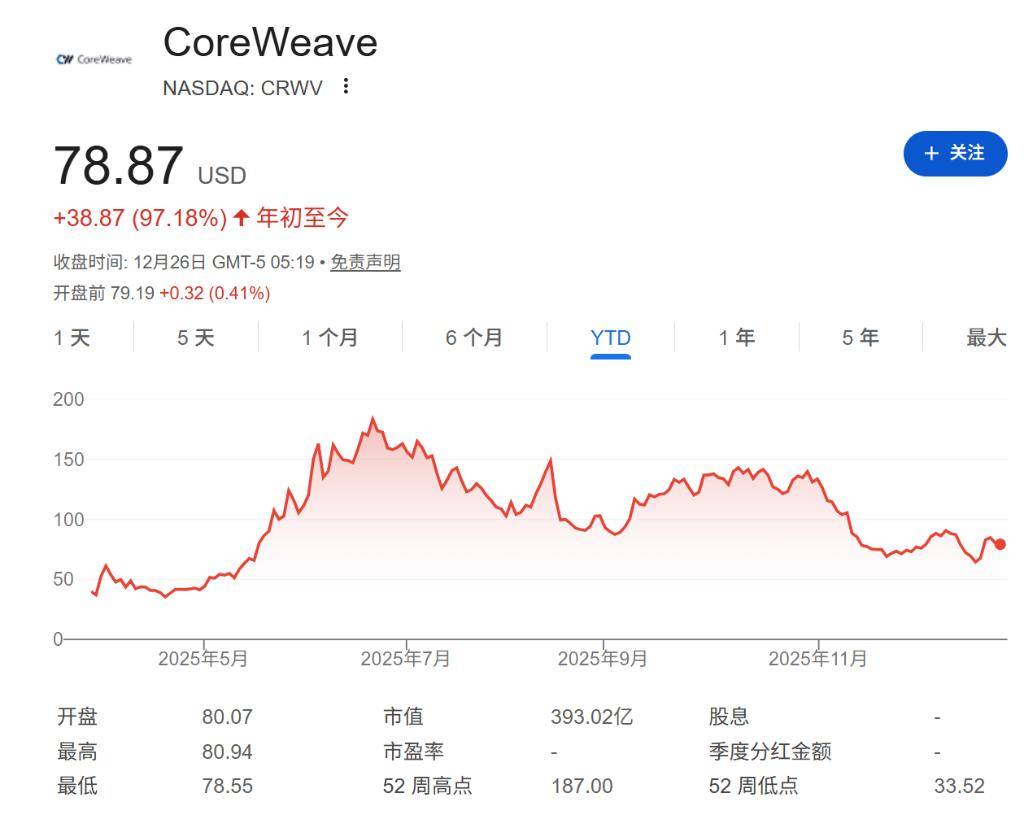
Group 1 - The AI competition has intensified, with significant investments and developments shaping the landscape, including a $500 billion commitment from the U.S. government for AI infrastructure [5][15][22] - CoreWeave's IPO marked the first public market valuation of AI computing power, demonstrating a shift in how GPU resources are perceived and utilized [7][10][11] - NVIDIA became the world's first $5 trillion company, driven by soaring demand for GPUs essential for AI applications, with its market cap surpassing that of several major companies combined [22][23][24] Group 2 - Germany revised its 2035 ban on combustion engines, allowing for a transition period that reflects the tension between aggressive climate goals and market realities [2][31] - OpenAI, despite not being publicly listed, emerged as a significant market influencer, with its activities affecting the entire AI industry narrative throughout 2025 [15][19] - The partnership between NVIDIA and Intel, involving a $50 billion investment, signifies a strategic alliance aimed at enhancing competitiveness in the PC and data center markets [13][14] Group 3 - SpaceX's record of 155 launches in 2025 illustrates the industrialization of space travel, with a focus on reusability and cost efficiency [26][30] - Google's dual strategy of developing proprietary chips and models positions it to challenge NVIDIA's dominance in AI infrastructure, aiming for a significant market share [33][34] - NVIDIA's acquisition of Groq's technology highlights the shift in focus from training to inference in AI, emphasizing the importance of efficiency in computing power [35][36]
Brutal year for stock picking spurs trillion-dollar fund exodus
BusinessLine· 2025-12-27 14:29
Core Insights - The concentration of returns among a small group of technology stocks, primarily American megacaps, has created challenges for diversified fund managers, leading to significant outflows from active equity mutual funds [1][3][15] Investment Trends - In 2025, a small group of tech super stocks accounted for a disproportionate share of market returns, continuing a trend observed over the past decade, which has strained investor patience [2][15] - Approximately $1 trillion was withdrawn from active equity mutual funds in 2025, marking the steepest outflow in the current cycle, while passive equity exchange-traded funds attracted over $600 billion [3][15] Market Dynamics - The S&P 500 outperformed its equal-weighted counterpart throughout the year, indicating a narrow participation in market gains, with fewer than one in five stocks rising alongside the broader market on many days [5][6] - 73% of equity mutual funds in the US underperformed their benchmarks in 2025, the fourth highest rate since 2007, exacerbated by the tech sector's dominance following the recovery from April's tariff scare [8] Portfolio Strategies - Active managers face a dilemma: underweighting the largest stocks risks underperformance, while closely mirroring the index raises questions about the value of active management [7][15] - Dimensional Fund Advisors' International Small Cap Value Portfolio, which returned over 50% in 2025, illustrates the potential of diversifying outside the US large-cap index [9][10] Thematic Investing - Some funds, like VanEck's Global Resources Fund, achieved significant returns by focusing on themes such as alternative energy and base metals, demonstrating the potential of thematic investing [13][14] - Goldman Sachs Asset Management's approach emphasizes finding "alpha" beyond Big Tech, utilizing a proprietary model to analyze a broad range of stocks, resulting in gains of approximately 40% across various funds [16][17]

Prediction: This Artificial Intelligence (AI) Stock Could 5X by 2030
The Motley Fool· 2025-12-27 12:30
Core Viewpoint - AMD's management is optimistic about its future in the data center market, aiming for significant growth despite current challenges in competing with Nvidia [1][4]. Group 1: Market Performance and Projections - AMD has outperformed Nvidia in 2025, with an 80% increase compared to Nvidia's 35% [2]. - AMD's data center revenue rose 22% year over year to $4.3 billion in Q3 2025, while Nvidia's data center revenue reached $51.2 billion, up 66% year over year [5]. - AMD's management projects a 60% CAGR for its data center division over the next five years, exceeding the 38% CAGR needed for a fivefold return [9]. Group 2: Competitive Position and Opportunities - AMD's ROCm software downloads increased tenfold year over year as of November 2025, indicating potential for competitive growth against Nvidia [4]. - Nvidia's current supply issues with cloud GPUs may lead clients to seek alternatives, positioning AMD as a viable option due to its lower price point [7]. - A recent agreement with the U.S. government allows AMD to export downgraded GPUs to China, which could significantly boost AMD's revenue in the long run [8]. Group 3: Profitability and Growth Potential - AMD's overall CAGR is projected at 35%, slightly below the required 38% for a fivefold return, due to slower growth in its consumer hardware and embedded processor divisions, which are expected to grow at 10% CAGR [9]. - Improving profit margins to the 15% to 20% range could double profits from revenue, providing an additional growth lever for AMD [12]. - If AMD can achieve both revenue growth and improved profit margins, it may surpass the necessary CAGR for substantial stock returns [10][12].
Price Over Earnings Overview: Advanced Micro Devices - Advanced Micro Devices (NASDAQ:AMD)
Benzinga· 2025-12-26 17:00
Core Viewpoint - Advanced Micro Devices Inc. (AMD) has shown a significant increase in stock price over the past year, but there are concerns regarding its current valuation compared to industry peers [1]. Group 1: Stock Performance - AMD's current share price is $215.65, reflecting a 0.28% increase in the current market session [1]. - Over the past month, AMD's stock has decreased by 0.86%, while it has increased by 76.13% over the past year [1]. Group 2: P/E Ratio Analysis - The P/E ratio is a critical metric for assessing AMD's market performance, with a current P/E ratio of 112.59, which is higher than the industry average of 95.01 [5][6]. - A higher P/E ratio may indicate that investors expect AMD to outperform its industry peers, but it could also suggest that the stock is overvalued [6]. Group 3: Limitations of P/E Ratio - The P/E ratio has limitations and should not be used in isolation; it must be considered alongside other financial metrics and qualitative factors [9][10]. - A lower P/E ratio could indicate undervaluation, but it may also suggest a lack of expected future growth [10].

别被华尔街“轮动牛市”噪音带偏 Mag7“领涨神话”仍是美股主线
智通财经网· 2025-12-26 09:01
Core Viewpoint - Wall Street analysts predict that 2026 will be characterized as a "rotation bull market," with institutional investors believing that the current rotation will not last long, and that the "Magnificent Seven" tech giants will significantly outperform other sectors, leading the S&P 500 and Nasdaq 100 to new highs [1][2]. Group 1: Market Trends and Predictions - The S&P 500 index is expected to close 2025 at a historical high, paving the way for further gains in 2026 [1]. - The market leadership has shifted from AI-related tech and growth stocks to undervalued sectors such as value, healthcare, and materials [1]. - The S&P 500 index has seen a cumulative increase of approximately $30 trillion over the past three years, largely driven by major tech giants and companies investing in AI infrastructure [3]. Group 2: The Magnificent Seven - The "Magnificent Seven" (Mag 7) includes Apple, Microsoft, Google, Tesla, Nvidia, Amazon, and Meta Platforms, which collectively account for about 35% of the S&P 500 and are viewed as key drivers of market performance [4]. - Analysts expect the Mag 7 to achieve a profit growth of approximately 22.7% in 2026, compared to 12.5% for the remaining 493 companies in the S&P 500 [15]. Group 3: AI Infrastructure and Investment Themes - AI infrastructure and the Mag 7 theme remain central to market dynamics, with companies driving long-term value expansion [3]. - The ongoing AI investment narrative is expected to continue as a strong theme throughout 2026, despite some market rotation towards other sectors [2][9]. - The market is currently experiencing a capital reallocation, shifting focus from growth to value and from tech to non-tech sectors [6]. Group 4: Economic Indicators and Market Sentiment - The S&P 500's overall profit estimates have been revised upward, with analysts not anticipating significant risks of a downturn due to a dovish Federal Reserve outlook [14]. - The potential for a "melt-up" phase exists, which could lead to a larger market peak, supported by strong earnings from the Mag 7 [15]. - The current market environment is not seen as an extreme bubble compared to the internet bubble of the early 2000s, with tech valuations being more reasonable [17][18].
领益智造(002600):公司信息更新报告:拟收购立敏达,强化AI服务器“散热+电源”布局
KAIYUAN SECURITIES· 2025-12-25 08:15
Investment Rating - The investment rating for the company is "Buy" (maintained) [1] Core Views - The company plans to acquire 35% equity in Limin Da for 875 million yuan, gaining control over 52.78% of voting rights, which will enhance its position in the AI server market, particularly in cooling and power supply [1][2] - The acquisition is expected to create synergies between the company's existing businesses in consumer electronics, robotics, and AI servers, potentially unlocking long-term growth opportunities [1][3] - The profit forecast for the company has been revised upwards, with expected net profits of 2.516 billion, 3.575 billion, and 4.765 billion yuan for the years 2025, 2026, and 2027 respectively [1] Financial Summary - Revenue projections for the company are as follows: 34.124 billion yuan in 2023, 44.211 billion yuan in 2024, 54.127 billion yuan in 2025, 63.373 billion yuan in 2026, and 73.550 billion yuan in 2027, reflecting a year-on-year growth of 29.6% in 2024 and 22.4% in 2025 [4] - The expected net profit margins are projected to be 6.0% in 2023, increasing to 6.5% by 2027, with a net profit of 2.051 billion yuan in 2023 and 4.765 billion yuan in 2027 [4] - The company's P/E ratios are forecasted to decrease from 57.0 in 2023 to 24.5 in 2027, indicating an improving valuation over time [4] Business Overview - Limin Da, established in 2009, specializes in thermal management for enterprise-level servers and is a core supplier for NVIDIA, providing critical components for liquid cooling systems [2] - The company has a comprehensive product matrix in server thermal management, covering both liquid and air cooling solutions, and has established significant customer relationships with industry leaders [2] - The strategic acquisition is expected to enhance the company's capabilities in high-power AI server power supply and cooling systems, aligning with the increasing performance demands in the AI server sector [2][3]

搅动GPU市场的Cerebras,终于要IPO?
Sou Hu Cai Jing· 2025-12-25 02:54
Core Viewpoint - Cerebras Systems plans to reapply for an IPO in the U.S. aiming for a debut in Q2 2026, following a previous withdrawal due to national security concerns related to its ties with Abu Dhabi's G42 [1][4][14] Group 1: IPO Plans and Market Context - Cerebras Systems is considering a new IPO application after withdrawing its previous one months ago due to national security reviews [4][14] - The company aims to capitalize on the increasing demand for specialized AI silicon, with a target valuation that has reportedly nearly doubled to several billion dollars [12][13] - The IPO's success will depend on public market investors' acceptance of associated risks rather than just the technology itself [6] Group 2: Financial Performance and Customer Dependency - Cerebras reported a significant revenue increase of 1,364 million USD in H1 2024, a 1,474% year-over-year growth, with 87% of this revenue coming from G42 [15] - The company's gross margin decreased from 50.5% to 41.1% due to discounts related to high-volume orders from G42 [15] Group 3: Competitive Landscape - Nvidia remains the dominant player in the AI chip market, holding an estimated 80% to 90% market share, while competitors like AMD, Intel, and Qualcomm are seeking to diversify offerings [16][18] - The competitive landscape is intensifying, with various tech giants and startups aiming to reduce reliance on Nvidia by developing their own chips [19] Group 4: Technological Innovation - Cerebras employs a unique approach by developing a single wafer-scale processor, which integrates nearly 40 trillion transistors and 900,000 cores, providing advantages in training large AI models [7][8][9] - This design focuses on flexibility and robust performance, distinguishing Cerebras from traditional GPU companies [9]


Forget The Chips: Oracle Wins Phase 2 of AI
Yahoo Finance· 2025-12-24 18:35
Core Insights - Oracle Corporation's stock closed at $198.38 on December 22, reflecting a gain of over 3% amid significant trading volume, indicating a shift in market focus from AI chip manufacturing to infrastructure needs [3] - The AI market is transitioning from hardware procurement to deployment, with Oracle positioning itself as a critical utility provider for AI chip operations rather than a direct competitor in chip manufacturing [4][5] Company Performance - Oracle's transition from a legacy software company to a cloud infrastructure leader is evident, with second-quarter fiscal year 2026 growth metrics surpassing many hyperscale competitors [5] - Oracle Cloud Infrastructure (OCI) revenue increased by 68% year-over-year, while revenue from graphics processing units (GPUs) surged by 177%, highlighting strong demand for AI-related services [7] Strategic Moves - The company has a significant backlog of signed contracts, providing strong revenue visibility and supporting aggressive data center capacity expansion to meet rising demand [6] - Oracle's strategic pivot to Chip Neutrality, including the sale of its stake in Ampere for a $2.7 billion pre-tax gain, indicates a focus on partnerships with Nvidia and AMD, reducing manufacturing risks while capitalizing on the AI boom [8]
Investigating Micron Technology's Standing In Semiconductors & Semiconductor Equipment Industry Compared To Competitors - Micron Technology (NASDAQ:MU)
Benzinga· 2025-12-24 15:00
Core Insights - The article provides a comprehensive analysis of Micron Technology in comparison to its competitors in the Semiconductors & Semiconductor Equipment industry, focusing on financial metrics, market position, and growth potential [1] Company Overview - Micron Technology is a leading semiconductor company specializing in memory and storage chips, primarily generating revenue from dynamic random access memory (DRAM) and having some exposure to NAND flash chips [2] Financial Metrics Comparison - Micron's Price to Earnings (P/E) ratio is 26.26, which is 0.27x lower than the industry average, indicating favorable growth potential [3] - The Price to Book (P/B) ratio of 5.29 is below the industry average by 0.56x, suggesting potential undervaluation based on book value [3] - Micron's Price to Sales (P/S) ratio is 7.37, which is 0.59x the industry average, indicating possible undervaluation based on sales performance [3] Performance Indicators - Micron's Return on Equity (ROE) stands at 9.28%, which is 3.87% above the industry average, reflecting efficient use of equity to generate profits [5] - The company's EBITDA is $8.35 billion, which is 0.21x below the industry average, potentially indicating lower profitability [5] - Micron's gross profit is $7.65 billion, which is 0.22x below the industry average, suggesting lower revenue after accounting for production costs [5] - The revenue growth of 56.65% exceeds the industry average of 32.03%, indicating strong sales performance [5] Debt-to-Equity Ratio - Micron Technology has a debt-to-equity ratio of 0.21, which is lower than its top 4 peers, indicating a stronger financial position and less reliance on debt financing [8] Key Takeaways - Micron's low P/E, P/B, and P/S ratios compared to peers suggest potential undervaluation, while its high ROE and revenue growth indicate strong performance relative to industry standards [9] - Concerns may arise regarding operational efficiency and profitability due to low EBITDA and gross profit figures [9]