伊利股份

Search documents
伊利股份:股东呼和浩特投资有限责任公司质押1877万股公司股份
Xin Lang Cai Jing· 2025-12-10 07:41
伊利股份公告称,2025年12月10日接到股东呼和浩特投资有限责任公司函告,其于11月4日质押1877万 股公司股份,占其所持股份比例3.49%,占公司总股本比例0.30%,质权人为上海电气内蒙古青城实业 有限公司,质押融资资金用于生产经营,到期日为2028年1月4日。截至12月10日,该股东持有公司股份 5.39亿股,占总股本8.51%,累计质押2.06亿股,占其持股总数38.17%。 ...

《喜人奇妙夜2》社媒热度、关键词及品牌联动分析
数说故事· 2025-12-10 06:44
Report Industry Investment Rating - Not provided in the content Core Viewpoints of the Report - Since its premiere on September 26, 2025, "The Comedians' Wonderful Night 2" has witnessed an explosive growth in social media popularity, especially on Douyin and Weibo [3]. - The audience's emotional inclination towards the show is polarized, with both strong love and support, as well as rational criticism and concerns [3]. - In terms of brand collaboration, various brands have effectively utilized the show's influence for brand promotion through different forms of cooperation [3]. Summary by Relevant Catalogs 1. Subject Introduction - "The Comedians' Wonderful Night 2" is a comedy competition variety show jointly produced by Tencent Video and Mew Media, targeting young people and office workers interested in comedy [4]. - The show features guests like Ma Dong, Hu Xianxu, and others, and has made adjustments to its competition system, abandoning the point - scoring system [4]. 2. Social Media Overall Performance Analysis 2.1 Social Media Trend Analysis - Pre - launch period (June - August 2025): There were small peaks in June on Weibo, Douyin, and the grass - planting platform due to the official announcement of the show's return, followed by a decline in July and August [9][10]. - Initial broadcast and popularity explosion period (September - October 2025): All platforms saw an explosive increase in volume and interaction after the show premiered on September 26, with the peak in October [10]. - Sustained high - heat period (November 2025): Weibo volume reached a new high, while Douyin interaction volume slightly decreased, but the overall popularity remained high [10]. - Show finale period (December 2025, partial data): The popularity declined but remained at a relatively high level, with Weibo interaction volume even higher than in November [10]. 2.2 Social Media Channel Volume Comparison - Weibo is the main platform for information dissemination and discussion, accounting for 80.84% of the social media volume, while Douyin is the main source of interaction, accounting for 86.88% of the interaction volume [13]. 2.3 Social Media Emotional Trend Analysis - The social media sentiment towards the show is mainly neutral, followed by positive emotions, and negative emotions, although with a small proportion, have a higher content depth [14][18]. 2.4 Social Media Keyword Clustering Analysis - The core topics of audience discussion focus on specific show works, comedians and their teams, show competition system and evaluation, and brand collaboration [20][22]. 3. Core Events Analysis 3.1 Core Event One: Show Premiere (September 26, 2025) - The premiere had a significant initial impact on the show's social media popularity, with an explosive increase in volume and interaction on all platforms [23]. 3.2 Core Event Two: Hit Sketch "Skill Gomoku" - The sketch, with its "abstract comedy" style and easy - to - learn core gags, became the core engine for the social media popularity explosion, driven by KOL and star promotion [24][25][27]. 4. Brand Collaboration Case Analysis 4.1 Case One: Meituan Group - Buying (Exclusive Sponsor) - Meituan Group - Buying achieved effective brand implantation through innovative voice - over and content embedding, and its hot - meme advertising also received a positive response [32][33]. 4.2 Case Two: Anmuxi (Co - Sponsor/Artist Cooperation) - Anmuxi adopted a marketing strategy of in - depth co - creation with the show content and stars, achieving "advertising - free" brand implantation [33][35]. 4.3 Case Three: Yili (Hot - Meme Leveraging Marketing) - Yili quickly captured the hot - meme of "Grandpa Niu" Zhang Xingchao and launched an abstract advertisement that resonated with users [36]. 4.4 Case Four: DQ (Non - official Collaboration and Hot - Meme Application) - DQ combined the "Bangbang Hard" eating method of "Zootopia 2" with the show's hot - meme, resulting in increased sales and high popularity [40]. 5. Summary and Suggestions - The show has achieved remarkable success on social media, and the key elements of its successful brand collaboration are content integration, star effect, and hot - meme leveraging [36]. - Suggestions for the show include continuous content innovation, balancing commercialization and artistry, and strengthening in - depth interaction with the audience [37][38][41].
中上协发布最新上市公司董秘履职评价结果,这些董秘获得5A评级(附名单)
Sou Hu Cai Jing· 2025-12-10 05:54
Core Insights - The China Securities Association released the results of the "2025 Evaluation of Board Secretaries of Listed Companies," with 282 board secretaries receiving a 5A rating, 589 receiving a 4A rating, and 687 receiving a 3A rating [1] - The evaluation criteria included ten major standards and 67 indicators, covering areas such as compliance, information disclosure, internal control, investor relations management, and social responsibility [1] - Board secretaries play a crucial role in corporate governance, acting as gatekeepers for compliance and as a bridge between the capital market, investors, and company management [1] Group 1 - A total of 282 board secretaries achieved the highest 5A rating, reflecting their exceptional performance and the governance standards of their respective companies [1] - The evaluation emphasizes the importance of board secretaries in maintaining corporate transparency and sustainable development [1] - The recognition of board secretaries is not only a personal accolade but also highlights the benchmark status of their companies in governance and transparency [1] Group 2 - Notable companies with 5A rated board secretaries include COSCO Shipping Energy, Fosun Pharma, and Kweichow Moutai, among others [2] - The list of 5A rated board secretaries includes individuals such as Ni Yidan from COSCO Shipping Energy and Dong Xiaoxian from Fosun Pharma [2] - The evaluation results serve as a reference for best practices in corporate governance and investor relations within the industry [1][2]






梦龙“单飞”上市,640亿市值背后,中高端雪糕能否站稳中国市场?
Xin Lang Cai Jing· 2025-12-10 02:08
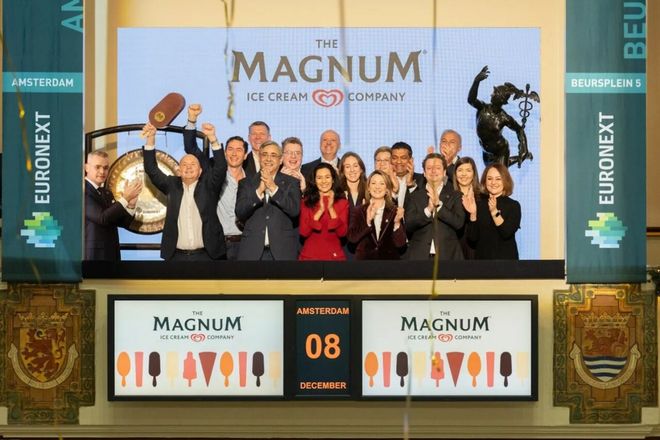
Core Viewpoint - The Magnum Ice Cream Company has successfully launched its IPO, becoming the largest ice cream IPO globally, with a market capitalization of €7.8 billion (approximately ¥64.2 billion) on its listing day [3][4]. Company Overview - The company, spun off from Unilever, holds four of the five major global ice cream brands, including Häagen-Dazs, Cornetto, Magnum, and Ben & Jerry's, establishing itself as a significant player in the ice cream industry [3][4]. - In 2024, the ice cream business under Unilever reported revenues of €7.9 billion (approximately ¥66.6 billion) and an adjusted EBITDA of €1.3 billion (approximately ¥11 billion), capturing about 21% of the global ice cream retail market [3][4]. Brand Performance - The four major brands under Magnum's umbrella rank among the top five globally by revenue: Häagen-Dazs (€2.8 billion), Magnum (€1.8 billion), Ben & Jerry's (€1.1 billion), and Cornetto (€0.7 billion) [4]. - In China, the company is a key growth area, with projected revenues of €317 million (approximately ¥2.6 billion) for 2024 and €270 million (approximately ¥2.2 billion) for the first half of 2025, showing a double-digit growth rate year-on-year [4][5]. Market Position and Strategy - Magnum is positioned as the second-largest ice cream company in China, with a market share of approximately 11% [5]. - The company aims to maintain its high-end market positioning despite increasing competition from local brands offering better price-performance ratios [5][9]. - Recent product innovations include the launch of new flavors and mini versions of their ice creams, which have been well-received by consumers [6][10]. Challenges and Consumer Trends - The high-end ice cream segment is facing challenges as consumer preferences shift towards more affordable options, with a significant portion of the market now dominated by ice creams priced below ¥5 [9]. - Consumers are becoming more price-sensitive, often prioritizing cost over brand loyalty, which poses a challenge for Magnum's premium pricing strategy [9][10]. Future Outlook - Analysts remain optimistic about the long-term growth potential of the Chinese ice cream market, emphasizing the importance of innovation and competitive pricing strategies for brands like Magnum to thrive [10]. - The company's independent operation allows for focused resource allocation, which could enhance its competitive edge in the evolving market landscape [10].
研判2025!中国果胶行业发展历程、市场政策、产业链图谱、供需现状、市场规模、竞争格局及发展趋势分析:食品饮料市场需求占比超70%[图]
Chan Ye Xin Xi Wang· 2025-12-10 01:43
Core Insights - The demand for pectin is increasing due to the growth of the food and beverage industry, with applications in dairy products, jellies, beverages, and baked goods, as it gradually replaces synthetic colloids to meet consumer health demands [1][10] - The market size for pectin in China is projected to reach 1.036 billion yuan with a demand of 12,300 tons by 2024 [1][10] - The pectin industry is experiencing a shift towards high-value applications in pharmaceuticals and cosmetics, expanding its market potential [1][10] Industry Overview - Pectin is a complex natural polysaccharide primarily composed of D-galacturonic acid, found in the cell walls of various fruits such as citrus peels and apple pomace [2][4] - The industry has evolved since the reform and opening up, with significant production growth driven by the food and beverage sector [6][7] Market Policies - Recent policies emphasize food safety and quality control, requiring pectin manufacturers to enhance their production and management practices [7][8] Industry Chain - The upstream of the pectin industry includes raw material suppliers like citrus peels and apple pomace, while the downstream encompasses applications in food, pharmaceuticals, and cosmetics [8][10] - China is a major producer of apples and citrus, providing ample raw materials for pectin production, with apple production expected to reach 51.285 million tons and citrus production 67.915 million tons in 2024 [8][10] Current Development - The food and beverage sector is the primary market for pectin, accounting for over 70% of its applications, with the industry benefiting from the overall growth in food manufacturing [10][11] Competitive Landscape - The pectin market features both international giants and local players, with companies like CP Kelco and DSM dominating high-end segments, while local firms focus on mid to low-end products [11][12] - Leading domestic companies such as Guangzhou Lemon Biotechnology Co., Ltd. and Zhejiang Guoyuan Kangpin Biotechnology Co., Ltd. are advancing technology and achieving import substitution [13][14] Future Trends - The pectin industry is expected to adopt greener extraction methods and diversify product offerings to meet various application needs, driven by health trends and stricter environmental regulations [14]

贵州:加大白酒线上销售力度,食品饮料ETF天弘(159736)昨日获净申购2200万份,机构:白酒配置性价比显现
2 1 Shi Ji Jing Ji Bao Dao· 2025-12-10 01:33
Group 1 - The three major indices showed mixed performance, with the Shanghai Composite and Shenzhen Component indices experiencing fluctuations and declines, while the ChiNext index saw a late rally [1] - The China Securities Food and Beverage Index fell by 0.83%, with notable increases in stocks such as Yiming Food (over 6%), Junyao Health (over 5%), and Xiangpiaopiao (over 4%) [1] - The Tianhong Food and Beverage ETF (159736) recorded a net subscription of 22 million units, bringing its latest circulating share count to 7.846 billion units and a circulating scale of 5.454 billion yuan as of December 8 [1] Group 2 - According to a report from GF Securities, the liquor sector has undergone a four-year adjustment period, and by 2025, it is expected to reach a "valuation + performance" double bottom, indicating a favorable configuration cost-performance ratio [2] - The consumer price index (CPI) is expected to gradually recover by 2026, with leading companies in the mass consumer goods sector continuing to launch new products, which is anticipated to accelerate revenue growth during the CPI upturn [2]

食品饮料板块抹平2021年以来的所有涨幅,何时反转?
Mei Ri Jing Ji Xin Wen· 2025-12-10 01:22
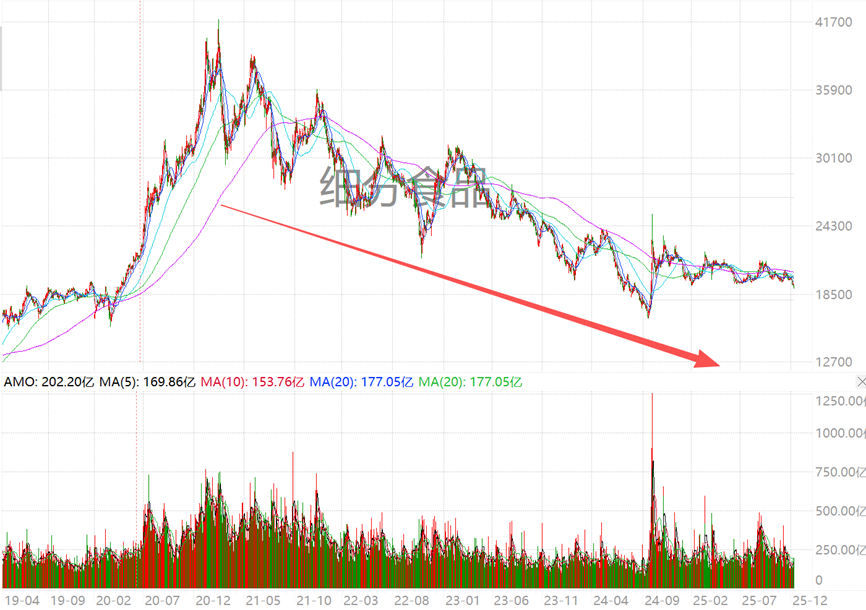
Core Viewpoint - The food and beverage sector has been experiencing a prolonged adjustment period, with prices of key products like Moutai declining, leading to a significant drop in the sector's index close to the levels seen at the end of 2019 [1][3]. Group 1: Reasons for Continuous Adjustment - The food and beverage sector has been in continuous adjustment since early 2021, lasting over four years, resulting in a significant clearing of positions and nearly erasing all gains since 2021 [1]. - Various interpretations of the adjustment reasons include valuation digestion, foreign capital outflow, macroeconomic downturns, low price cycles, and weakened demand in the liquor sector [3]. Group 2: Current Position of the Food and Beverage Sector - As of Q3 2025, the allocation of the food and beverage industry in public fund heavyweights has decreased to 6.4%, similar to levels seen in 2017 [4]. - The PE-TTM of the food and beverage ETF (515170.SH) is currently at 20.15 times, which is below 95% of the time over the past decade, indicating a significant deviation from the mean [4]. - Leading companies in the food and beverage sector emphasize shareholder returns, with many offering dividend yields above 4% [4]. - Historical trends show that sectors experiencing three to four years of decline often see a reversal, as evidenced by the recent performance of sectors like non-ferrous metals and chemicals [4]. Group 3: Indicators for Potential Reversal - The stabilization of the consumer sector depends on the recovery of domestic demand, which is closely linked to improvements in household income and employment [7]. - Past trends indicate that a recovery in corporate profits often precedes improvements in the labor market and income levels, suggesting a potential turnaround in the food and beverage sector [7]. - Key indicators for the liquor segment include the stabilization of Moutai prices and the narrowing of distributor losses, which could signal a recovery [7]. Group 4: Investment Opportunities - The food and beverage ETF (515170.SH) serves as a useful tool for individual investors to capture potential reversal opportunities in leading companies within the sector [8]. - This ETF includes major players across various sub-sectors such as liquor, dairy, soft drinks, and snacks, making it a low-threshold option for investors looking to capitalize on sector recovery [9].
伊利股份首次中期分红30.36亿 销售毛利率35.32%创近4年新高
Chang Jiang Shang Bao· 2025-12-09 23:33
Core Viewpoint - Yili Group is actively fulfilling its commitment to implement a significant mid-term dividend, marking its first mid-term dividend since its listing, with a cash dividend of 0.48 yuan per share, totaling 30.36 billion yuan [1][3]. Financial Performance - For the first three quarters of 2025, Yili Group achieved total revenue of 905.64 billion yuan, a year-on-year increase of 1.71%, while net profit attributable to shareholders was 104.26 billion yuan, a decrease of 4.07% [1][9]. - The company completed over 76% of its annual revenue target in the first three quarters, indicating a strong likelihood of achieving its planned goals [10]. - The gross profit margin for the first three quarters reached 35.32%, up 0.51 percentage points from the previous year, marking a four-year high [10]. Dividend Policy - The mid-term dividend payout ratio is approximately 29%, reflecting the company's commitment to high dividend levels and stable operations [2][3]. - Yili Group plans to maintain a cash dividend total of no less than 75% of the net profit attributable to shareholders for the years 2025-2027, with a minimum cash dividend of 1.22 yuan per share for 2024 [4]. Market Position - Yili Group remains a leader in the industry, with significant market shares in various segments, including liquid dairy products and infant formula [8]. - The company aims to achieve a total revenue of 1,190 billion yuan and a total profit of 126 billion yuan in 2025 [8]. Research and Development - Yili Group has consistently increased its investment in research and development, with R&D expenses exceeding 8 billion yuan for three consecutive years [12]. - In the first three quarters of 2025, R&D expenses reached 6.28 billion yuan, a year-on-year increase of 12.83%, with expectations to exceed 9 billion yuan for the full year [13].
全球最大的冰淇淋公司上市了
Di Yi Cai Jing Zi Xun· 2025-12-09 15:18
Core Viewpoint - The company, Dream Ice Cream, has officially announced its listing in Amsterdam, London, and New York, with a total share capital of 612 million shares. The company was previously part of Unilever and is set to operate independently starting July 2025 [2]. Group 1: Company Overview - Dream Ice Cream is the largest ice cream company globally, with projected revenue of €7.9 billion in 2024, capturing a 21% market share. Competitor Froneri holds an 11% market share, while eight other companies, including Mengniu, Yili, Nestlé, and Mars, collectively account for 12% [2]. - The Chinese market is one of Dream Ice Cream's top ten core markets and ranks second in retail sales for 2024, while other core markets hold the first position in market share [2]. Group 2: Market Dynamics - Despite Dream Ice Cream's strong global position and significant share in China, the overall ice cream market is facing challenges with slowing growth. The average price per 100 grams of ice cream has decreased from ¥3.94 in 2023 to ¥3.65 in the first eleven months of this year [3]. - Analysts suggest that Dream Ice Cream, as a foreign brand, has a higher overall gross margin and will benefit from brand, scale, and fan effects, as well as a complete supply chain after its separation from Unilever [3][4].
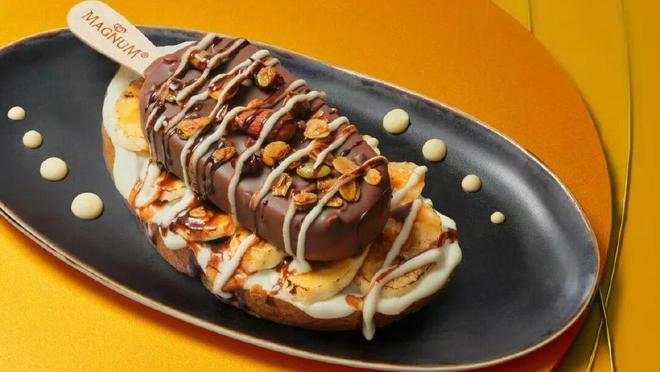
全球最大的冰淇淋公司上市了
第一财经· 2025-12-09 15:07
Core Viewpoint - Dream Ice Cream Company has officially announced its listing in Amsterdam, London, and New York, with a total share capital of 612 million shares. The company, which was previously part of Unilever, aims to focus on its independent operations after the split in 2024 [3][4]. Group 1: Company Overview - Dream Ice Cream Company generated revenue of €7.9 billion in 2024, capturing a 21% share of the global ice cream market. The second-largest player, Froneri, holds an 11% market share, while eight other companies, including Mengniu, Yili, Nestlé, and Mars, collectively account for 12% [3]. - In the Chinese market, Dream Ice Cream is one of the top ten core markets globally and ranks second in retail sales for 2024, while other core markets hold the top position [3]. Group 2: Market Dynamics - The overall ice cream market is experiencing a slowdown in growth, with the average price per 100 grams of ice cream declining from ¥3.94 in 2023 to ¥3.65 in the first eleven months of the current year [4]. - Despite the challenges in the market, Dream Ice Cream is expected to leverage its brand, scale, and supply chain advantages post-split, focusing on building a product pyramid to enhance its market position [4].