宇树科技

Search documents
说实话,人形机器人上春晚不止1个亿
3 6 Ke· 2026-02-03 12:52
Core Viewpoint - The investment of 100 million yuan in humanoid robots for the Spring Festival Gala is not merely a financial transaction but a strategic move to enhance brand recognition and long-term development in the industry [1][20]. Group 1: Investment and Costs - The 100 million yuan investment is insufficient for the Spring Festival Gala, as it involves extensive collaboration among various departments, including control and algorithms, requiring significant human resources and time [2][4]. - The costs associated with the event extend beyond sponsorship fees, encompassing research and development, training, and promotional expenses [4][6]. Group 2: Industry Impact and Brand Recognition - The Spring Festival Gala serves as a national platform that can significantly enhance brand memory and recognition for humanoid robot companies, which is crucial for reducing trust costs in a competitive market [4][8]. - The event is expected to generate subsequent orders and rental demands, contributing positively to the companies' financial performance [6]. Group 3: Technological Development and Performance - Humanoid robot performances are not merely entertainment; they represent a necessary transitional phase in the industry's development, showcasing the complexity and capabilities of robotic systems [7][19]. - Performing arts help refine the underlying capabilities of robots, improving their stability and functionality for future applications [8][10]. Group 4: Business Model Evolution - The demand for humanoid robot performances is projected to grow, leading to a shift from direct sales to a rental model, which is more suitable for the performance context [9][10]. - The rental market for robots is expected to reach 1 billion yuan by 2025 and potentially expand to 10 billion yuan by 2026, indicating a significant market opportunity [9]. Group 5: Long-term Viability - While performances may not become the primary revenue source for robot companies, they can serve as a sustainable income stream, similar to the drone industry, which initially relied on performances for public recognition [17][19]. - The ongoing performances are a strategic choice for companies to gain time, resources, and market positioning in a still-maturing industry [18][19].


《财富》中国科技50强榜单发布:华为、宇树科技、比亚迪等上榜


Feng Huang Wang· 2026-02-03 12:51
其中华为、DeepSeek、宁德时代、阿里巴巴、腾讯、比亚迪等企业均在名单内。 凤凰网科技讯 8月21日,"财富FORTUNE"公众号公布了"《财富》中国科技50强"榜单,并称这份榜单 旨在寻找出生于中国、正在影响世界的科技公司。 ...
黄仁勋2026大模型座上宾:杨植麟
3 6 Ke· 2026-02-03 11:44
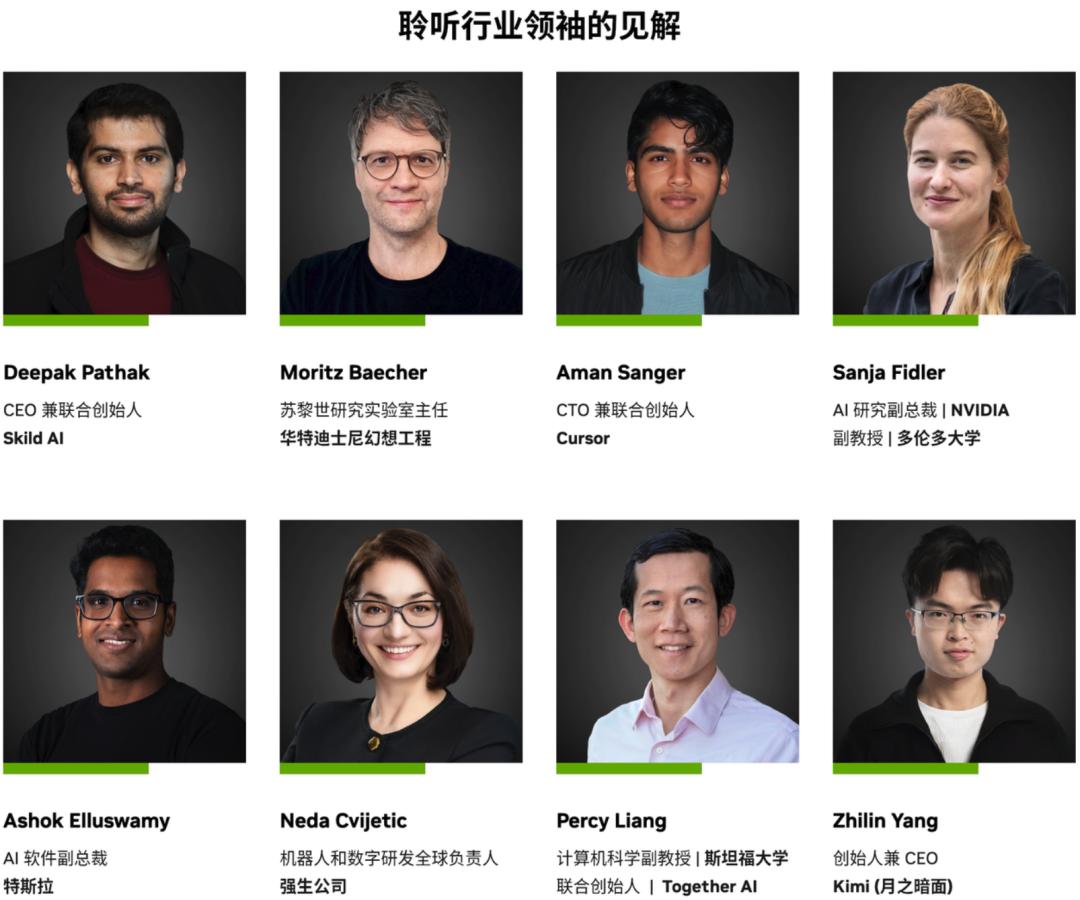
Core Insights - Yang Zhilin, founder and CEO of Moon's Dark Side, has been invited as a keynote speaker at NVIDIA's GTC 2026, marking a significant recognition for him and his Kimi models [1] - The invitation reflects NVIDIA's strategy of identifying emerging trends and endorsing key players in the AI industry [6][7] - Yang's presence at GTC indicates a shift in focus towards the need for advanced reasoning capabilities in AI, moving beyond mere computational power [14] Group 1: Yang Zhilin and Kimi's Journey - Yang Zhilin represents a new pain point in AI development, as the industry seeks to move past the limitations of previous models and explore deeper cognitive capabilities [14] - Kimi faced significant challenges in 2025 due to competition from DeepSeek, which disrupted its business model and led to a decline in user engagement [15][17] - After a period of silence and strategic retreat, Kimi re-emerged with the launch of Kimi K2, showcasing advanced capabilities and reaffirming its position in the market [18][21] Group 2: Market Dynamics and Financial Position - Kimi's recent funding round raised $500 million, bringing its post-money valuation to $4.3 billion, indicating strong investor confidence in its technology and long-term vision [21] - The successful IPOs of competitors in the same sector signal a pivotal moment for AI startups, with Kimi positioned to leverage its cash reserves for continued research and development [21] - Yang Zhilin's focus on technology over marketing has allowed Kimi to regain traction and recognition in the AI community, particularly through its open-source initiatives [21]

机器人扎堆上春晚,花一亿元,抢行业“卡位赛”
3 6 Ke· 2026-02-03 11:23
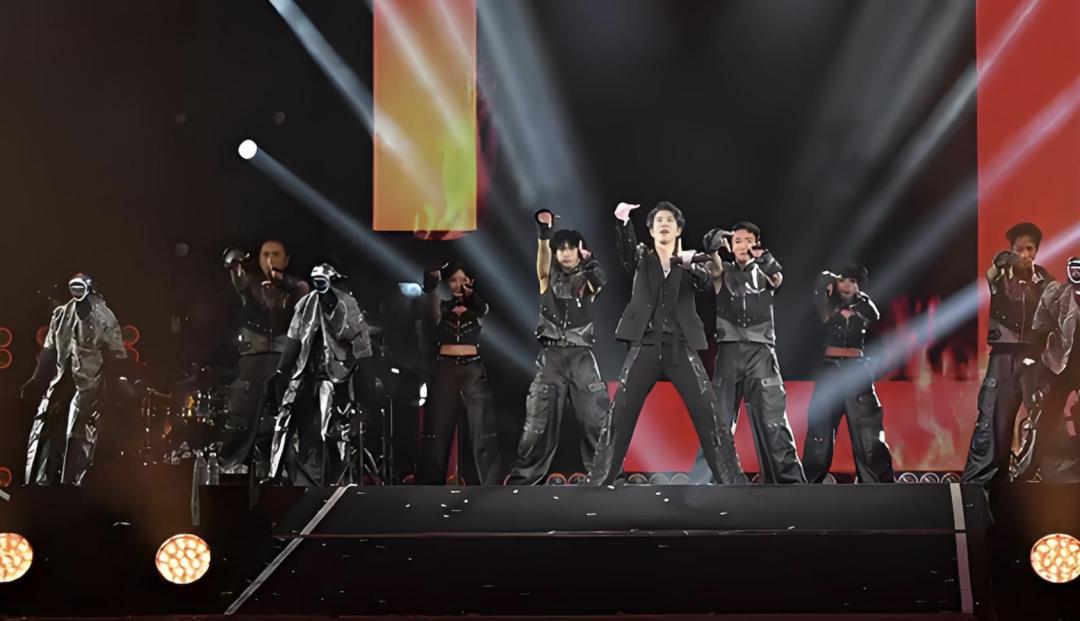
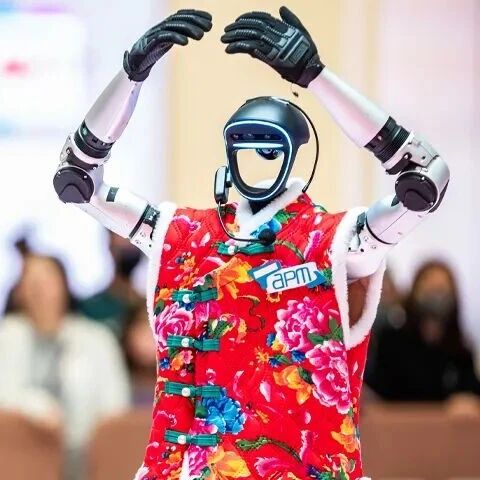
2025年8月,在一家机器人公司任市场总监的周乐来到央视,询价2026年马年春晚登台费用。年初,宇树机器人穿着花棉袄转 手绢,在2025年春晚"一夜火出圈"。 那一刻,周乐心里埋下一个念头:总有一天,也要把自家机器人推上春晚。 可现实让周乐迅速冷静下来:登上2026年马年春晚的"起步价",高达1亿元。 "太贵了",这是周乐和其公司CEO共同的第一反应。 文|富充 编辑|苏建勋 不少具身智能公司正处于剧烈烧钱阶段,某具身大脑公司CEO曾和我们算过一笔账:训一个模型,团队需要10个人,年薪2000 万元左右;如果用英伟达H200的卡,单月成本就要900万元(包括存储)。 到底是花亿元去春晚一搏,还是留给研发与产品,是不少机器人公司犹豫是否"上春晚"的原因。 "我们还在考虑,就是这几天,管理层会最终决定。"另一位机器人公司的市场总监告诉《智能涌现》,可对于上春晚的效果, 该人士也显得顾虑重重,"如果只是作秀,反而会过度拉高公众期待,这不是个好事儿。" 在"周乐们"望而却步时,宇树科技、银河通用、魔法原子、松延动力四家公司"扎堆"官宣即将登上春晚舞台。 "上春晚,可能会改变具身智能产业的现有格局,本质是在买一场为期1 ...
2026开局Update:锦秋与创业者的“全速前进”
锦秋集· 2026-02-03 10:44
Group 1 - The core viewpoint of the article discusses the emergence of 1.8 million "animation super individuals" enabled by technology, suggesting that animation can become a form of "super expression" for everyone [1] - The discussion features OiiOii's founder, who emphasizes that OiiOii is not just a generative tool but an intelligent collaborative agent system composed of AI scriptwriting, storyboarding, and sound effects [1] - The conversation aims to dissect the technological experiment surrounding "identity reversal" and the reconstruction of AI productivity [1] Group 2 - The first episode focuses on the dynamics of AI entrepreneurship in China and the U.S. in 2026, highlighting how Chinese entrepreneurs can position themselves on a global stage [2] - The guests include a dual-capacity investor with a background in AI research and early-stage VC, providing insights into the underlying logic of the Sino-U.S. AI investment ecosystem [2] - Key topics include the due diligence truths of Silicon Valley VCs, funding strategies for non-native entrepreneurs, and overlooked market gaps by OpenAI [2] Group 3 - The CES discussion involved around 40 participants from AI hardware and AI agent sectors, exchanging insights on industry trends observed during the CES event [3] - The "Predict 2026" roundtable gathered AI builders to share their predictions for the year, focusing on supply-side discussions and the evolving landscape of content production and trust in a saturated market [5] - A session on AI application gaps explored the challenges and future prospects of AI deployment, with founders and practitioners sharing their experiences [7] Group 4 - A conversation with a top AI comic company centered on multimodal content and the industrialization of content production, addressing emotional expression and monetization strategies [8] - The article highlights the achievements of various companies, including Inke's recent financing round of nearly 200 million RMB, indicating strong investor interest in humanoid robotics and core components [12] - The article also mentions the successful launch of several AI products at CES 2026, showcasing advancements in humanoid robots and smart home technology [19][21][23]

黄仁勋2026大模型座上宾:杨植麟
量子位· 2026-02-03 10:35
Core Insights - Yang Zhiling, founder and CEO of Moon's Dark Side, has been invited as a keynote speaker at NVIDIA's GTC 2026, marking a significant recognition for him and his Kimi models [1][2][27] - The invitation reflects NVIDIA's strategic foresight in identifying emerging trends within the AI industry, as Huang Renxun (NVIDIA's CEO) typically selects speakers who align with future market directions [7][11] Group 1: Yang Zhiling and Kimi's Journey - Yang Zhiling represents a new pain point in AI development, as the industry faces challenges with existing models and the need for innovative solutions [28][30] - Kimi faced significant challenges in 2025 due to the impact of DeepSeek, which threatened its business model and user engagement [33][35] - After a period of silence and strategic retreat, Kimi re-emerged with the launch of Kimi K2, showcasing advanced capabilities and reaffirming its position in the market [38][39] Group 2: Market Position and Financial Developments - Kimi K2.5 was launched in January 2026, demonstrating superior performance in various benchmarks compared to competitors like GPT-5.2 and Claude 4.5 Opus [41][42] - Kimi's successful C-round financing raised $500 million, leading to a post-money valuation of $4.3 billion, indicating strong investor confidence and financial stability [46] - The cash reserves exceeding 10 billion yuan position Kimi well for continued research and development, aiming for leadership in the global SOTA (state-of-the-art) landscape [46]

快时代的慢公司——长期主义者的艰辛之旅
3 6 Ke· 2026-02-03 10:31
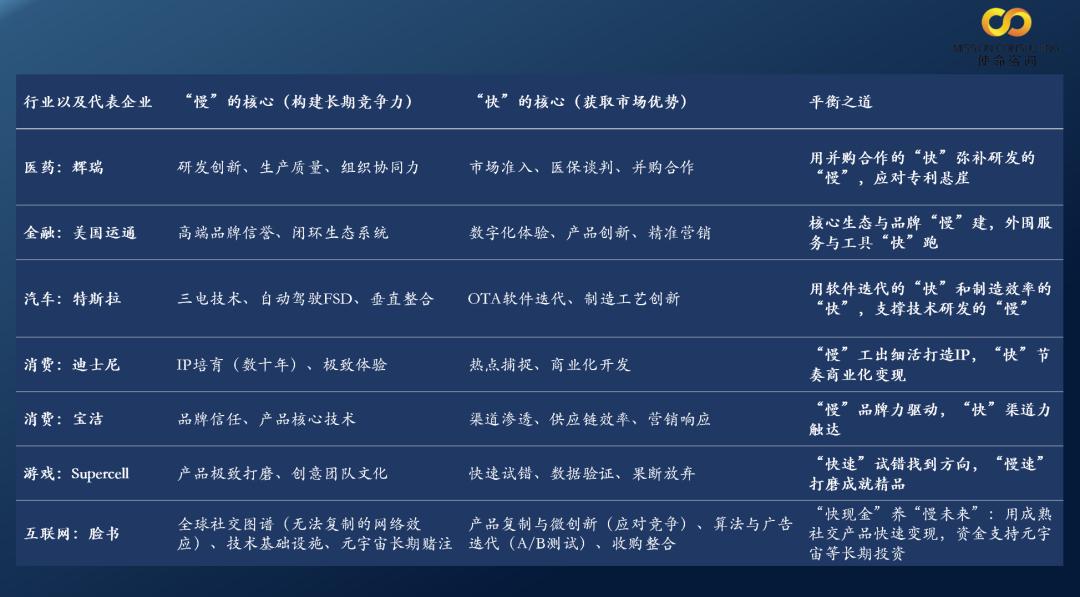
Core Concept - The article emphasizes the importance of "slow companies" in China, advocating for a balance between speed and depth in business strategies, where "slow" represents foundational strength and "fast" signifies market agility [1][4][72]. Group 1: Fast vs. Slow in Business Strategy - "Slow" refers to long-term investments in core competencies such as technology, brand value, and organizational culture, which require time and cannot be rushed [1][3]. - "Fast" indicates the need for agile responses to market demands, including product iterations and capturing market opportunities quickly [2][3]. - Successful companies master the combination of "fast" and "slow," using "slow" to build a solid foundation while leveraging "fast" to seize market opportunities [3][4]. Group 2: Global and Chinese Examples of Slow Companies - Pfizer exemplifies the pharmaceutical industry's balance of "slow" drug development and "fast" market entry strategies, often relying on acquisitions to fill gaps in their pipeline [5][6][10]. - American Express focuses on building a strong brand and ecosystem slowly while rapidly innovating in digital experiences and product offerings [12][16]. - Tesla invests heavily in long-term technology development while maintaining rapid product iterations and manufacturing innovations to capture market share [17][22]. - Disney and Procter & Gamble illustrate the consumer sector's balance, with Disney cultivating IP over decades while quickly monetizing it, and P&G focusing on brand trust and product technology while ensuring efficient market penetration [23][24]. - Supercell emphasizes quality through meticulous product development while employing rapid testing and iteration to find successful game concepts [25][30]. Group 3: Characteristics of Founders and Teams in Slow Companies - Founders of slow companies often exhibit traits such as strategic patience, deep focus, and a mission-driven approach, which guide their long-term decision-making [72][97]. - Teams in these companies are structured to ensure stability and cultural alignment, often combining diverse skills to achieve a common mission [98]. Group 4: Education and Talent Development for Slow Companies - The article discusses the need for educational reforms to cultivate leaders with a long-term vision, emphasizing the importance of foundational knowledge and craftsmanship in training [77][78]. - Innovative educational practices, such as problem-based learning and dual mentorship systems, are highlighted as methods to develop future leaders capable of sustaining slow company principles [79][82].
这场AI竞赛,归根结底是“我们的中国人”对阵“他们的中国人”……
虎嗅APP· 2026-02-03 09:26
Core Insights - The article discusses the competitive landscape of AI talent, highlighting China's dominance in AI talent production, with a 47% share globally compared to the US's 18% [9][26]. - It emphasizes the importance of talent density over computational power in the research phase of AI development, suggesting that the future of AI will be shaped by the concentration of skilled individuals [8][9]. - The article also points out the geographical advantages of China's AI talent clusters, particularly in cities like Beijing, Shanghai, and Shenzhen, which collectively outperform the US's Silicon Valley [14][15][16]. Global AI Talent Landscape - China has established a significant lead in AI talent production, with major clusters in Beijing (16.11%), Shanghai-Hangzhou (14.82%), and the Guangdong-Hong Kong-Macao Greater Bay Area (11.71%) [17][18]. - The article notes that the density of top-tier research labs in Beijing's Haidian District surpasses that of Silicon Valley, indicating a self-reinforcing ecosystem for AI research in China [18][20]. Comparison of Talent Sources - The article highlights that 47% of top AI researchers come from Chinese universities, while only 18% are from US institutions, indicating a strong foundation of talent in China [27]. - It also mentions that approximately 42% of these Chinese talents choose to work in the US, creating a dependency of the US AI industry on Chinese talent [28][30]. Challenges and Opportunities - The article discusses the challenges faced by the US in retaining Chinese talent due to geopolitical tensions and visa restrictions, which may disrupt the flow of skilled individuals [31][32]. - Conversely, it notes a trend of top Chinese talents returning home, with retention rates increasing from 11% in 2019 to 28% in 2022, suggesting a shift in the talent landscape [32]. Regional Dynamics - The article contrasts the industrial maturity of the US, particularly in Silicon Valley, with China's dual-driven model of talent production from both universities and enterprises [20][21]. - It highlights the emergence of Shenzhen and Hangzhou as hubs for applied AI, particularly in robotics and embodied AI, showcasing a different aspect of AI development compared to Beijing's theoretical focus [22][23]. Global AI Competition - The article points out that Europe is lagging in AI talent production, with only 5.35% of global output, primarily due to regulatory challenges and a lack of concentrated talent clusters [34]. - Singapore is noted as a rising player, attracting talent and capital due to its geopolitical positioning, surpassing Europe in AI talent output [36]. Quality vs. Quantity - The article discusses the distinction between quantity and quality in AI research, noting that while the US leads in defining paradigms, China excels in rapid engineering and application [39][41]. - It suggests that as talent density reaches a critical mass, significant breakthroughs in AI research and applications are likely to occur in China [42]. Future Implications - The article concludes that the shift in talent dynamics, combined with China's population base and educational system, positions it favorably in the AI landscape, potentially leading to a new era of competition [52][54].

机器人扎堆上春晚,花一亿元,抢行业「卡位赛」
36氪· 2026-02-03 09:18
"春晚带来知名度—知名度带来订单—订单转为收入—收入支撑融资—融资投入研发。"——宇树跑通了这条路。可如今,这条路变得拥挤。 以下文章来源于智能涌现 ,作者富充 智能涌现 . 直击AI新时代下涌现的产业革命。36氪旗下账号。 文 | 富充 编辑 | 苏建勋 来源| 智能涌现(ID: AIEmergence ) 封面来源 | IC photo 2025年8月,在一家机器人公司任市场总监的周乐来到央视,询价2026年马年春晚登台费用。年初,宇树机器人穿着花棉袄转手绢,在2025年春晚"一夜 火出圈"。 那一刻,周乐心里埋下一个念头:总有一天,也要把自家机器人推上春晚。 可现实让周乐迅速冷静下来:登上2026年马年春晚的"起步价",高达1亿元。 "太贵了",这是周乐和其公司CEO共同的第一反应。 不少具身智能公司正处于剧烈烧钱阶段,某具身大脑公司CEO曾和我们算过一笔账:训一个模型,团队需要10个人,年薪2000万元左右;如果用英伟达 H200的卡,单月成本就要900万元(包括存储)。 到底是花亿元去春晚一搏,还是留给研发与产品,是不少机器人公司犹豫是否"上春晚"的原因。 "我们还在考虑,就是这几天,管理层会最终决 ...
第一波人形机器人倒闭潮,来了
芯世相· 2026-02-03 08:37
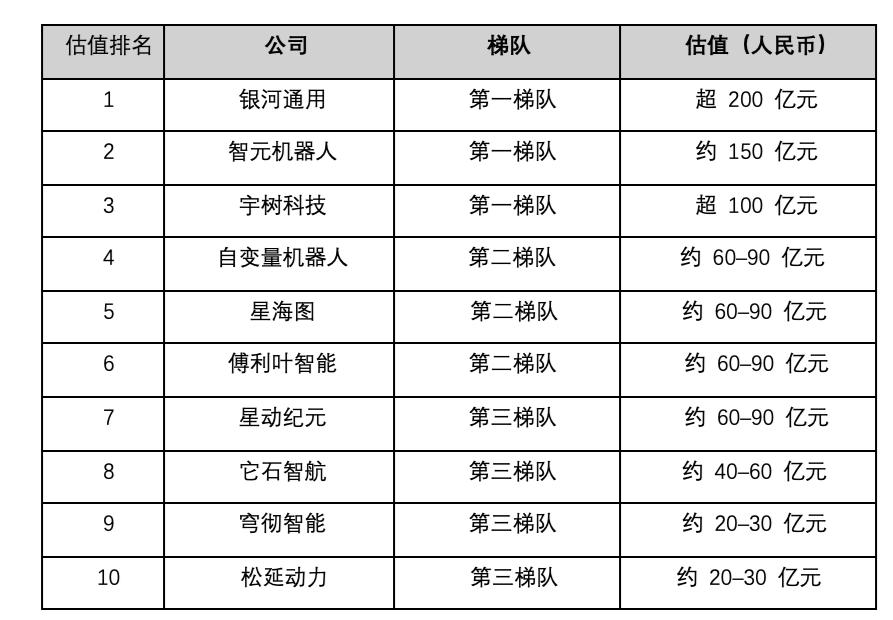
Core Viewpoint - The humanoid robot industry is experiencing a dual reality in 2025, with significant financing and market activity on one side, while many companies face collapse due to operational and financial challenges on the other [4][10]. Group 1: Industry Overview - In 2025, the humanoid robot sector saw 57 billion yuan in financing, with nearly 30 companies preparing for IPOs, while over 100 companies are struggling, leading to a stark divide between the leading and lagging firms [4][14]. - The industry is undergoing a brutal elimination process, with many once-prominent companies failing to transition from concept to production, revealing a gap between technological enthusiasm and commercial viability [4][9]. Group 2: Company Failures - K-Scale Labs, a notable startup, collapsed just before mass production due to cash flow issues, highlighting the challenges faced by U.S. companies lacking a complete local supply chain [5][10]. - Rethink Robotics, a pioneer in collaborative robots, faced its second closure in 2025 after failing to meet market expectations, demonstrating the risks of rushed product launches [6][10]. - The closure of Embodied, which produced a social robot for children, underscores the vulnerabilities of cloud-dependent models, as the company's failure rendered its product useless [8][10]. - iRobot, known for its Roomba, filed for bankruptcy in December 2025, attributed to prolonged financial struggles and competition from lower-priced alternatives [8][10]. Group 3: Common Causes of Failure - The primary reasons for company failures include funding shortages, commercialization failures, product homogeneity, and insufficient technological reserves [10][11]. - Funding shortages are critical, as many companies, like K-Scale Labs and iRobot, faced insurmountable debts and cash flow issues leading to their demise [10][11]. - Over 50% of humanoid robot orders are primarily for public relations and data collection rather than genuine productivity, indicating a failure in commercial viability [11][12]. - Product homogeneity has led to a competitive landscape where many companies produce similar offerings, diluting their market differentiation [12][13]. Group 4: Future Outlook - The humanoid robot industry is expected to see a significant shift in 2026, with a focus on industrial applications rather than academic research, as companies seek to establish reliable commercial orders [14][15]. - Predictions for global humanoid robot shipments in 2026 vary, with estimates ranging from 30,000 to over 50,000 units, depending on technological advancements [15]. - Surviving companies must differentiate their products, establish real commercial cycles, maintain funding capabilities, and leverage data to enhance AI models [15][16].