
华熙生物

Search documents
2025年中国NMN行业研究报告
艾瑞咨询· 2026-02-06 00:07
Core Viewpoint - NMN (β-Nicotinamide Mononucleotide) is gaining attention in the global health industry for its potential in anti-aging, DNA repair, and metabolic regulation, with significant advancements in regulatory approval and market potential expected by 2025 [1][2]. Industry Development - The NMN industry has evolved from laboratory research to commercial application, with major markets like the US, Japan, Canada, and Australia recognizing its legal status through various regulatory pathways [1][2]. - China is currently the largest producer of NMN raw materials, with leading companies building competitive barriers through technological innovation and industry chain layout [2]. NMN Definition and Function - NMN is a direct precursor of NAD+ (Nicotinamide Adenine Dinucleotide), crucial for delaying aging and enhancing physiological functions [3][4]. - Supplementing NMN can quickly elevate NAD levels in the body, playing a vital role in anti-aging, cardiovascular health, and metabolic improvement [4]. NAD+ Synthesis Pathways - NMN supplementation shows significant advantages in NAD+ synthesis pathways compared to other precursors, with the highest conversion efficiency and no known adverse reactions [6][7]. Natural Sources of NMN - Natural food sources of NMN are limited, with NMN supplements providing approximately 300 times the intake efficiency compared to dietary sources [8]. NMN Synthesis Technology - The synthesis of NMN has transitioned from chemical methods to fully enzymatic methods, focusing on high purity, safety, and environmental sustainability [10][11]. - Leading companies are innovating in full enzymatic synthesis technology, establishing competitive advantages through patent applications [12]. Industry Development Drivers: Policy - The regulatory environment for NMN is evolving, with significant progress in China towards legalization as a health food, following the approval of NMN as a cosmetic ingredient [17][18]. Industry Development Drivers: Demand - The aging population and increasing anti-aging awareness among younger generations are driving demand for NMN products, creating a substantial market opportunity [19]. Industry Development Drivers: Technology - Innovations in synthesis, quality testing, and delivery methods are driving the NMN industry towards scale, standardization, and efficiency [21][22]. Application Areas of NMN - NMN is primarily used in health supplements and cosmetics, with potential expansion into pet nutrition, medical health, and agricultural technology [24][28]. Market Size and Growth - The NMN market in China is expected to exceed 3 billion yuan by 2025, driven by policy relaxation and new applications in various sectors [28]. Sales Channels - NMN products are primarily sold through cross-border e-commerce and private channels, with cross-border platforms accounting for 60%-70% of market share [35]. Certification System - The "blue hat" certification for health foods represents the highest standard in the NMN industry in China, indicating product safety and compliance [37]. Challenges Facing the NMN Industry - Despite positive regulatory signals, the industry faces challenges such as exaggerated claims, lack of consumer awareness, and the need for technological advancements [61][63].


这么好的国货,竟然倒闭了!今日清仓,抓紧抢
洞见· 2026-02-05 12:36
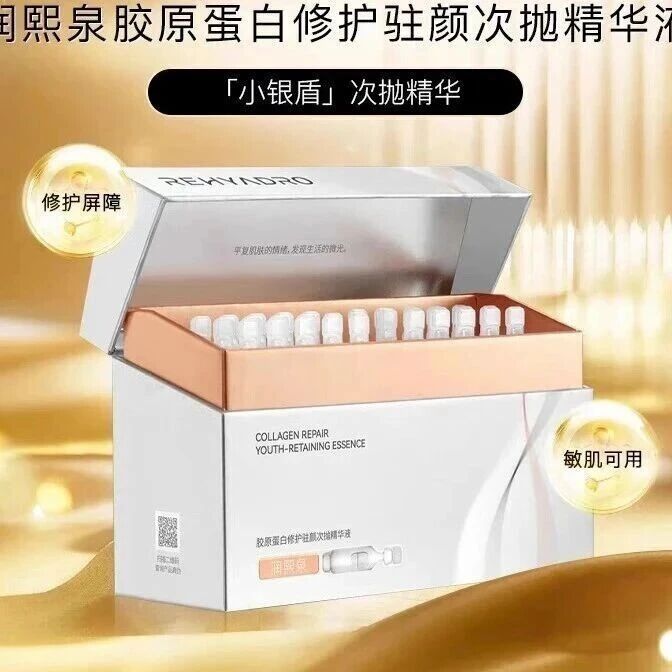
坏消息是 : 华熙生物旗下【润熙泉】,因公司内部业务调整, 以后就不做这个牌子了。 这个消息一出,直接炸了! 目前某猫旗舰店已经关闭了,某音店 内商品全撤了, 某书也没更新了。 思的延伸阅读。 洞见 (DJ00123987) ——不一样的观点,不一样的故事,2000万人订阅的微信大号。点击标题下蓝字"洞见"关注,我们将为您提供有价值、有意 年末惊喜来袭!倾听者返场福利 预约直播,抢新年好礼 一个短暂的好消息和一个永久的坏消息。 很多人的心也跟着碎掉了,它家很多宝藏产品之后再也买不到了,呜呜呜。 华熙生物大家都熟, 连国际大品牌 (雅*兰黛、资*堂、H*R、海*之谜、*蔻等) 都抢着用的供应商! 润熙泉,则是华熙生物的贵妇线,都上新闻的。 整个华熙生物好的成分、贵的成分、先进的技术, 几乎全数用在润熙泉里。 如今宣布全线停产,多少姐妹天塌了啊~因为 润熙泉的东西是真的好用。 好消息! 今天我赶紧给大家薅到了一波 闭店羊毛 ! 有需要的朋友直接买。错过这头,可能再也没有这么好用的华熙平价线了…… 润熙泉小银盾「四抗次抛」精华 规格: 1ml*30支/盒 有效期: 至202 6年10月-12月 清仓价 : 59.9 ...

2月5日中证医疗(399989)指数涨0.27%,成份股华熙生物(688363)领涨
Sou Hu Cai Jing· 2026-02-05 10:34
证券之星消息,2月5日,中证医疗(399989)指数报收于7171.29点,涨0.27%,成交225.41亿元,换手 率1.91%。当日该指数成份股中,上涨的有28家,华熙生物以4.47%的涨幅领涨,下跌的有22家,美年 健康以2.48%的跌幅领跌。 资金流向方面,中证医疗(399989)指数成份股当日主力资金净流入合计5.31亿元,游资资金净流出合 计1.07亿元,散户资金净流出合计3.9亿元。成份股资金流向详情见下表: 以上内容为证券之星据公开信息整理,由AI算法生成(网信算备310104345710301240019号),不构成 投资建议。 中证医疗(399989)指数十大成份股详情如下: ...

医疗美容板块2月5日涨3.93%,华熙生物领涨,主力资金净流入1.72亿元
Sou Hu Cai Jing· 2026-02-05 09:14
Core Viewpoint - The medical beauty sector experienced a significant increase of 3.93% on February 5, with Huaxi Biological leading the gains [1] Market Performance - The Shanghai Composite Index closed at 4075.92, down by 0.64% [1] - The Shenzhen Component Index closed at 13952.71, down by 1.44% [1] Capital Flow - The medical beauty sector saw a net inflow of 172 million yuan from main funds, while retail investors experienced a net outflow of 126 million yuan [1] - Speculative funds had a net outflow of 46.41 million yuan [1]
A股低开低走,缩量震荡:大消费逆势走强,两市成交超2.1万亿元
Xin Lang Cai Jing· 2026-02-05 07:33
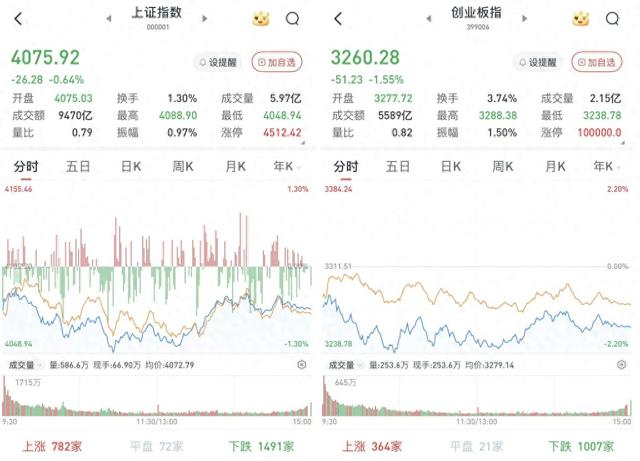
Market Overview - The A-share market experienced a significant decline on February 5, with all three major indices opening sharply lower and showing slight recovery in the afternoon [2] - The Shanghai Composite Index fell by 0.64% to 4075.92 points, the ChiNext Index dropped by 1.55% to 3260.28 points, and the Shenzhen Component Index decreased by 1.44% to 13952.71 points [2] Stock Performance - A total of 1616 stocks rose while 3715 stocks fell across the two exchanges and the Beijing Stock Exchange, with a total trading volume of 21,762 billion yuan, down from 24,809 billion yuan in the previous trading day [3] - In terms of individual stock performance, 59 stocks saw gains of over 9%, while 42 stocks experienced declines of over 9% [4] Sector Analysis - Bank stocks showed resilience, with notable gains including Xiamen Bank reaching the daily limit, and Chongqing Bank and Shanghai Bank rising over 4% [5] - The beauty and personal care sector also performed well, with companies like Lafang Home and Dengkang Dental hitting the daily limit [5] - Conversely, the gold and precious metals sector faced significant declines due to a sharp drop in international gold prices, with several stocks hitting the daily limit down [5] Market Sentiment and Future Outlook - Analysts suggest that the A-share market is currently in a phase of repair and fluctuation, with limited potential for a new sustained trend due to recent adjustments and the upcoming Spring Festival [7] - The first quarter is expected to show the effects of growth-stabilizing policies, with liquidity remaining relatively loose [7] - Concerns over tightening U.S. dollar liquidity and rising market volatility are noted, with a warning of increased investment risks [8] - The upcoming Spring Festival is anticipated to influence consumer demand positively, potentially leading to a more stable market outlook [8]
震荡市方显消费价值!段永平调仓买入茅台,消费ETF(159928)涨近1%冲击三连阳!港股通消费ETF汇添富(159268)涨超2%!
Xin Lang Cai Jing· 2026-02-05 02:20
Core Viewpoint - The consumer sector is experiencing a strong performance, particularly in the context of the Hong Kong Stock Connect Consumer ETF, which has seen significant inflows and notable gains in key stocks [1][5]. Group 1: Market Performance - The Hong Kong Stock Connect Consumer ETF (159268) has surged over 2%, with net inflows exceeding 46 million yuan over the past five days [1]. - Key stocks within the ETF include Baisheng China, which rose over 7%, and other notable performers like Giant Bio and Pop Mart, which increased by over 6% and 4% respectively [3][4]. Group 2: Company Earnings - Baisheng China reported a total revenue of $11.797 billion for the fiscal year 2025, marking a 4% year-on-year increase, with a net profit of $929 million, up 2% [3]. - In Q4 alone, Baisheng China achieved a revenue of $2.823 billion, reflecting a 9% increase year-on-year, and a net profit of $140 million, which is a 22% growth [3]. Group 3: Consumer Sector Insights - The consumer sector is showing a divergence in performance, with essential consumption industries experiencing a recovery while discretionary consumption faces challenges [8]. - The valuation of the consumer sector remains attractive, with the PE historical percentile for A-share food and beverage at 17%, indicating a slight increase from the previous month [9]. Group 4: Investment Trends - There is a notable shift in investment strategies, with international capital increasing its exposure to Chinese markets, particularly in consumer sectors [12]. - The report suggests focusing on leading brands in the liquor sector and those with improving fundamentals and dividend yields, such as dairy products and beer [14].





2026年开年之际促消费政策频发,消费ETF嘉实(512600)获资金关注
Xin Lang Cai Jing· 2026-02-05 02:20
Group 1 - The core viewpoint is that the consumer sector is expected to benefit from a series of consumption promotion policies in 2026, focusing on encouraging new business models rather than traditional stimulus methods [1] - The main consumption index increased by 0.86% as of 09:53 on February 5, 2026, with significant gains from companies like Beitaini (up 8.74%) and Huaxi Biological (up 6.62%) [1] - New economic models such as performance economy, cruise economy, and ice and snow economy are anticipated to receive policy support, creating structural investment opportunities in the consumer industry [1] Group 2 - The top ten weighted stocks in the main consumption index account for 67.37%, with leading companies including Kweichow Moutai and Wuliangye [1] - The consumption ETF managed by Harvest (512600) tracks the main consumption index, which includes major consumer leaders across various sectors, with over 38% weight in the liquor industry [2] - Investors can also access the consumption recovery trend through the consumption ETF linked fund (009180) [3]
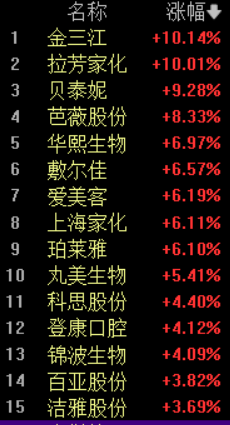
美容护理板块逆势拉升,拉芳家化涨停,贝泰妮涨超9%
Jin Rong Jie· 2026-02-05 02:19
Group 1 - The beauty care sector is experiencing a surge, with companies like Lafang Jiahua hitting the daily limit up, Jin Sanjiang rising over 10%, and others like Beitaini and Babi shares also showing significant gains [1][2] - Men's skincare products are becoming increasingly popular among Generation Z, with brands like C Coffee and Gu Yu seeing sales growth of 1900% and 1000% respectively during the recent holiday season [1] - Shanghai is focusing on consumer upgrades and market innovation, with plans to enhance domestic brands and improve inbound consumer services by 2026 [2][3] Group 2 - The beauty raw materials sector is witnessing a rapid increase in demand for specialized ingredients tailored to Chinese skin types, benefiting companies with core R&D capabilities [4] - Domestic beauty brands are gaining recognition and are expected to continue growing, especially those with innovative products and multi-channel operations [4] - The demand for cosmetic testing services is rising due to stricter regulations and consumer focus on product efficacy, creating opportunities for companies with advanced technical capabilities [5] Group 3 - Lafang Jiahua is a well-established beauty company focusing on hair care and skincare, actively pursuing brand rejuvenation and increasing R&D investments [6] - Huaxi Biological is a leading biotech firm specializing in hyaluronic acid, benefiting from the trend of domestic raw material production and industry upgrades [6] - Porlaia is a top domestic beauty brand known for effective skincare products, expected to increase R&D investments and expand its market leadership [6] - Beitaini specializes in sensitive skin care and has gained market recognition through collaborations with dermatological institutions, poised to benefit from the growing efficacy skincare market [6]


万元童颜针降至999元
第一财经· 2026-02-04 14:15
Core Viewpoint - The era of upstream medical beauty supply chain manufacturers relying solely on price control to maintain high profits may be coming to an end, indicating a significant shift in the industry's development logic [2][4]. Group 1: Industry Dynamics - New Oxygen has reached cooperation agreements with 14 upstream manufacturers, including major players like Allergan and Huaxi Biological, marking a pause in the pricing power battle that dominated the previous year [3]. - The medical beauty industry is experiencing a restructuring of power dynamics between upstream and downstream players, suggesting a transformation in the overall industry landscape [4]. Group 2: Pricing Strategies - New Oxygen's founder, Jin Xing, aims to lower the prices of medical beauty projects, citing high operational costs and supplier pricing as key factors for the inflated prices in China compared to countries like South Korea [6]. - The introduction of the "Miracle Tongyan 1.0" project by New Oxygen, priced at 4,999 yuan per unit, significantly undercuts the traditional market price of over 10,000 yuan, leading to backlash from suppliers [6][7]. - The pricing strategy continued to evolve with the launch of "Miracle Tongyan 3.0," which further reduced the price to 2,999 yuan, setting a new low in the industry [7]. Group 3: Supplier Relationships - Despite previous conflicts, some suppliers have reconciled with New Oxygen, indicating a shift in relationships as the market dynamics change [9]. - New Oxygen's purchasing power has increased, allowing it to negotiate better prices with suppliers, as it has established a significant presence with 50 stores across 16 cities by the end of 2025 [11]. Group 4: Market Supply and Demand - The balance of pricing power is shifting towards buyers, with an increase in the number of suppliers and products available, leading to a more competitive market environment [11][14]. - The regulatory environment is improving, with a significant increase in the number of medical beauty device registrations, which is expected to further enhance supply [13]. Group 5: Future Outlook - The medical beauty industry is transitioning from a phase of rapid, unregulated growth to a more structured and value-focused era, emphasizing the importance of quality over price competition [14][16]. - New Oxygen faces challenges in maintaining its scale while achieving profitability and balancing relationships with suppliers, which will be crucial for its successful transformation [15].


万元童颜针降至999元背后 :供需反转,医美企业向供应商要回定价权
Xin Lang Cai Jing· 2026-02-04 13:51
Core Viewpoint - The era where upstream medical beauty supply chain manufacturers rely solely on price control to maintain high profits may be coming to an end, as evidenced by recent collaborations between New Oxygen and 14 upstream manufacturers, including major players like Sota, Allergan, Aimeike, Huaxi Biology, Jinbo Biology, and Sihuan Pharmaceutical [1] Group 1 - New Oxygen has reached agreements with 14 upstream manufacturers, indicating a shift in the dynamics of the medical beauty industry [1] - Previous conflicts over pricing between New Oxygen and several suppliers, which even led to supply disruptions, appear to have been temporarily resolved with these new partnerships [1] - Industry insiders believe that this collaboration reflects a restructuring of power between upstream and downstream players in the medical beauty sector, signaling a significant change in the industry's development logic [1]