索菲亚

Search documents
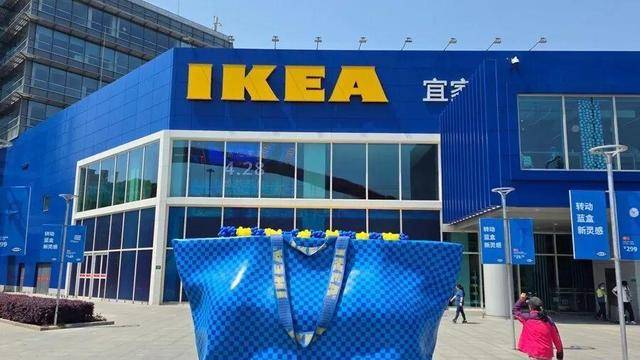
宜家的撤退,与一代人“家”想象的终结
3 6 Ke· 2026-01-14 10:51
Core Insights - IKEA is closing seven stores in China, marking a significant shift away from its traditional large store model, reflecting changes in consumer behavior and market dynamics [1][2][10] - The company's sales in China have declined by 7.6% year-on-year for the fiscal year 2024, with a nearly 30% drop from its peak sales of 15.77 billion yuan in 2019 [2][10] - The global retail revenue for IKEA decreased by 1% to 44.6 billion euros, with operating profit dropping over 25% [2] Group 1: Strategic Shift and Market Dynamics - The closure of stores represents not just a business model optimization but a collective shift in consumer expectations towards personalized and functional home solutions [2][3] - The rise of local brands has reshaped the competitive landscape, with companies like Lin's Home and Source Wood focusing on personalized services and efficient supply chains, often offering products at 60%-70% of IKEA's prices [5][6] - The changing consumer landscape is driven by the Z generation, who prefer online shopping and personalized experiences over traditional retail formats [4][10] Group 2: New Consumer Behavior and Digital Ecosystem - Consumers are increasingly seeking unique and personalized home solutions, moving away from standardized offerings [4][11] - The digital ecosystem plays a crucial role in shaping consumer decisions, with platforms like Xiaohongshu and Taobao facilitating inspiration and transactions [7][8] - The integration of AI tools in design and the establishment of socialized installation networks are enhancing the overall consumer experience, making it easier to realize home aspirations [8][9] Group 3: Future Competitive Landscape - The future of home furnishing will depend on understanding diverse consumer needs, creating seamless online-offline service networks, and adding meaningful value beyond basic functionality [11][12] - Policies promoting home renovation and smart products are expected to provide opportunities for companies focusing on the existing housing market [11] - The closure of IKEA stores signifies a broader societal shift where consumers are taking control of their home narratives, moving from passive recipients to active participants in defining their living spaces [12]
渤海证券研究所晨会纪要(2026.01.13)-20260113
BOHAI SECURITIES· 2026-01-13 04:05
Group 1: Fund Research - The equity market saw all major indices rise, with the highest increase being 9.80% for the Sci-Tech 50 index during the week of January 5 to January 9, 2026 [2] - The average return for equity funds was 4.66%, with a positive return ratio of 98.63%, while fixed income plus funds averaged a 0.90% increase with a positive return ratio of 93.57% [3] - The ETF market experienced a net outflow of 57.215 billion yuan, with bond ETFs seeing the largest outflow of 66.431 billion yuan [3] Group 2: Industry Research - The U.S. Supreme Court has not yet announced a ruling on the Trump tariff case, which is being closely monitored, while the U.S. has postponed the tariff increase on certain imported furniture products [5] - The light industry manufacturing sector outperformed the CSI 300 index by 0.19 percentage points, while the textile and apparel sector underperformed by 0.13 percentage points during the same period [6] - China's emotional consumption market is projected to grow from 1.63 trillion yuan in 2022 to over 4.5 trillion yuan by 2029, indicating strong growth potential in sectors like trendy toys, pet consumption, and domestic fashion [7]
宜家将连关七店,山东门店逆势求变
Xin Lang Cai Jing· 2026-01-12 22:06
Core Insights - IKEA's recent decision to close stores in China marks its largest consolidation in 28 years, reflecting broader challenges in the home furnishing industry driven by real estate market fluctuations [1] - The home furnishing sector is experiencing significant difficulties, with only 11 out of 26 listed companies expected to be profitable in the first half of 2025, while 15 companies are projected to incur losses [1][2] - The industry is shifting from a focus on volume expansion to quality upgrades, with a growing emphasis on localized renovations and incremental improvements rather than large-scale new home purchases [3] Industry Trends - The home furnishing retail market has been heavily reliant on the real estate cycle, with past growth closely tied to new home deliveries, which are now declining [2] - Price wars are intensifying as brands adopt strategies to exchange price for volume, leading to a contraction in store sizes and a reshaping of the industry landscape [2] - The market is witnessing a transition where demand is not disappearing but evolving towards smaller, phased renovations and targeted upgrades [3] Regional Performance - In contrast to the overall market, IKEA's performance in Shandong remains strong, with the Jinan store recognized for its stability and operational efficiency [4][5] - The Shandong market benefits from a mature logistics system and favorable business environment, allowing for quicker delivery times compared to other regions [5] - Consumer behavior in Shandong is shifting towards renovation of older homes, with estimates suggesting that by 2025, over 70% of the renovation market will be driven by secondary renovations [5] Strategic Adjustments - Home furnishing retailers are increasingly positioning themselves as service providers rather than just product sellers, introducing design centers and service modules to enhance customer engagement [6] - The shift in consumer decision-making processes is prompting retailers to rethink their revenue models, emphasizing service quality as a critical performance indicator [6] - IKEA's store closures serve as a warning for the industry to adapt to the changing landscape post-real estate boom, highlighting the need for ongoing adjustments [6]
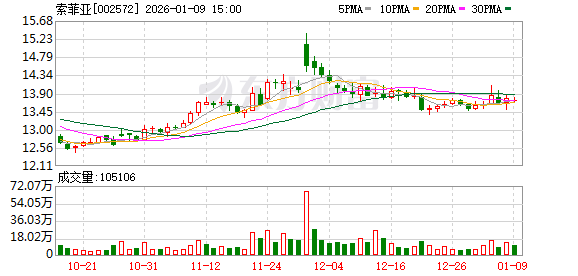
索菲亚:公司始终围绕消费者需求,持续构建自身的产品与服务优势
Zheng Quan Ri Bao Zhi Sheng· 2026-01-09 13:16
Core Viewpoint - The company emphasizes its commitment to consumer needs and aims to enhance its product and service advantages through various strategies [1] Group 1: Product and Service Advantages - The company leads the industry with its environmentally friendly standards centered around the Kangchun board, which has formaldehyde emissions significantly lower than the ENF-level new national standard and has received multiple international certifications [1] - Leveraging 40 years of customization experience and international design resources, the company offers diverse styles, personalized customization solutions, and efficient design services [1] - The company has established a 4.0 smart manufacturing factory and eight major bases nationwide, achieving a short delivery cycle of 7-12 days and transparent production services [1] - A multi-brand matrix allows the company to accurately cover different consumer tiers and niche markets, creating category synergy advantages [1] Group 2: Future Focus - The company plans to continue focusing on environmental upgrades, design innovation, and manufacturing efficiency improvements to strengthen and enhance product competitiveness [1]

索菲亚:公司持续进行数智化系统研发升级与变革
Zheng Quan Ri Bao· 2026-01-09 13:12
Core Viewpoint - The company is actively engaged in the continuous development and transformation of its digital intelligence systems, leveraging advanced technologies to enhance operational efficiency and consumer experience [2] Group 1: Digital Transformation - The company has been focusing on the research and development of digital intelligence systems [2] - Upgrades and transformations are being implemented across design software, digital operation platforms, and service systems [2] - The aim is to improve work efficiency and accuracy while meeting personalized service demands of consumers [2]

家具集团化多品牌运营,如何避免“系统越多越混乱”?
Sou Hu Cai Jing· 2026-01-09 11:40
Core Insights - The home furnishing industry is entering a phase of stock competition, prompting many furniture companies to adopt a multi-brand strategy to seek new growth opportunities [1] - Multi-brand operations are complex and require a systematic approach involving product positioning, channel strategy, supply chain coordination, and organizational management [1] Group 1: Challenges of Multi-Brand Operations - Different sub-brands target distinct customer segments and employ varied operational models, leading to significant operational logic divergence [2] - High-end brands emphasize design services and high price points, while mass-market brands focus on standardization and quick turnover [2] - Independent system deployment for each brand can result in data silos, high operational costs, and difficulties in cross-brand collaboration [3] Group 2: Key Solutions for Multi-Brand Strategy - A smart system architecture must be "configurable, isolated, and collaborative" to support multi-brand strategies effectively [5] - Business logic should be configurable without coding, allowing for tailored pricing, discount permissions, and approval processes for different brands [5] - Data and permissions must be strongly isolated within a single system to prevent information leakage and internal competition [6] - Supply chain and financial operations should be centralized yet allow for brand-specific accounting, enabling cost-sharing and efficient resource utilization [7] Group 3: Practical Case Study - A listed custom home furnishing company operates three brands with varying price points and sales strategies [8] - The implementation of a unified smart operation platform led to a 40% reduction in IT operational costs, a 50% decrease in new product launch cycles, and a 25% increase in overall workforce efficiency [9] Group 4: Future Trends - The industry is moving towards a "one inventory" intelligent collaboration model, focusing on cross-brand customer value extraction [10] - The new generation of home furnishing ERP systems will require capabilities for full customer ID integration, cross-brand marketing automation, and intelligent recommendation engines [10] - Successful multi-brand strategies rely heavily on operational excellence and a robust digital foundation to avoid fragmentation [10] Group 5: Industry Solutions - Shufu Software has over 20 years of experience in the home furnishing industry, providing integrated platforms designed for multi-brand groups [12] - Their solutions support independent brand operations while enabling centralized control, facilitating end-to-end collaboration from design to delivery [12] - The company has assisted leading enterprises in achieving efficient operations through a unified system that accommodates multiple brands [12]
广州:加快建设先进制造业强市,到2035年工业增加值翻一番
Sou Hu Cai Jing· 2026-01-08 11:04
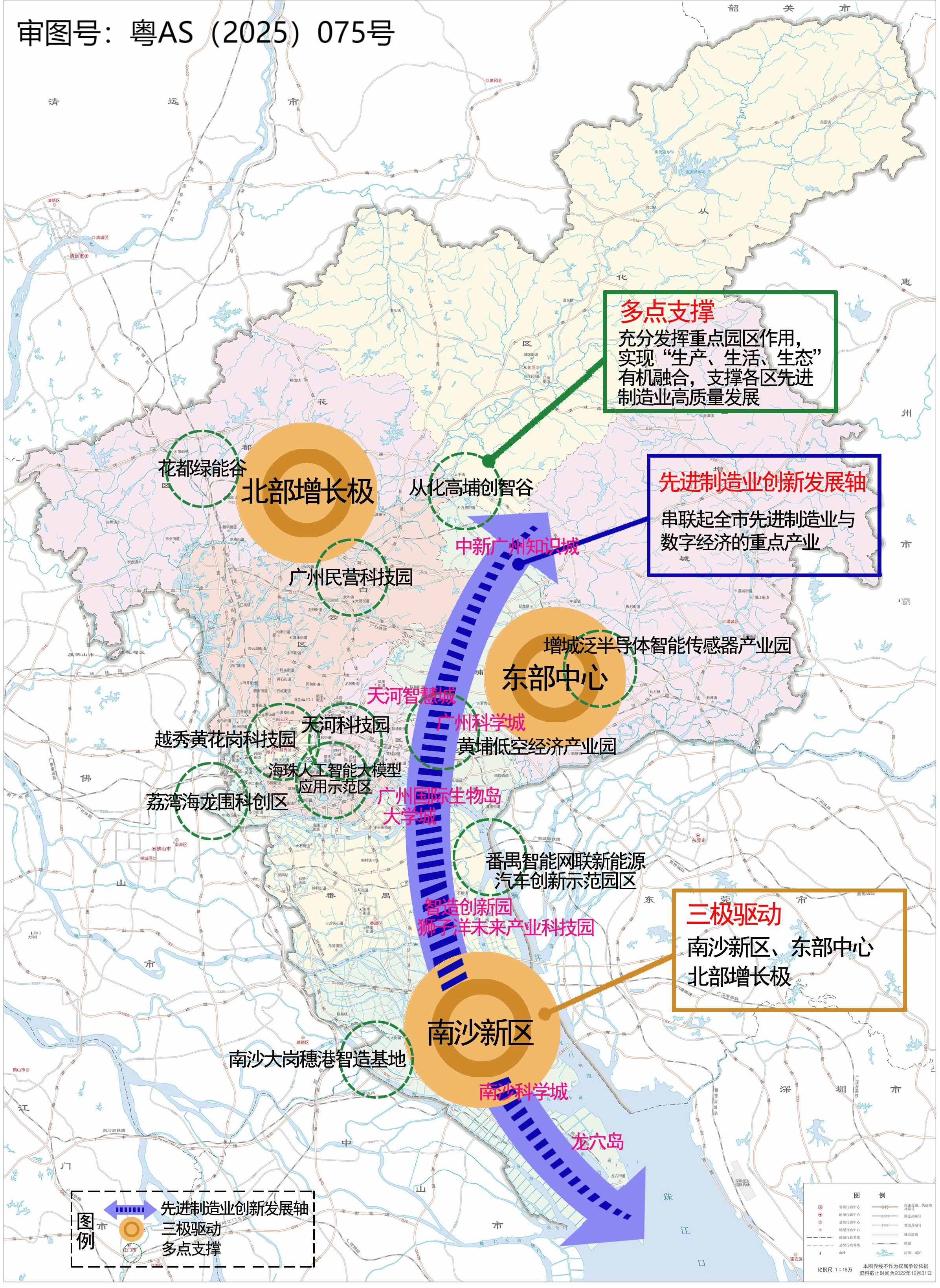
Core Viewpoint - Guangzhou aims to accelerate the construction of an advanced manufacturing city by 2035, targeting a doubling of industrial added value and focusing on the "12218" modern industrial system, integrating advanced manufacturing with modern services, and promoting digital and green transformations [2][14]. Group 1: Key Industrial Directions - The plan emphasizes the development of 15 strategic industrial clusters and six emerging pillar industries, including smart connected new energy vehicles, ultra-high-definition video and new displays, biomedicine and health, green petrochemicals and new materials, software and the internet, and intelligent equipment and robotics [2][38]. - Five strategic leading industries will be cultivated, including artificial intelligence, semiconductors and integrated circuits, new energy and new energy storage, low-altitude economy and aerospace, and biomanufacturing [3][38]. - Four characteristic advantageous industries will be strengthened, such as fashion consumer goods, rail transit, shipbuilding and marine engineering, and intelligent construction and industrialized buildings [4][38]. Group 2: Implementation Strategies - The plan outlines five major projects: industrial agglomeration, industrial innovation, intelligent manufacturing traction, integrated development, and supply chain optimization [14][34]. - Six action plans are proposed, including structural optimization, investment leap, talent attraction and cultivation, digital empowerment, spatial innovation, and element guarantee [14][34]. Group 3: Development Foundations - Guangzhou has a solid manufacturing base, being the most complete industrial city in South China, with significant advantages in technological innovation, green development, and international cooperation [19]. - The city ranks 8th globally in the "Nature Index - Research Cities" and has a robust innovation ecosystem, including numerous national and provincial manufacturing innovation centers [20][27]. Group 4: Opportunities and Challenges - The plan identifies major opportunities from national strategies, such as the manufacturing power strategy and the development of the Guangdong-Hong Kong-Macao Greater Bay Area, which enhances Guangzhou's role as a manufacturing hub [24][18]. - Challenges include the pressure from global economic downturns, the need for industrial upgrades, and competition from other metropolitan areas [28][29]. Group 5: Future Goals - By 2030, the advanced manufacturing city construction is expected to reach significant milestones, with a focus on optimizing industrial structure and enhancing quality and efficiency [36]. - By 2035, Guangzhou aims to solidify its status as an advanced manufacturing city, achieving breakthroughs in key technologies and maintaining a leading position in the global value chain [36][38].
造纸轻工周报 2025/12/29-2026/01/03:智能眼镜首次纳入国补;关注造纸策略、京东工业、伟易达深度报告-20260108
Shenwan Hongyuan Securities· 2026-01-08 07:05
Investment Rating - The report indicates a positive investment outlook for the smart glasses and smart home sectors, as well as for the paper industry, personal care, pet products, and export-oriented companies [5][6][8]. Core Insights - The report highlights the implementation of a large-scale equipment update and a consumption upgrade policy for smart glasses and smart home products, which is expected to accelerate market penetration and benefit quality suppliers [6][7]. - The paper industry is projected to see a supply-demand improvement, with a focus on the potential impact of anti-involution policies and marginal demand changes contributing to cyclical elasticity [8][9]. - The personal care sector is recommended for bottom-fishing opportunities, with specific companies identified for their growth potential [11]. - The pet products sector is noted for its growth trajectory and global expansion, with strong recommendations for specific companies [13]. - The export market is expected to benefit from a potential U.S. interest rate cut, which may stimulate furniture consumption and enhance the competitive landscape for Chinese companies [14][15]. Summary by Sections Smart Glasses and Smart Home - The introduction of subsidies for smart glasses is expected to lower consumer costs and enhance market penetration, with major manufacturers launching new AI glasses products [6][7]. - Smart home products are also included in the subsidy program, with various categories expected to benefit from consumer incentives [7]. Paper Industry - The report outlines a new investment strategy for the paper industry, emphasizing the integration of wood pulp and paper production, with a focus on improving supply-demand dynamics [8][9]. - Specific segments such as cultural paper and boxboard are highlighted for their unique supply-demand characteristics, with recommendations for companies that exhibit strong performance in these areas [10]. Personal Care - Companies like Baiya, Dengkang Oral Care, and Zhongshun Jierou are identified as key players in the personal care sector, with strategies focused on national expansion and product upgrades [11][12]. Pet Products - The report emphasizes the growth potential in the pet products sector, recommending companies like Yiyi and Yuanfei Pet for their strong domestic and international performance [13]. Export Market - The report notes that U.S. interest rate cuts could boost furniture consumption, with a focus on companies like Xiangxin Home, Yongyi, and Jiayi for their export capabilities [14][15]. High Dividend Safety Margin Assets - The report identifies several companies in the packaging and home furnishing sectors with stable dividend yields and strong market positions, including Yongxin, Yutong Technology, and Huawang Technology [18][19][20].


造纸轻工周报:智能眼镜首次纳入国补,关注造纸策略、京东工业、伟易达深度报告-20260108
Shenwan Hongyuan Securities· 2026-01-08 06:42
Key Insights - The report highlights the implementation of a large-scale equipment update and consumer product replacement policy in 2026, focusing on smart glasses and smart home products [5][6] - The paper industry is expected to see a trend of supply-demand improvement, with a focus on the potential impact of anti-involution policies and marginal demand changes [8][10] - The personal care sector is recommended for bottom-fishing investments, with specific attention to companies like Baiya, Dengkang Oral Care, and Zhongshun Jierou [12][13] - The pet products sector is positioned for growth, with recommendations for Yiyi and Yuanfei Pet, emphasizing their global expansion and rapid development of domestic brands [14] - Export dynamics are influenced by short-term currency fluctuations and long-term expectations of US interest rate cuts boosting furniture consumption, with a focus on quality export stocks [15][16] - High dividend safety margin assets are highlighted, particularly in the packaging and home furnishing sectors, with companies like Yongxin, Yutong, and Kuka Home being noted for their stability [19][24] Industry Insights - Smart Glasses: The inclusion of smart glasses in national subsidies is expected to accelerate industry penetration, with a subsidy of 15% on products priced under 6000 yuan [6][7] - Paper Industry: The new investment strategy emphasizes integrated forest-pulp-paper operations, with a focus on cost support for paper prices and gradual supply-demand improvements [10][11] - Personal Care: Companies are focusing on product structure upgrades and national expansion, with a strong emphasis on profitability recovery [12][13] - Pet Products: The sector is experiencing robust growth, with companies like Yiyi and Yuanfei Pet capitalizing on both domestic and international markets [14] - Export Sector: The report notes a shift towards global operations for Chinese companies, with a focus on design and supply chain advantages [15][16] - Home Furnishing: The industry is expected to benefit from improved real estate policies, with a focus on high dividend companies as a safe investment [24][25]
财经观察丨一次性宣布关掉7家商场,宜家“断舍离”剑指战略调整
Sou Hu Cai Jing· 2026-01-08 05:15
Core Viewpoint - IKEA China has announced the closure of seven stores as part of a strategic transformation aimed at optimizing costs, improving efficiency, and reallocating resources, while maintaining operations in other stores and online channels [3][5][10]. Group 1: Store Closures - On January 7, IKEA China confirmed the closure of seven stores, including locations in Shanghai, Guangzhou, Tianjin, and others, effective February 2, 2026 [3][5]. - This marks a significant shift from previous years where closures were limited to one or two stores at a time, indicating a more aggressive approach to store management [7][10]. - The closures are part of a broader strategy to address market saturation in certain areas and to focus on enhancing the customer experience through other existing stores and online services [5][11]. Group 2: Strategic Transformation - IKEA's decision to close these stores is described as a proactive transformation rather than a response to poor performance, emphasizing a comprehensive review of its channel mix and service capabilities [5][8]. - The company aims to build a more resilient foundation for future growth by focusing on local relevance and providing affordable home products and solutions [5][14]. - IKEA is transitioning from a traditional retail model to a more flexible approach, including the introduction of smaller store formats and digital channels to better meet consumer needs [10][11]. Group 3: Market Context - The closures come amid increasing competition from local brands that offer more tailored designs and competitive pricing, challenging IKEA's standardized product offerings [11][14]. - The shift in consumer behavior towards omnichannel shopping experiences has prompted IKEA to adapt its business model, moving away from reliance on large stores [11][14]. - The company is also investing in digital transformation and automation to enhance operational efficiency and customer engagement [14].