全渠道战略

Search documents
恒安国际(01044) - 2025 H2 - 电话会议演示
2026-03-17 04:00
ANNUAL RESULTS 2025 Corporate Presentation March 2026 AGENDA Open Forum Financial Highlights Financial Highlights Business Review Outlook Priorities and Opportunities Near Term ◼ Hygiene Products Further consolidate leading position by expanding market share of upgrade and premium products and enhancing omni- channel layout ◼ Tissue Paper Revenue growth and market share expansion driven by product upgrade and premiumisation, and stable pricing strategy Capture the opportunities of industry consolidation Mid ...
Build-A-Bear Workshop(BBW) - 2026 Q4 - Earnings Call Transcript
2026-03-12 14:02
Financial Data and Key Metrics Changes - Total revenues for Q4 2025 were $154.5 million, an increase of 2.7% year-over-year, with full-year revenues reaching $529.8 million, up 6.7% from the previous year [20][24] - Pre-tax income for Q4 was $21.5 million, down from $27.5 million last year, impacted by approximately $6 million in tariffs and related costs [23] - Earnings per share for the full year were $3.99, representing a 5% growth, although tariffs reduced EPS by approximately $0.65 [24] Business Line Data and Key Metrics Changes - Net retail sales for Q4 were $139.5 million, essentially flat compared to last year, while e-commerce demand decreased by 13.6% for the quarter [20][22] - Commercial revenue, reflecting wholesale sales, increased by 42.2% for the quarter and 23.4% for the year, indicating strong growth in this segment [22] Market Data and Key Metrics Changes - The company expanded its international footprint significantly, entering eight new countries in 2025, doubling its international presence to 36 countries in two years [7][11] - The U.S. market saw continued expansion with new store openings, including co-branded locations with Hello Kitty [9][10] Company Strategy and Development Direction - The company focuses on three strategic initiatives: expanding experiential retail locations, advancing digital transformation, and leveraging brand equity for new revenue streams [6][11] - Plans for 2026 include opening at least 50 net new locations, primarily in the partner-operated model, to support international growth [10][25] Management's Comments on Operating Environment and Future Outlook - Management expressed confidence in the company's resilience despite challenges from tariffs and supply chain disruptions, highlighting a record revenue year and ongoing strategic initiatives [4][16] - The outlook for 2026 anticipates mid-single-digit revenue growth, with pre-tax income expected to range from a decline to low single-digit growth due to tariff impacts [25][26] Other Important Information - The CEO announced retirement plans, with the COO set to take over, emphasizing a planned succession process [3][29] - The company has successfully launched new products, such as Mini Beans, which have generated significant sales and expanded distribution [14][15] Q&A Session Summary Question: Discussion on personalization and expansion - Management acknowledged the importance of in-store personalization and customization, with plans to expand these offerings in key markets [49][50] Question: Inventory management and tariff impacts - The CFO discussed elevated inventory levels due to tariffs and ongoing investments to support growth, emphasizing proactive management strategies [51][52] Question: Long-term investments and digital business - Management confirmed ongoing strategic investments in digital capabilities and infrastructure to support future growth, despite short-term impacts [57][58] Question: International expansion and new partners - The COO detailed recent international expansions and the strategy to open new locations in both existing and new markets [61][62] Question: Pre-tax margin guidance - The CFO explained the expected impact of tariffs and investments on pre-tax margins, indicating a cautious outlook for the upcoming year [65][66]

Freshpet(FRPT) - 2025 Q4 - Earnings Call Transcript
2026-02-23 14:00
Financial Data and Key Metrics Changes - In Q4 2025, net sales were $285.2 million, an increase of 8.6% year-over-year, primarily driven by volume growth of 9.7% [17][31] - For the full year 2025, net sales reached $1.102 billion, up 13% year-over-year, with volume contributing 12% growth [18][33] - Adjusted gross margin for Q4 was 48.4%, compared to 48.1% in the prior year, while full year adjusted gross margin was 46.7%, up 20 basis points year-over-year [18][34] - Adjusted EBITDA for Q4 was $61.2 million, a 16% increase year-over-year, and for the full year, it was $195.7 million, up 21% [18][36] - The company ended the year with cash on hand of $278 million and was free cash flow positive [37] Business Line Data and Key Metrics Changes - The e-commerce business grew nearly 40% last year, now accounting for 14% of total business [8][14] - The company expanded its distribution network significantly, with products now in 30,235 stores, 24% of which have multiple fridges [19][20] - The company achieved its best year in over a decade for new store growth, largely driven by club expansion [13][19] Market Data and Key Metrics Changes - The total addressable market for Freshpet has grown to 36 million households, up from 33 million [9] - The company has increased its market share in the US dog food category to 4.0% [19] Company Strategy and Development Direction - The company is focusing on building an omni-channel presence, leveraging its brand equity and manufacturing capabilities to meet consumer demands across various channels [10][51] - Freshpet aims to enhance its competitive advantages through investments in new manufacturing technologies and expanding its fridge network [10][16] - The company plans to rebalance its media mix to be more diversified and digital-forward, targeting Millennials and Gen Z consumers [12] Management's Comments on Operating Environment and Future Outlook - Management acknowledged the challenges faced in 2025 but emphasized the lessons learned that have strengthened the company for future growth [5] - The company expects net sales growth of 7% to 10% for 2026, with adjusted EBITDA projected between $205 million and $215 million [23][40] - Management remains optimistic about the growth potential despite macroeconomic headwinds, citing early signs of improvement in household penetration and buying rates [64] Other Important Information - The company received $95.5 million from the sale of Ollie, a DTC dog food brand, which has strengthened its financial position [29] - Freshpet is evaluating its capital allocation strategy to accelerate growth and improve margins [29] Q&A Session Summary Question: Can you elaborate on the implied uptick in EBITDA margins for 2027? - Management indicated multiple pathways to achieve 2027 EBITDA margin targets, including improvements in gross margin and net sales growth [44][45] Question: What insights were gained from the investment in Ollie? - The investment provided valuable insights into the DTC market, leading to a focus on building an omni-channel business [49][50] Question: What are the key drivers for consumption growth in 2026? - Management ranked advertising effectiveness, distribution growth, and affordability initiatives as primary drivers for consumption growth [58][61]

东方甄选:FY2026H1点评报告:迎来新拐点,优质渠道品牌再出发-20260201
ZHESHANG SECURITIES· 2026-02-01 07:45
Investment Rating - The investment rating for the company is "Buy" [8] Core Insights - The company has experienced a turnaround in operations, with significant growth in product and channel expansion since the appointment of the new CEO in December 2025 [1][3] - For FY2026H1, the company reported revenue of 2.3 billion yuan, a year-on-year increase of 5.7%, and a 17% increase when adjusted for previous consolidation effects [1][18] - The gross merchandise volume (GMV) for FY2026H1 reached 4.1 billion yuan, with a 16.4% year-on-year increase after adjusting for previous consolidation effects [1][18] - The company's self-operated products generated a GMV of 2.16 billion yuan, reflecting a 22% year-on-year growth and accounting for 52.8% of total sales, marking it as the core growth driver [1][18] Summary by Sections FY2026H1 Financial Report: Self-Operation as Core Driver, Significant Improvement in Profitability - The gross margin for FY2026H1 was 36.4%, an increase of 2.8 percentage points, primarily due to high-margin self-operated products [2][18] - The non-GAAP net profit for FY2026H1 reached 260 million yuan, with a profit margin of 6.3% compared to 0.0% and 4.5% in FY2025H1 and H2 respectively, indicating continued improvement in profitability [2][18] High-Frequency Updates: Momentum Upward, Frequent Self-Operated Bestsellers - The company has over 800 self-operated products and plans to exceed 1,000 SKUs, entering a rapid iteration testing phase [4][19] - The company has successfully developed popular products such as probiotics and soft candies, with recent launches like dried apples and five-red powder also performing well [4][20] Accelerating Multi-Channel Strategy Implementation, Supporting Brand Momentum - The company is transitioning from a reliance on live-streaming sales to a focus on high-quality products, with significant sales through Douyin and its app [5][19] - The app sales GMV for FY2026H1 reached 760 million yuan, a year-on-year increase of 16% [5][19] New Development Phase Gradually Realized, Growth Accelerated in January 2026 - Estimated GMV for January 2026 exceeded 1 billion yuan, with a year-on-year growth rate exceeding 30%, driven by the launch of multiple new product lines and matrix accounts [6][19] Profit Forecast and Valuation - The company is expected to accelerate self-operated product and channel expansion, with adjusted net profit forecasts for FY2026-2028 at 556 million, 669 million, and 800 million yuan respectively, corresponding to PE ratios of 45x, 38x, and 31x [7][19]
七年关十店!宜家中国“断臂求生”
Sou Hu Cai Jing· 2026-01-16 07:06
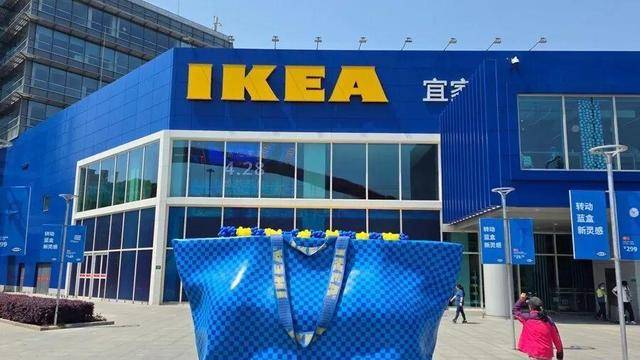
Core Viewpoint - IKEA China is set to close seven stores, marking its largest closure in nearly 30 years, indicating a significant shift in its operational strategy in the Chinese market [1][4]. Group 1: Store Closures - IKEA China will cease operations at seven stores, including locations in Shanghai and Guangzhou, effective February 2, 2026, which is its largest batch closure to date [1][4]. - The closure is part of a broader trend where IKEA's store closure strategy has evolved from single-store adjustments to batch optimizations, with a total of 10 stores closed over the past seven years [3][6]. - The closures are attributed to market saturation in certain regions and are aimed at optimizing costs and improving operational efficiency, rather than indicating an inability to operate [6]. Group 2: Financial Performance - IKEA China's sales for the fiscal year 2024 are projected to decline by 7.6% to 11.15 billion yuan, a nearly 30% decrease from its peak sales of 15.77 billion yuan in 2019 [6]. - The global operating profit for IKEA has dropped by over 25%, with the revenue share from the Chinese market slightly decreasing from 3.6% to 3.5% [6]. Group 3: Market Competition - The Chinese market is experiencing slower growth compared to India (31%) and Southeast Asia (22%), with local brands gaining popularity due to their customization options and competitive pricing [7][11]. - Consumers are increasingly favoring local brands that offer integrated services, such as design, production, and installation, which contrasts with IKEA's traditional self-service model [11][13]. Group 4: Strategic Shifts - IKEA plans to open over 10 smaller stores in cities like Beijing and Shenzhen over the next two years, focusing on high-frequency, essential home products [8]. - The company is enhancing its digital capabilities, including partnerships with platforms like JD.com for instant retail trials and improving its app for better customer experience [8][9]. - A new pricing strategy involves a 160 million yuan investment to introduce over 150 lower-priced products, with 70% of this investment focused on bestsellers [9][10]. Group 5: Challenges and Future Outlook - Despite efforts to adapt, IKEA faces challenges such as execution issues with its pricing strategy and competition from local brands that are quicker to adopt digital innovations [10][13]. - The company aims to localize its supply chain, with 80% of its value chain sourced from China, to mitigate cost fluctuations [13]. - The success of IKEA's transformation will depend on its ability to integrate into the local market and meet evolving consumer preferences [13].


圣农发展20260114
2026-01-15 01:06
Summary of Shennong Development Conference Call Company Overview - **Company**: Shennong Development - **Industry**: White feather broiler chicken industry Key Points and Arguments - **Revenue and Profit Growth**: Despite a challenging environment in the white feather broiler chicken industry, Shennong Development achieved revenue and profit growth through a multi-channel strategy and a full industry chain model. C-end revenue increased by over 30% year-on-year, while offline channel revenue grew by over 40%. The B-end export channel saw a revenue increase of over 100%, reaching 1 billion RMB [2][4]. - **Cost Reduction**: In 2025, the comprehensive breeding cost decreased by over 5 percentage points, with an annual cost of approximately 9,000 RMB. This reduction was primarily due to the full replacement of Shengd 901 Plus, which improved feed conversion ratios and survival rates, along with the application of digital and AI technologies [2][5][6]. - **Market Outlook for 2026**: Although there was a slight decline in white chicken prices at the beginning of 2026, the company maintains a cautiously optimistic outlook for the year. It is expected that there will not be significant price increases overall, but some quarters may see slight surges. The overall supply remains large, but market demand is expected to absorb the supply gap [2][7]. - **Impact of Breeding Supply Disruption**: The impact of breeding supply disruptions on commodity broiler chicks was less than anticipated. Domestic alternatives have gradually mitigated some of the effects, leading to a minimal impact on future industry price trends [2][8]. - **Future Cost Reduction Potential**: Future cost reduction opportunities are expected to come from ongoing research and development of the Shengd 903 variant and improvements in adaptability, as well as enhanced decision-making and operational efficiency through refined management and digitalization [2][9]. - **Revenue Breakdown by Channel**: The revenue is divided into three main segments: B-end, retail channels, and traditional distribution. The B-end, which includes major clients like KFC and McDonald's, accounts for nearly 50% of total revenue. The retail segment represents about 15%, while the distribution segment has decreased to 36% [2][11]. - **Export Market Performance**: Japan remains the primary export market, with Shennong Development achieving the top position in cooked chicken exports to Japan in 2025. The company has also successfully entered the Middle Eastern and Russian markets, with Russia contributing significantly to growth in 2026 [2][12]. - **Profitability and Production Metrics**: The average export price for Shengd 901 Plus remains stable at around 30 RMB, with sales slightly declining to less than 4 million sets. The parent stock performance is strong, resulting in lower costs for commodity broiler chicks [2][10]. - **Future Capital Expenditure**: Capital expenditure is expected to be modest, focusing on the construction of food processing plants in Gansu and Pucheng, with plans for new farm constructions being limited [2][18]. - **Dividend Policy**: The company plans to maintain a high dividend payout ratio, having already distributed 0.3 RMB per share in 2025 and expecting to distribute an additional 0.2 RMB [2][19]. - **Collaboration with Sun Valley**: Shennong Development plans to enhance collaboration with Sun Valley, focusing on cost control and sales synergy, aiming to position Sun Valley as a high-end sub-brand [2][20]. - **Impact of Avian Influenza on Breeding**: The current situation regarding avian influenza in France has made breeding more challenging, which is seen as a potential benefit for the industry, although the exact impact remains uncertain [2][21].

同时关闭7家商场!宜家中国转型遇挫?
3 6 Ke· 2026-01-14 10:51
Core Viewpoint - IKEA China is undergoing a strategic adjustment, announcing the closure of seven offline stores starting February 2, reflecting challenges in the retail sector and changing consumer behavior [1][3]. Group 1: Store Closures and Operations - IKEA China will stop operations at seven stores, including locations in Shanghai, Guangzhou, and Tianjin, effective February 2 [1]. - The announcement follows prior temporary closures in Xuzhou and Ningbo, with a clearance sale expected to take place before the final closure [2]. - After the closures, IKEA will have only one store remaining in Guangzhou and Tianjin, and no stores in Heilongjiang, while Jiangsu will reduce from five to three stores [2]. Group 2: Financial Performance - IKEA's parent company, Ingka Group, reported a 5.5% decline in revenue and a 46.5% drop in net profit for the 2024 fiscal year [3]. - In China, despite opening four new stores, IKEA's revenue decreased from €1.58 billion to €1.46 billion, indicating a significant decline in single-store performance [3]. Group 3: Market Trends and Consumer Behavior - The middle class in China is moving away from IKEA, perceiving its offerings as less upscale, leading to a demographic shift where older consumers frequent the stores more than younger ones [3]. - Online sales for IKEA in China accounted for 25.7% of total revenue in the 2025 fiscal year, but the brand lags behind competitors in online presence [4]. Group 4: Strategic Adjustments and Future Plans - IKEA China is focusing on transformation, emphasizing a multi-channel strategy and plans to open over ten smaller stores in key markets like Beijing and Shenzhen by 2026 [4]. - The company aims to enhance its online presence, recently launching a flagship store on JD.com, as part of its strategy to adapt to market changes [4][5].
宜家中国大调整:关闭北京、上海等地共7家门店 未来将开设超十家小型门店
Zhong Guo Jing Ying Bao· 2026-01-08 14:05
Core Viewpoint - IKEA China is adjusting its store layout by closing seven underperforming stores starting February 2, 2026, while emphasizing a shift towards smaller, community-focused stores and enhanced online services to better meet consumer needs [1][2][4]. Group 1: Store Closures and Strategy - The closure of seven stores, including locations in Shanghai, Guangzhou, and Tianjin, is part of a strategic shift rather than a retreat from the Chinese market, as IKEA will still maintain 34 physical locations and multiple digital channels [2][3]. - The closures are aimed at optimizing costs, improving efficiency, and reallocating resources to better align with consumer preferences [1][2]. - IKEA China plans to open over ten small-format stores in key markets like Beijing and Shenzhen within the next two years, marking a transition from large stores to smaller, more flexible retail formats [4][5]. Group 2: Market Trends and Consumer Behavior - The shift in strategy reflects a significant change in consumer habits, particularly among the younger generation, who prefer online browsing and immediate delivery over traditional shopping experiences [5][6]. - The average store visit frequency has dropped from 4.2 times in 2018 to an expected 1.8 times by 2025, indicating a shift towards more fragmented and immediate consumption patterns [6][7]. - The instant retail market in China is projected to reach 1 trillion yuan by 2026, highlighting the growing demand for convenience and speed in retail [6][7]. Group 3: Financial Performance - For the fiscal year 2024, IKEA China's sales are estimated at approximately 11.15 billion yuan, a decline of 7.6% from the previous year and nearly 30% lower than the peak sales of 15.77 billion yuan in fiscal year 2019 [7]. - The sales contribution of IKEA China to the Ingka Group's global retail revenue has decreased to 3.5%, underscoring the need for strategic adjustments [7][8].
财经观察丨一次性宣布关掉7家商场,宜家“断舍离”剑指战略调整
Sou Hu Cai Jing· 2026-01-08 05:15
Core Viewpoint - IKEA China has announced the closure of seven stores as part of a strategic transformation aimed at optimizing costs, improving efficiency, and reallocating resources, while maintaining operations in other stores and online channels [3][5][10]. Group 1: Store Closures - On January 7, IKEA China confirmed the closure of seven stores, including locations in Shanghai, Guangzhou, Tianjin, and others, effective February 2, 2026 [3][5]. - This marks a significant shift from previous years where closures were limited to one or two stores at a time, indicating a more aggressive approach to store management [7][10]. - The closures are part of a broader strategy to address market saturation in certain areas and to focus on enhancing the customer experience through other existing stores and online services [5][11]. Group 2: Strategic Transformation - IKEA's decision to close these stores is described as a proactive transformation rather than a response to poor performance, emphasizing a comprehensive review of its channel mix and service capabilities [5][8]. - The company aims to build a more resilient foundation for future growth by focusing on local relevance and providing affordable home products and solutions [5][14]. - IKEA is transitioning from a traditional retail model to a more flexible approach, including the introduction of smaller store formats and digital channels to better meet consumer needs [10][11]. Group 3: Market Context - The closures come amid increasing competition from local brands that offer more tailored designs and competitive pricing, challenging IKEA's standardized product offerings [11][14]. - The shift in consumer behavior towards omnichannel shopping experiences has prompted IKEA to adapt its business model, moving away from reliance on large stores [11][14]. - The company is also investing in digital transformation and automation to enhance operational efficiency and customer engagement [14].
再见了,万宁!
首席商业评论· 2025-12-20 03:54
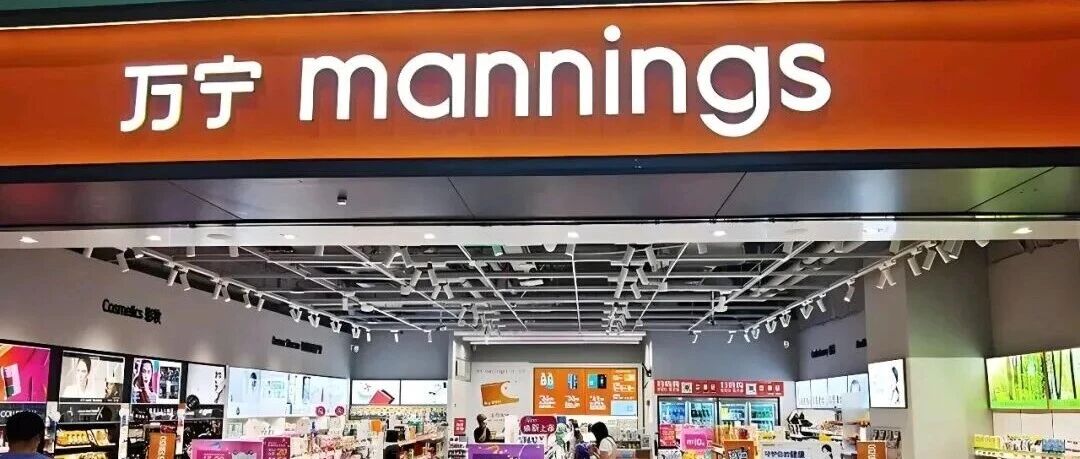
Core Viewpoint - Mannings, a Hong Kong-based health and beauty retail chain, has announced its complete withdrawal from the Chinese market, ceasing all offline and online operations by early 2026, which reflects a strategic decision influenced by its inability to adapt to the rapidly evolving consumer landscape in China [5][7][19]. Group 1: Company Withdrawal Announcement - Mannings will close its offline stores by January 15, 2026, and its online platforms, including its official mini-program, will cease operations by December 28, 2025 [5][6]. - The brand has struggled to establish a significant presence in the Chinese market, with over 120 stores but failing to penetrate beyond certain regions [7][9]. Group 2: Market Position and Competition - Mannings entered the Chinese market during a period of rapid retail growth but failed to capitalize on this opportunity, unlike its competitor Watsons, which aggressively expanded its store network [9][10]. - The brand's cautious and conservative approach hindered its ability to transition from a regional to a national brand, resulting in a lack of visibility among the broader consumer base [11][12]. Group 3: Consumer Behavior and Experience - The shift in consumer demographics, particularly among younger generations, has led to a disconnect between Mannings' traditional retail model and the expectations of modern consumers who prioritize experience and information transparency [13][14]. - The brand's in-store experience has been perceived as outdated, with younger consumers preferring brands that engage them through social media and experiential marketing [14][15]. Group 4: Strategic Misalignment - Mannings has not effectively adapted its product offerings to meet the evolving preferences of younger consumers, leading to a loss of market relevance [15][17]. - The company's supply chain and operational efficiency have lagged behind competitors, impacting its ability to respond to market changes and consumer demands [17][18]. Group 5: Parent Company Strategy - DFI Retail Group's decision to withdraw Mannings from the Chinese market reflects a broader strategic choice to focus on more promising business units, such as its successful restaurant and supermarket operations [19][21]. - The contrasting strategies of DFI's other brands, which have successfully adapted to local market demands, highlight the challenges Mannings faced in a competitive and rapidly changing retail environment [20][21].