越疆

Search documents
刚刚,港股大跌!机器人概念股,逆市暴涨!
证券时报· 2026-02-20 02:39
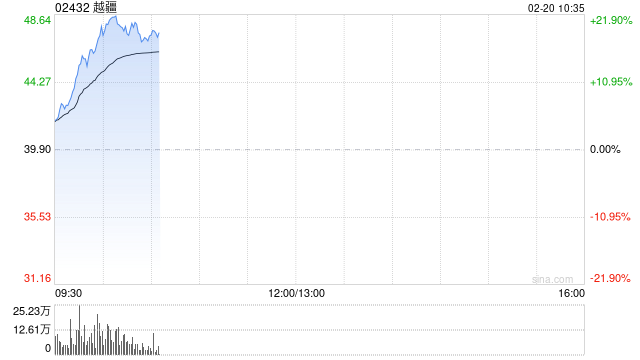
Core Viewpoint - The article highlights a significant rise in robotics and AI concept stocks despite a general market downturn, indicating strong investor interest and potential growth in these sectors [1][2]. Group 1: Market Performance - On February 20, the Hong Kong stock market opened lower, with the Hang Seng Index down approximately 1% and the Hang Seng Tech Index down over 2% [2]. - Despite the overall market decline, AI applications and humanoid robotics stocks experienced notable gains, with companies like 越疆 (Yuejiang) rising nearly 20% and 速腾聚创 (Suteng) increasing by nearly 11% [3][4]. Group 2: Individual Stock Highlights - 越疆 (Yuejiang) saw a price increase to 47.860, marking a rise of 19.95% [4]. - 速腾聚创 (Suteng) reached a price of 38.100, with a gain of 10.76% [4]. - 优必选 (UBTECH) increased to 150.500, reflecting a rise of 9.06% [4]. - 微创机器人 (MicroPort) rose to 30.140, with a gain of 5.02% [4]. - AI application stocks also performed well, with 海致科技集团 (Haizhi Technology Group) initially rising over 28% before settling at approximately 14% [6]. Group 3: Industry Insights - The 2026 CCTV Spring Festival Gala featured a record number of humanoid robots, showcasing the industry's advancements and increasing public interest [5]. - A report from 赛迪顾问 (CCID Consulting) noted that the humanoid robotics industry is transitioning from concept to viable technology, driven by breakthroughs in key technologies such as embodied large models and multi-modal perception [5]. - 智谱 (Zhipu) launched its new flagship model GLM-5, which has expanded its parameter scale significantly, indicating ongoing innovation in AI capabilities [8].


春晚机器人出圈,港股相关概念股集体大涨,越疆涨超19%
Xin Lang Cai Jing· 2026-02-20 02:35
春晚期间,抖音电商同步推出"春晚同款"供给,带动相关话题持续发酵、同款商品稳步热销。抖音电商 数据显示,2月16日-18日,抖音电商机器人产品GMV同比增长1680%,订单量同比增长655%。 责任编辑:郝欣煜 消息面上,今年马年央视春晚,被不少观众称为"科技春晚"。在四个多小时的直播里,机器人几乎从头 登场到尾场。多家中国新兴人形机器人初创企业——宇树科技、银河通用、松延动力和魔法原子在春晚 上展示了各自的产品。 春晚期间,抖音电商同步推出"春晚同款"供给,带动相关话题持续发酵、同款商品稳步热销。抖音电商 数据显示,2月16日-18日,抖音电商机器人产品GMV同比增长1680%,订单量同比增长655%。 责任编辑:郝欣煜 热点栏目 自选股 数据中心 行情中心 资金流向 模拟交易 客户端 2月20日消息,港股机器人概念股集体走强,其中,越疆涨超19%,速腾聚创涨超10%,首程控股涨超 9%,优必选涨超8%,云迹、三花智控涨超6%,微创机器人、力劲科技涨超5%。 热点栏目 自选股 数据中心 行情中心 资金流向 模拟交易 客户端 2月20日消息,港股机器人概念股集体走强,其中,越疆涨超19%,速腾聚创涨超10%, ...

港股异动丨春晚机器人出圈,相关概念股集体大涨,优必选涨近9%
Ge Long Hui· 2026-02-20 02:33
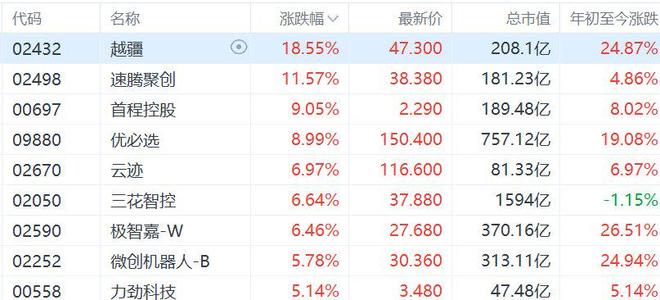
Core Viewpoint - The Hong Kong stock market saw a significant rise in robotics concept stocks, driven by the showcase of humanoid robots during the Spring Festival Gala, leading to increased consumer interest and sales in related products [1][2]. Group 1: Market Performance - Robotics stocks such as Yujian surged over 18%, Suton Jichuang increased by over 11%, and Shoucheng Holdings rose by 9% [1]. - Other notable gains included Youbixuan with nearly 9%, Yunjie, Sanhua Intelligent Control, and Jizhi Jia-W each rising over 6%, while MicroPort Scientific and Lijin Technology increased by over 5% [1]. - The total market capitalization for these companies varied, with Youbixuan at 757.12 billion, and Shoucheng Holdings at 189.48 billion [2]. Group 2: Sales Growth - During the Spring Festival period from February 16 to 18, Douyin e-commerce reported a 1680% year-on-year increase in GMV for robot products, with order volume rising by 655% [1]. - The "Spring Festival Gala" effect contributed to the popularity of related products, as several emerging humanoid robot startups showcased their innovations during the event [1].
港股AI、机器人大爆发!智谱飙升21% 越疆涨超20% 科网股跳水
2 1 Shi Ji Jing Ji Bao Dao· 2026-02-20 02:25
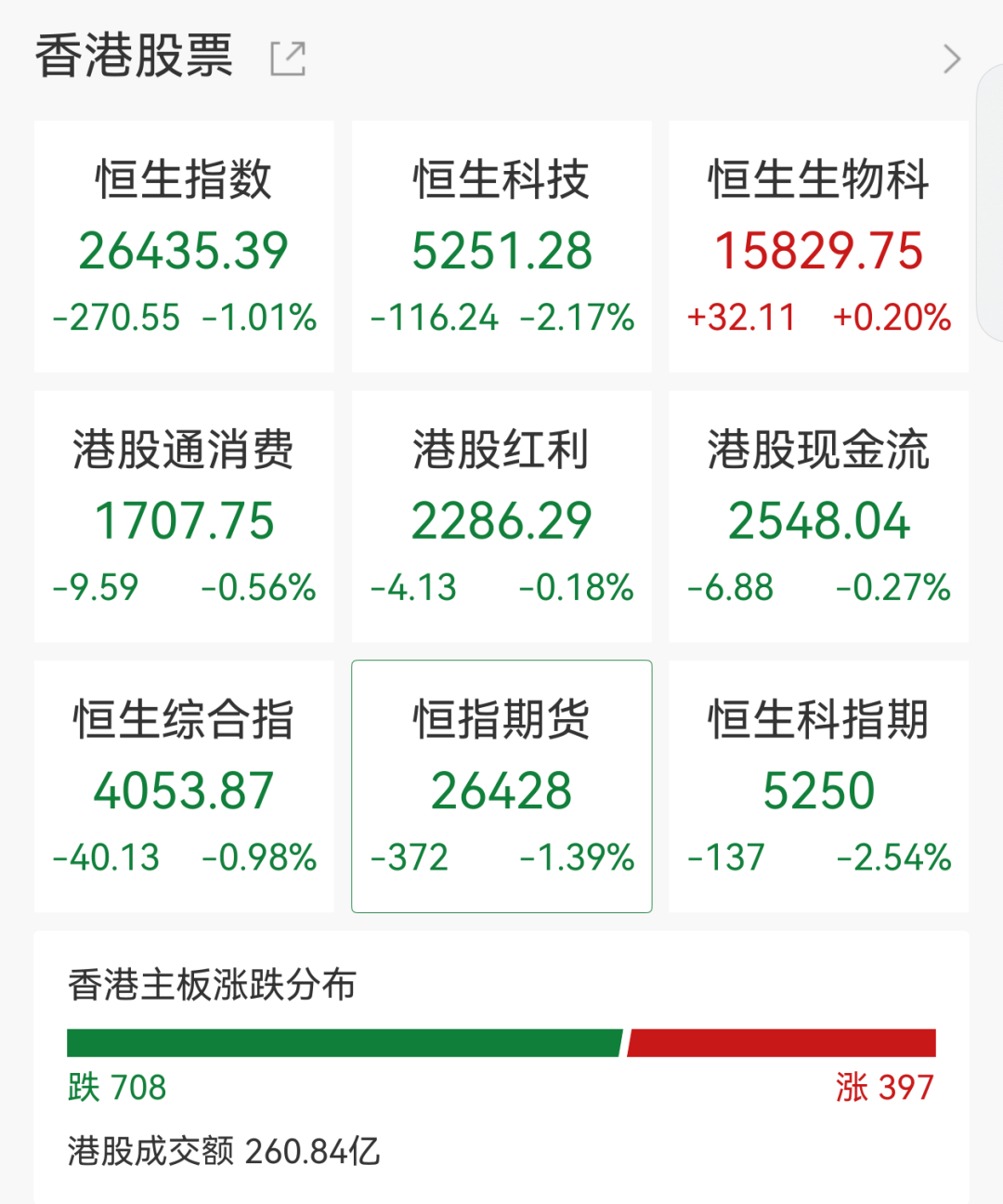
Group 1: Market Overview - On February 20, the Hong Kong stock market opened lower, with the Hang Seng Index down by 1.01%, the Hang Seng Tech Index down by 2.17%, and the Hang Seng China Enterprises Index down by 1.1% [1] Group 2: AI and Robotics Sector - AI application stocks performed strongly against the market trend, with Zhihui rising over 21%, Haizhi Technology Group up by 23%, and MINIMAX-WP increasing by 10% [2] - Zhihui announced a "Computing Power Partner" recruitment plan, aiming to collaborate with chip manufacturers and service providers to optimize their GLM-5 model [2] - The robotics sector saw significant gains, with companies like Yujian rising over 20%, Sutech increasing by nearly 12%, and UBTECH up by 10% [3] - The popularity of robotics was boosted by performances during the Spring Festival Gala, attracting audience attention and driving sales on platforms [3] Group 3: Oil Sector - Oil stocks surged, with China National Offshore Oil Corporation rising by 2.23%, reaching a historical high of HKD 25.70, and a total market capitalization of HKD 12,215.20 million [4] Group 4: Technology Sector - The majority of technology stocks in Hong Kong experienced declines, with Kingdee International down over 5%, Baidu down over 5%, Alibaba and Bilibili down over 4%, NetEase down over 3%, and Tencent down over 2% [5] Group 5: Precious Metals - Precious metals like gold and silver saw slight adjustments, with spot gold down by 0.11% and spot silver down by 0.29% [6] - Goldman Sachs indicated that central bank purchases and increased exposure to gold by private investors due to potential Fed rate cuts could lead to gold prices gradually rising to USD 5,400 per ounce by the end of 2026 [6]

港股AI、机器人大爆发,智谱飙升21%,越疆涨超20%,科网股跳水
2 1 Shi Ji Jing Ji Bao Dao· 2026-02-20 02:08
Market Overview - On February 20, the Hong Kong stock market opened lower on the first trading day of the Year of the Rabbit, with the Hang Seng Index down by 1.01%, the Hang Seng Tech Index down by 2.17%, and the Hang Seng China Enterprises Index down by 1.1% [1][2]. Sector Performance - AI and robotics sectors showed strong performance, with AI application stocks like Zhizhu rising over 21%, Haizhi Technology Group up 23%, and MINIMAX-WP increasing by 10% [3]. - The semiconductor sector also saw gains, with Lanke Technology rising by 3.22% to a new high of 217.80 HKD, and Tianshu Zhixin increasing by 4.68% to 281.60 HKD, marking a historical high [3]. - The robotics sector experienced significant growth, with companies like Yujian rising over 20% and Sutech increasing nearly 12% [3]. Oil Sector - The oil sector saw a notable surge, with China National Offshore Oil Corporation (CNOOC) rising by 2.23% to 25.70 HKD, achieving a historical high with a total market capitalization of 1,221.52 billion HKD [4]. Technology Sector - The technology sector faced declines, with companies such as Kingdee International down over 5%, Baidu Group down nearly 5%, and Bilibili down nearly 4% [4][5]. Precious Metals - Precious metals experienced adjustments, with spot gold down by 0.11% and spot silver down by 0.29%. Goldman Sachs projected that overall central bank gold purchases and increased exposure from private investors due to potential Fed rate cuts will gradually raise gold prices to 5,400 USD per ounce by the end of 2026 [5][6].

港股异动 | 机器人概念股普涨 春晚引爆机器人热潮 机构看好头部企业将开启大规模量产
智通财经网· 2026-02-20 01:41
Group 1 - The core viewpoint of the articles highlights a significant surge in robot-related stocks, driven by the popularity of robot performances during the Spring Festival Gala, leading to increased sales and interest in the sector [1][2] - Notable stock performances include Yujiang (02432) up 6.52% to 42.5 HKD, Hesai-W (02525) up 6.05% to 214 HKD, and SUTENG (02498) up 5.76% to 36.38 HKD, among others [1] - JD reported a substantial increase in robot-related metrics during the Spring Festival Gala, with search volume up over 300%, customer inquiries up 460%, and order volume up 150% within two hours of the event [1] Group 2 - Dongwu Securities emphasizes that the advancements in core robotic capabilities are crucial for the industry's transition from experimental phases to mass production, marking a significant development from 2021 to 2025 [2] - The report anticipates that by 2026, major companies like Tesla and leading domestic firms will commence large-scale production, representing a new phase in the industry [2] - Investment focus is expected to narrow down to companies with genuine mass production capabilities and integration into the supply chain [2]
兴业证券:2026年值得关注的十大产业趋势
智通财经网· 2026-02-18 03:45
Group 1: AI Applications - The global AI competition is intensifying, with model iterations driving deeper application scenarios, and the focus is on whether significant capital expenditures by tech giants can lead to commercial applications [2][3] - The competitive landscape for AI applications is shifting from dominance by OpenAI to a more multipolar environment, with major players like Google and Meta integrating AI into their ecosystems [3] - In China, AI applications are experiencing a breakthrough, with major tech companies accelerating model iterations and application deployments, leading to a transformation from model landing to scenario monetization [5] Group 2: AI Computing Power - Overseas, major cloud service providers are maintaining high capital expenditures, with a projected increase of 67% in 2026, reflecting a strong demand for AI computing power [7][8] - In China, leading tech companies are increasing capital expenditures and accelerating the iteration of domestic large models, promoting the performance of domestic chips amid tightening supply from foreign sources [9] Group 3: Storage - The demand for storage is entering a new super cycle driven by AI training and inference needs, with AI servers consuming significantly more memory than traditional servers [11][16] - Supply constraints are expected to persist, leading to continued high prices for storage components, as major manufacturers shift production focus to advanced memory types [16] Group 4: Commercial Aerospace - Commercial aerospace is becoming a key battleground in US-China competition, with significant policy support and funding initiatives in both countries to accelerate industry development [19][21] - Domestic companies are achieving breakthroughs in satellite mass production and reusable rocket technologies, transitioning from technical validation to commercialization [22] Group 5: Humanoid Robots - Major overseas companies are ramping up production plans for humanoid robots, benefiting domestic component suppliers, with Tesla aiming for a production capacity of 500,000 units by 2026 [27][30] - Chinese manufacturers are leading in humanoid robot shipments, with significant contracts and production milestones achieved in 2025 [30] Group 6: Intelligent Driving - Domestic policies are expected to facilitate the commercialization of L3 autonomous driving in 2026, with several manufacturers preparing to launch L3 models [32][33] - Tesla's Full Self-Driving (FSD) technology is setting the direction for autonomous driving, with significant advancements in AI capabilities [35] Group 7: Energy Storage - The expansion of AI computing power in North America is driving electricity demand, with domestic power equipment expected to accelerate exports [37][40] - China's "14th Five-Year Plan" includes significant investments in the power grid and energy storage, creating a favorable environment for industry growth [40][43] Group 8: Chemicals - The chemical industry is undergoing a transformation driven by policies aimed at supply-side reform, with a focus on optimizing supply structures and reducing excess capacity [44][47] - New economic sectors are boosting demand for chemical materials, particularly in AI, renewable energy, and robotics, leading to a favorable outlook for new materials [47][48]


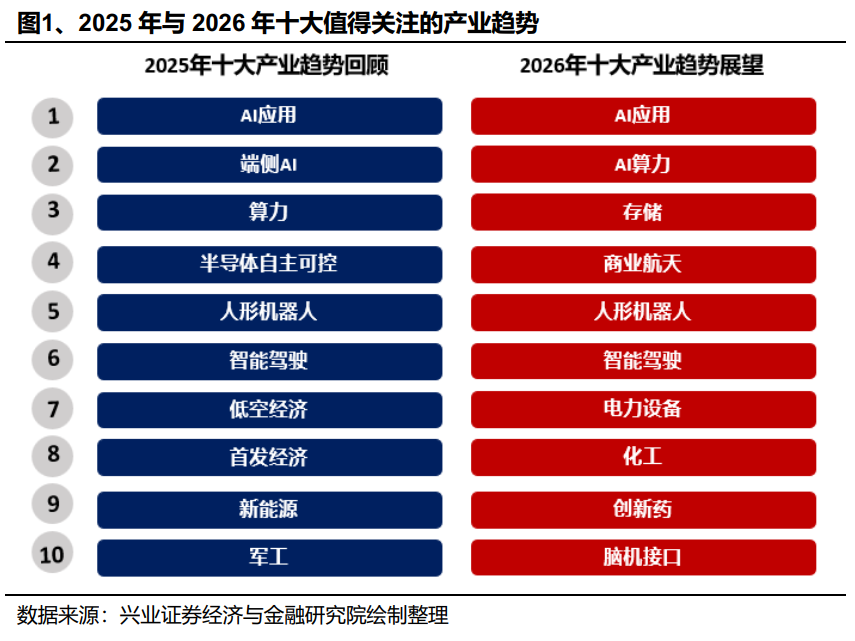
【兴证策略】2026年值得关注的十大产业趋势
Xin Lang Cai Jing· 2026-02-18 02:55
Group 1: AI Applications - The global AI competition is intensifying, with significant capital expenditures from tech giants expected to lead to deeper application scenarios in 2026 [1][2] - The competitive landscape for AI applications is shifting from a dominance of OpenAI to a more multipolar environment, with companies like Google and Meta making significant advancements [2] - Domestic AI applications are reaching a tipping point, with major tech companies accelerating their investments and model iterations, leading to a resonance between model development and application penetration [5] Group 2: AI Computing Power - Major cloud service providers in North America are projected to increase their capital expenditures significantly, with a combined guidance of approximately $598.7 billion for 2026, reflecting a 67% year-on-year growth [7][8] - Domestic companies are also ramping up capital expenditures and accelerating the iteration of local models, driven by the need for domestic chip performance improvements [7][8] Group 3: Storage - The demand for storage is entering a new super cycle driven by AI training and inference needs, with AI servers consuming 8-10 times more DRAM and NAND than traditional servers [12][13] - The supply-demand imbalance in the storage sector is expected to persist, with global storage prices rising over 40% in Q4 2025 [13][17] Group 4: Commercial Aerospace - Commercial aerospace is becoming a key battleground in US-China competition, with significant policy support and funding initiatives in place to accelerate the industry [20][21] - Domestic companies are achieving breakthroughs in satellite mass production and reusable rocket technologies, transitioning from technology validation to commercial scale [23] Group 5: Humanoid Robots - Major overseas companies like Tesla and FigureAI are ramping up production plans for humanoid robots, which is expected to benefit domestic component suppliers [25][28] - Chinese manufacturers are leading in humanoid robot shipments, with significant orders and production milestones achieved in 2025 [29] Group 6: Intelligent Driving - The rollout of policies in China is expected to facilitate the commercialization of L3 autonomous driving in 2026, with several manufacturers already launching L3 models [32][33] - Tesla's Full Self-Driving (FSD) technology continues to lead the market, with ongoing enhancements expected to drive the commercialization of Robotaxi services [32] Group 7: Energy Storage - The aging power grid in North America is creating opportunities for domestic power equipment exports, particularly in gas turbines and high-voltage equipment [36][37] - China's "14th Five-Year Plan" includes significant investments in the power grid and energy storage, with a focus on high-value areas [37] Group 8: Chemicals - The chemical industry is undergoing a transformation driven by supply-side reforms, with a focus on optimizing supply structures and reducing excess capacity [41][43] - New economic sectors are driving demand for chemical materials, particularly in AI, renewable energy, and robotics, which are expected to sustain high demand in 2026 [43][46]
一区超万亿、两区超6千亿 这三区集中深圳近6成GDP
2 1 Shi Ji Jing Ji Bao Dao· 2026-02-13 09:33
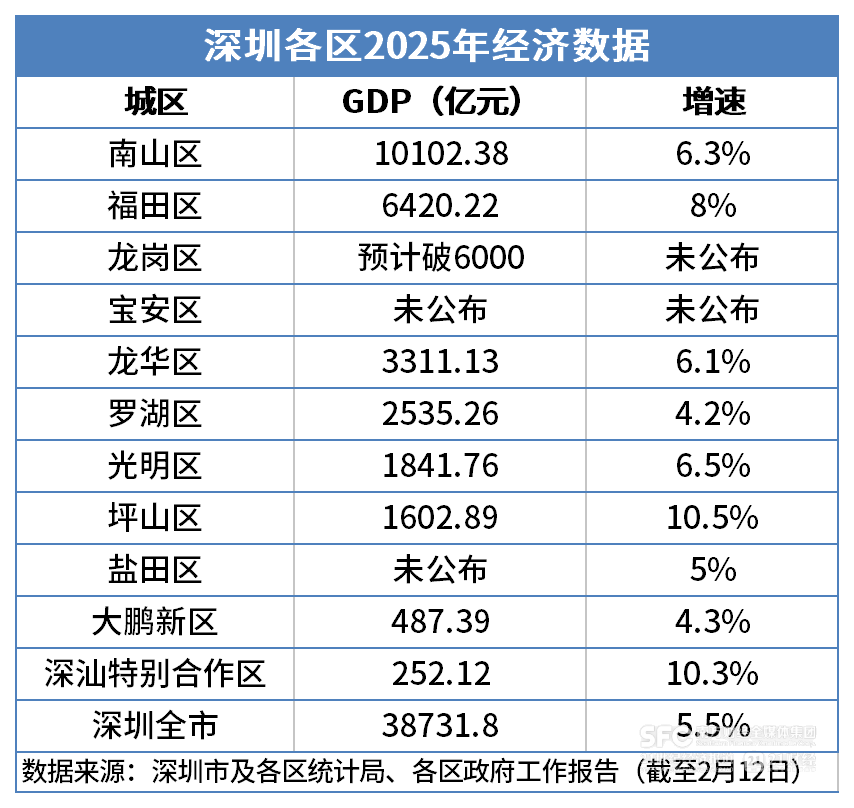
Core Insights - The article highlights the economic growth of various cities in China, particularly focusing on Shenzhen, which has seen significant GDP increases and the emergence of new "trillion-yuan cities" [1][3]. Economic Growth and City Rankings - The number of cities with a GDP exceeding 1 trillion yuan is set to increase from 27 in 2024 to 29 in 2025, with Wenzhou and Dalian making the list [1]. - Beijing has joined the ranks of "5 trillion cities," while Shenzhen leads the four first-tier cities with a growth rate of 5.5%, aiming for a GDP exceeding 5 trillion yuan by 2025 [1]. District Performance in Shenzhen - Nanshan District has achieved a GDP of 10,102.38 billion yuan, becoming the first district in China to surpass the trillion-yuan mark [3][5]. - Futian and Longgang districts are also significant, with Futian's GDP reaching 6,420.22 billion yuan and Longgang expected to exceed 6,000 billion yuan [2][9]. - Nanshan contributes over 25% of Shenzhen's total economic output despite its small area of 185 square kilometers [3]. GDP Growth Rates - Among the districts, Pingshan (10.5%) and Shenshan (10.3%) have shown remarkable growth rates, focusing on high-value industries such as automotive and pharmaceuticals [10][11]. - The overall GDP of Shenzhen is projected to reach 38,731.8 billion yuan by 2025, with several districts outperforming the city average [2][10]. Sectoral Contributions - Nanshan is home to over 200 listed companies, contributing significantly to Shenzhen's economy, with a total market value expected to exceed 65 trillion yuan by 2025 [5][6]. - Futian's modern service sector is projected to grow, with a value of 4,754.98 billion yuan, accounting for 82.2% of its tertiary industry [6][7]. Industrial Focus and Innovation - Pingshan is concentrating on developing a "6+3" industrial cluster, focusing on smart connected vehicles, semiconductors, and biomedicine, with strategic emerging industries expected to account for 88% of its industrial output [11][12]. - The Shenshan Special Cooperation Zone is also leveraging the presence of BYD to enhance its automotive industry, with multiple projects set to launch by 2025 [12][13].