速卖通

Search documents
税务风暴来袭!2025新规下的跨境电商卖家生存指南
Sou Hu Cai Jing· 2025-10-15 11:35
Core Insights - The cross-border e-commerce industry is entering a new era of strict regulation as major platforms like Amazon implement tax reporting mechanisms for sellers, marking a shift from a gray area of "no tax ID, no declaration" to a compliance-focused environment [1][3]. Group 1: Regulatory Changes - Amazon announced it will begin quarterly reporting of seller identity and transaction data to Chinese tax authorities by October 31, covering the period from July to September 2025 [6]. - The State Council issued regulations on tax information reporting by internet platform enterprises, establishing legal obligations for platforms to report tax-related information [3][6]. - Multiple platforms, including Walmart, Shopify, and TikTok, have completed their tax registrations, indicating widespread compliance across the industry [8][5]. Group 2: Reporting Requirements - The information to be reported includes seller identity details, transaction volumes, revenue, and fees paid to the platform [6][8]. - Specific identity information required includes seller names, social credit codes, personal identification numbers, addresses, and bank account details [9]. - Revenue information must encompass total income, refund amounts, net income, transaction order counts, and platform fees [10]. Group 3: Compliance and Penalties - Platforms that fail to comply with reporting requirements may face tiered penalties, including business suspension and restrictions on issuing invoices [18][21]. - Sellers who do not report accurately may be subject to tax recovery, late fees, and potential upgrades to their tax status if their sales exceed certain thresholds [23][24]. - The new regulations necessitate that sellers maintain accurate and up-to-date records, ensuring compliance with tax obligations [26][27]. Group 4: Industry Impact - The shift towards tax transparency is expected to significantly affect millions of Chinese cross-border e-commerce sellers, making compliance a critical aspect of their business operations [29]. - Companies are encouraged to optimize their tax structures and consider registration in regions with favorable tax policies to mitigate tax burdens [28][29].



聚焦品牌出海,速卖通打响海外双11“前哨战”
Guan Cha Zhe Wang· 2025-10-14 14:41
Core Viewpoint - AliExpress is launching its overseas Double 11 shopping festival, aiming to strengthen its competitive position in the global cross-border e-commerce market through enhanced fulfillment capabilities, optimized merchant structure, and improved user experience [1] Group 1: Event Timeline and Strategy - The overseas Double 11 and Black Friday events will start with a pre-sale on November 8, followed by sales from November 11 to 19, and will seamlessly transition into Black Friday until December 3 [1] - The focus will be on three key areas: commission incentives, local inventory, and brand expansion [1] Group 2: Operational Model and Merchant Support - AliExpress will continue its "POP + Full Management" dual-track model, promoting differentiated product offerings and utilizing AI tools for rapid growth [2] - A commission incentive plan will reward high-performing merchants with up to 7% of sales as commission, with new stores eligible for 100% commission [2] - An AI diagnostic tool will be provided to help merchants achieve sales targets, offering a 10% reduction in GMV targets for those who complete specific actions [2] Group 3: Localized Fulfillment and Brand Strategy - The "Overseas Management" model has expanded to over 30 countries, allowing merchants to store products locally and benefit from reduced delivery times [3] - Over 50% of the transaction volume for large items like furniture and appliances comes from the "Overseas Management" model [3] - The "Brand+" channel aims to enhance consumer trust in high-ticket brands, with a 75% year-on-year increase in new brand registrations [3] Group 4: Financial Performance and Strategic Alignment - The international digital commerce group (AIDC), which includes AliExpress, has become a key growth engine for Alibaba, with a 19% year-on-year revenue increase to 34.7 billion yuan [4] - The strong financial performance supports AliExpress's strategic initiatives for the Double 11 event, reflecting a deep integration of domestic and international operations [5] - The synergy within Alibaba's ecosystem allows for real-time market insights to be relayed back to Chinese manufacturers, enhancing product selection and inventory management [5]

八马茶业通过港交所上市聆讯 | 10月14日早报
Sou Hu Cai Jing· 2025-10-14 02:16
Star Brands - Ye Guofu, the founder of Miniso and non-independent director of Yonghui Supermarket, emphasized the importance of direction in the company's transformation, stating that progress is key and that they will achieve great success [2] - Yonghui Supermarket's CEO Wang Shoucheng reported an average customer traffic increase of 80% in the transformed stores, with 102 stores achieving a net promoter score (NPS) average exceeding 40, and 19 stores surpassing 50 [3] - Yonghui plans to develop 100 billion-yuan-level flagship products over the next three years, collaborating with 200 core strategic partners to create compelling reasons for consumers to choose Yonghui [4] Consumer Platforms - Alibaba's cross-border e-commerce platform Lazada has integrated with Tmall to facilitate easier access for Tmall merchants to Southeast Asian markets, indicating a growing trend in cross-border e-commerce [5] - AliExpress has reported over 100,000 artificial Christmas trees being shipped overseas in preparation for the Double 11 and Black Friday sales, marking a new high in holiday inventory [6] - A report on outdoor sports consumption revealed that 60% of users on the Dewu app spend over 8,000 yuan annually, with a significant portion of users being from Generation Z [7] Investment and Financial Reports - Nanchao Foods reported a September consolidated revenue of 276 million yuan, reflecting a slight year-on-year increase of 0.0016% [12] - Eight Horses Tea has passed the listing hearing at the Hong Kong Stock Exchange, with joint sponsors including Huatai International and Agricultural Bank of China International [13] Macro News - The General Administration of Customs reported that China exported over 50 billion yuan worth of holiday goods, dolls, and animal-shaped toys in the first three quarters, highlighting the global appeal of domestic products [15]


【新华解读】外贸三季度答卷:平稳增长韧性显现 结构升级与品牌“出海”齐头并进
Xin Hua Cai Jing· 2025-10-13 09:22
Core Insights - China's goods trade demonstrates strong resilience amid profound changes in the global trade landscape, achieving stable growth in both volume and structure, with a shift towards higher quality and innovation [1][2][3] Trade Performance - In the first three quarters of the year, China's total goods trade value reached 33.61 trillion yuan, a year-on-year increase of 4%, with exports at 19.95 trillion yuan (up 7.1%) and imports at 13.66 trillion yuan (down 0.2%) [2] - In September, the monthly trade value was 4.04 trillion yuan, marking an 8% year-on-year increase, the highest monthly growth rate of the year, with exports growing by 8.4% and imports by 7.5% [3] Export Structure and Upgrades - The export structure is continuously optimizing, with high-tech, high value-added, and green low-carbon products becoming new growth engines. In the first three quarters, exports of electromechanical products reached 12.07 trillion yuan, growing by 9.6% and accounting for 60.5% of total exports [6] - Exports of integrated circuits increased by 32.9%, and automotive exports rose by 10.9%, indicating that domestic industrial transformation is providing new growth momentum for exports [4][6] Corporate Innovations - Companies like GoerTek are leveraging intelligent production lines to enhance efficiency, with significant advancements in acoustic sensor technology, while also expanding into automotive electronics and smart home applications [7] - The marine engineering sector, represented by companies like Yantai Penglai DaJin Marine Engineering Co., has seen a 141.16% increase in revenue from offshore wind power products, exporting to over 30 countries [7] Shift from Product to Brand Export - Chinese enterprises are transitioning from relying on OEM exports to establishing their own brands in international markets, driven by external pressures and proactive business strategies [8] - The beauty industry is witnessing a surge in domestic brands going global, with sales increasing by 100% over the past year, particularly in Europe and Latin America [9] E-commerce and Brand Development - E-commerce platforms are restructuring to support brand exports, with initiatives like AliExpress's "Super Brand Export Plan" aimed at facilitating market entry for brands at lower costs [9] - The shift towards high value-added and high-tech exports reflects advancements in China's manufacturing capabilities and enhances competitiveness in the global supply chain [9]

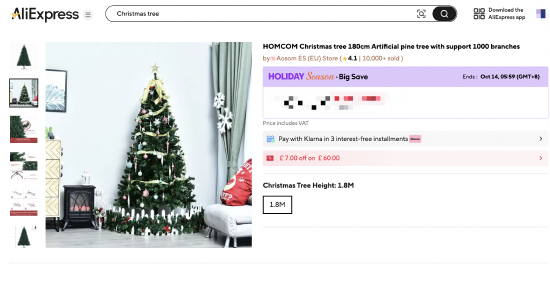
速卖通:10万棵圣诞树加入海外托管备战双11
Xin Lang Ke Ji· 2025-10-13 02:59
Core Insights - The article highlights that AliExpress is preparing for the upcoming Double Eleven and Black Friday sales by shipping at least 100,000 artificial Christmas trees overseas, marking a record high in inventory for holiday large goods [1] - AliExpress's overseas hosting service now covers 30 countries, with over 50% of the transaction volume in heavy goods categories such as home and appliances coming from overseas hosting [1] - The promotional activities for AliExpress's overseas Double Eleven and Black Friday sales will begin on November 8 and run until December 3, with the main sales event starting on November 11 [1]
跨境电商平台涉税信息10月首次报送,行业合规进入新阶段
Nan Fang Du Shi Bao· 2025-09-30 05:36
Core Viewpoint - The cross-border e-commerce industry is entering a critical phase of tax compliance and data transparency, as platforms like AliExpress and Shein begin reporting tax-related information in accordance with new regulations issued by the State Council and the National Taxation Administration [1][2]. Group 1: Reporting Requirements - The initial reporting window for tax information is set for October 2025, requiring platforms to submit identity information of all operators and employees, as well as income data from July 1 to September 30, 2025 [2]. - From 2026 onwards, regular quarterly updates will be mandated, with platforms required to report identity and income information for the previous quarter by the next month [2]. - In cases of tax inspections or identified tax risks, platforms must provide detailed information such as contracts, transaction records, and logistics data to support tax oversight [2]. Group 2: Compliance Guidelines for Sellers - Sellers must complete market entity registration if their annual transaction volume exceeds 100,000 yuan, with specific regulations governing registration locations [3]. - After registration, tax information will be shared with tax authorities, and sellers must confirm their tax status promptly upon incurring tax obligations [3]. - Sellers are required to accurately report all taxable income from both online and offline channels, and failure to do so may result in legal consequences [3]. Group 3: Additional Compliance Requirements - Sellers with annual taxable sales exceeding 5 million yuan must register as general taxpayers and comply with applicable tax rates [4]. - It is prohibited to split income to evade taxes through methods such as changing business entities or accounts, with strict penalties for violations [4]. - The National Taxation Administration has provided clear answers to common questions regarding compliance scenarios, emphasizing the importance of accurate reporting and adherence to regulations [6]. Group 4: Industry Implications - The implementation of these tax reporting regulations signifies a shift towards greater transparency and regulatory precision in the cross-border e-commerce sector, moving away from previous unregulated growth models [6]. - Industry experts recommend that sellers promptly assess their compliance status and prepare for the new reporting requirements to ensure sustainable business operations [6].
2025年汕头仕鸣科技国际站服务价格排行榜,助你轻松开展外贸业务
Sou Hu Cai Jing· 2025-09-27 10:29
Core Insights - The article highlights the importance of a transparent pricing system for international trade companies, provided by Shantou Shiming Technology, which aids in budget decision-making and service selection [2] - Various service providers, including Shantou Shiming Technology, Lijia Partner, Chaochuan International, and AliExpress, offer comprehensive e-commerce solutions tailored for foreign trade enterprises [6][8] Group 1: Shantou Shiming Technology - Shantou Shiming Technology offers a range of e-commerce operational solutions, including store positioning, page design, and product listing, to enhance competitiveness in the international market [2] - The company provides professional guidance on traffic operations, utilizing both direct and organic traffic strategies to help clients acquire more customers [2] - Multi-language adaptation services are included, allowing products to reach a broader audience, which is essential for both startups and established brands [2] Group 2: Lijia Partner and Chaochuan International - Lijia Partner is designed to simplify online operations for foreign trade companies, offering tools for store setup and daily operations, along with multi-language support for international customers [5] - Chaochuan International provides a straightforward cross-border e-commerce solution, enabling quick online store creation with various templates and design tools [5][6] - The platform also collaborates with international courier companies to ensure fast order delivery, enhancing customer satisfaction [6] Group 3: AliExpress and JD International - AliExpress offers diverse online business development support for Shantou's foreign trade companies, including platform rule interpretation and targeted marketing strategies [6] - The platform's promotional tools are designed to increase product visibility and attract potential customers, while data analysis services help track sales dynamics [6] - JD International provides an efficient online marketing solution with various marketing tools, customized strategies based on market analysis, and real-time sales performance monitoring [8] Group 4: Overall Market Impact - The availability of multiple service providers allows Shantou's foreign trade companies to choose the most suitable solutions, optimizing operational strategies within budget constraints [8] - The combination of multi-language adaptation and intelligent data analysis across platforms enhances competitive advantages in the international market [8] - These services not only improve operational efficiency but also create new opportunities for sustainable development and market expansion for foreign trade enterprises [8]

“双11”前与天猫完成系统打通 Lazada能否撬开东南亚电商市场新局面?
Mei Ri Jing Ji Xin Wen· 2025-09-26 12:44
Core Viewpoint - Lazada has upgraded its brand strategy by integrating with Tmall, allowing Tmall brands to easily enter five Southeast Asian markets, enhancing its competitive position in the region [1][5][6]. Group 1: Strategic Integration - Lazada has launched the "One-Click Easy Overseas" project, enabling Tmall brands to access markets in Malaysia, Singapore, Thailand, Vietnam, and the Philippines without significant barriers [1][2]. - The integration allows Tmall merchants to mirror their stores on Lazada, with synchronized product listings, inventory, and marketing efforts [1][2][4]. - This strategic move is part of Lazada's ongoing brand strategy upgrade, focusing on quality user experience and service [4][5]. Group 2: Market Context - Southeast Asia's e-commerce market is growing, with a projected GMV of $128.4 billion in 2024, reflecting a 12% year-on-year increase [6][7]. - Lazada faces significant competition, particularly from Shopee, which holds a 51% GMV share in Thailand compared to Lazada's 25% [7]. - The region's e-commerce penetration remains low, indicating potential for growth, especially as consumer demand for branded products increases [5][6]. Group 3: Brand Strategy and Trends - The shift towards brand-focused strategies is becoming essential in Southeast Asia, as low-price strategies are losing effectiveness [8]. - The introduction of a VAT on low-priced imports in Thailand signals a move towards fair competition, further emphasizing the need for brands to establish trust and quality [8]. - Industry experts suggest that brand globalization aligns with current trade policies, making it a viable path for Chinese companies [8][9].

出海不打价格战,速卖通要和亚马逊争夺头部品牌
2 1 Shi Ji Jing Ji Bao Dao· 2025-09-25 00:51
Core Insights - AliExpress has launched the "Super Brand Going Global Plan," aiming to challenge Amazon by offering merchants the opportunity to achieve higher sales at half the cost in key markets [1][7] - The shift from low-price competition to brand-focused strategies is a response to the changing international trade environment and increased competition in the cross-border e-commerce sector [2][3] Industry Trends - The cross-border e-commerce landscape has transitioned from a "blue ocean" to a "red ocean," with intensified competition and product homogenization leading to lower profit margins for sellers [3][4] - The urgency for transformation is heightened by external pressures, such as increased tariffs and changing trade policies, particularly affecting the U.S. market [3][4] Company Strategy - AliExpress has seen a 70% year-on-year increase in the number of brands on its platform, with over 500 brands doubling their sales and more than 2,000 brands successfully entering new markets [5] - The platform is focusing on high-ticket and high-tech products, with brand sales gradually surpassing those of lower-ticket items [2][5] Competitive Positioning - AliExpress aims to differentiate itself from other platforms in the "going global" space by providing a more tailored and supportive operational framework for brands, addressing challenges that sellers face on platforms like Amazon [8][9] - The average commission rate for AliExpress is between 8-10%, significantly lower than Amazon's 15-25%, which is part of its strategy to attract more brands [8][9] Long-term Vision - The company is prepared for long-term investments in cross-border globalization, with a focus on brand and multi-dimensional supply strategies rather than solely competing on price [9][10] - Other Alibaba platforms, such as Taobao and Lazada, are also shifting towards brand-focused strategies to escape the low-price competition trap [9][10]
速卖通疯抢亚马逊品牌商家
Hua Er Jie Jian Wen· 2025-09-24 08:15
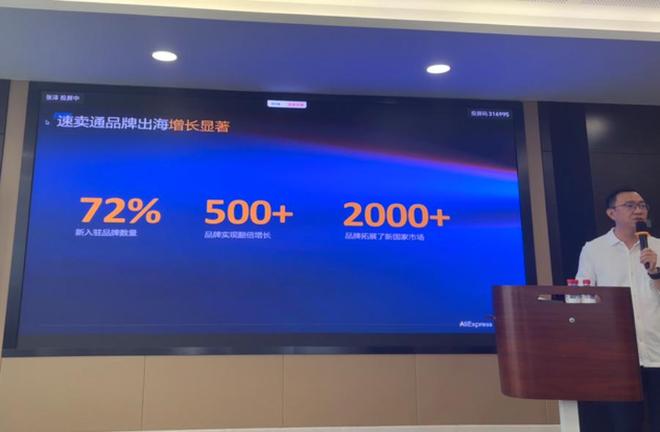
Core Insights - AliExpress is rapidly emerging as a significant player in the cross-border e-commerce market, challenging Amazon's dominance in brand exports [2][3] - The platform has upgraded its brand export strategy to the "Super Brand Export Plan," aiming to attract well-known brands, including those from Tmall and Amazon [2][3] - AliExpress emphasizes cost efficiency for merchants, claiming that sellers can achieve higher sales at half the cost compared to Amazon [2][3] Brand Export Strategy - The upgrade in brand export strategy marks a pivotal moment in AliExpress's development, focusing on a systematic approach to brand export [3] - AliExpress will launch a "Brand+" dedicated channel to enhance consumer trust through genuine product certification, free shipping, and price protection mechanisms [4] - The platform aims to improve the shopping experience for high-ticket items, recognizing the different decision-making processes for expensive versus inexpensive products [4] Merchant Support - AliExpress will introduce a "Brand Service Center" to provide real-time advertising performance data and channel conversion analysis for brands [5] - The platform currently serves over 2,000 brands, primarily focusing on excellent Chinese brands while also incorporating local brands in markets like Spain and Poland [5] Marketing Initiatives - AliExpress is leveraging its local marketing capabilities, exemplified by a partnership with Pop Mart to host a music festival in Spain, enhancing brand engagement with local consumers [6] AI and Efficiency Tools - The platform will offer a comprehensive suite of AI tools tailored for e-commerce brands to help reduce costs and improve efficiency [7] Growth Metrics - In the first half of this year, the number of new brands on AliExpress increased by 72%, with over 500 brands doubling their sales and more than 2,000 brands entering new overseas markets [8] - The brand-focused inventory is becoming a growth engine for AliExpress, with high-ticket items gradually surpassing lower-priced products in sales [8] Market Trends - The global cross-border e-commerce landscape is shifting from aggressive growth strategies to a focus on profitability and brand value [8] - AliExpress aims to empower brands and position itself as a viable alternative for brands considering international expansion, leveraging its experience in serving Chinese brands [8] Overseas Management Model - The "Overseas Management" model allows merchants to stock products in overseas warehouses while AliExpress handles marketing and user operations [9] - This model has been upgraded to cover 30 countries, enhancing product visibility and efficiency for local consumers [9] Future Outlook - The combination of brand export and overseas management is seen as a powerful strategy for 2025, as the market evolves towards higher profits and stronger brands [10]