大疆

Search documents
上市公司集群崛起:大湾区经济跃迁“ C位担当”
Zheng Quan Shi Bao Wang· 2025-11-12 02:34
Group 1: Economic Overview of the Greater Bay Area - The Greater Bay Area, covering less than 0.6% of China's land area, generates approximately 1/9 of the national economic output, showcasing its high economic vitality [1] - The region has the highest density of listed companies in China, with 813 A-share listed companies in the nine mainland cities [1] Group 2: Innovation and R&D Investment - The Greater Bay Area's listed companies have significantly increased their R&D investments, totaling 237.31 billion yuan in the first three quarters of this year, a year-on-year increase of 9.69%, accounting for 20.69% of all A-share companies' R&D expenses [2] - BYD leads in R&D spending among A-share companies with 43.75 billion yuan, focusing on advanced technologies in the electric vehicle sector [2] Group 3: AI and Technology Development - TCL Huaxing is developing an AI architecture that enhances product development and quality control capabilities [3] - Daotong Technology has maintained a high R&D expense ratio of 15% to 20%, resulting in a 61.81% year-on-year increase in net profit for the first three quarters of 2025 [3] Group 4: Industry Upgrades and New Sectors - The Greater Bay Area is becoming a leader in new production capabilities, with breakthroughs in autonomous driving, low-altitude economy, and robotics [4] - Companies like WeRide and Pony.ai are expanding their operations globally, with WeRide holding licenses in seven countries [4] Group 5: International Expansion - In the first half of 2025, listed companies in the Greater Bay Area achieved overseas revenue of 955.60 billion yuan, representing 19.5% of all A-share companies' overseas revenue [7] - BYD's overseas revenue reached 135.36 billion yuan, marking a 50.49% year-on-year increase, as the company accelerates its international expansion [7] Group 6: Financial Empowerment and Future Development - The upcoming "2025 Greater Bay Area Technology and Financial Innovation Development Conference" aims to explore new paths for the integration of technology and finance, enhancing the region's role as an international technology innovation center [10][13]


上市公司集群崛起:大湾区经济跃迁“ C位担当” |魅力湾区·相约南沙
Zheng Quan Shi Bao· 2025-11-12 02:29
Group 1: Economic Overview of the Greater Bay Area - The Greater Bay Area (GBA) is one of the most open and economically vibrant regions in China, accounting for approximately 1/9 of the national economic output with less than 0.6% of the country's land area [1] - The GBA has the highest density of listed companies in China, with 813 A-share listed companies across nine cities [1] Group 2: Innovation and R&D Investment - The GBA's listed companies have shown significant growth in R&D investment, totaling 237.31 billion yuan in the first three quarters of this year, a year-on-year increase of 9.69%, representing 20.69% of all A-share companies' R&D expenses [3] - BYD leads all A-share companies with R&D expenses of 43.748 billion yuan, focusing on advanced technologies such as fast-charging batteries and silicon carbide power chips [3] Group 3: AI and Emerging Technologies - TCL Huaxing is developing an AI architecture to enhance product development and yield rates, while Daotong Technology has seen significant profit growth due to its AI strategy, maintaining a R&D expense ratio of 15% to 20% [4] - The establishment of the "Air-Ground Integrated Cluster Smart AI Ecological Alliance" indicates a strong focus on AI solutions, with predictions of a market exceeding one trillion yuan in the next five years [7] Group 4: Industry Upgrades and New Market Opportunities - The GBA is becoming a leader in new industries such as autonomous driving and low-altitude economy, with companies like WeRide and Pony.ai making significant strides in the market [6] - GAC Group is diversifying into autonomous driving, low-altitude economy, and robotics, with plans for significant expansion in these areas [8] Group 5: Global Expansion and Internationalization - GBA listed companies achieved overseas revenue of 955.604 billion yuan in the first half of 2025, accounting for 19.5% of all A-share companies' overseas revenue [10] - BYD and Midea Group are leading examples of successful internationalization, with BYD's overseas revenue reaching 135.358 billion yuan, a 50.49% increase year-on-year [10][11] Group 6: Upcoming Events and Collaborative Efforts - The 20th China Economic Forum will take place on November 18, focusing on technology innovation and financial collaboration in the GBA [12] - The forum aims to create a positive ecosystem for technology, industry, finance, and communication, promoting the GBA as an international technology innovation center [13]
上市公司集群崛起:大湾区经济跃迁“ C位担当” |魅力湾区·相约南沙
证券时报· 2025-11-12 02:15
Core Viewpoint - The Guangdong-Hong Kong-Macao Greater Bay Area (GBA) is a highly open and economically vibrant region in China, contributing approximately 1/9 of the national economic output with only 0.6% of the country's land area. The area has a high density of listed companies, showcasing significant growth in technology innovation and emerging industries, thus playing a crucial role in high-quality development [1]. Group 1: Innovation and R&D - The GBA has been recognized as the world's top innovation cluster, surpassing the Tokyo-Yokohama cluster, reflecting the continuous investment in R&D by listed companies in the region [3]. - In the first three quarters of this year, GBA listed companies invested a total of 237.31 billion yuan in R&D, a year-on-year increase of 9.69%, accounting for 20.69% of the total R&D expenses of all A-share companies [3]. - BYD led the A-share companies with 43.75 billion yuan in R&D expenses, developing advanced technologies such as fast-charging batteries and high-performance electric motors, thereby strengthening its competitive edge in the global electric vehicle market [3]. Group 2: Industry Upgrading and New Tracks - The GBA is a key player in nurturing new productive forces, achieving breakthroughs in emerging sectors such as autonomous driving, low-altitude economy, and robotics [6]. - Companies like WeRide and Pony.ai have made significant strides in autonomous driving, with WeRide operating in 30 cities across 11 countries and Pony.ai focusing on local operations in major Chinese cities [6]. - The establishment of the "Air-Ground Integrated Cluster Smart AI Ecological Alliance" indicates a growing market potential in low-altitude economy and robotics, projected to exceed one trillion yuan in the next five years [6]. Group 3: Global Expansion - GBA listed companies are increasingly pursuing internationalization, with total overseas revenue reaching 955.60 billion yuan in the first half of 2025, accounting for 19.5% of all A-share companies' overseas revenue [10]. - BYD achieved 135.36 billion yuan in overseas revenue, marking a 50.49% year-on-year increase, and has plans to derive 50% of its sales from international markets by 2030 [10]. - Transsion Holdings has captured over 40% of the African smartphone market by focusing on differentiated imaging technology, while also exploring collaborative opportunities with major domestic internet companies [11].
大疆无人机加快智慧运维场景应用:已应用于超1000座新能源电站
Zheng Quan Shi Bao Wang· 2025-11-11 11:03
Core Insights - DJI showcased innovative applications of drone technology in the construction of renewable energy bases and ecological restoration in the Kubuqi Desert [1][2] - The project includes a total construction plan of 8 million kilowatts of photovoltaic and 4 million kilowatts of wind power, with drones significantly enhancing efficiency in site surveying and inspections [1] Group 1: Drone Technology Applications - Drone technology was applied extensively in the 2 million kilowatt photovoltaic pilot project, completing terrain surveys in just two weeks, improving efficiency by nearly 9 times compared to traditional methods [1] - DJI's products are currently used in over 1,000 renewable energy stations, achieving a 50% coverage rate for drone inspection solutions across domestic renewable energy sites [1] Group 2: Efficiency Improvements - The use of drones for inspections has led to significant time savings: photovoltaic inspections are at least 10 times faster, wind turbine inspections are at least 9 times faster, and line inspections are at least 8 times faster compared to traditional methods [1] - The introduction of drone inspections by the Three Gorges Corporation has increased inspection efficiency by over 26 times, allowing for the inspection of approximately 30,000 photovoltaic components daily compared to 1,000 with manual methods [2] Group 3: Technical Advantages - Drones equipped with infrared thermal imaging cameras can detect temperature anomalies in photovoltaic components, identifying potential issues such as overloads or damaged bypass diodes [2] - Drone inspections can cover complex terrains, such as sand dunes and water surfaces, where traditional manual inspections are not feasible, ensuring comprehensive and efficient monitoring of solar panels and associated equipment [2]
智慧运维守护塞北绿电长城 无人机助力“沙漠变绿洲”
Zhong Guo Xin Wen Wang· 2025-11-11 07:32
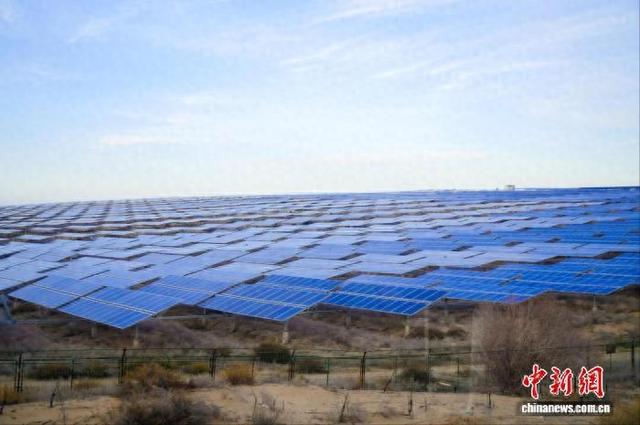
Core Insights - The article highlights the innovative use of drone technology in the construction and ecological management of the world's first 10 million kilowatt-level renewable energy base located in the Kubuqi Desert, Inner Mongolia [1][2]. Group 1: Renewable Energy Base - The Kubuqi Desert renewable energy base features a vast array of over one million photovoltaic panels, creating a "photovoltaic Great Wall" that serves as a green barrier between the Yellow River and the desert [1]. - The solar power station, with an installed capacity of 1 million kilowatts, occupies an area of 32,000 acres, equivalent to 3,000 standard soccer fields, and includes over 2 million critical devices [2]. Group 2: Operational Challenges - The elevated installation of photovoltaic panels (1.5 meters or more) significantly increases maintenance difficulties compared to traditional projects (0.8 to 1 meter) [2]. - Traditional manual inspections require 180 days to complete a full inspection of the solar power station, which is impractical given the vast area and complex internal roadways [2]. Group 3: Drone Technology Implementation - Drone-based inspections have improved efficiency, allowing for the inspection of approximately 30,000 photovoltaic components daily, completing the entire station inspection in 36 days, which is over 26 times more efficient than manual methods [2][3]. - Drones equipped with high-definition visible light and infrared thermal imaging can detect temperature anomalies in photovoltaic components, indicating potential issues such as overload or diode failure [3]. Group 4: Broader Applications and Impact - The application of drone technology extends to over 1,000 renewable energy stations in China, achieving a 50% coverage rate for drone inspection solutions across domestic renewable energy sites [4]. - The use of drones has significantly enhanced operational efficiency, with terrain mapping completed in just two weeks for a site of over 60,000 acres, improving efficiency by nearly nine times compared to traditional methods [4].
初创企业如何快速“出道” 这份深圳“创新日历”请收好
2 1 Shi Ji Jing Ji Bao Dao· 2025-11-11 06:48
Core Insights - The article discusses the emergence of startup companies in Shenzhen and the efficient channels available for them to gain exposure and attract investment, particularly through competitions and expos [3][4][5]. Group 1: Startup Competitions - The "Entrepreneur Star" competition has been a significant platform for startups, with past winners like DJI and others becoming industry leaders [3][5]. - The 2025 global finals of the "Entrepreneur Star" competition will take place on November 12-13, covering three continents and aiming to discover the next global stars [3][5][6]. - This year's competition has been upgraded to a global contest with a total prize pool of 100 million yuan, emphasizing its international reach and financial incentives [5][6]. Group 2: Technology Expos - The BEYOND Expo, Asia's largest technology expo, will feature a new sub-brand "XIN Summit" on November 15-16, providing startups with opportunities to connect with global investors [4][10][12]. - The 27th China International High-Tech Achievements Fair (High-Tech Fair) will take place from November 14-16, showcasing nearly 5,000 tech companies and attracting major international investment firms [4][13][15]. - The High-Tech Fair will implement a "136" plan to ensure a diverse range of buyers, including international and domestic procurement [13]. Group 3: Innovation Ecosystem - The article highlights the interconnectedness of various events, such as competitions, expos, and forums, creating a comprehensive innovation ecosystem in Shenzhen [4][15]. - The integration of startups with established financial institutions and investment firms is expected to accelerate the commercialization of innovative technologies [15][16]. - The establishment of the "AI for Science" initiative at Peking University aims to leverage AI in scientific research, further enhancing Shenzhen's role as a hub for innovation [18][19].

科技大事件 丨 iPhone Air 2 被曝大幅推迟;95 岁「股神」巴菲特发表谢幕信
Sou Hu Cai Jing· 2025-11-11 06:15
Group 1: Apple iPhone Air 2 Delay - Apple has indefinitely postponed the release of the next-generation iPhone Air due to poor sales performance, with Foxconn dismantling most of the production lines while still hoping for a 2027 release [1][2] - The iPhone Air 2 was initially planned to launch in the fall alongside iPhone 18 Pro/Max and iPhone Fold, aiming to be lighter and equipped with a larger battery [2] - Although the project has been removed from the development schedule, some engineering teams and manufacturing partners continue to work on it, but no new release timeline has been provided, which is considered unprecedented [1][3] Group 2: Samsung SmartThings Update - Samsung has updated its iOS SmartThings app to support Siri shortcuts, enhancing the integration of Apple devices within its smart home ecosystem [4][5] - This update allows users to create personalized automation scenarios, such as "Good Morning" or "Leaving Home," which can be triggered via voice commands [5] Group 3: Xiaomi Automotive Sales - Xiaomi's automotive division reported retail sales of 48,654 vehicles in October, with the YU7 model selling 33,662 units, surpassing Tesla Model Y sales for the month [9][10] - The company aims to maintain a delivery volume exceeding 40,000 units by October 2025 [9] Group 4: Honor 400 Series Performance - Honor's 400 series has achieved global shipments exceeding 6 million units, with first-day sales up 195% compared to the 300 series and 138% compared to the 200 series [8][9] - The series has shown strong market performance, with overseas sales reaching 2-3 times that of its predecessor [9] Group 5: Warren Buffett's Philanthropic Actions - Warren Buffett has converted 1,800 shares of Class A stock into 2.7 million shares of Class B stock for donation to four family charitable foundations, valued at over $1.3 billion [10][11] - He announced that he will no longer write annual reports or speak extensively at shareholder meetings, indicating a shift in his engagement with the company [11] Group 6: NIO's Future Plans - NIO's CEO Li Bin confirmed that the Firefly model will have a larger battery pack in the future, expected to be at least 50% larger than the current version [14] - The Firefly model, launched in April, has already surpassed 20,000 units in deliveries within five months [14] Group 7: DJI Product Update - DJI is expected to release the Osmo Pocket 4 in December, a product that has not been updated for over two years [15][17] - The new camera may feature a 50-megapixel sensor and has entered beta testing, with some users currently evaluating its stability [17]


极飞科技递表港交所后首场公开秀:从四个方面拓展农业智能化产品矩阵
Mei Ri Jing Ji Xin Wen· 2025-11-10 13:16
Core Viewpoint - Guangzhou XAG Technology Co., Ltd. (XAG) held its annual conference, marking its first public appearance after submitting an IPO application to the Hong Kong Stock Exchange, attracting attention from investors and media [1] Company Overview - XAG submitted its IPO application on September 25, 2023, aiming to achieve profitability in 2024 and project a net profit of 134 million RMB in the first half of 2025, surpassing the entire profit of 2024 [1][3] - The company specializes in agricultural drones, ranking second globally in market share with 10.7% in agricultural robots and 17.1% in agricultural drones according to Frost & Sullivan [1] Business Strategy - XAG's strategy focuses on addressing the "labor shortage" in agriculture through automation, particularly in the management aspects of farming, which currently lag in smart technology despite a mechanicalization rate exceeding 75% in China [4] - The company aims to expand its product matrix around four key areas: irrigation, fertilization, pest control, and monitoring [4] Product Development - XAG continues to innovate, recently launching a new generation of agricultural drones and additional products such as smart fertilization systems and autonomous driving devices for agricultural machinery [4] - Agricultural drones remain the primary revenue driver, with their revenue share projected to increase from 78.6% in 2022 to 89% in the first half of 2025 [4] Market Dynamics - The agricultural drone market is highly concentrated both domestically and globally, with significant competition among leading firms focusing on performance, pricing, and service [2][8] - The global agricultural robot market is expected to grow from 2.5 billion RMB in 2019 to 8.9 billion RMB in 2024, with a projected compound annual growth rate of 53.3% [8] Financial Performance - XAG's overseas revenue has significantly increased, with figures rising from 146 million RMB in 2022 to 371 million RMB in 2024, representing an increase in overseas revenue share from 24.1% to 34.8% during the same period [7] - The gross margin for agricultural drones is expected to improve from 26.8% in 2022 to 34.1% in the first half of 2025, despite a decrease in product prices [9]
大疆、影石还没争出第一,大批友商已经赶在路上
36氪· 2025-11-10 10:23
Core Viewpoint - The global panoramic camera market is experiencing significant shifts in market share, with companies like影石 (Insta360) and 大疆 (DJI) competing fiercely, leading to a dynamic and competitive landscape in the smart imaging sector [5][6][7]. Market Dynamics - A report from 久谦咨询 indicates that 影石's market share dropped from 92% in Q2 to 49% in Q3, while 大疆 captured 43% of the market [5]. - Another report by 弗若斯特沙利文 shows 影石 and 大疆's market shares at 75% and 17.1% respectively, highlighting discrepancies in market data [6]. - The entry of 大疆 into the panoramic camera market with its Osmo 360 has significantly impacted 影石's dominance, showcasing the competitive nature of the industry [8]. Industry Trends - The rise of short video content globally has increased the demand for smart imaging devices, with 大疆's Osmo Pocket 3 achieving over 10 million units sold, generating revenue exceeding 300 billion [13]. - The current global user base for vlogs is estimated at 520 million, with outdoor sports consumers at 220 million, indicating a growing market for smart imaging devices [16]. Competitive Landscape - New entrants in the smart imaging sector are advised to avoid direct competition with established players like 大疆 and 影石, focusing instead on niche markets and differentiated product offerings [20]. - Companies like Looki and XbotGo are exploring unique use cases, such as AI-driven wearable cameras and solutions for sports event recording, respectively [23][24]. Technological Innovations - The integration of AI and advanced algorithms is becoming crucial for product differentiation in the smart imaging market, as seen with 光子跃迁's AI-enabled camera that responds to natural language commands [25]. - The industry is characterized by a low barrier to entry for basic imaging products, but achieving brand recognition and competitive pricing remains challenging [40][42]. Market Entry by Smartphone Manufacturers - Major smartphone manufacturers like OPPO and vivo are entering the smart imaging space, indicating a shift in focus towards handheld imaging devices [28][30]. - The competitive pressure from smartphone companies is seen as a defensive strategy to maintain market relevance in the face of declining smartphone sales [37]. Conclusion - The smart imaging market is poised for growth, with a penetration rate of only 6%, suggesting ample opportunities for innovation and competition [16][38]. - Companies entering this space must be prepared with sufficient resources and talent to navigate the competitive landscape effectively [45].

狂卖10亿的“没用”玩具,成了年轻人团建新宠
3 6 Ke· 2025-11-09 23:49
Core Insights - The article discusses the rise of the stringless guitar, a new musical instrument that simplifies playing for beginners, leading to a significant increase in sales and popularity among young people [1][3][5]. Market Performance - The stringless guitar achieved sales of 968 million in 2024, marking an explosive growth of nearly nine times from 105 million in 2023 [3]. - The product has become a phenomenon in the smart instrument market, with sales reaching 1 billion within a year [5]. Target Demographics - Young people aged 18-30 are the primary buyers of the stringless guitar, accounting for nearly half of the sales, while working professionals aged 25-40 also represent a significant portion of the market [12]. Product Features and Appeal - The stringless guitar allows users to produce music easily by simply touching keys, making it accessible for those without prior guitar knowledge [3][6]. - It offers multiple instrument sounds, including bass and cello, enhancing its appeal as a social and entertainment tool [8][10]. Social and Cultural Impact - The stringless guitar has become popular in university dorms and camping settings, serving as a social catalyst for gatherings and enhancing group activities [10][12]. - The product has been marketed effectively through social media, with over 370 million views on related topics and significant engagement from influencers [31][32]. Competitive Landscape - The launch of the stringless guitar by LiberLive has prompted traditional guitar manufacturers to consider similar innovations [20][22]. - The average price of the stringless guitar is around 2,234 yuan, comparable to a gaming console or a low-end smartphone, indicating a premium positioning in the market [16]. Future Prospects - The global smart guitar market is projected to grow from 1.4 billion in 2024 to 3.23 billion by 2030, with a compound annual growth rate of 13.9% from 2025 to 2030 [38]. - Companies are focusing on enhancing user engagement and community building to maintain interest and prevent the product from becoming a passing trend [39][45].