平安银行

Search documents
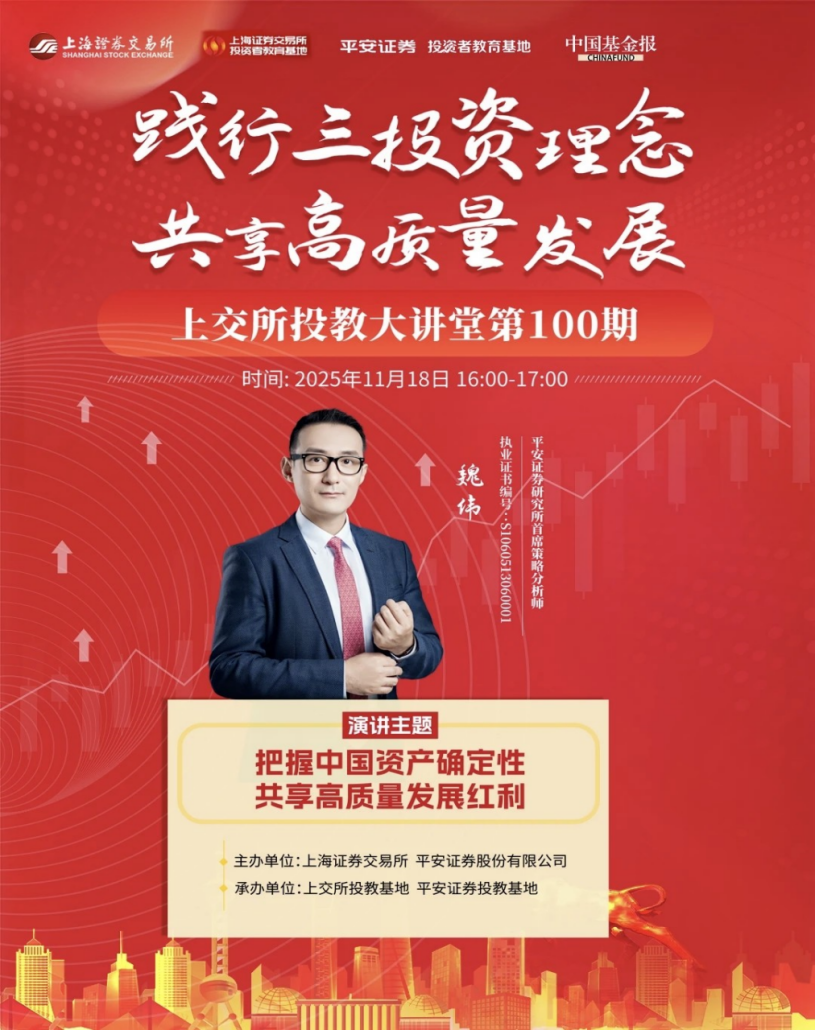
平安证券魏伟:把握中国资产确定性 共享高质量发展红利
Di Yi Cai Jing· 2025-11-25 07:05
Global Macro Environment - The global macro environment in 2025 is characterized by increased uncertainty, particularly in overseas markets, while China remains committed to high-quality development, providing a sense of certainty for investors [3] - Major economies are experiencing a divergence in economic cycles, with heightened policy uncertainty negatively impacting the US economy, as noted by OECD and IMF [3] - Global monetary policies are showing differentiation, with the Federal Reserve maintaining its stance while the European Central Bank continues to lower rates, and the Bank of Japan has initiated rate hikes [3] - Ongoing geopolitical complexities, such as the Russia-Ukraine conflict and Middle East tensions, highlight the importance of security and stability in the international landscape [3] Industry Trends - The new quality productivity sector is identified as a key area for future growth, with significant investment opportunities in artificial intelligence, semiconductors, and new energy vehicles [6][7] - China's AI sector is gaining global attention, with advancements in domestic computing power and a focus on applications like smart driving and humanoid robots [6] - The semiconductor industry is increasingly self-sufficient, with competitive domestic companies emerging since 2019, indicating a strengthening of the overall supply chain [6] - The new energy vehicle sector is highlighted for its global competitiveness, with traditional automakers accelerating their smart driving initiatives [6] - The biopharmaceutical sector is witnessing a transformation, with domestic innovative drugs gaining recognition and achieving commercial breakthroughs [6] Capital Market Reform - The capital market is positioned as a crucial support for economic transformation, with a focus on maintaining stability and promoting high-quality development [8] - Reforms in the A-share market are aimed at enhancing support for the real economy, particularly in technology and innovation sectors, through initiatives like the Science and Technology Innovation Board [8] - The bond market is also evolving, with the introduction of a "technology board" to improve service capabilities for technological innovation [8] - Increased participation of medium- and long-term funds and the deepening of public fund reforms are seen as stabilizing forces in the market [8] Asset Allocation - In the context of global asset volatility, the attractiveness of RMB assets is increasing, with the A-share market showing steady progress and expanding profit potential [10] - Key investment themes for the medium to long term include sectors benefiting from new quality productivity, such as AI, biomedicine, military, and smart driving [10] - Industries benefiting from "anti-involution" policies, including photovoltaics, lithium batteries, and traditional cyclical sectors like steel and coal, are also highlighted [10] - New consumer trends in home appliances and emerging consumption themes are expected to develop steadily, supported by policy and consumption upgrades [10]


研究院院长升任副总 粤开证券“研究支持业务”战略如何突围?
2 1 Shi Ji Jing Ji Bao Dao· 2025-11-25 04:35
公开资料显示,雷杰于2022年12月1日被聘任为粤开证券副总裁;自2024年10月30日起,担任粤开证券 联席总裁一职。 21世纪经济报道记者 易妍君 又一家券商高管变动落地。11月24日晚间,粤开证券公告称,因个人原因,雷杰先生向公司董事会辞去 公司联席总裁、首席信息官职务。辞任后雷杰不再担任公司其它职务。 新的高管任命同步而来。最新公告显示,粤开证券研究院院长罗志恒升任公司副总裁,总裁崔洪军代行 首席信息官职责,同时公司新设立一级战略协同部门。这一系列调整旨在进一步打破业务壁垒,提升公 司整体运营效率。 21世纪经济报道记者了解到,目前粤开证券正启动新一轮战略布局,通过设立战略协同部门、任命高级 管理人员、设立40亿元产业基金等系列举措,全面推进"投资+投行+投研"三大业务体系的深度协同发 展。 据悉,粤开证券董事会于2025年11月20日收到联席总裁、首席信息官雷杰递交的辞任报告,自2025年11 月20日起辞任生效。 粤开证券表示,雷杰先生在担任公司联席总裁及首席信息官期间恪尽职守、勤勉尽责,公司及董事 会 对雷杰先生任职期间的工作表示感谢。 "此次新任副总裁体现了粤开证券对研究业务的高度重视,研究支 ...
苏州近岸蛋白质科技股份有限公司 关于新增募集资金专户并签订三方监管协议的公告
Zhong Guo Zheng Quan Bao - Zhong Zheng Wang· 2025-11-25 03:43
Fundraising Overview - The company successfully completed its initial public offering (IPO) by issuing 17,543,860 shares at a price of RMB 106.19 per share, raising a total of RMB 186,298.25 million, with a net amount of RMB 174,219.58 million after deducting issuance costs [2][3] Fund Management and Usage - The company has established a special account for the raised funds, which is solely designated for the R&D center construction project and other related projects, ensuring that the funds are not used for any other purposes [6][20] - The balance in the special account as of November 11, 2025, is RMB 31,244.82 million, with additional accounts holding balances of RMB 8,000 million and RMB 9,972.27 million [11][15][20] Regulatory Compliance - The company has signed a tripartite supervision agreement with its wholly-owned subsidiary and the underwriting institution to ensure compliance with relevant laws and regulations, protecting investors' rights [4][26] - The underwriting institution is responsible for ongoing supervision of the fund usage, including conducting on-site investigations and providing regular account statements [7][27] Changes in Project Implementation - The company has approved changes to the implementation location of the R&D center project and has authorized the use of part of the raised funds for capital increase in its wholly-owned subsidiary to facilitate the project [3][30]

中国首个规模化专用光量子计算机制造工厂落地
21世纪经济报道· 2025-11-25 02:42
21世纪经济报道记者现场获悉,该制造工厂位于南山智城,总面积约5000平方米,集研发、制 造、测试于一体,用于实现光量子计算机的工程化、标准化和规模化生产,相当于造出一 条"流水线"。 编辑丨孙超逸 11月24日,中国首个规模化专用光量子计算机制造工厂正式落地深圳南山区。 记者丨 陈思琦 "这座工厂具备年产数十台专用光量子计算机的能力,填补了全球在该领域规模化制造的空 白。"玻色量子创始人兼CEO文凯表示。 麦肯锡《量子技术监测》研究报告显示,预计到2035年全球量子技术市场规模将达到970亿美 元,其中量子计算最具潜力并将占据最大份额,收入规模预计将从2024年的40亿美元增长至 2035年的720亿美元。 政策面上,"量子科技"被写入《中共中央关于制定国民经济和社会发展第十五个五年规划的建 议》,与生物制造、氢能和核聚变能、脑机接口、具身智能、6G等并列为前瞻布局的未来产 业。 当前,北京、上海、合肥、深圳等地纷纷加力,量子科技在金融、生物制药、能源等领域商业 化落地持续提速。 填补全球光量子规模化生产空白 光量子计算,顾名思义就是利用光的量子特性来进行计算的技术,是一种主流的量子计算技 术。 相较其他技 ...

中国银行与地产_个人房产抵押贷款风险几何-China Banks and Property_ How risky are individual property-backed loans_
2025-11-25 01:19
Summary of Conference Call on China Banks and Property Industry Overview - The focus is on the Chinese banking sector and the property market, particularly the risks associated with property-backed loans and the implications for banks and borrowers [2][3][4]. Key Points 1. Rising Risks in Property-Backed Loans - Individual property-backed loan risks are increasing due to ongoing declines in property prices, raising concerns about potential defaults on mortgages and business operating loans [2][3]. - Key metrics indicating risk include: - **Foreclosed Properties**: 2.1 million units, or 1.8% of total properties with mortgages or loans [2]. - **Negative Cash Flow**: 1.2% of mortgage holders and 4.8% of all borrowers may have insufficient income to cover their loans [2][3]. - **Negative Equity**: Expected to rise from 0.7 million units in 2025 to 3.3 million units by 2027, with loan losses projected to reach RMB 232 billion [2][9]. 2. Cash Flow as a Key Driver of Defaults - Cash flow issues, rather than property price declines, are seen as the primary driver of potential defaults [3]. - Historical reference from Hong Kong (1997-2003) shows that despite significant property price declines, delinquency rates remained low, indicating that cash flow is a more critical factor [3][16][17]. 3. Regulatory Measures and Their Implications - Anticipated regulatory measures to mitigate risks include: - Personal credit relief policies to remove small defaults from credit reports [4]. - Delivery of over 7.5 million stalled housing units by the end of 2025 [4]. - Potential mortgage rate cuts below 3% [4]. - These measures could lead to increased secondary market listings, putting further pressure on property prices [4]. 4. Implications for Banks - The banking sector is expected to face manageable risks, with a projected NPL ratio of 3% (1.6% for mortgages and 4.8% for MSE/business operating loans) [5]. - Large state-owned banks may need to make additional provisions equivalent to 11-10 basis points of annualized credit cost [5]. - The estimated additional provisioning needed for banks could amount to RMB 0.3 trillion, representing 7.3% of annual PPOP in 2025 [74]. 5. Foreclosure and Refinancing Risks - The number of foreclosed properties is expected to rise significantly, with estimates of 0.64 million units in 2025 and 2.43 million units by 2027 due to refinancing pressures on business operating loans [25][27]. - The outstanding operating loan amount was RMB 29.4 trillion as of the end of 2023, with a significant portion backed by physical property [24]. 6. Market Sentiment and Future Expectations - A significant increase in respondents indicating they will not buy a house in the next two years, rising from 32% in 2024 to 45% in 2025, reflects a pessimistic outlook on the property market [62]. - Property prices are expected to decline by 10% in 2026 and 5% in 2027, following a 12% decline in 2025 [65][68]. 7. Potential Policy Responses - Forbearance measures, such as repayment extensions and penalty waivers, are expected to be implemented to contain defaults [69]. - The PBOC is considering reforms to the personal credit system to alleviate the impact of delinquencies on borrowers [71]. 8. Conclusion - The overall sentiment indicates that while risks in the property market and banking sector are rising, regulatory measures and cash flow management strategies may help mitigate potential defaults and systemic risks [3][4][5][68].

大金融政策和基本面展望
2025-11-25 01:19
Summary of Conference Call Records Industry Overview - The overall recovery of the real estate market is slow, with new home sales showing no significant improvement and low land auction premium rates indicating insufficient market confidence [1][2] - Local government short-term small loan interest subsidy policies have limited effects, and long-term sustainable policy support is crucial [1][2] - The brokerage industry is facing a trend of risk resolution and resource complementarity, but not all mergers will yield immediate results [1][4] Key Points and Arguments Real Estate Market - The targeted reduction of housing burdens aims to alleviate downward pressure on the real estate market, but overall trends remain negative, especially in major cities like Beijing and Shanghai, where home prices have dropped approximately 15% this year [2] - Current local government loan interest subsidy policies are mostly short-term and limited in scope, with examples including a 2% interest subsidy in Wuhan and 1% in other cities, which provide minimal overall impact [2][3] - Long-term, larger and more sustained interest rate reductions would significantly stimulate the market, but current measures are insufficient compared to past direct financial support [2] Brokerage Industry - CICC's merger with two AMCs has positioned it among the top five in net assets, enhancing its brokerage business competitiveness [1][4] - The integration of regional strong brokerages is expected to strengthen CICC's market position, but the short-term stock performance has been weak due to the time required for integration and profitability [4] - The brokerage sector's future direction is heavily influenced by policy, with a focus on stability in the current capital market [4][5] Banking Sector - The retail asset quality in the banking sector is under scrutiny due to fluctuations in housing prices, with rising concerns over mortgage loan asset quality and increasing non-performing loan ratios since 2024 [6] - Major banks, particularly state-owned ones, are experiencing more pronounced fluctuations in non-performing loan ratios due to their higher mortgage loan proportions [6] - A positive outlook for bank stock valuation recovery is anticipated in Q4, with recommendations for quality city commercial banks and state-owned banks based on high dividend logic [7][8] Additional Important Insights - The brokerage sector's configuration value will significantly increase if there is a rebound in valuations to high cost-performance ranges, with companies like CICC and Huatai Securities showing potential for profit recovery [5] - The market's reaction to recent mergers has been muted, indicating that thematic speculation may have reached a saturation point [4] - The core interest income of banks has accelerated growth, particularly among city commercial banks, which is expected to spread to more listed banks next year [8]
中国首个!规模化专用光量子计算机工厂落地深圳,机构看好产业应用前景
2 1 Shi Ji Jing Ji Bao Dao· 2025-11-25 00:11
麦肯锡《量子技术监测》研究报告显示,预计到2035年全球量子技术市场规模将达到970亿美元,其中量子计算最具潜力并将占据最大份额,收入规模预计 将从2024年的40亿美元增长至2035年的720亿美元。 21世纪经济报道记者现场获悉,该制造工厂位于南山智城,总面积约5000平方米,集研发、制造、测试于一体,用于实现光量子计算机的工程化、标准化和 规模化生产,相当于造出一条"流水线"。 "这座工厂具备年产数十台专用光量子计算机的能力,填补了全球在该领域规模化制造的空白。"玻色量子创始人兼CEO文凯表示。 政策面上,"量子科技"被写入《中共中央关于制定国民经济和社会发展第十五个五年规划的建议》,与生物制造、氢能和核聚变能、脑机接口、具身智能、 6G等并列为前瞻布局的未来产业。 11月24日,中国首个规模化专用光量子计算机制造工厂正式落地深圳南山区。 相较其他技术路线,光量子计算不需要超低温,且具有量子比特数规模大、室温稳定运行、相干时间长等多方面优势,在短期内可实现工程化,是商用量子 计算机的新兴形态。 据不完全统计,全球范围内,芬兰量子计算公司IQM、欧洲量子计算服务提供商Quandela、美国量子计算公司Io ...

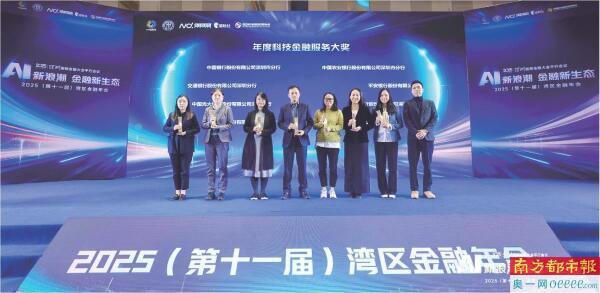
年度科技金融服务大奖
Nan Fang Du Shi Bao· 2025-11-24 23:11
Core Insights - The article highlights the recognition of various banks in Shenzhen for their contributions to providing high-quality financial services to technology innovation enterprises, thereby supporting the development of new industries and economic models [2][3][4][5]. Group 1: Awarded Institutions - The awarded institutions include major banks such as Bank of China, Agricultural Bank of China, Bank of Communications, Ping An Bank, China Everbright Bank, Shanghai Bank, Guangfa Bank, and Zhuhai Huaren Bank [2]. Group 2: Contributions of Awarded Banks - **Bank of China Shenzhen Branch**: Focused on inclusive finance and key industries, serving over 15,000 local tech enterprises with technology loans exceeding 270 billion yuan, and loans for strategic emerging industries and manufacturing surpassing 200 billion yuan each [2]. - **Agricultural Bank of China Shenzhen Branch**: Innovated multiple financial products, including the first knowledge property asset-backed note and a customized loan product for drone technology enterprises [2]. - **Bank of Communications Shenzhen Branch**: Developed the "Kechuang Pengfei Loan" to address financing difficulties for small and medium-sized tech enterprises by integrating 12 lending dimensions into the assessment system [3]. - **Ping An Bank**: Established a technology finance center to create a comprehensive financial service system covering the entire lifecycle of tech enterprises, with specialized teams in key branches [3]. - **China Everbright Bank Shenzhen Branch**: Built a specialized service team and innovative "Sunshine Innovation" products to support enterprises throughout their lifecycle [3]. - **Shanghai Bank Shenzhen Branch**: Focused on providing diversified financial support for tech innovation enterprises, establishing a unique "12345" technology finance service system [3]. - **Guangfa Bank Shenzhen Branch**: Emphasized customer-centric high-quality development and created a comprehensive technology finance service system [4]. - **Zhuhai Huaren Bank**: Engaged in the Bay Area development, focusing on integrating finance with industry to create a technology-driven specialty industrial bank [5].

年末部分银行推出零息、贴息等汽车金融优惠
Zheng Quan Ri Bao Zhi Sheng· 2025-11-24 16:43
Core Viewpoint - Banks are intensifying their automotive consumer finance support as the year-end car buying season approaches, implementing measures such as zero interest rates and subsidies to stimulate the automotive market [1][2] Group 1: Bank Initiatives - Postal Savings Bank of China offers up to 4,500 yuan in financial subsidies for the new BJ40 model, with annual loan rates ranging from 0% to 6% [1] - Ping An Bank has launched a year-end car purchase campaign with a minimum interest rate of 0%, offering loans from 10,000 yuan to a maximum of 1 million yuan [1] - Zhongyuan Bank has introduced a "Car Purchase Guide" for its car loan products, with online approval and loan amounts up to 3 million yuan at an interest rate starting from 4.37% [1] Group 2: Market Dynamics - The increase in automotive consumer finance incentives by banks is driven by the year-end buying season and government measures to boost consumption [2] - Banks are focusing on activating car purchase demand through low rates, subsidies, and flexible guarantees amid slowing retail credit growth [2] - The automotive finance sector is transitioning from extensive expansion to a more refined operation centered on scenario-based, digital, and personalized services [2] Group 3: Future Trends - Future competition in automotive finance will shift from interest rate comparisons to capabilities in scenario embedding, technological responsiveness, and ecological collaboration [3] - Key trends include deepening engagement in the new energy sector, enhancing technological empowerment and risk control, and promoting product differentiation for various consumer segments [3] - The focus will also be on establishing partnerships with quality car manufacturers and dealers, creating a comprehensive financial service ecosystem for car owners, and leveraging digital platforms to align with government consumption incentives [3]

多家银行挂牌信用卡不良资产
Zhong Guo Ji Jin Bao· 2025-11-24 16:29
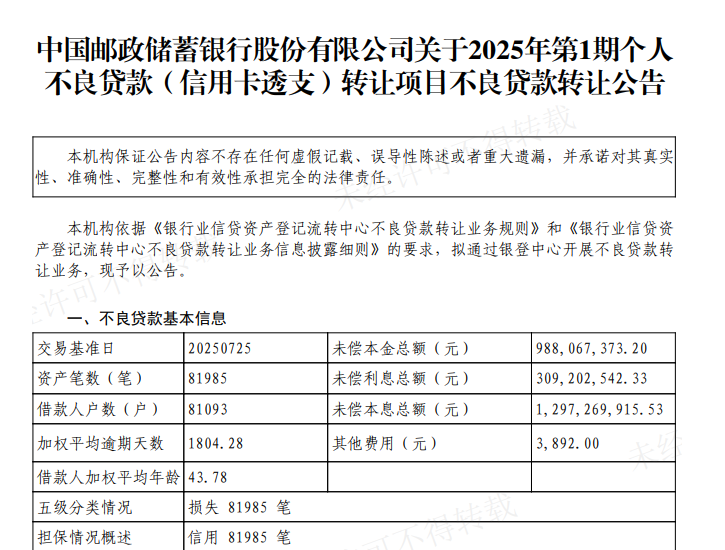
Core Viewpoint - Postal Savings Bank and Ping An Bank are transferring personal non-performing loans totaling 2.1 billion yuan, indicating a trend of accelerated asset clearance in the banking sector as they seek to manage rising non-performing loan ratios and meet regulatory requirements [1][6]. Group 1: Loan Transfer Details - Postal Savings Bank is transferring its first batch of personal non-performing loans for 2025, involving 81,985 loans and 81,093 borrowers, with a total unpaid principal of 988 million yuan and unpaid interest of 309 million yuan, amounting to a total of 1.297 billion yuan [3][5]. - The weighted average overdue days for Postal Savings Bank's non-performing loans is 1,804.28 days (approximately 5 years), with a weighted average borrower age of 43.78 years [5]. - Ping An Bank is transferring two batches of personal non-performing loans, with the first batch involving 33,631 loans and a total unpaid principal and interest of 477 million yuan, and the second batch involving 27,522 loans with a total of 328 million yuan [5]. Group 2: Industry Trends - Since entering the fourth quarter, banks have accelerated the clearance of non-performing assets, with over 20 announcements related to personal non-performing loans in the credit card sector reported this month [6]. - The trend of increasing non-performing loan ratios in retail loans is evident, with credit card loan non-performing rates continuing to rise, although the rate of increase is slowing [6]. - Banks are motivated to transfer non-performing assets to reduce their non-performing loan balances and free up capital tied to inefficient assets, driven by regulatory assessments and the need to optimize financial statements [6].