
罗氏

Search documents
Hologic Faces Molecular Drag, But Here's Why It's Not a Major Concern
ZACKS· 2025-07-02 14:35
Core Insights - Hologic's Molecular Diagnostics business experienced a 7.8% growth in Q2 of fiscal 2025, excluding COVID-19-related sales, but faced challenges due to reduced HIV testing sales in Africa from USAID funding cuts [1][8] - The long-term outlook for the Molecular Diagnostics segment remains positive, driven by over 20 assays on the Panther platforms and a focus on increasing test utilization [2] - Innovations such as the BV/CV/TV assay are contributing to growth, addressing significant testing gaps in women's health [3] - Hologic's Molecular Diagnostics is projected to grow at a compound annual growth rate (CAGR) of 7.3% from 2025 to 2027 [4] Company Performance - Hologic's stock has increased by 3.6% in the last 30 days, contrasting with a 0.7% decline in the industry [7] - The company is trading at a forward five-year sales multiple of 3.44X, below the industry average of 4.11X, and currently holds a Value Score of B [9] - Consensus estimates for Hologic's fiscal 2025 and 2026 earnings show a downward trend, with current earnings projections for fiscal 2025 at $4.19 per share [10][11]



诺华领跑!全球11款RDC药物上市,中国120家药企激战万亿核药赛道
Ge Long Hui· 2025-07-01 10:45
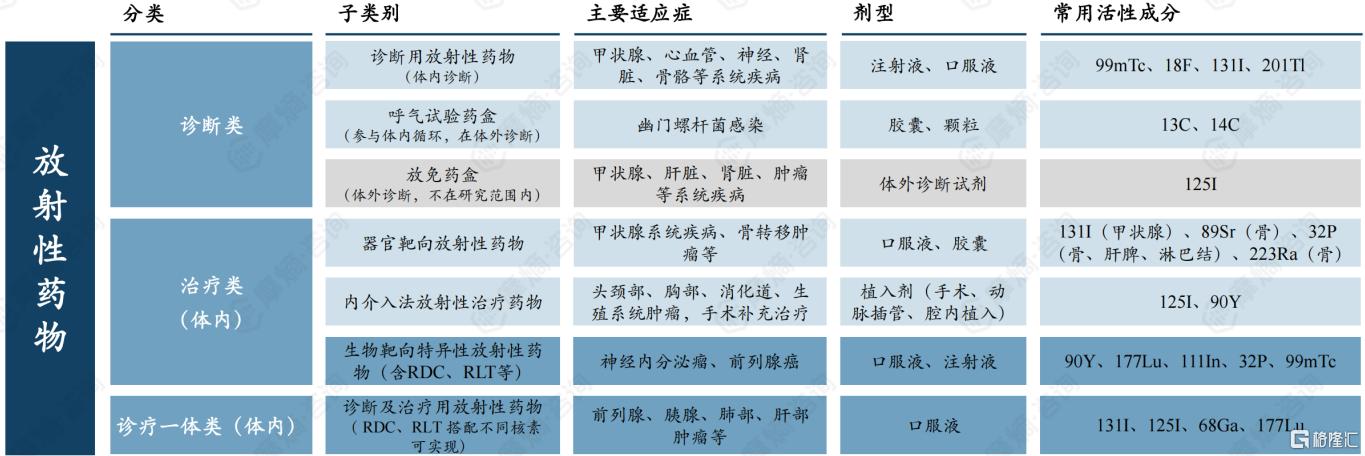
Group 1: Rise of RDC Drugs - The development of Radiopharmaceutical Drug Conjugates (RDC) is gaining momentum in the field of oncology, driven by the need for more precise, effective, and less toxic treatment methods [1][2] - The history of radioactive substances in medicine dates back to 1896, with significant advancements in nuclear medicine applications, particularly in diagnostics, which dominate over 90% of the market [2] - Traditional nuclear medicines like Iodine-131 and Radium-223 have been widely used in clinical treatments, with Iodine-131 being effective for thyroid conditions since 1941 and Radium-223 approved by the FDA in 2013 for prostate cancer bone metastases [2] Group 2: Mechanism and Composition of RDC - RDCs combine targeting molecules with radioactive isotopes to create a new type of integrated diagnostic and therapeutic drug, allowing for precise localization of diseased tissues and simultaneous treatment [7][10] - The key components of RDC include targeting ligands, linkers, chelators, and radioactive isotopes, each serving specific functions to ensure effective delivery and action against cancer cells [9][10] - The unique ability of RDCs to integrate diagnosis and treatment makes them a versatile tool in clinical applications, with common isotopes used for diagnosis being Gallium-68 and for treatment being Lutetium-177 [10] Group 3: Global R&D Landscape of RDC - The RDC sector has seen significant R&D achievements, with 11 RDC drugs currently on the market, including 9 diagnostic and 2 therapeutic agents, focusing on targets like PSMA and SSTR for prostate and neuroendocrine tumors [11][12] - Novartis leads the international market with strategic acquisitions, including AAA and Endocyte, resulting in flagship products Lutathera and Pluvicto, with Pluvicto projected to achieve $1.392 billion in sales by 2024 [12][16] - Other major pharmaceutical companies such as Roche, Eli Lilly, Bayer, and AstraZeneca are investing heavily in RDC development, each committing over $1 billion to find promising pipelines [16] Group 4: Domestic Market Dynamics in China - Over 120 Chinese companies are involved in RDC R&D, with leading firms like Yuan Da Pharmaceutical developing innovative products targeting various cancers [17] - Heng Rui Pharmaceutical is also a key player with multiple pipelines, including three RDCs in Phase III clinical trials, targeting PSMA and SSTR [17][18] - New entrants like Xiantong Pharmaceutical and Yunhe Pharmaceutical are emerging, with innovative products entering clinical trials, indicating a growing competitive landscape in the domestic RDC market [20][23]

Halozyme Therapeutics Added to Russell 1000® Index
Prnewswire· 2025-06-30 20:05
Group 1 - Halozyme Therapeutics, Inc. has been added to the U.S. large-cap Russell 1000® Index, effective after market close on June 27, 2025, as part of the 2025 FTSE Russell indexes annual reconstitution [1][2] - The Russell 1000® Index includes approximately 1,000 of the largest U.S. securities based on market capitalization and serves as a benchmark for large-cap stock performance [1][2] - Dr. Helen Torley, President and CEO of Halozyme, stated that joining the Russell 1000 Index reflects the company's leadership in rapid large-volume subcutaneous drug delivery and its track record of durable growth [2] Group 2 - Halozyme is a biopharmaceutical company focused on improving patient experiences and outcomes through its ENHANZE® drug delivery technology, which facilitates subcutaneous delivery of injected drugs [3] - The company has licensed its ENHANZE® technology to major pharmaceutical companies, including Roche, Takeda, and Pfizer, impacting over one million patients globally [3][4] - Halozyme develops drug-device combination products using advanced auto-injector technologies aimed at enhancing patient comfort and adherence [4] Group 3 - The company is headquartered in San Diego, CA, with additional offices in Ewing, NJ, and Minnetonka, MN, where its operations facility is located [5]


行业周报:多款减肥药亮相2025ADA,重点关注AMYR与ActRII靶点-20250629
KAIYUAN SECURITIES· 2025-06-29 06:45
Investment Rating - The investment rating for the pharmaceutical and biotechnology industry is "Positive" (maintained) [2] Core Insights - The report highlights the emergence of multiple promising weight loss drugs showcased at the 2025 ADA conference, focusing on AMYR and ActRII target drugs, which exhibit excellent clinical data and are expected to become core targets for future weight loss drug development [6][15] - The report emphasizes the potential of oral and ultra-long-acting drugs in the weight loss and glycemic control market, which are anticipated to open new incremental market opportunities [8][31] - The report recommends several pharmaceutical and biotechnology companies as investment targets, including Heng Rui Medicine, East China Medicine, and others across various segments such as CXO, research services, traditional Chinese medicine, raw materials, medical devices, and retail pharmacies [9] Summary by Sections 1. Weight Loss Drug Developments - The 2025 ADA conference showcased several potential pipeline drugs for weight loss, with a focus on AMYR and ActRII target drugs, which are expected to lead future developments in this area [15] - AMYR-targeted drugs, such as eloralintide from Eli Lilly, demonstrated superior efficacy and safety compared to GLP-1 drugs, indicating a promising future for this class of drugs [16][18] - ActRII-targeted drugs, particularly Bimagrumab, showed significant weight loss results, with 100% of weight loss coming from fat, suggesting a new standard for high-quality weight loss therapies [28][29] 2. Oral and Ultra-Long-Acting Drugs - The report identifies oral GLP-1RA drugs as a new trend in the weight loss and glycemic control market, with several companies presenting promising clinical data at the 2025 ADA conference [31][32] - The ultra-long-acting drug Maridebart cafraglutide demonstrated effective weight loss results with extended dosing intervals, enhancing patient compliance and treatment simplicity [33][34] 3. Recommended Investment Targets - The report lists various companies across different segments as recommended investment targets, including pharmaceutical and biotechnology firms, CXO companies, research service providers, traditional Chinese medicine manufacturers, raw material suppliers, medical device companies, and retail pharmacies [9]




(进博故事)瑞士中心解锁瑞中合作密码
Zhong Guo Xin Wen Wang· 2025-06-27 13:01
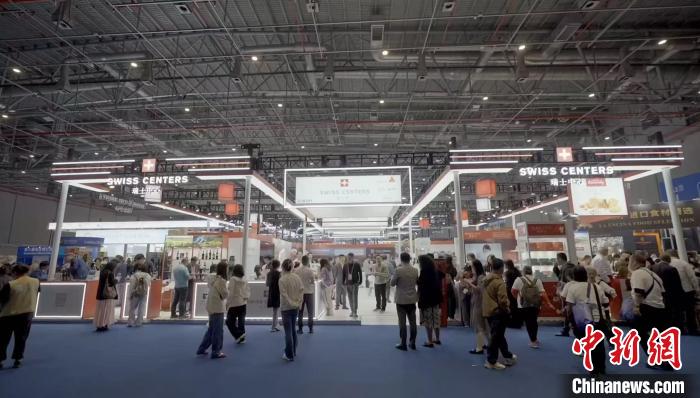
Core Insights - The China International Import Expo (CIIE) serves as a significant platform for enhancing Swiss-Chinese economic and trade cooperation, acting as a "multiplier" for Swiss companies to expand in the Chinese market [1][3] - The Swiss Center has evolved into a key navigator for Swiss enterprises entering the Chinese market, helping over 100 companies participate in CIIE since its inception [2][3] Group 1: Swiss Center's Role - The Swiss Center has been a consistent participant in CIIE, helping Swiss companies, especially SMEs, showcase products and find business partners [2] - The Center has witnessed a growing recognition and satisfaction among Swiss enterprises regarding CIIE, with participation expanding from four companies in the first year to 24 companies in the seventh year [8][11] Group 2: Innovations and Developments - The Swiss Center has introduced a Business Development department to specifically support Swiss consumer goods companies, reflecting the increasing number of exhibitors at CIIE [6] - A new position, "Customer Success Manager," was created to assist Swiss companies in successfully entering the Chinese market, with a focus on reducing the product entry cycle from 12 months to 3 months [6][7] Group 3: Market Opportunities - CIIE provides Swiss brands with opportunities to test products, expand sales channels, and enter the Chinese market, leading to high participation enthusiasm among Swiss enterprises [11] - The introduction of an innovation incubation area at CIIE aims to meet the needs of Swiss startups looking to enter the Chinese market, showcasing 14 medical technology companies [11]
药品产业链周度系列(六)CCR8单抗:靶向Treg的潜力新星-20250627
Changjiang Securities· 2025-06-27 04:42
Investment Rating - The report maintains a "Positive" investment rating for the healthcare sector [8]. Core Insights - CCR8 is a significant member of the chemokine receptor family, specifically expressed in Tregs within the tumor microenvironment, enhancing Treg recruitment and function, thereby suppressing anti-tumor immune responses and facilitating tumor immune evasion [2][6]. - There are currently 15 CCR monoclonal antibodies in clinical trials globally, with LM-108, developed by Lixin Pharmaceutical in collaboration with China National Pharmaceutical Group, being the fastest progressing CCR8-targeting antibody, showing excellent clinical data across multiple indications [2][7]. Summary by Sections CCR8: A Promising Tumor Immunotherapy Target - CCR8 is highly expressed in Tregs within the tumor microenvironment and is associated with various cancers such as breast, colorectal, and gastric cancers, making it a potential tumor immunotherapy target [6][16]. - Targeting CCR8 may selectively eliminate tumor-infiltrating Treg cells while minimizing systemic immune-related toxicity, thus enhancing treatment safety and efficacy [6][16]. Development Landscape - As of June 2025, there are 28 CCR8 monoclonal antibodies in development, with 15 in clinical stages. Lixin Pharmaceutical's LM-108 is leading in development, currently in I/II phase trials for non-small cell lung cancer, triple-negative breast cancer, and gastric cancer [7][26]. - Data from the 2024 ASCO conference indicated that LM-108 combined with PD-1 antibodies achieved an overall response rate (ORR) of 36.1% in advanced gastric cancer patients, with a notable ORR of 87.5% in the CCR8 high-expression subgroup [7][31]. Investment Perspective - The report suggests that the healthcare sector will continue to see innovation-driven growth, particularly in the context of breakthrough therapies and technological advancements. It emphasizes the importance of companies with healthy cash flows and strong innovation capabilities [33].

Will MRK's Growing Pipeline Help Navigate the Looming Keytruda LOE?
ZACKS· 2025-06-26 14:51
Core Insights - Merck has developed a significant portfolio of new products and pipeline candidates in oncology, vaccines, neuroscience, and infectious diseases, with plans to launch around 20 new vaccines and drugs in the coming years, many of which have blockbuster potential [1][9] Pipeline Development - Merck's phase III pipeline has nearly tripled since 2021, driven by in-house progress and M&A activities [1][9] - Promising late-stage candidates include enlicitide decanoate/MK-0616 for hypercholesterolemia, tulisokibart for ulcerative colitis, and bomedemstat/MK-3543 for essential thrombocythemia, myelofibrosis, and polycythemia vera [2] - Merck is co-developing three DXd antibody-drug conjugates (ADCs) with Daiichi Sankyo for various cancer indications [3] Market Expansion - Merck has in-licensed global rights to HS-10535, an investigational oral GLP-1 receptor agonist, to enter the obesity market [3] - The company is also focusing on its new 21-valent pneumococcal conjugate vaccine, Capvaxive, and pulmonary arterial hypertension drug, Winrevair, to enhance revenue as Keytruda approaches patent expiration [5][9] Keytruda and Competitive Landscape - Keytruda, a PD-L1 inhibitor, generated $7.21 billion in sales in Q1 2025, reflecting a 6% year-over-year increase, with a projected CAGR of 5.4% over the next three years [6] - Keytruda faces competition from other PD-L1 inhibitors such as Opdivo, Tecentriq, and Imfinzi, which have also shown strong sales growth [7][8][10] Financial Performance - Year-to-date, Merck's shares have decreased by 19.9%, compared to a 1.8% decline in the industry [11] - Merck's price/earnings ratio stands at 8.56, which is lower than the industry average of 14.92 and its 5-year mean of 12.85, indicating attractive valuation [12] - The Zacks Consensus Estimate for 2025 earnings has slightly declined from $8.94 to $8.92 per share over the past 60 days [13]

国内药企积极布局减肥药领域,又一国产创新药加入对“减肥神药”司美格鲁肽的挑战
Hua Xia Shi Bao· 2025-06-26 05:53
Core Insights - The article discusses the emergence of Ecnoglutide, a new GLP-1 receptor agonist developed by a team led by Professor Ji Linong from Peking University People's Hospital, which poses a challenge to the market dominance of Novo Nordisk's Semaglutide in the weight loss drug sector [1][4]. Company Developments - Ecnoglutide has shown impressive results in its Phase III clinical trial (SLIMMER), with over 92.8% of participants achieving effective weight loss and an average weight reduction of 15.1% over 48 weeks [3][4]. - The trial involved 664 participants across 36 centers in China, making it the largest sample size for a weight loss drug trial in the country [3]. - The drug has entered the market application stage, indicating a potential for commercialization soon [4]. Market Landscape - The global GLP-1 weight loss drug market is projected to exceed $150 billion by 2025, with Novo Nordisk's Semaglutide leading the market, generating $8 billion in Q1 2025, a 31% year-on-year increase [5]. - Other companies, including Hengrui Medicine, East China Pharmaceutical, and others, are actively developing weight loss drugs, with some products already in Phase II or III clinical trials [2][6]. Competitive Dynamics - Ecnoglutide's clinical trial results suggest a significant competitive edge over existing products, with a higher effective weight loss rate compared to similar drugs [3][4]. - The article highlights the potential for domestic companies to challenge established players like Novo Nordisk and Eli Lilly, as several innovative drugs are in advanced clinical stages [6]. Future Outlook - The article emphasizes the commercial opportunity for domestic alternatives in the weight loss drug market, especially as imported drugs have already cultivated market demand [7].

晶泰科技(02228)与美国生物制药传奇Gregory Verdine旗下公司达成战略合作 联手打造最强AI制药平台
智通财经网· 2025-06-24 03:24
Core Insights - Quantum physics, AI, and robotics drug and new materials development platform, CrystalTech (02228), has entered a strategic partnership worth billions with DoveTree LLC, founded by renowned chemist Gregory Verdine [1] - The agreement grants DoveTree exclusive global rights to multiple pipelines in oncology, autoimmune, and neurological diseases, with CrystalTech receiving a total of $100 million in upfront payments and potential milestone payments worth billions [1][10] Company Overview - Gregory Verdine is a pioneer in chemical biology and a successful entrepreneur, having founded over 12 biotech companies, with 7 going public and one being acquired [2][3] - Verdine's innovative "Stapled Peptides" technology has opened new pathways for targeting "undruggable" targets, creating a market valued in the billions [2][6] Financial Implications - CrystalTech will receive $51 million and $49 million in upfront payments within 10 and 180 days post-signing, respectively, along with potential milestone payments and royalties based on annual net sales [1][10] - The collaboration is expected to significantly enhance CrystalTech's financial returns and support ongoing R&D efforts [10] Market Potential - Verdine's work has led to the successful development of drugs targeting traditionally "undruggable" targets, generating over $30 billion in sales from three major drugs [6][8] - The partnership is seen as a model for combining U.S. intellectual property with Chinese efficiency, potentially unlocking a multi-billion dollar market for previously untargetable drug targets [10] Strategic Positioning - The collaboration elevates CrystalTech's status in the industry and may inspire further high-tech partnerships [10] - Verdine's extensive experience and network in the biotech sector, including roles with top venture capital firms, positions the partnership for success in the evolving landscape of drug development [9][10]
对外授权交易大单频现中国创新药闪耀全球舞台
Zheng Quan Shi Bao· 2025-06-23 18:44
Core Insights - Chinese innovative pharmaceutical companies are increasingly engaging in large-scale business development (BD) transactions, signaling a shift from being "followers" to "participants" and "contributors" in the global pharmaceutical landscape [1][6][10] Group 1: Major BD Transactions - Recently, major BD deals have been reported, including a $60 billion deal by 3SBio and a $53.3 billion strategic collaboration between CSPC and AstraZeneca [1][3] - In January, Innovent Biologics licensed its DLL3 ADC to Roche for $800 million upfront and potential milestone payments up to $1 billion [1][2] - In March, HAPO announced a global strategic partnership with AstraZeneca, receiving $175 million upfront and potential milestone payments up to $4.4 billion [2][3] Group 2: Market Trends and Growth - The total value of BD transactions for Chinese innovative drugs is projected to reach $52.3 billion in 2024, with an upfront payment of $4.1 billion, both setting historical records [3][5] - As of May 27, 2024, the total value of BD transactions for Chinese innovative drugs has already reached $45.5 billion, indicating a strong growth trajectory [3][5] Group 3: Policy and Regulatory Support - The Chinese government has implemented a series of reforms to support innovative drug development, including a significant reduction in drug approval times from an average of 3 years to 60 days [6][7] - The recent proposal to further reduce clinical trial approval times to 30 working days aims to enhance the efficiency of drug development [7][8] Group 4: Competitive Advantages - Chinese innovative drugs are becoming increasingly attractive to multinational pharmaceutical companies due to their cost-effectiveness and faster development timelines [10][11] - The average R&D cost for innovative drugs in China is significantly lower than in the U.S., with estimates suggesting costs are 20% to 30% of those in the U.S. [11][12] Group 5: Industry Positioning - China has emerged as a leader in the global pharmaceutical innovation landscape, with the number of innovative drugs entering clinical trials surpassing that of the U.S. [8][9] - The number of innovative drugs approved in China has increased dramatically, from 3 in 2015 to 39 in 2024, marking a twelvefold increase [7][8]