
宇树科技

Search documents
机器人扎堆抢上春晚:1亿出场费背后的行业狂欢与隐忧
Sou Hu Cai Jing· 2026-01-31 20:52
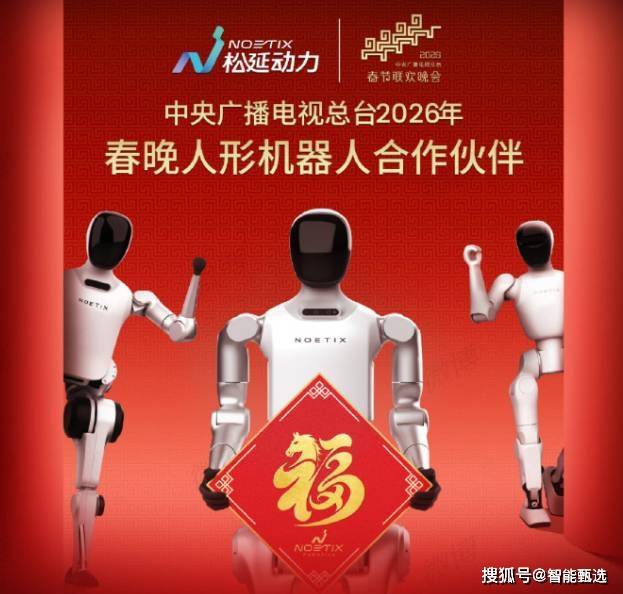
春晚的商业价值早已被互联网巨头验证。2015年微信支付以5亿元红包首战春晚,一夜完成支付宝8年积 累的用户绑卡量;2016年支付宝以8亿元反击,此后百度、快手、京东等企业轮番登场,独家赞助费水 涨船高。2019年百度为春晚投入的营销费用超16亿元,2022年京东的赞助费达2亿元,叠加红包发放后 总投入超10亿元。 然而,2026年春晚的赞助逻辑发生根本性转变。当阿里、京东等互联网巨头开始审视投入产出比时,具 身智能企业却以"组团"形式接棒成为主角。据业内人士透露,此次春晚机器人赞助总金额达5亿元,由 宇树科技、银河通用等5家企业分摊,每家实际支出约1亿元。部分企业甚至以股权或资源置换形式参 与,央视融媒基金的身影也出现在多家机器人企业的融资列表中。 2026年央视春晚的舞台上,一场前所未有的科技盛宴正在上演。宇树科技、银河通用、魔法原子、松延 动力等具身智能企业携多款人形机器人集体亮相,武术、舞蹈、小品等节目轮番登场,金属机械与传统 文化碰撞出别样火花。这场被外界称为"机器人狂欢"的表演背后,是每家企业高达1亿元的"出场费"投 入,以及行业洗牌前夜的激烈博弈。 这场"蚂蚁接棒大象"的戏码,折射出科技产业的风向 ...


国产人形机器人“入职”国际邮轮变身“船员” 中国智造助推入境游升温
Zhong Guo Jing Ying Bao· 2026-01-31 15:36
Core Insights - The MSC Mediterranean Cruise has launched a regular operation of the "Shanghai-Busan" dual homeport model, enhancing Shanghai's appeal as a global tourist destination [1][2] - The introduction of humanoid robots and robotic dogs from Yushu Technology marks the first time such technology has been deployed on a cruise ship, providing interactive experiences for guests [1][2] Group 1: Operational Developments - The MSC "Glory" cruise ship has successfully completed its first voyage from Busan to Shanghai, carrying nearly 1,000 guests from Korea and over 3,000 returning guests from Shanghai [1] - The dual homeport model allows for visa-free travel for Chinese and international guests to Busan and Jeju, while also facilitating Korean guests to visit Shanghai [1] Group 2: Technological Innovations - Yushu Technology's robotic dogs and humanoid robots will serve as permanent crew members on the MSC "Glory," engaging with guests through themed parades and dance performances [2] - A new robotic dog from Yushu Technology is set to embark on a global cruise journey aboard the MSC "Splendor" on March 29, 2026, marking a significant milestone in the integration of robotics in the cruise industry [2]
具身智能产业爆发,90亿订单引领赛道升级:机械设备
Huafu Securities· 2026-01-31 14:15
行 机械设备 2026 年 01 月 31 日 中国机器人网表示,目前来看,发展足够智能的人形机器人把人 类社会的重复性体力劳动接管过去将会是一个造福全人类的科技大方 向。据高工移动机器人,英伟达 CEO 黄仁勋曾公开表示:机器人时代 已经来临,具身智能是人工智能的下一波浪潮,未来人形机器人将像 汽车般普及。GGII 预测,中国人形机器人市场规模到 2030 年将达到 近 380 亿元,2024-2030 年复合增长率将超过 61%,中国人形机器人销 量将从 0.4 万台左右增长至 27.12 万台。 建议关注 业 研 究 机械设备 具身智能产业爆发,90 亿订单引领赛道升级 投资要点: 市场格局明晰,多场景产品规模化落地 行 业 定 期 报 告 2025 年具身智能行业订单总额超 90 亿元,优必选、宇树科技等头 部企业领跑第一梯队,B 端工业制造、智慧物流为核心应用领域,占 比超 80%,消费级与教育科研类订单快速增长。产品形态呈现双足、 轮式、四足并行发展态势,适配汽车生产、电力巡检、商业服务等多 元场景,多地数据采集与训练中心的建设,推动行业从"卖硬件"向 "卖服务+解决方案"转型。 全球布局提速,产 ...
2026(重庆)海陆空科技展开幕 打造沉浸式科技体验
Xin Lang Cai Jing· 2026-01-31 13:19
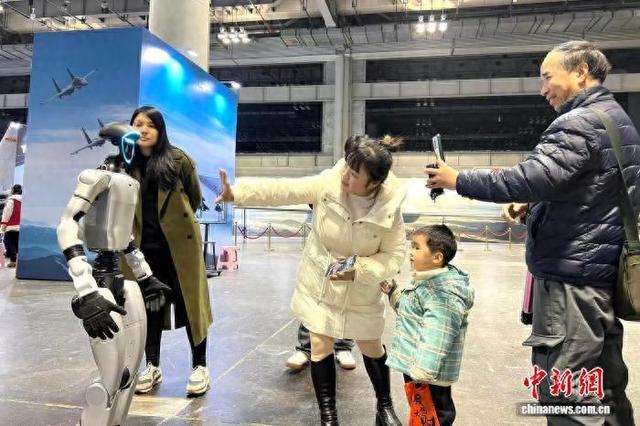
Core Viewpoint - The 2026 Chongqing Sea, Land, and Air Technology Exhibition showcases the integration of artificial intelligence and advanced equipment, providing an immersive public science education experience [1]. Group 1: Exhibition Overview - The exhibition features a theme of "Artificial Intelligence + Hard-core Equipment," combining display, interaction, science popularization, and experience [1]. - It breaks away from traditional static exhibition models, emphasizing dialogue, interactivity, learning, and control [2]. Group 2: Exhibition Highlights - Key areas include an artificial intelligence theme zone, a sea, land, and air equipment model zone, an immersive interactive experience zone, and a diverse play area [2]. - The AI exhibition area features robots and bionic dogs interacting with visitors, performing dynamic shows such as dance and martial arts, while a soccer robot team demonstrates precise decision-making capabilities [5]. - The drone performance area showcases a visual feast of "Artificial Intelligence + Cluster Control" through coordinated flying and light effects [5]. Group 3: Educational Aspects - To enhance the educational value of the exhibition, multiple science popularization experts will be invited to conduct themed lectures and interactive Q&A sessions, helping visitors understand the scientific principles and technological applications behind the exhibits [7].
具身智能产业爆发,90亿订单引领赛道升级
Huafu Securities· 2026-01-31 12:43
行 华福证券 市场格局明晰,多场景产品规模化落地 行 业 定 期 报 告 2025 年具身智能行业订单总额超 90 亿元,优必选、宇树科技等头 部企业领跑第一梯队,B 端工业制造、智慧物流为核心应用领域,占 比超 80%,消费级与教育科研类订单快速增长。产品形态呈现双足、 轮式、四足并行发展态势,适配汽车生产、电力巡检、商业服务等多 元场景,多地数据采集与训练中心的建设,推动行业从"卖硬件"向 "卖服务+解决方案"转型。 全球布局提速,产业链协同释放动能 中国具身智能企业加速全球化拓展,越疆、星动纪元等海外订单 占比达 50%,东南亚、欧洲成为主要市场,技术优势与性价比成出海 核心竞争力。国内产业链上下游协同发力,核心零部件需求激增,"本 体+集成"模式成主流,叠加资本市场加持,多家企业启动 IPO 或完成 融资,2026 年行业将聚焦技术突破、成本下降与场景深化,持续释放 发展潜力。 人形机器人造福全人类,未来有望像汽车般普及 机械设备 2026 年 01 月 31 日 业 研 究 机械设备 具身智能产业爆发,90 亿订单引领赛道升级 投资要点: 中国机器人网表示,目前来看,发展足够智能的人形机器人把人 类 ...
我们不需要100万台“跳舞机器人”
虎嗅APP· 2026-01-31 03:54
Core Viewpoint - The article discusses the current state and future prospects of humanoid robots, highlighting the discrepancies in projected shipment volumes and the challenges faced by the industry in achieving practical applications beyond entertainment [5][6][12]. Group 1: Market Data and Projections - Omdia's report lists the top three humanoid robot manufacturers for 2025 as Zhiyuan Robotics, Yushu Technology, and Ubtech, with projected shipments of 5168 units, 4200 units, and 1000 units respectively [6]. - Counterpoint's data shows that these three companies hold market shares of 30.4%, 26.4%, and 5.2% in the humanoid robot sector [9]. - Yushu Technology claims its actual shipment volume will exceed 5500 units in 2025, countering external claims of lower figures [12]. Group 2: Industry Challenges - Despite the optimistic projections, the humanoid robot industry is still in its early exploratory phase, with over 140 companies and more than 330 products expected by 2025, indicating a lack of substantial production capacity [12][13]. - The industry faces significant hurdles in application and market acceptance, with many robots currently limited to entertainment functions like dancing, which raises concerns about their practical utility [14][18]. - The need for further development and the high barrier for consumer adoption are evident, as many users report their robots becoming unused after initial excitement [19][20]. Group 3: Development and Innovation - The article emphasizes the importance of product stability and the need for a simplified "proof of concept" (POC) process to enhance deployment efficiency [20][21]. - Current humanoid robots struggle with hardware reliability, often requiring additional support to function properly, which hampers their market readiness [22]. - The potential for humanoid robots to evolve into more functional roles exists, but significant advancements in intelligence and application are necessary for widespread adoption [27][28]. Group 4: Future Outlook - The article suggests that achieving mass production targets, such as the ambitious goal of 1 million units set by Elon Musk for Tesla's Optimus, may be unrealistic in the near term due to existing technological and market challenges [25][28]. - Industry experts believe that the path to scaling production will depend on continuous iteration and improvement of the robots' capabilities, drawing parallels with the electric vehicle industry's growth trajectory [23][27].

谷歌推出世界生成工具 Project Genie;又一 AI 大牛加入腾讯;雷军、刘强东等出席中英企业家委员会会议 | 极客早知道
Sou Hu Cai Jing· 2026-01-31 02:02
Group 1: Google Project Genie - Google DeepMind has launched Project Genie, an AI tool that allows users to create interactive virtual worlds using text prompts or images [1] - The tool is currently available to users with a Google Ultra account in the U.S. who are 18 years or older [1] - Project Genie is based on the previously showcased Genie 3 model and integrates Google's Nano Banana Pro image generation model and Gemini multimodal model [1] Group 2: Apple AirPods Pro 3 Demand - Apple CEO Tim Cook stated that the demand for AirPods Pro 3 has exceeded the company's expectations since its release in September 2025 [3] - The "Wearables, Home, and Accessories" category saw a revenue decline of approximately 2% year-over-year in Q1 of fiscal year 2026 [3] - Cook clarified that the revenue drop does not reflect true market demand, attributing it to production constraints affecting AirPods Pro 3 [3] Group 3: Apple Siri Development - Apple initially considered using Anthropic's Claude model for the new Siri but ultimately chose Google's Gemini platform due to cost negotiations [5][7] - Anthropic's proposal included high fees, demanding tens of billions annually from Apple, which led to the decision to switch to Gemini [7] - Despite not being selected for Siri, Anthropic continues to play a significant role in Apple's internal systems [7] Group 4: Xiaomi's UK Expansion - Xiaomi plans to open 150 stores in the UK over the next four years, having generated approximately 1 billion RMB in revenue last year [10] - The company has diversified its product lines, including smartphones, wearables, home appliances, and vehicles [10] Group 5: Tencent's AI Research - Tencent has appointed Pang Tianyu as the Chief Research Scientist for its AI division, focusing on multimodal reinforcement learning [12] - Pang has a strong academic background in machine learning and has published multiple papers in top conferences [12] Group 6: Apple iPhone 18 Pro Features - Apple is negotiating with SpaceX to integrate Starlink satellite communication into the upcoming iPhone 18 Pro, allowing users to connect without additional hardware [14] - Currently, Apple offers emergency SOS satellite services through Globalstar, but this is limited to urgent situations [14] Group 7: Alibaba's DeepPlanning - Alibaba Qianwen has launched a new benchmark test called DeepPlanning, which focuses on complex real-world planning tasks for AI [13] - Current top AI models still show limitations in global optimization and long-term consistency, indicating a gap in achieving full autonomous decision-making capabilities [13] Group 8: Robotics and AI Insights - Yu Shu Technology's CEO Wang Xingxing emphasized the importance of developing large models for robots, suggesting that success in this area could lead to significant recognition [17] - The company reported a production output of over 5,500 humanoid robots in 2025, with plans for further advancements [18]



挪威主权财富基金2025年获利近2500亿美元;理想新设人形机器人和软件本体部门;Sora下载量暴跌45%丨邦早报
创业邦· 2026-01-31 01:12
Group 1 - Sora's mobile downloads have dropped by 45% month-on-month, with consumer spending decreasing by 32% to $367,000, indicating a significant user loss after previously reaching the top of the App Store [1] - Ideal Auto has restructured its R&D organization, creating new teams for humanoid robots and software, with many autonomous driving employees moving to the base model team [3] - Wang Xingxing from Yushu Technology stated that the company that successfully develops large models for robots will be the leading AI and robotics company globally [3] Group 2 - Nvidia's proposed $100 billion investment in OpenAI is reportedly stalled due to internal doubts, despite initial expectations for a swift agreement [5] - Tencent has recruited young AI talent, with scientist Pang Tianyu joining to explore advanced reinforcement learning algorithms [6] - Kimi K2.5 has quickly become one of the top three models globally in terms of usage, significantly increasing Kimi's overseas revenue and user base [8] Group 3 - CATL's sodium battery brand "Sodium New" is set to enter passenger vehicle testing, with models from various manufacturers participating [8] - Apple is prioritizing the production of high-end iPhone models for 2026, delaying standard versions to optimize resource allocation amid rising memory chip prices [8] - Apple's Q1 2026 revenue reached a record $143.76 billion, with a 38% growth in the Greater China region, and a 23% increase in iPhone revenue [9] Group 4 - The Norwegian Sovereign Wealth Fund is projected to earn nearly $246.5 billion in 2025, with a 15.1% annual return driven by strong performance in technology and financial sectors [18] - Omdia forecasts that global smartphone shipments will reach 1.25 billion units in 2025, the highest since 2021, with Apple expected to maintain its position as the largest smartphone manufacturer [18] - Meta's Ray-Ban Display smart glasses component orders have been revised upward, predicting a significant increase in global AR glasses shipments in 2026 [18]

美顶级投行改了,“最新情况表明,中国还要翻一番”
Xin Lang Cai Jing· 2026-01-30 22:15
Core Insights - Morgan Stanley has raised its forecast for China's humanoid robot sales in 2026, expecting a 133% increase this year to 28,000 units, doubling the previous estimate of 14,000 units [1] - The humanoid robot market in China is projected to grow exponentially, from approximately 12,000 units in 2024 to 262,000 units by 2030, and reaching 2.6 million units by 2035 [1] Industry Growth and Cost Reduction - The production costs for robots are expected to decline, lowering the purchase threshold; raw material costs for robot production in China are anticipated to decrease by 16% this year [3] - By 2035, global component prices are expected to drop by about 70%, leading to significant price reductions for humanoid robots [3] - Prices for humanoid robots in middle and low-income countries, including China, are projected to fall from $50,000 in 2024 to approximately $21,000 by 2050 [3] Market Penetration and Application - By 2036, the number of humanoid robots in use globally is expected to reach 25.4 million, accounting for 2% of the overall robot market, with this share increasing to 13% by 2040 and 42% by 2044 [3] - By 2050, the global deployment of humanoid robots may exceed 1 billion units, with over half of these applications in middle and high-income countries [3] China's Dominance in Humanoid Robotics - China is currently the largest market for humanoid robot applications, with over 80% of the global deployment expected by 2025 [3] - The domestic humanoid robot industry has begun extensive market promotion, with several manufacturers partnering with the CCTV Spring Festival Gala to showcase their products [4][5] Investment and Industry Trends - The increasing presence of robot manufacturers at the Spring Festival Gala reflects three major industry trends: focus on consumer-level applications, reaching the C-end market, and transitioning from experimental technology to commercial deployment [7] - A report by IDC indicates that the humanoid robot market will experience explosive growth in 2025, with an estimated shipment of 18,000 units and sales of approximately $440 million, marking a year-on-year increase of about 508% [7] Government Support and Competitive Landscape - Since 2015, the Chinese government has prioritized robotics as a key industry, leading to rapid development and the establishment of over 150 humanoid robot companies [8] - The government has implemented policies to support the robotics industry, aiming for China to achieve international leadership in robotics by 2035 [8] - Elon Musk has acknowledged that China's humanoid robot sector poses the most significant competition for Tesla, highlighting China's manufacturing capabilities and advancements in AI technology [9]


摩根士丹利上调数据,“中国机器人销量还要翻一番”
Xin Lang Cai Jing· 2026-01-30 17:26
Core Insights - Morgan Stanley has raised its forecast for China's humanoid robot sales in 2026, expecting a 133% increase this year to 28,000 units, doubling the previous estimate of 14,000 units [1] - The humanoid robot sales in China are projected to grow exponentially, from approximately 12,000 units in 2024 to 262,000 units by 2030, and reaching 2.6 million units by 2035 [1] Group 1: Market Growth and Projections - The production cost of robots is expected to decline, lowering the purchase threshold for humanoid robots, with raw material costs in China projected to decrease by 16% this year [3] - By 2035, global prices for related components are expected to drop by about 70%, leading to significant price reductions for humanoid robots [3] - The average price of humanoid robots in middle and low-income countries, including China, is expected to fall from $50,000 in 2024 to approximately $21,000 by 2050 [3] - In developed countries like the U.S., the average price is projected to decrease from $200,000 to $75,000 in the same timeframe [3] - By 2036, the number of humanoid robots in use globally is expected to reach 25.4 million, accounting for 2% of the overall robot market, with this share increasing to 13% by 2040 and 42% by 2044 [3] Group 2: Industry Trends and Developments - The humanoid robot industry in China is entering a phase of market promotion, with several manufacturers collaborating with the CCTV Spring Festival Gala to showcase their products [4][5] - The participation of multiple robot manufacturers in the Spring Festival Gala reflects three key industry trends: focus on consumer-level applications, reaching the C-end market, and transitioning from experimental technology to commercial deployment [7] - A report by IDC indicates that the humanoid robot market will experience explosive growth in 2025, with an estimated shipment of 18,000 units and sales revenue of approximately $440 million, marking a year-on-year increase of about 508% [7] - Chinese manufacturers are leading the market, with companies like Zhiyuan Robotics and Yushutech being significant players in terms of shipment volume [7] Group 3: Competitive Landscape - Since 2015, when China prioritized robotics as one of its top ten key industries, the sector has seen rapid development, with over 150 humanoid robot companies currently operating [8] - Government support has been crucial, with policies aimed at enhancing R&D and promoting the integration of robots into economic and social frameworks [8] - China possesses unique advantages in manufacturing application scenarios and data collection capabilities, which are critical for the development of embodied intelligence [9] - Elon Musk has acknowledged that China's humanoid robot sector represents the most formidable competition for Tesla, highlighting China's strengths in large-scale manufacturing and AI technology [9]