
博通

Search documents
利好刺激,这一板块直线拉升!
证券时报· 2025-03-25 04:28
Core Viewpoint - The A-share market is experiencing low volatility with major indices showing overall weak performance, while a new stock, Shengke Nano, has seen a significant surge of over 240% in the morning session [1][2][7]. Group 1: A-share Market Performance - The A-share market is characterized by low volatility and overall weak performance of major indices [1][8]. - Shengke Nano, a newly listed stock, experienced a remarkable increase of over 240% during the morning session [2][12]. Group 2: Shengke Nano Overview - Shengke Nano is a well-known third-party testing and analysis laboratory in the semiconductor industry, providing essential services for semiconductor clients in the R&D phase [12][13]. - The company has established a strong brand effect in the semiconductor testing field, having served over 2,000 global clients, including major chip design firms and leading semiconductor manufacturers [13]. Group 3: Policy Developments - The National Health Commission has initiated a research project aimed at improving the quality of population development by enhancing the support policy system for childbirth, including various measures such as maternity leave and childcare services [3][15]. - The research will analyze the current implementation status and issues of existing support measures, and propose further improvements and long-term policy reserves [15][16]. Group 4: Hong Kong Market Performance - The Hong Kong market is facing a significant downturn, particularly in the technology sector, with the Hang Seng Technology Index dropping over 3% [5][19]. - Notable declines were observed in major tech stocks, including BYD Electronics and Sunny Optical Technology, with declines of over 9% and 8% respectively [6][20][22]. Group 5: Financial Performance of Key Companies - BYD Electronics reported a sales revenue of approximately RMB 177.3 billion for 2024, a year-on-year increase of about 36.43%, with significant growth in its consumer electronics segment [20][21]. - Sunny Optical Technology's revenue for 2024 reached approximately RMB 38.3 billion, a 20.9% increase from the previous year, driven by the recovery in the smartphone market and growth in automotive intelligence [22][23].


深夜,全线大涨!
券商中国· 2025-03-24 15:16
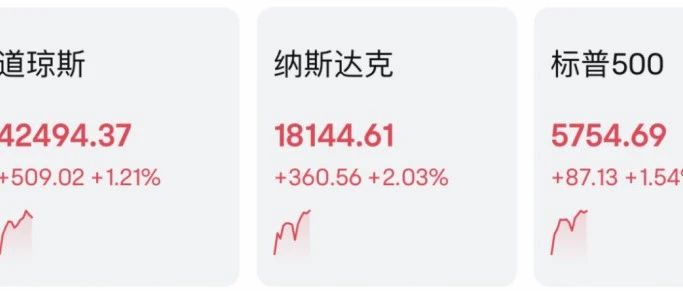
Core Viewpoint - The U.S. stock market staged a strong rebound, with major indices experiencing significant gains, driven by optimism surrounding potential changes in tariff policies announced by the Trump administration [2][5]. Group 1: Market Performance - The three major U.S. indices opened high and continued to rise, with the Dow Jones up 1.21%, Nasdaq up 2.03%, and S&P 500 up 1.54% [5]. - Major tech stocks saw substantial increases, with Tesla rising over 10%, Amazon up over 3%, and other companies like Nvidia, Google A, TSMC ADR, and Broadcom rising over 2% [6]. Group 2: Investment Trends - Investors are currently ignoring the risks posed by a potential full-scale trade war, as significant capital continues to flow into global equity markets. In the week ending last Wednesday, global equity funds saw an inflow of approximately $43.4 billion, the highest level this year [3][10]. - Retail investors in the U.S. have been actively buying Tesla shares, with a cumulative investment of $8 billion over 13 consecutive trading days, marking the largest inflow since 2015 [3][10]. - South Korean investors have also been heavily investing in U.S. stocks, with a net investment of $2.2 billion in Tesla shares this year, making it the most popular trade among them [11]. Group 3: Tariff Policy Insights - The Trump administration's upcoming tariff policy, set to be announced on April 2, is expected to be more targeted than previously suggested, which has contributed to market optimism [7][8]. - Officials have indicated that the new tariffs may exclude certain countries and will not simply be an addition to existing steel and aluminum tariffs, particularly regarding the automotive and semiconductor sectors [7][8].

英伟达引爆CPO新战场
半导体芯闻· 2025-03-24 10:20
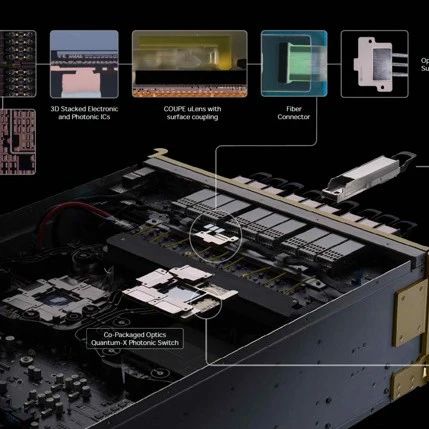
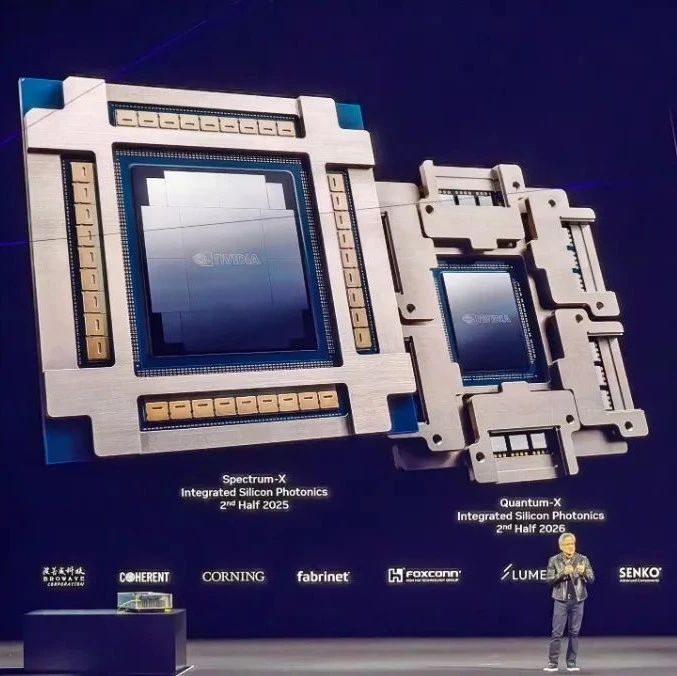
Core Viewpoint - NVIDIA has officially launched two CPO (Co-Packaged Optics) switch products, Quantum-X Photonics for InfiniBand and Spectrum-X Photonics for Ethernet, with the InfiniBand CPO expected to debut in the second half of 2025 and the Ethernet CPO in the second half of 2026 [1][2]. Group 1: CPO Technology and Market Position - CPO will be an optional configuration, and NVIDIA will continue to offer traditional switch systems with pluggable modules [2]. - The primary driver for NVIDIA's investment in CPO technology is power optimization, with a significant reduction in power consumption from 30W to 9W for a 1.6T port, achieving a 70% decrease [2]. - NVIDIA's CPO solution utilizes new micro-ring modulators (MRM) for enhanced energy efficiency, contrasting with Broadcom's CPO solution that achieved a 50% power reduction using traditional Mach-Zehnder modulators (MZM) [2]. Group 2: Ecosystem and Partnerships - The technology involves a multi-component ecosystem, integrating electronic and photonic chips through 3D stacking, with TSMC's compact optical engine technology playing a key role [3]. - NVIDIA's CPO partners include major industry players such as Browave, Coherent, Corning, Fabrinet, Foxconn, Lumentum, Senko, SPIL, Sumitomo, Tianfu Communication, and TSMC [3]. Group 3: Strategic Implications and Future Developments - LightCounting notes that NVIDIA's first CPO product is an InfiniBand switch, which has been overshadowed by Ethernet in NVIDIA's AI strategy, indicating that the initial deployment will primarily serve NVIDIA's own clusters [4]. - The Spectrum-X platform aims to elevate Ethernet performance to match that of InfiniBand, with potential for significant GPU interconnectivity in future architectures [4]. - NVIDIA's entry into the CPO market is expected to invigorate the ecosystem, with both NVIDIA and Broadcom projected to release single-channel 200G CPO switches by 2027, leading to a more mature industry landscape [4]. Group 4: Technical Challenges and Innovations - Scale-out is seen as a low-risk entry point for CPO, while scale-up is critical for success, particularly for the mixed expert (MoE) model requiring rapid response times across GPUs [5]. - NVIDIA has previously announced fiber-based NVLink plans, with at least one cluster built internally, but large-scale deployment has been hindered by high power consumption of timing modules [6]. - The NVLink CPO is scheduled for 2028, allowing NVIDIA to validate technology feasibility over two product cycles, significantly reducing future integration risks [6].

台积电2nm,4月1日开始接单
半导体芯闻· 2025-03-24 10:20
Core Insights - TSMC has achieved a significant milestone with a 60% yield rate for its 2nm technology and will start accepting orders from April 1 [1][2] - Apple is expected to be the first customer for TSMC's 2nm wafers, with the A20 chip designed for the iPhone 18 series set to launch in the second half of 2026 [1][2] - TSMC aims to reach a monthly production target of 50,000 wafers by the end of 2025, with the potential to increase capacity to 80,000 wafers [2] Production and Capacity - TSMC's production will focus on two factories located in Kaohsiung and Baoshan, with an expansion ceremony scheduled for March 31 [1] - The first batch of 2nm wafers is expected to be delivered to Hsinchu Baoshan by late April [1] - The company plans to implement the "CyberShuttle" service to help reduce customer costs associated with wafer testing [2] Market Demand - There is high demand for 2nm wafers, surpassing that for 3nm wafers, with several major clients including AMD, Intel, Broadcom, and AWS lining up for orders [2] - The estimated cost per wafer is around $30,000, indicating a significant investment in advanced semiconductor technology [2]

博通芯片,麻烦不小
半导体行业观察· 2025-03-24 01:23
Core Viewpoint - The article discusses the evolving relationship between Broadcom and its largest customer, Apple, particularly focusing on the potential impact of Apple switching to its own Wi-Fi chips, which could significantly affect Broadcom's revenue from this segment [2][5][8]. Group 1: Revenue Impact from Wi-Fi Chip Transition - Apple plans to replace Broadcom's Wi-Fi and Bluetooth chips with its internal Proxima chips in upcoming products, which could lead to a revenue loss for Broadcom estimated at $2.74 billion in 2025, decreasing to $3.24 billion by 2028 [7][8]. - The Wi-Fi chip segment currently contributes approximately 33.6% to Broadcom's revenue from Apple, but this is expected to drop to 4.3% in 2025 and further to 3.3% by 2028 [8][9]. - Broadcom's market share in the Wi-Fi chip market could decline from 24% to 12.5% if Apple transitions to its own chips, highlighting Broadcom's dependency on Apple for this revenue stream [9]. Group 2: RF Business Analysis - Broadcom supplies RF components to Apple, which accounted for about 65.2% of its revenue from Apple, with a previous agreement valued at $15 billion over three years [10][11]. - Despite the competitive landscape, Broadcom holds a significant position in the RF market, with a stable growth rate and a strong share of Apple's RF revenue, estimated at 32.7% [15][16]. - The RF business is crucial for Broadcom, and while it faces competition from Qualcomm and others, it has maintained a solid relationship with Apple, which is expected to continue in the near term [12][16]. Group 3: AI Chip Opportunities - Broadcom is collaborating with Apple on the Baltra AI chip, which is expected to be produced in 2026, potentially offsetting losses from the Wi-Fi chip transition [18][20]. - Apple's commitment to invest $50 billion over the next four years in AI infrastructure could create significant revenue opportunities for Broadcom, estimated at $12.53 billion annually from custom ASICs [21][22]. - The partnership with major tech companies like Google and Meta in the custom ASIC market positions Broadcom favorably to benefit from Apple's AI initiatives [19][22]. Group 4: Market Outlook and Valuation Concerns - Broadcom's optimistic market outlook, particularly in the custom accelerator space, has faced scrutiny as the company’s valuation has declined since reaching a $1 trillion market cap [24][29]. - The company’s revenue growth is projected to be strong, but there are concerns that the market's expectations for growth may be overly optimistic, particularly in light of competitive pressures from Nvidia and others [24][29]. - Broadcom's current market valuation appears high compared to its growth projections, suggesting potential downward pressure on its stock if growth does not meet expectations [28][29].



【太平洋科技-每日观点&资讯】(2025-03-24)
远峰电子· 2025-03-23 11:57
Market Performance - The main board led the gains with notable stocks such as Zhizhen Technology (+10.01%), Shenzhou Information (+9.99%), and Sanwei Communication (+9.96%) [1] - The ChiNext board saw top performers like Tianhe Defense (+7.19%) and Jiuzhiyang (+7.16%) [1] - The Sci-Tech Innovation board was led by Puyuan Information (+5.14%) and Guoguang Electric (+5.13%) [1] - Active sub-industries included SW Communication Cables and Accessories (+2.52%) and SW Education Publishing (+0.68%) [1] Domestic News - Huaxing Optoelectronics plans to diversify the supply chain for components at its newly acquired LCD factory in Guangzhou from LG Display, set to begin operations next month [1] - Guangxun Technology will launch an upgraded version of its optical module featuring a 3nm DSP chip during OFC 2025, extending the lifecycle of high-speed pluggable optical modules in AI interconnection scenarios [1] - Rayyu has introduced a full-color light engine equipped with its 0.13-inch PowerMatch®️ 1 micro-display, which is 45% smaller than traditional three-color solutions and weighs only 0.5g [1] - Yake Hongyu completed the first closing of its Series B financing, with funds aimed at advancing key technologies in digital front-end EDA and hardware-assisted verification [1] Company Announcements - Jiangbolong reported a total revenue of 17.464 billion yuan for 2024, a year-on-year increase of 72.48%, with a net profit of 499 million yuan, up 160.24% [2] - Huiding Technology announced a total revenue of 4.375 billion yuan for 2024, a slight decrease of 0.75%, while net profit surged by 265.76% to 604 million yuan [2] - Huibo Yuntong issued a notice regarding the dilution of shareholding for significant shareholders, with Jinan Zhixin's stake reduced from 5.02% to 4.98% [2] - Lingyun Optics announced share reduction plans for some directors and supervisors, with specific reductions outlined [2] Overseas News - Sony plans to launch a 200 MP image sensor this year, which is expected to outperform Samsung's equivalent due to its larger size [3] - SK On has signed a battery supply contract with Nissan, committing to supply nearly 100 GWh of high-performance batteries from 2028 to 2033 for electric vehicles produced in Mississippi [3] - SK Hynix is expediting the introduction of equipment at its new M15X factory due to a surge in HBM orders, with full production expected by 2026 [3] - Amazon is adjusting its product lineup to compete more effectively with Apple, potentially introducing new Alexa+ devices including AR glasses [3]

英伟达,开启硅光新纪元
半导体行业观察· 2025-03-22 03:17
Core Viewpoint - NVIDIA's introduction of silicon photonics technology, specifically the Co-Packaged Optics (CPO), is set to revolutionize data center infrastructure by significantly reducing power consumption and enhancing network efficiency for AI computing clusters [1][11]. Group 1: NVIDIA's Innovations - NVIDIA announced its groundbreaking silicon photonics technology at the GTC2025 conference, which is expected to reduce data center power consumption by 40 megawatts [1]. - The Spectrum-X and Quantum-X silicon photonic network switches integrate electronic circuits with optical communication technology, enabling AI factories to interconnect millions of GPU clusters while lowering energy consumption and operational costs [1][2]. Group 2: Spectrum-X and Quantum-X Specifications - Spectrum-X offers configurations with up to 128 ports at 800 Gb/s or 512 ports at 200 Gb/s, achieving a total bandwidth of up to 100 Tb/s [2]. - Quantum-X features a throughput of 115.2 Tb/s with 144 ports, utilizing advanced cooling and silicon photonics technology to double AI computing speeds compared to previous generations [2][4]. Group 3: CPO Technology Advantages - CPO technology integrates ASIC and optical components, eliminating the need for separate DSP chips, which enhances overall module performance and significantly reduces data center power consumption [6]. - Compared to traditional pluggable optical modules, CPO can reduce power consumption by 30% in high-capacity switches [6]. Group 4: Challenges and Market Position - CPO modules face challenges such as fixed configurations that may limit flexibility, as failures in CPO systems require replacing the entire module rather than just the faulty part [8]. - Despite the advantages of CPO technology, pluggable optical modules remain the market standard due to their flexibility and established standardization [9]. Group 5: Future Outlook - The CPO technology marks the beginning of a transformative phase in the semiconductor and switching markets, with potential for accelerated growth in AI infrastructure as the technology matures [11]. - In the short term, CPO may be piloted in specific scenarios, while pluggable modules will continue to dominate; however, a hybrid "CPO + pluggable" architecture may emerge to meet varying application needs [11].
还了7万亿韩元债务,SK海力士真的赚翻了!
半导体芯闻· 2025-03-21 10:40
Core Viewpoint - SK Hynix has emerged as a leading supplier of high-bandwidth memory (HBM) for NVIDIA, driven by the booming demand for artificial intelligence (AI) semiconductors, resulting in record financial performance in the past year [1][2]. Financial Performance - SK Hynix achieved a record sales revenue of 66.193 trillion KRW and an operating profit of 23.467 trillion KRW, marking a significant rebound in the semiconductor industry [1]. - The company's total debt decreased by approximately 23% to 22.6837 trillion KRW, with nearly 7 trillion KRW repaid in the past year [2]. Market Dynamics - The company's sales in the U.S. surged 2.6 times, accounting for over 63% of total sales, primarily due to demand from major tech companies like NVIDIA [1][2]. - The successful mass production of the fifth-generation HBM3E product has helped maintain SK Hynix's leading position in the HBM market [1]. Investment and R&D - SK Hynix's R&D expenses reached a historic high of 4.9544 trillion KRW, increasing by 800 billion KRW from the previous year [3]. - Capital expenditures (CAPEX) nearly tripled to 17.956 trillion KRW, reflecting investments in HBM demand response and infrastructure [3]. Strategic Initiatives - The company announced the launch of its sixth-generation HBM4 prototype, aimed at addressing significant technological demands from market leaders like NVIDIA [2]. - SK Hynix's president is participating in the China Development Forum, engaging with global tech leaders to explore investment opportunities [3].

每周观察 | 英伟达GB300多项设计规格将升级;预计2028年全球人形机器人产值近40亿美元;2024年全球前十大IC设计厂商
TrendForce集邦· 2025-03-21 04:38
Group 1 - NVIDIA is expected to launch the GB300 chip in Q2 2025, with improvements in computing performance, memory capacity, network connectivity, and power management compared to the GB200 chip [1] - ODMs will require additional time for testing and customer validation, with production of GB300 chips and Compute Trays anticipated to start in May [1] - The GB300 system is projected to gradually increase its shipment scale after the design and mass production phases are finalized in Q3 [1] Group 2 - NVIDIA's open-source Isaac GR00T N1 humanoid robot model is expected to accelerate research and development, potentially leading to a global humanoid robot market value of nearly $4 billion by 2028 [2] - The model features a comprehensive dataset and multi-modal input, allowing researchers to train the robot using real and synthetic data [2] Group 3 - The top ten global IC design companies are projected to achieve a combined revenue of approximately $249.8 billion in 2024, reflecting a year-on-year growth of 49% [4] - NVIDIA is expected to account for 50% of this revenue, with a remarkable growth rate of 125% compared to the previous year [5] - The revenue figures for the top companies include NVIDIA at $124.4 billion, Qualcomm at $34.9 billion, and Broadcom at $30.6 billion, among others [5]

半导体:AI算力芯片是“AI时代的引擎”,河南省着力布局
Zhongyuan Securities· 2025-03-20 09:00
Investment Rating - The report does not explicitly state an investment rating for the semiconductor industry Core Insights - AI computing chips are considered the "engine of the AI era," with significant growth in global computing demand driven by the ChatGPT trend and the acceleration of AI model iterations [6][12] - The global computing scale is expected to grow from 1397 EFLOPS in 2023 to 16 ZFLOPS by 2030, with a compound annual growth rate (CAGR) of 50% from 2023 to 2030 [25][28] - The AI computing chip market is dominated by GPUs, with a rapid growth in the custom ASIC chip market anticipated due to the increasing demand for AI computing [6][42] Summary by Sections 1. AI Computing Chips as the "Engine of the AI Era" - The ChatGPT trend has led to a surge in global tech companies accelerating their AI model development, with major players like Google, Meta, and Alibaba launching and iterating on AI models [6][12] - The demand for AI servers, which are essential for generative AI applications, is expected to drive significant growth in the AI server market, projected to reach $158.7 billion by 2025 [29] 2. Dominance of GPUs and Growth of Custom ASIC Market - AI computing chips are primarily used in cloud, edge, and terminal applications, with GPUs currently being the mainstream choice [6][42] - NVIDIA holds a dominant position in the global GPU market, with over 95% market share in AI server acceleration chips [42] - The custom ASIC chip market is expected to grow rapidly, with a projected CAGR of 45% from 2023 to 2028, driven by the need for diversified supply chains and enhanced bargaining power among cloud vendors [6][42] 3. DeepSeek's Role in Accelerating Domestic AI Computing Chip Development - DeepSeek's technological innovations are expected to enhance the efficiency of domestic AI computing chips, facilitating their rapid development and increasing market share [6][7] 4. Development of AI Computing Chip Industry in Henan Province - Henan Province is focusing on building a robust AI computing chip industry, establishing a core hub for computing resource scheduling and attracting upstream chip enterprises [9][10]




