华菱钢铁

Search documents
“反内卷”政策持续发力,钢铁板块估值修复未止
Xinda Securities· 2025-07-12 13:18
Investment Rating - The investment rating for the steel industry is "Positive" [2] Core Viewpoints - The steel sector has shown a 3.90% increase this week, outperforming the broader market, with specific segments like special steel and plate steel also experiencing gains [2][10] - Despite a decrease in iron and steel production, the average daily molten iron output remains above last year's levels, indicating resilience in the market [3][25] - The report highlights the ongoing "anti-involution" policies aimed at stabilizing the market, which may lead to a gradual recovery in steel prices and profitability [3][41] - The demand for steel is expected to stabilize or slightly increase due to government policies supporting real estate and infrastructure investments [3][34] Summary by Sections 1. Market Performance - The steel sector's performance this week was 3.90%, with sub-segments like special steel up by 1.64% and plate steel up by 4.51% [2][10] - Iron ore prices increased by 7.16%, indicating strong demand for raw materials [12] 2. Supply Data - As of July 11, the capacity utilization rate for blast furnaces was 89.9%, down by 0.39 percentage points week-on-week [25] - The total production of five major steel products was 7.61 million tons, a decrease of 1.59% from the previous week [25][30] 3. Demand Data - The consumption of five major steel products was 8.73 million tons, reflecting a week-on-week decrease of 1.38% [34] - The transaction volume for construction steel was 99,000 tons, down 7.04% week-on-week [34] 4. Inventory Levels - Social inventory of five major steel products was 9.14 million tons, a slight decrease of 0.23% week-on-week, but down 29.02% year-on-year [41][39] - Factory inventory increased to 4.26 million tons, up 0.42% week-on-week [41][40] 5. Price and Profitability - The comprehensive index for ordinary steel increased to 3,428.5 CNY/ton, up 1.14% week-on-week [47] - The profit for rebar production was 196 CNY/ton, an increase of 4.81% week-on-week [56] - The average cost of molten iron was 2,173 CNY/ton, reflecting a week-on-week increase of 25 CNY/ton [56] 6. Company Valuations - The report includes a valuation table for key listed companies, indicating potential investment opportunities in firms like Baosteel and Hualing Steel, which are expected to see earnings growth [72]
“宁电入湘”助力湖南迎峰度夏 新能源产业链红利将加速释放
Zheng Quan Ri Bao· 2025-07-10 06:15
Core Insights - The "Ningdian Ruinxiang" project is expected to significantly enhance electricity supply in Hunan province during the summer peak, with a maximum load forecasted to exceed 50 million kilowatts, representing an 8.4% year-on-year increase [1] - The project will contribute to the local economy by accelerating the release of benefits from the renewable energy industry chain, benefiting upstream, midstream, and downstream companies [1][2] - The project is set to achieve a transmission capacity of 8 million kilowatts and an annual transmission volume of 40 billion kilowatt-hours, accounting for 16% of Hunan's annual electricity consumption [1] Upstream Industry - The "Ningdian Ruinxiang" project breaks the bottleneck of renewable energy generation in western regions, allowing for increased production of renewable energy generation equipment [2] - Companies involved in renewable energy equipment manufacturing are expected to ramp up production to support projects in regions like Xinjiang, Qinghai, and Gansu [2] Midstream Industry - The project has prompted transmission and transformation equipment manufacturers to follow the bidding steps of the State Grid, aiding in the construction of power channels in central and western China [2][3] Downstream Industry - Electricity supply from the "Ningdian Ruinxiang" project allows downstream companies, such as Hunan Hualing Steel and SANY Heavy Industry, to significantly reduce energy costs and improve carbon emission performance [3][4] - SANY Heavy Industry is utilizing green electricity from the western regions to replace traditional coal power, leading to a notable decrease in carbon emissions during production [4] Equipment Supply - TBEA Co., Ltd. is a key supplier for the "Ningdian Ruinxiang" project, providing essential equipment such as high-end converter transformers and high-voltage capacitors [3] - The company has achieved a 100% first-time test pass rate for its delivered equipment, ensuring the project's operational reliability [3]


A股,新信号!
天天基金网· 2025-07-09 05:05
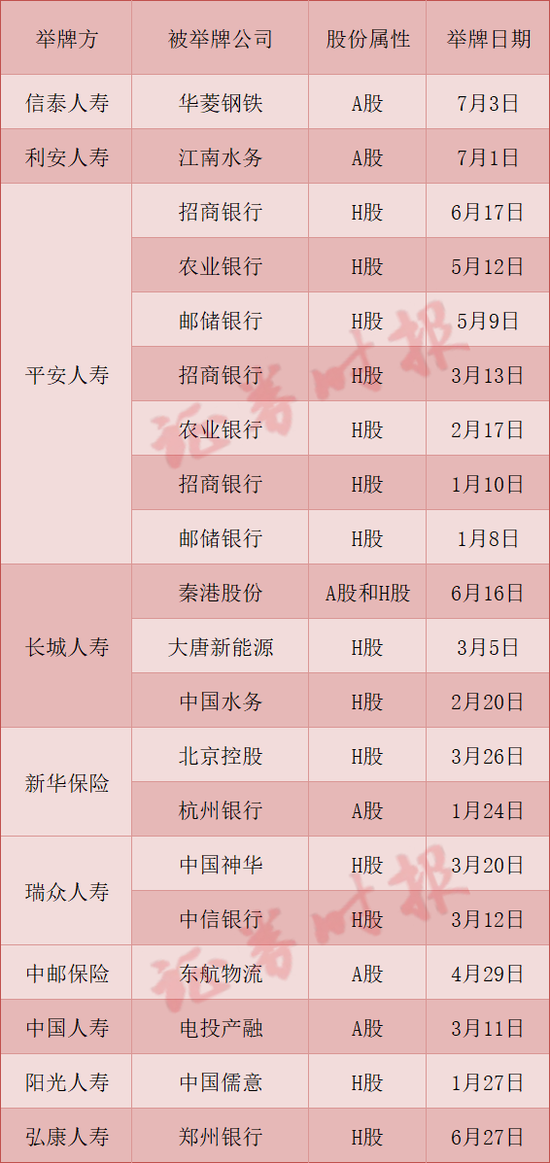
Core Viewpoint - Insurance capital has become a significant force in the capital market, actively acquiring shares in A-share and Hong Kong-listed companies, particularly in stable dividend-paying sectors like banking and public utilities [2][3][7]. Group 1: Insurance Capital Activity - Insurance capital has made at least 20 acquisitions of listed companies this year, focusing on sectors with stable cash flows and dividends [3][4]. - Notable acquisitions include Li'an Life increasing its stake in Jiangnan Waterworks by 46.99 million shares (5.03%) and Xintai Life acquiring 343 million shares (5.00%) of Hualing Steel [3][4]. - Hongkang Life increased its stake in Zhengzhou Bank to 6.68% after multiple acquisitions, highlighting the trend of insurance capital in the market [3][4]. Group 2: Market Environment and Strategy - The current low-interest-rate environment has led to an "asset shortage," prompting insurance capital to seek high-dividend equities to enhance returns [7][8]. - Regulatory changes, such as adjustments to the equity asset ratio for insurance funds, have facilitated greater participation of insurance capital in equity investments [7][8]. - The focus on high-dividend assets, particularly those yielding over 5%, is seen as a strategy to mitigate the impact of low fixed-income returns [7][8]. Group 3: Broader Market Implications - The increase in acquisitions by financial and industrial capital, as well as private equity, reflects a positive outlook on the long-term development of the capital market [10]. - The rise in acquisition activities serves as a market confidence booster, potentially attracting more capital and fostering a healthier market cycle [10][11]. - There is a need for insurance capital to balance the pursuit of returns with risk management, especially given the concentration in banking stocks which may amplify systemic risks [10][11].


A股,新信号!
Zheng Quan Shi Bao· 2025-07-08 11:39
Group 1 - Insurance capital has become a significant force in the capital market, with at least 20 instances of shareholding increases in A-shares and H-shares this year, primarily targeting stable dividend-paying assets like banks and public utilities [1][2] - Recent announcements indicate that Li'an Life and Xintai Life have increased their holdings in Jiangnan Water and Hualing Steel, respectively, with Li'an Life acquiring 46.99 million shares (5.03% of total shares) and Xintai Life acquiring 343 million shares (5.00% of total shares) [2][3] - The trend of insurance capital actively participating in shareholding increases is attributed to a low interest rate environment, leading to a search for stable cash flow and strong performance companies [1][6] Group 2 - The increase in shareholding by insurance capital is seen as a response to "asset scarcity," with a focus on high-dividend equities to enhance returns and offset the pressure from low fixed-income asset yields [6][7] - Regulatory changes, such as adjustments to the equity asset ratio for insurance funds, have facilitated greater participation of insurance capital in the equity market, creating favorable conditions for shareholding increases [6][7] - The rise in shareholding activities is viewed as a positive signal for the long-term development of the capital market, potentially enhancing investor confidence and attracting more capital [7][8] Group 3 - The participation of various capital types, including financial capital, industrial capital, and private equity, in shareholding increases reflects a positive outlook on the long-term performance of the companies involved [7][8] - The concentration of insurance capital in high-dividend sectors, particularly banks, raises concerns about potential systemic risks due to high industry concentration [7][8] - Future strategies for insurance capital may involve diversifying into less cyclical and more diversified high-dividend sectors to balance returns and risks [8]



A股,新信号!
证券时报· 2025-07-08 11:28
Core Viewpoint - Insurance capital has become a significant force in the capital market, actively acquiring shares in A-share and H-share listed companies, particularly in stable dividend-paying sectors like banking and public utilities [1][5][12]. Group 1: Insurance Capital Activity - Insurance capital has made at least 20 acquisitions of listed companies this year, focusing on stable cash flow and dividend-yielding assets [1][5]. - Recent notable acquisitions include Li'an Life increasing its stake in Jiangnan Waterworks by 46.99 million shares (5.03%) and Xintai Life acquiring 343 million shares (5.00%) of Hualing Steel [4][5]. - Hongkang Life has also increased its stake in Zhengzhou Bank, reaching 6.68% after multiple acquisitions [4]. Group 2: Market Environment and Strategy - The current low-interest-rate environment has led funds to seek companies with stable cash flows and strong performance as optimal investment choices [2][14]. - The "asset shortage" phenomenon has intensified, pushing insurance capital to invest in high-dividend equities to enhance returns and offset the pressure from fixed-income assets [14][20]. - Regulatory changes, such as adjustments to insurance capital investment ratios, have facilitated greater participation of insurance funds in equity markets [13][12]. Group 3: Broader Participation - Besides insurance capital, other entities like Asset Management Companies (AMCs) and private equity firms have also engaged in share acquisitions [7][8][9]. - The involvement of various capital types, including financial and industrial capital, reflects a positive outlook on the long-term development of the capital market [17]. Group 4: Market Impact and Future Outlook - Increased share acquisitions serve as a market confidence booster, attracting more capital and promoting a virtuous cycle in the market [19]. - The concentration of insurance capital in specific sectors, particularly banking, raises concerns about potential systemic risks due to high industry concentration [20][21]. - Future strategies may involve diversifying investments into less cyclical and higher-dividend sectors to balance risk and return [21].

弘康人寿在港举牌郑州银行 年内已有6家银行获险资青睐
2 1 Shi Ji Jing Ji Bao Dao· 2025-07-08 08:16
Core Viewpoint - The insurance sector is increasingly engaging in shareholding activities, with a notable rise in the number of stakes taken in listed companies, driven by low interest rates and policy guidance [1][4]. Group 1: Insurance Companies' Shareholding Activities - Hongkang Life Insurance recently increased its stake in Zhengzhou Bank H-shares, raising its ownership from 4.75% to 5.55% after purchasing 16 million shares at a price of HKD 1.2068 per share, totaling HKD 19.31 million [2]. - Following this, Hongkang Life further increased its stake to 6.68% by acquiring an additional 23 million shares at HKD 1.1804 per share, amounting to HKD 27.14 million [2]. - The total number of banks in which insurance funds have taken stakes has reached six, including major banks like China Merchants Bank and Agricultural Bank of China [2][4]. Group 2: Investment Trends and Motivations - Analysts suggest that the preference for bank stocks is due to their low volatility, high dividends, and low valuations, making them attractive to insurance funds [4]. - The trend of insurance companies increasing their stakes is expected to continue, as they seek stable cash returns through high-dividend stocks in a low-interest-rate environment [4]. - The recent surge in shareholding activities is also linked to the need for insurance companies to enhance their return on equity (ROE) through strategic investments in quality banks [4]. Group 3: Recent Shareholding Movements - On July 3, Xintai Life Insurance acquired 3.45 million shares of Hualing Steel, bringing its total stake to 5% [5]. - Li'an Life Insurance increased its stake in Jiangnan Waterworks to 5.03% by purchasing 110,000 shares, indicating a long-term investment strategy [7]. - Changcheng Life Insurance also made headlines by acquiring shares in Qindao Port, raising its stake to 5.0005% [8].
反内卷不止是光伏,稀缺场内品种·钢铁LOF(502023)盘中涨1.41%!
Xin Lang Cai Jing· 2025-07-08 07:36
Group 1 - The steel sector experienced a rebound, with Liugang Co. hitting the daily limit and achieving five consecutive trading limits in six days, while other stocks like Taigang Stainless and Hualing Steel also rose [1] - The Central Financial Committee's sixth meeting emphasized the need to advance the construction of a unified national market and to govern low-price disorderly competition, which could lead to an orderly exit of backward production capacity, benefiting industry profit recovery [1] - The comprehensive gross profit of the steel industry is expected to increase by 52.45% year-on-year to 281 yuan/ton in the first half of 2025, driven by the implementation of capacity exit policies [1] Group 2 - Longjiang Securities believes that the end of 2025 will be a critical node for the implementation of capacity reduction policies, with small and medium-sized private enterprises facing significant challenges to meet standards [1] - The "anti-involution" trend aims to clear out not only backward production capacity but also manufacturing and platforms with significant private enterprise participation, which are crucial for local employment and tax revenue [1] - The capital market exhibits a strong learning effect, with stock price reactions becoming increasingly anticipatory based on past supply-side reform experiences, suggesting that investors should seize policy opportunities early [2]
钢铁板块震荡回升 柳钢股份6天5板
news flash· 2025-07-08 05:20
智通财经7月8日电,钢铁板块日内震荡回升,柳钢股份封涨停走出6天5板,此前金岭矿业涨停,太钢不 锈、重庆钢铁、盛德鑫泰、华菱钢铁、三钢闽光等跟涨。消息面上,国家统计局数据显示,1—5月,我 国黑色金属冶炼和压延加工业累计实现利润总额316.9亿元,盈利情况好于2024年全年的291.9亿元。 就 单月来看,5月份,全行业盈利147.7亿元,创下年内单月盈利新高。 钢铁板块震荡回升 柳钢股份6天5板 ...

枕戈待旦——钢铁行业2025年度中期投资策略
2025-07-07 16:32
Summary of Steel Industry Conference Call Industry Overview - The steel industry is experiencing a significant decline in demand due to the downturn in the real estate market, with the demand share from real estate dropping from nearly 40% in 2020 to 22% in 2024, leading to a contraction in total demand [1][2] - High prices of iron ore and coke are squeezing profit margins, with these materials accounting for 70%-80% of steel production costs [2] Key Insights - **Cost Dynamics**: In 2025, there are signs of weakening cost pressures, with coking coal prices significantly dropping and iron ore fundamentals deteriorating. Domestic coking coal inventories have increased, leading to lower market prices [3] - **Supply Changes**: The Guinea Simandou project is expected to begin shipments between October and November 2025, with a planned capacity of 120 million tons, potentially impacting global iron ore supply significantly [4] - **Profitability Trends**: The proportion of steel companies achieving quarterly profitability has increased from 20%-30% in 2024 to 50%-60% in 2025, indicating a rebound in profitability due to falling raw material prices [6] Demand and Supply Factors - **Domestic vs. Export Demand**: Domestic demand has decreased by 2.9% in the first five months of 2025, but strong export performance has narrowed the total demand decline to 1.2%. Exports of semi-finished products like steel billets have surged by 300% [7] - **Price Expectations**: Current rebar prices are around 3,000 RMB, with a higher probability of price increases in the long term due to new low-cost production projects [8] Strategic Developments - The steel industry is focusing on increasing high-end production while reducing low-end homogeneous production, differing from past reforms that were more rigid [8][10] - Future trends indicate a shift towards high-end and sustainable development, with leading companies expected to play a crucial role in both domestic and international markets [10] Investment Opportunities - Potential investment opportunities include high-quality steel companies linked to manufacturing upgrades, regional companies benefiting from production cuts, and state-owned enterprises undergoing reforms [11] Cost Management Strategies - High-end and mid-range companies are responding to cost pressures by enhancing product value and implementing regional self-discipline measures to achieve supply reductions [12]
险资南下掘金!年内扎堆举牌港股,战绩不凡获15%超额回报
Hua Xia Shi Bao· 2025-07-07 13:29
Core Viewpoint - The insurance capital market is experiencing a significant wave of acquisitions, with insurance funds actively buying shares in listed companies, particularly in the banking and public utility sectors, as well as in leading cyclical industries like steel [2][3][4]. Group 1: Insurance Capital Trends - Insurance funds have made 19 acquisitions this year, nearly matching last year's total of 20 within just six months [2]. - A notable trend is the substantial movement of funds towards Hong Kong stocks, with 14 out of 19 acquisitions involving Hong Kong-listed companies [2][8]. - The average return on investment for insurance companies in the Hong Kong market is approximately 15%, indicating a strong performance compared to previous years [2][8]. Group 2: Investment Strategies - The acquisitions reflect a rebalancing of insurance assets and liabilities, emphasizing long-term value investment [2][5]. - Insurance companies are increasingly focusing on high-dividend, low-volatility stocks, particularly in the banking sector, which offers an average dividend yield exceeding 5% [6][7]. - The recent regulatory changes have allowed for more flexible equity asset allocation, potentially unlocking an additional 1.5 trillion yuan in investment capital [5]. Group 3: Sector Focus - The banking sector remains the primary focus for insurance fund acquisitions, with nine out of the 19 acquisitions involving banking stocks [6]. - Steel industry leaders like Hualing Steel are also attracting attention, indicating a tactical interest in undervalued cyclical stocks [7]. - The insurance funds are not entirely avoiding cyclical industries but are selectively investing in financially stable companies with strong cash flow and dividend capabilities [3][4]. Group 4: Market Dynamics - The Hong Kong market is becoming increasingly attractive due to its higher dividend yields and significant valuation discounts compared to A-shares [8]. - The ongoing release of institutional benefits in Hong Kong is expected to enhance its appeal to cross-border investments [8]. - Despite geopolitical tensions, the Hong Kong market has shown resilience, achieving a 20% increase in performance, making it a leading financial center [8].