大成基金

Search documents
月初7只权益类基金率先成立 被动指数型产品受青睐
Zheng Quan Ri Bao· 2025-07-03 16:18
Group 1 - The issuance of equity funds has shown a significant increase, with 7 equity funds established at the beginning of July, indicating a recovery in investor confidence and optimism towards the equity market [1][2] - Among the 67 funds currently being issued, 50 are equity funds, accounting for 74.63%, and 34 are passive index funds, making up 50.75% [2] - The trend of increasing equity fund issuance is expected to inject more capital into the market, enhancing liquidity and trading activity, while also fostering healthy competition among public fund institutions [2] Group 2 - Passive index funds are favored due to their clear investment style, high transparency, and standardization, which facilitates asset allocation [3] - The growing recognition of passive index funds among investors, along with their risk mitigation capabilities in volatile markets, has contributed to their appeal [3] - Public fund institutions are diversifying their product offerings, focusing on various indices and industry themes such as healthcare, robotics, and aerospace, reflecting their assessment of future investment opportunities [3][4] Group 3 - The healthcare sector is highlighted as a significant investment opportunity, with expectations of a major recovery in the innovative drug industry by 2025, driven by favorable policies and market conditions [4] - The Chinese innovative drug sector is anticipated to gain global market attention once clinical data is validated internationally, marking a substantial trend in the industry [4]
债券型ETF新动向不断!首批科创债ETF快速“通关”,存量规模已破3800亿
Bei Jing Shang Bao· 2025-07-03 14:20
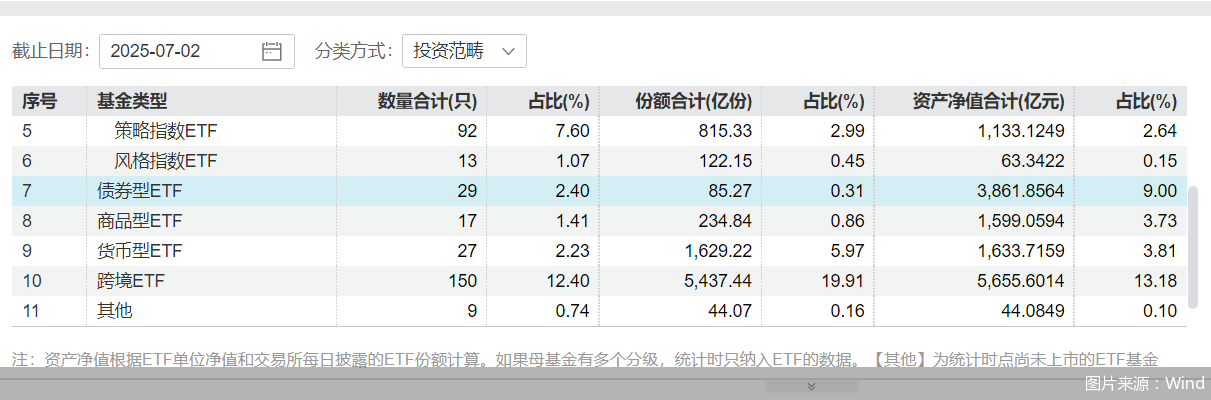
Core Viewpoint - The approval of the first batch of 10 Science and Technology Innovation Bond ETFs marks a significant development in the bond ETF market, which has seen rapid growth in 2023, surpassing 380 billion yuan in total scale, with over 60% of net inflows in the ETF market attributed to bond ETFs [1][6][9]. Group 1: Approval and Launch of Science and Technology Innovation Bond ETFs - The first batch of 10 Science and Technology Innovation Bond ETFs has been officially approved, with a swift approval process of only half a month from the submission of materials [1][3]. - The fund managers of these ETFs have announced that the issuance will start on July 7, with a maximum fundraising scale of 3 billion yuan for each product [4]. - The ETFs will track various indices, including the China Securities AAA Technology Innovation Company Bond Index and the Shanghai Stock Exchange AAA Technology Innovation Company Bond Index [3][4]. Group 2: Growth of Bond ETFs - The total scale of bond ETFs has rapidly exceeded 380 billion yuan, with a significant year-on-year growth of 146.03% as of the end of the first quarter of 2023 [6][9]. - As of July 2, the bond ETF market consists of 29 products, and if the new Science and Technology Innovation Bond ETFs are successfully launched, the total will increase to 39 [6]. - The average annual return of bond ETFs has been stable, with 15 out of 29 products achieving returns exceeding 1% this year [9]. Group 3: Market Dynamics and Investor Sentiment - The growth of bond ETFs is driven by several factors, including their trading advantages, increased demand for safe-haven assets, and policy support [8]. - The bond ETF market has become a new focus for investors, with net inflows accounting for over 60% of total ETF net inflows this year [9]. - The Science and Technology Innovation Bond ETFs are expected to provide investors with convenient tools for allocating high-quality technology innovation company bonds [5][10].

2025上半年量化基金10强揭晓!小盘指增包揽前10!
Sou Hu Cai Jing· 2025-07-03 11:05
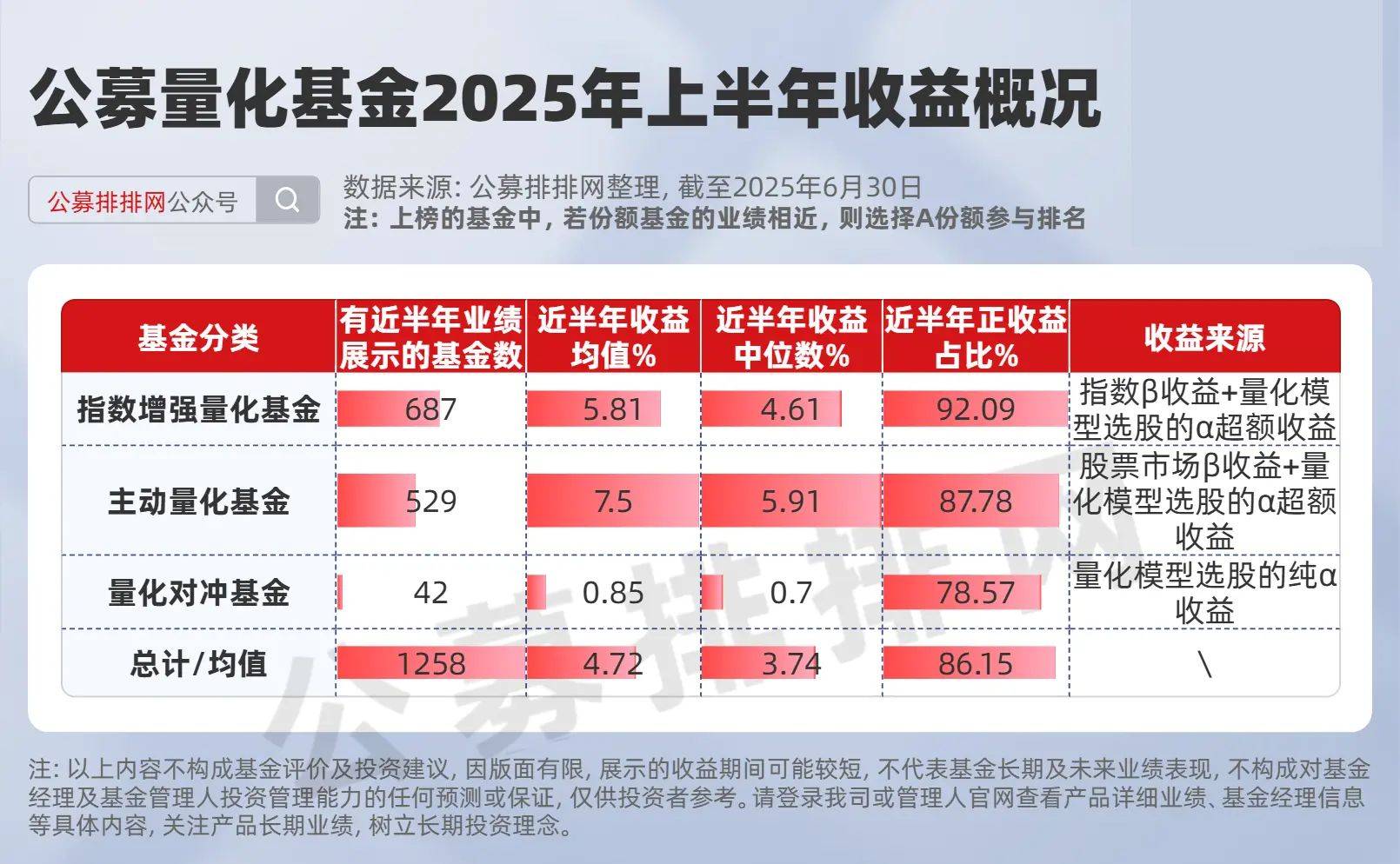
Core Viewpoint - In the first half of 2025, the popularity of quantitative trading continues to rise amid increased activity in small-cap stocks and market volatility, with a significant number of quantitative funds showing positive returns [1][3]. Group 1: Performance of Quantitative Funds - As of June 30, 2025, there are 1,258 quantitative funds with an average return of 4.72% and a median return of 3.74%, with 86.15% of these funds achieving positive returns [1]. - Among the three categories of public quantitative funds, active quantitative funds have the highest returns, with average and median returns of 7.5% and 5.91% respectively [1]. - Index-enhanced funds, while slightly lower in returns, have the highest proportion of positive returns at 92.09% [1]. Group 2: Top Performing Funds - The threshold for the top 10 index-enhanced quantitative funds is set at 18.77%, with all top 10 funds tracking small-cap stock indices [3]. - The top three funds in the index-enhanced category are managed by 创金合信基金, 招商基金, and 长盛基金 [3]. - The top-performing index-enhanced fund, 创金合信北证50成份指数增强A, achieved a return of 37.17% in the first half of 2025 [5]. Group 3: Active Quantitative Funds - The threshold for the top 10 active quantitative funds is the highest at 24.64%, with the top three funds managed by 诺安基金, 中加基金, and 汇安基金 [8]. - The leading active quantitative fund, 诺安多策略A, recorded a return of 40.62% [10]. - The second-ranked fund, 中加专精特新量化选股A, achieved a return of 35.55% [11]. Group 4: Quantitative Hedge Funds - The threshold for the top 10 quantitative hedge funds is 0.82%, with 中邮基金, 富国基金, and 申万菱信基金 managing the top three funds [12]. - 工银瑞信基金 has two funds listed among the top 10 [12].
恒生创新药ETF、港股创新药ETF涨超4%,机构频繁调研医药企业
Ge Long Hui· 2025-07-03 07:51
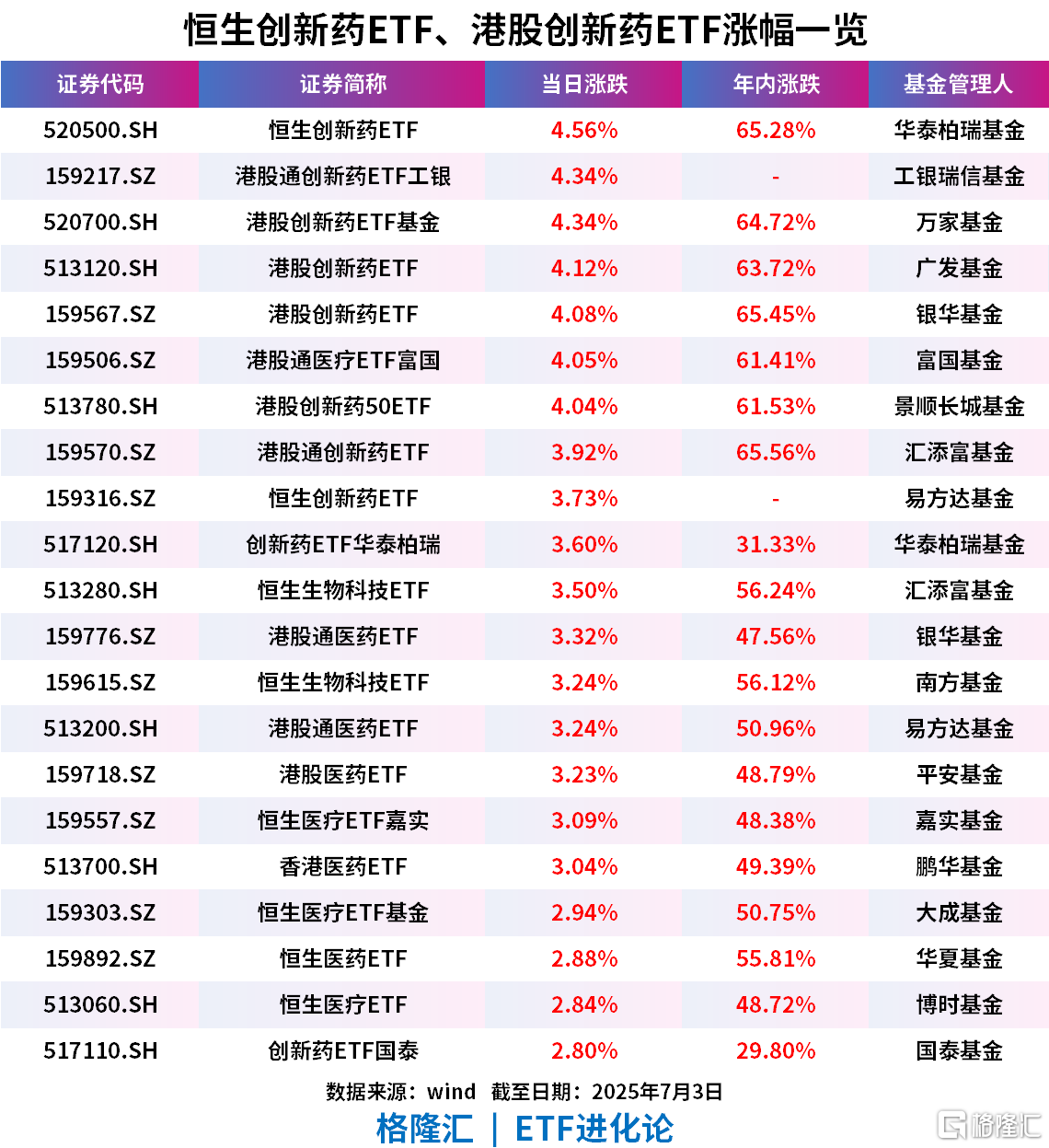
Market Performance - The three major A-share indices collectively rose, with the Shenzhen Component Index and the ChiNext Index both increasing by over 1% [1] - The Shanghai Composite Index closed up 0.18% at 3461 points, while the Shenzhen Component Index rose 1.17% and the ChiNext Index increased by 1.9% [1] - Total trading volume for the day was 1.33 trillion yuan, a decrease of 716 billion yuan compared to the previous trading day, with nearly 3300 stocks rising across the market [1] ETF Performance - The Hong Kong innovative drug ETFs led the gains, with several ETFs such as the Hang Seng Innovative Drug ETF and the Hong Kong Innovative Drug ETF Fund rising over 4% [1] - Specific ETFs like the Hang Seng Innovative Drug ETF saw a daily increase of 4.56% and a year-to-date increase of 65.28% [2] Policy Developments - On July 1, the National Healthcare Security Administration and the National Health Commission jointly issued measures to support the high-quality development of innovative drugs [4] - This policy marks the first time these two government departments have collaborated to support differentiated innovation in pharmaceuticals, covering the entire value chain from R&D to hospital access and diversified payment methods [4] Investment Trends - Public and private funds have been actively researching pharmaceutical companies, with 163 public institutions conducting 19,943 company visits in the first half of 2025, focusing on sectors like electronics and biomedicine [5] - The biopharmaceutical sector received significant attention, with 222 stocks being researched 5,150 times by public institutions [6] Industry Outlook - The innovative drug sector is expected to experience a systematic valuation increase, driven by leading companies entering profitability and the transformation of R&D pipelines into regular income [6] - The biotech sector in China is anticipated to enter a profitable phase by 2025, marking a new stage of commercial model validation [7] - There is a growing trend of international collaboration, with domestic upfront payments for licensing deals exceeding 2.5 billion USD by June 2025, indicating a robust market for mergers and acquisitions [7]
资金疯狂涌入债券型ETF,规模超百亿的债券ETF达15只
Ge Long Hui· 2025-07-03 06:24
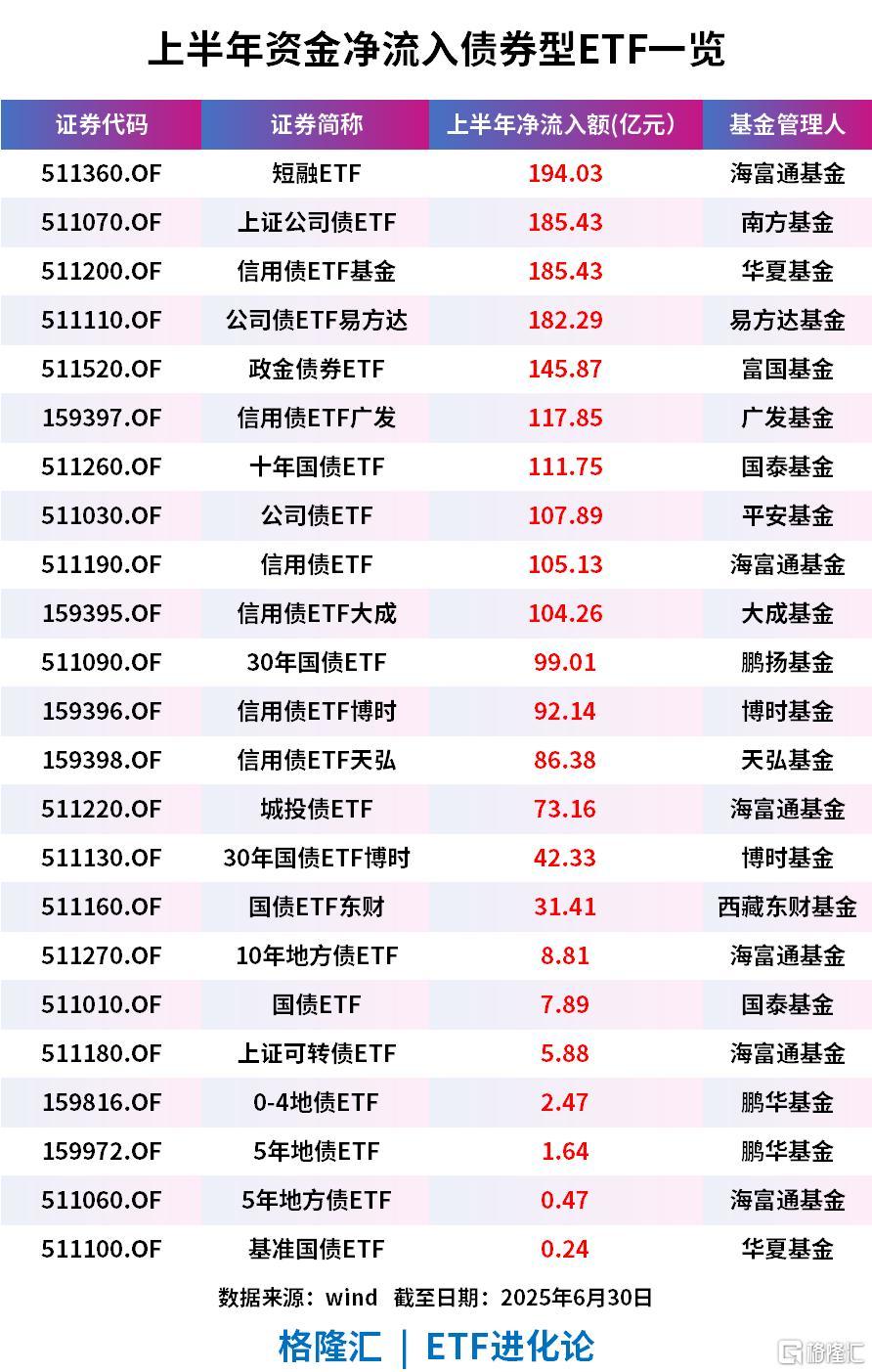
Group 1 - The total scale of ETFs surpassed 4 trillion yuan, reaching 4.31 trillion yuan, representing a growth of 15.57% compared to the end of last year [1] - The largest growth in the first half of the year was seen in bond ETFs, which grew by 120.71% to 383.976 billion yuan [1] - A total of 29 bond ETFs reached a combined scale of 383.976 billion yuan, setting a new historical record [1] Group 2 - Bond ETFs had the highest net inflow in the first half of the year, totaling 175.784 billion yuan [1] - Notable bond ETFs with net inflows exceeding 10 billion yuan include Hai Futong Short-term Bond ETF, Southern Shanghai Stock Company Bond ETF, and others [1] - The top bond ETF by scale is the Government Financial Bond ETF, which reached 52 billion yuan [5][7] Group 3 - There are 15 bond ETFs with a scale exceeding 10 billion yuan, including various types such as policy financial bonds and corporate bonds [5] - The rapid growth of bond ETFs is attributed to factors such as increased market liquidity, lower costs, improved regulatory frameworks, and a shift in investor risk preferences [10] - The credit bond market is experiencing fluctuations in yield, with low-grade credit spreads compressing the most [11] Group 4 - The outlook for the second half of the year suggests that credit bond yields are likely to remain volatile, with potential for credit spreads to widen due to supply-demand mismatches [12][13] - Investment strategies should focus on short to medium-term high-grade credit bonds and consider opportunities in local government bonds [12]
重磅!收益榜单出炉!
天天基金网· 2025-07-03 05:15
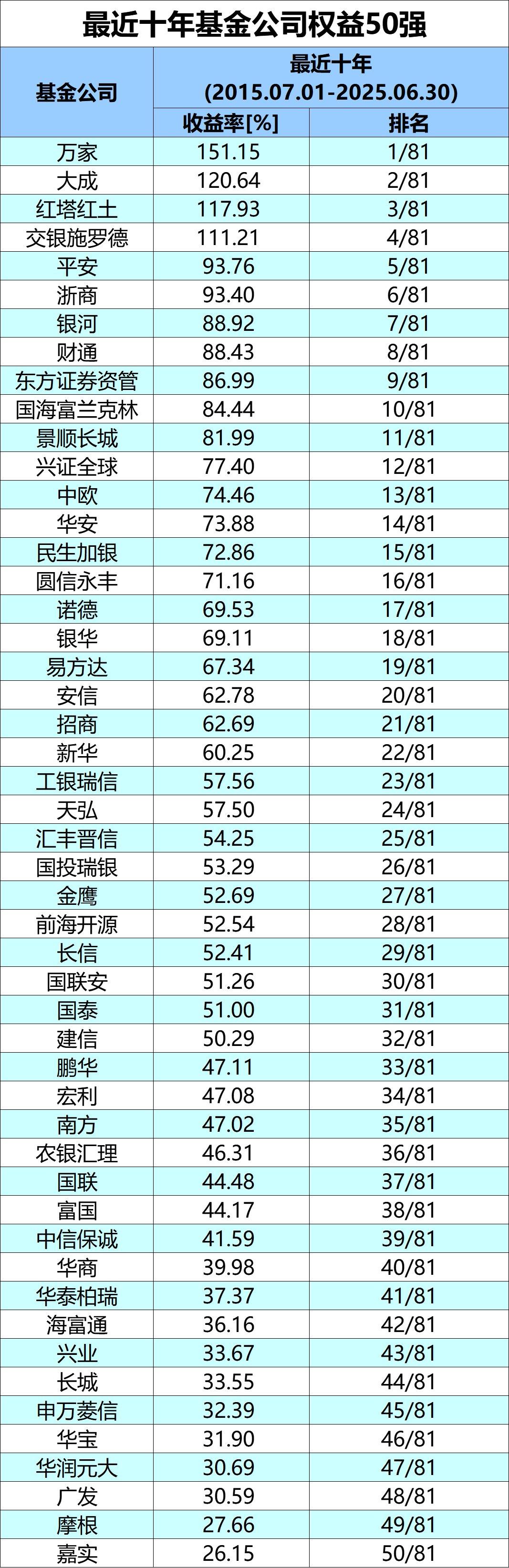
上半年结束,又到了总结基金公司主动权益投资业绩的时刻。 投资是一场持久赛,最近10年市场牛熊交替中,哪些基金公司跑在前列?大中型基金公司中 是谁独占鳌头?最近5年,哪家公司踏对市场节奏?最近3年波动行情之下,哪家公司抗风险 能力更强?在2025年上半年震荡上行的A股市场中,又是哪家公司表现最为亮眼? 国泰海通证券日前发布基金公司权益类基金绝对收益排行榜,揭晓上述谜底。 十年"王者" 万家、大成、红塔红土位居前三 A股市场10年行情起起伏伏,究竟哪家公司是十年"王者"? 从市场表现来看,10年前的2015年,A股市场演绎"冰火两重天",上半年是火爆的大牛市, 下半年A股由牛转熊,急剧调整,2016年初更是出现熔断。随后三四年行情整体平淡,直到 2019年开始出现结构性牛市,科技、医药、消费等赛道表现突出,然而2022年以来市场陷入 震荡格局,直到去年9月24日政策暖风吹拂之下,A股市场逐渐回暖,今年以来AI、人形机器 人、创新药、新消费等领域轮番表现。 一批基金公司因抓住市场机会取得了不错的业绩。国泰海通证券数据显示,2015年7月1日至 2025年6月30日期间,万家基金位居近十年权益类基金绝对收益榜榜首,近 ...

★首批创新浮动管理费率基金上报
Zheng Quan Shi Bao· 2025-07-03 01:56
Core Viewpoint - The first batch of innovative floating fee rate products based on performance benchmarks has been reported, with 26 fund managers participating, indicating a shift towards performance-based fee structures in the industry [1][2]. Group 1: Product Overview - A total of 26 fund managers have submitted products, including 21 leading managers in active equity fund management, 4 small to medium-sized managers, and 1 foreign-owned manager [1]. - The participating fund managers include well-known firms such as E Fund, Fuguo Fund, and GF Fund, among others [1]. - The new floating fee rate model charges management fees based on each investor's holding period and annualized return, with specific fee structures for different holding durations [1]. Group 2: Investor-Centric Design - The product design emphasizes investor interests, allowing fee adjustments based on performance relative to benchmarks, with asymmetric adjustments favoring fee reductions for underperforming funds [2]. - The products aim to encourage long-term investment from investors, focusing on enhancing the long-term investment experience rather than merely increasing fundraising scale [2]. Group 3: Regulatory Framework - The "Action Plan" mandates that leading institutions should issue at least 60% of these new funds compared to their active equity fund issuance within a year [3]. - The implementation of these floating fee rate products will not affect the normal operation of existing products, ensuring a smooth transition [3]. - Fund managers are preparing for the rollout by focusing on product design, legal documentation, and communication with sales channels [3].
★首批创新浮动费率基金本周开抢 众多产品细节曝光
Zheng Quan Shi Bao· 2025-07-03 01:56
Core Viewpoint - The first batch of innovative floating rate funds has been approved and will start issuing on May 27, marking a significant shift in the fund management fee structure aimed at better aligning with investor interests [1][2]. Fund Structure and Fee Details - The innovative floating rate funds will operate on an open-ended basis, with management fees determined by the holding period and annualized return during that period [2]. - For holdings of less than one year, a management fee of 1.20% will be charged; for one year or more, fees will vary based on performance, with a maximum of 1.50% for returns exceeding 6% and a minimum of 0.60% for returns below -3% [2]. - The fee structure emphasizes asymmetric design, with a greater potential reduction in fees for poor performance compared to increases for good performance, prioritizing investor protection [2]. Industry Response and Manager Selection - Multiple fund companies have expressed that the floating management fee reform is a strong approach to optimize active equity funds and shift the industry’s operational model [1][3]. - A range of experienced and high-performing fund managers have been appointed to lead these new products, indicating a commitment to quality management [3][4]. Fundraising Goals and Strategies - Fundraising targets vary, with the highest set at 8 billion for one fund and many aiming for 3 billion to 5 billion, reflecting a cautious approach to initial fundraising [6]. - Companies are focusing on long-term investor experience rather than immediate fundraising success, with some planning to bind their interests with investors through self-purchase or initiator funds [6][7]. Future Outlook - The floating rate product is seen as a significant practice in public fund reform, with expectations for more products to be filed and potentially normalized in issuance [6]. - Companies are enhancing their core investment research capabilities and focusing on actual investor returns to foster long-term value creation [7].
基金公司主动权益中长期投资业绩大比拼
Zhong Guo Ji Jin Bao· 2025-07-02 16:22
Core Insights - The report highlights the performance of fund companies in active equity investment over various time frames, revealing the top performers in the A-share market [1][2]. Long-term Performance (10 Years) - The top three fund companies over the last decade (from July 1, 2015, to June 30, 2025) are: - Wanji Fund with a return of 151.15%, ranking first among 81 companies - Dacheng Fund with a return of 120.64%, ranking second - Hongta Hongtu with a return of 117.93%, ranking third [2][3][5]. Medium-term Performance (5 Years) - For the five-year period (from July 1, 2020, to June 30, 2025), the leading fund companies are: - Jinyuan Shun'an with an average return of 152.27%, ranking first among 137 companies - Guojin Fund with a return of 94.55%, ranking second - Zhongtai Securities Asset Management with a return of 94.46%, ranking third [7][8]. Short-term Performance (3 Years) - In the three-year period (from July 1, 2022, to June 30, 2025), the top performers are: - Huarun Yunda with an average return of 34.65%, ranking first among 156 companies - Jinyuan Shun'an with a return of 33.61%, ranking second - Guojin with a return of 23.92%, ranking third [12][14]. Recent Performance (First Half of 2025) - In the first half of 2025, the best-performing fund companies include: - Zhonghang Fund with a return of 23.01% - Hongtu Innovation with a return of 22.10% - Hengyue with a return of 21.23% [17][18][20]. Performance Comparison by Company Size - The average returns of large, medium, and small fund companies over the last ten years show that large and medium companies significantly outperform small companies, with medium companies averaging 67.85% and large companies averaging 56.16% [5][6].
重磅!榜单出炉!
中国基金报· 2025-07-02 16:16
【导读】基金公司主动权益中长期投资业绩大比拼 中国基金报记者 方丽 孙晓辉 上半年结束,又到了总结基金公司主动权益投资业绩的时刻。 投资是一场持久赛,最近10年市场牛熊交替中,哪些基金公司跑在前列?大中型基金公司中 是谁独占鳌头?最近5年,哪家公司踏对市场节奏?最近3年波动行情之下,哪家公司抗风险 能力更强?在2025年上半年震荡上行的A股市场中,又是哪家公司表现最为亮眼? | 天弘 | 57.50 | 24/81 | | --- | --- | --- | | 汇丰富信 | 54.25 | 25/81 | | 国投瑞银 | 53.29 | 26/81 | | 受庫 | 52.69 | 27/81 | | 前海开源 | 52.54 | 28/81 | | 长信 | 52.41 | 29/81 | | 国联安 | 51.26 | 30/81 | | 国泰 | 51.00 | 31/81 | | 建信 | 50.29 | 32/81 | | 鵬や | 47.11 | 33/81 | | 宏利 | 47.08 | 34/81 | | 南方 | 47.02 | 35/81 | | 衣银汇理 | 46.31 | 36/ ...