Anthropic

Search documents
每日投资策略-20260223
Zhao Yin Guo Ji· 2026-02-23 08:04
Global Market Overview - The Hang Seng Index closed at 26,413, down 1.10% for the day but up 3.05% year-to-date [1] - The Hang Seng Technology Index fell by 2.91%, reflecting a year-to-date decline of 5.52% [1] - The US stock market showed positive movement with the Dow Jones up 0.47% and the S&P 500 up 0.69% [1] - European markets were buoyed by a rise in the STOXX 600 index, which increased by 0.84% to reach a historical closing high [3] Sector Performance - The Hang Seng Financial Index increased by 0.08% year-to-date, while the Hang Seng Real Estate Index saw a significant rise of 21.22% [2] - The Hang Seng Industrial Index decreased by 1.89% for the day, with a modest year-to-date increase of 0.25% [2] - The Hang Seng Utilities Index fell by 0.81% but has a year-to-date increase of 8.29% [2] Macroeconomic Insights - Strong domestic travel and consumption data were reported during the Chinese New Year holiday, indicating robust economic activity [3] - The offshore RMB strengthened against the USD, recovering above the 6.90 mark and recording three consecutive weekly gains [3] - The 10-year US Treasury yield rose to 4.08%, influenced by a significant increase in the core PCE price index, which rose 3% year-on-year [3] Commodity Market Trends - Gold prices rebounded, with spot gold rising over 2% to reach $5,080 per ounce, while silver surged approximately 6% to surpass $82 [3] - Concerns over stagflation and uncertainties surrounding tariff policies have influenced the precious metals market positively [3]
周观点:全年维度看好AI的价值落地与商业化-20260223
KAIYUAN SECURITIES· 2026-02-23 07:56
Investment Rating - The investment rating for the computer industry is "Positive" (maintained) [1] Core Viewpoints - The year 2026 is seen as a critical year for AI to achieve value realization and commercialization, with major companies like Anthropic leading in commercialization speed and significant revenue growth [4][10] - Multi-modal models are expected to reach a "DS moment" in 2026, enhancing capabilities while significantly reducing costs, which will benefit sectors like film, gaming, and advertising [5][11] Summary by Sections Market Review - During the period from February 9 to February 13, 2026, the CSI 300 index increased by 0.36%, while the computer index rose by 4.35% [3][13] Industry Dynamics - The AI sector is transitioning from model competition to application exploration, with a focus on commercialization in 2026 [4][10] - Anthropic's Claude model has shown impressive growth, with an annual recurring revenue (ARR) reaching $14 billion by February 2026, driven by its enterprise subscription growth [4][10] - OpenAI has shifted its focus from AGI ideals to commercial priorities, with projected revenues exceeding $280 billion by 2030 [4][10] Investment Recommendations - Key AI application companies recommended include Kingsoft Office, Hehe Information, Dingjie Shuzhi, and others, with beneficiaries in the multi-modal field such as Wanxing Technology and Meitu [6][12]
Anthropic推出AI安全工具,可帮助用户发现并修复代码漏洞
Xin Lang Cai Jing· 2026-02-23 04:15
Core Insights - Anthropic has launched Claude Code Security, an AI tool designed to scan for vulnerabilities in software code and suggest solutions [1][3] - The tool is integrated into Claude Code and aims to help teams detect and fix security flaws more efficiently [3] Group 1 - Claude Code Security is currently available in a limited preview for enterprise and team customers [3] - The tool scans code repositories for security vulnerabilities and recommends targeted software patches for manual review [3] - Each discovery undergoes a multi-stage validation process before being submitted to analysts, ensuring accuracy and reducing false positives [3] Group 2 - Each finding is assigned a severity rating to help teams prioritize the most critical fixes [3]

Asana Now Available in the AWS Middle East (UAE) Region to Support Enterprise and Government Customers with Local Data Residency
Businesswire· 2026-02-23 04:00
Core Insights - Asana has launched its services in the AWS Middle East (UAE) Region, enabling local data residency for enterprise and government customers [1] - The platform aims to support organizations in the Middle East that are modernizing their operations through technology, particularly in complex, cross-agency initiatives [1] - Asana's infrastructure on AWS provides enterprise-grade security and governance, which is crucial for regulated sectors [1] Group 1: Availability and Impact - Asana is one of the first enterprise collaborative work management platforms to be available on AWS Marketplace in the UAE [1] - The availability of Asana in the region is expected to enhance the speed, reliability, and scalability of technology-driven operations for local organizations [1] - Organizations like Washmen are leveraging local hosting to evolve their operations and improve customer experiences [1] Group 2: Security and Compliance - The AWS Middle East (UAE) Region offers enterprise-grade security controls, including encryption and role-based access management [1] - Asana collaborates with a growing partner ecosystem in the region to meet customer implementation and compliance needs [1] Group 3: Company Overview - Asana is a work management platform that facilitates coordination of tasks and strategic initiatives for over 170,000 organizations, including notable companies like Accenture and Amazon [1] - The platform integrates AI capabilities with human collaboration to enhance productivity and workflow management [1]


DAU已死,TPD永生
3 6 Ke· 2026-02-23 02:37
Core Insights - OpenAI is reportedly shifting focus from the traditional DAU (Daily Active Users) metric to a new metric called TPD (Tokens Per Day), which measures the value generated by users through AI interactions rather than just user engagement [2][3][25][60]. Group 1: Shift in Metrics - DAU has been a key performance indicator in the internet industry for the past 20 years, primarily measuring user attention [4][5]. - The traditional logic of DAU is based on capturing user time to drive advertising and sales, but this is being challenged by AI agents that can perform tasks without direct user interaction [6][7][62]. - OpenAI's product lead emphasized that DAU does not reflect the value created by users, leading to the adoption of TPD as a more relevant metric [3][25]. Group 2: The Role of AI Agents - AI agents can automate tasks that previously required significant user attention, fundamentally changing how productivity is measured [8][10][22]. - Users can now delegate complex tasks to AI agents, resulting in high token consumption without the need for constant app interaction, thus diminishing the relevance of DAU [12][24][63]. - The emergence of AI agents suggests that many traditional applications may become obsolete, as users will rely on agents to perform tasks rather than manually interacting with multiple apps [17][20][24]. Group 3: TPD as a New Metric - TPD measures the computational resources a user drives through AI, indicating a shift from time-based productivity to value-driven productivity [25][27]. - Companies like Midjourney and Cursor exemplify high TPD, achieving significant outputs with minimal personnel, showcasing the efficiency of AI in driving productivity [30][32][43]. - The value of a user is now determined by their ability to leverage AI agents effectively, rather than the time they spend on applications [38][39]. Group 4: Implications for Business Models - The transition to TPD will alter business models, moving from user-based revenue to consumption-based revenue, where companies charge based on token usage rather than user counts [46][47]. - OpenAI's projected annual recurring revenue (ARR) for 2025 is expected to exceed $20 billion, largely driven by token consumption from enterprise clients [47]. - Future SaaS models will likely charge based on the computational power required, rather than per user, reflecting the shift in how value is generated [48][49]. Group 5: Future of Software and User Engagement - The rapid adoption of AI agents is expected to lead to a decline in traditional software applications, as users will prefer to interact with agents that can complete tasks efficiently [54][66]. - The competitive landscape will shift from user acquisition to enhancing the efficiency of user-driven AI interactions, fundamentally changing how platforms are valued [45][62]. - While DAU remains relevant for content and social products, its importance is diminishing in productivity tools and enterprise services, where TPD is becoming the primary measure of success [61][63].

春节要闻与市场主线:特朗普关税裁决、AI竞赛、中东局势升温
Sou Hu Cai Jing· 2026-02-23 01:46
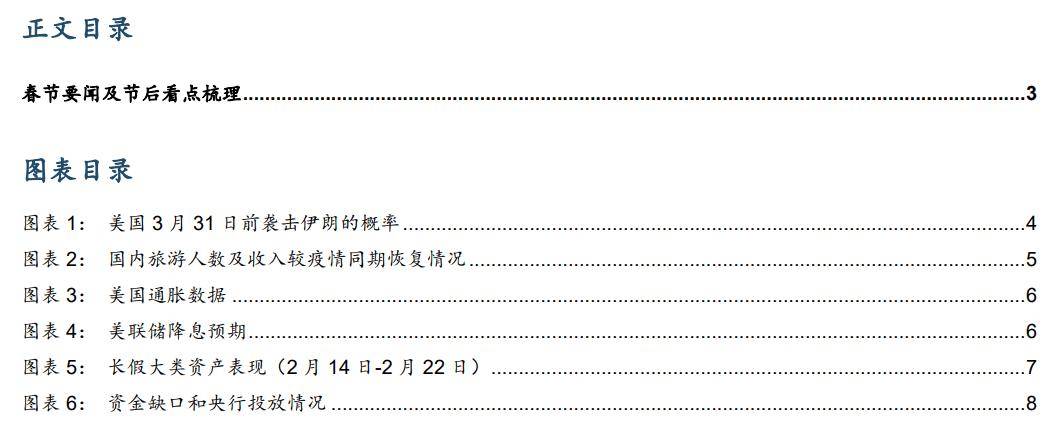
Core Viewpoint - The travel data during the Spring Festival showed strong performance, while the IEEPA tariff ruling and escalating Middle East tensions disturbed risk appetite. The AI competition accelerated, and the resilience of the US economy led to a decline in interest rate cut expectations [1][2][7] Group 1: Major Events and Market Trends - The US Supreme Court ruled the IEEPA tariffs illegal, prompting Trump to invoke the Trade Act of 1974, resulting in an average tariff rate that may not differ significantly from previous levels [2][8] - The technology sector continues to see a high level of interest with new AI and robotics products emerging [2][14] - The US economy remains resilient, with inflation pressures emerging, leading to a decline in interest rate cut expectations [2][23] Group 2: Asset Class Performance - During the Spring Festival, major asset classes showed divergence, with the Nasdaq, Korean index, and European stocks rising by 1.51%, 5.92%, and 2.44% respectively, while Hong Kong stocks weakened due to liquidity and competitive pressures [3][26] - The bond market showed mixed results, with US Treasury yields slightly rising while Japanese and German long-term bond yields fell [3][26] - Precious metals and oil performed strongly due to safe-haven demand, with gold and silver prices reaching $5104 and $84 per ounce, respectively, and oil prices rising to $71 per barrel [3][26] Group 3: Debt Market Outlook - The post-Spring Festival bond market will largely depend on the fundamentals, policy signals, supply and demand, and stock market performance [4][41] - The bond market is expected to remain in a volatile state, with limited space below 1.8% for the 10-year Treasury yield [4][41] - The demand side of the bond market is primarily driven by insurance and bank allocations, with a focus on the potential for structural opportunities in medium to short-term bonds [4][40] Group 4: Stock Market and Convertible Bonds - The stock market is expected to open slightly lower on the first trading day after the holiday, with a focus on tariff and trade issues, the Fed's interest rate decisions, and geopolitical concerns [5][42] - The overall market sentiment is expected to remain positive, with potential for a quick recovery after a slight dip [5][42] - Investors are advised to optimize their positions during the post-holiday low opening, particularly in sectors like AI applications and humanoid robots that may be undervalued due to market sentiment [5][48]
X @Ignas | DeFi
Ignas | DeFi· 2026-02-23 01:11
RT Ignas | DeFi (@DefiIgnas)The OpenClaw moment reminds me of DeFi summer:Early adopters experimenting with expensive tech and bad UX.Both have conviction that this changes everything. A community building open source stuff (smart contracts vs AI Skills now).But DeFi summer had a financial layer that let anyone capture value.Compound launched $COMP rewards. Uniswap let you LP and earn fees and a star dev Andre (vs P. Steinberger now) found ways to build on top.Every new protocol meant new tokens and new ups ...
无视海外“AI恐慌” 中国市场狂炒AI赢家
智通财经网· 2026-02-22 23:46
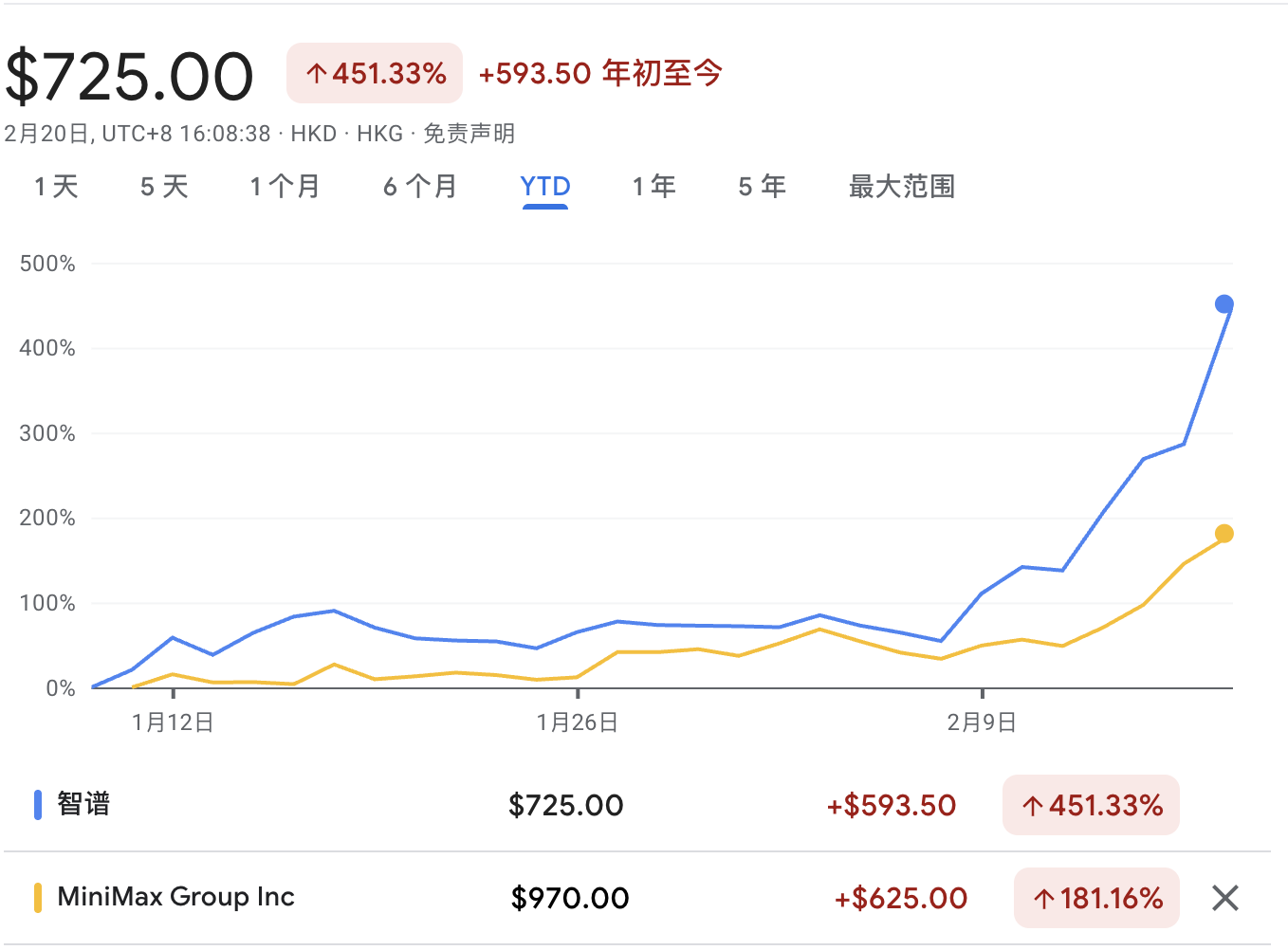
本月发布新模型或升级现有产品的国内公司成为投资者宠儿。MiniMax和智谱AI最为典型,两家公司股价在2月均翻倍。摩根士丹利等华尔街投行的看涨评 级进一步推高市场热情,纯AI概念股正从传统互联网巨头手中抢夺资金。 这种市场分化背后是投资逻辑的差异。盛宝市场首席投资策略师Charu Chanana表示,中国市场仍专注于AI能带来什么帮助,而非它会从现有企业手中夺走 什么。美国投资者焦虑于丰厚利润池面临竞争威胁,而中国关注的仍是市场渗透。 新上市AI股领涨 MINIMAX-WP(00100)和智谱(02513)AI受到投资者青睐,部分原因在于全球范围内构建大模型的上市公司稀缺。两家公司均于1月在香港上市,智谱AI股价 此后一度飙升524%,MiniMax大涨488%。相比之下,被视为行业先驱的OpenAI和Anthropic仍未上市。 当美国市场陷入"AI恐慌交易",投资者抛售软件公司和财富管理机构之际,中国投资者却在大举追捧人工智能概念股。这种截然不同的市场情绪反映出两地 投资者对AI技术的根本性分歧:美国担忧既有商业模式被颠覆,中国则聚焦于增长机遇和降本潜力。 新模型发布和融资数据推动了估值重估。Jeffer ...
Is private equity the next market crisis? How we got here and what's next
CNBC· 2026-02-22 23:31
Core Viewpoint - The article discusses the current challenges facing private equity firms, particularly in light of the recent performance declines of major players like KKR, Blackstone, and Apollo Global Management, as well as the issues surrounding Blue Owl Capital, a newer entrant in the private credit space [1][2][3]. Group 1: Private Equity and Market Sentiment - Private equity companies, historically strong performers, are now viewed as potentially toxic investments due to their exposure to risky tech companies and private credit loans [1][2]. - The market is skeptical about the credit risk assessments made by private equity firms, especially regarding their investments in small- and medium-sized businesses [1][2]. - The decline in stock prices for Apollo, KKR, and Blackstone, with year-to-date drops of 17%, 20%, and 21% respectively, reflects growing investor concerns [2]. Group 2: Blue Owl Capital's Challenges - Blue Owl Capital has seen its stock drop over 27% this year, primarily due to fears about its ability to redeem capital from its business development company funds [2][3]. - The suspension of regular redemptions by Blue Owl raises red flags about its lending practices and the quality of its loan portfolio [3][4]. - Investors are worried that Blue Owl may have made riskier loans compared to its peers, leading to a lack of transparency and confidence in its financial health [3][4]. Group 3: Impact of Artificial Intelligence - The rise of artificial intelligence is disrupting traditional software companies, which are significant components of the portfolios held by private equity firms, including Blue Owl [4][5]. - Concerns are growing that AI advancements could diminish the value of established software companies, impacting the debt associated with these investments [4][5]. - The potential for AI to reduce the need for traditional software solutions raises questions about the future profitability of companies like Salesforce, which is already experiencing stock price declines [4][5]. Group 4: Lending Practices and Market Conditions - Blue Owl's aggressive lending to data center projects, which were previously seen as safe investments, is now viewed as risky due to the increased borrowing levels in the sector [5]. - The overall economic environment is stable, but the specific risks associated with private equity lending practices are coming under scrutiny [3][5]. - The article suggests that the current market conditions may lead to a reevaluation of the value of software companies and the loans made to them, potentially resulting in lower valuations and tighter credit conditions [5].


AI Scales Up as the Biggest Players Battle for Supremacy
FinanceFeeds· 2026-02-22 19:08
Core Insights - The AI industry is undergoing a significant shakeout, leading to a concentration of power among a few major players, similar to the public cloud infrastructure battle [1] - Recent months have seen a surge in multi-billion-dollar acquisitions in the AI sector, indicating a trend towards consolidation [2][4] - The quality of AI tools is under scrutiny, with many companies struggling to deliver on promises, leading to increased pressure on AI startups [6][8] Acquisitions and Market Trends - Major acquisitions include Google’s $30 billion purchase of Wiz, SoftBank’s $5.4 billion acquisition of ABB's robotics business, and Palo Alto Networks’ $25 billion buyout of CyberArk [2] - Smaller acquisitions are also prevalent, with ServiceNow acquiring Pyramid Analytics and Nvidia taking control of SchedMD [3] - PwC's Brian Levy notes that the AI market is structurally reshaping itself, with elevated deal values expected to continue throughout the year [4] Challenges in AI Implementation - A survey revealed that 62% of CIOs have faced scrutiny from CEOs regarding AI-related decisions, and 74% feel their jobs are at risk if they cannot demonstrate productivity gains [6][7] - Studies indicate that many AI tools are not meeting expectations, with open-source developers taking 19% longer to complete tasks using AI [8] - The implementation of AI is identified as a significant challenge, requiring systemic changes rather than just technology adoption [9] Strategic Acquisitions - Acquisitions are seen as a low-risk strategy for tech companies to enhance product quality and capabilities [11] - ServiceNow's acquisition of Pyramid Analytics aims to integrate a semantic data layer to improve its AI tools [12] - OpenAI's acquisition of OpenClaw is intended to enhance the development of autonomous AI agents by providing necessary infrastructure [15][16] Future Outlook - The AI industry is predicted to follow a similar trajectory to the public cloud, with consolidation leading to a few dominant players and many startups failing to survive [24] - The excitement around AI experimentation is shifting towards a focus on delivering measurable productivity gains and real revenue growth [25]