巨子生物

Search documents
掘金脱发经济,孩子王10.73亿收购星丝域投资65%股权
Guan Cha Zhe Wang· 2025-07-14 14:06
Core Viewpoint - The acquisition of Siyi Industrial by Kidswant marks a strategic move into the hair care sector, driven by the need to find new growth points amid a slowing maternal and infant market [1][2]. Group 1: Acquisition Details - Kidswant has completed the payment for the acquisition of 100% equity in Siyi Industrial, with the second phase payment amounting to 990 million RMB [1]. - The total transaction price for the acquisition was set at 1.65 billion RMB, with Kidswant investing 1.073 billion RMB [2]. - Following the acquisition, Siyi Industrial has become a subsidiary of Kidswant, holding a 65% stake through Jiangsu Xingsiyi [2]. Group 2: Company Performance - In 2024, Siyi Industrial reported a revenue of 723 million RMB, with sales from hair care products accounting for 417 million RMB, representing 57.76% of total revenue [1]. - Kidswant anticipates a significant increase in net profit for the first half of 2025, projecting a range of 119.64 million to 159.52 million RMB, which translates to a year-on-year growth of 50% to 100% [2]. Group 3: Market Insights - The hair care market in China has shown substantial growth, with the market size increasing from 43.23 billion RMB in 2020 to 57.09 billion RMB in 2023, reflecting a compound annual growth rate of 9.7% [1]. - The rising demand for scalp care and the increasing population experiencing hair loss are driving the expansion of the hair care market [1].


行业周报:闪购业务订单数创新高,即时零售行业竞争持续升级-20250713
KAIYUAN SECURITIES· 2025-07-13 15:09
Investment Rating - The industry investment rating is "Positive" (maintained) [1] Core Views - The report highlights the rapid growth of instant retail, with daily order volumes for Taobao Flash Sale and Meituan Flash Sale reaching new highs, indicating a competitive landscape among major platforms [5][25] - The report emphasizes the shift in the instant retail industry from speed competition to comprehensive strength competition, driven by significant investments from major e-commerce platforms [26] - The report suggests focusing on high-quality companies in high-growth sectors driven by emotional consumption themes [8][29] Summary by Sections Retail Market Review - The retail industry index rose by 2.20% during the week of July 7 to July 11, outperforming the Shanghai Composite Index by 1.11 percentage points [7][14] - The internet e-commerce sector showed the largest increase among retail sub-sectors, with a weekly rise of 4.37% [17][20] Retail Insights: Instant Retail Competition - Taobao Flash Sale and Meituan Flash Sale reported daily order volumes exceeding 80 million and 150 million, respectively, contributing significantly to market growth [5][25] - Major platforms are implementing substantial subsidy programs to support merchant transformations, indicating a trend towards a three-way competitive landscape [26] Focus on High-Growth Quality Companies - Investment themes include: - **Gold and Jewelry**: Focus on brands with differentiated product offerings, recommending companies like Laopuhuangjin and Chaohongji [8][29] - **Offline Retail**: Emphasizing companies that adapt to trends, with recommendations for Yonghui Supermarket and Aiyingshi [8][29] - **Cosmetics**: Highlighting domestic brands with strong differentiation, recommending brands like Maogeping and Pola [8][29] - **Medical Aesthetics**: Focusing on companies with differentiated product lines, recommending Aimeike and Kedi-B [8][29] Company-Specific Insights - **Zhou Dafu**: FY2025 revenue of 89.66 billion HKD (-17.5%), net profit of 5.916 billion HKD (-9.0%), focusing on product structure optimization [31][36] - **Laopuhuangjin**: FY2024 revenue of 8.506 billion CNY (+167.5%), net profit of 1.473 billion CNY (+253.9%), benefiting from brand expansion [31][36] - **Chaohongji**: 2025Q1 revenue of 2.252 billion CNY (+25.4%), net profit of 189 million CNY (+44.4%), driven by differentiated product offerings [31][39] - **Mao Ge Ping**: FY2024 revenue of 3.885 billion CNY (+34.6%), net profit of 881 million CNY (+33.0%), focusing on high-end cosmetics [31][39] - **Polaya**: FY2024 revenue of 10.778 billion CNY (+21.0%), net profit of 1.552 billion CNY (+30.0%), maintaining a strong position in the domestic market [31][39]
行业周报:烟火气回归家常菜崛起,潮玩、创作者经济赛道景气度延续-20250713
KAIYUAN SECURITIES· 2025-07-13 14:15
Investment Rating - The industry investment rating is "Positive" (maintained) [2] Core Views - The return of everyday dining and the rise of home-cooked meals are significant trends, with the market for casual dining exceeding 1.2 trillion RMB, emphasizing high cost-performance [5][58] - The creator economy, particularly in the music streaming sector, is experiencing stable growth, with platforms enhancing their bargaining power through non-music content [22][24] - The casual dining market is projected to grow at a compound annual growth rate (CAGR) of 9.1% from 2023 to 2028, reaching 55.87 billion RMB by 2028 [56][58] Summary by Sections 1. Trend in Casual Dining - The average spending on Chinese dining has decreased from 87.6 RMB in 2023 to 79.2 RMB in 2024, a decline of 9.6% [53][55] - The casual dining market is characterized by a shift towards high cost-performance and practicality, with a significant increase in home cooking frequency [53][56] - The market for affordable casual dining (under 100 RMB per meal) is the largest segment, accounting for 88.7% of the total dining market, with a current size of 36.18 billion RMB [56][58] 2. Creator Economy and Music Streaming - The global music streaming market is projected to reach over 20.4 billion USD in 2024, with a year-on-year growth of 7.3% [27][30] - Subscription users in the music streaming sector are expected to grow to 263 million in 2024, reflecting an increase of 11% year-on-year [30] - Spotify's market penetration in emerging markets is driving user growth, with a CAGR of 35% from 2021 to 2025 [26][30] 3. Trends in Toy and Creator Economy - The online sales of trendy toys in June 2025 reached 1.348 billion RMB, with a year-on-year growth of 16% [12][14] - The sales of blind boxes and plush toys showed strong performance, with blind boxes growing by 109% year-on-year [12][13] - The creator economy is bolstered by the growth of non-music content, enhancing platforms' bargaining power [22][24] 4. Beauty and Personal Care Market - The skincare market on Tmall has seen a concentration increase, with the top 20 brands accounting for 46.2% of the total GMV [66] - Domestic brands have seen a decline in both quantity and market share, while international brands have experienced double-digit growth [66][67]



化妆品医美行业周报:再生药械再添两员,轻医美概念方兴未艾-20250713
Shenwan Hongyuan Securities· 2025-07-13 07:12
Investment Rating - The report maintains a positive outlook on the cosmetics and medical beauty industry, indicating a "Buy" recommendation for several companies within the sector [2][14]. Core Insights - The cosmetics and medical beauty sector has shown weaker performance compared to the market, with the Shenwan Beauty Care Index rising by 1.5% from July 4 to July 11, 2025, which is below the market average [3][5]. - The introduction of new products in the regenerative medicine sector, particularly in the "童颜针" (youthful needle) category, is expected to enhance consumer interest and expand the market [2][8]. - The report highlights strong anticipated earnings growth for several key companies in the cosmetics sector for the second quarter of 2025, with notable increases in revenue and net profit for brands like 上美股份 (Shangmei), 丸美股份 (Marubi), and 珀莱雅 (Proya) [9][10][11]. Summary by Sections Industry Performance - The cosmetics and medical beauty sector has underperformed the market, with specific indices showing varied performance, such as the Shenwan Cosmetics Index increasing by 2.6% [3][5]. - The report notes that the demand for cosmetics is recovering, with a 4.1% year-on-year increase in retail sales for the first five months of 2025 [19][20]. Company Performance - 上美股份 (Shangmei) is expected to see a revenue increase of 16% and a net profit increase of 25% in the first half of 2025 [10]. - 丸美股份 (Marubi) anticipates a 22% revenue growth and a 28% increase in net profit for the second quarter of 2025 [10]. - 珀莱雅 (Proya) is projected to achieve a 10% revenue growth and a 15% increase in net profit for the second quarter of 2025 [10]. - 毛戈平 (Mao Geping) expects a significant revenue increase of 38% and a net profit increase of 35% in the first half of 2025 [10]. - 若羽臣 (Ruoyuchen) forecasts a remarkable 70% revenue growth and a 75% increase in net profit for the second quarter of 2025 [10]. Market Trends - The report emphasizes the ongoing trend of domestic brands gaining market share, with national brands occupying five of the top ten positions in the skincare market [32]. - The regenerative medicine sector is expanding, with new products enhancing consumer engagement and market growth potential [2][8]. Investment Recommendations - The report recommends focusing on companies with strong brand matrices and high growth potential, such as 上美股份 (Shangmei), 珀莱雅 (Proya), and 丸美股份 (Marubi) [14]. - It suggests monitoring companies that leverage e-commerce and social media platforms effectively, such as 若羽臣 (Ruoyuchen) and 毛戈平 (Mao Geping) [14].


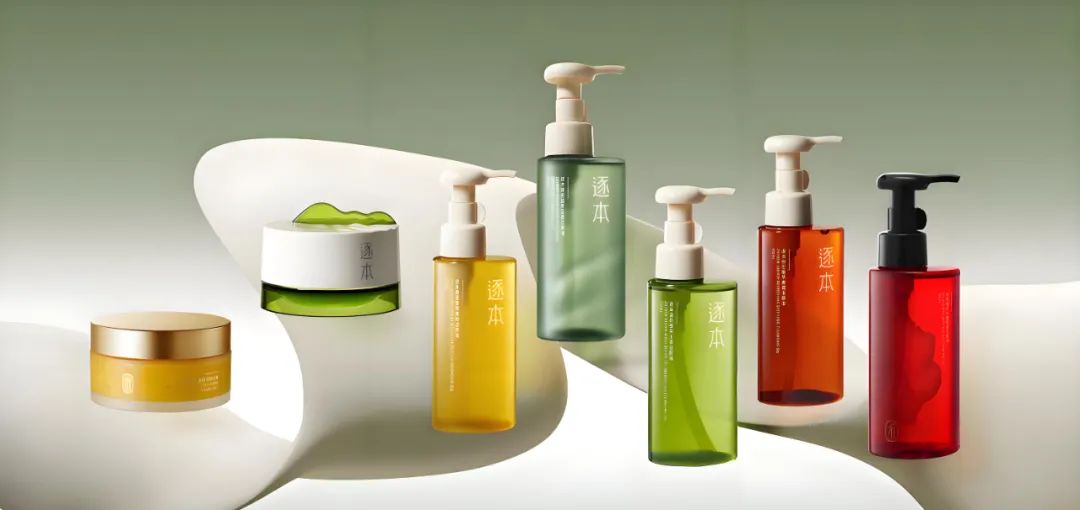
618销冠逐本“翻车”背后,国货美妆新锐难逃“红不过三年”魔咒?
3 6 Ke· 2025-07-12 03:03
Core Viewpoint - The emerging skincare brand "Zhuben" has faced significant backlash due to discrepancies between product ingredient filings and actual contents, as well as allegations of false advertising by its founder during a live stream. The Zhejiang Provincial Drug Administration has intervened, leading to the urgent withdrawal of the involved products, while the brand denies any quality safety issues [1][3]. Industry Trends - The performance of new domestic beauty brands is declining, with only two brands, Meishi and Tiluowei, making it to the top 20 on Douyin this year, while previously popular brands like Jia Run Quan and Di Shi Ai Pu have disappeared from the rankings. In contrast, established brands such as Kose, Proya, L'Oreal, and Estée Lauder continue to dominate the market, indicating a trend where "the strong get stronger" and new brands struggle to last beyond three years [3][4]. Brand Strategies - New domestic beauty brands are increasingly focusing on creating unique aesthetic positions and establishing differentiated branding. For instance, Lin Qingxuan emphasizes the story of its rare ingredient, red camellia, combined with advanced technology to enhance brand value and justify higher pricing [4][6]. Marketing and Promotion - Many new beauty brands utilize a "template" approach to rapidly create and market products, often focusing on popular concerns like skin whitening and anti-aging. They employ low or high pricing strategies to attract consumers, and leverage celebrity endorsements to enhance brand visibility and credibility [8][10]. Challenges Faced - The beauty industry is witnessing a high rate of penalties for false advertising and ongoing disputes regarding product efficacy. Many new brands are struggling with high customer acquisition costs and declining effectiveness of traffic-driven growth strategies, leading to a "flash in the pan" phenomenon [11][12]. R&D Investments - Established beauty giants like L'Oreal and Unilever invest heavily in research and development, with L'Oreal operating 20 research centers globally and employing over 4,000 scientists. In contrast, newer brands like Lin Qingxuan show significantly lower R&D expenditures, which may hinder their long-term sustainability [14][15]. Conclusion - The current landscape of the beauty industry reflects a scenario where established brands maintain their dominance through substantial R&D investments and effective marketing strategies, while new entrants struggle to establish themselves and often face rapid declines in market presence [16].
港股三大指数齐涨 半导体股表现亮眼
Zhong Guo Xin Wen Wang· 2025-07-11 14:01
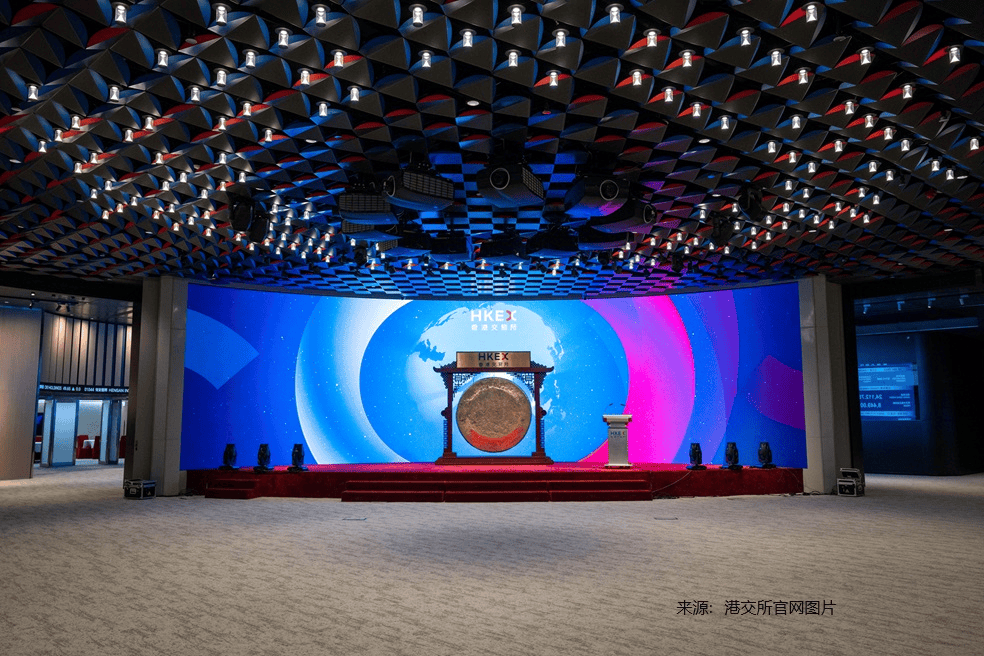
Group 1: Hong Kong Stock Market Performance - The three major indices in the Hong Kong stock market rose on July 11, with the Hang Seng Index increasing by 0.46%, the Hang Seng Tech Index by 0.61%, and the National Enterprises Index by 0.22% [1] - For the week, the overall trend in the Hong Kong stock market was upward, with the Hang Seng Index gaining 0.93% to close at 24,139.57 points, the Hang Seng Tech Index up 0.62% to 5,248.48 points, and the National Enterprises Index rising 0.91% to 8,687.56 points [1] - The total market turnover on July 11 reached 323.95 billion HKD, the highest since April 10 of this year [1] Group 2: Sector Performance - Biotechnology stocks saw significant gains, with notable increases including 15.32% for Nuo Cheng Jian Hua, 10.46% for WuXi AppTec, and 8.30% for Boan Biotech [1] - Semiconductor stocks also performed well, with Huahong Semiconductor rising by 4.12%, and SMIC increasing by 2.22% [1] - Securities and brokerage stocks experienced widespread increases, with Zhongzhou Securities surging by 47.47% and Guotai Junan International rising by 1.26% [1] Group 3: Regulatory Developments - The Hong Kong Special Administrative Region's Stablecoin Regulation will officially take effect on August 1 [2] - Several brokerages, including Guotai Junan International and Tianfeng International Securities, have been granted licenses to expand their business scope to provide virtual asset trading services to professional investors [2] - Longcheng Securities noted that the recent approval of stablecoin-related licenses has attracted significant market attention, potentially enhancing the pricing attractiveness of the securities sector [2]
港股上市后募资超IPO,同行企业为何境遇分化?
Sou Hu Cai Jing· 2025-07-11 11:27
Group 1 - The Hong Kong stock market has performed exceptionally well this year, with a double-digit increase in the main index, outperforming many global equity markets [2] - The new stock market has seen significant activity, with many new listings experiencing hundreds of times oversubscription during the offering phase, and post-listing performance has been strong, exemplified by companies like Mixue Group and CATL [2] - From early 2025 to July 11, the post-listing fundraising scale in the Hong Kong market reached HKD 164.418 billion, surpassing the IPO fundraising scale of HKD 123.564 billion, with the half-year post-listing fundraising nearly doubling last year's total [2] Group 2 - Placement has been the primary method for post-listing fundraising this year, with a total of HKD 156.985 billion raised, accounting for 95.5% of the total [4] - BYD and Xiaomi announced placement plans in March, raising HKD 43.509 billion and HKD 42.600 billion respectively, with proceeds aimed at R&D, overseas business development, and general corporate purposes [4] - Following their placements, both BYD and Xiaomi saw their stock prices continue to reach new highs, indicating market recognition of their growth potential [4] Group 3 - NIO raised HKD 4.03 billion through a placement in March for R&D and strengthening its balance sheet, but its stock price did not recover post-placement, reflecting market skepticism about its financial health and future prospects [8] - Robotics companies have also been active in fundraising, with several raising over HKD 1 billion, including Horizon Robotics and Fourth Paradigm [10] - Biotech companies, particularly those not yet profitable, are also seeking funds, with Innovent Biologics raising HKD 4.310 billion to support global expansion and pipeline development [10] Group 4 - Gold-related stocks have capitalized on rising gold prices to raise funds, with companies like Lao Pu Gold and Zhaojin Mining successfully completing fundraising while their stock prices continued to rise [11] - The Hong Kong stock market has seen significant price increases for companies like Pop Mart and Mixue Group, raising questions about whether these companies will also pursue fundraising opportunities [12] - Investor sentiment towards fundraising activities is influenced by the company's fundamentals, the rationale behind the fundraising, and the overall market environment [12] Group 5 - Companies like Innovent Biologics that raised funds while their stock prices were high were viewed positively by investors, while others that saw stock price declines post-fundraising faced skepticism regarding their pipeline progress and capital efficiency [13] - Gold-related fundraising activities are seen as timely moves to expand capacity in a favorable market environment, creating a positive feedback loop between stock price and fundraising [13] - Investors are encouraged to consider the fundamentals and growth prospects of companies rather than making decisions based solely on short-term stock price fluctuations or fundraising activities [14]


智通港股空仓持单统计|7月11日
智通财经网· 2025-07-11 10:32
Group 1 - The top three companies with the highest short positions are WuXi AppTec (22.57%), CATL (17.76%), and COSCO Shipping Holdings (14.27%) [1][2] - The companies with the largest absolute increase in short positions are Alibaba Health (4.45%), China Liansu (2.54%), and Hong Kong Travel (2.02%) [1][2] - The companies with the largest absolute decrease in short positions are Far East Horizon (-1.62%), ZhongAn Online (-1.55%), and Rongchang Biologics (-1.32%) [1][3] Group 2 - The latest short position data shows that WuXi AppTec has 87.35 million shares, CATL has 27.69 million shares, and COSCO Shipping Holdings has 411 million shares [2] - Alibaba Health's short position increased from 6.97% to 11.42%, while China Liansu's increased from 0.61% to 3.15% [2] - Far East Horizon's short position decreased from 4.43% to 2.82%, and ZhongAn Online's decreased from 7.43% to 5.88% [3][4]



天价“童颜针”引争议:医美只为有钱人服务,还是“青春面前人人平等”?
阿尔法工场研究院· 2025-07-11 03:30
Core Viewpoint - The upstream brand manufacturers capture most of the industry's profits but fail to assume the "chain master" responsibility, leading to safety risks that ultimately burden consumers [1][39]. Group 1: Industry Issues - The medical beauty industry is facing severe issues, with the police announcing strong measures to combat serious crimes in the sector [4]. - Recent investigations have exposed the chaotic practices behind "medical beauty crash courses," raising widespread concern [5]. - "Black medical beauty" institutions are rapidly training unqualified individuals as "professional beauty practitioners" and providing illegal channels for purchasing medical beauty products [6][7]. Group 2: Profit Distribution and Pricing Power - The industry is characterized by "excessive profits," primarily captured by upstream brand manufacturers [8]. - A public dispute between SoYoung (NASDAQ: SY) and Saint Bo Ma highlights the pricing power dynamics in the medical beauty industry [10]. - SoYoung's pricing for a product was significantly lower than the official price set by Saint Bo Ma, leading to accusations of product legitimacy and safety concerns [12][14]. Group 3: Financial Performance and Market Dynamics - SoYoung's revenue is projected to decline from 1.151 billion yuan in 2023 to 929 million yuan in 2024, with a net loss of nearly 590 million yuan [31]. - The average customer acquisition cost for medical beauty institutions has risen significantly, with some reporting costs as high as 3,000 to 5,000 yuan per person [33]. - The profit distribution in the medical beauty industry resembles a "reverse pyramid," with upstream manufacturers holding most of the profits while downstream institutions struggle [35]. Group 4: Regulatory and Ethical Concerns - Upstream manufacturers have neglected their supervisory responsibilities, leading to industry chaos and unsustainable development [40]. - Many manufacturers only provide basic operational training without ensuring compliance and safety standards, contributing to a lack of oversight [41]. - The prevalence of "off-label use" in medical beauty procedures raises ethical concerns, with a significant portion of disputes arising from such practices [53][56]. Group 5: Future Outlook - The recent release of guidelines by the Medical Insurance Bureau aims to improve the pricing structure in the medical beauty sector, promoting transparency and clarity [60][61]. - The industry is expected to shift towards a model that emphasizes technology at the upstream level and service quality at the downstream level [62].

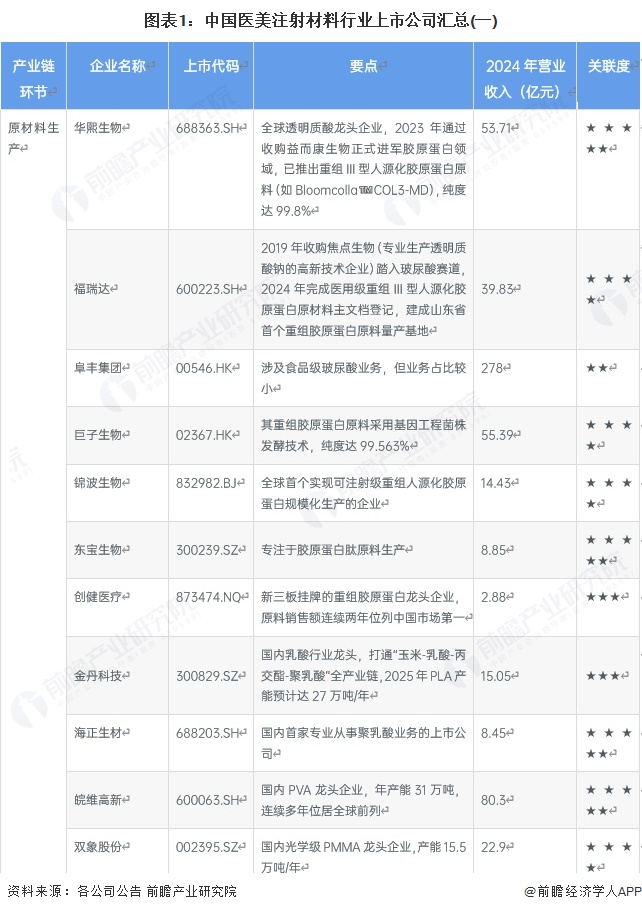
【最全】2025年医美注射材料行业上市公司全方位对比(附业务布局汇总、业绩对比、业务规划等)
Qian Zhan Wang· 2025-07-11 02:56
Industry Overview - The medical beauty injection materials industry in China has a limited number of publicly listed companies, primarily including Huaxi Biological, Haohai Biological, Aimeike, and Juzhi Biological, with most companies involved in the supply of upstream raw materials [1][7]. Company Summaries - Huaxi Biological is a global leader in hyaluronic acid, with a projected revenue of 53.71 billion yuan in 2024, and has expanded into collagen products through acquisitions [2][9]. - Haohai Biological has secured exclusive rights for domestic and international botulinum toxin products and is focusing on a dual product line of hyaluronic acid and botulinum toxin [6][15]. - Aimeike is expected to generate approximately 29.60 billion yuan in sales for its medical beauty injection materials in 2024, emphasizing high-end products [9][15]. - Juzhi Biological is projected to achieve sales of around 55.20 billion yuan in 2024, focusing on collagen products and leading the industry in standard-setting [9][15]. Sales and Production Data - Huaxi Biological has sold over 10 million units of its products, while Haohai Biological and Aimeike have sales around 7 million units each [13]. - Juzhi Biological's collagen products have a sales volume of approximately 55.20 billion yuan, indicating a strong market presence [11][13]. Business Strategies - Huaxi Biological is focusing on core technologies in glyco-biology and cell biology, aiming to enhance its position in the extracellular matrix and anti-aging sectors [15]. - Haohai Biological is pursuing international collaborations and technology imports to strengthen its product offerings and market competitiveness [15]. - Aimeike is developing a high-end product matrix centered on regenerative materials, with significant investments in training and technology [15]. - Juzhi Biological is leading the development of industry standards and expanding its product offerings in the collagen segment [15]. Regional Distribution - The majority of medical beauty injection material companies are concentrated in Shandong Province, with key players in raw material production and equipment manufacturing [7].