
万东医疗

Search documents
万东医疗(600055) - 万东医疗关于股份回购进展的公告
2026-03-02 09:46
证券代码:600055 证券简称:万东医疗 公告编号:临 2026-012 北京万东医疗科技股份有限公司 重要内容提示: | 回购方案首次披露日 | 2025/8/23 | | | | | | --- | --- | --- | --- | --- | --- | | 回购方案实施期限 | 2025 年 8 月 8 月 21 | 22 | 日~2026 | 年 | 日 | | 预计回购金额 | 3,000万元~6,000万元 | | | | | | 回购用途 | □减少注册资本 √用于员工持股计划或股权激励 | | | | | | | □用于转换公司可转债 | | | | | | | □为维护公司价值及股东权益 | | | | | | 累计已回购股数 | 1,802,700股 | | | | | | 累计已回购股数占总股本比例 | 0.2564% | | | | | | 累计已回购金额 | 29,992,822.08元 | | | | | | 实际回购价格区间 | 15.71元/股~17.99元/股 | | | | | 一、 回购股份的基本情况 2025 年 8 月 22 日,北京万东医疗科技股份有限公司(以 ...

中航证券:AI药物发现提速 国产医疗大模型彰显国际竞争力
Zhi Tong Cai Jing· 2026-02-25 03:53
Core Insights - The report from Zhonghang Securities highlights the ongoing integration of AI products and services in the healthcare sector, focusing on areas such as medical imaging, clinical decision support, precision medicine, health management, medical information technology, drug development, and medical robotics. AI is evolving from a "technical assistant" role to becoming a core driver of "value reshaping" and "efficiency revolution" in the medical industry, with its commercial value permeating from research to clinical, payment, and patient levels [1] International Developments - In the international arena, significant advancements are noted in AI medical imaging diagnostics and AI-assisted drug discovery. AI systems for abdominal CT multi-disease triage and fetal abnormal ultrasound imaging have received FDA approval, indicating a shift from single-disease assistance to comprehensive triage and decision support systems. Collaborations between pharmaceutical companies and AI tech firms are enhancing cancer early screening capabilities, potentially increasing cancer diagnosis rates and accessibility to treatment drugs. Additionally, AI imaging diagnostics for stroke have gained recognition at top academic conferences, reflecting the growing acceptance of AI technology in clinical and research communities [1] - In drug discovery, international pharmaceutical companies are partnering with AI tech firms to accelerate new drug development. The world's first fully AI-designed antibody drug, GB-0895, has entered Phase III clinical trials, marking a significant breakthrough from concept to clinical practice. Google has also launched two open-source AI models for medical applications, enhancing capabilities in multi-modal analysis and voice interaction [1] Domestic Developments - Domestically, the value of AI in early drug development is being clinically validated, with companies like InSilico Medicine receiving FDA approval for new drug applications via AI platforms. AI-assisted diagnosis is expanding into various medical scenarios, with recent approvals for AI software in cervical cell digital pathology and accelerated AI healthcare initiatives from leading in vitro diagnostic companies. The emergence of large AI models in China is also noteworthy, with local teams publishing evaluation standards in international journals, showcasing the competitive edge of Chinese medical AI models [2] - Significant advancements are being made in AI imaging, surgical robots, and brain-computer interfaces, with AI accelerating the development of medicine and drug research. Recent policies related to AI in healthcare are being actively discussed, focusing on the reliability and compliance of AI-assisted diagnosis and the use of medical data [2] Investment Opportunities - Key investment opportunities identified include: 1) AI drug development: companies like Crystal Technology, Hongbo Pharmaceutical, Chengdu XianDao, and InSilico Medicine 2) AI medical imaging and assisted diagnosis: companies such as United Imaging Healthcare and Wandong Medical 3) Medical information technology and smart hospitals: firms like Jiahe Meikang, Chuangye Huikang, Donghua Software, and Weining Health 4) Internet healthcare and health platforms: including JD Health, Alibaba Health, and Ping An Good Doctor 5) Precision medicine and AI-driven medical services: companies like Kingmed Diagnostics, Runda Medical, and Meinian Health 6) Technology/data platform enterprises: such as iFlytek Medical and Yidu Technology [4] AI Medical Core Themes - The core themes in AI healthcare investment revolve around addressing industry pain points. AI-assisted diagnosis enhances diagnostic efficiency and consistency, supporting grassroots healthcare with clear cost-reduction and efficiency benefits. In cancer early screening, companion diagnostics, and efficacy prediction, AI contributes to achieving precision medicine. The maturity of AI applications varies, with AI medical imaging evolving from single-disease assistance to multi-disease integration and comprehensive management. AI-assisted drug discovery is transitioning from early discovery to clinical validation, necessitating attention to platform technology validation and deep collaborations with top pharmaceutical companies [3] - The development of large medical AI models and multi-modal AI, capable of processing diverse medical data, is crucial. The focus should be on the accuracy of these models in specialized fields, their integration with existing hospital information systems, and their potential to build an ecosystem as foundational "medical intelligent agents" [3]


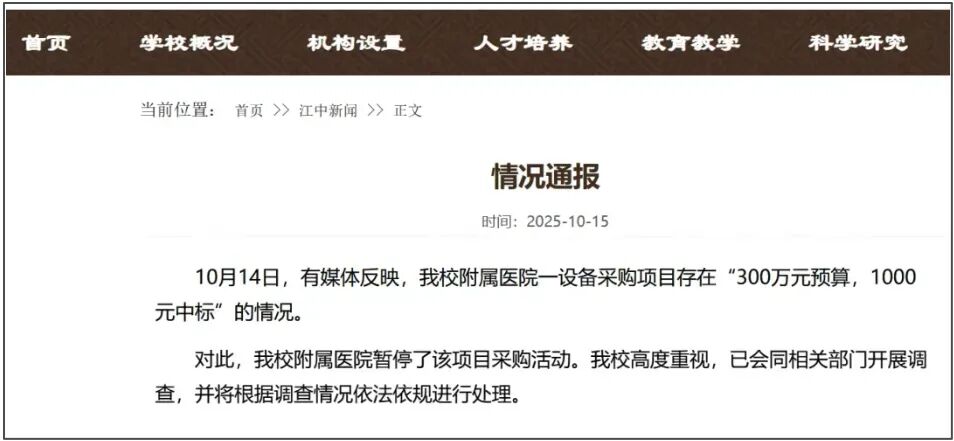
设备白送,耗材翻5倍!医疗采购\"1元中标\"的隐秘生意经还能持续多久?
Xin Lang Cai Jing· 2026-02-24 11:06
Core Viewpoint - The recent notice from Hubei Province addresses the issue of "abnormally low bidding" in government procurement, particularly targeting bids as low as "1 yuan" or "0.01 yuan" [1][19]. Group 1: Government Procurement Issues - The focus on abnormally low bids is not new, with previous regulations implemented in regions like Jiangxi, Guangxi, and Jiangsu, emphasizing scrutiny on bids below 50% of the average price or 45% of the maximum limit [2][10]. - A notable case involved a hospital with a budget of 3 million yuan for medical equipment, which was awarded to a bid of only 1,000 yuan, leading to increased costs for consumables later on [2][19]. Group 2: Market Dynamics and Company Performance - Companies like Wandong Medical have seen high bidding rates in 2025, with CT, MR, and DR equipment winning bids at rates of 47%, 56%, and 50% respectively, but this has come at the cost of profitability [3][20]. - Wandong Medical forecasts a net loss of 199 million to 257 million yuan for 2025, marking the worst annual performance since its listing, while Mindray's gross margin has dropped by 4.59 percentage points to 61.21% [3][15][28]. Group 3: Competitive Strategies and Industry Trends - The intense competition in the in-vitro diagnostics (IVD) sector has led to a significant reduction in the number of companies, from 2,320 to 1,530 between 2023 and 2025, with many resorting to extreme pricing strategies to capture market share [5][23]. - Companies often employ a bundling strategy, offering low-priced equipment while charging high prices for consumables, leading to increased overall costs for hospitals [6][24]. Group 4: Regulatory Responses - The national government has begun to take serious measures against low-cost bidding practices, with new regulations set to take effect in 2026 that will enforce scrutiny on bids significantly below average prices [9][25]. - Hubei Province has established specific thresholds for triggering reviews of abnormally low bids, which may be adjusted based on actual circumstances [11][27]. Group 5: Future Directions for the Medical Equipment Market - Companies are increasingly focusing on international markets and developing differentiated products to navigate the pressures of price competition [16][29]. - The need for innovation is emphasized as the industry shifts from a manufacturing to a creative approach, highlighting the importance of driving growth through new product development [30][31].


健信超导(688805):深度报告:全国MRI超导磁体独立供应龙头
Dongguan Securities· 2026-02-24 09:45
医药生物行业 增持(首次) 全国 MRI 超导磁体独立供应龙头 2026 年 2 月 24 日 分析师:谢雄雄 SAC 执业证书编号: S0340523110002 电话:0769-22110925 邮箱: xiexiongxiong@dgzq.com.cn 主要数据 2026 年 2 月 13 日 | 收盘价(元) | 44.00 | | --- | --- | | 总市值(亿元) | 73.78 | | 总股本(亿股) | 1.68 | | 流通股本(亿股)0.32 | | | ROE(TTM) | 10.43% | | 12 月最高价(元)58.12 | | | 12 月最低价(元)41.40 | | 股价走势 资料来源:东莞证券研究所,iFind 相关报告 公 司 研 究 证 券 研 究 报 告 健信超导(688805)深度报告 投资要点: ◼ 投资建议:预计公司2025年和2026年每股收益分别为0.42元和0.49元, 对应估值分别为105倍和89倍。公司作为全国MRI超导磁体独立供应龙 头,在超导磁体和永磁领域优势突出。首次覆盖,给予公司"增持"评 级。 ◼ 风险提示。研发进度不及预期风险、技术 ...
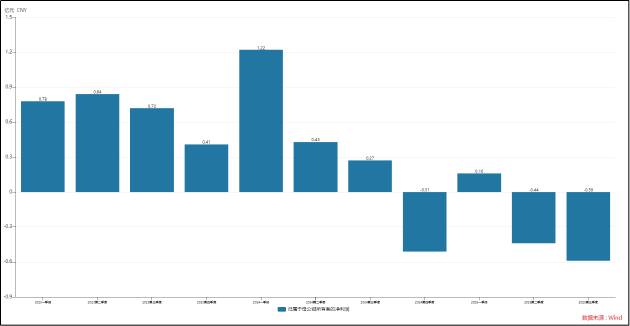
迪瑞医疗上市首亏:华润入主五年仍“叫好不叫座” 亏损逐季扩大业绩全面跑输行业
Xin Lang Zheng Quan· 2026-02-13 07:15
Core Viewpoint - Dier Medical faces significant challenges, including its first annual loss since its listing, due to internal control issues and a declining market environment in the IVD industry [1][2][7] Group 1: Financial Performance - In 2025, Dier Medical's revenue is projected to decline by 60.12% year-on-year to 469 million yuan, with a net profit of -87 million yuan, marking a 145.31% year-on-year decrease [2][4] - The company anticipates a total loss of at least 1 billion yuan in Q4 2025, with no signs of stabilization [4] - The operating cash flow has seen a net outflow of 580 million yuan in the first three quarters of 2025, following a 299 million yuan outflow in 2024 [4] Group 2: Market Environment - The IVD industry is experiencing a downturn, with A-share IVD sector revenues dropping by 14.5% year-on-year to 27.62 billion yuan in the first three quarters of 2025, and net profits down by 26.4% to 4.49 billion yuan [2] - Dier Medical's performance is lagging behind the industry, with its revenue and profit both declining significantly [2] Group 3: Operational Challenges - The company's gross margin for instrument business plummeted from 33.99% in 2023 to 9.68% in the first half of 2025, while reagent gross margin fell from 75.42% to 60.53% [4] - Dier Medical's business structure is heavily weighted towards instruments rather than reagents, which is contrary to the industry norm of "instruments attract customers, reagents generate profit" [4][5] Group 4: Internal Control Issues - The company received a corrective order from the Jilin Securities Regulatory Bureau for improper revenue recognition and inadequate internal controls, leading to an overstatement of revenue by 3.693 million yuan and profit by 716,000 yuan in 2023 [1][7] - The company has reported a significant increase in credit impairment losses and asset impairment losses, totaling over 25.8 million yuan in the first three quarters of 2025 [5] Group 5: Governance and Strategic Challenges - Despite the acquisition by China Resources Group for 1.8 billion yuan, the expected synergies have not materialized, and the company's performance continues to decline [8] - Dier Medical has launched 14 new products in 2025, but faces stiff competition from domestic leaders and foreign brands in high-end markets [9]


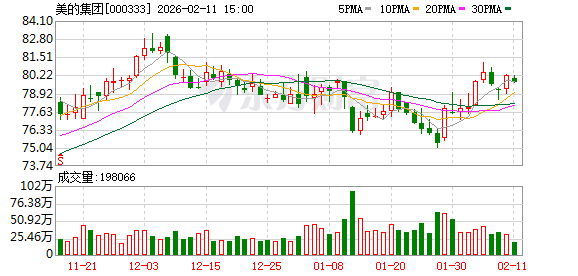
美的医疗铁血突围:不做第二个东芝
2 1 Shi Ji Jing Ji Bao Dao· 2026-02-11 12:28
Core Insights - Midea Group is focusing on the healthcare sector as a strategic pivot, acquiring Carestream Health's international business to enhance its medical imaging capabilities and compete with established players like GE, Philips, and Siemens [2][3][4] - The company is positioning itself for leadership in the medical field, with a strong emphasis on AI technology to drive innovation and efficiency in its healthcare offerings [13][14][17] Group 1: Leadership Transition and Strategic Focus - The key concerns among shareholders include the timing of Chairman Fang Hongbo's retirement and the selection of his successor, which is closely tied to Midea's future direction [2] - Wang Jianguo, seen as a potential successor, is taking on significant roles within Midea's healthcare division, indicating a shift towards a more focused leadership in this sector [2][3] Group 2: Market Position and Competitive Landscape - Midea's healthcare division faces significant challenges from established competitors like Philips, which has a strong market share in medical imaging and a well-developed ecosystem that integrates technology and services [3][7][9] - The company aims to avoid the pitfalls experienced by Toshiba Medical, which struggled to compete in the medical imaging market and ultimately exited the sector [10][11] Group 3: Business Structure and Product Offerings - Midea's healthcare business comprises several entities, including Wandong Medical and KUKA Medical, focusing on a comprehensive ecosystem that spans clinical technology and hospital operations [5][6] - The company is actively working to enhance its product offerings in high-end imaging equipment, although it currently holds a low market share in critical areas like CT and MR imaging [6][8] Group 4: AI Integration and Future Strategies - Midea is leveraging AI technology to transform its healthcare offerings, with plans to integrate AI into its products and services to enhance operational efficiency and patient care [13][14] - The company has committed to significant R&D investments, aiming to establish itself as a provider of comprehensive smart healthcare solutions rather than just medical equipment [14][17] Group 5: Challenges and Future Outlook - Despite its ambitions, Midea's healthcare division must navigate the complexities of the medical industry, which requires a different approach compared to its traditional consumer electronics business [16] - The company has outlined a five-year plan to address potential overlaps and competition between its subsidiaries, ensuring a clear market strategy moving forward [16]

美的旗下医疗板块推出DR智能体 释放医生70%重复性劳动
Zheng Quan Ri Bao Wang· 2026-02-10 04:43
Core Viewpoint - Midea Group, through its subsidiary Beijing Wandong Medical, has launched the Wandong DR Intelligent System, which aims to automate the entire imaging workflow, enhancing efficiency and accuracy in clinical diagnostics [1] Group 1: Product Development - The Wandong DR Intelligent System integrates advanced technologies from Midea's AI Research Institute, Central Research Institute, and Alibaba's Damo Academy [1] - The system automates imaging processes, including intelligent positioning, image capture, AI quality control, and automatic detection of common chest diseases, generating structured diagnostic reports seamlessly [1] Group 2: Technological Innovation - The system leverages over 4 million cross-domain chest DR imaging data from Wanliyun, enabling the development of a multimodal diagnostic model that surpasses traditional AI's single-point recognition limitations [1] - It introduces a deep reasoning engine that simulates clinical thought processes, allowing for multi-step logical deductions in complex cases [1] Group 3: Quality and Consistency - The model includes standardized report templates to ensure terminological accuracy and traceability, significantly improving the professionalism and consistency of reports [1] - Continuous integration of diagnostic experiences from imaging and clinical experts into the model allows for iterative upgrades, aligning the system's logic closer to real clinical thinking [1]
美的医疗推出业界首个DR智能体,释放医生70%重复性劳动
2 1 Shi Ji Jing Ji Bao Dao· 2026-02-06 14:44
Core Insights - The launch of the first DR intelligent system by Wandong Medical, a subsidiary of Midea Medical, establishes a comprehensive ecosystem integrating hardware, core algorithms, imaging cloud, and clinical scenarios in the high-end DR market [2][9] Group 1: Technological Innovation - The DR intelligent system leverages over 4 million cross-domain chest DR imaging data to build a multimodal diagnostic model, overcoming traditional AI limitations of single-point recognition [5] - The system introduces a "deep thinking" reasoning engine that simulates clinical thought processes, enabling multi-step logical deductions for complex or multi-lesion images [5] Group 2: Workflow Transformation - The core value of the Wandong DR intelligent system lies in reshaping clinical workflows by automating the entire imaging process, allowing for one-click smart positioning, imaging, AI image quality control, and automatic detection of common chest diseases [3][5] - The system generates structured diagnostic reports seamlessly, bridging the gap between image acquisition and diagnostic analysis [3] Group 3: Clinical Efficiency and Quality - In high-load scenarios such as health check centers and emergency departments, the intelligent system significantly enhances clinical value by reducing chest X-ray analysis time to minutes, freeing up over 70% of physicians' repetitive reading time [7] - It provides a "second pair of eyes" for less experienced primary care physicians, reducing the risk of missed or misdiagnosed cases [7] Group 4: Ecosystem and Market Impact - The collaboration between Midea Medical and its ecosystem partners signifies a shift from isolated innovations in high-end medical equipment to a comprehensive intelligent transformation across the entire chain [9] - This technology not only improves diagnostic efficiency and consistency but also injects expert-level capabilities into grassroots healthcare, promoting the standardization of quality medical resources [9]
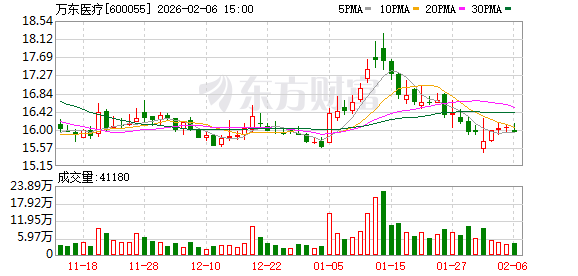
由盈转亏!万东医疗发布2025年业绩预告
思宇MedTech· 2026-02-03 04:18
Core Viewpoint - WanDong Medical is expected to report a significant net loss for 2025, transitioning from a profitable state to a phase of pressure on earnings [1][3]. Performance Overview - The company forecasts a net profit attributable to shareholders of between -199 million to -257 million yuan for 2025. - The net profit after deducting non-recurring items is expected to be between -213 million to -271 million yuan. - In contrast, the company achieved a net profit of 157 million yuan in 2024, with a net profit of 142 million yuan after deducting non-recurring items, indicating a clear reversal in performance for 2025 [3]. Reasons for Performance Pressure - The decline in performance for 2025 is attributed to three main factors: 1. The impact of centralized procurement and price adjustments on gross profit margins. The company is participating in centralized procurement for medical equipment, adopting more competitive pricing strategies to increase bid success rates, which compresses product gross margins and affects current profits [4]. 2. Increased R&D investment leading to short-term cost pressures. The company is intensifying R&D in high-end medical imaging equipment, focusing on CT, MR, and DSA products, which results in a temporary drag on profits due to increased R&D expenditures [5]. 3. Rising costs associated with expanding into overseas and high-tier hospital markets. The company is advancing its overseas market layout and enhancing its marketing and organizational investments in domestic high-tier hospitals, leading to increased costs [6]. Industry Perspective - The expected loss for WanDong Medical in 2025 is seen as a typical case of "transitional pressure" in the imaging equipment industry amid centralized procurement and structural upgrades. - High-end imaging equipment is gradually being included in more price-constrained procurement systems, making it difficult for domestic manufacturers to avoid temporary declines in gross margins, even with increased bid volumes. - The shift towards high-end, systematic, and overseas operations inherently requires longer cycles, higher R&D intensity, and heavier organizational investments. - The company has not retreated from its strategic goals but has chosen a path of "exchanging scale for time and investment for technological reserves" in the centralized procurement environment. This strategy may be unfavorable for profits in the short term but is worth observing from a medium to long-term perspective, especially in core areas like CT, MR, and DSA where domestic replacement is deepening [7]. Key Variables for the Future - The future performance will depend on the commercialization pace of high-end imaging products, the efficiency of overseas market order conversions, and the ability to rebalance product structure and gross margins post-centralized procurement [8].

万东医疗20260202
2026-02-03 02:05
Summary of WanDong Medical Conference Call Company Overview - **Company**: WanDong Medical - **Parent Company**: Midea Group - **Industry**: High-end medical equipment, focusing on CT, MR, and DSA technologies Key Points and Arguments Strategic Shift and Market Positioning - Since joining Midea Group in 2021, WanDong Medical has shifted its strategic focus towards the high-end medical equipment market, particularly in CT, MR, and DSA sectors, aiming to transition from traditional low to mid-end markets to high-end clients [2][5] - The company is actively expanding its overseas market presence, aligning with the "Belt and Road" initiative, which supports its internationalization strategy [2][5] Response to Market Challenges - The centralized procurement policy has provided WanDong Medical with opportunities to enter mainstream public hospital markets, despite facing pressure on gross margins [2][5] - The company is overcoming challenges by offering high cost-performance products and a flexible product matrix, launching new products like the 64-slice 128-layer cardiac CT and high-end 3T MRI [2][5] Internationalization and Collaboration - Midea Group's acquisition of Reiko International aims to enhance international business, with both companies complementing each other in product positioning and market reach [2][7] - Future capital operations may be implemented to avoid competition between WanDong and Reiko, ensuring optimal resource utilization [2][7] Innovation and R&D Focus - WanDong Medical is increasing its R&D investments, particularly in high-end medical imaging equipment, establishing a technology reserve system to enhance future product competitiveness [3][11] - The company is developing innovative products, including a helium-free MRI, which is expected to lead the market trend towards more sustainable technologies [12][18] Financial Performance and Market Strategy - Despite short-term profit pressures due to increased R&D and marketing expenses, the company is focused on long-term growth and value creation for shareholders [4][13] - WanDong Medical anticipates significant market share growth in mid to low-end CT and MRI markets, aiming for a top-three position in its segments by 2025 [15] AI and Smart Technology Integration - The company is investing in AI technologies for smart scanning, imaging, and management, aiming to transform imaging devices into intelligent systems [16][17] - Current projects include the development of smart DR systems and integrated diagnostic solutions for specific conditions like adolescent scoliosis [16][17] Future Outlook - WanDong Medical expects to maintain a strong growth trajectory, with a focus on high-end and innovative products, while expanding its international market share to 40-45% of total revenue by 2026 [15][19] - The company is committed to enhancing its operational efficiency and cost structure to improve overall profitability [11][14] Additional Important Insights - The company is strategically positioning itself to adapt to the ongoing changes in the medical equipment market, particularly with the implementation of centralized procurement policies [9][11] - WanDong Medical's approach to product differentiation and innovation is crucial for maintaining competitiveness against established players in the industry [12][19]