国泰君安资管

Search documents
量化指增基金超额呈现边际修复
HTSC· 2026-01-26 03:05
证券研究报告 金工 量化指增基金超额呈现边际修复 2026 年 1 月 24 日│中国内地 量化投资周报 本月以来估值因子偏弱,成长因子相对走强 本月以来估值因子整体偏弱,月初的回撤影响较大;波动率、换手率等防御 性量价因子同样表现不佳,仅在沪深 300 成分股票池取得正收益。成长、 盈利、小市值及反转因子相对走强,在中证 500 以外的成分股票池均呈现 正收益。预期类因子中,超预期因子在沪深 300 以外的股票池呈现正收益; 预期估值因子在沪深 300 和全 A 股股票池取得正收益,在其余股票池回撤; 预期增速因子则呈现普遍回撤。 本月以来小市值因子多空表现靠前,量价因子承压 从平均多空收益来看,本月以来小市值因子表现靠前,平均取得较明显的正 收益,但主要源于在沪深 300 成分股票池中的收益优势;预期增速和超预 期因子紧随其后;成长因子同样呈现正向的平均多空收益。反转、波动率和 换手率等量价因子整体承压,平均呈现较大回撤。 本月以来指增超额呈现边际修复,300 指增超额领先 我们重点跟踪以沪深 300、中证 500、中证 1000 和中证 A500 指数为基准 的量化指数增强基金。基于公募指增基金的复权净 ...
大集合谢幕,9万亿券商资管转型加速
2 1 Shi Ji Jing Ji Bao Dao· 2026-01-08 07:12
Core Insights - The transition of brokerage collective asset management products towards public offerings is nearing completion, with only three products remaining as of the end of 2025 [1][2][3] - The total scale of the securities industry asset management business has exceeded 9 trillion yuan, with private asset management scale reaching 5.8 trillion yuan [1] - The application for public fund licenses by brokerage asset management subsidiaries has slowed down significantly, indicating a shift in market dynamics and regulatory guidance [4][5] Group 1: Transition of Collective Asset Management Products - By the end of 2025, only three brokerage collective products remain, with most transitioning to public fund products or opting for liquidation [1][2] - The historical context of brokerage collective products dates back to 2003, with the first product launched in 2005, but new setups have been prohibited since 2013 [2] - The transition to public fund standards is ongoing, with many products facing direct pressure on management scale and income due to competition from public funds and bank wealth management subsidiaries [3] Group 2: Public Fund License Applications - A wave of applications for public fund licenses occurred in 2023, with several brokerages successfully obtaining licenses, but the approval process has since slowed [5] - The withdrawal of applications by multiple brokerages indicates a significant change in the competitive landscape, with the public fund market becoming increasingly saturated [5] - Currently, 14 brokerages and their asset management subsidiaries have been approved to conduct public fund management business [5] Group 3: Differentiated Development Strategies - Brokerages are focusing on reducing channel and non-standard business while increasing resources towards actively managed products, particularly in equity and fixed income sectors [6] - National Securities has emphasized risk control and management while enhancing active management scale to provide stable investment returns [6] - The trend suggests that larger institutions may benefit more from public paths, while specialized brokerages may find private paths more advantageous [6]
“小众”变“爆款”!公募REITs今年吸金已达473亿,收官规模逾2100亿
Di Yi Cai Jing Zi Xun· 2025-12-31 07:48
Group 1 - The core achievement of the domestic public REITs market in 2025 includes 20 new issuances and 5 expansions, raising a total of 47.335 billion yuan, with a total issuance of 79 products and a total scale exceeding 210 billion yuan [1] - The domestic REITs market has grown to become the largest in Asia and the second largest globally over five years [1] - The market is evolving from a focus on financing to becoming a key tool for revitalizing existing assets, with increasing participation from individual investors [1] Group 2 - In the secondary market, public REITs gained popularity in 2025, experiencing a significant rise in the first half of the year followed by a recent adjustment, with the CSI REITs total return index rising nearly 10% from the beginning of the year to August [2] - By December 31, 2025, out of 78 listed REITs, 55 saw price increases while 22 experienced declines, with the top performer, the Jiashi Wumei Consumption REIT, rising over 39% [2] Group 3 - Different asset types showed varied performance, with consumption REITs leading the market with an average increase of over 30% due to consumer subsidy policies and improved market expectations [3] - The average distribution rate for franchise rights assets was recorded at 9%, significantly higher than the 10-year government bond yield by 7 percentage points, making it an attractive option for long-term investors [3] Group 4 - The public REITs market experienced a "hot" new issuance trend in 2025, with record subscription multiples for various products, including 1,192 times for the Huitianfu Jiuzhoutong Pharmaceutical REIT [4] - The underlying asset types for REITs have diversified, now including not only logistics and transportation but also heating equipment, industrial park renovations, and pharmaceutical logistics [4] Group 5 - The approval of data center REITs in 2025 indicates ongoing support for technology companies to utilize intellectual property and data assets for asset securitization [5] - The diversification of original rights holders has increased, with more international asset management entities entering the market, such as the first foreign asset management institution initiating a consumption REIT [5]
最低申赎额精确到分角 公募基金缘何自降入场门槛
Zhong Guo Zheng Quan Bao· 2025-11-13 23:30
Core Viewpoint - Tianhong Fund has announced a reduction in the minimum subscription and redemption thresholds for over fifty funds to 0.1 yuan, marking a shift from the "1 yuan era" to the "fractional era" in fund subscriptions, driven by customer acquisition needs, internet marketing, and pressure to avoid fund liquidation [1][2][4]. Group 1: Fund Threshold Adjustments - Tianhong Fund will lower the minimum subscription amount to 0.1 yuan and the minimum redemption amount to 0.1 shares for various fund types, including index funds, actively managed equity funds, QDII, and bond funds [2][4]. - Other fund companies, such as Taikang Fund and Huaren Yuanda Fund, have also reduced their minimum subscription thresholds, indicating a broader trend in the industry [4][5]. Group 2: Market Trends and Drivers - The trend of lowering fund thresholds is influenced by the increasing popularity of internet platforms for fund purchases, with many companies adapting to online sales styles [3][4]. - Fund companies are motivated by the need to attract new customers and meet the demand for small-scale investments, allowing investors to experience fund investments with minimal amounts [4][7]. Group 3: Strategic Considerations - Some fund companies may be lowering redemption and holding thresholds to retain customers and mitigate the risk of fund liquidation, especially for funds with low investor numbers [5][7]. - The adjustments in thresholds may also be a strategic move to ensure compliance with regulations regarding fund holder numbers and asset values, thereby avoiding forced liquidation [6][7].
公募基金缘何自降入场门槛
Zhong Guo Zheng Quan Bao· 2025-11-13 20:02
Core Viewpoint - Tianhong Fund has announced a reduction in the minimum subscription and redemption thresholds for over fifty funds to 0.1 yuan, marking a shift from the "1 yuan era" to the "fractional era" in fund subscriptions, driven by the need for customer acquisition, internet marketing, and pressure to avoid fund liquidation [1][2][3] Group 1: Fund Threshold Adjustments - Starting November 10, Tianhong Fund will adjust the minimum subscription amount to 0.1 yuan for various fund types, including index funds, actively managed equity funds, QDII, and bond funds [1] - Other fund companies, such as Taikang Fund and Huaren Yuanda Fund, have also lowered their minimum subscription amounts, with some money market funds dropping to a minimum of 0.01 yuan [2][3] Group 2: Market Trends and Drivers - The trend of lowering fund thresholds is influenced by multiple factors, including the need for public funds to attract more investors, the marketing strategies of distribution channels, and the requirements of investment advisory strategies [3] - The reduction in thresholds allows more investors to participate in fund investments, catering to the demand for managing small amounts of idle cash [3] Group 3: Strategic Considerations - Some fund companies are lowering redemption and holding thresholds to retain clients and mitigate the risk of fund liquidation, especially for funds with a small number of investors [5] - The adjustments in redemption thresholds may also be a strategy to prevent forced redemptions that could occur if the number of fund holders falls below regulatory requirements [5]
0.01元起购!买基金,进入“分角时代”
Zhong Guo Zheng Quan Bao· 2025-11-13 15:05
基金申购门槛正进入"分角时代"。 近日,天弘基金宣布,将旗下50余只基金的申赎门槛统一调降至0.1元,其中包括多只主动权益基金。 今年来,陆续有基金公司发布类似公告,最低申赎份额以及最低持有份额降至0.01份。 记者调研了解到,这背后既有基金公司获客需求,也是渠道营销的"噱头",同时也能够满足投顾策略的 配置需求。此外,一些发起式基金的操作,或暗藏着"保壳"的考量。 进入"分角时代" 据天弘基金近日公告,自11月10日起,调整旗下五十余只基金的最低申赎金额限制以及最低持有份额限 制,覆盖指数基金、主动权益基金、QDII、债券基金、LOF等多种产品类型。 公告称,投资者通过天弘基金直销平台及其他销售机构的首次申购单笔最低金额为0.1元,追加申购单 笔最低金额为0.1元。此外,持有人单笔赎回份额不得少于0.1份。如因红利再投资、非交易过户、转托 管、巨额赎回、基金转换等原因导致的账户余额少于0.1份等情况不受此限,但再次赎回时必须一次性 全部赎回。 今年8月,天弘基金还同步降低了天弘标普500发起式基金(QDII-FOF)、天弘中证银行ETF联接基金 的单笔最低申赎金额以及最低持有份额。 在货币基金领域,则有更多 ...
华泰证券资管“换帅”,崔春离任江晓阳代任
2 1 Shi Ji Jing Ji Bao Dao· 2025-10-24 14:16
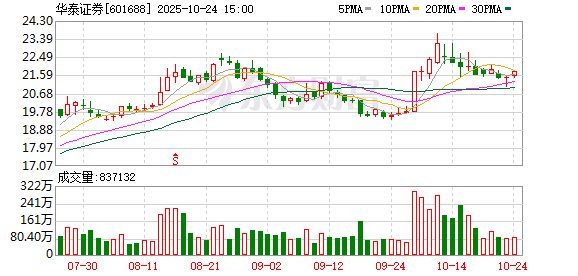
Core Viewpoint - The resignation of Cui Chun, the chairperson of Huatai Securities Asset Management, marks a significant leadership change within the company, with Jiang Xiaoyang stepping in as acting chairperson [2][7]. Company Overview - Huatai Securities Asset Management, a wholly-owned subsidiary of Huatai Securities, was established in 1999 and became an independent entity in 2014, obtaining a public offering license in 2016 [3][5]. - Under Cui Chun's leadership since 2015, the company transitioned from a single business model to a dual-license model, achieving over 100 billion in asset management scale [5][6]. Leadership Background - Cui Chun holds a master's degree from Tsinghua University and has over 20 years of experience in the financial industry, having worked at notable institutions such as Everbright Securities and China International Capital Corporation [4]. - Jiang Xiaoyang, the new acting chairperson, has been with Huatai Securities for several years and has held various positions within the company [8]. Business Performance - As of June 30, 2025, Huatai Securities Asset Management reported an asset management scale of 627.03 billion, a year-on-year increase of 23.92%, with public offering business exceeding 165.91 billion [6]. - The company achieved semi-annual revenues surpassing 1.2 billion and profits exceeding 700 million, ranking among the top in the brokerage asset management sector [6]. Industry Context - The leadership change at Huatai Securities Asset Management is part of a broader trend in the brokerage asset management industry, with multiple firms experiencing executive turnover in 2025 [9][11]. - Factors driving these changes include regulatory adaptations, market pressures, and internal strategic realignments, as firms shift focus from scale to quality [11][13].


重磅资管会议,众多大咖发声
Zhong Guo Ji Jin Bao· 2025-10-18 13:58
Core Insights - The conference focused on the integration of artificial intelligence (AI) in asset management, highlighting the historical opportunities presented by "AI + Asset Management" [2][3] - The event gathered over 300 participants from various sectors, including government, finance, and technology, to discuss the application and development trends of AI in asset management [1] Group 1: AI Integration in Asset Management - The Shanghai Lingang New Area aims to become a benchmark financial technology hub by leveraging its unique advantages in financial openness and innovation [2] - The Intelligent Investment Research Technology Alliance (ITL) has grown from 72 to 333 member institutions over five years, indicating a significant expansion in the sector [2] - AI technologies, particularly large models, are transforming asset management processes such as research, advisory, trading, and risk control [3] Group 2: Challenges and Solutions in AI Development - Key challenges in AI model development include the misalignment of AI expansion laws with hardware capabilities, error accumulation in multi-agent collaboration, and ensuring AI safety and value alignment [4] - Solutions proposed include the "Federated Teacher-Student Model" for collaborative learning between general and specialized models [4] - The need for high-quality vertical data, foundational technology platforms, and enhanced AI safety and ethical governance was emphasized as critical for AI's successful implementation in finance [4] Group 3: Practical Applications of AI - AI is being applied in various industries, including satellite design, new materials development, and semiconductor manufacturing, presenting investment opportunities [6][7] - The integration of AI in semiconductor manufacturing is particularly highlighted, with a focus on improving operational efficiency and increasing domestic production rates [6][7] - The financial sector is seeing a shift from "information disparity" to "model disparity," necessitating improvements in data governance and organizational structures to fully leverage AI capabilities [8] Group 4: Future Directions and Ecosystem Development - The establishment of a trusted data space in the securities industry aims to reduce the complexity and cost of applying large models, fostering AI innovation [8] - The importance of a multi-disciplinary team with a blend of curiosity and cross-functional skills was identified as essential for overcoming challenges in AI integration [8][9] - The Shanghai Asset Management Association is focusing on enhancing the global competitiveness of Shanghai as an asset management center through digitalization and AI integration [10]
重磅资管会议!众多大咖发声
Zhong Guo Ji Jin Bao· 2025-10-18 13:48
大模型挑战与金融AI实践 在主题演讲环节,杨强院士深入剖析了人工智能大模型发展面临的五大挑战,包括AI扩展定律与硬件 摩尔定律的不协调、多智能体协同中的错误叠加、人工智能安全与价值观对齐等,并提出了"联邦师生 大模型"的解决方案,通过联邦学习实现通用大模型与垂直小模型的协同学习。 2025年10月17日,第六届1024资管科技开发者大会(ITDC 2025)在上海临港中心(世界顶尖科学家论 坛永久会场)滴水厅成功举办。大会由中国(上海)自由贸易试验区临港新片区管理委员会指导,由上 海资产管理协会、智能投研技术联盟(ITL)、上海临港新片区商会、上海临港新片区投资控股(集 团)有限公司主办。 本次大会是上海资产管理协会主办的"全球资产管理中心上海国际活动周2025"系列重要活动之一,同时 也是智能投研技术联盟(ITL)成员机构发展年会。本次大会以"人工智能+,从产业AI到金融AI"为主 题,汇聚来自政府部门、金融基础设施、银行、保险、公募基金、券商资管、金融科技企业等领域的 300余位嘉宾,共同探讨人工智能技术在资产管理行业的前沿应用与发展趋势。 "AI+资管"正迎来历史性机遇 在大会开幕仪式上,中国(上海)自 ...
重磅资管会议!众多大咖发声
中国基金报· 2025-10-18 13:41
Core Viewpoint - The sixth Asset Management Technology Developers Conference emphasizes the deep integration of AI in the asset management industry, highlighting the historical opportunities presented by AI technologies [2][3]. Group 1: Conference Overview - The conference was held on October 17, 2025, in Shanghai, focusing on the theme "AI + Asset Management," gathering over 300 guests from various sectors including government, finance, and technology [2][4]. - The event is part of the "Global Asset Management Center Shanghai International Activity Week 2025" and aims to explore the application and development trends of AI in asset management [2][4]. Group 2: Key Insights from Speakers - Zhao Yihuai, a government official, emphasized the role of the Lingang New Area in financial innovation and the importance of creating a benchmark for financial technology [4]. - Yang Qiang, chairman of the Intelligent Investment Research Technology Alliance, noted the growth of member institutions from 72 to 333 over five years, indicating a shift in AI's role from a tool to an ecosystem [4][5]. - Jia Biao, president of the Shanghai Asset Management Association, highlighted that AI technologies are transforming investment research, advisory, trading, and risk control processes [5]. Group 3: Challenges and Solutions in AI Development - Yang Qiang identified five major challenges in AI model development, including the misalignment of AI expansion laws and hardware limitations, and proposed solutions like federated learning [7]. - Xiao Jing from Ping An Group discussed the three stages of AI development and emphasized the need for high-quality data and robust technical platforms [7]. - Bai Shuo from Hang Seng Electronics focused on how AI is reshaping investment research processes through enhanced efficiency and accuracy [7]. Group 4: AI Applications in Various Industries - The conference featured discussions on AI applications in satellite design, new materials, and semiconductor manufacturing, highlighting investment opportunities in these areas [10][11]. - Chen Bimei from Shanghai Jiangling Technology showcased AI's role in semiconductor manufacturing, emphasizing the market potential due to low domestic production rates [11]. - Future trends in AI include the development of home AI assistants and the modularization of robotics, indicating a shift towards more integrated and user-friendly AI solutions [11]. Group 5: AI in Asset Management - The second roundtable focused on the integration of AI in asset management, with discussions on the need for a reliable data space and the challenges of data governance and talent acquisition [14][15]. - Wu Miao from Ping An introduced "Zhipu Assistant" for knowledge management and collaborative work, aiming to evolve AI from an assistant to a collaborative entity [15]. - The importance of establishing a comprehensive auditing mechanism for AI applications was emphasized to ensure model interpretability and regulatory compliance [15].