怡和嘉业

Search documents
把握业绩高增个股,长期关注“创新+复苏”
Xinda Securities· 2025-07-21 12:49
Investment Rating - The investment rating for the pharmaceutical and biotechnology industry is "Positive" [2] Core Insights - The pharmaceutical and biotechnology sector has shown a weekly return of 4.00%, outperforming the CSI 300 by 2.91%, ranking second among 31 primary sub-industry indices [3][8] - The report emphasizes the importance of innovation and recovery as key investment themes, highlighting the ongoing enthusiasm for innovative drugs driven by policy incentives and clinical data [10] - Notable mergers and acquisitions, such as China Biopharmaceutical's acquisition of Lixin Pharmaceutical for approximately $1 billion, are seen as significant milestones in the industry [9][10] Summary by Sections 1. Industry Overview - The pharmaceutical and biotechnology sector's monthly return was 9.44%, ranking fourth among 31 primary sub-industry indices, with the medical services sub-sector leading with a 15.72% increase [8][22] - The chemical pharmaceuticals sub-sector had the highest weekly return of 6.86% [32] 2. Market Performance and Valuation - The current PE (TTM) for the pharmaceutical and biotechnology industry is 30.03, which is below the historical average of 30.89 [14][17] - The industry has shown a 21.25% increase over the last six months, outperforming the CSI 300 by 14.79% [12][14] 3. Stock Performance - Top-performing stocks in the past week include Borui Pharmaceutical, Lisheng Pharmaceutical, and Nanxin Pharmaceutical, with increases of 42.35%, 41.68%, and 34.95% respectively [37] - In the Hong Kong market, stocks like Sanofi Biologics and Lepu Medical have also shown significant gains of 63.79% and 62.04% [41] 4. Industry and Company Dynamics - Recent policy developments include the Shanghai Municipal Drug Administration's action plan for regulating online drug sales from 2025 to 2027 [44] - The National Healthcare Security Administration has initiated the eleventh batch of centralized drug procurement, which will include 55 varieties [44]
走访上市公司 推动上市公司高质量发展系列(二十)
证监会发布· 2025-07-18 09:30
Group 1 - The Shenzhen Stock Exchange (SZSE) has initiated a regular visiting mechanism to enhance the quality of listed companies, focusing on supporting technological innovation and addressing external challenges [2][4] - Over 200 listed companies in regions such as Guangdong, Zhejiang, Jiangsu, Beijing, and Shanghai have been visited, allowing for in-depth discussions on business models, core technologies, and challenges faced by companies [2][3] - The SZSE has implemented over 150 measures in response to company feedback, primarily in areas such as information disclosure, mergers and acquisitions, refinancing, and equity incentives [3] Group 2 - The Guangxi Securities Regulatory Bureau has established a collaborative mechanism with local governments to enhance the innovation and competitiveness of listed companies, aiming to improve overall investment value [5][7] - In 2024, Guangxi listed companies' R&D expenditure reached 6.316 billion yuan, a year-on-year increase of 18.62%, with significant advancements in traditional industries' digital and green transformations [12] - The Beijing Securities Regulatory Bureau has conducted extensive visits to nearly 200 listed companies in the first half of 2025, achieving a problem resolution rate exceeding 95% [15][19] Group 3 - The Beijing Securities Regulatory Bureau has focused on addressing common issues faced by listed companies, such as housing security, personnel settlement, and financing needs, through coordinated efforts with various government departments [17] - The implementation of policies like "merger six articles" and "science and technology innovation board eight articles" has encouraged companies to utilize mergers and acquisitions for transformation and upgrade [18] - The ongoing regular visits by regulatory bodies are seen as a crucial strategy to enhance service quality and regulatory effectiveness, fostering a better business environment for high-quality development [19]


科技重塑睡眠:可穿戴设备、AI与数字化疗法驱动的睡眠健康创新报告,头豹词条报告系列
Tou Bao Yan Jiu Yuan· 2025-07-14 12:09
Investment Rating - The report does not explicitly provide an investment rating for the sleep health industry Core Insights - The sleep health industry is focused on improving and maintaining individual sleep quality, addressing the increasing prevalence of sleep issues, and meeting consumer demand for high-quality sleep solutions driven by technological innovations [4][5][9] - The market is expanding due to factors such as rising consumer awareness of sleep quality, the integration of technology, the aging population, and the evolution of sales models that blend online and offline channels [4][12][29] Industry Overview - The sleep health industry encompasses a wide range of activities and services aimed at improving sleep quality, preventing and treating sleep disorders, and enhancing overall health related to sleep [5][6] - Key segments include sleep monitoring devices, sleep aids, therapeutic services, bedding products, and sleep medications [6][7] Market Demand - The demand for sleep health products is steadily increasing, with a reported sleep disturbance rate of 48.5% among adults in China, highlighting the urgency for effective solutions [10][11] - Women experience a higher sleep disturbance rate (51.1%) compared to men (45.9%), and the rate increases with age, reaching 73.7% among those aged 65 and above [11] Policy Environment - The policy landscape for the sleep health industry is improving, with government initiatives emphasizing the importance of sleep health and supporting the development of related products and services [12][32] - Policies such as the "14th Five-Year Plan for National Health" promote the application of advanced technologies in health services, which is expected to benefit the sleep health sector [32][34] Consumer Behavior - Consumers are increasingly rational in their purchasing decisions, prioritizing product effectiveness and safety, and showing a high acceptance of smart and personalized sleep products [13][20] - The market for smart sleep products, such as smart mattresses and sleep monitoring devices, is growing, with consumers willing to invest in solutions that enhance sleep quality [29][20] Industry Development - The sleep health industry has evolved through various stages, from early research in the 19th century to the current phase characterized by technological advancements and a focus on integrated health solutions [14][18] - The industry is witnessing a shift from traditional product manufacturing to smart, technology-driven solutions that encompass hardware, digital services, and health management [28][29] Competitive Landscape - The competitive landscape is diverse, with traditional companies like Mousse and Xilinmen maintaining significant market positions in bedding products, while new entrants focus on innovative sleep solutions [35][36] - The market is characterized by rapid expansion and transformation, driven by technological advancements and a growing emphasis on comprehensive sleep health solutions [35][36] Market Size and Growth - The sleep health market is expected to continue expanding, with increasing consumer focus on sleep quality and the integration of technology into sleep solutions [29][28] - The market is projected to grow as consumers increasingly invest in sleep health products and services, supported by the rise of the aging population and the blending of online and offline sales channels [29][28]
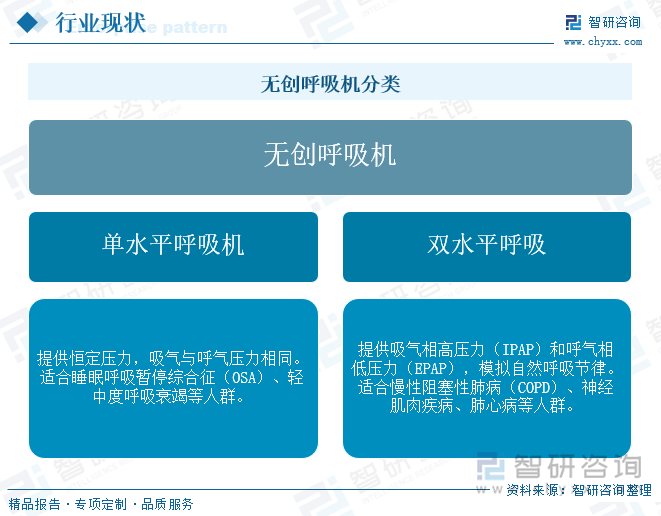
研判2025!中国无创呼吸机行业产需、市场规模、进出口贸易情况及重点企业分析:随着老龄化深化和技术智能化推进,行业向“设备+服务”生态模式转型[图]
Chan Ye Xin Xi Wang· 2025-07-11 01:33
Industry Overview - The non-invasive ventilator market in China is experiencing continuous growth due to an aging population, increasing chronic respiratory disease patients, and heightened health management awareness among residents [1][9] - In 2024, the production of non-invasive ventilators in China is projected to reach 672,200 units, a year-on-year increase of 2.50%, while the demand is expected to be 602,700 units, growing by 8.20% [9][11] - The transformation of home non-invasive ventilators from "medical devices" to "health consumer products" aligns with the trend of consumption upgrades [1][9] Industry Development History - The development of the non-invasive ventilator industry in China has gone through four stages: initial stage (1980s-1990s), independent research and development (2000-2010), localization (2010-2020), and the current stage focusing on intelligence and personalization [4][5] - The initial stage saw domestic companies introducing foreign technology but faced challenges such as high production costs and low market share [4] - The current stage emphasizes smart, portable designs, with products like the AI medical product "E5 series" launched by companies like Yihua Jiaye [5] Market Size - The market size of the non-invasive ventilator industry in China is projected to reach 4.856 billion yuan in 2024, reflecting a year-on-year growth of 8.61% [11] - The competitive landscape is shifting, with domestic brands like Ruimaite and Yihua Jiaye gaining market share against international brands [11] Key Companies - Beijing Ruimaite Medical Technology Co., Ltd. ranks among the top five global non-invasive ventilator companies, with over 830 patents and products in more than 180 countries [16] - Jiangsu Yiyue Medical Equipment Co., Ltd. is a leading domestic medical device manufacturer, with a strong presence in the non-invasive ventilator market [18] Industry Trends - The industry is witnessing a wave of technological innovation and product upgrades, with advancements in AI and IoT leading to smarter and more portable non-invasive ventilators [20] - Market demand is expected to continue growing due to the aging population and increasing prevalence of chronic respiratory diseases [21][22] - The competitive landscape is characterized by domestic companies narrowing the gap with international brands, with potential for greater global market share [23]

上周公募机构合计调研近500次
Zheng Quan Ri Bao Wang· 2025-06-30 10:04
Group 1 - A total of 122 public fund institutions participated in A-share company research activities last week, covering 112 stocks across 26 Shenwan primary industries, with a total of 491 research instances [1] - 35 stocks received significant attention from public fund institutions, with research instances not less than 5 times, and 4 stocks exceeding 20 research instances [1] - The beauty and personal care sector stock, Shenguan Medical (300888), was the most researched, with 43 instances, involving institutions like Jiashi Fund and China Merchants Fund [1] Group 2 - The non-ferrous metals sector had two stocks, Cangge Mining (000408) and Jinli Permanent Magnet (300748), that attracted at least 11 public fund institutions for research [1] - The mechanical equipment sector received the highest number of research instances at 71, with 17 stocks attracting attention, including Jingzhida and Binglun Environment (000811) [2] - The electronic sector stocks, including Jucheng Co. and Zhongshi Technology (300684), were also favored by public fund institutions for research [2] Group 3 - Huaxia Fund led in research instances with 14, focusing on stocks like Jucheng Co., Jinli Permanent Magnet, and Dadi Bear [3]
华鑫证券:首次覆盖瑞迈特给予买入评级
Zheng Quan Zhi Xing· 2025-06-29 14:20
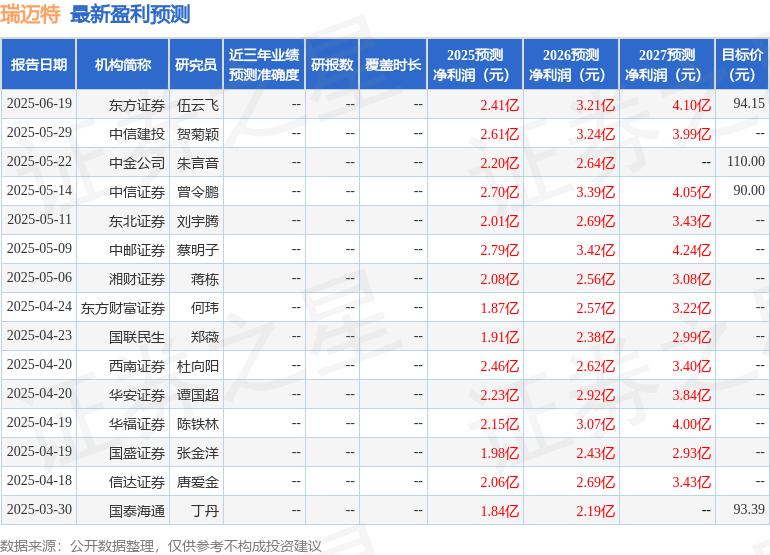
Core Viewpoint - The report highlights that Ruimait (301367) has met performance expectations and is positioned to become a global leader in integrated respiratory devices, with a buy rating assigned for the first time [1] Group 1: Financial Performance - In 2024, the company achieved revenue of 843 million yuan, a year-on-year decrease of 24.85%, and a net profit attributable to shareholders of 155 million yuan, down 47.74% year-on-year [1] - In Q1 2025, the company reported revenue of 265 million yuan, an increase of 38.11% year-on-year, and a net profit of 72 million yuan, up 44.11% year-on-year [1] - The gross profit margins for 2023, 2024, and Q1 2025 were 46.14%, 48.34%, and 49.57%, respectively, indicating a steady upward trend [1] Group 2: Consumables Business Growth - The consumables segment is expected to achieve continuous growth, with revenue of 284 million yuan in 2024, reflecting a year-on-year increase of 46.22% [2] - The company is actively promoting its consumables in the U.S. market through a specialized team and a strategy of distributing masks for free at sleep monitoring institutions to enhance brand recognition [2] - In Europe, a data-oriented subsidiary was established in France in 2023 to address reimbursement issues and attract more partnerships, further expanding market reach [2] Group 3: Market Position and Expansion - The company is deeply engaged in the respiratory health sector, with a global market share of 12.4% for home non-invasive ventilators, ranking second globally and first among domestic brands in China with a market share of 30.6% [3] - As of 2024, the company's products are sold in over 100 countries and regions, having obtained multiple certifications including NMPA, FDA, and CE, making it one of the few domestic manufacturers to enter the U.S. and European healthcare markets [3] - A five-year exclusive distribution agreement was signed with RH in July 2024 to further penetrate the North American market [3] Group 4: Profit Forecast - Revenue forecasts for 2025, 2026, and 2027 are projected at 1.013 billion yuan, 1.268 billion yuan, and 1.610 billion yuan, respectively, with corresponding EPS of 2.60 yuan, 3.35 yuan, and 4.47 yuan [4] - The current stock price corresponds to PE ratios of 30.7, 23.8, and 17.9 for the years 2025, 2026, and 2027, respectively, indicating a favorable investment outlook [4]
瑞迈特(301367) - 2025年6月27日投资者关系活动记录表
2025-06-27 07:46
Company Overview - Founded in 2001, the company launched its first multi-channel sleep monitor in 2003 and its first CPAP sleep breathing machine in 2007 [2] - The company specializes in providing comprehensive treatment solutions for OSA and COPD patients, covering diagnosis, treatment, and chronic disease management [2] - It is a leading domestic company in home non-invasive ventilators and masks, with products certified by NMPA, FDA, CE, and others, and sold in over 100 countries [2][3] Research and Development - As of December 31, 2024, the company holds 633 valid patents in China, including 107 invention patents, 390 utility model patents, and 136 design patents [3] - The company has 202 overseas patents, including 39 in the USA and 30 in Europe [3] Supply Chain and Production - The company has achieved basic localization of core components, ensuring supply chain security and cost advantages [4] - It operates two production facilities in Dongguan and Tianjin, with the ability to dynamically adjust production capacity based on market demand [5] Brand Strategy - The recent rebranding to "Resmart" signifies a strategic alignment between product and capital markets, enhancing brand value and recognition [5][6] - The name "Resmart" combines "respiratory" and "smart," reflecting the company's commitment to respiratory health and innovative technology [5] Market Performance - The domestic business showed positive performance in Q1, with revenue and gross margin improvements due to adjustments in channel strategies [6] - The company has established a strong global market presence, having entered the healthcare insurance markets in the USA, Germany, UK, France, and Italy [6] Investor Relations - The investor relations activity took place from June 26 to June 27, 2025, in Beijing and Shanghai, with participation from various investment firms [2][7][8]
医药生物行业报告(2025.06.16-2025.06.20):强生公布PFA研究进展,2025年国产PFA品牌有望进入商业化快车道
China Post Securities· 2025-06-23 01:20
Industry Investment Rating - The industry investment rating is maintained at "Outperform the Market" [1] Core Insights - The report highlights that the domestic PFA brands are expected to enter a commercialization fast track in 2025, driven by their non-thermal ablation characteristics, shorter operation times, lower complication risks, and better long-term efficacy [5][6] - The pharmaceutical and biotechnology sector experienced a decline of 4.35% this week, underperforming the CSI 300 index by 3.9 percentage points, ranking 29th among 31 sub-industries [6][18] - The report emphasizes the importance of high-end medical device innovation, supported by recent regulatory measures aimed at optimizing lifecycle management [13][14] Summary by Sections Industry Overview - The closing index for the pharmaceutical and biotechnology sector is 7552.12, with a 52-week high of 8490.25 and a low of 6070.89 [1] Recent Developments - Johnson & Johnson announced significant progress in PFA research at the HRS2025 conference, showcasing three key PFA products with excellent safety and efficacy profiles [4][5] - The report notes that six domestic brands have received approval for PFA technology, marking a significant step towards commercialization [5] Subsector Performance - All sub-sectors within the pharmaceutical and biotechnology industry experienced declines this week, with the largest drop in the other biological products sector at 6.7% [6][23] - The report provides a detailed breakdown of weekly performance across various sub-sectors, indicating a general trend of retraction [6][24] Recommended and Beneficiary Stocks - Recommended stocks include innovative pharmaceutical companies such as Xinda Biopharma and Kangfang Biopharma, as well as medical device firms like Yingke Medical and Maipu Medical [7][29] - Beneficiary stocks in the innovative drug sector include Zai Lab, Yifan Biopharma, and others, while the medical device sector includes companies like Mindray Medical and Aohua Endoscopy [7][29] Regulatory Insights - The report discusses the approval of measures to support high-end medical device innovation, which includes optimizing special approval processes and enhancing communication mechanisms [13][14] - The report suggests that the implementation of these measures will significantly benefit high-tech medical devices, including AI-assisted diagnostic tools [14][28]
瑞迈特: 关于持股5%以上股东及其一致行动人减持股份的预披露公告
Zheng Quan Zhi Xing· 2025-06-20 12:02
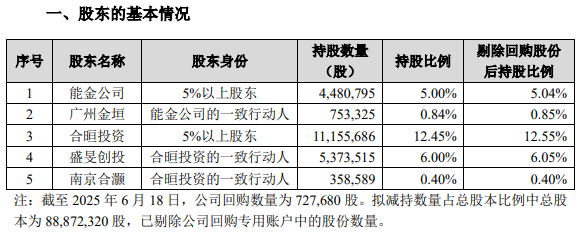
Core Viewpoint - Major shareholders of Beijing Ruimait Medical Technology Co., Ltd. plan to reduce their holdings, with specific details on the number of shares and the percentage of total shares being disclosed [1][2]. Shareholder Reduction Plans - Nengjin Co., Ltd. and its concerted actions plan to reduce their holdings by up to 888,325 shares, representing 1% of the total share capital, within three months after 15 trading days from the announcement [1]. - Zhuhai Hexuan Investment Center and its concerted actions plan to reduce their holdings by up to 2,666,169 shares, representing 3% of the total share capital, within the same timeframe [2]. Shareholding Structure - As of June 18, 2025, the total share capital of the company is 88,872,320 shares, with 727,680 shares already repurchased by the company [2]. Compliance and Commitments - Shareholders have made commitments regarding the lock-up period and reduction intentions, ensuring compliance with relevant laws and regulations [4][5]. - The shareholders have also committed to not seeking control of the company within 36 months post-issuance [7].
破发股瑞迈特股东拟减持 2022年上市超募10亿元
Zhong Guo Jing Ji Wang· 2025-06-19 07:33
Core Viewpoint - The major shareholders of Ruimai Te (301367.SZ) have announced plans to reduce their holdings, which may impact the stock's performance in the market [1][2]. Shareholder Reduction Plans - Nengjin Company and its concerted action partner, Guangzhou Jinyuan, plan to reduce their holdings by up to 888,325 shares, representing 1% of the total share capital, within three months after the announcement [1]. - Hehan Investment and its concerted action partners, Shengmin Chuangtou and Nanjing Hehao, plan to reduce their holdings by up to 2,666,169 shares, representing 3% of the total share capital, within the same timeframe [2]. Shareholding Structure - Nengjin Company holds 4,480,795 shares (5.00% of total shares) and Guangzhou Jinyuan holds 753.325 shares (0.84% of total shares) [3]. - Hehan Investment holds 11,155,686 shares (12.45% of total shares), while Shengmin Chuangtou holds 5,373,515 shares (6.00% of total shares) and Nanjing Hehao holds 358.589 shares (0.40% of total shares) [3]. Reduction Methods and Quantities - Nengjin Company plans to reduce up to 135,000 shares through centralized bidding, while Guangzhou Jinyuan plans to reduce up to 753.325 shares [5]. - Hehan Investment plans to reduce up to 530.134 shares through centralized bidding, and Shengmin Chuangtou plans to reduce up to 1,777,446 shares through block trading [5]. Market Context - Ruimai Te is currently in a state of share price decline, indicating a potential market challenge for the company [9].