
迪安诊断

Search documents
迪安诊断:公司于2025年制定了AI三年战略规划
Zheng Quan Ri Bao Wang· 2026-02-25 13:41
证券日报网讯2月25日,迪安诊断(300244)在互动平台回答投资者提问时表示,公司于2025年制定了 AI三年战略规划,致力于将AI技术从辅助手段升级为驱动业务增长的核心引擎,尤其在疾病风险评 估、健康管理、专病辅助诊断等场景中创造新业务价值。公司正沿着AI+CDSS(辅助临床决策)、AI+健 康管理、AI+CRO、数据产品四大方向稳步推进,实现从技术研发到商业落地的无缝衔接。医疗AI业务 尚处于投入阶段,二级市场股价受宏观经济、行业动态、投资者预期等多重因素影响,敬请注意投资风 险。 ...

低位反弹!医疗器械指数ETF(159898)开盘拉升0.90%,出口韧性与脑机接口双轮驱动
Sou Hu Cai Jing· 2026-02-25 02:35
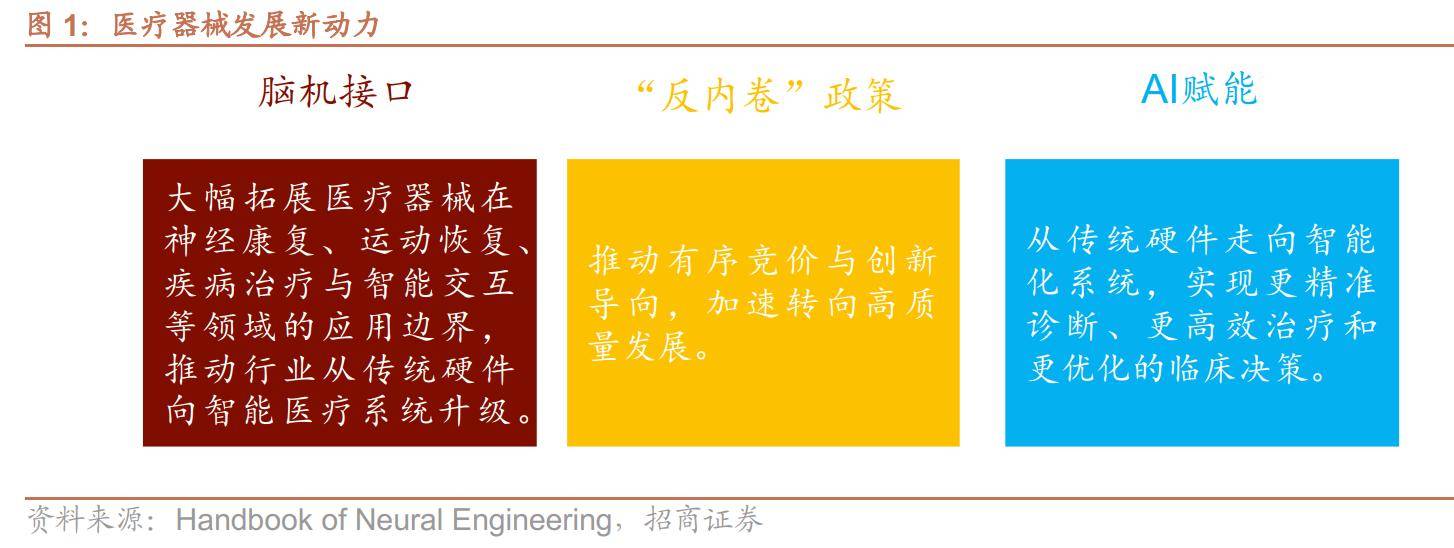
Core Viewpoint - The medical device sector is experiencing a rebound, driven by policy support, technological advancements, and a shift towards domestic innovation and global competition [1][4]. Group 1: Medical Device Sector Performance - On February 25, the medical device sector saw a rebound with the medical device index ETF (159898) rising by 0.90%, following a net subscription of 1.67 million yuan the previous trading day [1]. - Key stocks such as Aidi Te, Zhend Medical, and Lepu Medical saw significant gains, with Aidi Te rising over 5% and others like Hualan Biological and Yuyue Medical also showing strong performance [1]. Group 2: Brain-Computer Interface Developments - The brain-computer interface (BCI) sector is accelerating, with significant policy backing and capital investment. A semi-invasive BCI company, Borui Kang, is preparing for a listing on the Sci-Tech Innovation Board [4]. - The global BCI market is projected to grow from approximately $2.62 billion in 2024 to $12.4 billion by 2034, with a compound annual growth rate (CAGR) of 17.35% [4]. - In China, the BCI market is expected to reach 3.2 billion yuan in 2024 and grow to 6.14 billion yuan by 2028 [4]. Group 3: Export Resilience and Growth - China's medical device exports demonstrated strong resilience, with a total export value of $45.542 billion in the first 11 months of 2025, marking a year-on-year increase of 3.82% [5]. - The export structure is evolving, with significant growth in high-end products such as hospital diagnostic and treatment equipment, which increased by 8.36% [5]. Group 4: Domestic Market and Innovation - The implementation of the fifth batch of national high-value medical consumables procurement has significantly reduced prices, such as the cost of cochlear implants dropping from over 200,000 yuan to around 50,000 yuan [7]. - The domestic medical device market is projected to reach 1,017.4 billion yuan by 2026, with a CAGR of approximately 5.9% to 6.6% from 2020 to 2035, driven by aging population, equipment upgrades, and technological innovation [7]. - In 2025, a total of 3,402 medical device products were approved, including 76 innovative devices, maintaining a high approval rate for three consecutive years [7]. Group 5: ETF Performance - The medical device index ETF (159898) tracks the CSI All Medical Device Index, focusing on the medical equipment, consumables, and in vitro diagnostics sectors, with a notable exposure to the BCI concept at 23.79% [9]. - Since its inception, the ETF has achieved a total return of 1,015.07%, with an annualized return of 12.52% and a one-year annualized return of 20.86% [9]. - The revenue and net profit of the ETF's constituent stocks have shown a year-on-year recovery, indicating a gradual improvement in the industry's fundamentals [9].

精准医疗板块2月24日跌0.47%,迪安诊断领跌,主力资金净流出4.2亿元
Sou Hu Cai Jing· 2026-02-24 08:52
以上内容为证券之星据公开信息整理,由AI算法生成(网信算备310104345710301240019号),不构成 投资建议。 从资金流向上来看,当日精准医疗板块主力资金净流出4.2亿元,游资资金净流入3840.85万元,散户资 金净流入3.82亿元。精准医疗板块个股资金流向见下表: 证券之星消息,2月24日精准医疗板块较上一交易日下跌0.47%,迪安诊断领跌。当日上证指数报收于 4117.41,上涨0.87%。深证成指报收于14291.57,上涨1.36%。精准医疗板块个股涨跌见下表: ...

东吴证券:检测服务行业与宏观经济增速强相关 关注商业航天等新兴产业带来的发展机遇
智通财经网· 2026-02-24 01:39
智通财经APP获悉,东吴证券发布研报称,当前时点,中国经济进入存量时代,但检测服务市场成长性 仍有支撑,且格局将持续优化。龙头企业强者恒强,成长空间广阔:1)AI、新能源汽车、人形机器 人、商业航天等新兴技术的发展将带来新的检测需求,并且抬高检测服务市场的门槛,2)中国产业和 经济结构的转型,将继续提高对产品品质、品牌等的要求,公信力更强的龙头企业将脱颖而出。 东吴证券主要观点如下: 检测服务行业与宏观经济增速强相关,空间大、增速稳、格局散 2024年全国检验检测市场规模约4876亿人民币,2015-2024年CAGR约10.5%。2023年以来,受宏观经济 增速放缓等影响,检验检测行业增速放缓。2025年前三季度,我国检测服务板块实现营收304亿元,同 比下降7%(剔除医学检测占比较高的金域医学、迪安诊断后,同比增长3%,增速有所放缓),龙头企 业华测检验、广电计量和苏试试验下游较为分散,品牌和服务α属性明显,2025年前三季度营收同比增 长分别为7%、12%、9%,显著领先于行业。2025年前三季度,我国检测服务板块实现归母净利润20亿 元,同比下降6%。剔除医学检测占比较高的金域医学、迪安诊断后,板块归 ...

2026年度策略:强者恒强的千亿赛道,关注商业航天等新兴产业带来的发展机遇
Soochow Securities· 2026-02-14 11:41
Core Insights - The report emphasizes the strong growth potential in the testing services industry, particularly driven by emerging sectors such as commercial aerospace and new technologies [4][6] - The testing services sector is closely linked to macroeconomic growth, with a projected global market size of approximately 2.3 trillion RMB by 2024, reflecting a CAGR of about 6% from 2021 to 2024 [4][24] - In China, the testing services market is expected to reach around 487.6 billion RMB by 2024, with a CAGR of approximately 10.5% from 2015 to 2024, indicating a robust growth trajectory [5][24] Industry Overview - The testing, inspection, and certification (TIC) industry serves various sectors including consumer goods, industrial products, and pharmaceuticals, covering all stages from R&D to production and distribution [16][24] - The industry is characterized by a large market space and stable growth, with demand closely tied to macroeconomic trends and government regulations [20][24] - Emerging technologies such as AI, electric vehicles, and commercial aerospace are expected to create new testing demands, raising the entry barriers for new players [6][20] Company Performance - The report analyzes 19 listed companies in the testing services sector, highlighting their revenue and profit performance, with notable companies including Huace Testing, Guangdian Measurement, and Su Testing [2][11] - In the first three quarters of 2025, the testing services sector in China reported a revenue of 30.4 billion RMB, a decline of 7% year-on-year, but a growth of 3% when excluding companies heavily involved in medical testing [5][57] - Leading companies such as Huace Testing, Guangdian Measurement, and Su Testing demonstrated superior performance, with revenue growth rates of 7%, 12%, and 9% respectively, significantly outpacing the industry average [5][62] Market Dynamics - The testing services market is experiencing a structural shift, with a trend towards consolidation as larger firms gain market share and smaller firms face challenges [44][50] - The report notes that the majority of testing institutions in China are small and micro-sized, which limits their ability to withstand economic pressures [50][51] - Government policies are increasingly supporting the marketization and consolidation of testing institutions, aiming to enhance the overall quality and efficiency of the industry [51][53] Financial Metrics - The report indicates that the average gross margin for the testing services sector has improved, reaching 26.2% in the first three quarters of 2025, reflecting a recovery in profitability [63] - The accounts receivable turnover days have increased from 90 days in 2019 to 176 days in 2025, indicating a slowdown in cash flow and potential credit risks within the industry [67][68] - The report highlights that the proportion of accounts receivable in relation to revenue has risen to 50%, suggesting increasing challenges in managing receivables [71]



【检测服务】2026年度策略:强者恒强的千亿赛道,关注商业航天等新兴产业带来的发展机遇
Soochow Securities· 2026-02-14 10:24
Investment Rating - The report recommends focusing on leading companies in the testing service industry, particularly those with strong capital, management, and research capabilities, such as Huace Testing, Guangdian Measurement, and Sutest [7] Core Insights - The testing service industry is closely related to macroeconomic growth, with significant market space and stable growth. The global testing service market is projected to reach approximately 2.3 trillion RMB by 2024, with a CAGR of about 6% from 2021 to 2024 [4][24] - China's testing service industry is expected to outpace GDP growth, with a projected market size of around 487.6 billion RMB in 2024, reflecting a CAGR of approximately 10.5% from 2015 to 2024 [5][24] - The industry is experiencing a structural shift, with emerging sectors such as AI, new energy vehicles, and commercial aerospace driving new demand for testing services [6][33] Summary by Sections Industry Overview - The testing, inspection, and certification (TIC) industry serves various sectors, including consumer goods, industrial products, and pharmaceuticals, covering all stages from R&D to production and distribution [16] - The demand for testing services is highly correlated with macroeconomic trends, with growth driven by global trade, increasing quality and safety standards, and stricter regulations [20][24] Market Performance - In 2025, the testing service sector in China reported revenues of 30.4 billion RMB, a year-on-year decline of 7%. Excluding companies with high medical testing proportions, the sector saw a 3% growth [5][57] - Leading companies like Huace Testing, Guangdian Measurement, and Sutest outperformed the industry average, with revenue growth rates of 7%, 12%, and 9% respectively in the first three quarters of 2025 [57][62] Emerging Opportunities - New technologies and industries, such as low-altitude economy and semiconductor sectors, are rapidly developing, creating new testing service demands. The investment threshold for laboratories in these areas is significantly higher than traditional sectors [6][33] - The report emphasizes the importance of focusing on leading companies that possess brand, capital, and management advantages to capitalize on these emerging opportunities [6][7] Competitive Landscape - The testing service market in China is characterized by a large number of small and medium-sized enterprises, with over 96% of testing institutions being micro-sized, which poses risks due to their limited capacity to withstand economic fluctuations [50][51] - The report predicts a trend towards consolidation in the industry, with resources increasingly concentrating in leading firms as smaller entities face challenges [50][51]


检验互认驱动:黑灯实验室智能化路径与市场机遇
思宇MedTech· 2026-02-13 04:08
Core Viewpoint - The article emphasizes the importance of standardization in medical testing and the integration of the IVD market to enhance the efficiency and quality of healthcare services in China, particularly through the implementation of result recognition policies [2][3]. Group 1: Result Recognition Policy - Result recognition is a key strategy in China's healthcare reform aimed at reducing redundant tests and lowering overall medical costs by unifying technical standards and breaking down data barriers [3]. - The core value of the recognition policy is a systematic approach to "cost control, quality improvement, and efficiency enhancement," with clear targets set for 2025, including over 200 mutual recognition projects within city domains [4]. - The market demand is shifting from merely increasing testing volume to a pressing need for "quality homogenization" and "service integration," creating growth opportunities for products and services that help medical institutions meet recognition standards efficiently and cost-effectively [4]. Group 2: Current Status and Challenges - A four-tier recognition framework has been established across the country, with increasing depth and breadth of implementation [5]. - The core challenges to effective implementation include three major gaps: insufficient comparability of results, fragmented quality control systems, and lack of coordination among supporting mechanisms [7]. - The recognition of results and the DRG/DIP payment reform are aligned in their goals of improving efficiency and controlling costs, but they face execution challenges due to quality shortcomings in mutual recognition [8]. Group 3: Standards and Technological Integration - The foundation of result recognition relies on the "homogenization" of management and technology between laboratories, primarily through two core international standards: ISO 15189 and ISO 17511 [9]. - ISO 15189 focuses on establishing a comprehensive quality management system, while ISO 17511 ensures the traceability of measurement results to international standards [10]. - The integration of these standards into intelligent laboratory systems is crucial for ensuring the reliability of test results and facilitating automated processes [18]. Group 4: Market Dynamics and Growth - The automated laboratory market in China is projected to grow at a compound annual growth rate (CAGR) exceeding 30%, with the black-box laboratory model expected to surpass 15 billion yuan by 2026 [23]. - The market is driven by policy compliance and operational efficiency, with high demand for solutions that reduce human labor reliance by over 60% while enhancing throughput and stability [23]. - The competitive landscape features three main types of players: medical device manufacturers, specialized automation integrators, and healthcare IT companies, each focusing on different aspects of the market [25]. Group 5: Investment Opportunities - The shift towards intelligent laboratory solutions necessitates a comprehensive approach that includes not just automation hardware but also a complete "turnkey" intelligent system that ensures stable and recognizable results [26]. - The business model is evolving from one-time hardware sales to ongoing service subscriptions, reagent consumption, and data analysis services, particularly in resource-constrained environments [27]. - There is a growing need for innovative IVD products that can seamlessly integrate with automated systems, emphasizing the importance of standardized interfaces and built-in traceability data [29]. Group 6: Risk and Success Factors - Identifying structural risks is crucial as the market experiences rapid growth driven by policy and capital, with a focus on sustainable revenue and profit generation [34]. - The dual engines of policy and capital define market dynamics, but companies must ensure their business essence can sustain growth beyond initial policy-driven demand [35]. - Successful companies typically build multiple layers of competitive advantages, including technology-market fit, resilient business models, and advanced data governance capabilities [42][44].

未知机构:中泰医药谢木青刘照芊乘通用AI之势建议关注AI医疗昨日-20260213
未知机构· 2026-02-13 02:35
Summary of Conference Call Notes Industry Focus - The focus is on the **AI healthcare sector**, particularly the integration of artificial intelligence in medical applications and services [1][2]. Core Insights and Arguments - The **Chinese government** emphasizes the need to promote large-scale commercial applications of AI, aiming to enhance the AI industry and expand high-value application scenarios [1]. - Recent advancements include **DeepSeek's version update** and the launch of **GLM-5**, indicating continuous breakthroughs in AI models [2]. - The **AI healthcare sector** is gaining traction due to supportive policies, technological advancements, and the gradual commercialization of pathology-assisted diagnostics [2]. - Clear application scenarios for AI in healthcare have been identified: - **B-end applications**: Involvement in medical imaging, surgical robots, in vitro diagnostics, and radiotherapy. - **C-end applications**: Empowering health management, chronic disease monitoring, personalized treatment suggestions, and academic research for doctors [2]. - Continuous policy support is evident through various documents that outline development directions and commercial pathways for AI in healthcare [2]. - The **first inclusion of "AI-assisted"** in the pricing project guidelines for pathology services marks a significant step towards commercialization [2]. - National-level AI application pilot platforms are being promoted in regions like **Beijing and Zhejiang**, enhancing industry conversion efficiency [2]. Additional Important Content - The **AI application market** is experiencing a surge in interest, driven by competition among major tech companies (ByteDance, Tencent, Alibaba, Baidu) in the general AI application field [3]. - Recent achievements, such as **ByteDance's Seedance 2.0**, demonstrate a shift from mere generation capabilities to commercial viability [3]. - The performance of companies like **Tempus** supports the feasibility of AI healthcare business models [3]. - Investment recommendations include companies such as **Dian Diagnostics, KingMed Diagnostics, and Meinian Health** [4]. - Risks highlighted include potential delays in policy implementation and slow commercialization of products or services [5].

未知机构:中泰医药谢木青刘照芊乘通用AI之势建议关注AI医疗昨日国-20260213
未知机构· 2026-02-13 02:35
Summary of Conference Call Records Industry: AI in Healthcare Key Points and Arguments - **Government Support for AI in Healthcare** The State Council emphasized the need to promote large-scale commercial applications of AI, enhance AI terminal and service consumption, and develop AI application pilot bases. This indicates strong governmental backing for the AI healthcare sector [1] - **Technological Advancements** Recent updates in AI models, such as DeepSeek's version update and the launch of GLM-5 by Zhizhu, demonstrate continuous breakthroughs in AI technology. This progress is crucial for the development of AI applications in healthcare [1] - **Commercialization Pathways** The introduction of guidelines like the "Pathology Medical Service Pricing Project" which includes "AI-assisted" services, paves the way for commercialization in the healthcare sector. This is a significant step towards integrating AI into medical services [2] - **Regional Initiatives** Various regions, including Beijing and Zhejiang, are advancing national-level AI application pilot platforms to enhance industrial transformation efficiency. This reflects a commitment to integrating AI with technological innovation [2] - **Market Dynamics and Competition** Major tech companies such as ByteDance, Tencent, Alibaba, and Baidu are competing in the general AI application space, which is driving the proliferation and iteration of AI technologies. For instance, ByteDance's Seedance 2.0 has achieved a breakthrough from "capable of generation" to "capable of commercialization" [2] - **Performance Validation** Companies like Tempus are demonstrating the viability of AI healthcare business models through their performance, further validating the potential of AI applications in the medical field [2] Investment Recommendations - **Growth Potential in AI Healthcare** Given the clear policy support, increasing market attention, and maturing technology, the AI healthcare sector is viewed as having significant growth potential. Recommended companies to watch include Dean Diagnostics, KingMed Diagnostics, and Meinian Health [3]
湘财证券晨会纪要-20260213
Xiangcai Securities· 2026-02-13 00:51
Industry Overview - The pharmaceutical and biotechnology sector increased by 0.14% this week, ranking 15th among 31 primary industries in the Shenwan index, outperforming the CSI 300 index by 1.47 percentage points, which fell by 1.33% [2] - The medical services sub-sector reported a rise of 1.31%, while traditional Chinese medicine and medical commercial sectors also saw increases of 2.56% and 0.57%, respectively [2] Company Performance - Top-performing companies in the medical services sector included Meidisi (+18.0%), Tongce Medical (+8.1%), and NuoSiGe (+5.7%), while underperformers included Haoyuan Pharmaceutical (-6.2%) and Baicheng Pharmaceutical (-4.5%) [3] - CXO-related companies experienced significant pullbacks [3] Valuation Metrics - The medical services sector's price-to-earnings (PE) ratio is currently at 34.43X, with a one-year maximum of 41.13X and a minimum of 28.46X; the price-to-book (PB) ratio stands at 3.49X, with a one-year maximum of 4.00X and a minimum of 2.48X [5] - The PE ratio increased by 0.56X and the PB ratio by 0.06X compared to the previous week [5] Regulatory Developments - The National Health Commission approved a pilot program for internet-based first consultations in Beijing, focusing on pediatric specialties, which marks a significant regulatory advancement for internet healthcare in major cities [6] - This initiative is expected to enhance online medical services and provide new market opportunities for private healthcare providers [6] Investment Recommendations - The report maintains a "buy" rating for the medical services industry, suggesting a focus on high-growth areas such as ADC CDMO and weight-loss drug supply chains, as well as companies with improving profit expectations like Aier Eye Hospital and Dean Diagnostics [7] - The report emphasizes the importance of a multi-tiered payment system and the resilience of medical demand in stabilizing the industry [7]