
光子学

Search documents
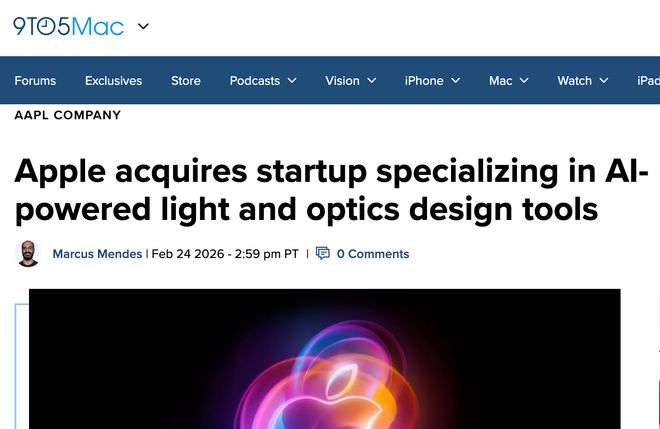
苹果低调收购光学AI初创公司invrs.io,强化光学技术布局
Huan Qiu Wang Zi Xun· 2026-02-25 04:59
invrs.io成立于近年,专注于开发光子学研究的开源框架,其GitHub页面显示,公司通过提供标准化仿 真挑战、优化工具及公共排行榜,构建了一个面向AI科学家、光学设计师等群体的协作生态系统。其 技术核心在于利用人工智能模拟并优化光线在复杂结构中的传播路径,这一能力对AR/VR设备、数据 中心光互联、自动驾驶激光雷达等场景的组件设计至关重要。 来源:环球网 【环球网科技综合报道】2月25日消息,据9to5mac报道,苹果公司近期通过提交欧盟的文件披露,已收 购光学与人工智能交叉领域初创公司invrs.io的核心资产,并吸纳其创始人兼唯一员工马丁·舒伯特 (Martin Schubert)加入团队。 创始人马丁·舒伯特曾担任Meta研究科学家,并在谷歌、美光科技(Micron)等企业从事先进显示、芯 片及光学技术研发超十年,拥有深厚的技术积累与行业资源。 尽管苹果未公开收购后的具体规划,但分析指出,invrs.io的技术可能直接应用于苹果多条产品线,比 如Apple Vision Pro及后续机型的光学模组、眼动追踪传感器等需高精度光子学设计,AI优化工具可缩短 研发周期并提升性能。此外,iPhone、iPa ...


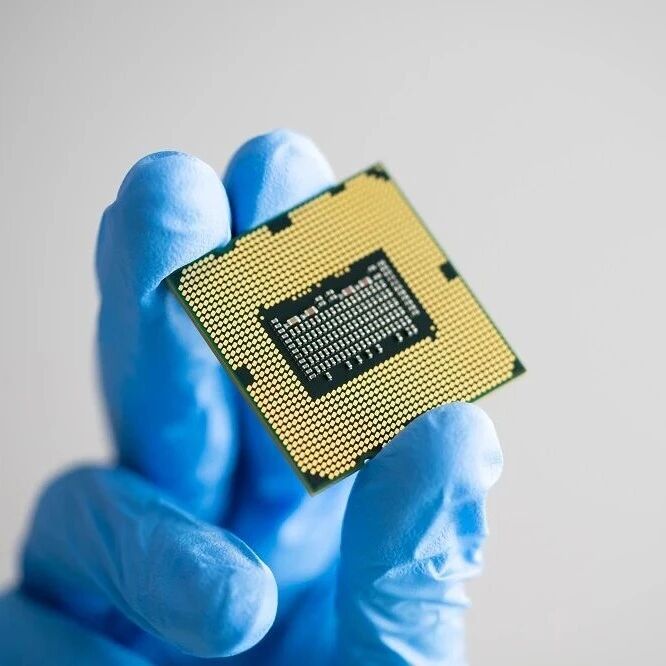
芯片,最新展望
半导体行业观察· 2026-02-03 01:35
Core Viewpoint - The semiconductor industry is crucial for modern technology, impacting various sectors from consumer electronics to military applications, and is currently facing challenges related to energy efficiency and manufacturing costs [2][3][4]. Group 1: Semiconductor Importance - Semiconductors are essential components in a wide range of devices, controlling systems from smartphones to military equipment [2]. - The industry is pivotal not only for information technology but also for advancements in fields like neuroscience and synthetic biology [7]. Group 2: Chip Design and Manufacturing - Chip design is an intellectual task requiring specialized tools and teams, while manufacturing is a labor-intensive process needing large factories [4][6]. - The integration of different chip functions necessitates various technologies, leading to inefficiencies in information transfer and high design costs [4][6]. Group 3: Market Dynamics - TSMC dominates the semiconductor foundry market with over 60% share, while the U.S. manufacturing capacity has significantly declined from 37% in 1990 to 12% in 2021 [7]. - The CHIPS Act was introduced to address the declining U.S. semiconductor manufacturing capabilities, but the global supply chain remains fragile [7]. Group 4: Technological Advancements - Moore's Law, which predicts the doubling of transistors on chips, is facing challenges as manufacturing costs rise and energy efficiency improvements slow down [10][11]. - Innovations such as 2.5D integration and chiplets are being explored to enhance performance and efficiency while addressing the limitations of traditional semiconductor designs [25][16]. Group 5: AI and High-Performance Computing - The demand for AI and machine learning applications is driving the need for specialized processors, leading to significant investments in GPU and dedicated hardware [14][15]. - High-performance computing systems are becoming increasingly power-intensive, necessitating advanced cooling solutions to manage heat [19]. Group 6: Storage Technology - Advances in storage technologies, including 3D structures and high-bandwidth memory (HBM), are crucial for meeting the growing data demands of modern applications [21][22][23]. - Emerging storage technologies like MRAM and PCM are being developed as alternatives to traditional non-volatile memory solutions, offering advantages in speed and energy efficiency [23]. Group 7: Future Outlook - The semiconductor industry is expected to achieve significant advancements driven by the increasing demand for AI and high-performance computing, with innovations in materials and manufacturing processes playing a key role [25][30]. - The integration of photonics and application-specific optimizations will be essential for overcoming the limitations of current semiconductor technologies [28][30].


AMD CTO,深度对话
半导体行业观察· 2026-02-02 01:33
Core Viewpoint - The article discusses the significant transformation of AMD over the past decade, highlighting its advancements in CPU, GPU, and AI infrastructure, and the strategic vision that has driven its success in the semiconductor industry [2][4][5]. Group 1: AMD's Evolution and Vision - AMD has transitioned from a company with limited market presence to a key player in high-end markets, driven by long-term investments and a commitment to innovation [2][4]. - The introduction of the Zen architecture marked a pivotal moment for AMD, enabling it to compete effectively in the CPU market and leading to a significant increase in market share [6][8]. - The company has evolved to become a flexible competitor, offering a diverse product portfolio that includes CPUs, GPUs, and other essential hardware and software IP [5][6]. Group 2: Technological Innovations - The first generation of Zen architecture, launched in 2017, demonstrated a 42% increase in instructions per clock cycle, setting the stage for future innovations [6][8]. - AMD has consistently achieved double-digit performance improvements across generations, with each new architecture delivering 15% to 20% enhancements [7][8]. - The company has invested in advanced technologies such as Infinity Fabric and 3D V-Cache, which have significantly improved performance and efficiency [10][12]. Group 3: Future Directions and Challenges - AMD is focusing on AI-driven chip design, which is expected to revolutionize the industry by integrating AI as a core component of the design process [18][19]. - The company is addressing power consumption challenges as AI chips are projected to reach power levels of 6 kW to 10 kW, emphasizing the need for innovative cooling solutions [20][21]. - AMD's modular design approach aims to expand its market reach, allowing it to cater to diverse computing needs across data centers, edge computing, and consumer markets [22][23]. Group 4: Collaboration and Market Position - AMD's recent acquisitions, including ZT Systems, enhance its capabilities in rack-level design, crucial for AI training and large-scale model inference [19][20]. - The company is committed to deep collaboration with foundries and data center operators to optimize AI training and model development [19][20]. - AMD's focus on building an open ecosystem encourages innovation and collaboration with various partners, ensuring a competitive edge in the rapidly evolving semiconductor landscape [24][25].

这款芯片,算力是英伟达10倍
Xin Lang Cai Jing· 2026-01-28 03:31
Core Insights - Neurophos, an AI chip company based in Austin, Texas, has announced significant testing results for its Optical Processing Unit (OPU), claiming it achieves ten times the performance of NVIDIA's latest AI supercomputer while maintaining similar power consumption levels [3][4] - The breakthrough is attributed to larger computational matrices and higher clock frequencies, which provide a key advantage over traditional GPUs [3][4] Company Highlights - Neurophos's CEO, Patrick Bowen, detailed the OPU's hardware design, featuring a 1000 x 1000 pixel photonic sensor matrix, which is 15 times larger than the typical 256 x 256 pixel matrices used in most AI GPUs [4] - The company has successfully reduced the physical size of photonic transistors by approximately 10,000 times, addressing integration challenges faced by traditional silicon photonic chips [4][6] - The first-generation optical accelerator, Tulkas T100, has a core unit size of about 25 square millimeters and operates at a clock frequency of 56 GHz, significantly surpassing traditional electronic chip performance limits [5][6] Industry Context - Photonics is emerging as a key area in the semiconductor field, with major tech companies like NVIDIA and AMD investing in optical technologies to enhance data transmission and processing capabilities [7] - The advancements in optical computing, such as those demonstrated by Neurophos, represent important milestones in the maturation of the photonics industry, which aims to overcome limitations of traditional electronic chips [7][8] - The ongoing demand for AI computing power is pushing the boundaries of traditional electronic chip performance, making photonics a promising direction for future breakthroughs [8]

迈威尔科技(MRVL.US)2026财年Q3业绩会:定制ASIC业务下一财年预计增长约20%
Zhi Tong Cai Jing· 2025-12-04 03:17
Core Viewpoint - Marvell Technology (MRVL.US) anticipates revenue of approximately $10 billion for the next fiscal year, supported by an organic growth plan, with expectations for sequential growth each quarter and stronger growth in the second half of the year [1][2] Revenue Projections - The custom ASIC business is expected to grow by about 20% in the next fiscal year, with projections to double by fiscal year 2028 compared to fiscal year 2027 [1][2] - The interconnect business is projected to continue growing at a rate that exceeds capital expenditures [1][2] - Other segments of the data center business, including storage and switching, are expected to grow by 10% in fiscal year 2028, leading to an overall data center business growth rate of nearly 40% in that year [1][2] - The compound annual growth rate (CAGR) for the data center business since 2023 is approximately 50% [1][2] Long-term Growth Drivers - Assuming communication and other businesses grow at GDP rates, Marvell's total revenue growth rate for fiscal year 2028 is estimated to be around 30% [1][2] - Growth drivers such as Celestial AI are expected to start contributing from fiscal year 2028 and further accelerate in fiscal year 2029 and beyond [1][2] AI and Product Development - Marvell has secured orders for next-generation 3nm and 2nm XPU products, with a strong product pipeline and visibility [3] - Revenue targets for Celestial AI, including $500 million and $1 billion, are based on the overall business, with initial revenue expected from PF small chips [3][4] - The collaboration with a leading customer is crucial for driving initial growth, with significant interest in the photonics transition within data centers [4] Custom Business Insights - The custom business is projected to have a solid growth base of 20%, with strong order reserves and expected acceleration in the second half of the year [5] - Long-term guidance is provided due to the multi-year cycle of AI infrastructure development, enhancing confidence in achieving future revenue targets [5] Strategic Partnerships - The extension of a warrant agreement with Amazon for 1 million shares related to photonic architecture indicates a strong partnership, with significant potential for collaboration [6] - The optical business is driven by AI and AI accelerators, with growth expected to exceed capital expenditures [6] System-Level Solutions - Marvell aims to provide comprehensive rack-level solutions, integrating various optical interconnect technologies, while maintaining a vision for system-level capabilities [7] - Current forecasts do not include system-level revenue, but the strategy emphasizes a holistic approach rather than isolated solutions [7]

光芯片,被引爆
半导体行业观察· 2025-11-18 01:40
Core Insights - The rapid growth of artificial intelligence (AI) is creating a bottleneck in traditional electrical communication methods, prompting a shift towards photonics for chip interconnectivity [2][3] - Significant venture capital is flowing into photonics startups, with companies like Lightmatter and PsiQuantum achieving valuations of $4.4 billion and $7 billion respectively [3] - The semiconductor industry is undergoing a transformation as companies race to develop new networking technologies to support AI workloads, which are doubling every three months [2][3] Group 1: Industry Trends - Traditional networking technologies are struggling to keep up with the demands of AI, leading to innovations in speed and efficiency [3][6] - Major companies like NVIDIA and Broadcom are investing heavily in AI data centers and custom chip solutions, indicating a shift towards highly specialized networking [4][6] - The competition is intensifying as established firms and startups alike seek to capitalize on the growing need for faster data transmission in AI applications [7] Group 2: Company Developments - NVIDIA's foresight in acquiring Mellanox Technologies for $7 billion in 2020 has positioned it well in the AI data center market [3][4] - Broadcom is becoming a preferred partner for companies like Google and Meta, showcasing its expertise in custom data center chips [4][6] - Startups like Celestial AI and Lightmatter are innovating in optical interconnect technology, with Lightmatter claiming to have developed the fastest AI chip photonic engine [5][6] Group 3: Challenges and Opportunities - While photonics technology presents significant opportunities, it also faces challenges such as high costs and the need for integration with existing electrical systems [5][6] - The industry is moving towards highly customized solutions, which may favor larger companies over startups, despite the latter's valuable intellectual property [6][7] - The outcome of this technological race will determine which companies will dominate the infrastructure that drives the next generation of AI [7]

又一座芯片工厂开建,投资过百亿
半导体行业观察· 2025-11-15 01:42
Core Viewpoint - Awz Investment Group announced plans to invest 5 billion new shekels (approximately 10 billion RMB) in building an advanced semiconductor manufacturing plant in Ashkelon, but key questions regarding funding and technology sources remain unanswered [2][5]. Group 1: Investment and Project Details - The planned factory will not produce silicon chips but will focus on III-V semiconductor technology, utilizing compounds from groups 13, 14, and 15 of the periodic table, such as gallium arsenide and gallium nitride [2][3]. - III-V semiconductors offer advantages over silicon, including higher electron mobility, better power efficiency, and superior light-emitting properties, making them valuable in defense, telecommunications, artificial intelligence, and quantum computing [3][4]. Group 2: Challenges and Concerns - Building a semiconductor manufacturing facility is complex and capital-intensive, requiring advanced technical expertise and years of experience, along with specialized and expensive equipment [3][4]. - Awz lacks a track record in developing or managing projects of this scale and complexity, raising concerns about the feasibility of the project [4][5]. - The company has not disclosed the identities or experience of the international advisory team that will oversee the project, nor the sources of funding for the 5 billion new shekels investment [5].
Fabrinet(FN) - 2026 Q1 - Earnings Call Transcript
2025-11-03 23:00
Financial Data and Key Metrics Changes - First-quarter revenue reached $978 million, a 22% increase year-over-year and an 8% increase from Q4 [4][7] - Non-GAAP earnings per share (EPS) were $2.92, reflecting strong revenue growth directly impacting the bottom line [4][9] - Gross margin for the first quarter was 12.3%, down 30 basis points from Q4, but in line with expectations [9] Business Line Data and Key Metrics Changes - Optical communications revenue was $747 million, up 19% year-over-year and 8% from Q4 [7][8] - Telecom revenue hit a record $412 million, surging 59% year-over-year and 15% from Q4, primarily driven by data center interconnect (DCI) products [7][8] - DCI revenue was $138 million, representing a 92% increase year-over-year and a 29% increase from Q4 [8] - DataCom revenue totaled $273 million, down 17% year-over-year but only 1% from Q4, indicating stronger-than-expected demand [8] - Non-optical communications revenue was $231 million, up 3% year-over-year and 5% from Q4, driven by high-performance computing (HPC) revenue of $15 million [8] Market Data and Key Metrics Changes - Automotive revenue was $122 million, up 19% year-over-year but down 5% from Q4 [8] - Industrial laser revenue was $40 million, up 12% year-over-year and flat sequentially [8] Company Strategy and Development Direction - The company is optimistic about extending strong momentum into the second quarter, with multiple growth drivers across its business [6][11] - Construction of Building 10, totaling 2 million square feet, is on track for completion by the end of calendar 2026, with portions expected to be completed by mid-2026 to support growth [6][10] - The introduction of a new revenue category for HPC products is expected to scale significantly over the coming quarters [5][19] Management's Comments on Operating Environment and Future Outlook - Management expressed confidence in continued growth driven by strong demand trends across various segments, particularly in telecom and HPC [4][11] - The company anticipates second-quarter revenue to be in the range of $1.05-$1.1 billion, representing a 29% increase year-over-year at the midpoint [11][12] - Management acknowledged ongoing component constraints but remains optimistic about overall demand trends [5][49] Other Important Information - The company ended the first quarter with cash and short-term investments of $969 million, up $35 million from Q4 [10] - Capital expenditures of $45 million were above maintenance levels due to ongoing construction of Building 10 [10] Q&A Session Summary Question: What is embedded in your December quarter outlook for DataCom? - Management refrained from commenting on individual components but emphasized their position to capitalize on the ongoing transition to photonics [15] Question: Does the HPC program take into account other customer engagements? - The HPC program was broken out as a separate category due to its complexity and potential for growth, with initial engagements going well [17][19] Question: How do the ramps of the HPC customer compare to the new telecom customer? - The HPC product is complex and has a slower ramp, while the new telecom product is a new offering that will grow as it gains market traction [23][25] Question: How many customers drove the sequential growth in telecom? - The growth was driven by a mix of customers across traditional telecom and DCI, indicating broad-based demand [30] Question: Can you discuss the share repurchase activity? - The share repurchase was limited due to a focus on capital allocation for growth, particularly in Building 10 expansion [36][37] Question: Is the component supply situation improving? - Management indicated that while some components remain in tight supply, they expect improvements as suppliers ramp up capacity [49][50]

光电股份(600184):3Q25营收增长69%,布局机器视觉传感系统
Minsheng Securities· 2025-10-29 05:59
Investment Rating - The report maintains a "Recommended" rating for the company [4][6]. Core Insights - The company reported a revenue of 1.415 billion yuan for the first three quarters of 2025, representing a year-over-year increase of 35.56%. The net profit attributable to shareholders reached 25 million yuan, a significant increase of 2131.96% year-over-year [1]. - In Q3 2025, the company achieved a revenue of 556 million yuan, up 68.84% year-over-year, and turned a profit with a net profit of 12 million yuan compared to a loss of 5 million yuan in the same period last year [1]. - The gross margin for the first three quarters of 2025 improved by 3.77 percentage points to 19.44%, while the net margin increased by 1.69 percentage points to 1.79% [1]. Summary by Sections Financial Performance - The company’s operating cash flow for the first three quarters of 2025 was -221 million yuan, compared to -24 million yuan in the same period last year, primarily due to increased procurement costs related to higher order volumes [2]. - The company’s R&D expenses increased by 69.71% year-over-year to 99 million yuan, with the R&D expense ratio rising to 6.98% [2]. Strategic Development - The company is focusing on the development of high-performance optical glass for applications in emerging fields such as autonomous driving, machine vision, augmented reality, and robotics, which are expected to become significant revenue growth drivers [3]. - The company is expanding its product lines to include humanoid robots and robotic dogs, while also enhancing collaboration between internal manufacturing and military trade [4]. Earnings Forecast - The projected net profits for the company from 2025 to 2027 are 69 million yuan, 199 million yuan, and 358 million yuan, respectively, with corresponding price-to-earnings ratios of 153x, 53x, and 29x [4][5].

2025年光学工程前沿交叉科学大会在浙江金华开幕
Zhong Guo Xin Wen Wang· 2025-08-16 14:53
Core Insights - The 2025 Frontier Interdisciplinary Science Conference on Optical Engineering opened in Jinhua, Zhejiang, focusing on five cutting-edge interdisciplinary fields: new materials, aerospace technology, green energy, brain-machine interaction, and quantum computing [1] - The conference aims to enhance the capabilities of optical engineering and interdisciplinary fields in serving technological frontiers, accelerating technological progress and discipline integration in China's optical engineering sector [1] Group 1 - The conference theme is "Intersection, Integration, Innovation, Development," reflecting the ongoing global technological revolution and industrial transformation [1] - A total of 210 experts were invited to give keynote speeches, and 204 specialized sub-forums featured outstanding young and middle-aged leaders from various fields [2] Group 2 - The conference also included local industry technology demand matching, technology achievement transfer projects, high-level talent recruitment fairs, and site visits [2] - Over 140 companies participated in the talent recruitment section, with 287 job openings announced by 19 hiring units, including Jinhua Vocational and Technical University and Zhejiang Optoelectronic Research Institute [2]