
农业农村现代化

Search documents
中华人民共和国国民经济和社会发展第十五个五年规划纲要|宏观经济
清华金融评论· 2026-03-14 10:09
Core Viewpoint - The 15th Five-Year Plan outlines China's strategic intentions and government priorities for the period from 2026 to 2030, aiming to achieve comprehensive modernization and establish a solid foundation for socialist modernization [4]. Group 1: Development Environment - The 14th Five-Year Plan period saw significant achievements, with GDP surpassing 140 trillion yuan, and a focus on high-quality development and technological innovation [8][9]. - The development environment is characterized by complex changes, with both opportunities and challenges arising from international relations and domestic economic conditions [10][11]. Group 2: Guiding Principles - The guiding ideology emphasizes the importance of Marxism, socialism with Chinese characteristics, and the need for high-quality development, reform, and innovation [14]. - Key principles include maintaining the Party's leadership, prioritizing people's interests, promoting high-quality development, and ensuring effective market and government collaboration [15][16]. Group 3: Main Goals - The plan aims for significant achievements in high-quality development, with GDP growth maintained within a reasonable range and an increase in the contribution of technological progress to economic growth [18]. - It targets a substantial improvement in social welfare, with urban unemployment rates below 5.5% and an increase in per capita disposable income [19]. - Environmental goals include reducing carbon emissions per unit of GDP by 17% and increasing the proportion of non-fossil energy in total energy consumption to 25% [20]. Group 4: Modernization of Industry - The focus is on building a modern industrial system that emphasizes advanced manufacturing, quality, and green development [22]. - Key industries such as steel, petrochemicals, and electronics are targeted for structural upgrades and innovation [24][25]. Group 5: Emerging and Future Industries - The plan promotes the development of strategic emerging industries, including information technology, new energy, and biotechnology, to create new economic growth points [29][30]. - Future industries such as quantum technology and brain-computer interfaces are identified as key areas for investment and development [30]. Group 6: Infrastructure Development - A modern infrastructure system is to be established, focusing on transportation, energy, and digital infrastructure to enhance connectivity and resilience [38][41]. - The transportation network will be improved with the construction of high-speed rail and modern airports, while energy infrastructure will focus on clean and renewable energy sources [39][41].

“十五五”规划纲要(全文)
财联社· 2026-03-13 14:09
Core Points - The "14th Five-Year Plan" outlines a comprehensive framework for China's economic and social development, emphasizing modernization and self-reliance in various sectors [1][2]. Group 1: Economic Development - The plan aims to create a modern industrial system to strengthen the foundation of the real economy [2]. - It emphasizes the acceleration of high-level technological self-reliance to lead new productive forces [2]. - The construction of a strong domestic market is prioritized to accelerate the formation of a new development pattern [2]. Group 2: Digital and Green Transformation - There is a focus on advancing digital China construction to enhance digital and intelligent development levels [2]. - The plan promotes a comprehensive green transformation of economic and social development to build a beautiful China [2]. Group 3: Social and Cultural Development - The strategy includes enhancing the population development strategy to promote high-quality population growth [2]. - It aims to invigorate national cultural innovation and creativity to prosper socialist culture [2]. Group 4: National Security and Defense - The plan outlines the modernization of the national security system and capabilities to build a higher level of a safe China [2]. - It includes goals for high-quality advancement of national defense and military modernization by the centenary of the army [2]. Group 5: Governance and Coordination - The plan emphasizes the need for a high-level socialist market economic system to enhance the momentum for high-quality development [2]. - It also focuses on optimizing regional economic layout to promote coordinated regional development [2].

人勤春来早 实干开新局 | 春耕春管
Yang Shi Wang· 2026-02-27 16:09
Core Viewpoint - The article emphasizes the importance of timely agricultural practices and the acceleration of agricultural modernization to promote comprehensive rural revitalization [1] Group 1 - Various regions are seizing the agricultural season to enhance productivity [1] - There is a strong focus on advancing agricultural and rural modernization efforts [1] - The initiative aims to solidify the overall revitalization of rural areas [1]
甘肃成县:春潮涌动成州地 实干冲刺开门红
Zhong Guo Fa Zhan Wang· 2026-02-27 09:13
Group 1 - Gansu Cheng County is rapidly transitioning from holiday mode to work mode, focusing on resuming production and striving for a strong start in the new year [1] - Gansu Hongchuan Liquor Co., Ltd. has fully resumed production, aiming for a strong first quarter performance while ensuring production safety and product quality [1] - The company plans to refine its processes and actively explore markets to contribute to the county's economic development [1] Group 2 - Chengzhou Zinc Smelting Plant maintained a stable daily output of 290 tons during the Spring Festival, achieving a 100% grade rate for its main product [2] - The plant emphasizes equipment maintenance and efficient production management to ensure high-quality output [2] - The local walnut cooperative is processing over 50,000 walnut grafting branches to ensure high survival rates for grafting [2] Group 3 - The local government is focusing on modern industrialization, urbanization, and agricultural modernization, implementing various initiatives to enhance development momentum [3] - Investment in a drone training base in Cheng County is planned, with a budget of 13 million yuan, supported by favorable local policies [3] Group 4 - Cheng County is organizing an investment promotion conference to convert the influx of returning residents during the Spring Festival into investment projects, promoting 17 projects with a total investment of 2.358 billion yuan [4] - In the first quarter of 2026, 31 projects were signed with a total investment of 4.0818 billion yuan, including 14 projects from Fortune 500 companies [4] - The county is actively pursuing industrial economic growth and project development with a strong work ethic and determination [4]
未来就在家国共振里(今日谈)
Ren Min Ri Bao· 2026-02-25 22:12
Core Insights - The article highlights a shift in consumer behavior during the Spring Festival, with a noticeable increase in the consumption of fresh vegetables and a decrease in traditional heavy meats, indicating a growing emphasis on health and wellness among families [1] - The integration of technology in agriculture, exemplified by high-tech strawberry greenhouses, reflects the modernization of rural areas and the enhancement of living standards through innovative supply and demand interactions [1] - The narrative emphasizes the importance of improving the quality of life for citizens, showcasing how technological advancements and community services contribute to a happier society, aligning with national development goals [1] Group 1 - The proportion of fresh vegetables on family dining tables has increased, while traditional heavy meats have decreased, reflecting a health-conscious trend among consumers [1] - High-tech strawberry greenhouses featuring automated temperature control, precise irrigation, and intelligent sorting have become popular, indicating a modernization trend in agriculture [1] - The article underscores the government's commitment to enhancing citizens' quality of life, with a focus on ensuring stable prices and abundant supply of essential goods [1] Group 2 - The emergence of humanoid robots during the Spring Festival has sparked discussions about the future, suggesting a growing interest in technological advancements and their implications for society [1] - The article posits that the future lies in the mutual promotion of national development and the needs of the populace, highlighting a symbiotic relationship between government initiatives and public welfare [1] - The narrative concludes with a vision of a prosperous society where technological progress and community services converge to create a fulfilling life for citizens [1]
他们,将影响你的生意和生活|农业农村部部长韩俊
Jing Ji Guan Cha Bao· 2026-02-25 09:36
Core Viewpoint - The focus is on addressing the "three rural issues" as a priority, emphasizing the need for modernizing agriculture and improving rural living conditions to enhance farmers' livelihoods [2][5]. Group 1: Agricultural Production and Policies - The 2026 agenda emphasizes the importance of agricultural modernization and rural revitalization, aiming to enhance food production and maintain reasonable prices for key agricultural products to ensure stable income for farmers [2][3]. - A new initiative aims to increase grain production capacity by implementing a new round of actions to boost grain output, focusing on improving crop varieties and quality [3][5]. - The government plans to strengthen agricultural infrastructure, including water conservancy and meteorological monitoring, to enhance disaster prevention and mitigation capabilities in agriculture [3][4]. Group 2: Poverty Alleviation and Farmer Support - Establishing a mechanism to prevent large-scale poverty and ensuring continuous support for underdeveloped areas is crucial for consolidating the achievements of poverty alleviation [3][6]. - The government aims to promote stable income for farmers by improving the income guarantee mechanisms for grain producers and supporting rural employment and entrepreneurship [3][4]. Group 3: Rural Environment and Reform - Continuous efforts are needed to improve rural living conditions, addressing issues such as sanitation and waste management [4]. - The government plans to deepen rural reforms, including extending land contracts and innovating financing mechanisms for rural development [4][6]. Group 4: Agricultural Modernization and Challenges - The agricultural sector has seen stable grain production, with output expected to reach a historical high of 1.4298 trillion jin by 2025, ensuring food security for the population [5]. - Despite advancements, challenges remain in agricultural foundations and rural development, necessitating coordinated efforts in technology, green agriculture, and quality improvement [6].
【理响中国·话陇点睛(7)】沃野陇原解密钥 躬耕厚土绘农兴
Xin Lang Cai Jing· 2026-02-20 13:31
Core Insights - The 2026 Central No. 1 Document outlines the direction and path for "San Nong" (agriculture, rural areas, and farmers) work in the first year of the 14th Five-Year Plan, emphasizing agricultural production capacity and quality improvement, stable income for farmers, and rural development [1][2] Group 1: Agricultural Development Strategies - The document emphasizes enhancing agricultural production capacity and quality, implementing precise assistance, and promoting stable income for farmers [1] - It highlights the importance of building a robust mechanism to prevent poverty and ensure food security, with a focus on modernizing grain reserve management [5][6] - The strategy includes promoting high-standard farmland construction and protecting arable land, aiming for a coverage rate of over 97% for key crop varieties like wheat and corn [7] Group 2: Rural Revitalization and Support Mechanisms - The document stresses the establishment of a regular mechanism to prevent poverty, with a focus on precise identification and dynamic management of assistance recipients [6][11] - It aims to support key counties in rural revitalization and enhance collaboration between eastern and western regions, as well as corporate involvement in rural development [6][12] - The goal is to improve the living environment in rural areas, with plans to build around 100 model "beautiful villages" [9][13] Group 3: Economic Goals and Projections - The document sets ambitious targets for the agricultural sector, aiming for the total output value of eight major agricultural industry clusters to exceed 800 billion yuan by 2030 [12] - It projects that the per capita disposable income of rural residents will reach 14,105 yuan by 2024, reflecting a commitment to increasing farmers' income [11] - The first industry value-added growth rate in Gansu has consistently ranked in the top five nationally for 18 consecutive quarters, indicating strong agricultural performance [11]

情满中国年丨和美乡村 幸福新年
Yang Guang Wang· 2026-02-20 02:04
Core Insights - The modernization of agriculture and rural areas is essential for China's overall modernization, with a focus on rural revitalization and urban-rural integration [1] - Significant transformations have occurred in rural areas, with formerly impoverished villages evolving into livable and prosperous communities [1][2] Group 1: Agricultural and Rural Modernization - Xi Jinping emphasizes the importance of agricultural and rural modernization as a foundation for overall national development [1] - The transformation of villages like Liangjiahe and Bulenggou showcases the successful implementation of rural revitalization strategies, leading to improved living conditions and economic opportunities for residents [2][3] Group 2: Economic Development and Community Prosperity - In Liangjiahe, the collective economy surpassed 11.27 million yuan, reflecting the growth of local industries such as apple cultivation and solar power [2] - Bulenggou village has transitioned from traditional to scientific farming methods, resulting in an annual output of approximately 10,000 sheep and a revenue of around 500,000 yuan [2] - The development of infrastructure, such as roads and water supply, has significantly enhanced the quality of life in these villages, contributing to their economic growth [3][4] Group 3: Cultural and Social Improvements - Villages are investing in cultural and social infrastructure, such as community centers and healthcare facilities, to improve residents' quality of life [4] - The focus on diverse industries, including tourism and health management, aims to further strengthen the economic foundation of rural communities [4]
农业农村现代化要抓住农民这个关键
Xin Lang Cai Jing· 2026-02-18 04:59
Core Viewpoint - The essence of modernization in China is "human modernization," focusing on the comprehensive development of people, particularly farmers, which is crucial for achieving agricultural and rural modernization [1][2]. Group 1: Achievements in Agricultural and Rural Modernization - Significant historical achievements have been made in agricultural and rural modernization, including improved irrigation facilities, enhanced mechanization, and increased coverage of quality seed promotion [2]. - The transition from food scarcity to food choice freedom has been accomplished, with approximately 20% of the world's population being fed by only 9% of global arable land [2]. - Rural infrastructure improvements, such as road hardening, electricity upgrades, and access to safe drinking water, have transformed rural living conditions [2]. Group 2: Challenges Faced by Farmers - Farmers face slow improvements in mindset, skills, and rights protection, which hampers their integration into modern economic systems [3]. - Many farmers struggle with adapting to digital economy and modern agricultural practices due to a lack of skills and knowledge [3]. - The dual urban-rural structure creates barriers for farmers, limiting their opportunities for development and integration into urban areas [4][10]. Group 3: Systemic Barriers and Inequalities - The urban-rural dual structure perpetuates systemic barriers, affecting farmers' access to public services, social security, and property rights [10]. - Farmers often experience difficulties in accessing equal opportunities in education, healthcare, and housing, leading to a sense of marginalization [4][7]. - The lack of a comprehensive social security system for rural residents exacerbates inequalities, particularly for migrant workers [10]. Group 4: Need for Human-Centric Development - The focus of agricultural modernization is shifting from material accumulation to the comprehensive development of people, necessitating increased investment in human capital [13][19]. - Policies should prioritize the enhancement of farmers' rights, skills, and overall development to foster sustainable agricultural modernization [19]. - A robust training system is essential to equip farmers with the necessary skills for modern agricultural practices and digital economy [15][19]. Group 5: Policy Recommendations - Reforming the household registration system and improving access to public services for rural residents is crucial for equitable development [14]. - Establishing a lifelong vocational training system tailored to market needs can significantly enhance farmers' skills and adaptability [15]. - Encouraging the flow of financial resources into rural areas and supporting new agricultural business models can help bridge the gap between urban and rural economies [18][19].
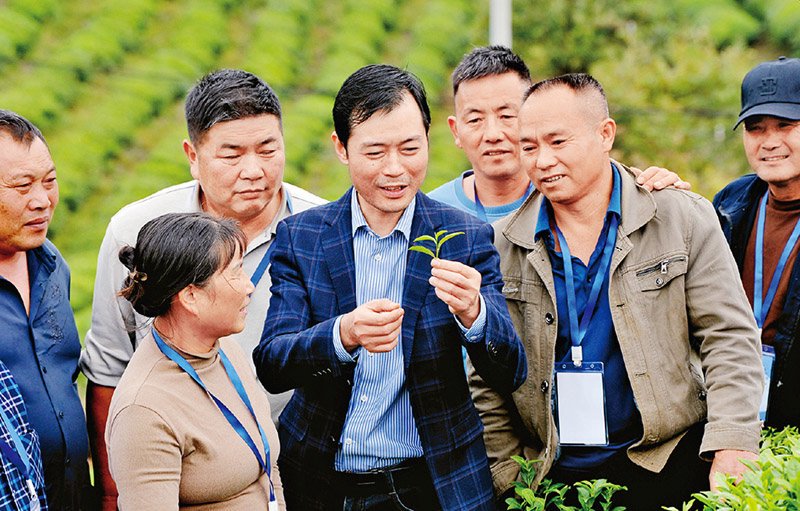
熊征宇调研优化政务服务、农村综合产权交易工作:更大力度推进重点领域改革,不断增强高质量发展动力活力
Chang Jiang Ri Bao· 2026-02-15 00:44
Core Viewpoint - The Wuhan municipal government is focusing on optimizing administrative services and enhancing the rural comprehensive property rights trading system to drive high-quality development and improve the business environment [1][2]. Group 1: Administrative Services Optimization - The Wuhan Citizen Service Center currently hosts 57 municipal-level administrative approval departments and public service units, facilitating various administrative approvals and public service matters for enterprises and citizens [1]. - The government aims to deepen the "efficient handling of one matter" reform, focusing on the perspective of enterprises and citizens, and enhancing the integration, intelligence, and collaboration of services [1]. Group 2: Rural Comprehensive Property Rights Trading - The Wuhan Rural Comprehensive Property Rights Trading Center is the second of its kind in the country and the first in Central China, aiming to create a trading platform that connects local and national markets [2]. - The government emphasizes the need for a robust operational responsibility framework, combining online and offline trading models to enhance market networks, expand trading varieties, and improve service functions [2]. - There is a focus on establishing a unified rural property rights trading system across the province, enhancing the quality and efficiency of resource allocation in rural areas to support agricultural modernization and rural revitalization [2].