
德国经济复苏

Search documents
德国工业领域2025年裁员超12万人
Zhong Guo Xin Wen Wang· 2026-02-18 01:08
Group 1 - The core point of the article is that the German industrial sector is expected to cut over 124,000 jobs by the end of 2025, with the automotive industry being the most affected, losing approximately 50,000 jobs [1] - The report indicates that the total employment in the industrial sector will be around 5.38 million by the end of 2025, a decrease of 124,100 jobs compared to 2024, which is nearly double the layoffs of the previous year [1] - The direct cause of these layoffs is attributed to weak revenue performance, with a reported decline of 1.1% in industrial revenue last year and an anticipated decline of 3.5% in 2024 [1] Group 2 - The automotive, paper, and textile industries experienced particularly weak performance, with revenues declining by approximately 3% [1] - Experts express concerns that due to weak orders and significant competitive pressure, job cuts in the German industrial sector are likely to continue this year [1] - The managing partner of EY's German audit business, Jan Brolshilke, stated that the German industrial sector is in a deep crisis, with industrial revenue having declined nearly 5% since 2023 [1]
德国1月失业人数突破300万创12年新高
Sou Hu Cai Jing· 2026-01-31 12:07
Group 1 - The number of registered unemployed in Germany reached 3.085 million in January, an increase of 177,000 from the previous month, marking the highest level in 12 years [1] - The unemployment rate in Germany rose to 6.6% in January [1] - The German government has implemented several economic support measures, but their effectiveness remains limited, indicating that economic recovery must be a core issue this year [1] Group 2 - The German labor market is currently experiencing insufficient momentum, with the rise in unemployment primarily attributed to seasonal factors [1] - Germany's economy is projected to shrink consecutively in 2023 and 2024, with a slight growth of 0.2% expected in 2025 [1] - The German federal government's annual economic report has downgraded the growth forecast for 2026 to 1%, a reduction of 0.3 percentage points from last autumn's predictions, highlighting ongoing pressures on economic recovery [1] Group 3 - Analysts point out that Germany's economy faces long-term challenges such as high energy prices, weak global demand, and slow progress in structural reforms [2] - In 2025, Germany's exports to the U.S. are expected to be significantly impacted by external factors like increased tariffs, leading to a decline in overall exports for the third consecutive year [2] - While large-scale investments in infrastructure and defense are anticipated to provide some support to the economy, a lack of accompanying structural reforms may delay a noticeable economic recovery [2]
德国总理:提振经济将成2026年首要任务
Xin Hua Wang· 2026-01-06 08:27
Core Viewpoint - The German economy is facing severe challenges, and boosting economic growth should be the top priority by 2026 [1] Economic Performance - Germany's economy is expected to shrink for two consecutive years in 2023 and 2024 [1] - A winter forecast report from multiple economic research institutions predicts only a 0.1% growth for Germany in 2025, primarily due to a significant decline in exports to the United States [1] Government Actions - Chancellor Merz has committed to revitalizing the German economy through large-scale public spending and increased investments in defense and infrastructure since taking office in May 2025 [1] - There is a call for decisive political and legislative actions to improve the business environment and enhance corporate competitiveness [1] Challenges - The German economy is grappling with high energy prices, weak global demand, and slow progress on structural reforms [1] - New pressures on exports are anticipated in 2025 due to increased tariffs imposed by the United States, complicating the recovery of the German economy [1]
外交活跃经济尚待复苏,专家:这届德国政府希望重振“欧盟领头羊”地位
第一财经· 2025-12-22 08:53
Core Viewpoint - The article discusses the contrasting political and economic landscape in Germany under Chancellor Merz, highlighting his diplomatic ambitions and the ongoing economic challenges facing the country [3][4]. Political Changes - The political landscape in Germany has undergone significant changes due to the recent elections, with mainstream parties being marginalized and new political forces emerging, including leftist and right-wing populist parties [5]. - Merz's government aims to restore Germany's leadership role within the EU and has introduced a three-step plan to enhance Germany's diplomatic and security policy [7]. Economic Outlook - Germany's economy has been in decline, with GDP shrinking by 0.3% in 2023 and 0.2% in 2024, and a projected growth of only 0.1% in 2025, down from a previous forecast of 0.2% [3][4]. - The government has initiated several policies to boost the economy, including a €500 billion infrastructure fund and a commitment from 61 top German companies to invest €631 billion by 2028 to enhance competitiveness [9]. Diplomatic Strategy - Merz's foreign policy emphasizes strengthening Germany and Europe, aiming for a more proactive role in international affairs, particularly in the context of the Ukraine conflict [8]. - The government is expected to gradually improve relations with China, recognizing the significant interests of German companies in the Chinese market [10].

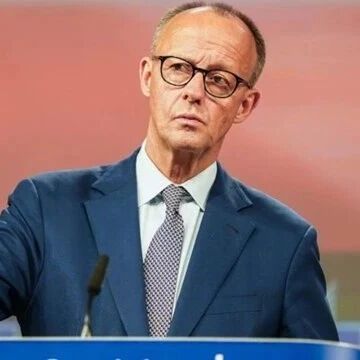
德国经济又“复活了”?
第一财经· 2025-11-28 10:01
Core Viewpoint - After more than five years of stagnation, the German economy is showing signs of recovery, with growth expected in 2026 and 2027 at 1.2% according to EU forecasts [4][5]. Economic Indicators - The German GDP remained stable in Q3, avoiding recession, with industrial orders, output, and exports showing recovery in September [4]. - The IMF noted that the German government's reform of the debt brake mechanism is a significant milestone that will aid in economic recovery [4][11]. Government Initiatives - The German government has established a special fund of €500 billion for infrastructure projects, which is considered additional debt and does not count against the current debt ceiling [6][7]. - This fund is expected to take time to impact GDP, likely not until 2026 or 2027 [6]. Sectoral Adjustments - A significant portion of the special fund is allocated for defense, which may help offset losses in the manufacturing sector [7]. - The construction industry, which has faced a deep recession, is crucial for economic recovery, accounting for about 50% of Germany's total output loss over the past three years [8]. Future Projections - The IMF predicts that government spending increases starting in 2026 will provide a positive boost to economic growth, with real GDP growth expected to accelerate to around 1% in 2026 and 1.5% in 2027 [9][11]. - The trade balance is expected to gradually decline but remain positive, with inflation projected to stay close to the ECB's target of 2% [9]. Challenges and Warnings - The IMF warns that without further bold reforms, Germany faces serious mid-term growth challenges, particularly due to a declining working-age population [5][12]. - Concerns exist regarding the potential misuse of new debt for welfare spending rather than productive investments, necessitating careful oversight of fund allocation [10][13].

德国11月商业景气指数意外下降
Sou Hu Cai Jing· 2025-11-24 13:45
Core Insights - The November German Business Climate Index released by the Ifo Institute decreased from 88.4 in October to 88.1 in November, indicating a decline in optimism regarding the recovery of the German economy [2] - The decline in the index suggests a spreading pessimism among German business executives about the potential for economic recovery [2] - The drop in the index was greater than most economists had anticipated, as they had expected a slight increase for November [2] Summary by Category Economic Indicators - The Ifo Business Climate Index serves as an important barometer for observing the economic trends in Germany [2] - The significant decline in confidence was particularly noted in the manufacturing and retail sectors [2] Expert Commentary - Clemens Fuest, the president of the Ifo Institute, stated that the data reflects skepticism about the ability of the German economy to recover [2]
视频丨德国经济专家委员会:美关税政策阻碍德国经济复苏
Yang Shi Xin Wen Ke Hu Duan· 2025-11-13 08:19
Core Insights - The German Economic Expert Committee forecasts weak economic growth for Germany in 2025 and 2026, lower than previous expectations, attributing this to U.S. tariff policies hindering recovery [1][3]. Economic Performance - The report indicates that Germany's GDP growth for this year is projected at 0.2%, with a revised forecast of 0.9% for 2026, down from an earlier estimate of 1% and below the German government's expectation of 1.3% [3]. - After two years of recession, Germany's economy is experiencing minimal growth, necessitating improvements in productivity, innovation, and investment to return to a growth trajectory [3]. Global Trade and Protectionism - The current global economic landscape is characterized by protectionist tendencies and unpredictable U.S. trade policies, negatively impacting Germany as an export-oriented nation [5]. - The decline in global trade poses significant challenges for Germany, which has not benefited from the economic recovery in import and export markets due to U.S. tariffs and the appreciation of the euro [5]. Domestic Economic Measures - The German government has implemented a series of economic stimulus measures, including increased investment, simplified approval processes, and expanded infrastructure projects [7]. - However, experts argue that to overcome low growth, Germany must achieve breakthroughs in digitalization, reduce energy costs, and enhance foreign trade, as short-term stimulus measures may not yield long-term results [7]. Recommendations for Future Growth - The German Economic Expert Committee emphasizes the need to eliminate trade barriers within the EU, strengthen capital markets, and address fragmentation in the defense market to fully leverage opportunities in the European single market [5].

【财经分析】裁员阴云“笼罩”德国 工业界持续“承压”或拖累经济复苏
Xin Hua Cai Jing· 2025-11-07 09:51
Group 1 - Over one-third (36%) of German companies plan to lay off employees by 2026, with only 18% expecting to create new jobs [2][3] - Three-quarters of German companies anticipate that their production in 2026 will be lower or at best the same as current levels [2] - The current business expectations for 2026 are less optimistic compared to earlier surveys conducted in spring [2] Group 2 - The industrial sector in Germany is particularly bleak, with 41% of industrial companies planning layoffs and only 15% intending to hire [4] - 36% of industrial firms predict a decline in production next year, while only 27% expect growth [4] - The industrial sector is facing significant challenges from trade disputes, geopolitical instability, and rising costs, which are weakening competitiveness [4] Group 3 - Despite the economic challenges, some German companies are still keen on overseas investments, particularly in China [6][7] - Small and medium-sized enterprises (SMEs) in Germany have shown resilience, with slight sales growth and record-high employment numbers [7] - The investment willingness among SMEs remains low due to rising costs, but there are signs of cautious recovery in investment [7]
调查:德国经济复苏乏力 企业信心持续低迷
Zhong Guo Xin Wen Wang· 2025-11-06 17:04
Economic Outlook - The DIHK's economic survey indicates that despite government reforms, there are no signs of recovery in the German economy, with business confidence remaining low [1] - The survey, covering approximately 23,000 companies, predicts stagnation for 2023 and only a slight growth of 0.7% in 2024, which is significantly lower than most economists' forecasts [1] - The German economy is expected to experience two consecutive years of recession, with a slight growth anticipated in 2025 and a potential growth rate exceeding 1% in 2026 [1] Business Investment Sentiment - The DIHK economic climate index has decreased by 1 point to 93.8, indicating a persistently pessimistic outlook [1] - Only 15% of surveyed companies expect economic conditions to improve in the next 12 months, while a quarter anticipate worsening conditions [1] - Investment intentions remain low, with only one-fifth of companies planning to increase investments and one-third intending to cut back on investments [1] Labor Market Conditions - The labor market is facing challenges, with only 10% of companies planning to hire more employees, while 25% are considering layoffs [2] - A significant 56% of companies identify labor costs as a major operational risk, influenced by rising social insurance contributions and recent minimum wage increases [2] - The DIHK CEO emphasizes the need for the government to accelerate efforts to reduce burdens on businesses to restore confidence [2]
【财经分析】“经济风向标”显示德企信心好转 德国经济面临“关键转折点”
Xin Hua Cai Jing· 2025-10-28 05:29
Group 1 - The German business climate index rose from 87.7 in September to 88.4 in October, indicating improved confidence among German enterprises [1][2] - The index is based on surveys from approximately 9,000 companies across manufacturing, services, trade, and construction sectors [2] - Manufacturing, services, and trade indicators showed improvement, while the construction sector experienced a slight decline [2] Group 2 - Analysts express mixed feelings about the index's rise, suggesting it reflects both positive and negative aspects of the German economy [3] - Reports from various institutions indicate expectations of economic improvement in Germany next year, supported by government fiscal plans [3] - The ZEW economic sentiment index and the composite purchasing managers' index also showed positive trends, suggesting better-than-expected economic conditions [3] Group 3 - Despite the rise in the business climate index, significant concerns remain regarding job stability, particularly in the automotive and metal industries [4] - Major companies like Porsche reported a drastic decline in profits, with a 99% drop in sales profit compared to the previous year [4] - The export-oriented nature of the German economy continues to be affected by unpredictable foreign trade policies from the U.S. [4] Group 4 - The index's increase is attributed to more optimistic expectations for the coming months, although current business conditions have been slightly downgraded [6] - Structural challenges in the German economy persist, with over 70% of surveyed companies considering relocating production or investing in other regions [6] - Despite a 25% increase in government spending since 2015, corporate investment has stagnated, returning to 2015 levels [6] Group 5 - Some economists warn that without comprehensive reforms, Germany may face a prolonged period of stagnation [7] - The current economic situation is described as dramatic, with long-term recession concerns highlighted by experts [7]