
有组织科研

Search documents
激发上海新动能,委员建议成立三大先导产业跨校育人联盟
第一财经· 2026-02-04 15:32
2026.02. 04 本文字数:1922,阅读时长大约4分钟 作者 | 第一财经 邹臻杰 上海应如何进一步发挥好以新质生产力为核心的要素优势? 2月4日举办的上海市政协十四届四次会议一场"坚持以科技创新为引领,充分激发城市发展新动能"专题会议(下称"专题会议")上,多位上海市政协 委员表示,当前上海在算力、数据等领域具有丰富资源,进一步发挥好上海在产业、人才、资本领域的要素优势,助力上海"2+3+6+6"现代化产业体 系构建是当务之急。 "我们还需要升级有组织科研。过去,有组织科研是把科学家组织起来,不同学科的人一起开展联合攻关;将来,有组织科研不仅要组织人,要组织市 场的人、工程的人、风投的人,还要组织算力、数据、工程能力这些新型生产要素,这是一种体制和资源的全面组织。"丁晓东建议。 投早投小投硬科技 除了科创人才,金融资本要素也是新质生产力的关键。 人才链应紧贴产业链 上海市政协委员、华东师范大学教授周立旻在专题会议上表示,从发展三大先导产业角度看,现阶段,"产业链—创新链—人才链"的贯通仍然不够顺 畅,产业创新体系与高校人才供给之间"节奏不一致、任务不对齐、资源不共享",因此,有必要将"构建高校产教融 ...

激发上海新动能,委员建议成立三大先导产业跨校育人联盟
Di Yi Cai Jing· 2026-02-04 10:15
目前产业创新体系与高校人才供给之间"节奏不一致、任务不对齐、资源不共享" "面对新质生产力发展的迫切需求,建议推进校企共同体化、课程项目化、资源平台化、评价闭环化的 新模式,这需要打破编制围墙、校际围墙。"周立旻告诉第一财经,一方面,可以成立集成电路、生物 医药、人工智能"先导产业"跨校育人联盟;建立统一课程目录、实验资源共享平台和学分互认机制,允 许学生跨校修读核心课程。 另一方面,还可以实施"校企双聘、双向流动"的人才互认机制;在试点高校设立"产业教授"特区,赋予 企业领军人才与高校教授同等的学术话语权,通过"企业专家入校"来构建一支既懂学术前沿、又精通工 程实践的复合型导师队伍。此外,也要鼓励高校青年教师到企业挂职"科技副总",挂职期间保留编制、 工龄连续计算,并将企业技术攻关成果视同高水平论文,作为职称评定的硬指标。 "现阶段,我们的产业升级迭代速度远超以往,产研用的内涵正在发生深刻变革,这些变革包括:AI赋 能下的科学研究周期发生变化、科技创新的范式(与市场反馈紧密贴合)发生转变,产研用的传统壁垒 被打破等。"上海市政协委员、上海创智学院党委书记丁晓东说。 上海创智学院采取"学习研究+实战创业"的培 ...
重点聚焦三个方向,内蒙古社科院2025年度科研成果发布
Xin Lang Cai Jing· 2026-01-29 12:38
2025年,内蒙古社科院紧紧围绕党的二十大及二十届历次全会精神,深入贯彻落实习近平总书记对内蒙 古系列重要讲话重要指示精神,自觉将铸牢中华民族共同体意识贯穿于全院工作的各方面、全过程,立 足"思想库、智囊团"职能定位,围绕内蒙古自治区党委、政府中心工作,持续提升科研支撑与智库服务 水平,产出一批高质量科研成果。 围绕中华优秀传统文化和内蒙古地域文化等领域潜心开展基础性研究,推出《内蒙古地域文化概论》 《新译〈三国演义〉》《多语种合璧文鉴》等系列研究成果。其中,《内蒙古地域文化概论》是在内蒙 古自治区党委宣传部组织指导下,由社科院牵头编撰,对内蒙古地域文化进行全面深入细致研究和分析 的文化理论研究著作,内容涉及内蒙古历史文化渊源、发展脉络、基本特征、时代价值,具有较强理论 参考价值,为推进文化强区建设提供可靠的学理支撑。 追踪学术前沿、围绕内蒙古自治区高质量发展过程中面临的焦点难点堵点等问题深入开展针对性研究, 推出《预防性监禁问题研究》《草原牧区新型城镇化机制创新研究》《美丽中国建设:内蒙古绿色转型 案例》等系列研究成果,这些学术著作注重学理支撑与实践观照相结合,旨在从学术视角回应现实关 切,从专业角度厘清问 ...
一场与菌株“斗脾气”的慢跑
Xin Lang Cai Jing· 2026-01-27 09:35
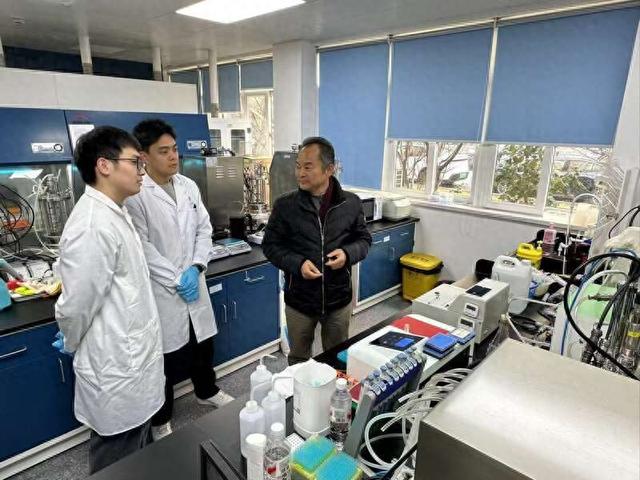
中青报·中青网记者 王一迪 王烨捷 在华东理工大学鲁华生物技术研究所的实验室里,魏东芝教授团队成员丁永合已经记不清这是第几次守 在发酵罐前采集菌株参数了。参与"角鲨烯"合成项目的3年间,他经历了太多"意外"——菌株生长缓 慢、产量波动、发酵周期长……"做实验就是这样,菌株绝不会按照你的预期和'参数'生长。"丁永合 说,在大多数情况下,"无常"才是正常。需要不断试错,慢慢摸索菌株的"脾气"。 这样的状况正是生物制造实验室里的常态。然而,正是通过这种反复摸索和调整,魏东芝团队最终 将"角鲨烯"的发酵周期从最初的10天逐步缩短到7天,再到5天。"这不是一蹴而就的突破,而是通过无 数次的失败和调整,慢慢积累的进步。"丁永合说。 近日,魏东芝教授领衔的"多酶协同催化体系及生物基产品绿色制造技术创新与产业化"项目获得2025年 度中国石油和化学工业联合会科技进步特等奖。"角鲨烯"合成就是这项技术创新的代表之一。这份荣誉 背后,是一段关于20年坚持与创新的旅程。 魏东芝 (右一)和团队成员进行实验研讨。中青报·中青网记者王一迪/摄 然而,这条创新之路并非一帆风顺。丁永合回忆道,最初菌株发酵周期长达10天,且产量极不稳 定。 ...
北京:强化有组织科研,以“试验线加生产线”推动校企“三融合”
Huan Qiu Wang· 2025-12-10 09:05
Core Viewpoint - The Ministry of Education emphasizes the importance of reforming the training of outstanding engineers to support the development of a strong education, technology, and talent nation, aligning with the national strategic talent cultivation goals [1][2]. Group 1: Policy and Strategic Framework - The "14th Five-Year Plan" suggests a comprehensive approach to advancing education, technology, and talent development, aiming to cultivate more outstanding engineers [1]. - A recent meeting highlighted the need for deepening engineering education reform and increasing the training of outstanding engineers to support national strategic goals [1][2]. - The establishment of a leadership group for education, technology, and talent in Beijing aims to integrate resources across various sectors to enhance the training of high-level innovative talents [2][3]. Group 2: Educational Initiatives and Collaborations - Beijing has created new educational platforms such as the National Excellence Engineer Innovation Research Institute, focusing on key areas like integrated circuits and artificial intelligence, in collaboration with top universities and enterprises [3][5]. - The first cohort of graduate students from the National Excellence Engineer Academy has graduated, with 80% entering critical fields in high demand [3]. Group 3: Innovative Training Models - A new model combining "large-scale problem identification by industry and small-scale solutions by education" has been developed to cultivate outstanding engineering talents [5][6]. - The integration of educational and industrial resources aims to create a cohesive ecosystem for talent development, ensuring that educational outcomes align with industry needs [5][6]. Group 4: Research and Development Focus - Beijing is promoting organized research to align key technology development with talent training, focusing on practical applications and industry needs [6]. - The National Excellence Engineer Innovation Research Institute has identified and published a list of research topics based on enterprise needs, leading to 74 collaborative projects and 47 new technology research initiatives [6].

齐鲁师范学院2025年度科研工作实现多项历史性突破
Zhong Guo Jing Ji Wang· 2025-12-10 08:04
Core Insights - The research work of Qilu Normal University in 2025 has shown a positive trend with significant growth and breakthroughs, contributing to the development of a high-level application-oriented normal university [1] Group 1: Integration of Party Building and Research - The university's Party Committee emphasizes leadership in research, ensuring that Party guidance is integrated throughout the research process [2] - The establishment of "Party Member Research Pioneer Posts" and research teams led by Party members has enhanced the effectiveness of research efforts [2] - Academic integrity and ethical education are incorporated into the Party building framework, promoting a culture of innovation and honesty in research [2] Group 2: Key Breakthroughs in Research - The university achieved its first provincial science and technology progress award, marking a significant milestone in its research capabilities [3] - Multiple national social science projects were successfully approved, showcasing the university's potential in the field of art theory research [3] - The university received national funding for artistic projects, indicating recognition of its creative and practical capabilities in the arts [4] Group 3: Organizational Research Strategy - The university has made significant progress in national natural science fund approvals, with a 60% increase in successful applications compared to the previous year [5] - A total of 123 high-level research papers were published, reflecting an improvement in research quality and impact [6] - The establishment of new research platforms has provided better conditions for research personnel, facilitating major project undertakings and significant outcomes [6] Group 4: Future Outlook - The university aims to continue strengthening Party leadership and deepening the integration of Party building with research, focusing on organized research models to serve national and regional development [7] - Future efforts will prioritize enhancing original innovation capabilities and addressing key issues, optimizing academic layouts, and building strong talent teams [7]
生产线上做科研,头部职校探路科教融汇丨2025职教拐点⑤
2 1 Shi Ji Jing Ji Bao Dao· 2025-11-22 01:41
Core Viewpoint - The increasing emphasis on research and innovation in vocational colleges is reshaping their educational landscape, highlighting the importance of integrating scientific research with practical skills training to meet industry demands [1][2][3] Group 1: Research Development in Vocational Colleges - Vocational colleges are increasingly recognized for their research capabilities, with 22 institutions making it to the top 2% of global scientists in 2025 [1] - The Ministry of Education has initiated policies to promote organized research in higher education, leading to a surge in research activities within vocational institutions [2][3] - Guangdong vocational colleges are adopting structured research models, such as the "152" model, which integrates research into the educational process and addresses real-world industrial challenges [3][4] Group 2: Industry Collaboration and Practical Application - Vocational colleges are focusing on research projects that directly address industry needs, fostering collaboration between academia and enterprises [4][5] - Institutions like Shenzhen Information Vocational Technology University are developing market-oriented products in fields such as AI and smart manufacturing, enhancing their relevance to industry [3][4] - The shift towards practical, application-oriented research is evident, with faculty and students actively engaging in projects that yield tangible results for industries [8][9] Group 3: Systematic Support and Infrastructure - Vocational colleges are investing in infrastructure and systems to support research, including establishing technology transfer centers and collaborative platforms with industries [5][8] - Continuous investment in research capabilities is evident, with institutions reporting significant funding and successful project outcomes [5][6] - The development of a comprehensive evaluation system for research outcomes is recommended to ensure that vocational colleges align their research efforts with educational and societal needs [10]
与城市同频 与产业共振
Xin Hua Ri Bao· 2025-11-13 21:52
Core Viewpoint - The integration of technological innovation and industrial innovation is emphasized, with a focus on deepening the collaboration between education, technology, and talent development in the context of the 20th National Congress of the Communist Party of China [1] Group 1: Industry-Academia Collaboration - Changzhou Institute of Technology has developed a magnetic levitation motor product in collaboration with Jiangsu Mingci Power Technology Co., Ltd., achieving international leading technology and filling a domestic gap in centralized heating [2] - The institute has transitioned from "spontaneous and scattered" cooperation to "organized research and organized transformation," establishing 16 industry colleges to enhance collaboration with enterprises [2] - The Carbon Fiber New Materials Industry College, co-built with enterprises, has addressed over 50 key technical challenges in carbon fiber preparation and facilitated the transformation of more than 60 research outcomes [2] Group 2: Talent Mobility and Dual Employment - Three PhD graduates from Changzhou Institute of Technology are serving as technology vice presidents at Jiangsu Lemo Precision Technology Co., Ltd., enhancing China's supply capacity in the high-end display industry [3] - The institute promotes a "dual employment" model, allowing high-level talents to work in both academia and industry, with 72 high-level talents currently engaged in this model [3] - The collaboration has led to 71 national natural science fund projects in the past five years, with many results directly addressing critical technological challenges faced by enterprises [3] Group 3: Alignment with Local Industry - Changzhou Institute of Technology focuses on aligning its academic programs with local industrial needs, establishing new majors such as intelligent manufacturing and artificial intelligence that match the local industrial structure [5] - The institute has eliminated programs not directly related to local leading industries, achieving a 100% match between its 49 enrollment programs and Changzhou's advantageous industries [5] - The school aims to transform its intellectual resources into innovative momentum for industries, providing a replicable model for applied universities [5]
当前中国或许不是“有库无智”,而是“有智无库”
Guan Cha Zhe Wang· 2025-11-12 02:05
Core Viewpoint - The retention of talent has become a critical issue in the development of think tanks in China, which are essential for modern governance and international discourse [1]. Group 1: Current State of Think Tanks - Think tanks in China have rapidly developed and are crucial for policy-making and enhancing national soft power [1]. - There are underlying issues in the current think tank construction, questioning whether there is "intelligence without a library" or "a library without intelligence" [1]. - The quality and impact of research outcomes are increasingly important amidst the growing number of think tanks [1]. Group 2: CTTI System and Its Impact - The China Think Tank Index (CTTI) was developed to address the need for data-driven evaluation of think tanks, moving beyond subjective assessments [2][3]. - CTTI serves as a platform for evaluating think tanks, ensuring that only those with high quality are included, thus forming a loose alliance of excellent think tanks [3][5]. - The CTTI evaluation system includes various dimensions such as legality, expert team composition, funding, research outcomes, and influence [6][7]. Group 3: Characteristics of New-Type Think Tanks - The concept of "new-type think tanks" in China reflects a shift towards global governance and the need for international dialogue [8][10]. - Mechanisms and research paradigms have evolved, with new think tanks utilizing big data and AI for policy research [11][12]. - The new-type think tanks must possess international perspectives and engage in disseminating Chinese policies globally [14][16]. Group 4: Challenges in Talent Retention - The competition for talent is fierce, with many young scholars preferring academic institutions over think tanks due to clearer career paths [32]. - The lack of a "revolving door" mechanism in most think tanks limits their attractiveness to young scholars who aspire to influence public policy [32]. - Think tanks must create opportunities for young scholars to grow and take on responsibilities to enhance their appeal [33]. Group 5: Research Quality and Data Challenges - A significant barrier to producing high-quality research is the lack of accessible data, which is often hindered by a culture of data secrecy [29][30]. - Many think tanks do not fully recognize the importance of systematic data accumulation, focusing instead on immediate outputs [29][30]. - The absence of critical thinking and innovative ideas among researchers further hampers the quality of research outcomes [30]. Group 6: Differences Between Academic and Policy Research - The primary distinction between academic and policy research lies in the latter's focus on translating research findings into actionable policy recommendations [19][20]. - Think tank researchers must consider the applicability and feasibility of their policy suggestions, which is not a primary concern in academic research [19][20]. Group 7: Recommendations for Future Scholars - Future scholars should cultivate a genuine passion for public service and recognize the significance of their work in contributing to societal welfare [35][36]. - It is essential for scholars to maintain a balance between academic rigor and the practical demands of policy research [36].

聚焦国家重大战略需求,深化教学科研改革,加强基础研究和科技攻关—— 天津大学的三个创新场景(科技视点)
Ren Min Ri Bao· 2025-10-26 22:20
Group 1 - The core message emphasizes the importance of aligning educational and research efforts with national strategic needs, focusing on talent cultivation and technological self-reliance to contribute to the development of a strong educational and technological nation [1] - Tianjin University has made significant breakthroughs in research, discipline construction, and talent training, aiming to meet the demands of national security and engineering construction through large-scale scientific facilities [1][2] - The university's earthquake engineering simulation facility is unprecedented globally, designed to address major public safety and engineering challenges that existing smaller facilities cannot meet [2][3] Group 2 - The facility's development involved overcoming numerous technical challenges, including the creation of a unique "dual six-degree-of-freedom superimposed vibration table system" to simulate various earthquake scenarios [2][3] - The project team has successfully surpassed similar international facilities, achieving the capability to replicate nearly all earthquake scenarios within five years of construction [3] - The team has expanded the application of the facility from engineering to industrial product seismic testing, transitioning from a "purchaser" to a "service provider" role [3][4] Group 3 - Tianjin University is a leader in the new engineering education initiative, focusing on innovative teaching methods and interdisciplinary collaboration to enhance students' problem-solving abilities [5][6] - The university's synthetic biology laboratory has made significant advancements in genome synthesis and artificial cell construction, contributing to the field of synthetic biology [6][7] - The establishment of synthetic biology courses has fostered a new generation of researchers, enabling students to engage in cutting-edge projects and develop essential scientific skills [7][8] Group 4 - The collaborative environment within the synthetic biology lab encourages student autonomy and creativity, leading to innovative solutions and significant research breakthroughs [9] - The lab's recent achievements include the precise synthesis of large-scale human genome sequences, showcasing the university's commitment to advancing high-end research capabilities [8][9]