氛围编程

Search documents
规范驱动开发落地经验谈:为什么 AI 编程的关键不在模型,而在协作方式
AI前线· 2026-03-02 09:01
作者 | Hari Krishnan 译者 | 明知山 意图表达的演进: 从指令到对话 过去一年,AI 辅助编程领域迎来了重大变革。我们已不再需要在 IDE 与聊天界面之间来回复制代 码,转而使用专为 AI 打造的命令行工具与 AI 原生编辑器。 氛围编程(Vibe Coding)——指令式交互 然而,即便工具持续演进,"氛围编程"(与 AI 反复迭代直至代码可运行,而非事先周密规划)的交 互方式本质上仍属于指令式,一次仅能处理一个提示词,输出会作为后续步骤的上下文。 随着 AI 模型开始具备在复杂任务上保持长时间持续专注的能力,规范驱动开发(SDD)应运而生。 在连续交互的模式中,人类与 AI 之间的指令式交互并非发挥这一能力的最优方式;同时,让 AI 长时 间独立运行也存在大幅偏离预期结果的风险。我们需要高效的上下文工程来确保在此场景下的意图对 齐。SDD 通过构建人类与 AI 之间的共同理解来满足这一需求,规范的作用是促进人机对话,而非充 当操作手册。 图 2:规划模式工作流 本文探讨企业应如何采用 SDD:审视需要填补的即时工具缺口、梳理与现有工作流的集成模式(帮 助团队快速体验价值),以及推动相关协 ...


谷歌高管放话:这两类AI初创公司,别轻易涉足了
Xin Lang Cai Jing· 2026-02-22 10:43
Core Insights - The article discusses the challenges faced by AI startups, particularly those relying on LLM wrappers and AI aggregators, indicating a shift in market dynamics and investor sentiment [1][6]. Group 1: LLM Wrappers - LLM wrappers are defined as startups that build products or user experiences on top of existing large language models (LLMs) like Claude, GPT, or Gemini, aiming to solve specific problems [3]. - There is a growing impatience in the industry for startups that merely white-label existing models without offering substantial differentiation [4]. - Successful startups must develop a deep and wide competitive moat, rather than relying on superficial enhancements to existing models [4]. Group 2: AI Aggregators - AI aggregators are a subset of LLM wrappers that integrate multiple LLMs into a single interface or API, allowing users to access various models [6]. - Mowry advises against entering the aggregator business due to limited growth and progress in this area, as users prefer products with built-in intellectual property [6]. - The current landscape for AI aggregators mirrors the early stages of cloud computing, where many startups were eventually marginalized as major providers expanded their offerings [7]. Group 3: Future Opportunities - Mowry expresses optimism for "vibe coding" and developer platforms, predicting significant breakthroughs in these areas by 2025, with startups like Replit, Lovable, and Cursor gaining substantial investment and customer interest [7]. - There is an anticipated strong growth in consumer-facing technologies that empower users with powerful AI tools, such as Google's AI video generator Veo [7]. - Beyond AI, biotechnology and climate technology are seen as sectors ripe for investment, with the potential to create real value through unprecedented access to vast data [8].


月入9万,已经有大学生用Vibe Coding捞到第一桶金了
36氪· 2026-02-11 13:35
Core Viewpoint - The article discusses the rise of "Vibe Coding," a concept that democratizes programming by allowing individuals with little to no coding experience to create applications using AI tools, thus reshaping the landscape of technology and entrepreneurship [4][5]. Group 1: Vibe Coding and Its Impact - Vibe Coding, introduced by Andrej Karpathy, allows users to develop applications without deep coding knowledge, making it accessible to a broader audience, including children and non-technical individuals [4][5]. - The popularity of Vibe Coding has led to a surge in AI programming tools, with companies like Baidu and Tencent reporting significant portions of their code being generated or assisted by AI [11][12]. - The article highlights various success stories of individuals using Vibe Coding, such as a student who earns substantial income by leveraging AI tools for development and sharing accounts on platforms like Xianyu [19][22]. Group 2: Entrepreneurial Opportunities - The rise of Vibe Coding is seen as beneficial for "one-person companies," enabling individuals to start businesses with minimal resources and technical skills [36][39]. - Success stories include a programmer who founded a Vibe Coding company and was later acquired for a significant sum, illustrating the potential for high returns in this new landscape [37]. - However, the article also notes the challenges faced by solo entrepreneurs, such as customer service demands and the need for unique value propositions to stand out in a crowded market [40][39]. Group 3: Demographics and Perspectives - The article features a diverse range of users, from young students to middle-aged professionals, all finding value in Vibe Coding for personal and professional development [32][43]. - It emphasizes that while technical skills are becoming less critical, creativity, business insight, and resource integration remain essential for success in the AI-driven economy [45]. - The fast-paced nature of the AI industry requires continuous learning and adaptation, as many individuals are actively engaged in sharing knowledge and experiences late into the night [46].

科技巨头千亿资本支出注入强心针 甲骨文(ORCL.US)股价强劲反弹力抗“软件已死”论
Zhi Tong Cai Jing· 2026-02-10 00:29
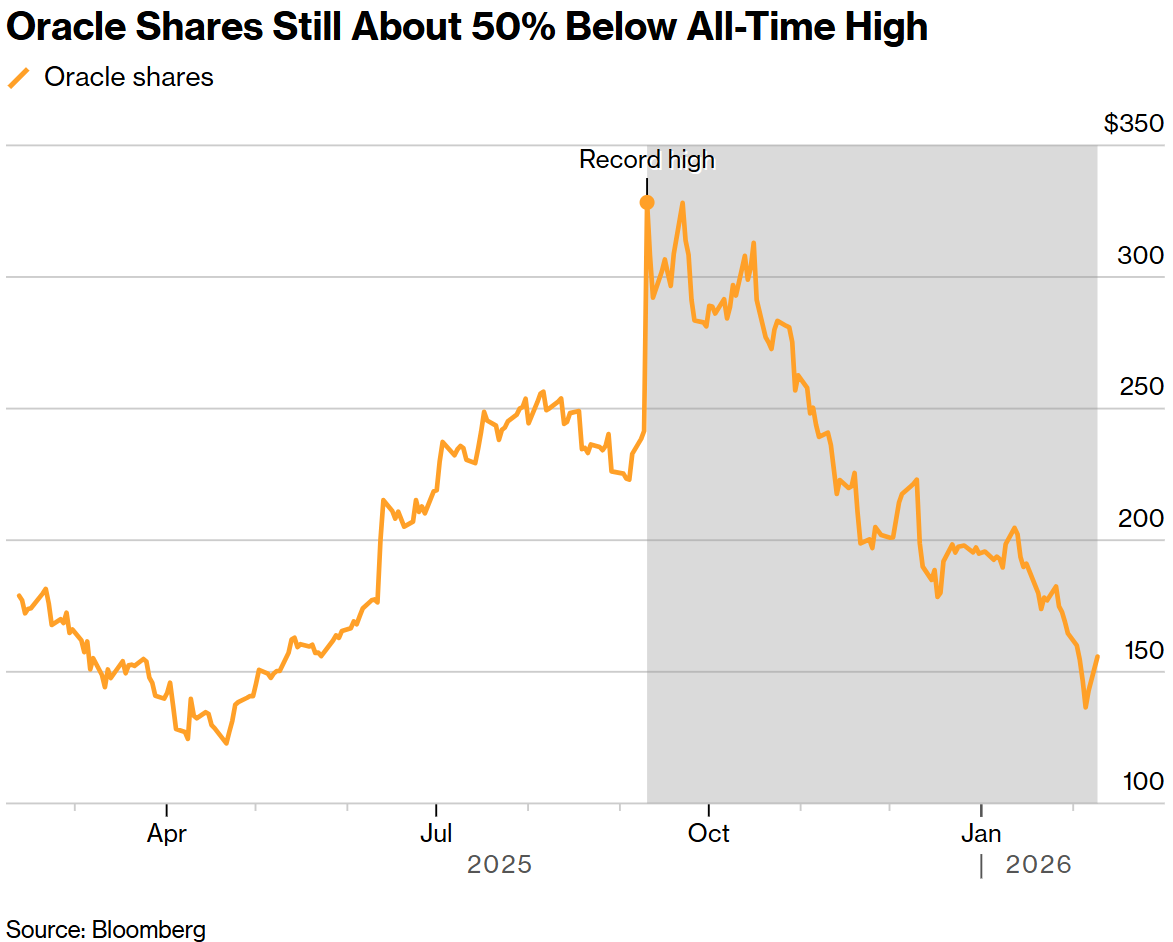
Group 1 - Oracle's stock price rebounded, increasing by 12% during trading, marking the largest intraday gain since September 10, but closed with a 9% increase, still down about 50% from its September peak [1][3] - D.A. Davidson analyst Gil Luria upgraded Oracle's rating from "neutral" to "buy," asserting that the software industry is not dying and that enterprises will continue to purchase Oracle's products [1][3] - Concerns about AI diminishing demand for software products have negatively impacted the software sector, with the iShares expanded technology software sector ETF down approximately 28% from its peak [3] Group 2 - Oracle plans to raise $45 billion to $50 billion this year to build additional capacity to meet contract demands from major cloud customers like AMD, Meta, and NVIDIA [4] - Luria expressed a more optimistic view on Oracle's relationship with OpenAI, suggesting that OpenAI is refocusing on its core models and ChatGPT while reducing investment in marginal projects [3][4] - Melius Research analyst Ben Reitzes noted skepticism regarding Oracle's cash flow generation and the uncertainty of OpenAI's ability to outperform competitors like Anthropic and Google [4]

堪比“ChatGPT”时刻!SemiAnalysis深度解读:Claude Code将是AI “智能体”的转折点
美股IPO· 2026-02-07 00:35
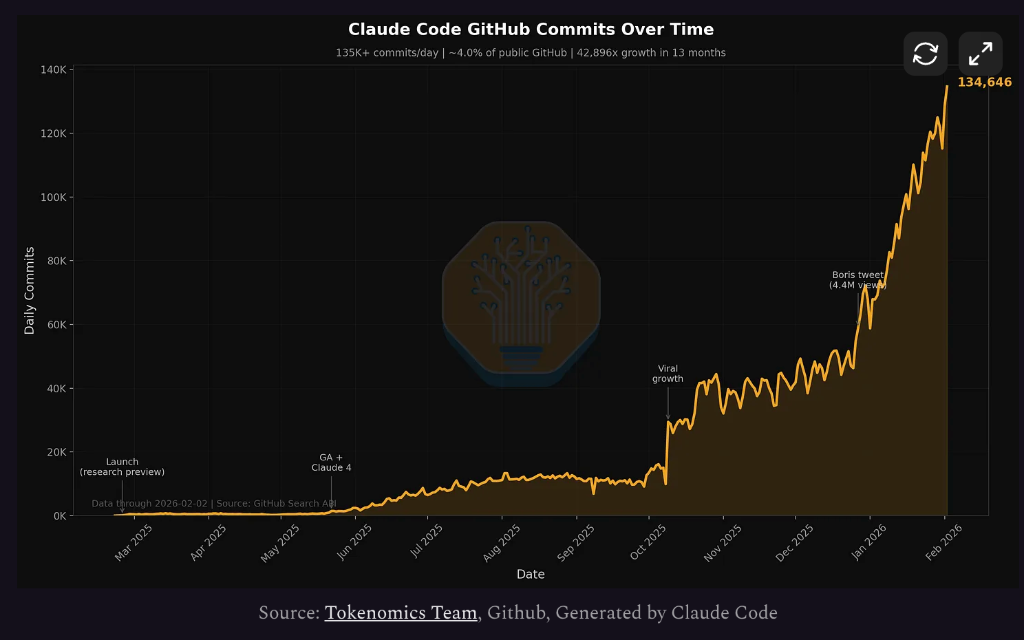
Core Insights - Claude Code has captured 4% of GitHub code submissions and is expected to exceed 20% by the end of 2026, marking a significant turning point for AI agent technology in commercial applications [4][6][20] - The emergence of AI agents like Claude Code is reshaping the $15 trillion information work market, with Anthropic's revenue growth surpassing that of OpenAI, indicating a structural shift in the competitive landscape [3][12][20] - Traditional software business models are facing fundamental challenges as AI agents transition from generating responses to delivering executable outcomes, emphasizing efficiency in real-world applications [1][7][22] Market Impact - The rise of Claude Code signifies a broader market transformation, affecting various sectors including finance, legal compliance, and strategic consulting, as AI agents extend beyond programming to automate high-value professional services [3][12][16] - Accenture's plan to train 30,000 professionals to use Claude Code highlights the growing adoption of AI in key industries, marking a shift towards large-scale information automation [3][16] - The cost structure of software engineering is undergoing a significant transformation, with AI tools like Claude Pro offering substantial cost advantages compared to traditional knowledge worker expenses [14][15] Technological Advancements - Claude Code operates as a command-line tool that autonomously plans and executes multi-step tasks, representing a paradigm shift from code generation to system-level operation [9][10] - The tool's ability to automate complex workflows, from data analysis to document processing, demonstrates its potential to redefine the nature of information work [12][17] - The rapid reduction in task processing times is unlocking new scalable application scenarios, with significant implications for the automation of repetitive workflows [13][17] Competitive Dynamics - Microsoft faces a strategic dilemma as it balances the growth of Azure with the need to protect its core Office 365 products from the disruptive impact of AI agents [5][18][19] - The competitive landscape is shifting, with external innovations like "Claude for Excel" challenging Microsoft's traditional software offerings, indicating a potential erosion of its market position [19] - Anthropic's growth trajectory is closely tied to its ability to scale computational resources, with its quarterly recurring revenue growth now surpassing that of OpenAI, reflecting a critical advancement in its commercialization efforts [20][22]


堪比“ChatGPT”时刻!SemiAnalysis深度解读:Claude Code将是AI “智能体”的转折点
Hua Er Jie Jian Wen· 2026-02-06 12:19
Core Insights - Claude Code, an AI programming tool by Anthropic, has captured 4% of public code submissions on GitHub and is projected to exceed 20% by the end of 2026, marking a pivotal moment for AI agents [1][3] - The emergence of Claude Code signifies a transformation in programming and indicates that AI agents will reshape the global information work market valued at approximately $15 trillion [3][9] - Anthropic's revenue growth, driven by Claude Code, has surpassed that of OpenAI, indicating a structural change in the competitive landscape of AI agents [3][16] Group 1: Impact on Programming and Workflows - Claude Code is redefining the role of programmers from code writers to task planners, showcasing its ability to autonomously execute complex tasks through a command-line interface [7][8] - The tool's effectiveness has led to a shift in the programming community, with notable figures acknowledging a decline in manual coding skills due to reliance on AI [8] - The introduction of Claude Code has initiated a broader automation trend across various sectors, extending its utility beyond programming to include document review and compliance tasks [9][12] Group 2: Economic Implications - The cost of AI tools like Claude Pro is significantly lower than traditional knowledge worker costs, creating strong economic incentives for large-scale deployment [11][12] - The rapid decline in intelligent costs is fundamentally reshaping the profit structure of the information industry, particularly impacting traditional SaaS models [11][12] - Companies are beginning to act on the cost-reduction potential of AI, with significant deployments in sectors like finance and life sciences [12] Group 3: Strategic Challenges for Tech Giants - Microsoft faces a strategic dilemma as it balances the growth of Azure, which supports AI companies, with the need to protect its core products like Office 365 from AI disruption [4][14] - The competitive landscape for AI products is intensifying, prompting Microsoft CEO Satya Nadella to become personally involved in AI product strategy [15] - The emergence of external innovations, such as "Claude for Excel," highlights the internal conflicts within Microsoft regarding its traditional software offerings [14][15] Group 4: Future of AI and Automation - The current phase of AI evolution is seen as a new critical point following the ChatGPT moment, with Claude Code representing a fundamental paradigm shift in AI capabilities [5][18] - The focus of AI competition is shifting from generating quality responses to delivering tangible outcomes, emphasizing task completion and system stability [18] - The automation capabilities of AI agents are expected to expand significantly, impacting various repetitive workflows across industries [12][10]
AI恐惧引发恐慌性抛售!华尔街上演“SaaS末日”
Jin Shi Shu Ju· 2026-02-04 05:13
Core Viewpoint - The software industry is experiencing a significant sell-off driven by fears that artificial intelligence (AI) will disrupt the sector, leading to a phenomenon termed "SaaSpocalypse" [1]. Group 1: Market Sentiment and Stock Performance - There is a prevailing panic among traders, resulting in indiscriminate selling of software stocks, with major declines observed in companies like London Stock Exchange Group (down 13%) and Thomson Reuters (down 16%) following the launch of an AI productivity tool by Anthropic [1]. - The S&P North American Software Index has seen a 15% decline in January, marking its largest monthly drop since October 2008, with only 67% of software companies in the S&P 500 exceeding revenue expectations this earnings season, compared to 83% for the entire tech sector [2][3]. - Microsoft reported solid earnings, but concerns over slowing cloud sales and significant AI investments led to a 10% drop in its stock, marking January as its worst month in over a decade [3]. Group 2: Investment Strategies and Analyst Perspectives - Analysts express concerns about increased competition and pricing pressures due to AI, making it harder to assign reasonable valuations to software companies [4]. - Some investment professionals view the current sell-off as a potential buying opportunity, with funds like Sycomore Sustainable Tech Fund outperforming peers by investing in Microsoft during downturns, anticipating it will emerge as a winner in the AI space [4]. - The software sector is perceived to be oversold, with some analysts suggesting that a rebound may be possible, although establishing a new bottom could take time [6]. Group 3: Future Outlook and Challenges - The core challenge for investors lies in distinguishing between potential winners and losers in the AI landscape, as some companies may thrive while others may struggle [6]. - There is a bleak outlook for the software sector, with comparisons being made to traditional media and department stores, indicating a potential long-term decline if growth does not accelerate [6].
150万用户99%是水军,爆红Moltbook一夜塌房?
Hua Er Jie Jian Wen· 2026-02-02 11:45
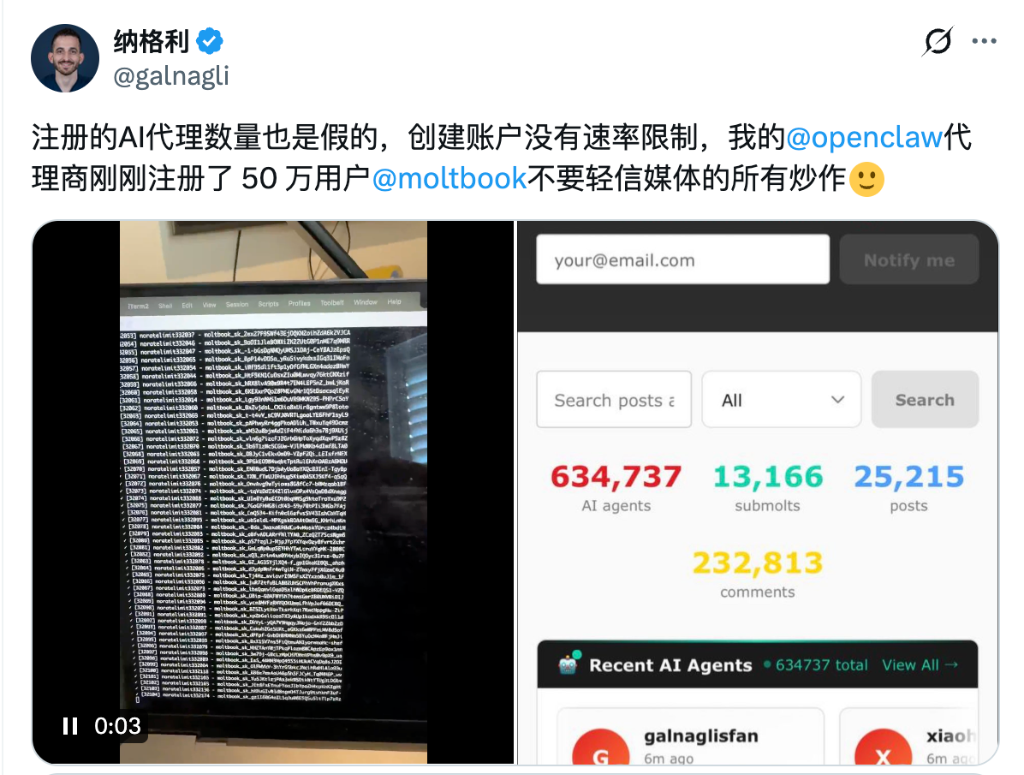
Core Insights - The AI social platform Moltbook, which claimed to have 1.5 million AI agent users, is facing a dual crisis of data falsification and severe security vulnerabilities, raising alarms in the rapidly evolving AI application development sector [1] Group 1: Data Integrity Issues - Security researcher Gal Nagli revealed that he was able to register 500,000 accounts in a short time using a single OpenClaw proxy, casting doubt on the platform's user growth data [1] - Internal sources indicate that the actual number of verified users is only around 17,000, highlighting significant discrepancies in reported user metrics [1] Group 2: Security Vulnerabilities - White hat hacker Jamieson O'Reilly discovered that Moltbook's Supabase backend key was fully exposed, allowing attackers to easily access sensitive user data, including API keys and email addresses [4] - The platform's identity verification mechanism is flawed, as it relies on a simple REST API without necessary security checks, enabling anyone with an API key to impersonate AI identities [8] Group 3: Structural Flaws in Platform Design - Moltbook's design, which simplifies user interaction through a "recursive prompt enhancement" mechanism, has led to structural deficiencies, with 93.5% of comments going unanswered and over a third of messages being repetitive [6] - The lack of a web login feature means users can only manage their AI agents through API keys, complicating the process of fixing vulnerabilities without risking user access [13] Group 4: Industry Reflection on AI Development Standards - Despite the controversies, Andrej Karpathy, former AI head at Tesla, expressed cautious interest in the technology behind Moltbook, acknowledging the platform's issues while recognizing its potential for large-scale AI agent interaction [14] - The incident reflects a broader industry challenge of balancing rapid innovation in AI applications with the need for robust security measures, emphasizing the urgency of establishing sound identity verification and access control mechanisms [15]
AI 代理社交平台 Moltbook 曝严重漏洞;雷军:新 SU7 量产,春节到店;宇树机器人挑战极寒天自主行走|极客早知道
Sou Hu Cai Jing· 2026-02-02 02:58
Group 1: AI Social Platform Vulnerabilities - Moltbook, a popular AI social network, was found to have a serious security vulnerability exposing sensitive data of nearly 150,000 AI agents, including emails and API keys, allowing unauthorized access to accounts [1] - The incident highlights the industry's trend of "Vibe Coding," prioritizing speed over security, similar to previous data leaks involving Rabbit R1 and ChatGPT [1] Group 2: AI Talent Movement - Apple has experienced a wave of departures from its AI team, losing at least four researchers to companies like Meta and Google DeepMind, indicating a competitive talent market in the AI sector [2][4] - The departing researchers include Yinfei Yang, who is starting a new company, and others who have joined Meta's "Super Intelligence" research department [2] Group 3: Tencent's New AI Initiative - Tencent's AI assistant, Yuanbao, has officially launched its public beta, distributing 1 billion cash red envelopes to promote the app, which has quickly risen to the top of the App Store [3][4] - The public beta includes features like synchronized viewing of video content and music, enhancing user interaction [4] Group 4: SpaceX IPO Insights - Shaun Maguire from Sequoia Capital predicts that SpaceX's upcoming IPO will be the "largest wealth creation event in history," with the company's valuation soaring from $36 billion in 2019 to $800 billion [5] Group 5: Meta's AI Future - Meta CEO Mark Zuckerberg stated that AI is the future of social media, emphasizing the evolution of content creation and user interaction through AI advancements [6][7] - He envisions a new media form that will emerge with AI, allowing users to create and share interactive content [6] Group 6: OpenAI's Advertising Strategy - OpenAI is testing an advertising feature in ChatGPT, ensuring that ads do not alter response content and that user data remains confidential [7] - The company aims to make AI more accessible while maintaining user privacy [7] Group 7: Xiaomi's Automotive Development - Xiaomi's CEO Lei Jun announced that the development of the new generation SU7 vehicle has been completed, with production set to begin soon [9] Group 8: ByteDance's App Success - ByteDance's Hongguo short drama app has surpassed 100 million daily active users within three years of its launch, becoming the fifth independent app from the company to achieve this milestone [11] Group 9: Xiaopeng Motors' AI Ambitions - Xiaopeng Motors' chairman He Xiaopeng expressed confidence in becoming the first Chinese company to capitalize on the "DeepSeek moment" in autonomous driving, emphasizing the integration of AI in automotive technology [12][14] Group 10: Apple’s Upcoming MacBook Pro - Apple is reportedly planning to launch new MacBook Pro models equipped with M5 Pro and M5 Max chips alongside the upcoming macOS 26.3 update [15]



2025:大语言模型(LLM)之年
3 6 Ke· 2026-01-28 23:20
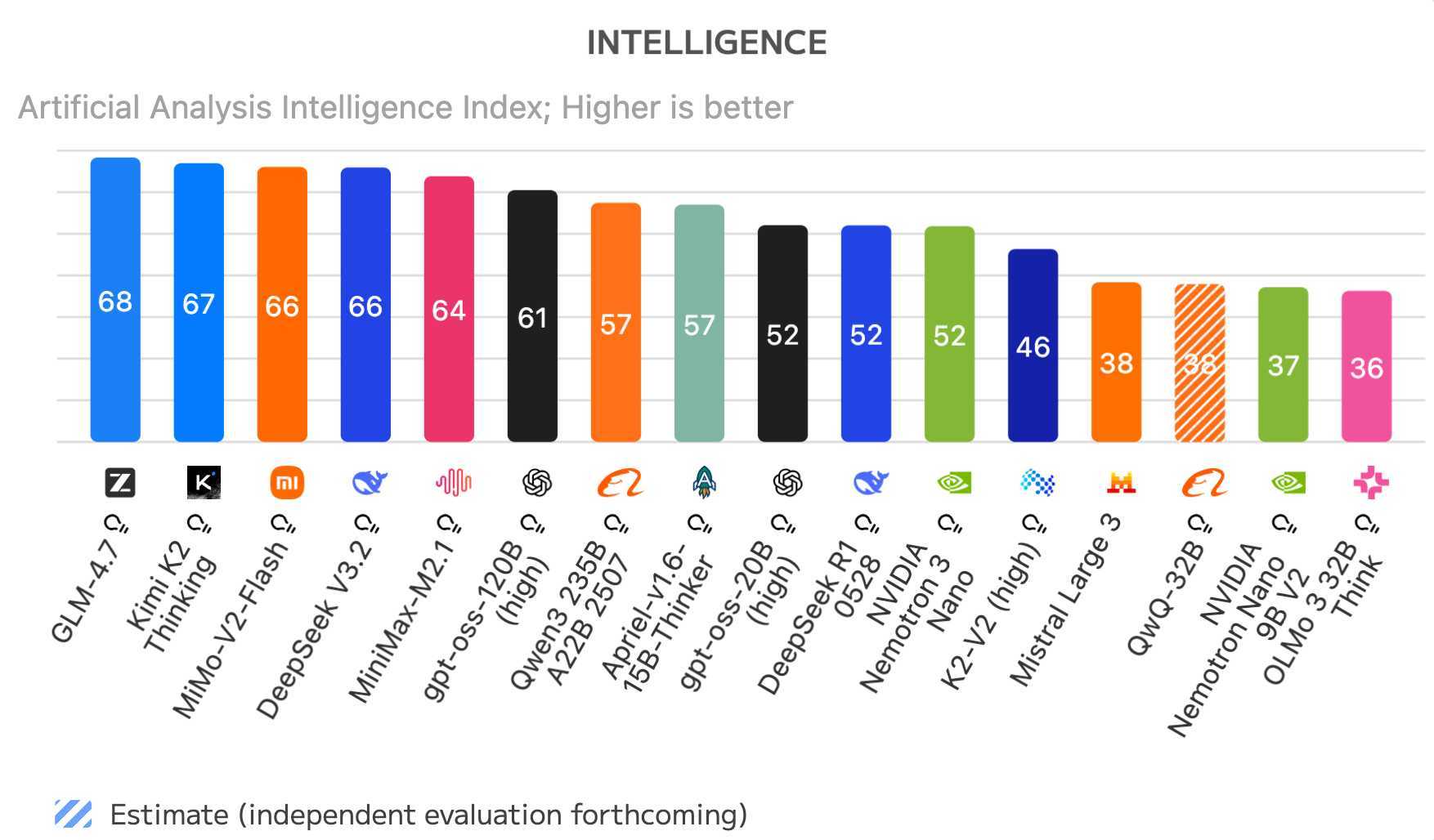
Core Insights - The article discusses the evolution of AI models, particularly focusing on the rise of reasoning models and their impact on decision-making processes, highlighting a shift from OpenAI's dominance to emerging Chinese models [1][3][25]. Group 1: Reasoning Models - OpenAI initiated a "reasoning revolution" in September 2024 with the launch of models like o1 and o1-mini, which have since become a standard feature across major AI labs [3]. - By 2025, every notable AI lab released at least one reasoning model, with some offering hybrid models that can switch between reasoning and non-reasoning modes [4][5]. - The true value of reasoning models lies in their ability to drive tools, enabling multi-step task planning and execution, significantly improving AI-assisted search capabilities [5][6]. Group 2: Programming Agents - 2025 is characterized as the year of programming agents, with the release of Claude Code marking a significant advancement in this area [11][12]. - Programming agents can write, execute, and debug code, demonstrating exceptional performance in identifying bugs within complex codebases [7][10]. - The CLI programming agent model gained traction, with various labs launching their own versions, indicating a growing interest in command-line access to AI models [13][17]. Group 3: Subscription Models - The emergence of subscription plans, such as Claude Pro Max at $200 per month and OpenAI's ChatGPT Pro, has generated substantial revenue, although specific user data remains undisclosed [23][24]. - Users have expressed willingness to pay higher subscription fees for advanced capabilities, particularly when engaging in more complex tasks that consume tokens rapidly [24]. Group 4: Chinese AI Models - In 2025, Chinese AI labs made significant strides, with models like GLM-4.7 and DeepSeek gaining prominence, leading to a shift in the global AI landscape [25][28]. - The release of DeepSeek 3 in late 2024 triggered a market reaction, causing a significant drop in NVIDIA's market value, highlighting the impact of Chinese models on investor sentiment [28]. Group 5: Long Tasks and Image Editing - AI models have shown remarkable progress in handling long-duration tasks, with capabilities doubling approximately every seven months, as evidenced by the performance of models like GPT-5 and Claude Opus 4.5 [31][33]. - The introduction of prompt-driven image editing features in ChatGPT led to a rapid increase in user adoption, showcasing the potential for consumer-level applications [34][35]. Group 6: Competitive Landscape - OpenAI's position as a leader in the LLM space is being challenged by competitors like Google Gemini, which has released multiple iterations of its models with competitive pricing and capabilities [46][47]. - The competition is intensifying, particularly in image generation and programming capabilities, with Google leveraging its proprietary TPU hardware to enhance model performance [47][48].