混合专家模型(MoE)

Search documents
MiniMax M2.5正式发布,带动股价上涨35%
3 6 Ke· 2026-02-13 04:15
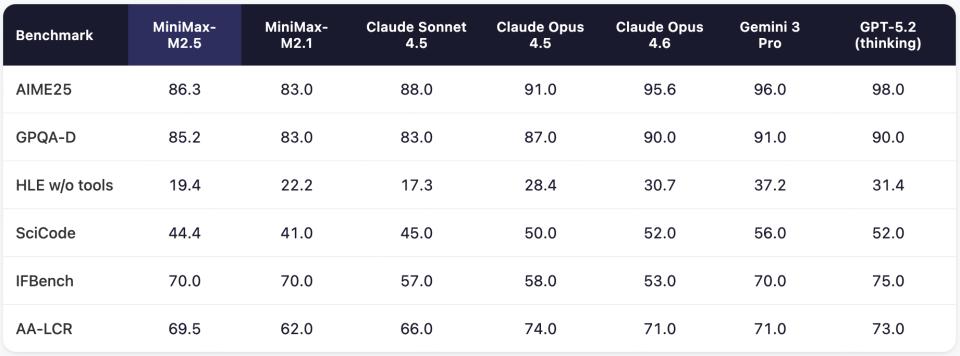
Core Insights - MiniMax has launched its latest flagship model M2.5, which has achieved industry-leading performance in high-value economic tasks such as programming and productivity tools through extensive real-world reinforcement learning training [2][4]. Model Positioning and Core Capabilities - M2.5 scored 80.2% in the SWE-Bench Verified test and 51.3% in the Multi-SWE-Bench test, showcasing its advanced capabilities in programming and intelligent agent tasks [2][11]. - The model's execution speed for complex tasks improved by 37% compared to its predecessor M2.1, matching the speed of Claude Opus 4.6 [3][18]. Technical Framework Analysis - M2.5 retains the mixed expert model (MoE) architecture from M2.1, with a total parameter scale of 230 billion, activating only 10 billion parameters during inference for efficiency [5]. - The Forge framework, introduced in M2.1, continues in M2.5, allowing for the integration of various agents and optimizing model performance across different environments [6][8]. Performance and Benchmark Testing - M2.5 demonstrated superior programming capabilities, achieving a score of 79.7% on the Droid harness and 76.1% on the OpenCode harness, outperforming Claude Opus 4.6 [13]. - In office productivity tasks, M2.5 achieved a 59.0% average win rate against leading models, indicating significant improvements in generating deliverable outputs [17]. Cost, Efficiency, and Market - M2.5 supports a reasoning speed of 100 tokens per second, nearly double that of other leading models, with a task completion cost significantly lower than competitors [19]. - The pricing strategy for M2.5 is designed to make advanced models economically feasible for users, with costs as low as $1 for an hour of continuous operation at full speed [19]. Application Ecosystem and Implementation - M2.5 has been fully deployed in MiniMax Agent, enhancing user experience with standardized Office Skills and allowing for the creation of over 10,000 reusable Experts [24]. - Internally, M2.5 autonomously completes 30% of overall tasks across various departments, validating its capabilities in real-world applications [24]. Summary - MiniMax M2.5 represents a significant advancement in the M series, achieving enhanced capabilities through engineering optimizations while maintaining a competitive pricing strategy that could influence the domestic large model market [25].

瑞银重磅报告:博通TPU接棒GPU成AI新宠 目标价隐含近40%上涨空间
美股IPO· 2026-02-11 13:03
Core Viewpoint - UBS maintains a "Buy" rating and a target price of $475 for Broadcom (AVGO.US), highlighting a significant increase in demand for Tensor Processing Units (TPUs) as developers of large language models accelerate their custom ASIC development [1][3]. Group 1: Company Overview - Broadcom, established in 1961 and headquartered in San Jose, USA, operates in various sectors including data center networking, communications, and smartphones [3]. - The explosive growth of the TPU business not only solidifies Broadcom's position in the semiconductor industry but also opens a new growth cycle in the AI era, marking it as a key indicator of hardware innovation in the global tech sector [3]. Group 2: Market Demand and Supply Chain Insights - UBS's report indicates that as developers of large language models expedite their custom ASIC plans, many manufacturers are increasingly viewing TPUs as a transitional alternative to GPUs, leading to a notable rise in demand [3]. - Following supply chain analysis, UBS predicts that Broadcom will ship over 5 million TPUs by 2027, up from approximately 3.7 million in 2026, with the majority of 2027 shipments being the v7 model [3]. Group 3: Financial Projections - For the fiscal year 2026, Broadcom's AI business revenue is projected to be around $60 billion, representing a year-over-year increase of approximately 200%, and is expected to grow to about $106 billion in 2027, an 80% increase [4]. - The revenue from customized computing business is anticipated to reach $30 billion from Google this year, increasing to $56 billion by 2027 [4]. Group 4: Technical Advantages of TPU - TPUs exhibit significant technical advantages over GPUs, particularly in terms of token processing efficiency and cost per token, driven by the rapid development of the Mixture of Experts (MoE) model [5]. - The architecture of TPUs, which includes hardware matrix multipliers and sparsity computing engines, greatly reduces data read/write interactions in memory, enhancing cost efficiency in dense and sparse model inference scenarios [5]. Group 5: Competitive Landscape - Core TPU customers like Anthropic and Meta have a distinct advantage over traditional cloud service clients, as they can fully control their software stack, reducing reliance on NVIDIA's unified computing architecture (CUDA) [6]. - UBS assesses that the collaboration between Google and MediaTek on customer-owned tools (COT) will have a limited negative impact on Broadcom, as Broadcom's SerDes technology remains a critical component of Google's supply chain [6]. Group 6: Valuation and Financial Metrics - UBS employs a sum-of-the-parts (SOTP) valuation method, assigning an EV/FCF multiple of 25x for infrastructure software and 30x for semiconductor business, suggesting a target price of $560 under optimistic scenarios [7]. - The report revises Broadcom's financial forecasts upward, projecting revenues of $105.8 billion, $155.5 billion, and $200.2 billion for fiscal years 2026 to 2028, with respective year-over-year growth rates of 65.6%, 47.0%, and 28.7% [7].


AI芯片格局
傅里叶的猫· 2026-01-24 15:52
Core Insights - The article discusses the evolving landscape of AI chips, particularly focusing on the rise of TPU and its implications for major tech companies like Google, OpenAI, and Apple [3][5][7]. TPU's Rise - TPU is gaining traction as a significant player in the AI training and inference market, challenging NVIDIA's long-standing GPU dominance [3]. - Major companies like OpenAI and Apple are increasingly adopting TPU for their core operations, indicating a shift in the competitive landscape [3][4]. - The transition from GPU to TPU involves complex technical adaptations, which can lead to high costs and extended timelines for companies [4][6]. Supply and Demand Challenges - There is currently a 50% supply gap in the global AI computing power market, driven by surging demand for TPU [5]. - This supply shortage is causing delays in projects and increasing costs for companies relying on TPU, particularly affecting TSMC, the main foundry for TPU [5]. - The immature software ecosystem surrounding TPU, particularly its incompatibility with the widely used CUDA framework, poses additional challenges for widespread adoption [5][6]. TPU vs. AWS Trainium - Google’s TPU has a hardware-level optimization for matrix and tensor operations, providing significant efficiency advantages over AWS's Trainium, which lacks such integration [7]. - Trainium's reliance on external libraries for operations increases resource consumption and limits efficiency, particularly in large-scale deployments [7]. - Both companies have different strengths in network adaptation, with Google focusing on vertical scaling and AWS on horizontal scaling, leading to a differentiated competitive landscape [8]. Oracle's Unexpected Rise - Oracle has emerged as a key player in the chip market by leveraging government policies and strategic partnerships to secure high-end chip supplies [9][10]. - The company has formed partnerships with government entities and other service providers to monopolize certain chip markets, creating a dual resource barrier [10]. - Oracle's collaboration with OpenAI for a $300 billion computing resource deal highlights its strategy to profit from reselling computing power [10]. OpenAI's Financial and Operational Challenges - OpenAI faces a significant funding gap, with annual revenues of approximately $12 billion against a projected investment need of $300 billion for expansion [14]. - The company’s reliance on venture capital and the increasing costs of computing power exacerbate its financial pressures [14]. - OpenAI's business model struggles with low profitability in its core LLM inference business, necessitating a delicate balance between pricing and user retention [15]. Future of Large Models - The industry is witnessing diminishing returns on performance improvements as model sizes increase, while the costs of computing power rise exponentially [17]. - Resource constraints, particularly in power supply and dependency on NVIDIA, are becoming critical bottlenecks for large model development [17][18]. - Future developments in large models are expected to focus on more efficient and diverse technological paths, moving away from mere parameter competition [18][19]. Conclusion - The competition in AI chips and computing power is a battle for industry dominance, with companies like Google, Oracle, and OpenAI navigating complex challenges and opportunities [19][20]. - The market is expected to stabilize as supply chains improve, but the ability to monetize technology and integrate it into practical applications will be crucial for long-term success [20].



Sebastian Raschka 2026预测:Transformer统治依旧,但扩散模型正悄然崛起
机器之心· 2026-01-14 07:18
Core Insights - The article discusses the evolving landscape of large language models (LLMs) as of 2026, highlighting a shift from the dominance of the Transformer architecture to a focus on efficiency and hybrid architectures [1][4][5]. Group 1: Transformer Architecture and Efficiency - The Transformer architecture is expected to maintain its status as the foundation of the AI ecosystem for at least the next few years, supported by mature toolchains and optimization strategies [4]. - Recent developments indicate a shift towards hybrid architectures and efficiency improvements, rather than a complete overhaul of existing models [5]. - The industry is increasingly focusing on mixed architectures and efficiency, as demonstrated by models like DeepSeek V3 and R1, which utilize mixture of experts (MoE) and multi-head latent attention (MLA) to reduce inference costs while maintaining large parameter counts [7]. Group 2: Linear and Sparse Attention Mechanisms - The standard Transformer attention mechanism has a complexity of O(N^2), leading to exponential growth in computational costs with increasing context length [9]. - New models like Qwen3-Next and Kimi Linear are adopting hybrid strategies that combine efficient linear layers with full attention layers to balance long-distance dependencies and inference speed [14]. Group 3: Diffusion Language Models - Diffusion language models (DLMs) are gaining attention for their ability to generate tokens quickly and cost-effectively through parallel generation, contrasting with the serial generation of autoregressive models [12]. - Despite their advantages, DLMs face challenges in integrating tool calls within response chains due to their simultaneous generation nature [15]. - Research indicates that DLMs may outperform autoregressive models when high-quality data is scarce, as they can benefit from multiple training epochs without overfitting [24][25]. Group 4: Data Scarcity and Learning Efficiency - The concept of "Crossover" suggests that while autoregressive models learn faster with ample data, DLMs excel when data is limited, achieving significant accuracy on benchmarks with relatively small datasets [27]. - DLMs demonstrate that increased training epochs do not necessarily lead to a decline in downstream task performance, offering a potential solution in an era of data scarcity [28].

年化近57%!梁文锋的量化基金赢麻了
Sou Hu Cai Jing· 2026-01-13 02:00
Core Insights - DeepSeek has gained significant attention in international tech media in 2025 due to breakthroughs in efficiency and cost with models like R1 and V3, while its founder Liang Wenfeng is expanding his quantitative finance portfolio [1] - Huanfang Quantitative achieved an impressive average annual return of 56.6% in 2025, ranking second among Chinese quantitative funds with over 10 billion yuan in assets under management, only behind Ningbo Lingjun Investment [1] Performance Metrics - In 2024, Huanfang Quantitative had a performance of -4% compared to the index, but rebounded to +56.6% in 2025 [2] - Assets under management increased from $7 billion in 2024 to an estimated $8.2 billion in 2025 [2] - The company transitioned to a long-only strategy in 2025, abandoning its previously high market-neutral strategy, which contributed to its significant performance improvement [2] Synergistic Ecosystem - Huanfang Quantitative and DeepSeek are not isolated entities but form a synergistic closed-loop ecosystem, with Huanfang's investment returns providing stable funding for DeepSeek's AI model development [3] - The impressive performance of Huanfang Quantitative has significantly expanded Liang Wenfeng's research and development resources, with estimated annual fee income exceeding 5 billion yuan [3] - Huanfang Quantitative has adopted model architectures from DeepSeek, such as the Mixture of Experts (MoE), enhancing decision-making efficiency while reducing computational costs [3] Resource Optimization - DeepSeek has established its own computing cluster for time-sharing, supporting both large model training and quantitative strategy data processing, maximizing hardware utilization [5] - This model is unique in the global AI and finance sectors, where AI is not merely a costly front-end project but is funded by mature financial operations, creating a feedback loop for continuous improvement [5] - The overall recovery of the Chinese quantitative fund industry in 2025, with an average return rate of approximately 30.5%, highlights Huanfang Quantitative's performance as a key example of the industry's revival [5]

英伟达推出Vera Rubin人工智能平台
Xin Lang Cai Jing· 2026-01-06 15:30
Core Insights - Nvidia (NVDA) has launched the Vera Rubin CPU/GPU platform, focusing on agentic AI and the efficiency of mixture of experts (MoE) models [1][2] - Production of the new platform has already commenced, indicating a proactive approach in the competitive landscape [1][2] - Competitors such as AMD (AMD) and major clients including Google (GOOG), Amazon (AMZN), and Meta (META) are closely monitoring this development [1][2]
英伟达仍是王者,GB200贵一倍却暴省15倍,AMD输得彻底
3 6 Ke· 2026-01-04 11:13
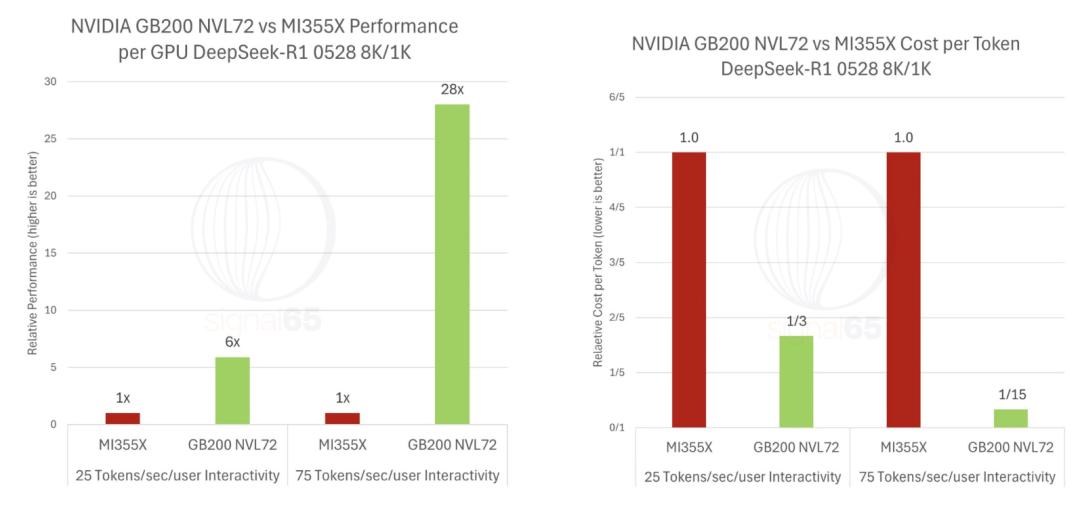
Core Insights - The report highlights a significant shift in AI inference economics, where the focus has moved from raw chip performance to the intelligence output per dollar spent [1][4][46] - NVIDIA continues to dominate the market, with its GB200 NVL72 outperforming AMD's MI350X by a factor of 28 in throughput [1][5][18] AI Inference Economics - The key metric for evaluating AI infrastructure has transitioned to "how much intelligence can be obtained for each dollar" [4][6][46] - In high-interaction scenarios, the cost per token for DeepSeek R1 can be reduced to 1/15th of other solutions [2][20] Model Architecture - The report discusses the evolution from dense models to mixture of experts (MoE) models, which activate only the most relevant parameters for each token, improving efficiency [9][11][46] - MoE models are becoming the standard for top open-source large language models (LLMs), with 12 out of the top 16 models utilizing this architecture [11][14] Performance Comparison - In terms of performance, the GB200 NVL72 shows a significant advantage over AMD's MI355X, achieving up to 28 times the performance in certain scenarios [18][24][30] - The report indicates that as interaction rates increase, the performance gap between NVIDIA and AMD platforms widens, with NVIDIA's solutions becoming increasingly efficient [30][37] Cost Efficiency - Despite the higher hourly cost of the GB200 NVL72, its advanced architecture and software capabilities lead to a lower cost per token, making it more economical in the long run [20][41][45] - The analysis shows that the GB200 NVL72 can achieve a performance per dollar advantage of approximately 12 times compared to its competitors [42][44] Future Trends - The future of AI models is expected to lean towards larger and more complex MoE architectures, with platform-level design becoming a critical factor for success [46][47] - Companies like OpenAI, Meta, and Anthropic are likely to continue evolving their flagship models in the direction of MoE and inference, maintaining NVIDIA's competitive edge [46]

2025年中国混合专家模型(MoE)行业市场现状及未来趋势研判:稀疏激活技术突破成本瓶颈,驱动万亿参数模型规模化商业落地[图]
Chan Ye Xin Xi Wang· 2026-01-01 03:22
Core Insights - The hybrid expert model (MoE) is recognized as a "structural revolution" in artificial intelligence, enabling the construction of ultra-large-scale and high-efficiency models through its sparse activation design [1][7] - The market size for China's MoE industry is projected to reach approximately 148 million yuan in 2024, reflecting a year-on-year growth of 43.69% [1][7] - The sparse activation mechanism allows models to scale to trillions of parameters at a significantly lower computational cost compared to traditional dense models, achieving a revolutionary balance between performance, efficiency, and cost [1][7] Industry Overview - MoE is a neural network architecture that enhances performance and efficiency by dynamically integrating multiple specialized sub-models (experts), focusing on a "divide-and-conquer strategy + conditional computation" [2][3] - The core characteristics of MoE include high parameter capacity and low computational cost, activating only a small portion of total parameters to expand model size [2][3] - MoE faces technical challenges such as load balancing, communication overhead among experts, and high memory requirements, while offering advantages like task specificity, flexibility, and efficiency [2][3] Industry Development History - The MoE concept originated from the "adaptive mixture of local experts" theory proposed by Michael Jordan and Geoffrey Hinton in 1991, focusing on efficient collaboration through a gating network [3][4] - Significant advancements occurred in 2017 when Google introduced sparse gating mechanisms in LSTM networks, leading to substantial reductions in computational costs and performance breakthroughs in NLP tasks [3][4] - The MoE technology has rapidly evolved alongside deep learning and big data trends, with notable models like Mistral AI's Mixtral 8x7B and DeepSeek-MoE series pushing the boundaries of performance and efficiency [3][4] Industry Value Chain - The upstream of the MoE industry includes chips, storage media, network devices, and software tools for instruction sets and communication libraries [6] - The midstream focuses on the development and optimization of MoE models, while the downstream applications span natural language processing, computer vision, multimodal large models, and embodied intelligence [6] - The natural language processing market in China is expected to reach approximately 12.6 billion yuan in 2024, growing by 14.55% year-on-year, driven by technological breakthroughs and increasing demand across various sectors [6] Market Size - The MoE industry in China is projected to reach a market size of about 148 million yuan in 2024, with a year-on-year growth rate of 43.69% [1][7] - The technology's advantages are attracting significant investments from research institutions, large tech companies, and AI startups, facilitating the transition from technical prototypes to scalable commercial applications [1][7] Key Company Performance - The MoE industry in China is characterized by a competitive landscape involving "open-source pioneers, large enterprises, and vertical deep-divers," with market concentration undergoing dynamic reshaping [8][9] - Leading companies like Kunlun Wanwei and Tencent are leveraging technological innovation and product advantages to establish a strong market position [8][9] - Kunlun Wanwei launched the first domestic open-source model based on MoE architecture in February 2024, achieving a threefold increase in inference efficiency compared to dense models [9] Industry Development Trends - The demand for multimodal data is driving the integration of MoE architecture with technologies like computer vision and speech recognition, making multimodal MoE models mainstream [10] - Breakthroughs in sparse activation and expert load balancing technologies are enhancing the stability and inference efficiency of large-scale MoE models [11] - The construction of ecosystems around open-source frameworks and domestic computing power is accelerating the large-scale implementation of MoE in various fields [12]



清华UniMM-V2X:基于MOE的多层次融合端到端V2X框架
自动驾驶之心· 2025-12-19 00:05
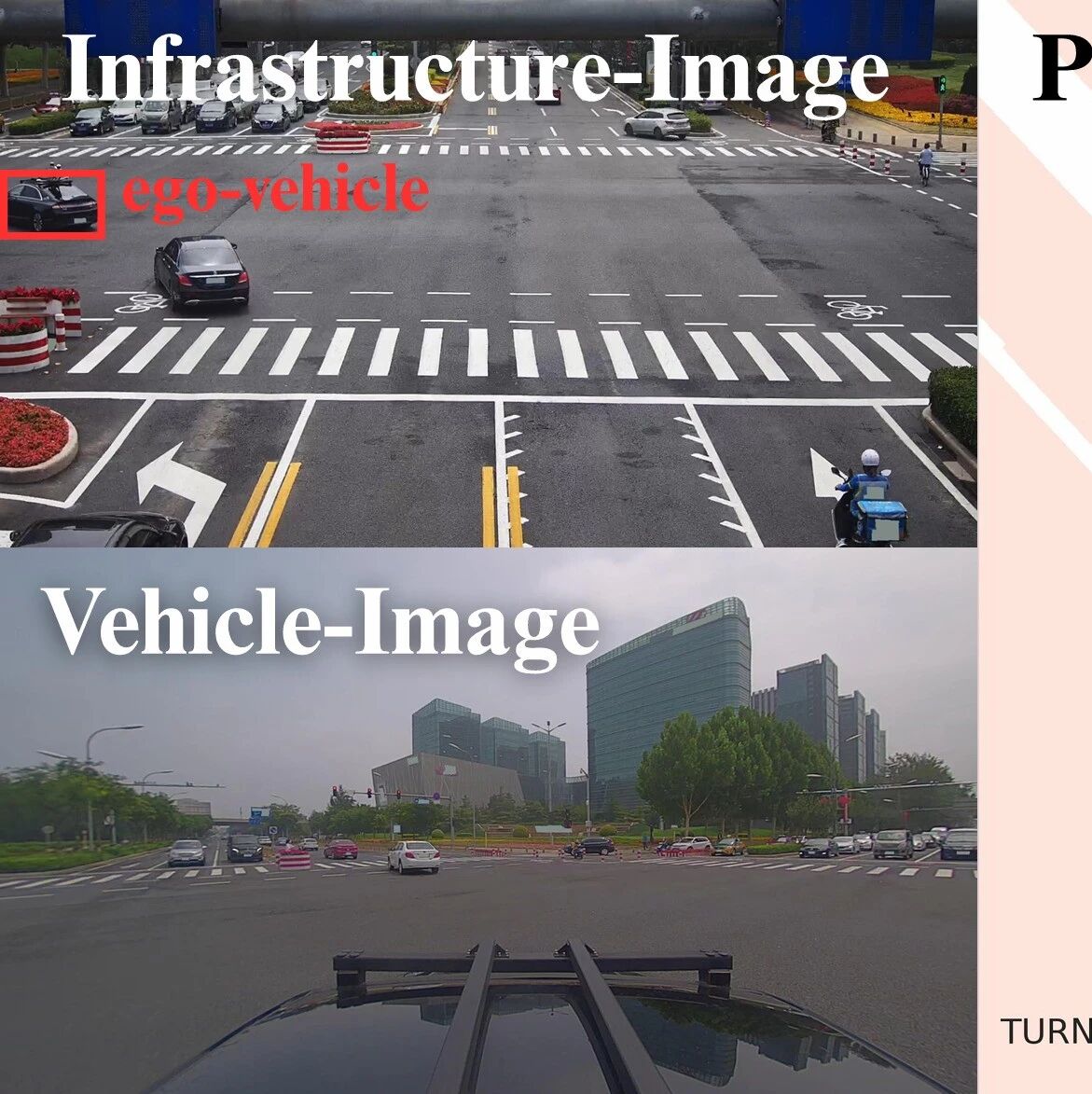
Core Insights - The article discusses the limitations of traditional modular autonomous driving systems and introduces the UniMM-V2X framework, which enhances multi-agent end-to-end systems through multi-level collaboration in perception and prediction [1][3][25] - UniMM-V2X utilizes a mixture of experts (MoE) architecture to improve the adaptability and specialization of perception, prediction, and planning tasks, achieving state-of-the-art (SOTA) performance [1][7][25] Group 1: UniMM-V2X Framework - UniMM-V2X consists of three main components: an image encoder, a collaborative perception module, and a collaborative prediction and planning module, all integrated with MoE architecture [8][24] - The framework enhances planning by integrating information from multiple agents at both perception and prediction levels, significantly improving decision-making reliability in complex scenarios [6][7][8] Group 2: Performance Metrics - The framework demonstrated a 39.7% improvement in perception accuracy, a 7.2% reduction in prediction error, and a 33.2% enhancement in planning performance, showcasing the effectiveness of the MoE-enhanced multi-level collaboration paradigm [7][25] - In the DAIR-V2X benchmark tests, UniMM-V2X achieved the lowest average planning error of 1.49 meters and a collision rate of only 0.12% over 3 seconds, outperforming all baseline models [15][16][25] Group 3: Comparative Analysis - Compared to the leading single-agent driving solution SparseDrive, UniMM-V2X improved mean Average Precision (mAP) by 39.7% and Average Multi-Object Tracking Accuracy (AMOTA) by 77.2% without incurring additional communication costs [17][25] - In motion prediction, UniMM-V2X achieved a minimum Average Displacement Error (minADE) of 0.64 meters and a minimum Final Displacement Error (minFDE) of 0.69 meters, contributing significantly to overall planning performance [19][20][25] Group 4: Multi-Level Fusion and MoE Impact - The multi-level fusion approach ensures high-quality intermediate features are propagated throughout the framework, leading to performance improvements across all modules [22][23] - The integration of MoE in both the encoder and decoder yields the best results, enhancing environmental understanding and capturing complex motion behaviors effectively [22][23] Group 5: Practicality and Reliability - UniMM-V2X significantly reduced communication costs by 87.9 times compared to traditional methods while maintaining planning quality, achieving a frame rate of 5.4 FPS [24][25] - The framework demonstrates reliability and scalability under various bandwidth conditions, making it suitable for real-world autonomous driving applications [24][25]
迎战TPU与Trainium?英伟达再度发文“自证”:GB200 NVL72可将开源AI模型性能最高提升10倍
硬AI· 2025-12-04 12:54
Core Viewpoint - Nvidia is facing competition from Google TPU and Amazon Trainium, prompting the company to reinforce its market position through a series of technical validations and public responses, including claims that its GPU technology is "a generation ahead" of the industry [2][5]. Group 1: GB200 NVL72 Technology Advantages - The GB200 NVL72 system can enhance the performance of leading open-source AI models by up to 10 times, addressing the scalability challenges of Mixture of Experts (MoE) models in production environments [2][9]. - The system integrates 72 NVIDIA Blackwell GPUs, delivering 1.4 exaflops of AI performance and 30TB of fast shared memory, with an internal GPU communication bandwidth of 130TB/s [9]. - Top-performing open-source models like Kimi K2 Thinking and DeepSeek-R1 have shown significant performance improvements when deployed on the GB200 NVL72 system [9][10]. Group 2: Market Concerns and Client Dynamics - Nvidia's recent technical assertions are seen as a direct response to market concerns, particularly regarding key client Meta's consideration of adopting Google's TPU for large-scale data center use, which could threaten Nvidia's dominant market share [5]. - Despite Nvidia's efforts to address these concerns, the company's stock price has declined nearly 10% over the past month [6]. Group 3: Cloud Service Provider Deployment - The GB200 NVL72 system is being deployed by major cloud service providers and Nvidia's cloud partners, including Amazon Web Services, Google Cloud, and Microsoft Azure, among others [12]. - CoreWeave and Fireworks AI have highlighted the efficiency and performance benchmarks set by the GB200 NVL72 system for MoE model services [12].