
天工2.0

Search documents
北京人形机器人实现 全自主无人化作业
Xin Lang Cai Jing· 2026-02-05 17:12
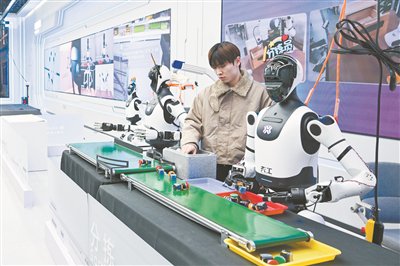
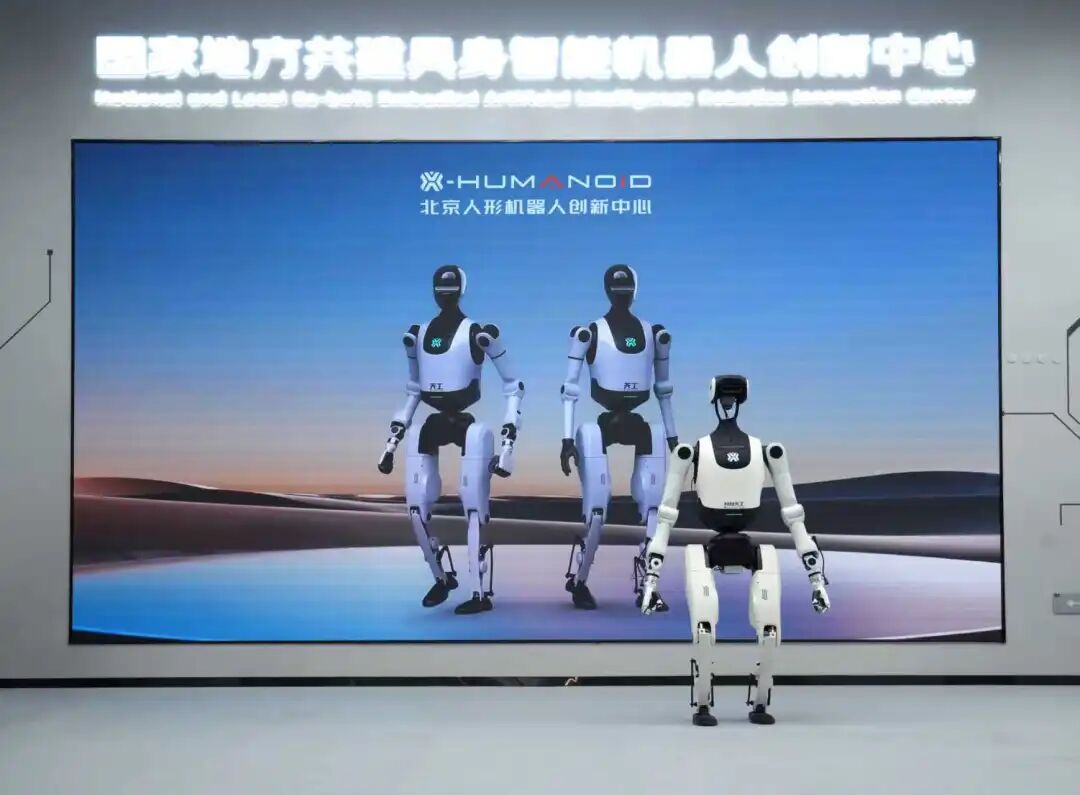
Core Insights - The article highlights the launch of the "Tiangong 2.0" humanoid robot, which operates autonomously in guiding visitors at the Beijing Humanoid Robot Innovation Center, marking a significant advancement in autonomous service technology [5][6]. Group 1: Technology and Innovation - "Tiangong 2.0" features an AI-driven "brain" and a data-driven "small brain," enabling it to operate without human control and providing professional-level autonomous service capabilities [5]. - The robot can autonomously manage IoT devices and coordinate with companion robots for tasks such as material handling, sorting, and packaging, showcasing an upgrade from single-point explanations to multi-robot collaboration [5]. Group 2: Market Application and Future Plans - The implementation of the fully autonomous humanoid robot guiding solution signifies a new phase in the application of humanoid robots, with plans for expansion into various settings such as exhibition halls, shopping malls, and cultural tourism sites [6]. - The Beijing Humanoid Robot Innovation Center aims to continue developing core technologies like embodied intelligent models and autonomous navigation algorithms, focusing on industrial manufacturing, public services, and special operations to establish itself as a global leader in embodied intelligent robotics [6].


北京多家机器人企业亮相2026年国际消费电子展
Sou Hu Cai Jing· 2026-01-07 15:01
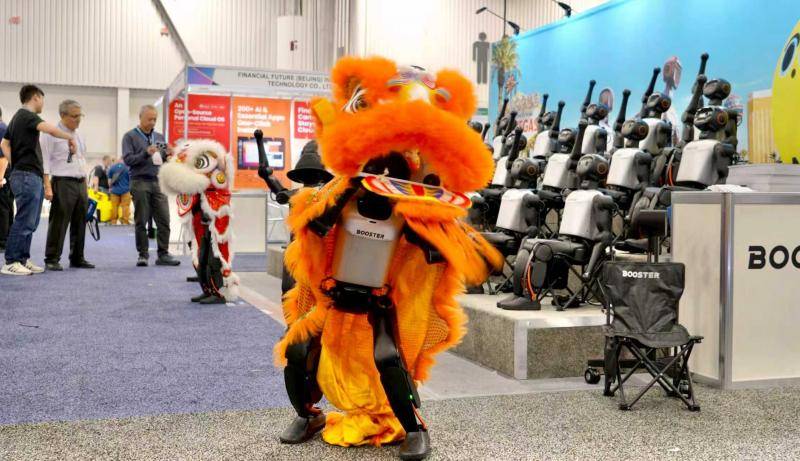
Core Insights - The 2026 International Consumer Electronics Show (CES 2026) in Las Vegas showcased numerous Chinese embodied intelligence companies, attracting significant attention from attendees [2] - Beijing Human-Robot Innovation Center presented multiple robots, including "Embodied Tiangong 2.0" and "Embodied Tiangong Ultra," demonstrating advanced autonomous capabilities [3] - The "Embodied Tiangong 2.0" robot showcased its ability to autonomously sort components and interact with the audience, highlighting its efficiency and adaptability [3] - The company also partnered with NVIDIA, featuring in the "NVIDIA Live" event and CEO Jensen Huang's keynote [3] - Accelerated Evolution's exhibit featured a matrix of Booster K1 robots performing synchronized movements, captivating both domestic and international visitors [4] - The Booster K1 robots also performed traditional Chinese cultural acts, including a lion dance, which became a highlight of the exhibition [4] - Songyan Power (Beijing) Technology Co., Ltd. introduced its core product "Little Mischief N2" and aims to expand its market presence in North America, the Middle East, Europe, Southeast Asia, and Japan/Korea [4]
2025年中国混合专家模型(MoE)行业市场现状及未来趋势研判:稀疏激活技术突破成本瓶颈,驱动万亿参数模型规模化商业落地[图]
Chan Ye Xin Xi Wang· 2026-01-01 03:22
Core Insights - The hybrid expert model (MoE) is recognized as a "structural revolution" in artificial intelligence, enabling the construction of ultra-large-scale and high-efficiency models through its sparse activation design [1][7] - The market size for China's MoE industry is projected to reach approximately 148 million yuan in 2024, reflecting a year-on-year growth of 43.69% [1][7] - The sparse activation mechanism allows models to scale to trillions of parameters at a significantly lower computational cost compared to traditional dense models, achieving a revolutionary balance between performance, efficiency, and cost [1][7] Industry Overview - MoE is a neural network architecture that enhances performance and efficiency by dynamically integrating multiple specialized sub-models (experts), focusing on a "divide-and-conquer strategy + conditional computation" [2][3] - The core characteristics of MoE include high parameter capacity and low computational cost, activating only a small portion of total parameters to expand model size [2][3] - MoE faces technical challenges such as load balancing, communication overhead among experts, and high memory requirements, while offering advantages like task specificity, flexibility, and efficiency [2][3] Industry Development History - The MoE concept originated from the "adaptive mixture of local experts" theory proposed by Michael Jordan and Geoffrey Hinton in 1991, focusing on efficient collaboration through a gating network [3][4] - Significant advancements occurred in 2017 when Google introduced sparse gating mechanisms in LSTM networks, leading to substantial reductions in computational costs and performance breakthroughs in NLP tasks [3][4] - The MoE technology has rapidly evolved alongside deep learning and big data trends, with notable models like Mistral AI's Mixtral 8x7B and DeepSeek-MoE series pushing the boundaries of performance and efficiency [3][4] Industry Value Chain - The upstream of the MoE industry includes chips, storage media, network devices, and software tools for instruction sets and communication libraries [6] - The midstream focuses on the development and optimization of MoE models, while the downstream applications span natural language processing, computer vision, multimodal large models, and embodied intelligence [6] - The natural language processing market in China is expected to reach approximately 12.6 billion yuan in 2024, growing by 14.55% year-on-year, driven by technological breakthroughs and increasing demand across various sectors [6] Market Size - The MoE industry in China is projected to reach a market size of about 148 million yuan in 2024, with a year-on-year growth rate of 43.69% [1][7] - The technology's advantages are attracting significant investments from research institutions, large tech companies, and AI startups, facilitating the transition from technical prototypes to scalable commercial applications [1][7] Key Company Performance - The MoE industry in China is characterized by a competitive landscape involving "open-source pioneers, large enterprises, and vertical deep-divers," with market concentration undergoing dynamic reshaping [8][9] - Leading companies like Kunlun Wanwei and Tencent are leveraging technological innovation and product advantages to establish a strong market position [8][9] - Kunlun Wanwei launched the first domestic open-source model based on MoE architecture in February 2024, achieving a threefold increase in inference efficiency compared to dense models [9] Industry Development Trends - The demand for multimodal data is driving the integration of MoE architecture with technologies like computer vision and speech recognition, making multimodal MoE models mainstream [10] - Breakthroughs in sparse activation and expert load balancing technologies are enhancing the stability and inference efficiency of large-scale MoE models [11] - The construction of ecosystems around open-source frameworks and domestic computing power is accelerating the large-scale implementation of MoE in various fields [12]



全自主!人形机器人化身讲解员
Shang Hai Zheng Quan Bao· 2025-12-11 13:05
Core Viewpoint - The article discusses the launch of China's first fully autonomous humanoid robot tour guide solution by Beijing Humanoid Robot Innovation Center, showcasing the potential for large-scale applications in various scenarios such as exhibition tours, shopping guidance, and cultural tourism [1][9]. Group 1: Technology and Innovation - The solution is built on the "Wisdom Open Object" general embodied intelligence platform, integrating autonomous guiding, human-like interaction, multi-robot scheduling, and global IoT linkage [3]. - The core of the fully autonomous guiding capability is a closed-loop technology system that includes perception, decision-making, and execution, driven by AI models [5][6]. - The multi-modal fusion perception system captures semantic and geometric features of the environment, enabling precise navigation and task planning for the robots [5][6]. Group 2: Market Potential and Challenges - The release of this solution demonstrates the scalability of humanoid robots in guiding and shopping scenarios, marking a new phase of fully autonomous and unmanned operations [9]. - The CTO of Beijing Humanoid highlighted that the main challenge for large-scale deployment lies in engineering and cost control, with mass application being key to reducing costs significantly [9]. - The industry is shifting from initial enthusiasm to a focus on practical implementation, with expectations for larger orders and more significant applications in specific scenarios over the next 1 to 2 years [9].
一文看尽世界机器人大会,不用去现场人挤人了
Sou Hu Cai Jing· 2025-08-10 11:12
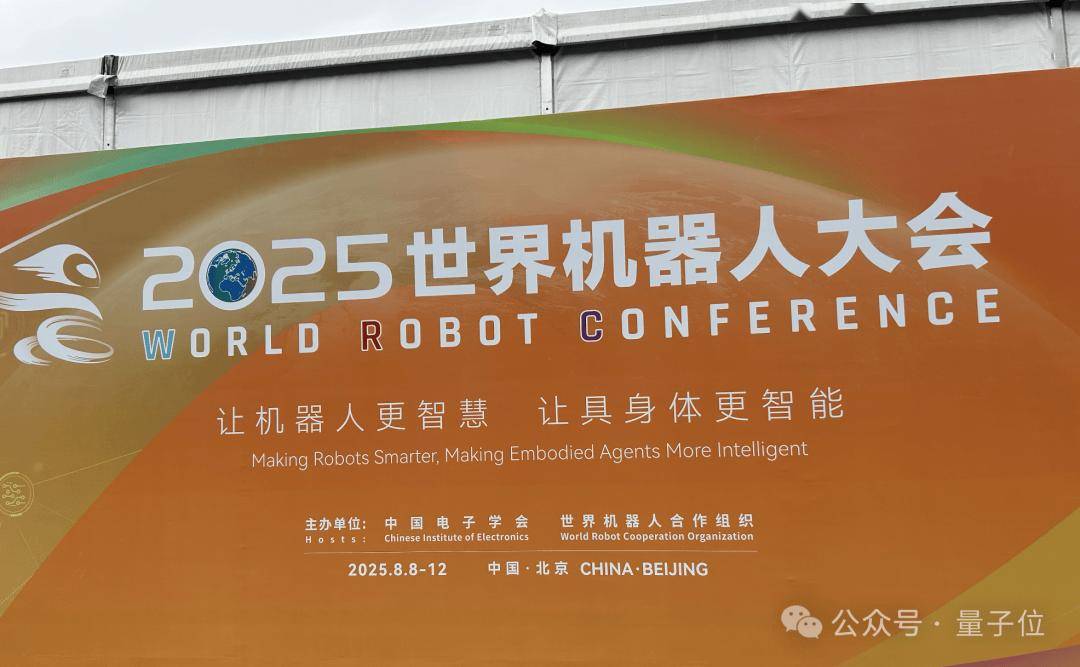
Group 1 - The World Robot Conference showcases rapid advancements in robotics, featuring over 200 domestic and international companies and hundreds of new products [1][3] - The conference is divided into three exhibition areas: A for humanoid and industrial robots, B for healthcare and service robots, and C for special-purpose robots and key components [3][6] - Notable products include the Fourier GR-3, Kepler K2, and various humanoid robots, highlighting the diversity in applications across industries [3][6][15] Group 2 - The event includes innovative displays from universities, showcasing cutting-edge embodied intelligence technologies [5] - JD.com serves as the exclusive global strategic partner, emphasizing the integration of robotics into retail, with various robotic products on display [15][22] - The conference features interactive experiences, such as robot competitions and demonstrations of robots performing tasks like sorting and delivering goods [12][30][32] Group 3 - The exhibition highlights advancements in industrial robots, including high-load handling systems and flexible welding solutions [33][36][40] - Special-purpose robots for emergency response and agriculture are also showcased, demonstrating their versatility in various environments [88][94] - The event emphasizes the importance of key components and sensors in robotics, with numerous suppliers presenting their innovations [105][110]
超100款机器人,上新
Shang Hai Zheng Quan Bao· 2025-08-10 02:19
Group 1 - The 2025 World Robot Conference showcased over 1,500 exhibits from more than 200 domestic and international robot companies, with over 100 new products launched, marking a historical high and nearly doubling the previous year's figures [1] - The increase in both the quantity and quality of participating companies indicates rapid technological iteration and product innovation within the robotics industry, enhancing the synergy across the supply chain [1] - The competition in the market is intensifying as companies are required to continuously launch new products to maintain competitiveness [1] Group 2 - The DOBOT Atom robot demonstrated advanced capabilities by performing tasks with high precision, such as tightening bearings to within 0.1 mm tolerance and responding to audience interactions during a dynamic popcorn-serving task [2] - The "Tian Gong" robot showcased its evolution by completing a long-distance running demonstration without errors, utilizing its self-developed intelligent platform for autonomous collaboration across various industrial scenarios [2] - The event highlighted the advancements in humanoid robots, with multiple companies presenting their innovations in humanoid design and embodied intelligence, showcasing their technical accumulation and application exploration [2] Group 3 - The exhibition featured humanoid robots performing high-level skills such as making coffee and installing furniture, indicating their advanced autonomous operation capabilities and readiness for complex tasks [3] - The demonstration of high-level skills signifies a shift from mere technical showcases to practical applications, laying the groundwork for commercial deployment [3]
做饭、冲咖啡、搬运快递、打拳击、弹琴、下象棋……2025世界机器人大会开幕,机器人集体“秀才艺”
Zheng Quan Shi Bao· 2025-08-09 01:47
Core Insights - The 2025 World Robot Conference showcased over 1,500 exhibits from more than 200 domestic and international robotics companies, highlighting the increasing integration of robotics into everyday life [1][3] - The event featured a variety of robots, including humanoid, quadruped, rescue, and collaborative robots, with over 100 new products launched [3][8] - The robotics industry is experiencing significant growth, with a reported 27.8% increase in revenue year-on-year in the first half of 2023, and a 35.6% and 25.5% increase in industrial and service robot production, respectively [10][11] Industry Trends - The robotics sector is moving towards greater maturity, particularly in home services and elder care applications, driven by advancements in perception, decision-making, and motion control technologies [1][3] - The domestic production rate of robotics components has surpassed 90%, with many companies achieving nearly complete localization of their products [6][8] - The competition in the humanoid robot market is intensifying, leading to significant reductions in prices, with some products now available for as low as 39,900 yuan [7][8] Technological Advancements - Core components such as precision reducers and servo systems are crucial for humanoid robots, with domestic companies making significant strides in technology and market competition [7][10] - The integration of advanced sensors and algorithms is enhancing the capabilities of robots, enabling them to perform complex tasks and interact more effectively with their environments [7][8] Future Outlook - Beijing aims to become a global benchmark city for robot applications, with plans to support the development of humanoid robots and establish a national testing platform [9][11] - The city is also focusing on creating specialized service institutions and expanding the use of robots in public service applications [11]
做饭、冲咖啡、搬运快递、打拳击、弹琴、下象棋……2025世界机器人大会开幕,机器人集体“秀才艺”
证券时报· 2025-08-09 01:07
Core Viewpoint - The 2025 World Robot Conference showcases the rapid advancement and integration of robots into everyday life, highlighting the increasing maturity of the robotics industry and its potential applications in various sectors, particularly in household services and elder care [2][10]. Group 1: Event Overview - The 2025 World Robot Conference opened with over 200 domestic and international robotics companies exhibiting more than 1,500 products, marking a shift towards broader public engagement compared to previous years [1][4]. - The event featured over 100 new product launches, including humanoid robots, quadrupedal robots, rescue robots, and collaborative robots, demonstrating the diverse applications of robotics in various fields [4][8]. Group 2: Industry Trends - The robotics industry is experiencing significant growth, with a reported 27.8% increase in revenue in the first half of the year, and production of industrial and service robots rising by 35.6% and 25.5% respectively [10][11]. - The domestic production rate of robotics components has surpassed 90%, indicating a strong trend towards localization and reduced reliance on imports [6][8]. Group 3: Technological Advancements - Breakthroughs in perception, decision-making, and motion control technologies are driving the maturation of the robotics industry, with expectations for robots to penetrate households within the next five years [2][5]. - The development of core components, such as sensors and actuators, is crucial for the performance of humanoid robots, with domestic companies increasingly innovating and replacing imported technologies [7][8]. Group 4: Future Outlook - Beijing aims to become a global benchmark city for robot applications, with plans to support the development of humanoid robots and establish a national testing platform [11]. - The competition in the humanoid robot market is intensifying, with domestic manufacturers achieving significant advancements in technology and cost reduction, fostering a cycle of innovation and market expansion [8][10].

2025世界机器人大会在京开幕 做饭弹琴大秀才艺 机器人走近千家万户
Zheng Quan Shi Bao· 2025-08-08 18:02
Group 1 - The 2025 World Robot Conference showcased over 1,500 exhibits from more than 200 domestic and international robot companies, highlighting the increasing integration of robots into everyday life [1][2] - The event featured over 100 new products, including humanoid robots, quadruped robots, rescue robots, and collaborative robots, demonstrating their applications in various sectors such as industrial manufacturing, commercial services, and healthcare [2][4] - The domestic core component industry has achieved over 90% localization, significantly enhancing the performance and affordability of humanoid robots, with prices dropping from millions to tens of thousands [5][6] Group 2 - The robot industry in China has seen a 27.8% year-on-year revenue growth in the first half of the year, with industrial and service robot production increasing by 35.6% and 25.5% respectively [6][7] - Beijing's humanoid robot industry accounts for about one-third of the national market, with a nearly 40% revenue growth in the first half of 2025, positioning the city as a leader in the sector [7] - The Chinese government aims to establish Beijing as a global benchmark city for robot applications, with plans to support technological advancements and create specialized service institutions [7]
分拣质检、养老照料、居家陪聊,“天选打工人”云集机器人大会
Xin Jing Bao· 2025-08-08 13:12
Group 1 - The 2025 World Robot Conference (WRC) opened in Beijing, showcasing a variety of practical robots, including those for factories, restaurants, and home assistance [1] - The "TianGong 2.0" robot, an upgraded version of the humanoid robot, is designed for sorting and quality inspection tasks in factories, demonstrating advanced capabilities [2][3] - The introduction of a universal multimodal visual perception system allows robots to operate autonomously, enhancing their functionality and reducing reliance on remote control [2][3] Group 2 - JD Group presented over 50 cutting-edge robot products, leveraging its supply chain advantages to connect with emerging tech companies and provide a seamless shopping experience for consumers [3][4] - The JoyInside intelligent platform was launched, enabling interactive capabilities for smart robots, with several leading robot brands integrating this technology [4] - Various assistive devices for elderly individuals, such as stair-climbing equipment, were showcased, highlighting the potential for smart technology in enhancing daily living [4] Group 3 - The exhibition featured interactive projects, including a humanoid robot that can perform household tasks based on voice commands, demonstrating the practical applications of embodied intelligence in home settings [5] - The "guide dog" robot, designed for visually impaired individuals, can recognize traffic signals and obstacles, providing navigation assistance and route planning [6] - Over 200 domestic and international robot companies participated in the event, displaying more than 1,500 exhibits, including the BionicBee, the smallest flying biomimetic device [6]
