
生态文明教育

Search documents
将生态文明教育全面融入教育体系
Zhong Guo Huan Jing Bao· 2026-02-12 05:47
Core Viewpoint - The integration of ecological civilization education into the education system is essential for fostering a sustainable mindset among citizens, ensuring that the concept of "lucid waters and lush mountains are invaluable assets" is deeply rooted in society [1] Group 1: Education Stages - In early childhood education, children can learn about the value of life and the wonders of nature through guided observations of ants and bees [2] - In primary education, ecological education can be incorporated into various subjects, such as moral education, science, and art, to instill a love for nature [2] - Secondary education should focus on deeper ecological principles through subjects like biology and geography, while also connecting ecological protection to national development [2] - Higher education should emphasize theoretical depth and practical innovation, offering specialized courses in ecology and sustainable development to cultivate professionals who understand and advocate for environmental protection [2] Group 2: Campus Practices - Schools are actively creating "ecological campuses" by utilizing solar energy and promoting waste sorting to instill low-carbon habits in students [3] - Various ecological and environmental activities, such as Earth Day campaigns and tree planting events, engage students in hands-on experiences that highlight the importance of environmental responsibility [3] - Collaborations with environmental organizations and research institutions provide students with opportunities to interact with experts and witness ecological practices firsthand, reinforcing the internalization of green concepts [3] Group 3: Teacher's Role - Teachers play a crucial role in guiding ecological education, and their own understanding of ecological civilization must be enhanced through training and collaborative activities [4] - The education system should foster an ecological culture within schools, promoting environmental knowledge through various communication platforms [4] - When environmental stewardship becomes a habitual action among students and a shared goal among faculty, schools can effectively embody the principles of ecological civilization [4]
结合古代智慧和现代理念 探索生态文明教育新路径
Xin Lang Cai Jing· 2026-02-09 20:19
原标题:结合古代智慧和现代理念 探索生态文明教育新路径 作者:李加林、刘永超(分别系宁波大学土木工程与地理环境学院执行院长、东海研究院浙江省新型重 点专业智库首席专家;宁波大学东海研究院副研究员) 水是生命之源,更是文明之基。五千年中华文明史,治水既是生存智慧,也是治国理政的哲学实践。 《"十四五"重点流域水环境综合治理规划》中明确提出"三水统筹"(统筹水资源、水环境、水生态)治 理,表明我国水治理正在从单一防治转向系统协同、综合提升。把中国传统治水智慧同现代生态理念结 合起来,锚定学校教育主阵地、融入全民教育体系,培养全社会尊重自然、顺应自然、保护自然的价值 观,是当前学校生态文明教育的重要课题。 古代治水理念是涵养生态文明素养的文化根基 历史治水实践及治水思想中蕴含着丰富的生态哲学,是古代治水智慧的核心所在。大禹治水尊重水性、 顺势而为,改"堵"为"疏",是对治水自然之道的领悟和主动顺应。懂得"疏"与"堵"的辩证关系,有助于 大学生树立尊重自然、敬畏自然、与自然和谐共处的生态伦理观念;也有利于引导大学生在解决当今时 代环境问题的过程中尊重生态系统演化的客观规律,积极寻找适切方案。 将"三水统筹"理念融入学 ...
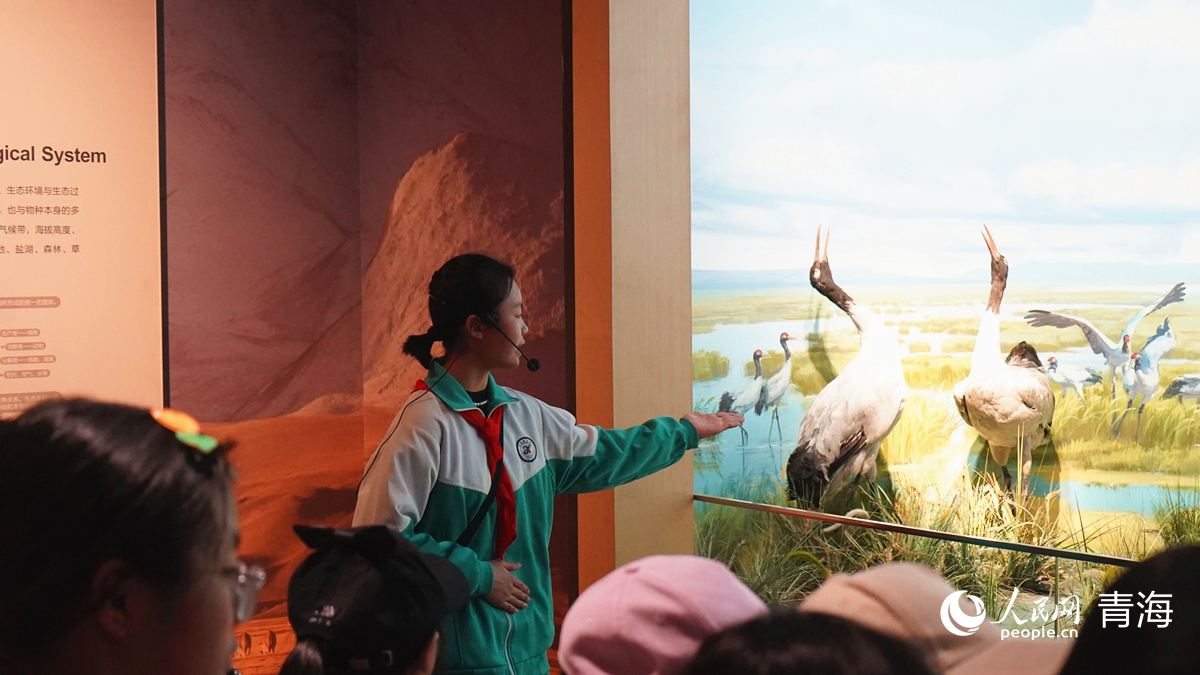
青海馆校协同共育“新苗”
Ren Min Wang· 2026-01-01 10:14
Core Viewpoint - The event aims to enhance ecological awareness among youth in Qinghai Province through the training of "ecological little interpreters," promoting the harmonious coexistence of humans and nature [1][3]. Group 1: Event Overview - The Qinghai Provincial Museum of Natural Resources, in collaboration with the Xining City Chengxi District Education Bureau, conducted a training program for "ecological little interpreters" from October to December 2025 [1]. - The program focuses on cultivating volunteers who understand and love their hometown and country, enhancing their ecological civilization awareness and overall quality [1]. Group 2: Educational Objectives - The initiative seeks to deepen ecological civilization education among young people and disseminate knowledge about natural resources [1]. - It represents an innovative practice of school-museum collaboration, exploring effective paths for extracurricular teaching [1]. Group 3: Significance of the Initiative - The activity is part of the museum's effort to fulfill its role as a "big ideological and political class" base, aiming to establish a brand for youth ecological education [1].

生态文明教育青海模式构建:何以可行与何以可为
Xin Lang Cai Jing· 2025-12-28 21:32
Core Viewpoint - The news emphasizes that ecological civilization is a fundamental aspect of China's modernization, highlighting the importance of green development and ecological protection as essential for sustainable national development [1]. Group 1: Ecological Civilization Education in Qinghai - Qinghai's ecological civilization education is deeply rooted in its ecological resources, policy support, and practical innovations, providing a benchmark for promoting ecological education in the context of building a beautiful China [2]. - The province has integrated ecological civilization education into its overall development strategy, establishing a collaborative mechanism involving provincial coordination, departmental cooperation, and social participation [2][3]. - Qinghai is the only province in China with three national parks under construction, which serve as core areas for ecological protection and immersive educational experiences [2]. Group 2: Multi-Stakeholder Governance Model - Qinghai has moved beyond a traditional administrative-led governance model to a multi-stakeholder collaborative governance structure for ecological education, involving government, schools, and social organizations [3]. - The provincial government plays a crucial role in policy guidance and resource coordination, while schools serve as the main platforms for ecological education [3]. - Social organizations contribute by conducting public ecological education activities, extending the reach of ecological education beyond schools into everyday life [3]. Group 3: Practical Experiences and Innovations - The ecological civilization education model in Qinghai focuses on transforming knowledge transmission into capability cultivation, emphasizing ecological responsibility and interdisciplinary learning [6]. - The province has developed immersive educational environments, such as ecological schools equipped with natural classrooms and VR experience zones, to enhance student engagement [6]. - Qinghai's approach integrates local cultural elements, utilizing traditional ecological wisdom from various ethnic groups to enrich the educational experience [7].
新时代广西高校思政课生态文明教育的创新路径探析
Yang Shi Wang· 2025-12-01 02:33
Core Viewpoint - The article emphasizes the importance of integrating ecological civilization education into ideological and political courses in Guangxi universities, highlighting the need for innovative teaching methods and local case studies to enhance student engagement and understanding of ecological issues [1]. Group 1: Curriculum Reconstruction - Strengthening ecological civilization education within ideological courses by embedding specialized content and topics, utilizing a multi-dimensional teaching model that combines legal texts, local case studies, and technical simulations [2]. - Forming interdisciplinary collaborative mechanisms by integrating knowledge from ecology, geography, and environmental science to enhance the teaching of ecological civilization [2]. - Developing micro-courses on ecological policy analysis using data from the Guangxi ecological big data platform to create a comprehensive curriculum chain that links theory, technology, and practice [2]. Group 2: Innovative Case Teaching - Implementing localized situational teaching models that focus on local realities, addressing local issues, and preserving local culture, thereby enhancing students' recognition of green and low-carbon development [3]. - Using specific local ecological practices, such as the governance of the Lijiang River, to provide students with tangible examples of ecological protection efforts and their outcomes [3]. - Analyzing the ecological economic transformation through local tourism development cases, highlighting the balance between ecological preservation and economic development [3]. Group 3: Upgrading Practical Systems - Establishing a "political course + ecological practice" model to deepen the integration of theoretical learning and ecological practice through student participation in environmental research and volunteer services [5]. - Collaborating with natural reserves and environmental enterprises to create practical teaching bases that allow students to engage in real-world ecological conservation efforts [6]. - Enhancing students' social responsibility and action through project-based learning that connects theoretical foundations with practical applications [5]. Group 4: Technology Empowerment - Utilizing immersive teaching methods, such as VR/AR technologies, to simulate real ecological restoration scenarios, allowing students to experience and understand ecological principles in a practical context [7]. - Expanding the reach and flexibility of ecological education through online courses and cloud-based learning platforms, facilitating cross-institutional collaboration and discussions [7]. - Applying AI technology in environmental protection to provide dynamic teaching materials and enhance students' understanding of technological innovations in green development [8].
鄞州垃圾分类创新实践获国家认可,校园“零废弃”模式走向全国
Feng Huang Wang Cai Jing· 2025-11-20 06:28
Core Insights - The successful case of "Zero Waste School Construction: Kitchen Waste" from Yinzhou Second Experimental Middle School has been recognized as an excellent case by the National Ecological Environment Ministry's Publicity and Education Center, marking a significant breakthrough in waste classification and resource utilization in the region [1] Group 1: Project Achievements - The project has developed a comprehensive campus resource recycling system, overcoming traditional waste classification limitations by integrating both front-end disposal and back-end processing [1] - Approximately 200 pounds of kitchen waste generated daily is processed alongside garden waste, achieving 100% on-site resource utilization of organic waste [1] - The initiative has created a green closed-loop system of "classification-collection-processing-utilization," providing a replicable and scalable solution for similar institutions in the region [1] Group 2: Educational Impact - The project elevates waste classification from a routine task to an engaging ecological education lesson, integrating it into the mandatory STEAM curriculum for first-year students [1] - This educational approach fosters a model where educating one child influences their family and engages the entire community, significantly enhancing public participation in waste classification efforts [1] Group 3: Community Expansion - The innovative model is extending its impact from schools to communities, with successful experiences being implemented in multiple neighborhoods through the establishment of community composting education stations [2] - This initiative effectively transforms the school's professional practices into actionable green skills for residents, revitalizing grassroots waste classification efforts [2]
告别“纸上谈兵”!生态文明教育需要这“三重奏”
Zhong Guo Huan Jing Bao· 2025-11-06 03:19
Core Viewpoint - Since the 18th National Congress of the Communist Party of China, significant progress has been made in ecological civilization education, but there are still shortcomings that need systematic solutions to enhance the quality of ecological civilization education [1] Group 1: Strengthening Classroom Cognition - Classrooms serve as the main platform for knowledge dissemination, where integrating ecological civilization knowledge into various subjects can shape students' ecological ethics of "harmonious coexistence between humans and nature" [2] - The development of a "1+X" ecological education curriculum in Xining, Qinghai Province, exemplifies a structured approach to enhance students' capabilities through a progressive learning model [2] - Schools can incorporate traditional ecological wisdom into the curriculum, fostering a cross-disciplinary educational synergy that connects ancient ecological philosophies with modern ecological civilization [2] Group 2: Enhancing Ecological Experience - Nature-based research and study programs have emerged as innovative educational models that integrate ecological practice into lifelong education, forming a comprehensive ecological civilization education network [4] - Projects like "Ecological Research with Youth" in the Sanjiangyuan National Park engage students in hands-on activities, transforming textbook knowledge into real-life experiences [4] - Programs that introduce students to species science and conservation efforts help cultivate systematic thinking and scientific literacy [4] Group 3: Promoting Life Integration - Families play a crucial role in ecological civilization education, where daily practices can internalize ecological values among children [5] - Encouraging green and low-carbon living habits within the family unit can significantly influence children's behavior and lifestyle choices [5] - Traditional ecological wisdom can be passed down through intergenerational education, allowing parents to instill ecological aesthetics and resource recycling concepts in their children [5]
不断增强生态文明教育的系统性、整体性、协同性
Ren Min Ri Bao· 2025-10-31 05:30
Core Viewpoint - Ecological civilization education aims to cultivate modern citizens with ecological literacy, promoting the harmonious coexistence of humans and nature, and enhancing awareness of respecting, conforming to, and protecting nature [1] Group 1: Education System and Structure - Significant progress has been made in ecological civilization education in China since the 18th National Congress, under the leadership of the central government and guided by Xi Jinping's ecological civilization thought [1] - The education system needs to extend the educational chain to cover all citizens and promote lifelong learning, integrating ecological civilization education into the national education system [2] - Schools should play a leading role in ecological education, ensuring that ecological education is seamlessly integrated across all educational levels [2] Group 2: Curriculum Development - The curriculum is a crucial vehicle for achieving ecological education goals, requiring optimization across various dimensions such as objectives, content, and evaluation [3] - The curriculum should be designed to align with students' cognitive development, emphasizing ecological knowledge at different educational stages [3] - A comprehensive evaluation mechanism should be established to enhance the quality of talent cultivation in ecological education [3] Group 3: Collaborative Education Efforts - Ecological civilization education must rely on the collaboration of schools, families, and society to create a strong educational synergy [4] - Schools should coordinate educational efforts with families and utilize social resources to enhance ecological education [4] - Innovative collaboration paths should be developed, leveraging digital technology to facilitate communication and resource sharing among all stakeholders [4]
一片枫叶该不该捡(纵横)
Ren Min Ri Bao· 2025-10-21 22:39
Core Viewpoint - The article discusses the balance between environmental protection and visitor experience in scenic areas, particularly regarding the prohibition of picking leaves, emphasizing the need for more nuanced management strategies [1][2]. Group 1: Environmental Protection - The prohibition on picking leaves is justified as a measure to protect the natural environment, as fallen leaves contribute to soil nutrients through microbial action [1]. - Large-scale collection of leaves can disrupt the landscape and affect soil quality, highlighting the importance of maintaining ecological integrity [1]. Group 2: Visitor Experience - The strict regulations can negatively impact the visitor experience, as many tourists do not intend to harm the environment when collecting leaves for educational or commemorative purposes [1]. - Suggestions include designating specific areas for leaf collection and creating products from leaves, such as bookmarks, to enhance visitor engagement while promoting environmental awareness [1]. Group 3: Sustainable Development - The relationship between humans and nature should be one of harmonious coexistence rather than strict separation, advocating for a sustainable approach to resource use [1]. - The article calls for the transmission of ecological wisdom, emphasizing the importance of respecting and adapting to nature in sustainable practices [1].
不断增强系统性、整体性、协同性 探索生态文明教育的有效路径
Ren Min Ri Bao· 2025-10-12 22:14
Core Viewpoint - The emphasis on ecological civilization education is crucial for fostering a modern citizenry that respects and protects nature, aligning with the broader goal of building a beautiful China through sustainable practices [1][2]. Group 1: Importance of Ecological Civilization Education - Ecological civilization education aims to instill a harmonious coexistence between humans and nature, enhancing public awareness and action towards environmental protection [2]. - Significant progress has been made in ecological civilization education since the 18th National Congress, with improvements in top-level design, institutional development, and educational outcomes [2]. Group 2: Educational Framework and Implementation - The education system must extend to cover all citizens and be integrated into lifelong learning, with schools playing a central role in this initiative [3]. - The curriculum should be optimized to align with historical conditions and current needs, incorporating Xi Jinping's ecological civilization thought throughout the educational process [4]. Group 3: Collaborative Efforts in Education - A collaborative approach involving schools, families, and society is essential for effective ecological civilization education, creating a unified effort to nurture responsible citizens [5]. - Schools should lead the initiative, while families and social organizations contribute by fostering green habits and providing resources for practical experiences [5].