碳积分

Search documents
韩国现代:准备好了在欧洲市场,跟中国斗
Guan Cha Zhe Wang· 2026-02-11 02:33
Core Viewpoint - Hyundai Motor Group aims to improve its performance in the European electric vehicle market, which is becoming increasingly competitive, by launching new electric and hybrid models and independently addressing EU emissions regulations [1][5]. Group 1: Company Strategy - Hyundai plans to launch five new electric and hybrid models in the next 18 months, positioning itself as a strong competitor against new entrants in the market [1]. - The company has chosen not to purchase carbon credits from competitors, emphasizing a strategy of self-reliance to meet its emissions targets [1]. - Hyundai's market share in the EU and UK stands at 8%, the highest among non-European automakers, and aims to maintain this position [5]. Group 2: Regulatory Environment - Starting in 2025, automakers must reduce the average carbon emissions of new cars sold by 15% from 2021 levels, with penalties of €95 per gram for exceeding the limit [1]. - Many automakers are forming alliances to share carbon credits, while Hyundai remains one of the few companies not participating in such arrangements [5][4]. Group 3: Market Trends - The EU electric vehicle market is at a turning point, with electric vehicle registrations surpassing traditional gasoline vehicles for the first time in December last year [6]. - In 2025, the registration of new electric vehicles in the EU is projected to reach 1.88 million, a 29.9% increase year-on-year, with a market share of 17.4% [6]. Group 4: Future Challenges - Hyundai acknowledges that its pace of electrification is slower than industry expectations, with a goal to offer electric or hybrid versions across its lineup by 2027 [5]. - The year 2030 is identified as a significant challenge, as the EU requires a 55% reduction in emissions compared to 2021 levels [5].


数字人民币2.0来了!钱包余额能生息 绿色出行可变现
Di Yi Cai Jing· 2026-01-22 22:48
Core Viewpoint - The upgrade to version 2.0 of the digital RMB introduces interest-bearing wallets and integrates carbon credits into the digital currency ecosystem, enhancing its functionality and appeal to users [1][2][3]. Group 1: Digital RMB Upgrade - The digital RMB 2.0 version allows wallet balances to earn interest, aligning them with the characteristics of demand deposits [2][3]. - The upgrade shifts the digital RMB's role from a mere payment tool to a comprehensive financial infrastructure, expanding its functionalities beyond retail payments to include savings, loans, and investments [3][5]. Group 2: User Experience and Wallet Types - Digital RMB wallets are categorized into four types based on user authentication, with only real-name wallets eligible for interest, reflecting a principle of rights and responsibilities [2][3]. - Users can choose between the convenience of anonymous wallets and the benefits of interest-bearing real-name wallets, catering to different needs [2]. Group 3: Ecosystem Expansion and Application Scenarios - The digital RMB ecosystem is expanding, with a significant increase in transaction volumes and wallet openings, indicating growing adoption [4][5]. - Future applications of digital RMB are expected to include diverse financial products and services, enhancing payment efficiency and reducing operational risks for businesses [5].

数字人民币2.0来了!钱包余额能生息,绿色出行可变现
Di Yi Cai Jing· 2026-01-22 12:43
Core Viewpoint - The digital RMB has upgraded to version 2.0, introducing interest-bearing features for real-name wallets and integrating carbon credits into its ecosystem, enhancing its role as a comprehensive financial infrastructure rather than just a payment tool [1][3]. Group 1: Digital RMB Features - The digital RMB wallet now allows interest accumulation, marking a shift from its previous non-interest-bearing model, which limited user motivation for long-term holding [2][3]. - The new version categorizes digital RMB wallets into four types based on user authentication, with only real-name wallets eligible for interest, reflecting a principle of rights and responsibilities [2][3]. Group 2: Economic Impact - The adjustment in the digital RMB's classification to align with commercial bank liabilities enhances banks' profit potential, transforming them from cost centers to profit centers [2][3]. - The digital RMB is expected to evolve into a multi-functional financial product, expanding beyond retail payments to include savings, loans, and investment services, thus integrating more deeply with the economy [5]. Group 3: Ecosystem Expansion - The digital RMB's application scenarios have broadened significantly, with a total transaction amount of 19.5 trillion yuan and 2.3 billion personal wallets opened by the end of 2025 [4]. - Future developments may focus on wholesale payments, cross-border settlements, and enterprise financial services, particularly in supply chain finance and green finance, enhancing payment efficiency for businesses [5].
生物柴油与生物航煤SAF近况与展望
2026-01-19 02:29
Summary of Key Points from the Conference Call Industry Overview - The conference call discusses the current status and outlook of the Sustainable Aviation Fuel (SAF) and biodiesel markets, particularly focusing on the global and European markets [1][6]. Core Insights and Arguments - **Global SAF Market Growth**: The global SAF market is expected to grow by 300,000 to 400,000 tons in 2026, with significant contributions from the CORSIA mechanism in 2027, which mandates equal carbon emissions at both ends of flight routes [1][6]. - **European Market Demand**: The European market is experiencing high demand for Hydrotreated Vegetable Oil (HVO) due to the EU's RED3 legislation and double carbon credit policies in countries like Germany [1][4]. The total demand in Europe and non-EU regions is projected to be around 1.8 million tons in 2026 [2]. - **Domestic Supply Constraints**: In China, the supply of waste cooking oil is tight, estimated at 4-4.5 million tons, which is insufficient to support planned production capacities [1][10]. The potential for new capacity must be assessed cautiously to avoid oversupply due to raw material shortages [1][10]. - **Raw Material Viability**: Palm oil and agricultural waste are technically feasible as raw materials, but certification issues and high costs limit their large-scale application [1][11]. The demand for palm-based products in Europe is noteworthy [1][11]. - **Impact of Restructuring**: The restructuring of China National Aviation Fuel (CNAF) and Sinopec is not expected to have a significant short-term impact on the domestic aviation fuel market, but long-term implications could arise if Sinopec leads SAF applications [1][12]. Additional Important Insights - **Price Dynamics**: The price of HVO in Europe is currently around $2,500, while soybean prices have dropped below $2,100 [4]. The market is expected to stabilize in 2026, with less volatility in procurement structures [9]. - **Regulatory Factors**: The implementation of the EU ID3 legislation and potential changes in carbon credit policies could significantly impact supply gaps and cost burdens for airlines [3][13]. - **UCO and Plant Oil Price Correlation**: There is a moderate correlation between UCO (Used Cooking Oil) and plant oil prices, with a correlation coefficient of approximately 0.6 [21]. - **UCO Production and Export**: China produces over 4 million tons of UCO annually, with about 2 million tons exported [22]. Future growth in UCO production may slow as potential resources are fully developed [22]. Conclusion The conference call highlights the complexities and dynamics of the SAF and biodiesel markets, emphasizing the importance of regulatory frameworks, supply constraints, and price stability in shaping future market conditions. The potential for growth in these sectors remains significant, but careful monitoring of raw material availability and regulatory changes is essential for stakeholders.
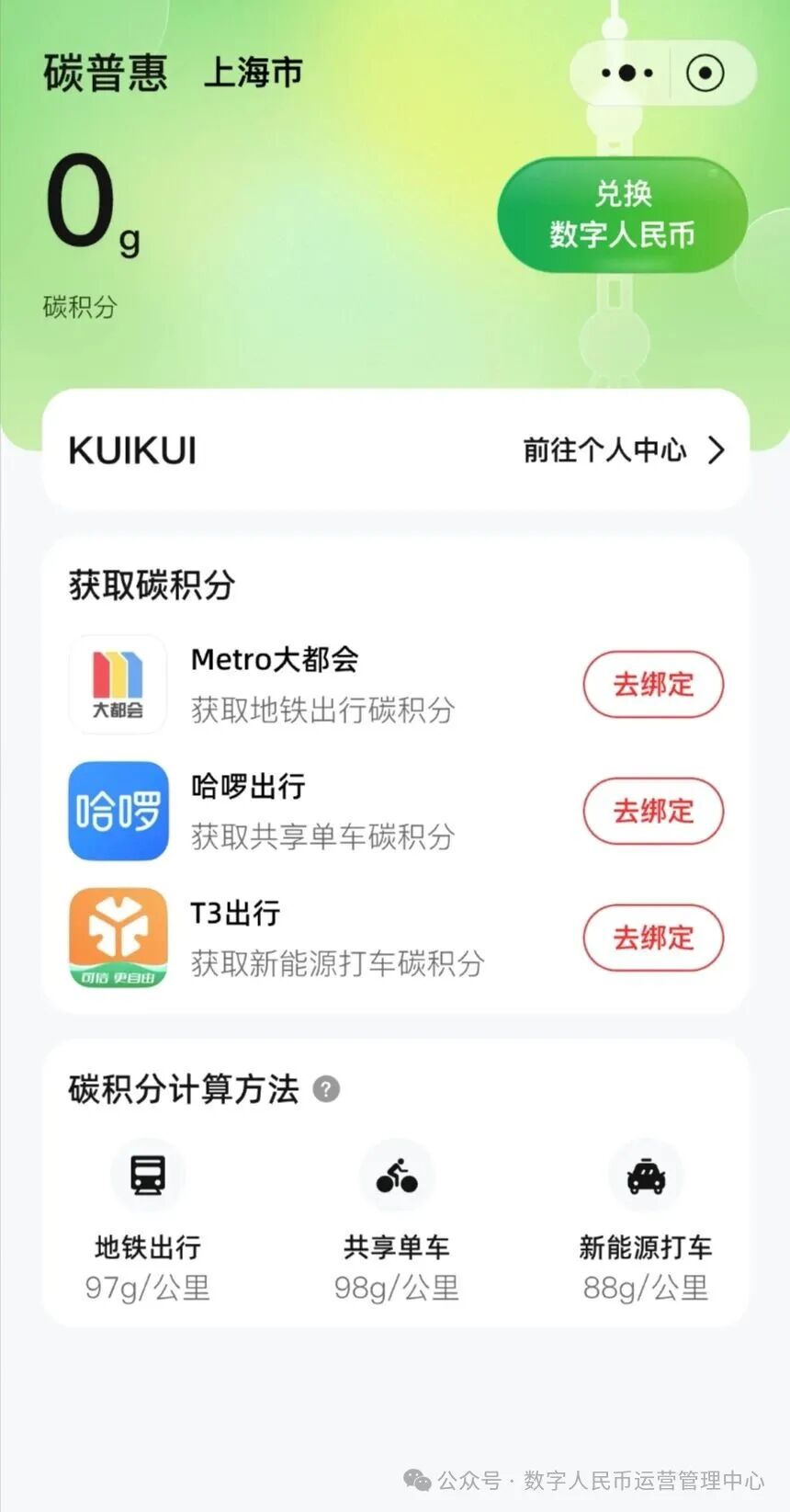
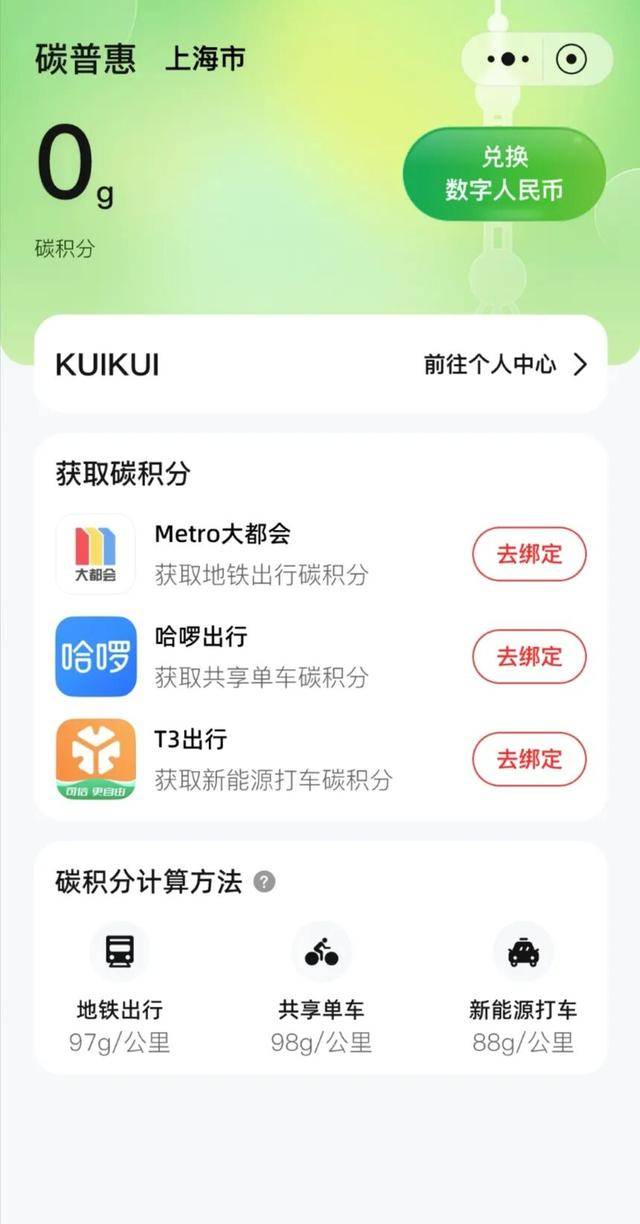
数字人民币App上线“碳普惠”服务 “碳积分”兑换“真金白银”
Sou Hu Cai Jing· 2026-01-08 08:50
Core Viewpoint - The digital renminbi management center has launched a "Carbon Inclusive" mini-program within the digital renminbi app to promote low-carbon behaviors among the public, initially available in Shanghai [1] Group 1: Digital Renminbi Initiatives - The "Carbon Inclusive" service encourages users to engage in low-carbon activities, with carbon credits automatically accumulated in a "Carbon Inclusive" account for everyday green actions such as riding shared bikes or using public transport [1] - Users can exchange their accumulated carbon credits for actual digital renminbi, creating a tangible incentive for environmentally friendly behavior [1] Group 2: Partnerships and Expansion - The initial partners for the "Carbon Inclusive" mini-program include Metro (Shanghai Metro), Hello Chuxing, and T3 Chuxing, indicating a collaboration with major transportation platforms [1] - The digital renminbi management center plans to collaborate with business operators to continuously introduce more low-carbon scenarios and expand the service to multiple cities, aiming to build a collaborative carbon inclusive service network [1]
日常绿色低碳行为可兑换数字人民币!快来看看怎么操作
2 1 Shi Ji Jing Ji Bao Dao· 2026-01-08 08:04
Core Insights - The digital RMB is expanding its application in "green finance" by launching a "Carbon Inclusive" mini-program in the digital RMB app, initially available in Shanghai [1] - Users can accumulate carbon credits for their low-carbon activities, which can be exchanged for digital RMB, incentivizing environmentally friendly behavior [1][6] - The program integrates with major platforms like Metro, Hello Chuxing, and T3 Chuxing to automatically track users' low-carbon actions and credit their accounts [1] Group 1: Digital RMB and Carbon Inclusive Program - The digital RMB management center is coordinating with business operators to create innovative applications in the carbon inclusive sector [1] - The "Carbon Inclusive" service allows users to convert their carbon credits from activities such as public transport and bike-sharing into digital RMB [1][6] - The program aims to encourage public participation in low-carbon behaviors by quantifying their actions into carbon credits [1] Group 2: User Engagement and Functionality - To activate the "Carbon Inclusive" service, users must open the digital RMB app, navigate to the service page, and bind their accounts with participating platforms [3] - Carbon credits can be exchanged for digital RMB, with a conversion rate of 1 digital RMB for every 1250 grams of carbon credits [10] - Users must upgrade to a real-name digital RMB wallet to successfully redeem their carbon credits for digital currency [10]
数字人民币App上线“碳普惠”服务
Sou Hu Cai Jing· 2026-01-08 06:36
Core Viewpoint - The digital RMB "Carbon Inclusive" service aims to encourage public participation in low-carbon behaviors by allowing users to earn carbon credits for environmentally friendly actions, which can be exchanged for digital RMB [1][2]. Group 1: Service Overview - The "Carbon Inclusive" service is designed to reward users for engaging in low-carbon activities such as using public transportation and participating in recycling [2][12]. - Users can accumulate carbon credits through their daily green actions, which are automatically recorded in the "Carbon Inclusive" account within the digital RMB app [6][14]. Group 2: Initial Implementation - The first three low-carbon scenarios integrated into the "Carbon Inclusive" program include Metro (Shanghai subway), Hello Bike, and T3 Mobility [3]. - Users must log into the "Carbon Inclusive" mini-program and link their accounts from the aforementioned platforms to automatically track their low-carbon behaviors [6]. Group 3: Activation Process - To activate the service, users need to open the digital RMB app, navigate to the service page, find the "Carbon Inclusive" mini-program, and complete the scene binding [9]. - After activation, users' low-carbon travel behaviors will be automatically recorded, and carbon credits will be accumulated in their accounts [9][14]. Group 4: Redemption Mechanism - Carbon credits can be exchanged for digital RMB, with a conversion rate of 1 digital RMB for every 1250 grams of carbon credits [21]. - Users must have a digital RMB wallet and upgrade it to a real-name wallet before redeeming their carbon credits for digital RMB [21].
蓝天有“净” 产业有“绿” 生活有“福”
Xin Lang Cai Jing· 2025-12-29 19:18
Core Viewpoint - The article highlights the ecological and environmental initiatives undertaken by Longquanyi District during the 14th Five-Year Plan, emphasizing the integration of ecological protection with industrial upgrading, urban construction, and improvement of people's livelihoods [1]. Group 1: Environmental Quality Improvement - Longquanyi District aims to systematically enhance environmental quality by implementing precise and scientific pollution control measures, promoting carbon reduction, pollution reduction, and green expansion [1]. - The district has established a comprehensive air quality monitoring network, including 13 self-built air monitoring stations and 2 VOCs component stations, to ensure robust air quality management [2][3]. Group 2: Technological Innovation in Pollution Control - The district employs advanced technology for pollution source identification, utilizing mobile monitoring vehicles to detect VOCs concentrations in real-time [2]. - A full-process closed-loop management system has been developed to optimize event handling and improve the efficiency of air quality issue rectification [3]. Group 3: Support for Green Business Development - Longquanyi District has implemented targeted support measures for enterprises, facilitating their transition to environmentally friendly practices and helping them achieve higher environmental performance ratings [4]. - The district has successfully secured over 17 million yuan in central subsidies for companies, enhancing their capacity for green development [5]. Group 4: Community Engagement and Environmental Awareness - The district has introduced a "carbon points" incentive mechanism, encouraging residents to participate in environmental protection activities, thus transforming government-led initiatives into community-driven actions [6]. - The implementation of the "626" project for water pollution prevention has led to significant improvements in water quality, achieving a 100% compliance rate for major river monitoring sections [6].
居民碳积分,接入平台便利兑换
Ren Min Ri Bao· 2025-12-03 22:29
Core Insights - The article highlights the implementation of carbon benefits in Yinchuan City, where 600 households have transitioned from coal to air source heat pumps, effectively converting clean air into ecological value [1] - Yinchuan has integrated carbon benefit initiatives into its carbon emission rights reform framework, allowing citizens to earn carbon credits through activities like cycling, public transport, and waste sorting [1] - The city has established a comprehensive service platform for carbon emission rights, facilitating the verification, accounting, reporting, and trading of carbon reduction credits, thus making low-carbon actions financially rewarding for both businesses and the public [1] Summary by Sections - **Carbon Benefits Implementation** - 600 households in Tongyang New Village have adopted air source heat pumps, moving away from coal and enhancing ecological value through clean air [1] - **Citizen Engagement** - Citizens can upload data related to commuting and waste management to accumulate carbon credits, which can be exchanged for daily necessities [1] - **Market Mechanism and Sustainability** - Yinchuan City has commissioned third-party organizations to manage carbon benefit methodologies and reduction projects, ensuring a market-driven and sustainable operational model [1]
特斯拉三季度营收、交付量创新高,净利润大跌近三成,盘后跌近4%
Sou Hu Cai Jing· 2025-10-23 06:32
Core Insights - Tesla reported record high revenue, delivery volume, and free cash flow for Q3 2025, but net profit declined by 29% year-over-year [1][3]. Financial Performance - Q3 revenue reached $28.1 billion, a 12% increase year-over-year, exceeding analyst expectations of $26.37 billion [1]. - Adjusted net profit was $1.77 billion, down 29% year-over-year, marking the third consecutive quarter of decline [1]. - Adjusted earnings per share were $0.50, a 31% decrease year-over-year, below the analyst forecast of $0.54 [1]. - Gross margin for Q3 was 18%, down from 19.8% in the same period last year [1][4]. - Free cash flow was $3.99 billion, a 46% increase year-over-year, surpassing the forecast of $1.25 billion [1]. Delivery and Sales - Tesla delivered 497,000 vehicles in Q3, a 7.4% increase year-over-year, exceeding market expectations of 448,000 [3]. - Sales in China reached 169,200 units, a 31% increase quarter-over-quarter, marking a new high for the year [3]. - The increase in demand is attributed to the upcoming expiration of tax incentives in both China and the U.S. [3]. Business Segments - The energy generation and storage segment saw significant growth, with revenue of $3.42 billion, a 44% year-over-year increase [3]. - Energy storage product installations reached 12.5 GWh, marking a record for the 13th consecutive quarter [3]. Challenges and Costs - The decline in net profit is linked to the introduction of lower-priced models, with a 12% price reduction for Model 3 and Model Y [4]. - Automotive gross margin decreased by 1.6 percentage points to 15.4% [4]. - Increased operating expenses due to R&D, stock compensation, and legal costs, along with rising tariffs, have impacted profitability [4]. Future Developments - Tesla plans to launch the third-generation humanoid robot, Optimus, in Q1 2026, with production expected to start by the end of 2026 [5]. - The Cybercab is set to begin mass production in Q2 2026, and Robotaxi services are in pilot operations, with expansion planned for late 2025 [5][6].