
粮食减损

Search documents
“粮食安全看山东”之潍坊绿野众合:“绿野模式”——聚焦粮食减损,确保仓储安全
Zhong Guo Fa Zhan Wang· 2025-12-10 06:38
Core Viewpoint - The article highlights the successful implementation of the "Green Wild Model" by Weifang Green Wild Agricultural Cooperative, which focuses on large-scale agricultural operations, mechanization, and technological integration to enhance food security and agricultural productivity [1][3]. Group 1: Cooperative Structure and Operations - Weifang Green Wild Agricultural Cooperative was established in April 2013 and currently has 92 members, managing over 30,000 acres of land and serving more than 100,000 acres in surrounding areas [1]. - The cooperative has transitioned from machinery services to land management since 2016, adopting a model where villagers can invest their land rights into the cooperative, thus transforming resources into assets and farmers into shareholders [2]. - The cooperative has been recognized with various awards, including being named a national-level demonstration cooperative and receiving accolades for its contributions to rural revitalization [1]. Group 2: Agricultural Practices and Innovations - The "Green Wild Model" has led to a 16% increase in land utilization by consolidating fragmented land into larger, more manageable plots, addressing the challenges of rural land management [2]. - The cooperative has developed a sustainable agricultural model that includes order-based farming and a "livestock-biogas-land" cycle to ensure food production sustainability [3]. - Technological advancements, such as the development of specialized planting equipment and the use of drones for pest control, have resulted in a 10% reduction in seed usage and a 7% increase in yield per acre [3]. Group 3: Post-Harvest Management - The establishment of a grain drying center in March 2022, with an investment of 43 million yuan, aims to reduce post-harvest losses and improve grain quality, capable of drying 2,400 tons of wheat daily [4]. - The drying center also helps mitigate the risk of grain spoilage due to adverse weather conditions, contributing to an increase in corn yield by approximately 150 jin per acre and reducing grain spoilage losses by over 1,000 tons annually [4]. - The cooperative's practices have set industry benchmarks and have been shared at international conferences, promoting the "Green Wild Model" as a replicable solution for enhancing regional agricultural productivity [4].
“钱等粮、仓等粮”充分激发秋粮购销活力 科技为全链条损耗“做减法”
Yang Shi Wang· 2025-10-16 09:55
Core Insights - The article highlights the successful completion of summer grain procurement in China, with a total of 108 million tons of wheat collected, and the ongoing autumn grain procurement efforts [1][3] Group 1: Summer Grain Procurement - China's summer grain procurement concluded at the end of September, with a total collection of 108 million tons of wheat [1] - Major producing regions such as Henan, Anhui, Hebei, Jiangsu, and Shandong implemented minimum purchase price policies, resulting in the procurement of 16.4 million tons of wheat at the minimum price, stabilizing the market [1] Group 2: Autumn Grain Procurement - Autumn grain has started to be harvested and procurement is gradually underway, with the government enhancing funding and storage capacity to ensure smooth operations [3] - The National Grain and Material Reserve Bureau is focusing on policy-driven storage and procurement strategies, particularly for mid and late rice varieties [5] Group 3: Technological Advancements in Grain Handling - In Guangdong, technology is being utilized to reduce grain loss during transportation and storage, with the introduction of high-efficiency logistics equipment [7] - The Guangzhou Port's grain handling efficiency has significantly improved, with unloading rates reaching up to 69,000 tons per day, attracting more vessels [8] - Real-time monitoring systems in grain storage facilities are implemented to maintain optimal conditions and prevent quality degradation [10] Group 4: Industry Losses and Mitigation - The grain loss during the entire supply chain from field to table is estimated at around 11%, with technological solutions being adopted to minimize these losses [11]


让丰收成果颗粒归仓
Jing Ji Ri Bao· 2025-09-29 22:20
Core Insights - The article emphasizes the importance of reducing losses during the autumn grain harvest to ensure food security and promote high-quality agricultural development [1][3] Group 1: Harvest Loss Reduction Strategies - The article highlights the significant role of autumn grain in China's food production and the various risks of loss during the harvest process, including outdated equipment and improper timing [1] - It suggests that improving machinery maintenance and training for operators is crucial, as experienced operators can significantly reduce grain loss during harvesting [1] - The concept of "machine harvesting loss reduction" is presented as a key approach to achieving lower loss rates [1] Group 2: Emergency Response and Service Systems - The article calls for the establishment of a robust agricultural machinery emergency service system to address risks posed by extreme weather during the harvest season [2] - It advocates for collaboration among agricultural service organizations, machinery cooperatives, and large-scale grain producers to enhance emergency response capabilities [2] - The need for a comprehensive approach to grain loss reduction across the entire supply chain, including transportation and storage, is emphasized [2] Group 3: Technological and Systematic Improvements - The article stresses the importance of utilizing technology for grain storage, such as upgrading old storage facilities and employing smart inspection robots to monitor grain conditions [2] - It highlights the necessity of raising public awareness about food security and the urgency of reducing autumn grain losses [3] - The article encourages continuous exploration and improvement of related technologies and models to effectively implement loss reduction strategies [3]
济南莱芜:严把“减损增产”两端,建成“粮安心安”样板
Zhong Guo Shi Pin Wang· 2025-08-04 09:39
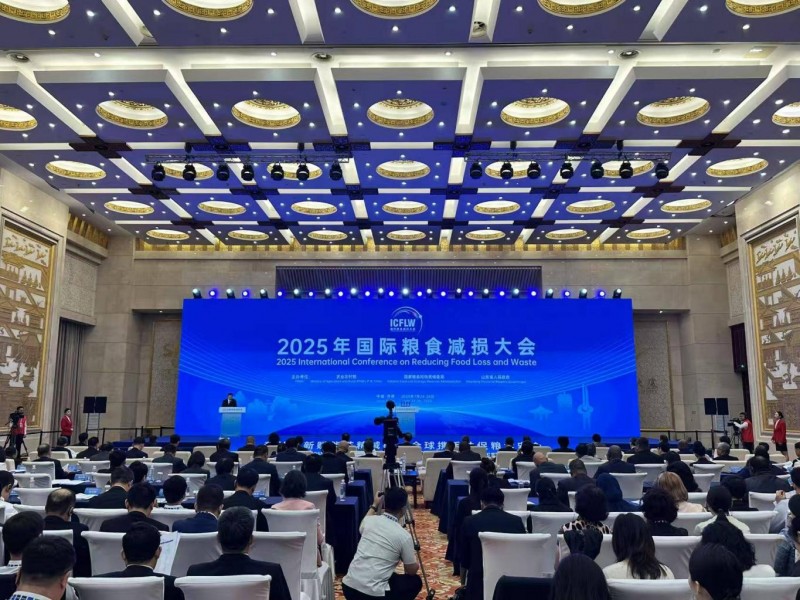
Core Viewpoint - The 2025 International Food Loss Reduction Conference was held in Jinan, focusing on "technological innovation empowering food waste reduction and global cooperation to promote food security" [1][3]. Group 1: Conference Overview - The conference attracted over 300 international guests, including deputy ministers and ambassadors from various countries, emphasizing the importance of food security as a national priority [3]. - The event highlighted the achievements of the Laiwu District in modern agricultural practices, showcasing the integration of technology in food production and management [3][5]. Group 2: Agricultural Practices in Laiwu - Laiwu District has implemented high-standard farmland construction, with 51.77 million acres (72.5% of total farmland) developed, ensuring a continuous 100% safety utilization rate of arable land for five years [5]. - The district has achieved over 92% mechanization in crop farming, with significant investments in agricultural machinery, including 18,000 tractors and 733 combine harvesters [5]. - The average loss rate during the wheat harvest in 2025 is projected to be 0.6%, reflecting effective management and technological application [5]. Group 3: Technological Integration - The "Sky-Earth-Net Integration" agricultural application platform is recognized as one of the most advanced digital agriculture technologies in Shandong Province, enhancing the management of the entire food production chain [8]. - The integration of technology in agriculture is seen as a key driver for future agricultural development, with international representatives expressing optimism about its potential [11]. Group 4: Rural Development and Cultural Integration - Laiwu District is promoting rural revitalization through cultural tourism projects, enhancing the local economy and showcasing the beauty of rural areas [9]. - The district's approach combines agricultural production with cultural and tourism development, aiming to improve the quality of life for residents and attract visitors [11]. Group 5: Future Directions and International Cooperation - The conference serves as a platform for international cooperation, sharing experiences and technologies to address global food security challenges [11]. - The "Laiwu Plan" is positioned as a model for rural revitalization, emphasizing the importance of systematic thinking in reducing food loss and increasing agricultural income [11].
我国3年减少粮食损失超500亿斤
Ren Min Ri Bao· 2025-08-01 21:49
Core Insights - In 2024, the mechanical harvesting loss rates for China's three major staple grains—wheat, rice, and corn—are projected to be 0.93%, 1.76%, and 2.06% respectively, indicating a significant reduction in grain loss over the years [1] - From 2022 to 2024, the total reduction in grain loss is expected to exceed 50 billion jin (approximately 25 million tons) [1] - The actual loss rates from pests and diseases for the three staple grains are controlled within 5%, while the processing loss rate for grain and oil has been reduced to below 1% [1] Industry Efforts - The country has firmly established the concept that reducing losses equates to increasing production, focusing efforts on various aspects such as production management, disaster prevention, processing utilization, storage and transportation, and consumer guidance [1] - A comprehensive grain loss reduction system has been preliminarily established, covering the entire supply chain from field to table [1]
粮食有增产 企业能增收 合作在深化——2025年国际粮食减损大会观察
Xin Hua Wang· 2025-07-27 08:56
Core Insights - The 2025 International Food Loss Reduction Conference highlighted the importance of technological innovation in enhancing food security and reducing food loss, with around 300 participants from various sectors sharing experiences and strategies [1][8]. Group 1: Food Production and Loss Reduction - The Weifang Green Wild Agricultural Machinery Cooperative reported significant increases in crop yields, with wheat production rising from 6 tons to 9 tons per hectare and corn from 7.5 tons to 9.7 tons since its establishment in 2013 [2]. - The mechanization of harvesting is crucial for minimizing food loss, with advancements in intelligent control models and automated harvesting machinery being emphasized [2][4]. - In 2024, the loss rates for major grains during harvesting were reported at 0.93% for wheat, 1.76% for rice, and 2.06% for corn, reflecting a reduction of 1 to 2 percentage points compared to 2021, resulting in a total loss reduction of over 50 billion jin [4]. Group 2: Technological Contributions - The application of the "Sky-Ground Network" AI integration platform at the Zhongke Beidou Digital Agriculture Demonstration Base has led to a 5% reduction in annual corn planting losses through efficient decision-making and early warnings [4]. - The Beijing Huinong Engineering Technology Co., Ltd. showcased integrated grain collection and storage solutions, having established over 3,000 steel silo systems globally, enhancing the entire grain supply chain [5][6]. Group 3: Industry Innovations - Shandong Jinsheng Grain and Oil Food Co., Ltd. developed a new processing technique that increased the average price of peanut cake from approximately 3,000 yuan per ton to about 7,000 yuan per ton, demonstrating the economic benefits of food loss reduction [7]. - The conference emphasized the role of food loss reduction as a new productive force in agricultural governance, with companies actively participating in innovative technologies for social and economic benefits [7]. Group 4: International Cooperation - The conference's youth forum resulted in the "New Food Fashion" initiative, promoting the reshaping of food value perceptions and the innovation of loss reduction technologies among youth from various countries [8][11]. - The "South-South Cooperation Action Plan" was released, calling for collaborative actions in policy research, digital technology, and experience sharing in food loss reduction over the next three years [11].
新华财经早报:7月27日
Xin Hua Cai Jing· 2025-07-27 01:11
Group 1 - The 2025 World Artificial Intelligence Conference was held in Shanghai, where Premier Li Qiang emphasized the importance of making AI a public good, fostering innovation, and ensuring collaborative governance [1][2] - The Chinese government proposed the establishment of a World Artificial Intelligence Cooperation Organization, with a preliminary plan to set its headquarters in Shanghai, aiming to promote multilateralism and bridge the digital divide [2] - The conference released the "Artificial Intelligence Global Governance Action Plan," which encourages international cooperation in AI technology, policy coordination, and the elimination of technical barriers to enhance global AI innovation [2] Group 2 - The Shanghai Pudong New Area announced a plan to enhance its biopharmaceutical industry, aiming to become a global hub for innovative drugs and medical devices, with a target industry scale exceeding 500 billion yuan by 2027 [2] - The "Shanghai High-Level Autonomous Driving Leading Area 'Mosu Zhixing' Action Plan" was introduced, targeting to achieve L4 autonomous driving passenger trips exceeding 6 million and open over 5,000 kilometers of roads by 2027 [2] - The China Meteorological Administration launched the "MAZU" early warning system, integrating AI technology with meteorological science for disaster prevention and mitigation, marking a significant step in international cooperation [2]

我国3年共减少粮食损失超500亿斤
news flash· 2025-07-26 10:31
Core Insights - China has reduced grain losses by over 50 billion jin in the past three years [1] - The harvesting loss rates for wheat, rice, and corn in 2024 are projected to be 0.93%, 1.76%, and 2.06% respectively, showing a decrease of 1 to 2 percentage points compared to 2021 [1] Summary by Category - **Grain Loss Reduction** - Over 50 billion jin of grain losses have been eliminated in three years [1] - **Harvesting Loss Rates** - Wheat loss rate: 0.93% in 2024, down from previous years [1] - Rice loss rate: 1.76% in 2024, down from previous years [1] - Corn loss rate: 2.06% in 2024, down from previous years [1]
为一粒米,聚世界之力——2025年国际粮食减损大会开幕侧记
Da Zhong Ri Bao· 2025-07-26 00:36
Core Viewpoint - The 2025 International Conference on Food Loss Reduction emphasizes the importance of reducing food loss as a critical approach to ensuring global food security, with participation from 62 countries and various international organizations [1] Group 1: Conference Highlights - The conference gathered high-level officials, agricultural ministers, and experts to discuss strategies for food loss reduction and promote food security [1] - The first International Conference on Food Loss Reduction was held in September 2021, resulting in ten consensus outcomes, indicating a growing global focus on this issue [1] - China, as a major food producer and consumer, prioritizes food security for its 1.4 billion population and actively participates in global food-saving initiatives [1] Group 2: China's Achievements - In 2024, China's total grain production is projected to reach 14,130 billion jin, marking a new milestone after nine consecutive years above 13,000 billion jin [2] - The loss rates for major crops in China have significantly decreased, with wheat at 0.93%, rice at 1.76%, and corn at 2.06% [2] - Over 5,500 grain post-harvest service centers have been established, and the grain loss rate for farmers has dropped from 8% a decade ago to around 3% [2] Group 3: Global Food Security Challenges - The 2024 report on global food security indicates that between 713 million and 757 million people still face hunger, highlighting the ongoing challenge of food scarcity alongside significant food waste [3] - The UN's goal to halve global food waste by 2030 is deemed ambitious, given the current annual food loss and waste of 1.3 billion tons, which accounts for about one-third of global production [3] Group 4: Collaborative Efforts - Various countries are recognizing the need for coordinated efforts to address food loss and waste, with China implementing a national action plan to reduce food waste [4] - Countries like Ireland and Slovenia are also developing their own strategies and certifications to prevent food waste across the supply chain [4] Group 5: Technological Innovations - Technology is identified as a key driver in preventing food loss and waste, with Turkey promoting AI-based systems for planning and consumption forecasting in the food industry [5] - Large retail chains are utilizing AI-assisted inventory optimization systems to donate near-expiry products, thereby reducing waste [5]
60余国嘉宾山东济南共商粮食减损
Zhong Guo Xin Wen Wang· 2025-07-25 21:12
Group 1 - The 2025 International Conference on Food Loss Reduction opened in Jinan, Shandong, with over 300 guests from more than 60 countries discussing global governance and technological innovation in food loss reduction [1] - Mexico's Minister of Agriculture emphasized that addressing food loss and waste is crucial for national food supply and combating hunger, highlighting the country's investment in resources and technology to increase food production [1] - The Director-General of the FAO stated that China has played a leading role in the international community regarding food loss reduction and called for collaborative efforts to transform this challenge into opportunities for all [1] Group 2 - China's Vice Minister of Agriculture reported that the mechanical harvesting loss rates for wheat, rice, and corn in 2024 were 0.93%, 1.76%, and 2.06% respectively, showing a reduction of 1 to 2 percentage points compared to 2021, resulting in a total reduction of over 500 million jin of food loss over three years [2] - China expressed its willingness to collaborate with other countries to improve the global food loss governance system and contribute to world food security and the building of a community with a shared future for mankind [2]