美元指数走强

Search documents
金荣中国:现货黄金延续隔夜反弹空间,重新尝试挑战5200关口
Sou Hu Cai Jing· 2026-02-25 08:07
周三(2月25日)亚盘时段,现货黄金延续隔夜反弹空间重新尝试挑战5200关口及以上,目前暂交投于5185美元附近。周二(2月24日)现货黄金价格出现显 著回调,一度下跌近2.5%至接近5094美元,收报5141.43美元/盎司,跌幅约1.65%,从而中断了此前连续四个交易日的上涨行情。这一轮调整主要源于市场 获利了结行为叠加美元指数的明显走强,导致以美元计价的贵金属承压下行。尽管价格出现回落,但仍有逢低买盘提供支撑。 基本面: 技术面: 日线级别,金价昨日录得阴线收盘回吐近期部分涨幅,但仍守住本周上破后空间展开争夺,短期表现仍暗示乐观预期或有望挑战5230及以上更多空间。1--4 小时级别,短线走势自4840低点展开多头攻势后本周迎来5100上破打破僵局,隔夜盘中自5250附近回吐涨幅后再度企稳5100关口并迎来反击,至当前亚盘时 段,价格已再度逼近5200附近蓄势待发。日内交易者或留意5150上方支撑测试情况尝试多单为主,上方压力5220/5280附近。 操作思路: 多单: 黄金在触及多周高点后,部分持仓者选择锁定前期涨幅,导致卖压逐步显现。这种典型的获利了结现象在价格快速拉升后较为常见,直接削弱了黄金的短 ...


金荣中国:金价亚盘高位震荡盘整,回落支撑位多单布局方案
Sou Hu Cai Jing· 2026-01-14 04:02
美元指数重拾涨势,黄金避险光环黯淡见顶信号闪现美元指数的强势反弹,成为黄金冲高回落的关键推手。周二,美元指数上涨0.3%至99.18,延续了上周 强劲就业数据后的支撑势头。 通胀数据公布后,美元虽短暂回落,但很快走强,因为市场解读为美联储有更多空间平衡物价与劳动力市场,而非立即大幅 降息。这让美元对其他货币的吸引力增强,日元兑美元跌至159.11的逾一年半低点,欧元和英镑也纷纷走低。强势美元直接提高了以美元计价的黄金持有成 本,对国际买家形成压制,导致金价从纪录高位回落。这种走势引发了市场对黄金见顶的担忧。历史经验显示,当美元指数重拾涨势时,黄金往往承压下 行,尤其在通胀温和且经济数据稳定的背景下。 最新数据显示,周三金价收盘小幅下跌02%至4586.45美元,延续了冲高后的回调趋势。 白银虽一度触及 89.10美元高点,但收盘仅上涨2.1%至86.74美元,也显示出贵金属板块的整体疲态。分析师认为,如果美元继续走强,黄金短期内可能测试4500美元支撑 位,这种见顶信号并非空穴来风,而是多重因素交织的结果,包括投资者在年度商品指数再平衡期内的机械性卖出。 然而,并非所有机构都悲观,德国商 业银行将2026年底 ...
太突然!股市突然大跳水,发生了什么?
天天基金网· 2025-11-11 08:29
Core Viewpoint - The article discusses the recent fluctuations in the stock market, highlighting the impact of external factors such as U.S. government funding issues and concerns over the AI sector bubble, which have influenced market performance and investor sentiment [10][11][18]. Market Performance - On November 11, the market experienced a day of volatility, with the Shanghai Composite Index falling by 0.39%, the Shenzhen Component down by 1.03%, and the ChiNext Index decreasing by 1.4% [3]. - The trading volume in the Shanghai and Shenzhen markets was below 2 trillion yuan, a decrease of 180.9 billion yuan compared to the previous trading day [3]. External Influences - The article notes that the Asian markets opened higher due to a significant rise in U.S. stocks but subsequently experienced declines, attributed to concerns over the U.S. government "shutdown" and its potential economic implications [7][10]. - The U.S. Senate passed a temporary funding bill, but uncertainties remain as it awaits approval from the House of Representatives and the President [10]. Economic Data Concerns - Investors are wary of upcoming economic data releases following the government reopening, with concerns that missing data could mask structural slowdowns in hiring [11]. - The article mentions that the U.S. dollar has performed well during the government shutdown, which may attract funds away from other markets [11]. AI Hardware Sector - The AI hardware sector showed a notable decline, mirroring the overall market trend, with concerns about the potential bubble in the U.S. AI sector affecting A-shares [12][13][18]. - Michael Burry's comments on the overvaluation of tech companies due to depreciation accounting practices have raised alarms about the sustainability of profits in the AI sector [18][19]. Investment Style Adjustments - There is a potential shift in institutional investment styles, with funds possibly reallocating from popular sectors, leading to market volatility [19]. - The China Securities Investment Fund Industry Association is drafting guidelines to regulate theme-based investment styles, which may impact fund management practices [20]. Emerging Opportunities - The cultivated diamond sector has emerged as a surprising leader in market gains, with a rise of over 6% [22]. - Recent advancements in the use of cultivated diamonds in semiconductor cooling solutions have sparked renewed interest in their industrial applications [25].

日韩股市跳水!韩国综合指数跌超6%,一度暂停程序化交易卖单
Mei Ri Jing Ji Xin Wen· 2025-11-05 03:33
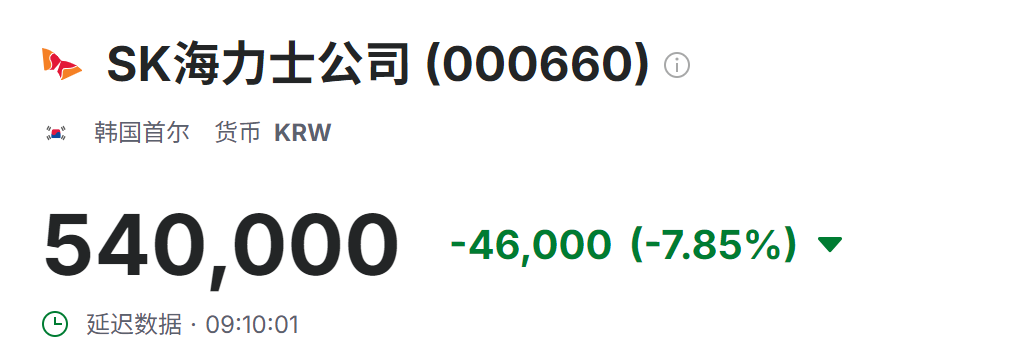
Market Overview - The Japanese and South Korean stock markets opened lower, with the South Korean Composite Index dropping over 6% and the Nikkei 225 Index falling below 50,000 points, down 3.74% [1] - Concerns over global AI valuations have led to declines in South Korean chip stocks, with SK Hynix down 7.85% and Samsung Electronics down 6.67% [1] - Japanese chip-related stocks also experienced significant declines, with SoftBank Group down 13.2% and Advantest down 8.6% [3] Economic Indicators - The yield on 10-year Japanese government bonds fell by 1 basis point to 1.66% [5] - The USD/JPY exchange rate dropped to 153.17, having previously touched 154 [5] Stock Performance - The Nikkei 225 Index has been above 50,000 points for six consecutive trading days, with a cumulative increase of over 15% since early October and a year-to-date rise of 29.8% [8] - The KOSPI index in South Korea has seen a 19% increase since October, with a year-to-date surge of nearly 72% [8] - On November 4, the Nikkei 225 Index recorded a high of 52,434.06 points before closing down 1.74% at 51,497.2 points, while the KOSPI index closed down 2.37% at 4,121.74 points [8] Market Influences - Three main factors are affecting the Asia-Pacific stock markets: the strengthening US dollar, declines in high-flying assets, and ongoing trade dispute uncertainties [8] - The decline in the Japanese and South Korean stock markets is attributed to "crowded trades at high levels" and the strengthening dollar, leading to profit-taking and technical pullbacks [9] - Future performance of Japanese stocks may depend on government fiscal plans and reforms, while the South Korean market's outlook is closely tied to the US AI cycle and domestic capital expenditure [9]
午后突发!亚太市场,全线跳水!
券商中国· 2025-11-04 06:53
Market Overview - Global stock markets experienced a sudden downturn, with Japan's Nikkei index falling over 1% and South Korea's KOSPI dropping more than 2% [1][3][5] - Australian stock indices also closed down nearly 1%, indicating a bearish trend [5] - A-shares in China saw an increase in their decline, following the negative sentiment in global markets [1][5] Factors Influencing the Market - The strengthening of the US dollar index, which recently approached the 100 mark, has negatively impacted equity valuations [7] - High-profile assets have been experiencing significant sell-offs, particularly in AI-related stocks, leading to increased pressure for profit-taking [7] - Despite some positive signals in global trade disputes, uncertainty remains, contributing to market volatility [7] Specific Market Movements - South Korea's SK Hynix saw a 5.3% drop after a significant rise of nearly 11% the previous day, highlighting the volatility in tech stocks [5] - The Australian central bank's comments on potential interest rate adjustments have added to market concerns, particularly regarding inflation and employment risks [5] - US stock index futures are also showing widespread declines, with small-cap indices down over 0.8% [5] Future Market Outlook - Short-term volatility is expected due to year-end profit-taking, but structural opportunities may still exist in the market [8] - Data from Shenwan Hongyuan indicates that the earnings risk premium (ERP) for A-shares has increased, suggesting potential value compared to global markets [8] - The valuation of the Shanghai Composite Index is currently lower than that of major global indices, indicating a potential investment opportunity [8]

深夜跳水!黄金创12年来最大单日跌幅,白银创4年来最大跌幅
Sou Hu Cai Jing· 2025-10-23 00:03
Core Viewpoint - The international precious metals market experienced a significant crash, with gold dropping 6.3%, marking the largest single-day decline since April 2013, catching many investors off guard [1][3]. Market Performance - On October 21, gold prices fell from approximately $4342 to a low of $4086, closing at $4128.27 per ounce, while silver saw an even steeper decline of 8.7%, closing at $48.58 per ounce [3]. - The New York Mercantile Exchange saw December gold futures drop by 4.92% to $4145 per ounce, and COMEX silver futures fell by 7.69%, indicating a systemic sell-off across the precious metals sector [3][9]. Causes of the Crash - Analysts attribute the crash to profit-taking after significant gains earlier in the year, with gold up over 57% and silver up 67% [5]. - A decrease in safe-haven demand due to easing geopolitical tensions and a more favorable trade outlook between the U.S. and China also contributed to the decline [5][7]. - The strengthening U.S. dollar added pressure, with the dollar index rising approximately 0.4% over three consecutive days, making gold more expensive for holders of other currencies [7]. Market Indicators - Technical indicators suggested an overheated market, with gold's relative strength index (RSI) previously exceeding 88, signaling a potential for correction [7]. - The surge in trading volume for gold futures, exceeding daily averages by about 40%, indicated a significant number of traders were selling simultaneously [15]. Institutional Reactions - The largest gold ETF, SPDR Gold Trust, showed a declining trend in holdings prior to the crash, signaling institutional investors' caution [13]. - Divergent views emerged among institutional investors, with some seeing the drop as a normal correction while others expressed concern over the sustainability of current gold prices if retail investors reduce their positions [11][13]. Historical Context - This crash represents the largest single-day decline in gold prices since April 2013, contrasting with a previous drop driven by liquidity issues during the "dollar shortage" in March 2020 [13][17]. - The market is now focused on upcoming U.S. CPI data, which could influence gold prices depending on inflation trends [19].
昨夜突发!黄金、白银崩了
Sou Hu Cai Jing· 2025-10-22 01:26
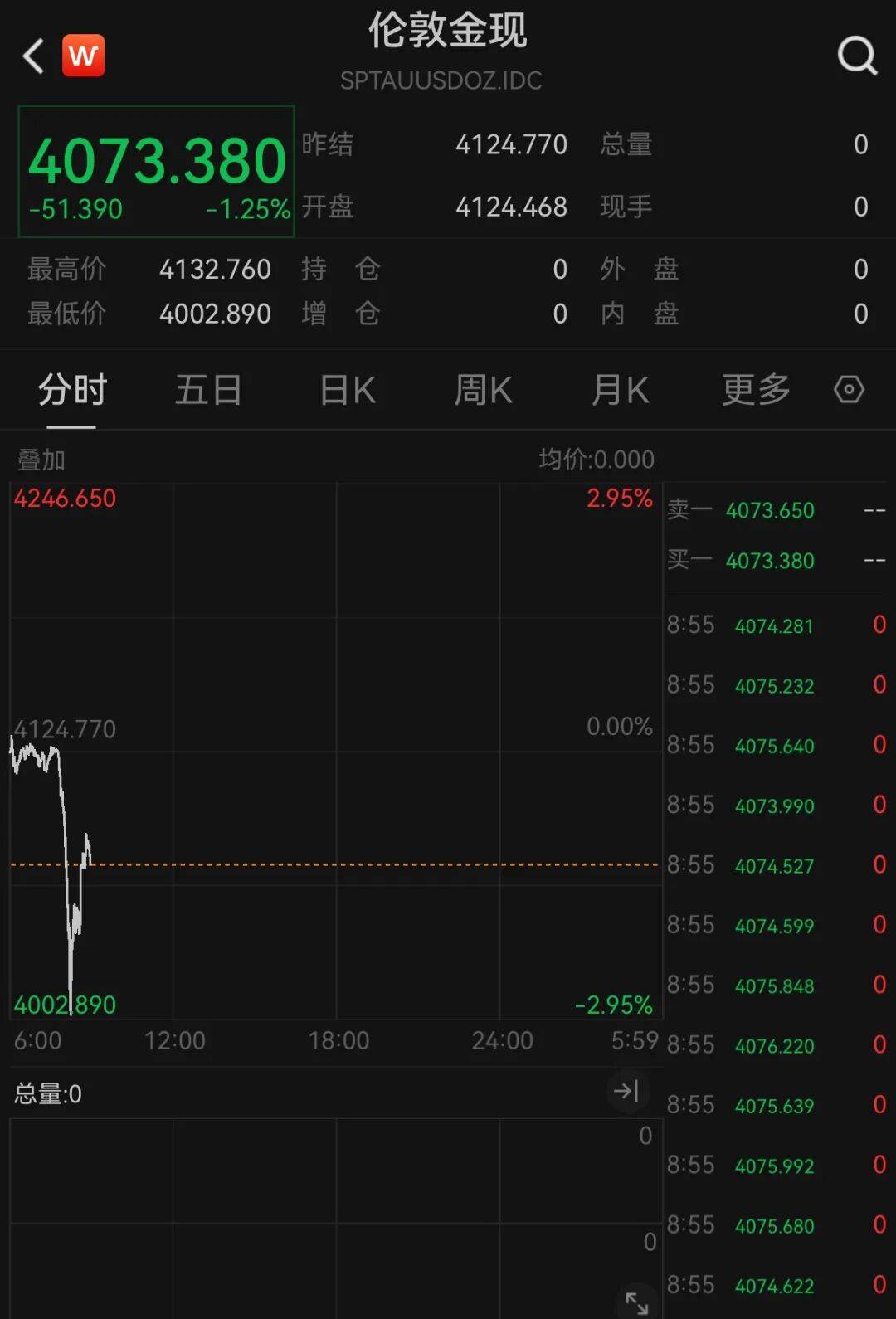
Core Viewpoint - The recent sharp decline in gold and silver prices marks a rare event, with gold experiencing its largest single-day drop since April 2013 and silver its largest drop since 2021 [1][2]. Price Movements - On October 21, spot gold fell by 6.3%, closing at $4,124.355 per ounce, while COMEX gold futures dropped by 5.07% to $4,138.5 per ounce [1]. - Spot silver saw a decline of 7.11%, with COMEX silver futures down by 6.27% [1]. - Following the initial drop, gold prices rebounded slightly to above $4,070 per ounce [1]. Causes of the Decline - Analysts attribute the price drop primarily to profit-taking and a decrease in safe-haven demand due to easing global trade tensions [2]. - A strengthening U.S. dollar has made precious metals more expensive for most buyers, further contributing to the decline [2]. - Changes in the Russia-Ukraine situation have also introduced volatility in the gold market, with European leaders expressing strong support for U.S. positions on Ukraine [2]. Market Sentiment and Future Outlook - Independent metal trader Tai Wong noted that recent high volatility in gold prices may lead to short-term profit-taking [3]. - Hudson Attar from Bridgewater expressed uncertainty about the future of the gold market, suggesting that the likelihood of a decline is greater than further increases [4]. - Attar highlighted that the sustainability of high-net-worth Western investors' gold purchases is crucial for future price support [4]. Long-term Projections - HSBC's commodity outlook report suggests that gold's upward momentum could continue until 2026, driven by strong central bank purchases and ongoing fiscal concerns in the U.S., with a target price of $5,000 per ounce [5]. - The report emphasizes that the U.S. fiscal deficit is a significant factor driving gold demand, as investors increasingly view gold as a hedge against debt sustainability risks and potential dollar weakness [5].
突然暴跌!黄金创12年来最大单日跌幅,什么原因?
天天基金网· 2025-10-22 01:02
Core Viewpoint - The article discusses the significant drop in gold and silver prices, highlighting the largest single-day declines since 2013 and 2021 respectively, driven by profit-taking and reduced safe-haven demand due to easing global trade tensions and a stronger US dollar [3][6]. Price Movements - On October 21, gold prices fell by 6.3%, marking the largest single-day drop since April 2013, with current prices at $4,128.27 per ounce, down 5.24% [3][4]. - Silver prices experienced a decline of 8.7%, the largest drop since 2021, with current prices at $48.58 per ounce, down 7.29% [3][4]. Market Analysis - Analysts attribute the price drop to profit-taking by investors, alongside a decrease in safe-haven demand due to improved global trade conditions and a stronger US dollar, making precious metals more expensive for buyers [6]. - The market had previously anticipated further interest rate cuts by the Federal Reserve, which had driven gold prices to new highs, but the current pullback is seen as a buying opportunity if the CPI data does not show unexpected increases [6]. Geopolitical Factors - Changes in the Russia-Ukraine situation have introduced volatility in the gold market, with European leaders expressing strong support for the US stance on Ukraine and planning to increase pressure on Russia while supporting Ukraine [7].
深夜跳水!黄金创12年来最大单日跌幅 白银创4年来最大跌幅!什么原因?
Mei Ri Jing Ji Xin Wen· 2025-10-21 23:26
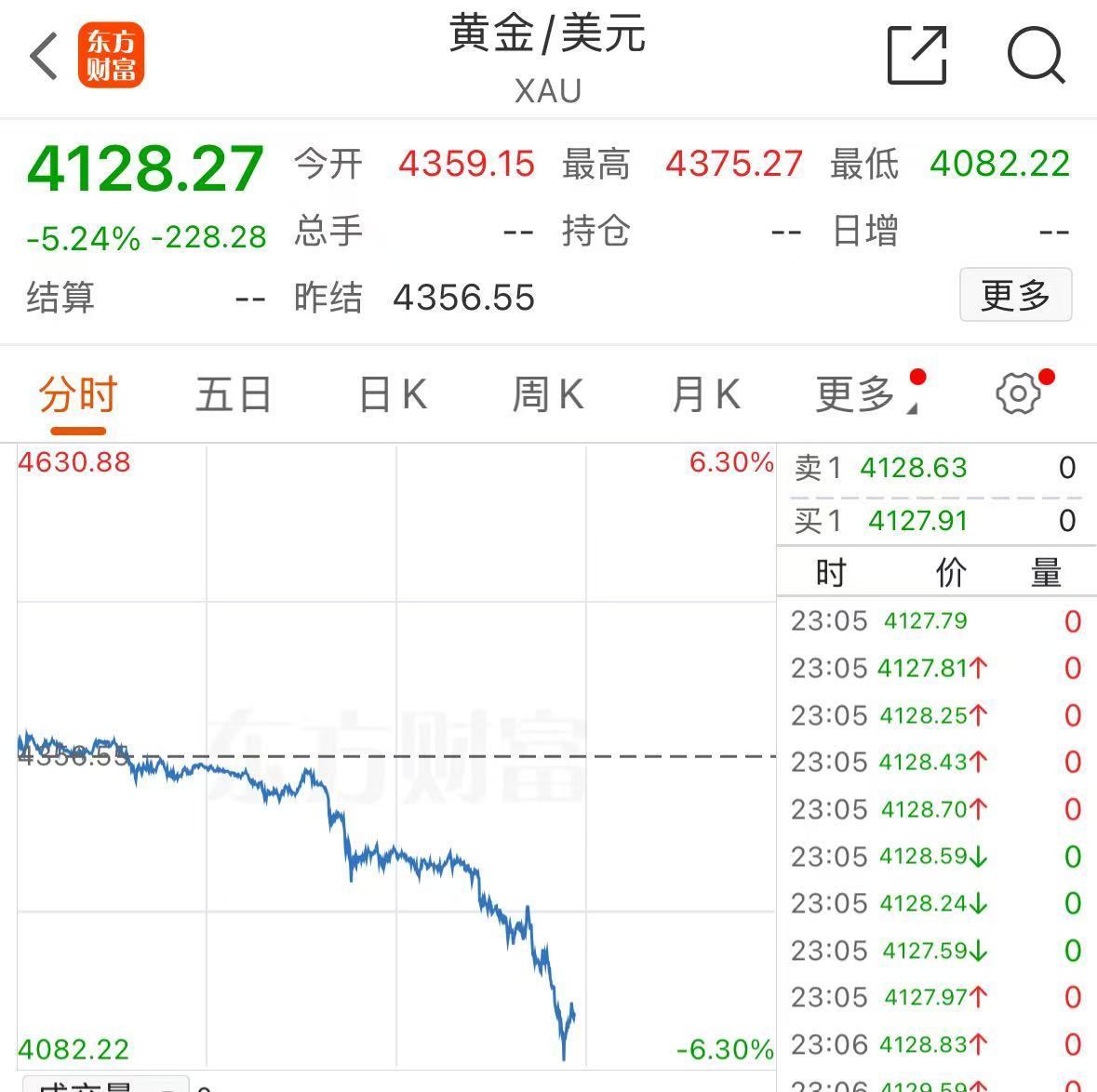
Core Insights - Gold and silver prices experienced significant declines, with gold dropping 6.3%, marking the largest single-day drop since April 2013, and silver falling 8.7%, the largest drop since 2021 [1][3] Price Movements - As of the report, spot gold was down 5.24% at $4128.27 per ounce, while spot silver was down 7.29% at $48.58 per ounce [1][3] - Gold opened at $4359.15, reached a high of $4375.27, and a low of $4082, closing at $4128.27 [2] - Silver opened at $52.48, peaked at $52.68, and hit a low of $47, closing at $48.58 [3] Market Analysis - Analysts indicated that profit-taking was a primary reason for the price drop, alongside a temporary easing of global trade tensions which reduced safe-haven demand [3][4] - The strengthening of the US dollar made precious metals more expensive for most buyers, contributing to the decline [3] Future Outlook - Market analysts believe that as long as the Federal Reserve maintains its current interest rate path, any pullback in gold prices will be viewed as a buying opportunity [4] - Upcoming US Consumer Price Index (CPI) data is expected to influence gold's upward momentum, provided there are no unexpected increases [4] - Changes in the geopolitical landscape, particularly regarding the Russia-Ukraine situation, may also impact the gold market significantly [4]
中概股飘绿,哔哩哔哩涨超6%,黄金、白银急剧跳水
2 1 Shi Ji Jing Ji Bao Dao· 2025-10-21 15:48
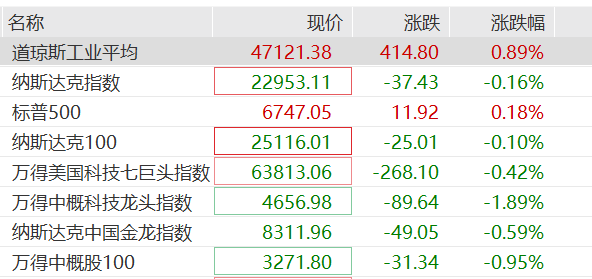
Market Overview - On October 21, U.S. stock indices opened mixed, with the Dow Jones up by 0.89%, the Nasdaq down by 0.16%, and the S&P 500 up by 0.18% [1][2] Index Performance - Dow Jones Industrial Average: 47,121.38, up 414.80 points (0.89%) [2] - Nasdaq Index: 22,953.11, down 37.43 points (-0.16%) [2] - S&P 500: 6,747.05, up 11.92 points (0.18%) [2] - Nasdaq 100: 25,116.01, down 25.01 points (-0.10%) [2] - Major U.S. tech stocks index down 0.42%, with Amazon leading gains at 2.39% and Google leading losses at 3.3% [2][3] Individual Stock Movements - Amazon (AMZN): $221.65, up 2.39% [3] - Apple (AAPL): $262.90, up 0.25% [3] - Microsoft (MSFT): $517.45, up 0.13% [3] - Tesla (TSLA): $445.73, down 0.38% [3] - Nvidia (NVDA): $181.63, down 0.55% [3] - Beyond Meat surged by 45%, while General Motors rose over 15% after raising its full-year guidance [3] Chinese Stocks Performance - Most Chinese stocks declined, with the Nasdaq China Golden Dragon Index down 0.6% [4] - Notable declines included NIO, Baidu, and Alibaba, each down over 2% [4] - Bilibili rose over 6%, and Huya increased by over 2% [4] Education Sector - The online education sector maintained its upward trend, with Intelligent Future up over 7% and New Oriental up over 4% [4][5] Precious Metals Market - Gold and silver prices fell sharply, with gold dropping to $4,106.82 per ounce, marking a decline of over 6% [6] - Silver also saw a significant drop, falling over 8% [6] - Analysts attributed the decline to profit-taking and a decrease in safe-haven demand due to easing global trade tensions [6] Geopolitical Factors - Changes in the Russia-Ukraine situation have introduced volatility in the gold market, with European leaders supporting a ceasefire and planning to use frozen Russian assets to aid Ukraine [7] - Analysts noted that while ETF holdings of gold have not reached previous peaks, historical trends suggest that buying momentum may eventually turn to selling [7]