资源型经济转型

Search documents
山西锚定转型航向能源革命与产业升级协同提速
Xin Lang Cai Jing· 2026-02-11 16:40
Core Viewpoint - Shanxi Province is focusing on energy revolution and industrial upgrading as part of its strategic plan to transition from a coal-dominated economy to a modern industrial system, aiming for a green and low-carbon energy transformation while ensuring energy security [1][4][8]. Energy Revolution - Shanxi will implement nine key paths for energy transformation, including intelligent and green coal mining, large-scale development of renewable energy, and the establishment of a new power system [3][4]. - In the past year, Shanxi's coal production reached 1.305 billion tons, a 2.1% increase year-on-year, while renewable and clean energy installed capacity reached 90.48 million kilowatts, accounting for 55.1% of the total, marking a historic shift in energy structure [2][3]. Industrial Upgrading - The province aims to optimize traditional industries and promote emerging sectors, focusing on high-end, intelligent, and green development [5][6]. - Shanxi will enhance traditional industries like steel and cement through low-carbon transformations and develop new materials and advanced manufacturing sectors, targeting the creation of billion-level industrial clusters [5][6]. Project Support and Technological Innovation - The province plans to launch a "Major Project Construction Year" with 629 key projects totaling over 2.4 trillion yuan in investment, including 309 energy transition projects with planned investments of 109.04 billion yuan [7]. - Shanxi will strengthen its technological innovation capabilities by establishing new laboratories and focusing on over 100 key research tasks in energy technology [7]. Mission and Strategic Focus - Shanxi is at a critical juncture for resource-based economic transformation, with a focus on energy technology innovation and industrial cluster development to support its transition [8]. - The province aims to balance development and security while contributing to national energy security and high-quality development in resource-based regions [8].
山西2025经济答卷亮眼 2026锚定高质量发展再出发
Zhong Guo Fa Zhan Wang· 2026-02-06 04:09
Core Viewpoint - Shanxi Province is focusing on high-quality economic development and resource-based economic transformation, with a positive outlook for 2026 following a stable performance in 2025 [1][6]. Economic Performance - In 2025, Shanxi's GDP reached 25,495.7 billion yuan, growing by 4.0% year-on-year, which is an increase of 1.8 percentage points compared to 2024 [1]. - The growth rates for primary, secondary, and tertiary industries were 4.5%, 3.1%, and 4.5% respectively, indicating sustained economic resilience [1]. Macroeconomic Policies - Shanxi implemented a series of policies to stabilize growth and promote transformation, with fiscal spending exceeding 600 billion yuan, of which 80.1% was allocated to people's livelihoods [2]. - Tax reductions and refunds for technological innovation and manufacturing totaled 231.8 billion yuan, benefiting 440,000 business entities [2]. - The province's loan balance grew by 7.4%, with average interest rates for new corporate loans and inclusive small and micro loans dropping to 3.41% and 4.35% respectively [2]. Domestic Demand and Investment - Shanxi's "old for new" consumption policy led to a significant increase in retail sales, reaching 8,030.9 billion yuan, a growth of 4.7%, which is 1 percentage point higher than the national average [3]. - Fixed asset investment saw a narrowing decline of 0.4%, which is 3.4 percentage points lower than the national average, supported by 120 "two重" projects [3]. Industrial Structure and Innovation - The province's industrial value added grew by 4.9%, with coal production exceeding 1.3 billion tons, an increase of 2.1% [4]. - New industries such as computer manufacturing and renewable energy saw substantial growth, with the former increasing by 121.6% [4]. - The service sector's contribution to GDP rose by 2.3 percentage points, with information technology services growing by 9.8% [4]. Reform and Development - Shanxi is deepening reforms in key areas, enhancing the competitiveness of state-owned enterprises and fostering innovation through the establishment of 27 national-level innovation platforms [5]. - The province's open economy is improving, with 1,000 China-Europe (Asia) freight trains operating, and 2,471 enterprises engaged in import and export activities, marking an 18.6% increase from the previous year [5]. Social Welfare and Employment - In 2025, Shanxi created 473,000 new urban jobs, exceeding annual targets, and continued to narrow the income gap between urban and rural areas [6]. - The high proportion of fiscal spending on social welfare ensures that development benefits are equitably distributed among the population [6].
山西两会锚定转型航向 能源革命与产业升级协同提速
Zhong Guo Fa Zhan Wang· 2026-02-06 03:07
Group 1: Core Themes - The 2026 Shanxi Provincial Two Sessions focused on high-quality development and the transformation of resource-based economy, aiming for a roadmap towards becoming an energy powerhouse and modern industrial system [1][8] - The sessions emphasized the importance of energy revolution and industrial upgrading, with a commitment to green transformation, technological innovation, and project investment [1][8] Group 2: Energy Revolution - Shanxi aims to establish a clean, low-carbon, safe, and efficient new energy system while ensuring national energy security, with significant achievements in energy transition over the past year, including a coal output of 1.305 billion tons, a 2.1% increase year-on-year [2][3] - The province plans to maintain coal production around 1.3 billion tons while developing new energy bases, with a target of 30 million kilowatts of wind and solar power installations [3][4] - The energy transition strategy includes enhancing unconventional natural gas production and advancing modern coal chemical processes, aiming for a comprehensive transformation [3][4] Group 3: Industrial Upgrading - The sessions outlined plans to optimize traditional industries and foster emerging sectors, focusing on high-end, intelligent, and green development [4][5] - Shanxi will promote low-carbon upgrades in traditional industries like steel and cement, while also developing new materials and advanced manufacturing [4][5] - The province aims to cultivate new industries such as high-end equipment manufacturing and electronic information, targeting the establishment of billion-level industrial clusters [4][5] Group 4: Project and Innovation - A "Major Project Construction Year" initiative was launched, with 629 provincial key projects totaling over 2.4 trillion yuan in investment, including 309 energy transition projects [7] - Shanxi plans to enhance its technological innovation capabilities by establishing new laboratories and focusing on over 100 key energy technology tasks [7] - The province will deepen reforms and enhance the business environment to attract investment and foster regional cooperation [7][8]
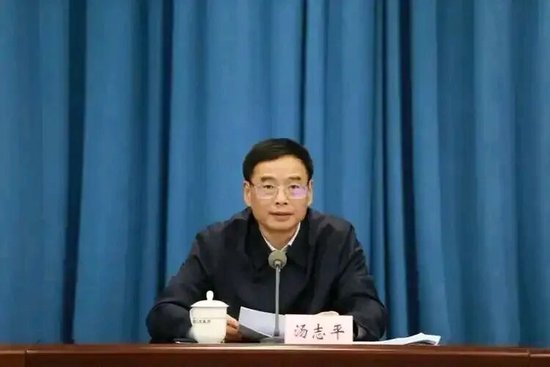
汤志平当选山西省政协副主席,副省长履新政协职责
Xin Lang Cai Jing· 2026-02-06 00:30
Core Viewpoint - The recent election of Tang Zhiping as the Vice Chairman of the Shanxi Provincial Committee of the Chinese People's Political Consultative Conference (CPPCC) highlights the integration of government and political advisory roles, which may enhance communication and coordination between the government and the CPPCC in Shanxi [1][5][12]. Group 1: Election and Roles - Tang Zhiping was elected as the Vice Chairman of the 13th Shanxi Provincial Committee of the CPPCC during the third plenary session of the committee, with 519 members present, meeting the required quorum [1][8]. - He has been serving as the Deputy Governor of Shanxi since January 2022, after being appointed as a member of the Shanxi Provincial Government in December 2021 [4][10]. - Tang is one of the few officials in China to hold both the Deputy Governor and CPPCC Vice Chairman positions simultaneously, which is expected to facilitate better integration of government decisions and CPPCC proposals [5][12]. Group 2: Background and Experience - Tang Zhiping has a strong background in urban planning and macroeconomic management, having spent most of his career in Shanghai before moving to Shanxi [3][10]. - His experience includes roles such as Deputy Director of the Shanghai Development and Reform Commission and Director of the Shanghai Price Bureau, which broadened his perspective from urban development to economic management [3][10]. - His technical expertise and understanding of local conditions in Shanxi are expected to contribute significantly to the province's economic transformation and development strategies [6][12]. Group 3: Economic Transformation in Shanxi - Shanxi is recognized as a key energy base in China and is undergoing a transition from a traditional energy economy to a diversified economic model [4][11]. - Tang has emphasized the importance of developing new productive forces tailored to local conditions, which aligns with Shanxi's strategic goals for economic diversification [5][11]. - The province is advancing its green energy initiatives, with renewable and clean energy installations accounting for 54.9% of its energy capacity, positioning it as a leader in green electricity transactions nationwide [4][11].

【两会】政府工作报告图解丨“十五五”开局 山西这样干!
Xin Lang Cai Jing· 2026-02-02 12:51
Group 1 - The core viewpoint emphasizes the importance of adhering to Marxism, Mao Zedong Thought, Deng Xiaoping Theory, and Xi Jinping's thoughts to promote high-quality development and ecological protection in Shanxi [2][3] - The overall strategy includes promoting the transformation of resource-based economies, deepening energy reforms, and establishing new high grounds for opening up inland areas [2][3] Group 2 - The focus is on achieving significant results in high-quality development by expanding domestic demand, improving consumption mechanisms, and increasing effective investment in key projects [7] - The development of new productive forces and the modernization of the economic system are prioritized to maintain reasonable economic growth [7] Group 3 - Major progress has been made in the transformation of the resource-based economy, with significant achievements in energy transition and industrial upgrading [9] - The establishment of a new energy system is underway, with a goal to increase renewable energy capacity by 100 million kilowatts [9] Group 4 - The strategy includes enhancing industrial upgrading, promoting traditional industries, and fostering emerging industries to achieve annual growth rates of over 5% in manufacturing and 8% in the digital economy [10] - Agricultural strategies aim for high-standard farmland to reach 30.5 million acres and grain production capacity to hit 30.5 billion jin by 2030 [10] Group 5 - The innovation system is being enhanced through the implementation of education and talent strategies, aiming for a 10% annual increase in R&D funding and the establishment of additional national laboratories [12] - A talent policy framework is being developed to create a unique talent center in Shanxi [12] Group 6 - The focus on social and cultural development includes promoting core socialist values and enhancing public cultural services to enrich the cultural life of the people [16][17] Group 7 - The quality of life for residents is being improved through employment initiatives, income growth plans, and the establishment of a comprehensive social security system [19] - Urbanization efforts aim for a population urbanization rate of around 71% and the modernization of rural areas [21] Group 8 - Significant achievements in ecological protection are noted, with an increase in non-fossil energy consumption and a reduction in major pollutants, alongside improved resource utilization [23] Group 9 - Safety development capabilities are being enhanced through a shift towards preventive public safety governance and improved disaster prevention measures [25]

【省委“十五五”规划《建议》解读之三】深刻把握“十五五”时期我省的发展方位和发展思路
Xin Lang Cai Jing· 2026-01-21 01:01
Core Viewpoint - The "14th Five-Year Plan" period is a crucial time for Shanxi to achieve high-quality development and deepen comprehensive transformation, laying a solid foundation for the realization of socialist modernization [1] Group 1: Development Opportunities - The overall judgment for Shanxi's development during the "14th Five-Year Plan" period is that opportunities outweigh challenges, with favorable conditions stronger than unfavorable factors [2] - Xi Jinping's personal attention and guidance for Shanxi's development provide significant confidence and support for the province [2] - The upcoming national policies and strategic measures during the "14th Five-Year Plan" period, such as constructing a new energy system and modern industrial system, offer broad space and rare opportunities for Shanxi's development [2] Group 2: Development Advantages - Shanxi is an important birthplace of Chinese civilization and a key energy base, with rich resources in coal and other minerals, as well as a strong foundation in traditional industries like electricity, steel, and chemicals [2] - The province has a unique geographical position and is well-connected, which enhances its importance in the national development landscape [2] - Achievements during the "13th Five-Year Plan" period have laid a solid foundation for high-quality development and modernization in the "14th Five-Year Plan" period [2] Group 3: Challenges and Issues - Shanxi faces prominent issues of unbalanced and insufficient development, with structural, institutional, and quality-related contradictions in its resource-based economy [2] - The transition from old to new growth drivers is still in progress, and there are significant shortcomings in ecological protection and public welfare [2] - The peak in coal consumption expected in the next five years poses urgent demands for industrial transformation and upgrading [2] Group 4: Development Principles - The overall requirements for economic and social development during the "14th Five-Year Plan" period include adherence to Marxism, comprehensive implementation of Xi Jinping's thoughts, and alignment with national strategic deployments [3] - Key principles include maintaining the Party's leadership, prioritizing high-quality development, and ensuring effective market and government collaboration [3] - The focus is on promoting economic growth, enhancing people's well-being, and ensuring decisive progress towards socialist modernization [3]
三措并举支持资源型经济转型
Jin Rong Shi Bao· 2026-01-15 02:07
Core Insights - The People's Bank of China, Linfen Branch, focuses on extending the energy industry chain and transforming green transportation, promoting financial resources to empower local economic transformation since 2025 [1] - A total of 103 projects have been pushed to financial institutions, with 23 projects receiving bank credit support amounting to 34.32 billion yuan [1][2] - The initiative includes collaboration between government and financial institutions to enhance communication and support for key projects [2] Group 1: Provincial and Municipal Collaboration - The Linfen Branch of the People's Bank of China, in collaboration with local government offices, has established a working group to analyze the city's industrial transformation and identify financial support directions [1] - Policy briefings and financial demand assessments have been conducted to understand the needs of key projects and enterprises [1][2] - A series of activities have been organized to facilitate communication between government, banks, and enterprises, enhancing collaborative efforts [1] Group 2: Mechanism-Driven Initiatives - An action plan has been developed to support the energy industry chain and green transportation, outlining key support areas and tasks [2] - Two information platforms have been established to maintain a directory of key projects and facilitate financing connections [2] - A credit product library covering the entire industry chain has been created, encouraging financial institutions to innovate and develop tailored financial products [2] Group 3: Enterprise-Specific Policies - Financial institutions are encouraged to follow the financing needs throughout the project lifecycle, providing diverse financing models [3] - Supply chain financing models have been innovated to support small and medium-sized enterprises through credit advantages of core enterprises [3] - Tailored services are provided to address specific financing challenges faced by enterprises, enhancing credit limits and reducing financing costs [3]
锚定“十五五”开局 山西以转型之笔绘就高质量发展新图景
Zhong Guo Fa Zhan Wang· 2026-01-06 09:07
Core Viewpoint - The Shanxi Provincial Economic Work Conference emphasizes the importance of high-quality development and comprehensive transformation as the province enters the "15th Five-Year Plan" period, focusing on energy revolution and regional development [1][2]. Group 1: Economic Development Goals - The overall requirement for economic work in 2026 is to adhere to Xi Jinping's thoughts, implement the spirit of the 20th National Congress, and focus on the strategic positioning of Shanxi [2]. - The conference highlights the need to balance qualitative improvements with quantitative growth, emphasizing transformation effectiveness and the development of new productive forces [2][3]. Group 2: Policy Implementation - Shanxi will implement proactive macro policies, enhance policy foresight, and promote coordinated development and safety [3]. - The province aims to expand domestic demand, optimize supply, and promote orderly transformation while ensuring employment and market stability [3]. Group 3: Key Tasks for Transformation - The conference outlines ten key tasks across various sectors, including domestic demand, energy, industry, technology, and reform [4]. - Shanxi will focus on expanding domestic demand through consumer stimulation and major project construction, while also ensuring energy security through a deepened energy revolution [4][5]. Group 4: Industry and Innovation - The province will promote traditional industry upgrades and cultivate emerging industries, implementing actions for manufacturing revitalization [5][6]. - Shanxi aims to strengthen the integration of technological and industrial innovation, enhancing the role of enterprises in innovation and promoting the transformation of scientific achievements [6]. Group 5: Reform and Opening Up - Economic reform is identified as a key strategy for transformation, with a focus on optimizing the business environment and enhancing the vitality of market entities [7]. - Shanxi will expand its level of openness, promoting integrated development of trade and investment, and enhancing cooperation with other regions [7]. Group 6: Social Welfare and Environmental Protection - The ultimate goal of high-quality development is to improve the well-being of the people, with a focus on increasing income and providing social services [8]. - Shanxi is committed to green development, promoting pollution prevention and ecological restoration, while ensuring safety in various sectors [8].
山西资源型经济转型迈出新步伐
Ren Min Ri Bao· 2025-12-25 22:27
Group 1: Technological Innovation and Energy Security - The "Coal Sea Dragon" excavation equipment has achieved technological breakthroughs, and large-scale open-pit mining intelligent electric shovels have led the industry, overcoming key technologies in coal and coalbed methane co-extraction [1] - Shanxi Province invested approximately 5 billion yuan in research and development during the 14th Five-Year Plan period, establishing over 80 provincial-level energy technology innovation platforms [1] - The province has built 369 intelligent coal mines and 75 green mining pilot coal mines, with advanced coal production capacity accounting for 84% [2] Group 2: Clean Energy Development - The new energy base project in the coal mining subsidence area of Jinbei has a total construction scale of 10 million kilowatts, capable of delivering 27 billion kilowatt-hours of clean electricity annually to the Beijing-Tianjin-Hebei region [3] - The proportion of installed capacity for new energy and clean energy in Shanxi increased from 39.7% to 54.65% during the 14th Five-Year Plan period [3] - The Shanxi electricity spot market has gathered 156 thermal power units and over 600 new energy stations, maintaining a new energy utilization rate of over 97% [3] Group 3: Emerging Industry Growth - Shanxi has established 13 pilot green electricity parks covering sectors such as computing power and equipment manufacturing [4] - The export value of Shanxi's "new three items" reached 3.356 billion yuan in 2024, a year-on-year increase of 183% [5] - The revenue from the photovoltaic and wind power equipment industry chains each exceeded 23 billion yuan [5]
山西金融“量增质升”服务经济高质量发展
Shang Hai Zheng Quan Bao· 2025-12-15 19:19
Core Viewpoint - Shanxi's financial system is committed to serving the real economy and promoting high-quality development, as evidenced by significant growth in social financing and loans [2][3][4]. Financial Performance - As of the end of September, Shanxi's social financing stock reached 7 trillion yuan, a year-on-year increase of 8.1% - The balance of various loans from financial institutions in the province was 4.9 trillion yuan, up 6.7% year-on-year - Inclusive micro-loan balance stood at 534.06 billion yuan, reflecting a robust year-on-year growth of 21.5% [2][4]. Financial Innovation and Support - Shanxi's financial management system has been deepening supply-side structural reforms and promoting financial innovation during the 14th Five-Year Plan period - The province has focused on directing financial resources towards key areas such as technological innovation, green transformation, and inclusive micro-finance [3][4]. Loan Structure Optimization - By the end of September, the balance of green loans in Shanxi was 567.05 billion yuan, an increase of 63.98 billion yuan since the beginning of the year - The balance of loans to technology-based enterprises reached 277.27 billion yuan, with a year-on-year growth of 10.3% [4][5]. Support for Manufacturing Sector - The medium and long-term loan balance for the manufacturing sector was 259.91 billion yuan, reflecting a year-on-year increase of 12.7% - This financial support is crucial for the revitalization and upgrading of Shanxi's manufacturing industry [5]. Capital Market Development - Shanxi is systematically promoting the efficient connection between technology enterprises and the capital market through various initiatives - The province has confirmed 31 key listed backup enterprises and 200 enterprises in the resource pool, with over 60% being high-tech enterprises [5][6]. Listing Support Mechanisms - Shanxi has established a resource pool for nurturing listed companies, with over 1,160 enterprises currently in the pool - The province is focusing on guiding specialized and innovative enterprises to enter the resource pool for cultivation [6][7]. Future Development Pathways - Shanxi's financial office has outlined a clear roadmap for capital market development, emphasizing the service of the real economy and increasing the proportion of direct financing - The province aims to enhance the comprehensive service capabilities of regional equity markets and strengthen the construction of a modern capital market system [7].