
非理性竞争

Search documents
港股异动 | 美团-W(03690)涨超4% 监管部门启动外卖行业反垄断调查评估
智通财经网· 2026-01-12 02:12
Group 1 - Meituan-W (03690) saw a stock price increase of over 4%, closing at 102.9 HKD with a trading volume of 2.433 billion HKD [1] - The State Council's Anti-Monopoly and Anti-Unfair Competition Committee announced an investigation into the competitive landscape of the food delivery service industry, which Meituan supports [1] - Meituan has highlighted issues of irrational competition in the food delivery market, such as price wars, subsidies, and traffic control, advocating for a return to rational competition [1] Group 2 - According to Caitong Securities, Meituan is a leading local business platform in China, with core operations in food delivery, flash purchase, and in-store travel services, while also developing new businesses like Xiaoxiang Supermarket and expanding into overseas markets [1] - The macroeconomic environment is identified as the largest beta factor, with the service sector showing higher growth rates compared to retail goods, indicating greater growth potential and resilience for the platform [1] - The increasing online penetration rate supports the stability of food delivery services, while the rapid growth of in-store and flash purchase businesses contributes to high growth [1]

国务院对外卖平台开展调查评估,美团回应:坚决拥护,将全力做好配合工作
Xin Lang Cai Jing· 2026-01-09 10:00
Group 1 - The State Council's Anti-Monopoly Committee has announced the initiation of an investigation and assessment of market competition in the food delivery platform service industry [1][2] - Meituan has expressed strong support for the investigation and will fully cooperate with the authorities [1][2] - Recent issues in the food delivery market include irrational competition characterized by price wars, subsidies, and traffic control [1][2] Group 2 - Meituan has repeatedly called for the industry to return to rational competition and has firmly opposed "involutionary" competition [1][2] - The company aims to use this investigation as an opportunity to work with other platforms in the industry to fulfill market responsibilities and promote fair competition [1][2] - The goal is to foster innovation and healthy development within the food delivery platform service industry [1][2]
隆基李振国呼吁强化行业自律,坚决抵制非理性竞争
中国能源报· 2025-12-18 08:20
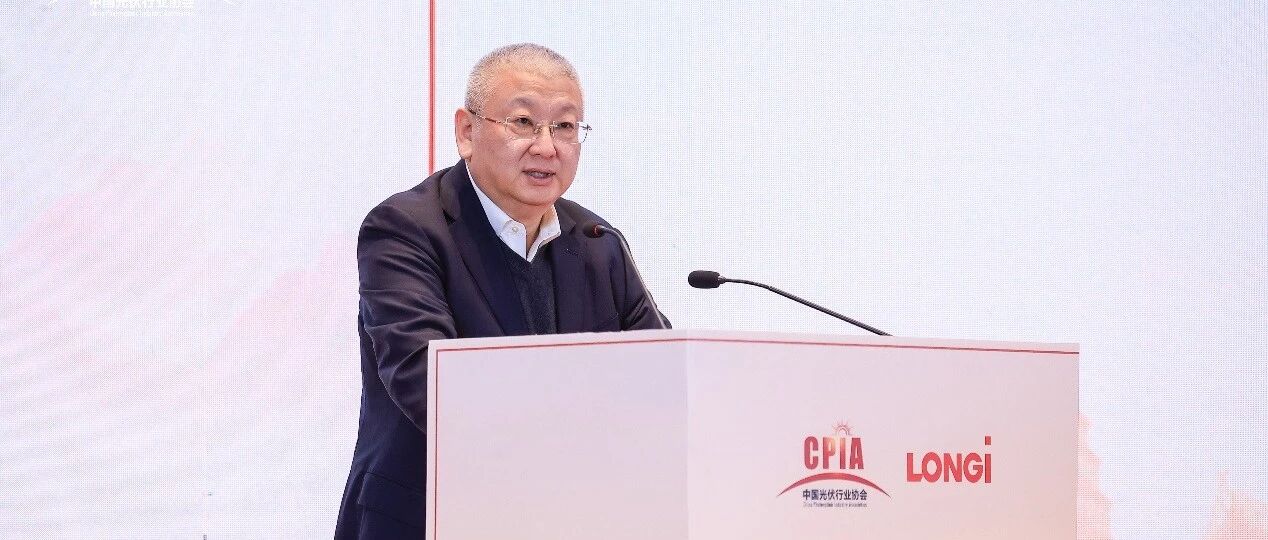
在12月1 7日举行的2025光伏行业年度大会光伏供应链配套发展研讨会上,隆基绿能创始人、首席技术官李振国深入分析了当前光伏产 业发展态势,并呼吁全行业强化自律、抵制非理性竞争,共同推动产业链协同、健康发展。 李振国指出,中国光伏产业经过数十年发展,已形成技术研发活跃、产业链完整齐备、端到端自主可控的具有国际竞争优势的战略性新 兴产业。中国光伏企业通过自主创新与原创技术发展,已经推动多个产业链环节达到国际领先水平,中国光伏产品已经出口至全球200 多个国家和地区,成为全球能源转型的重要支撑。 End 欢迎分享给你的朋友! 出品 | 中国能源报(c ne ne rgy) 责编丨李慧颖 当前,中国光伏产业正经历深刻的周期性调整,面临着产能、价格与"内卷式"竞争的挑战。李振国认为,创新引领、稳健协同的供应链 体系,是推动产业持续健康发展的关键所在。 "面对当前形势,光伏行业需要凝聚共识、齐心协力。"李振国表示,一方面,要持续强化创新引领、构建韧性协同的供应链体系,积极 开拓全球市场,持续提升中国光伏品牌的国际影响力与竞争力;另一方面,呼吁产业链上下游企业加强务实合作,强化行业自律,坚决 抵制非理性竞争,合力营造开放 ...


隆基李振国呼吁光伏业构建韧性供应链抵制非理性竞争
Zhong Guo Jing Ying Bao· 2025-12-17 06:03
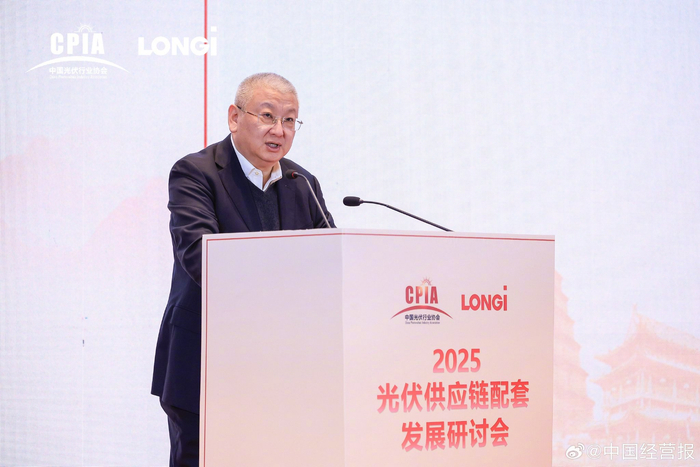
同时,李振国也表示,当前中国光伏产业正经历深刻的周期性调整,面临产能供需错配、价格下行 与"内卷式"竞争等挑战。在其看来,创新引领、稳健协同的供应链体系,是推动产业持续健康发展的关 键所在。 展望未来,李振国认为,一方面,要持续强化创新引领、构建韧性协同的供应链体系,积极开拓全球市 场,持续提升中国光伏品牌的国际影响力与竞争力;另一方面,呼吁产业链上下游加强务实合作,强化 行业自律,坚决抵制非理性竞争,合力营造开放包容、规范有序、韧性高效的产业新生态,为构建新型 能源体系、保障国家能源安全贡献光伏力量。中经记者 张英英 吴可仲 西安报道 【隆基绿能李振国:构建韧性协同供应链 抵制非理性竞争】12月17日,在西安召开的"2025光伏供应链 配套发展研讨会"上,隆基绿能创始人、首席技术官李振国发表致辞,呼吁行业强化创新与协同,构建 更具韧性的供应链体系。 李振国指出,经过几十年发展,我国光伏产业从无到有、从小到大,已成为技术研发活跃、产业链完整 齐备、端到端自主可控的具有国际竞争优势的战略性新兴产业。中国光伏企业通过自主创新与原创技术 发展,已经推动产业链多个环节达到国际领先水平,中国光伏产品出口覆盖全球200多 ...
工信部重要座谈会,哪些锂业巨头参加了?
Shang Hai Zheng Quan Bao· 2025-11-29 02:52
Core Viewpoint - The Ministry of Industry and Information Technology (MIIT) emphasizes the importance of regulating competition in the power and energy storage battery industry to promote high-quality development and address existing challenges [3][4]. Group 1: Industry Development - The power and energy storage battery industry in China has rapidly developed, achieving global competitive advantages in market scale, innovation capability, and industrial system [3]. - The MIIT acknowledges the challenges faced by the industry and aims to implement targeted policies to address irrational competition and enhance production consistency and product quality [3][4]. Group 2: Industry Collaboration and Innovation - Industry enterprises are encouraged to promote entrepreneurial spirit, resist irrational competition, and maintain a healthy market environment [4]. - There is a call for increased research and development investment to enhance core competitiveness and strengthen collaboration within the industrial chain [4][5]. Group 3: Regulatory Measures - The MIIT plans to monitor production capacity, implement early warning systems, and enforce regulations against intellectual property violations to ensure orderly industry development [3][5]. - The ministry will develop the "14th Five-Year" industrial development plan, focusing on technological innovation and modernizing industry governance [5].
工信部召开动力和储能电池行业制造业企业座谈会 坚决抵制非理性竞争行为
Zheng Quan Ri Bao· 2025-11-28 10:19
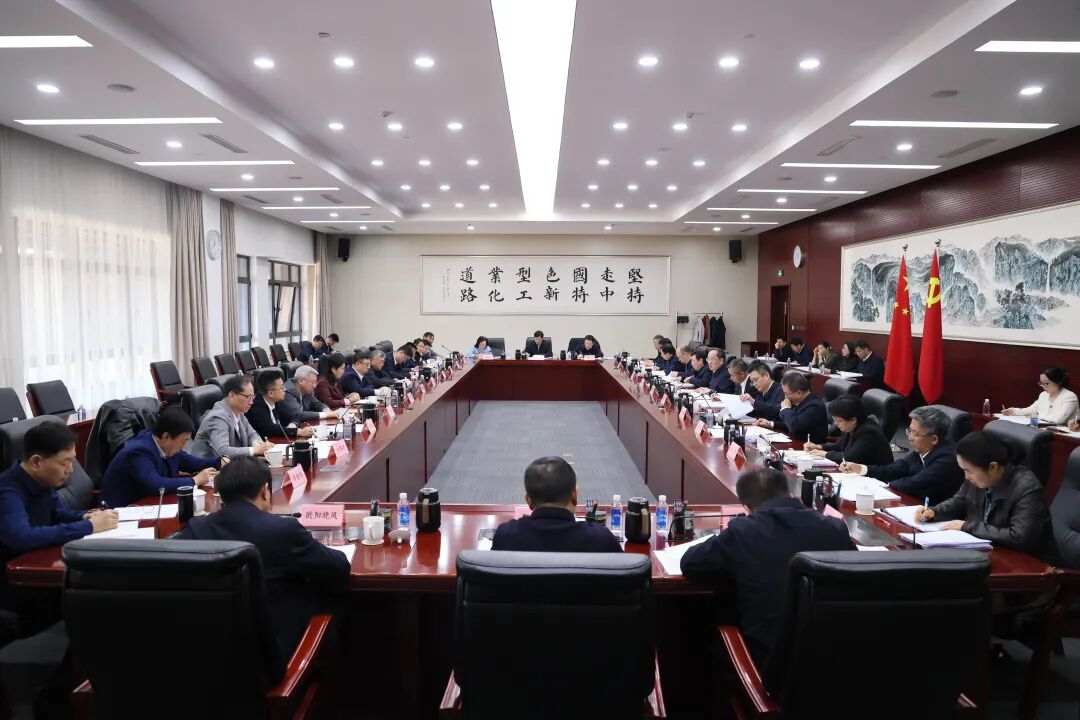
(文章来源:证券日报) 李乐成强调,行业企业要大力弘扬企业家精神,坚决抵制非理性竞争行为,共同维护健康有序市场环 境。要坚持创新引领,加大研发投入,补齐短板弱项,提升企业核心竞争力。要强化产业链协同,加强 合作,发挥协同增量效应,提升产业链自主可控水平,塑造发展新优势。行业协会要深化产业发展情况 跟踪研究,加强行业自律,推动构建协作共赢产业生态。工业和信息化部将科学编制"十五五"产业发展 规划,加大技术创新支持,强化标准支撑引领,提升产业治理现代化水平,为产业高质量发展创造良好 环境。 会上,12家动力和储能电池产业链企业负责人围绕企业生产经营、技术研发、市场竞争、知识产权保护 等深入交流,介绍企业基本情况和当前面临的困难问题,提出意见建议。 工业和信息化部党组书记、部长李乐成在会上指出,党中央对动力和储能电池产业发展高度重视。近年 来,在各方共同努力下,我国动力和储能电池产业迅速发展壮大,在市场规模、创新能力、产业体系等 方面形成了全球竞争优势。与此同时,产业发展还面临不少问题和挑战。工业和信息化部要全面客观认 识产业发展形势,认真落实党中央关于综合整治"内卷式"竞争的决策部署,加快推出针对性政策举措, 依 ...
尹江鳌:发挥再保险“三器”功能,促进实现敢保、善保、会保
2 1 Shi Ji Jing Ji Bao Dao· 2025-10-23 02:52
Core Viewpoint - The reinsurance sector is urged to leverage its roles as an "amplifier," "regulator," and "connector" to enhance the insurance industry's capacity to underwrite risks effectively and responsibly [1][3]. Group 1: Amplifier Role - The reinsurance industry should utilize global reinsurance capacity to promote "daring to insure," thereby improving the overall level of protection. As of January to September 2025, China's insurance premium income reached 5.2 trillion yuan, a year-on-year increase of 8.5%, with a projected annual premium scale exceeding 6 trillion yuan [3][4]. - The global direct insurance and reinsurance markets are valued at over $7.2 trillion and $900 billion, respectively, with underwriting capacities approximately nine times and slightly more than China's [3][4]. - The Shanghai International Reinsurance Registration and Trading Center is expected to create a favorable environment to attract more institutions, facilitating the connection of risks and capital [3]. Group 2: Regulator Role - The reinsurance sector is positioned as a tool for regulating market competition, particularly in addressing irrational competition in the non-auto insurance sector. The comprehensive loss ratio for the property insurance industry was 72.2% from January to September 2025, which is 5.9 percentage points higher than the average over the past decade [4]. - Recent regulatory measures have been implemented to strengthen oversight in the non-auto insurance sector, aiming to promote fair competition [4]. - Reinsurance serves not only as a risk transfer mechanism but also as a pricing benchmark and risk transmission signal, helping to regulate the insurance market [4]. Group 3: Connector Role - The reinsurance industry is tasked with utilizing global reinsurance technology to promote "knowing how to insure," thereby advancing high-level openness. There are existing gaps in risk modeling and loss assessment for traditional risks such as typhoons and earthquakes [5]. - New risks arising from advancements in information technology and artificial intelligence present challenges in pricing and loss assessment, particularly in areas like cybersecurity and low-altitude flying vehicles [5]. - The Shanghai International Reinsurance Registration and Trading Center is encouraged to facilitate technical exchanges in risk modeling and underwriting, enhancing the professional standards of China's insurance industry [5].

肃清网络乱象,汽车行业应回归产品竞争
Nan Fang Du Shi Bao· 2025-09-11 15:32
Core Viewpoint - The Chinese government is launching a three-month special action to address online chaos in the automotive industry, focusing on illegal profit-making, exaggerated and false advertising, and malicious defamation [1][2]. Group 1: Industry Overview - The automotive industry is a pillar industry with a long supply chain, high interconnectivity, technology-intensive characteristics, and global layout, involving multiple sectors such as steel, machinery, and electronics [1]. - In the first eight months of this year, China's automotive production and sales reached 21.05 million and 21.12 million units, respectively, representing year-on-year growth of 12.7% and 12.6% [1]. - New energy vehicles (NEVs) accounted for 45.5% of total new car sales, with production and sales of 9.625 million units and 9.62 million units, respectively, reflecting year-on-year growth of 37.3% and 36.7% [1]. - Automotive exports reached 4.292 million units, a year-on-year increase of 13.7%, with NEV exports at 1.532 million units, growing by 87.3% [1]. Group 2: Challenges in the Industry - The automotive industry is facing irrational competition, particularly in online discourse, where some companies or third-party organizations create false information to gain traffic or undermine competitors [2][3]. - The Ministry of Industry and Information Technology emphasizes that irrational competition can destroy a company or industry overnight, highlighting the urgency of addressing these issues [2]. - The special action targets three main issues: illegal profit-making, exaggerated and false advertising, and malicious defamation, indicating a strong focus on these areas [2][3]. Group 3: Specific Issues Addressed - Illegal profit-making involves creating false content and using improper evaluations to extort companies, forming a gray profit chain [2][3]. - Exaggerated and false advertising is prevalent, with some companies misleading consumers about product performance and manipulating accounts for false evaluations [3]. - Malicious defamation is recognized as a significant issue, with organized groups spreading false negative information about competitors, which detracts from industry image and consumes resources that could be used for innovation [3]. Group 4: Future Outlook - The action aims to uncover the underlying parties behind these online issues, indicating a comprehensive approach to tackling the problem [3]. - The competition among car companies should focus on technology, product strength, reputation, and brand, rather than engaging in irrational disputes [3]. - As the special action progresses, there is optimism that the automotive industry will overcome these online challenges, facilitating China's transition from a major automotive nation to a strong automotive power [3].
21社论丨加快建设全国统一大市场,治理非理性竞争
21世纪经济报道· 2025-09-11 00:12
Group 1 - The core viewpoint emphasizes that irrational competition can destroy enterprises and industries, potentially overnight, and must not be tolerated [1] - Irrational competition, particularly the "involution" phenomenon, has emerged in various sectors, leading to disordered competition that undermines market efficiency and innovation [1][2] - Price competition is prevalent in low-value-added sectors, while high-value-added sectors rely on technological differentiation and brand building for competitive advantage [1][2] Group 2 - Non-rational competition leads to a vicious cycle where companies cut production costs and lower product quality to gain price advantages, squeezing profit margins across the industry [2] - This situation not only affects the sustainability of enterprises but also damages consumer trust and the overall development potential of the industry [2][3] - The transition from rapid growth to high-quality development in China necessitates a focus on technological innovation and the establishment of a globally competitive modern industrial system [2][3] Group 3 - Innovation is crucial for economic circulation, enhancing productivity, and fostering new industries, which in turn increases household wealth and government revenue [3] - Persistent irrational competition undermines the ability of manufacturing and innovation to attract investment, jeopardizing the innovation-driven growth model [3] - Addressing irrational competition is vital for the fate of industries and the successful establishment of a new economic structure in China [3]

21社论丨加快建设全国统一大市场,治理非理性竞争
2 1 Shi Ji Jing Ji Bao Dao· 2025-09-10 23:05
Group 1 - The Ministry of Industry and Information Technology emphasizes that irrational competition can destroy enterprises and industries overnight, which is intolerable [1] - Irrational competition, particularly "involution-style" competition, has emerged in various sectors in China, leading to disordered competition as the economy transitions to innovation-driven development [1][2] - Price competition is prevalent in low-value-added sectors, while high-value-added sectors rely on technological differentiation and brand building for competitive advantage [1] Group 2 - Non-rational competition leads to a vicious cycle where companies cut production costs and lower product quality to gain price advantages, squeezing profit margins across the industry [2] - This situation not only affects the sustainability of enterprises but also damages consumer trust and distorts resource allocation efficiency, ultimately hindering innovation [2][3] - The transition from high-speed to high-quality development in China necessitates a focus on technological innovation to enhance manufacturing competitiveness and create a modern industrial system with global competitiveness [2][3] Group 3 - Innovation is crucial for economic circulation, driving productivity and creating new industries, which in turn increases household wealth and government revenue for public services [3] - However, widespread irrational competition undermines this cycle by leading to low profits in manufacturing, making it difficult to attract investment for innovation [3] - Addressing irrational competition is essential for the fate of industries and the ability to achieve a new development pattern and establish a self-circulating economy [3]