标准化

Search documents
绿茶集团(6831.HK):中式融合菜引领者 打造高性价比大众餐厅
Ge Long Hui· 2025-09-19 18:49
Group 1 - The core viewpoint is that Green Tea is a leading player in the domestic Chinese casual dining market, focusing on fusion cuisine and high cost-performance dining, primarily in East China, North China, and Guangdong [1][2] - Green Tea has adopted a small store strategy, continuously expanding its store network through regional densification, geographical expansion, and market penetration, indicating significant long-term opening space [1][2] - The company has experienced rapid growth in revenue and performance, with store numbers reaching 502 by H1 2025, a year-on-year increase of 28.7%, and revenue of 2.29 billion yuan, up 23.1%, with net profit of 230 million yuan, up 34.0% [1][2] Group 2 - The Chinese casual dining market is projected to reach a scale of 534.7 billion yuan in 2024, with a year-on-year growth of 7.4%, accounting for 19.3% of the Chinese restaurant market, indicating long-term growth potential [2] - The trend towards standardization, digitization, and cost performance is driving the industry, with consumers increasingly seeking value dining options, leading to a general decline in per capita spending across various dining categories [2] - Green Tea has a strong capability in menu development, with the chairman directly overseeing the team, launching 172, 168, and 203 new dishes in 2022, 2023, and 2024 respectively, ensuring long-term menu appeal [2] Group 3 - The profitability of individual stores is improving under the small store strategy, with a payback period of approximately 14-15 months for new stores opened in 2023-2024, and further profit margin improvement expected as store formats continue to optimize [2] - The company aims to expand its total store count to 1,500 in the long term, indicating a broad opening space for future growth [2] - The investment recommendation highlights that Green Tea is expected to continue its expansion through various strategies, with a target price of 11.8 HKD based on a 15x PE ratio for 2025, and a strong buy rating is suggested [3]
陈春花:真正的“管理控制”,管目标而非管人
Jing Ji Guan Cha Bao· 2025-09-19 13:25
Group 1 - The core viewpoint emphasizes the importance of control as a fundamental function in management to ensure performance achievement, despite the growing focus on empowerment and activation due to digital technology [1][2] - Control is essential for transforming corporate planning, organization, and leadership into performance, requiring measurement, verification, and correction throughout the process [3][4] Group 2 - Control serves five key functions: preventing crises, standardizing production, assessing employee performance, revising plans, and safeguarding organizational assets [5][6][7] - Control should be understood as a management behavior aimed at goals rather than a means of controlling individuals, focusing on continuous alignment with objectives and plans [8] Group 3 - The control process consists of four steps: establishing work goals and assessment standards, measuring actual performance, comparing actual performance with goals, and taking necessary corrective actions [9][10][11] - Effective control requires the establishment of standards, quantification of those standards, and a comprehensive approach throughout the management process [13][14][19] Group 4 - Effective control methods possess five important characteristics: economic efficiency, relevance to significant issues, timeliness, clarity, and the ability to clearly indicate necessary actions [20][21][22][23][24][25]
中德先进制造案例上新 太仓市三项标准化试点顺利通过验收
Yang Zi Wan Bao Wang· 2025-09-19 09:40
Core Points - Taicang City has achieved significant success in industrial standardization, with three manufacturing standardization pilot projects passing evaluation with a 100% success rate, marking a new stage in Sino-German standardization cooperation [1][10] - The pilot projects have led to the establishment of a comprehensive standard system within Sino-German enterprises, enhancing their participation in standard formulation and achieving multiple benefits in economic, social, and ecological aspects [4] Group 1 - Schaeffler (China) Co., Ltd. has developed a smart manufacturing application standard system, reducing operational costs and improving equipment utilization by 3%-5%, while also lowering average maintenance time for rotating equipment by approximately 10% [6] - During the pilot phase, Taicang Tongwei Electronics Co., Ltd. achieved a 92% conversion rate of independent intellectual property results into standards and participated in the formulation of three national standards and one industry standard [8] - Yuxisile Plastic Products (Taicang) Co., Ltd. established a standardization management committee, reducing defective product rates to 1.4 ppm and achieving a customer satisfaction rate of 98.24% [9] Group 2 - Taicang's market regulatory bureau has actively supported key Sino-German enterprises in participating in advanced manufacturing standardization pilot projects, enhancing the integration of Sino-German industrial chains [10] - In 2023, Taicang has seen the addition of three international standards, 77 national standards, 27 industry standards, and four local standards, promoting the establishment of the "Smart Manufacturing International Standard Research and Application Center" [12] - The market regulatory bureau aims to leverage Sino-German standardization innovation to deepen the implementation of industrial standardization strategies, integrating more "Taicang cases" into international and national standards [12]


从低价小商品卖向全球,中国品牌如何做到?
Hu Xiu· 2025-09-18 07:20
Core Insights - Chinese brands are breaking through globally, with cultural recognition and emotional resonance becoming new selling points rather than just price [1] - In the digital age, Chinese brands leverage cloud computing to tackle globalization challenges, empowered by cultural strength, standardization, and technological capabilities, allowing them to achieve global premium pricing and influence [1] Group 1 - Chinese brands are no longer solely defined by price, but by cultural identity and emotional connection [1] - The digital transformation is enabling Chinese brands to compete effectively on a global scale [1] - The combination of cultural power, standardization, and technology enhances the global competitiveness of Chinese brands [1]
魏建军坚持的标准化,能否带领高山7更进一步
Guan Cha Zhe Wang· 2025-09-13 12:21
Core Viewpoint - Long-termism and standardization are emphasized by Great Wall Motors' chairman Wei Jianjun, highlighting the importance of adhering to safety, performance, and quality standards in vehicle manufacturing [1][3][12]. Group 1: Long-termism and Standardization - Wei Jianjun has mentioned the concept of long-termism in vehicle manufacturing multiple times in recent months, advocating for a return to the essence of manufacturing [1][3]. - The focus on standardization reflects a critique of exaggerated marketing practices in the Chinese automotive industry, suggesting a trend towards maturity [3][5]. Group 2: Product Features of the High Mountain 7 - The High Mountain 7 is priced at 289,800 yuan and targets the mid-to-large family MPV market, balancing standardization with market demand [5]. - The High Mountain 7 features advanced technology, including a standard laser radar and the Coffee Pilot Ultra driver assistance system, which supports over 200 parking types with a 96% success rate [7]. - The vehicle is equipped with a self-developed Hi4 intelligent four-wheel drive system, delivering a maximum power of 337 kW and a torque of 644 N·m, achieving 0-100 km/h in 5.7 seconds [8]. Group 3: Safety and Quality Assurance - The High Mountain 7 incorporates a high-strength cage structure with 81.96% high-strength steel and has passed 89 rigorous tests for battery safety, achieving full marks in the "China Electric Vehicle Fire Safety Index" certification [10][12]. - Wei Jianjun asserts that safety is a fundamental requirement, not just an added feature, emphasizing the vehicle's commitment to quality and user trust [10][12]. Group 4: Market Positioning and Brand Strategy - The brand aims to refine its target user base while integrating the concept of standardization into its operational framework [15]. - Since introducing the new brand philosophy of "changing for users" in May, the company has been working on enhancing its brand image and direct-to-consumer (DTC) service model [15]. - The company faces challenges in proving that its commitment to standardization can compensate for its relative lag in system development compared to competitors [15].


贾国龙:我现在陷入自证清白循环,日营业额掉两三百万!罗永浩最新发声
Sou Hu Cai Jing· 2025-09-13 10:29
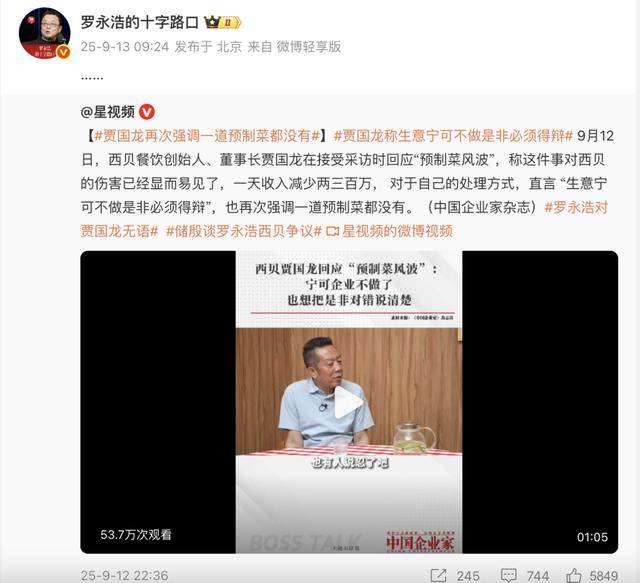
Group 1 - The recent dispute between Luo Yonghao and Xibei has gained significant attention, highlighting the controversy surrounding the use of pre-prepared dishes in the restaurant industry [1] - Xibei's founder, Jia Guolong, reported a significant drop in daily revenue, estimating a loss of 1 million yuan on September 11 and an expected loss of 2 to 3 million yuan on September 12 [2] - Jia emphasized that while Xibei employs pre-preparation techniques, it does not offer pre-prepared dishes, arguing that the distinction should be based on quality and standards rather than the method of preparation [2] Group 2 - Jia expressed concerns about public misconceptions regarding pre-prepared dishes, stating that many do not contain additives and that freezing is an effective preservation method [2] - Luo Yonghao's social media activity included sharing Jia's interview and criticizing the response from Xibei, suggesting that the company is not addressing its issues effectively [5][8] - Luo provided advice to Xibei, recommending that they either avoid serving pre-prepared dishes in dine-in settings or clearly label them as such [10]
中国核电董事长卢铁忠:以新“三化”战略为引领 持续增强价值创造能力
Zhong Zheng Wang· 2025-09-12 14:07
Core Viewpoint - China National Nuclear Power (CNNP) emphasizes its commitment to the "carbon peak and carbon neutrality" strategy, aiming to enhance its core competitiveness and value creation capabilities while building a clean energy system in collaboration with industry partners [1][2]. Group 1: Company Achievements - CNNP has achieved a strategic transformation from single nuclear power operation to a diversified layout including "nuclear energy + non-nuclear clean energy + strategic emerging industries" over the past ten years [2]. - The installed capacity of CNNP has seen significant growth, with non-nuclear clean energy capacity exceeding 30 million kilowatts [2]. - CNNP's 25 operational units are set to meet the "WANO Excellence Action Plan 2030" performance targets, making it one of the first companies globally to achieve this [2]. Group 2: Strategic Partnerships and Support - China National Nuclear Corporation (CNNC) expresses ongoing support for CNNP's capital market activities, aiming to establish CNNP as a benchmark for CNNC's listed companies [2][3]. - China Guoxin Holdings, as a major shareholder, plans to leverage its role as a long-term, patient, and strategic capital provider to support CNNP's high-quality development [3]. - CITIC Securities has played a crucial role in CNNP's IPO and subsequent financing, assisting in raising 42.6 billion yuan for major project construction and corporate development [3].

山东首次下达“揭榜挂帅”省级地方标准立项计划
Da Zhong Ri Bao· 2025-09-07 01:00
Core Insights - The provincial market supervision bureau has issued a notification regarding the second batch of local standard plans for 2025, focusing on supporting national strategic initiatives and high-quality development in key industries [1] - This is the first time the "reveal and take charge" approach has been applied to provincial local standard projects, with 19 projects covering emerging fields such as green environmental protection, new energy, and health care [1] Group 1: Standardization Initiatives - The "reveal and take charge" approach aims to guide technical institutions, research institutes, and universities to address challenges in developing local standards in core areas and key links, injecting standardized momentum into the upgrade of key industries and improvement of people's livelihoods [1] - The projects were identified through a comprehensive survey and public solicitation, highlighting their necessity and urgency in relevant fields [1] Group 2: Specific Projects - In the field of industrial intelligence, a project titled "Guidelines for the Application of Intelligent Inspection Model Technology in Power Transmission and Transformation" has been initiated to standardize model recognition and detection accuracy and speed, enhancing the efficiency of intelligent inspection robots [1] - In the health care sector, a project for "Standards for Unaccompanied Care Services in Medical Institutions" aims to standardize the process of unaccompanied care services, improving patient experience [1] - In the realm of government services, a project for "Public Data 'One Person One File' and 'One Enterprise One File' Data Standards" has been established to ensure the timeliness and accuracy of data collection, supporting the construction of a "No Proof Province" and the reform of "Efficiently Completing One Thing" [1] Group 3: Future Directions - The provincial market supervision bureau will continue to strengthen coordination with relevant departments, enhance the management of standard formulation cycles, and ensure the high-quality completion of key field standard development [2]
赛博老中医,能治药店虚火?
Hu Xiu· 2025-09-06 03:06
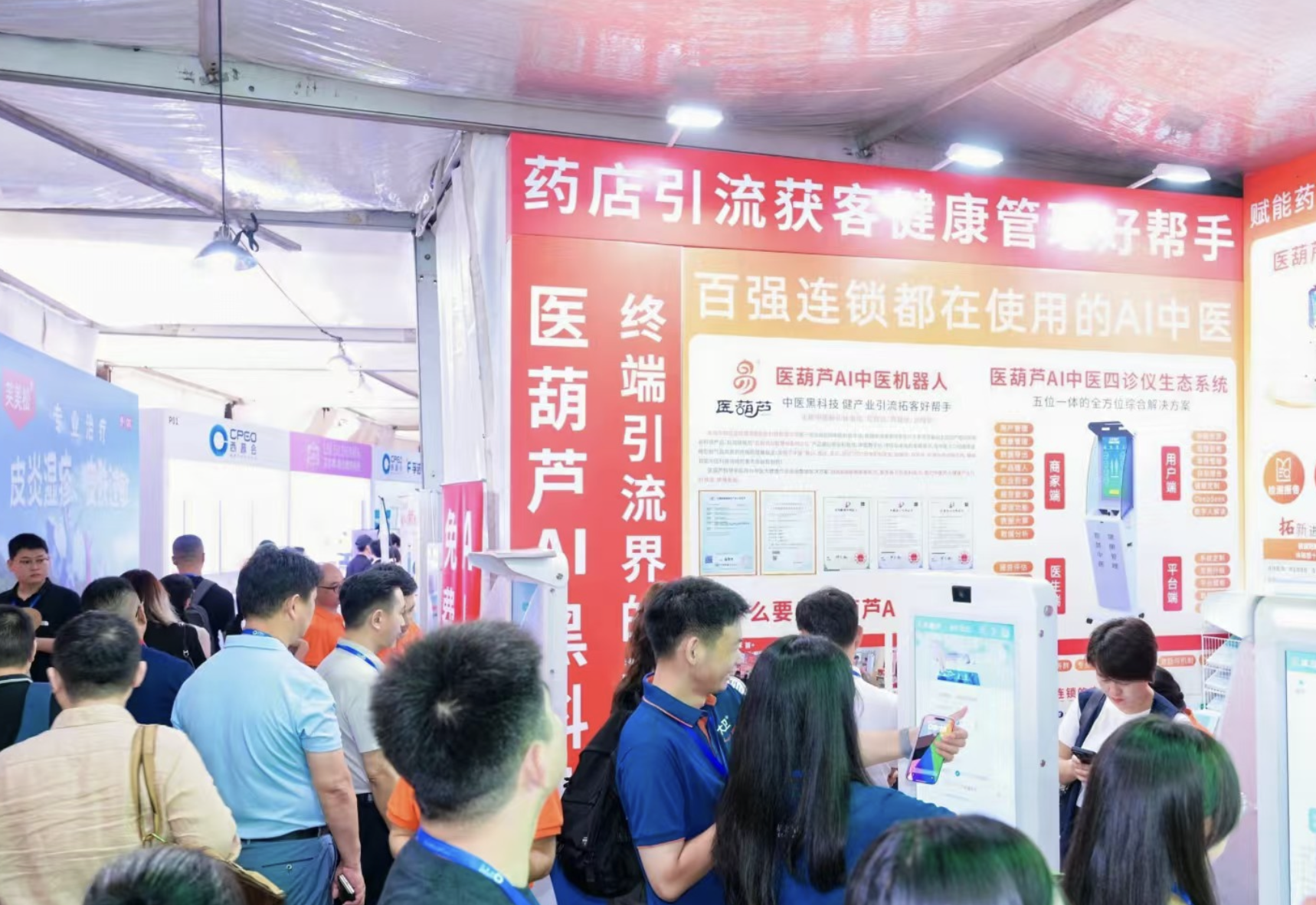
Core Insights - The article discusses the emergence of AI in the traditional pharmaceutical retail market, particularly through the introduction of AI-based health diagnostic devices, which are attracting significant consumer interest and driving foot traffic to pharmacies [1][4][6]. Industry Overview - The AI-based health diagnostic devices, such as the "医葫芦" AI, are gaining traction among consumers, especially those aged 30 to 40, who represent over 60% of the user base. This demographic is characterized by a high acceptance of new technologies and a willingness to invest in health [2][3]. - The retail pharmaceutical industry is facing a downturn, with a decline in the number of stores and an increase in closures. By the first quarter of 2025, the total number of pharmacies in China fell below 700,000, with predictions of further declines [8][6]. Company Insights - Initial reports indicate that the "赛博老中医" AI diagnostic device has been installed in nearly 10,000 pharmacies across China, contributing to an average revenue increase of about 10% for these stores [4][5]. - The technology behind the "医葫芦" AI is based on traditional Chinese medicine principles, integrating modern data collection methods to provide health assessments. This device has reportedly generated sales exceeding the revenue of traditional Chinese medicine clinics that have been operating for over eight years [5][8]. Market Dynamics - The introduction of AI technology in pharmacies is seen as a potential solution to the industry's challenges, with AI expected to bridge the gap between preventive and therapeutic healthcare [8][10]. - The market for AI diagnostic devices is projected to be substantial, with estimates suggesting a market size in the tens of billions of yuan based on device sales alone [8][10]. Future Outlook - The article emphasizes the need for pharmacies to adapt and enhance their service offerings beyond just selling medications. The integration of AI technology is viewed as a critical step in transforming pharmacies into comprehensive health management providers [10][19]. - There is a growing recognition that while AI can enhance operational capabilities, the success of pharmacies will ultimately depend on their ability to provide quality service and build consumer trust [15][20].
行业聚焦:全球激光三角测距传感器市场头部企业份额调研(附Top10 厂商名单)
QYResearch· 2025-09-05 09:29
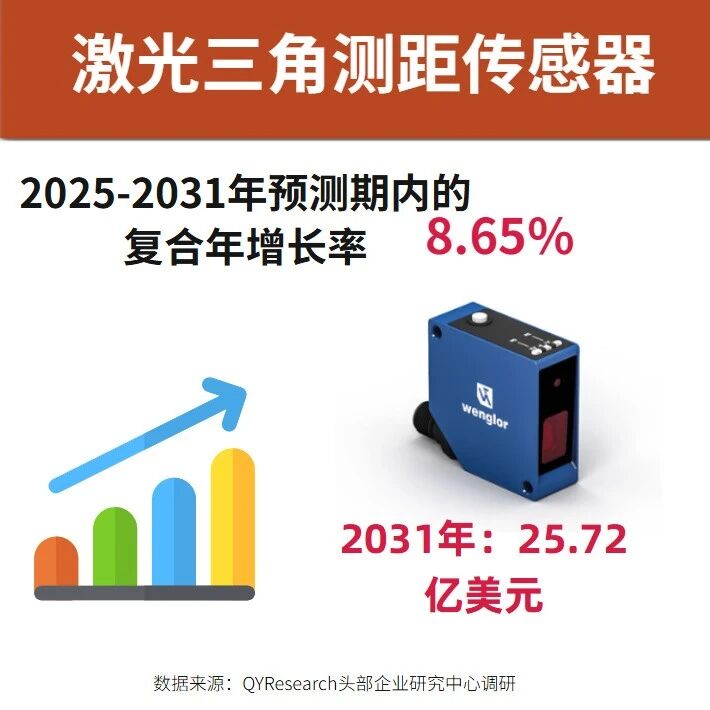
Core Viewpoint - The laser triangulation distance sensor market is experiencing robust growth driven by automation upgrades and demand from various industries such as automotive, logistics, and healthcare. The market is expected to reach $1.427 billion in 2024 and grow to $2.572 billion by 2031, with a compound annual growth rate (CAGR) of 8.65% from 2025 to 2031 [5]. Market Overview - The global market for laser triangulation distance sensors is primarily driven by the automotive industry, with significant demand in the Asia-Pacific region, especially in China, Japan, and South Korea, as well as Europe [3][9]. - Major manufacturers in the market include KEYENCE, Panasonic, and SICK, among others [8][20]. Industry Trends - **High Precision and Sub-Micron Breakthroughs**: The accuracy of laser triangulation sensors is approaching nanometer levels, becoming essential in high-end fields like semiconductor manufacturing and aerospace [12]. - **Cost Reduction and Domestic Substitution Acceleration**: Domestic manufacturers are achieving significant cost reductions through technological advancements and scale production, with expectations that the domestic market share for high-end industrial sensors will rise from under 20% to over 45% by 2025 [13]. - **Intelligent Integration with AI**: The integration of AI technologies is transforming sensor functionalities, enabling predictive maintenance and improved measurement robustness in complex environments [14]. - **Miniaturization and Integration Design**: Sensors are evolving towards miniaturization to meet the stringent space requirements of consumer electronics and drones, with multi-modal integration becoming a trend [15]. - **Environmental Production and Green Manufacturing**: The industry is increasingly focusing on sustainable practices, with new projects adopting eco-friendly facilities and materials to reduce environmental impact [16]. - **Industry Chain Integration and Ecological Collaboration**: Vertical integration across the supply chain is becoming common, enhancing collaboration between different sectors and reducing R&D costs [17]. - **Standardization and International Expansion**: The industry is pushing for unified standards to address market fragmentation, with significant growth expected in the Asia-Pacific region, particularly in China [18]. - **Multi-Scenario Expansion and Cross-Industry Applications**: The application boundaries of laser triangulation sensors are broadening, with innovative uses emerging in fields like healthcare and agriculture, as well as in space economics [19].