
生态产品价值实现

Search documents
平陆运河建设顺利推进 自然资源部门筑牢要素保障基石
Zhong Guo Xin Wen Wang· 2025-10-30 01:35
Core Insights - The construction of the Pinglu Canal is progressing rapidly, with significant support from the Guangxi Natural Resources Department to ensure the project's success [1] - The Pinglu Canal, a major project connecting rivers and seas, spans 134.2 kilometers and is expected to be the largest inland provincial ship lock in the world upon completion [1] - The project involves extensive land reclamation and ecological restoration efforts, with a total earthwork volume estimated at 315 million cubic meters, equivalent to three Three Gorges ship locks [2] Group 1 - The Guangxi Natural Resources Bureau has established a comprehensive service mechanism to ensure land use for the Pinglu Canal, focusing on minimizing the impact on arable land and ecological protection [2] - A total of 101 spoil storage sites covering 37,600 acres are involved in the land reclamation efforts, which are currently underway [2] - As of October 23, 2025, 69 land reclamation plans have been completed, covering 84 spoil sites, with 9,312 acres of land leveled and 3,217 acres planted with crops [3] Group 2 - The project includes the construction of 15 resettlement sites, with 1,323 households and 5,833 individuals planned for relocation, all of which have been completed as of January 20, 2025 [3] - The Guangxi Natural Resources Department is committed to monitoring environmental risks associated with the project and ensuring compliance with ecological restoration measures [3] - The initiative aims to integrate soil and water conservation with enhancing the ecological value of the region, promoting the Pinglu Canal as a green and ecological project [3]
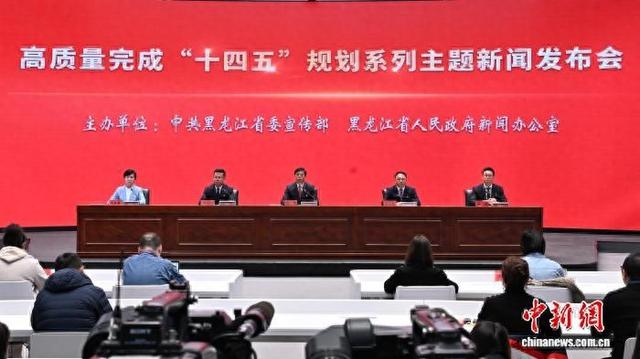
黑龙江:“十四五”期间生态文明示范建设创建数量、转化模式“双突破”
Zhong Guo Xin Wen Wang· 2025-10-23 09:47
Core Insights - The event highlighted the 20th anniversary of the "Green Mountains and Clear Water are Gold and Silver Mountains" concept and the achievements in ecological civilization construction during the 14th Five-Year Plan period in Heilongjiang Province [1][3] Group 1: Achievements in Ecological Civilization - Six regions in Heilongjiang Province have been recognized as national ecological civilization construction demonstration zones, including areas such as Da Hinggan Ling and Jiamusi [3] - Four regions have been selected as "Green Mountains and Clear Water are Gold and Silver Mountains" practice innovation bases, focusing on improving ecological quality and promoting green low-carbon development [3] Group 2: Transformation Pathways - Heilongjiang Province has developed transformation pathways such as "ecological restoration + industrial integration" and "ecological governance + value realization" [3] - For instance, Yichun City has restored 169,000 acres of forest wetlands and has maintained 21 years without major forest fires, establishing a closed-loop system of "protection—restoration—utilization" [3] Group 3: Future Plans - The province plans to enhance guidance for creation, implement record management for applicant regions, and provide precise services throughout the process [4] - There will be a focus on deepening value transformation and creating more characteristic demonstration models [4]

陕西省委书记赵一德在秦岭生态环境保护工作推进会上强调 健全常态化长效化保护体制机制
Zhong Guo Huan Jing Bao· 2025-10-21 04:49
Core Points - The meeting focused on the ecological protection of the Qinling Mountains, emphasizing the need for a systematic and sustainable approach to environmental management [1][2] - The importance of learning from past mistakes, particularly regarding illegal constructions, was highlighted to enhance political awareness and execution in ecological protection [1] - A call for strengthening biodiversity protection and the establishment of national parks and botanical gardens was made to create a comprehensive wildlife resource protection network [1] Summary by Sections - **Ecological Protection Strategies** - Emphasis on regulations to protect mountains, planning to control mountain development, and the use of technology for management [1] - A commitment to improving the ecological environment quality of the Qinling region through a long-term protection mechanism [1] - **Biodiversity and Wildlife Protection** - Initiatives to enhance the protection of wild birds and to combat illegal activities affecting wildlife [1] - Plans to increase the supply of high-quality and safe alternative products to reduce ecological damage [1] - **Regulatory and Management Framework** - The need for strict enforcement of regulations against illegal exploration and adventure activities in core protection areas [1][2] - Development of a comprehensive monitoring and regulatory system integrating various technologies [2] - **Community Engagement and Responsibility** - Encouragement for local governments and departments to take responsibility for ecological protection and to engage the community in conservation efforts [2] - A focus on enhancing public awareness and collective action towards the protection of the Qinling Mountains [2]
如何破解调节服务类生态产品价值实现“四难”问题?
Zhong Guo Huan Jing Bao· 2025-10-21 00:22
Core Viewpoint - The article discusses the challenges and solutions related to the valuation and monetization of ecological products, particularly focusing on regulatory services that are public goods and face difficulties in measurement, collateralization, trading, and realization of value. Group 1: Measurement Challenges - The core issue of "difficulty in measurement" arises from the intangible nature, public attributes, and hidden value of regulatory services, making them hard to quantify and recognize in traditional market systems. Solutions include enhancing localized parameter databases and dynamic monitoring capabilities, integrating "3S" technologies (Remote Sensing, GIS, GPS) with IoT sensor networks for real-time ecological monitoring [2] Group 2: Collateralization Challenges - The "difficulty in collateralization" stems from ambiguous property rights, high value uncertainty, and lack of effective risk mitigation mechanisms, preventing regulatory services from being qualified as financial collateral. Solutions involve establishing a legal basis for the capitalization of ecological assets, clarifying operational and income rights, and innovating diverse green financial tools such as "ecological asset mortgage loans" and "green bonds" [3] Group 3: Trading Challenges - The "difficulty in trading" is characterized by the absence of trading platforms for regulatory services, poor supply-demand matching, and high transaction costs. Solutions include developing multi-tiered market models, optimizing government ecological compensation methods, and innovating horizontal trading models for pollution rights and carbon emissions [4] Group 4: Realization Challenges - The "difficulty in realization" focuses on promoting industrial operations and precise market demand alignment. Solutions involve fostering "ecological+" industry integration, implementing origin-based ecological labeling systems, and guiding the development of new business models that rely on high-quality regulatory services [5]
山水颜值为发展增值(话说新农村)
Ren Min Ri Bao· 2025-10-16 22:09
Core Insights - The transformation of ecological advantages into development advantages is crucial for rural revitalization, with a focus on enhancing natural capital and promoting sustainable practices [1][2] Group 1: Ecological Advantages - A good ecological environment is considered the greatest asset for rural areas, providing significant potential for developing new industries and business models [2] - Successful examples include the conversion of apple orchards into both a source of income and a means of soil conservation in Gansu, and the transformation of barren mountains into green landscapes in Shaanxi [1][2] Group 2: Economic Transformation - The pathway for realizing the value of ecological products is expanding, emphasizing the need for effective market mechanisms and proactive government involvement [2] - Innovative practices such as carbon asset trading from bamboo in Zhejiang and soil conservation carbon trading in Fujian illustrate the potential for turning natural resources into economic benefits [2] Group 3: Rural Tourism and New Industries - The rise of rural tourism, including starry sky economies, camping, and homestays, is providing new avenues for income generation for farmers [3] - It is essential to establish mechanisms that allow farmers to share in the economic benefits derived from these new industries, ensuring equitable distribution of wealth [3]
“河事”知多少⑮丨从“绿水青山”到“金山银山”:以生态产品价值实现助推黄河流域高质量发展
Zheng Zhou Ri Bao· 2025-10-16 08:49
Core Viewpoint - The article emphasizes the transformation of ecological value into economic value in the Yellow River basin, promoting high-quality development through ecological product value realization [1] Group 1: Ecological Protection and Restoration - The integration of "mountains, waters, forests, fields, lakes, grass, and sand" is essential for ecological protection and systematic restoration across the entire Yellow River basin [1] - Key initiatives include the transformation of sloped farmland and small watershed management in the western Henan loess hilly area to reduce sediment entering the Yellow River [1] - Efforts to restore wetlands focus on water replenishment and vegetation recovery to reconstruct habitats [1] Group 2: Sustainable Development and Community Involvement - The article highlights the importance of coordinating resident relocation with ecological transformation in floodplain areas, creating a buffer zone between the floodplain, river channel, and embankments [1] - The goal is to shift the ecological system from a "fragile imbalance" to a "stable and healthy" state [1] - The initiative aims to allow the public to share in the ecological benefits while protecting the Yellow River, thus enhancing both ecological and civilizational prosperity [1]
CCER方法学大爆发 全国自愿碳市场传递5大信号
Xin Jing Bao· 2025-10-14 17:16
Core Insights - The construction of the carbon market is accelerating, with a maturing institutional framework [1][3] Group 1: Carbon Market Development - In two months, 13 new methodologies for the national voluntary greenhouse gas emission reduction trading market (CCER) have been released for public consultation, indicating a significant push in top-level design [2][3] - The rapid expansion of methodologies signifies that the core institutional system of the national voluntary carbon market is being improved, providing clearer policy expectations and a more stable trading environment [3] Group 2: Climate Governance Expansion - The newly released methodologies cover a wide range of areas, focusing on deep energy savings in public buildings, biomass cogeneration, and the recovery of non-CO2 greenhouse gases, reflecting a shift from single-point to multi-point climate governance [4] - China's new round of national contributions aims for a 7%-10% reduction in greenhouse gas emissions by 2035, indicating a broader scope of climate governance beyond just carbon emissions [4] Group 3: Valuation of Ecological Products - The CCER methodologies have quantified carbon sink benefits into tradable products, with cumulative trading volume exceeding 3.19 million tons and total transaction value surpassing 267 million yuan [5] - The inclusion of coastal salt marshes and seagrass beds in the methodologies fundamentally establishes a pricing mechanism for previously "priceless" ecological resources, facilitating the transformation of ecological assets into economic value [5] Group 4: Economic Incentives for Transitioning Industries - CCER provides crucial economic incentives for projects with significant environmental benefits, helping them overcome initial investment barriers and improve cash flow during transitional phases [6] - For instance, the CCER revenue can significantly enhance the cash flow of biomass power generation projects, supporting the industry's green transition [6] Group 5: International Influence and Standards - China's active participation in the international voluntary carbon market can alter the current dominance of Western countries in rule-making and standard-setting [7] - The release of methodologies in areas like geothermal energy and sulfur hexafluoride recovery positions China as a leader, potentially influencing global standards and enhancing its voice in international climate governance [7]
CCER方法学大爆发,全国自愿碳市场传递5大信号
Bei Ke Cai Jing· 2025-10-14 14:15
Core Insights - The construction of the carbon market is accelerating, and the institutional framework is maturing [3][4][5] Group 1: Carbon Market Development - The recent release of 13 new methodologies for the voluntary greenhouse gas emission reduction trading market (CCER) indicates a significant advancement in the core institutional framework of the national voluntary carbon market [2][3] - The rapid expansion of the methodology system is expected to enhance market liquidity and attract more social capital and diverse participants, marking a shift towards achieving comprehensive coverage in key areas by 2027 [3][4] Group 2: Climate Governance Expansion - The newly released methodologies cover a wide range of areas, focusing on deep energy savings in public buildings, biomass power generation, and the management of non-CO2 greenhouse gases, indicating a shift from single-point carbon emission governance to a multi-faceted approach [4][5] - China's new round of national contributions aims for a 7%-10% reduction in greenhouse gas emissions by 2035, expanding the governance scope beyond just carbon emissions [4] Group 3: Valuation of Ecological Products - The CCER methodologies have quantified carbon sink benefits into tradable products, with cumulative trading volume exceeding 3.19 million tons and transaction value surpassing 267 million yuan, facilitating the monetization of previously unvalued ecological resources [5][6] - The methodologies serve as standardized guidelines for pricing, confirming rights, and trading ecological products, thus enabling environmental protectors to generate stable cash flows [5] Group 4: Economic Incentives for Transitioning Industries - The CCER provides crucial economic incentives for projects with significant environmental benefits, helping to improve cash flow and support the green transition of industries facing high initial investment costs [6][7] - For instance, the carbon reduction revenue from biomass power generation projects can alleviate financial pressures and promote sustainable development [6] Group 5: International Influence and Standards - By actively participating in the international voluntary carbon market, China aims to change the current dominance of Western countries in rule-making and standard-setting [7] - The introduction of methodologies that are currently absent in global mainstream mechanisms positions China as a leader, potentially influencing international standards and enhancing its role in global climate governance [7]
“生态积分”点绿成金 张家港案例入选全省典型
Su Zhou Ri Bao· 2025-10-10 22:36
去年,张高新(张家港)科技产业发展有限公司完成张家港首单"生态积分"交易,实现该交易机制 的落地,为自然资源领域生态产品价值实现,提供了鲜活案例,为生态资源权益市场化交易开辟新路 径。 近日,江苏省自然资源领域生态产品价值实现典型案例(第三批)发布,《张家港市创新"生态积 分"交易机制探索"两山"转化新路径》入选。 作为全省首批自然资源领域生态产品价值实现机制省级试点地区,2022年以来,张家港积极推进试 点工作,结合自然资源禀赋条件,努力构建以生态用地占补平衡为核心,以"生态积分"为媒介的生态资 源权益交易制度,通过市场化手段激活沉睡国有生态资源资产,打通"资源—资产—资金—反哺"的生态 产品价值转化链条,让"绿水青山"自然生态财富转化为"金山银山"经济社会财富,再通过"金山银山"的 反哺,投入"绿水青山"的建设。 据悉,下一步,张家港将持续探索"生态积分"应用场景,鼓励企业、社会团体、个人等多方力量共 同参与国土空间生态修复,引导形成"保护者受益、使用者付费、破坏者受罚"为导向的生态环境保护机 制。 ...
“金融+生态”: 让金融服务绿色又普惠
Jin Rong Shi Bao· 2025-10-09 02:22
Core Viewpoint - The article highlights the innovative "financial + ecology" model developed by the People's Bank of China in Yunfu City, Guangdong, aimed at supporting the realization of ecological product value through green finance initiatives, addressing financing challenges for agricultural entities [1][2]. Group 1: Financial Innovations - The establishment of the first "ecological sub-branch" in Guangdong, which integrates ecological carbon sink assets into qualified collateral for loans, has been a significant development [2]. - The first batch of rice carbon sink expected revenue rights pledge loans amounting to 1.7 million yuan was issued, providing timely financial support for local agricultural activities [2]. - A total of 16 ecological carbon sink expected revenue rights pledge loans have been issued, amounting to approximately 12 million yuan, enhancing credit accessibility for agricultural operators [3]. Group 2: Agricultural Carbon Sink Project Library - The creation of the first "Agricultural Carbon Sink Economic Project Library" aims to address the challenges of assessing and measuring ecological product value, facilitating better loan evaluations for banks [4]. - The project library currently includes 148 agricultural carbon sink and carbon reduction economic projects, which are expected to generate over 50,000 tons of ecological carbon sinks annually [4]. Group 3: Green Financial Incentives - The introduction of the "zero deforestation ecological breeding support loan" by Luoding Rural Commercial Bank links interest rates to the client's commitment to zero deforestation, providing financial incentives for sustainable practices [7]. - The People's Bank of China in Yunfu is expanding the role of green financial incentives by including ecological protection compensation rights as qualified collateral for loans, promoting environmental conservation among agricultural producers [8].