直播电商

Search documents
直播电商月收官,深圳好物“走俏”全球市场 万名主播带货465亿元
Shen Zhen Shang Bao· 2025-12-03 23:07
Core Insights - Live streaming e-commerce has emerged as a new battlefield for consumption, with significant participation and sales figures reported during the "2025 Shenzhen Live E-commerce Month" event [1][2][4] Group 1: Event Overview - The "2025 Shenzhen Live E-commerce Month" attracted over 10,000 participating streamers, with more than 700,000 live broadcasts and over 1.18 million products listed, resulting in over 5.1 billion views and a total online retail sales of over 46.5 billion yuan [1] - The event showcased the rapid rise of Shenzhen's live e-commerce, leveraging its strong supply chain, industrial advantages, and advanced information technology [1][2] Group 2: Industry Impact - Major platforms such as Douyin, Taobao, Kuaishou, and TikTok Shop participated, helping brands like DJI, Huawei, and others to expand their reach in the live streaming space, driving sales across various categories including electronics, jewelry, and food [2][3] - The event not only strengthened the online competitiveness of traditional industries like 3C electronics and jewelry but also accelerated the growth of emerging sectors such as pet economy and specialty dining [3] Group 3: Cross-Border E-commerce - Shenzhen is actively expanding its international market through cross-border live streaming, with the city's cross-border e-commerce import and export volume reaching 372 billion yuan in 2024, accounting for nearly 40% of the national total [4][5] - The establishment of the "Bay Area Cross-Border Alliance" during the event aims to create a new ecosystem for cross-border e-commerce, integrating resources from various regions [4] Group 4: Digital Transformation - Live streaming e-commerce has become a crucial engine for consumption and transformation, with over 2.3 million live broadcasts conducted in Shenzhen from January to August this year, resulting in 18 billion views and 1 billion items sold online [6] - The development of live streaming bases across various districts in Shenzhen is enhancing the brand effect and market reach of local industries [6] Group 5: Future Directions - Experts suggest that Shenzhen's rapid rise in live e-commerce is attributed to its robust fashion and electronics industries, as well as its advantages in cross-border e-commerce [7] - Continuous development of the "live streaming + industrial cluster" model is recommended to build a favorable ecosystem for live e-commerce, promoting digitalization and quality improvements in the industry [7]
直播网红批量撤离杭州? 遥望科技董事长谢如栋:未观察到该现象,行业分配正从头部主播高收入趋向更均衡
Mei Ri Jing Ji Xin Wen· 2025-12-03 12:51
Core Insights - The article discusses the current state and changes in the live-streaming e-commerce industry in Hangzhou, often referred to as the "first city of live-streaming e-commerce" in China, highlighting both growth and structural shifts within the industry [1][2]. Industry Overview - Hangzhou has 32 major live-streaming platforms and nearly 50,000 streamers, with over 10,000 registered live-streaming related companies, contributing to over 1 million jobs [1]. - In the first half of 2025, the top MCN (Multi-Channel Network) institutions in Hangzhou reported total revenue of 5.993 billion yuan, a year-on-year increase of over 17%, with a total profit of 362 million yuan [1]. Structural Changes - There is a shift in the streamer structure, with more streamers moving from independent IP creation to store broadcasting, indicating the industry is maturing [2][3]. - Despite concerns about a mass exodus of streamers from Hangzhou, the net influx of streamers is still on the rise [3]. Market Dynamics - The live-streaming e-commerce market in China is approaching 40% of the national online retail sales, with the number of professional streamers increasing by 150% year-on-year [3]. - The industry is currently in a "blooming" phase, with a richer variety of vertical categories emerging [3][4]. Consumer Behavior - There is a notable shift towards rational consumption and high-cost performance, with consumers becoming more selective and less impulsive in their purchasing decisions [8]. - The types of products being sold through live-streaming are evolving from low-cost, standardized items to high-quality, personalized offerings [8]. Challenges and Innovations - MCN institutions face challenges due to rising traffic costs, necessitating a focus on content innovation and diversified operations to maintain profitability [7]. - The impact of AI digital humans on live-streaming is currently minimal, as consumer engagement relies heavily on the emotional connection with real streamers [6]. Future Outlook - The live-streaming e-commerce industry is entering a deep cultivation phase, requiring clear and reliable standardized processes for sustainable growth [9]. - The industry is moving away from the perception of being a "quick money" sector, focusing instead on rapid content innovation and product iteration [9].

出售星期六100%股权,遥望科技补亏损漏洞?
Bei Jing Shang Bao· 2025-12-03 11:16
Core Viewpoint - Recently, the company announced plans to transfer 100% equity of its wholly-owned subsidiary, Foshan Saturday Footwear Co., Ltd. (referred to as "Saturday"), at a minimum listing price of 453 million yuan, aiming to focus on the development of its digital marketing business [2][3]. Group 1: Business Strategy and Financial Performance - The sale of Saturday is part of the company's strategy to concentrate on digital marketing, as the footwear business has faced significant operational pressure due to declining revenues and ongoing losses [2][4]. - The company has been attempting to divest its footwear business since 2022, but previous attempts were halted due to a lack of transaction conditions [3]. - The footwear business, which was once a core part of the company, has seen a drastic decline in performance, with the company reporting losses of 263 million yuan in 2022, 1.05 billion yuan in 2023, and an expected 1 billion yuan in 2024 [4]. Group 2: Historical Context and Transition - Saturday, established in 2002 and listed in 2009, was known as the "first A-share women's shoe stock" and attempted to pivot towards internet business after poor performance in its core footwear segment [3]. - The acquisition of Hangzhou Yaowang Network in December 2018 marked a significant shift towards live-streaming e-commerce, leading to a turnaround in profitability, with net profits of 4.477 million yuan in 2018 and 151 million yuan in 2019 [3]. - By 2022, internet advertising accounted for 91.64% of the company's revenue, while the footwear segment contributed only 8.15% [3]. Group 3: Future Outlook - The company anticipates that the successful sale of Saturday will significantly improve its profit situation, optimize its industrial structure, and enhance operational efficiency [4]. - The management has expressed that the transaction will lower the company's asset-liability ratio, improve cash flow, and ultimately increase shareholder returns [4].


小杨哥复播无望,三只羊想“挣外国人钱”了
3 6 Ke· 2025-12-03 10:44
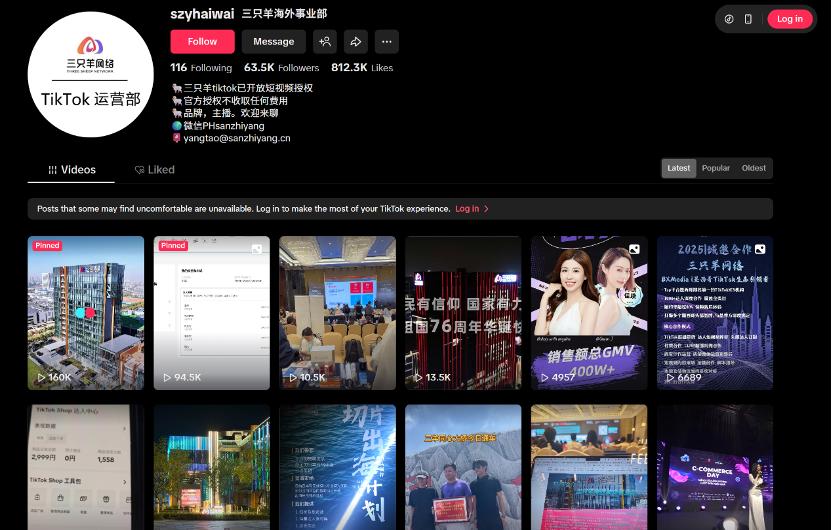
Core Viewpoint - The news discusses the ongoing expansion of the company "Three Sheep" into overseas markets, despite rumors about a key figure's return to live streaming being debunked. The company is focusing on establishing a presence in Southeast Asia, particularly through its newly formed overseas MCN, Three Sheep Network, which has already made significant strides in the region [1][2][4]. Group 1: Company Developments - Three Sheep Network was officially established in 2023, with a warehouse located in Singapore, marking the company's strategic entry into the Southeast Asian market [2][5]. - The company has successfully positioned itself among the top three cross-border MCNs in Southeast Asia, with significant operations in Singapore, Malaysia, and Vietnam [2][7]. - The company's revenue from agricultural products exceeded 2.7 billion yuan, covering over 20 provinces in China, but it faced a severe trust crisis following a controversy involving a product marketed as a Hong Kong brand [3][4]. Group 2: Market Strategy - The Southeast Asian e-commerce market is projected to grow from approximately $159 billion in 2024 to $370 billion by 2030, making it a lucrative target for Three Sheep's expansion efforts [5][11]. - The company has adopted a localized approach in Vietnam, with local teams managing operations and content, while the Chinese team provides supply chain and strategic support [7][11]. - Three Sheep's strategy includes a unique "source live streaming" model, which integrates local warehousing and content creation to enhance brand storytelling and consumer engagement [11][12]. Group 3: Challenges and Competition - Despite initial successes, the company faces significant challenges, including a competitive landscape in Southeast Asia and regulatory scrutiny, particularly in Vietnam [12][13]. - The trust issues stemming from past controversies continue to affect consumer perceptions, necessitating a focus on rebuilding credibility in both domestic and international markets [4][13]. - The reliance on TikTok as a primary platform for overseas operations poses risks, especially in markets like Brazil, where logistical and payment infrastructure is still developing [13].
快手发布“可灵O1”;滴滴自动驾驶在广州试运行全天候、全无人载客测试服务|未来商业早参
Mei Ri Jing Ji Xin Wen· 2025-12-02 23:07
Group 1: Kuaishou's Keling AI Launch - Keling AI has released "Keling O1," positioned as the world's first unified multimodal creation tool, aiming to streamline the entire process from generation to deep editing [1] - The launch signifies a shift in the domestic AIGC sector from isolated functional breakthroughs to an ecosystem competition focused on reshaping complete workflows [1] - Challenges remain regarding high computing costs, reliability of actual outputs, and establishing a unique ecosystem amidst strong competition from major players [1] Group 2: Didi's Autonomous Driving Testing - Didi has commenced all-weather, fully unmanned passenger testing in designated areas of Guangzhou, allowing users to summon autonomous vehicles via the Didi app [2] - This public trial is a crucial step in Didi's commercialization roadmap, requiring proof of both technical feasibility and economic viability for large-scale operations [2] - The competition in autonomous driving is shifting from technology demonstration to cost, user experience, and operational efficiency, with Didi leveraging its network advantages [2] Group 3: JD's Digital Human Live Streaming - JD has announced that its digital human live streaming service will be free for all merchants, enabling quick setup of 24/7 live streaming rooms [3] - This move represents a strategic upgrade from "tool selling" to "ecosystem building," aiming to attract a larger supply of live streaming content to enhance overall traffic and transaction volume [3] - The sustainability of this free strategy will depend on whether the resulting GMV increase can cover the technological investments and how to balance digital human live streaming with content diversity on the platform [3]


全国社会物流总额同比增长5.1%
Ren Min Ri Bao· 2025-12-02 21:52
单位与居民物品物流延续较快增长。1至10月,单位与居民物品物流总额同比增长6.4%,线上消费物流 持续活跃,即时零售、直播电商等新业态蓬勃发展,相关物流需求均保持两位数增长。 新能源产业链物流需求持续高速增长。10月,新能源汽车、汽车用锂离子电池等绿色产品物流量同比分 别增长19.3%、30.4%,高于社会物流总额平均水平。 本报北京12月2日电(记者欧阳洁)中国物流与采购联合会公布数据显示,今年1至10月,全国社会物流总 额293.7万亿元,同比增长5.1%,10月当月同比增长4.8%。物流需求规模稳定增长,结构性调整优化特 征凸显。 工业品物流增势趋稳。1至10月,工业品物流总额同比增长5.3%。10月,汽车制造相关物流需求同比增 长16.8%,增长动能较为强劲。 ...
河北大名“一品一播”直播电商平台助力乡村振兴
Zhong Guo Jing Ji Wang· 2025-12-02 15:07
Core Insights - The "Yipin Yibo" live e-commerce platform in Daming County has successfully promoted local products, achieving a record of selling over 30,000 bottles of sesame oil in just three minutes, showcasing the effectiveness of online sales channels [1] - Daming County's "Yipin Yibo" project won the national first prize at the Digital Rural Innovation Competition, highlighting its role in transforming and upgrading the local economy [1] Group 1: E-commerce Development - Daming County has systematically planned and designed the "Yipin Yibo" e-commerce live streaming ecosystem to address the challenges of small and weak county-level e-commerce [2] - The county has established a comprehensive e-commerce live streaming system, including a multifunctional industrial park, 20 town-based live streaming bases, and various vertical live streaming bases, creating a robust e-commerce ecosystem [2] - A 75-acre idle factory has been transformed into a logistics industrial park for e-commerce live streaming, featuring six functional modules to streamline the supply chain [2] Group 2: Operational Enhancements - The county has formed a dedicated "Yipin Yibo" working group and implemented 18 supportive policies for e-commerce live streaming, enhancing professional operational capabilities [3] - A professional team has been established to manage the live streaming industry park, with collaboration from various organizations for planning, operation, and talent training [3] - As of October, Daming County has trained 12,000 individuals, signed 27 full-time and 650 part-time hosts, and established partnerships with 1,979 hosts, indicating significant growth in the live streaming workforce [3]
马云又一预言应验了?传统电商遇冷,新购物模式已在全国兴起
Sou Hu Cai Jing· 2025-12-01 20:08
前阵子逛商场,看到有人在服装店用手机扫码比价,最后线上下单等即时配送。这场景让人想起马云多年前说的:"未来零售不是线上线下竞争,是线上线 下加物流的新零售。"如今传统电商用户增长率首现负增长,新购物模式却涨势迅猛,这是否意味着电商真要被淘汰了? 传统电商不香了? 我们先看一组数据,据《2025年中国零售市场趋势报告》,传统电商平台用户增长率同比下降3.7%,而社区团购、直播电商等新模式用户量增长46.8%。 再看GMV(商品交易总额),2025年上半年传统电商GMV增长率仅4.3%,创下近十年新低。以前热闹的"双十一""618"大促,现在增长也明显放缓,2025 年"618"期间,传统电商平台整体成交额同比仅涨5.6%,远低于2020年的26.7%。 更让商家头疼的是利润问题,某电商从业者联盟调研显示,2025年传统电商中小商家平均净利润率从2022年的8.5%降到了4.2%,有近18%的中小商家选择暂 时关闭店铺。 为啥会这样?先是获客成本太高,2025年电商平台获客成本平均320元/人,比2022年涨了87%。有个卖家居用品的商家算过账,以前花500元推广能带来20 个订单,现在花2000元推广,订单量还 ...

孙东旭卸任东方甄选法定代表人,俞敏洪接任,新增餐饮外卖业务
Xin Lang Ke Ji· 2025-12-01 03:46
Core Points - The core point of the news is the management change at Dongfang Zhenxuan (Beijing) Technology Co., Ltd., with Yu Minhong taking over from Sun Dongxu as the legal representative and executive director, alongside an expansion of the company's business scope to include restaurant management and delivery services [1] Company Overview - Dongfang Zhenxuan (Beijing) Technology Co., Ltd. was established in December 2021 with a registered capital of 10 million RMB, fully owned by Dongfang Youxuan (Beijing) Technology Co., Ltd. [1] - The company focuses on agricultural product sales and knowledge-based marketing, leveraging the New Oriental Group's background to operate through a live-streaming e-commerce model [1] Management Change - On November 6, Yu Minhong confirmed Sun Dongxu's departure from the company due to personal reasons [1] - Yu Minhong has taken over multiple roles including legal representative, executive director, and manager [1] Business Expansion - The company has added new business areas including restaurant management, takeaway delivery services, and catering services [1]
金十数据全球财经早餐 | 2025年12月1日
Jin Shi Shu Ju· 2025-11-30 22:58
Group 1: Economic Indicators - The manufacturing PMI in China has risen to 49.2, indicating an improvement in economic conditions [11] - State-owned enterprises in China reported total revenue of 6835.29 billion yuan, a year-on-year increase of 0.9%, while total profits decreased by 3% to 342.14 billion yuan [12] Group 2: Market Performance - The S&P 500 index rose by 0.54%, marking a seven-month consecutive increase, while the Nasdaq index experienced its first decline in seven months [3] - The Hang Seng Index closed down by 0.34%, with significant movements in technology and gold stocks [4] - The A-share market saw the Shanghai Composite Index increase by 0.34%, with a total market turnover of 1.59 trillion yuan [5] Group 3: Commodity Prices - WTI crude oil fell by 1.06% to $58.56 per barrel, while Brent crude oil decreased by 0.99% to $62.89 per barrel [3][6] - Spot gold prices increased by 1.49% to $4218.77 per ounce, and spot silver surged by 5.61% to $56.37 per ounce [6] Group 4: Corporate Actions - Guizhou Moutai announced a share repurchase plan, intending to buy back shares worth between 1.5 billion and 3 billion yuan [12] - The National Space Administration of China has established a Commercial Space Administration to promote high-quality development in the commercial space sector [12]