
软实力

Search documents
特朗普为什么要搞垮美国旅游业?
Hu Xiu· 2025-05-30 00:33
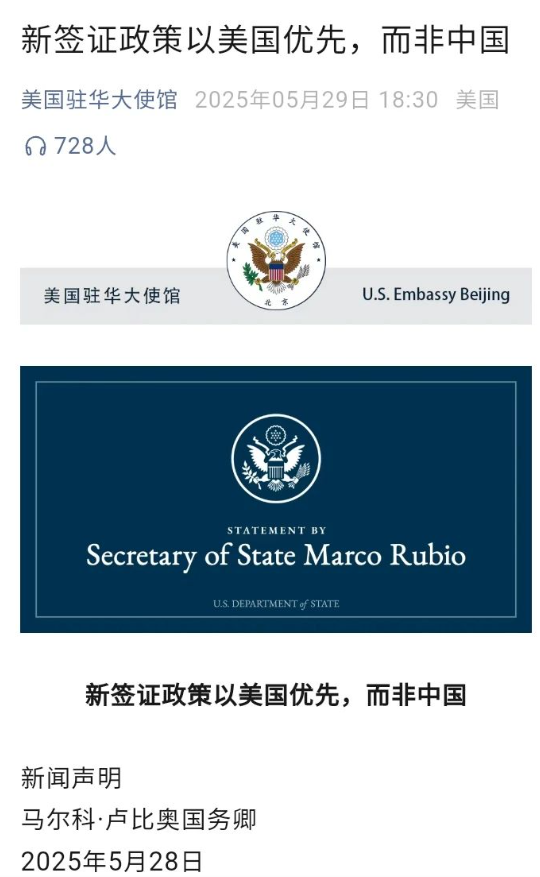
昨天,美国特朗普政府声称将积极地撤销中国学生签证,同时加强审查今后所有来自中国内地和香港的签证申请。 值得一提的是,这倒不仅仅针对中国,美国近期还暂停了对赴美留学、交流的外国公民在海外申请签证需要进行的面谈,并加强对申请者社交媒体帖子的 审查。 风雨欲来,当美国对中国等多个国家逐渐开始"闭关锁国",世界又如何看待今天的美国呢? 近期Skift(美国权威旅游行业新闻网站)做过一份调查报告,当时我还觉得《特朗普政策或将导致美国旅游业衰退》这个标题有点夸张,现在看颇有先见 之明。 01 美国驻华大使馆公众号5月29日截图 从具体调研内容来看,Skift问了来自五个国家的1250名游客:"特朗普执政时期,你们有去美国的旅游计划吗?" 结果,有46%的人当场回答"那不可能"。 更离谱的是,加拿大受访者"不去"的比例是62%,德国人"不去"是59%。 这不是"不想去",而是"躲着走"。 前阵子,我和一个中国工作多年的法国老友聊到今年暑期安排,他也是类似态度,"Xi,我宁可去你们宁夏看沙漠,也不想在纽约机场被问十分钟'你来干 嘛的'。" 听起来像段子,实际上是趋势,而数据也已经开口说话了。 也就是说,美国成了全球184个经 ...

特朗普被打了措手不及,判决结果送进白宫,中国罕见公开发声,关税战美国彻底败了?
Sou Hu Cai Jing· 2025-05-29 09:08
中美两国的关系可谓跌宕起伏,已不仅仅停留在经济与贸易领域,更渗透到了教育、科技等各个方面。 这场争夺战的白热化,不仅表现为特朗普政府加大对中国的制裁力度,更是在留学政策和人才争夺上演 出了一幕幕戏剧性场景。 首先,让我们聚焦于特朗普政府自上任以来的"关税战"。近期,美国国际贸易法院的裁决成为一记警 钟,揭示了特朗普政府在对外经济政策中面临的法律挑战。法院裁定特朗普发布的多项关税措施越权, 必须立即停止执行,这对于依赖贸易战取胜的特朗普来说,无疑是一次沉重打击。作为"美国优先"政策 的核心,关税不仅影响着进口商,也直接损害了相关产业,尤其是那些以中小企业为主体的产业。 不仅是企业,特朗普的政策还带来了社会层面的不安。受其影响,越来越多的科研人员开始考虑离开美 国。调查显示,高达75%的科研工作者对此表示忧虑,其中年轻研究人员尤为显著。这一趋势不仅关乎 个人职业选择,更是对美国科技创新和学术竞争力的一次重大考验。特朗普的"强人叙事"正受到来自社 会各界的反击,法律的束缚让他逐渐失去往日的耀眼光环。 与此同时,作为全球顶尖学府之一的哈佛大学也无辜卷入其中。特朗普政府不断加码的制裁与审查,使 得许多国际学生面临着前所 ...
最新!特朗普再威胁哈佛,要求校方提供国际学生名单
Mei Ri Jing Ji Xin Wen· 2025-05-26 01:19
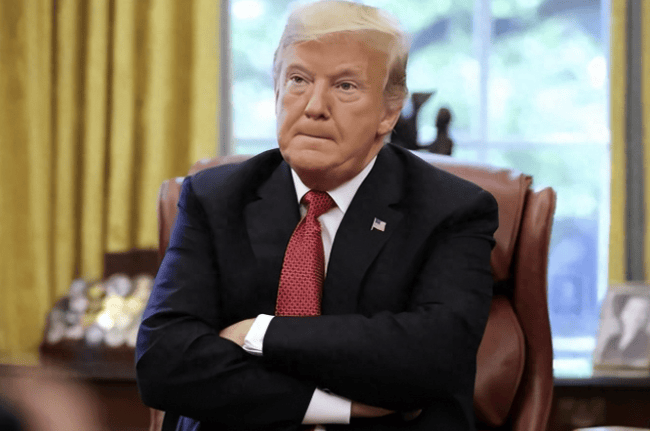
每经编辑|毕陆名 据央视新闻26日消息,当地时间25日,美国总统特朗普威胁称,联邦政府将可能不再继续向哈佛大学提供新的拨款,并要求校方提供所有国际学生的姓名及 国籍信息,以便进一步审查。 《日本经济新闻》网站文章认为,来自全球的优秀人才曾支撑起美国的繁荣,而特朗普政府正试图切断这一循环。 近期在英国伦敦发布的《2025年全球软实力指数》显示,美国在国际社会的"声誉"指标明显下滑。软实力概念的提出者、哈佛大学肯尼迪政府学院前院长约 瑟夫·奈在去世前曾撰文说,美国吸引其他国家的能力已日渐衰落,特朗普政府的种种做法正严重损害美国的"软实力"。 斯普雷策表示,美国教育委员会在4月就给美国国务院和国土安全部致信,要求他们如果要撤销学生签证,终止学生及交流访问学者项目,就需要提供更多 信息,但并没有收到回应。 斯普雷策说,她担心准入学的国际学生觉得来美国风险太大,从而导致学生数量开始下降,而国际学生去年一年就给美国带来了430亿美元的经济收益。 另据新华社报道,针对特朗普政府对哈佛大学的"国际禁招令",哈佛大学教授瑞安·伊诺斯称,美国政府正试图对一个美国机构施加惩罚,原因仅仅是这个 机构没有屈服于美国政府的政治意愿。 美 ...

白宫施压哈佛!美媒:“目光短浅”!哈佛大学学生怒批:“极其错误的决定”
Mei Ri Jing Ji Xin Wen· 2025-05-25 02:53
每经编辑|毕陆名 据央视新闻25日消息,当地时间5月23日,《华尔街日报》批评特朗普政府本周禁止哈佛大学招收国际学生的决定,称 这是对这所常春藤名校的"一次目光短浅的攻击"。 该报社论委员会在一篇评论文章中指出,美国国土安全部(DHS)撤销了哈佛大学的"学生和交流访问学者项 目"(SEVP)认证,这一决定导致哈佛所有国际学生的未来"陷入混乱"。 社论称:"哈佛的大多数国际学生就读于研究生项目,许多人参与科学研究或承担本科课程教学。将他们赶出哈佛将扰 乱研究项目,甚至可能导致部分从事科学研究的教授跳槽至其他高校。这似乎是为了冻结哈佛研究经费而设的目标。" 对此,白宫发言人阿比盖尔·杰克逊24日表示,尽管已多次收到警告,哈佛仍未解决校园内的严重问题,如今他们正在为 此承担后果。 对于美国政府这一禁令,哈佛大学的学生接受采访时表示,这是一个"可怕的决定",禁令不仅会削弱哈佛大学和美国的 国际学术地位,更会对美国社会造成极大负面影响。 哈佛大学学生蒂罗内·布雷斯怀特:我认为特朗普政府禁止哈佛大学招收国际学生是一个可怕的决定。美国是建立在多样 性和"大熔炉"社会的基础之上,我们需要重视每个人,不能因为他们来自不同的地方 ...

莫邦富:经济泡沫破裂后,日本做了两件大事
Huan Qiu Shi Bao· 2025-05-20 22:42
Core Insights - The article discusses Japan's economic challenges and its efforts to enhance soft power during the "lost thirty years" following the economic bubble burst in the early 1990s [1][4]. Economic Context - Japan's economy peaked in the late 1980s, with a notable cultural phenomenon referred to as the "thousand yen husband," indicating a relatively high cost of living [2]. - The Plaza Accord in 1985 led to a rapid appreciation of the yen, prompting Japanese investments abroad, particularly in real estate [2]. - The economic bubble burst in 1992 resulted in a significant drop in property prices, with many apartments becoming available for under 50 million yen [3]. Soft Power Development - During the "lost thirty years," Japan focused on promoting its culinary culture globally and enhancing its entertainment industry, particularly through companies like Sony [4]. - The rise of the dollar store phenomenon in Japan, featuring affordable Chinese goods, helped mitigate the economic downturn's impact on living standards [3]. Youth and Economic Sentiment - The stagnation of the economy has led to a pessimistic outlook among Japanese youth, with a trend of "lying flat" and a lack of motivation to strive for success [5][6]. - The older generation retains a sense of energy and innovation, contrasting sharply with the younger generation's experiences of failure and economic hardship [5]. International Relations and Economic Position - The article highlights Japan's declining status in the international economic landscape, particularly in comparison to China's rising economic power [7]. - The perception of Japan's economic position has shifted, with a notable comment from a Japanese economic leader indicating that Japan's second-place status was achieved after reaching a peak, while China's second place is seen as a continuing development [7]. Challenges for Chinese Enterprises - The article notes the challenges faced by Chinese companies in expanding overseas, emphasizing the need for innovation and the development of proprietary products to sustain long-term growth [8].
美国商学院专家感叹:“硬实力”和“软实力”,中国企业都有!
Sou Hu Cai Jing· 2025-05-20 13:34
Core Viewpoint - Chinese enterprises have significantly risen on the international stage, showcasing impressive growth and transformation, becoming key players in the global economy and reshaping international trade, investment, and innovation patterns [1][3]. Group 1: Hard Power of Chinese Enterprises - In the 1995 Fortune Global 500 list, the United States had 151 companies, while Japan had 149. By 2024, the U.S. has 139 companies, and China has 128, spanning various industries such as construction, oil, insurance, banking, and technology [3]. - Among approximately 10,500 companies with revenues exceeding $1 billion globally, 25% are from China, surpassing the 19% from the U.S., indicating a greater number of large enterprises in China [3]. Group 2: Global Presence and Investment Trends - About 70% of large Chinese enterprises have subsidiaries in the U.S., over 60% in Germany, around 40% in the U.K. and the Netherlands, and at least 30% in Canada, Brazil, and Italy. Chinese enterprises are also expanding in Africa [4]. - In 2023, Chinese enterprises shifted their greenfield investments from developed economies to Asia and other emerging markets, reflecting a strategic response to changes in the global economic and political landscape [4]. Group 3: Soft Power of Chinese Brands - Historically, U.S. brands dominated the Brand Finance Global 500 list, accounting for about 40%. However, the share of Chinese brands increased from 4% in 2010 to an expected 14% by 2025 [5]. - Chinese brands have gained global recognition in sectors such as e-commerce, media and entertainment, telecommunications, and electric vehicles, altering perceptions of Chinese products beyond the traditional "Made in China" label [5]. - Despite global economic fragmentation, Chinese enterprises are optimizing their overseas strategies and focusing on the vast domestic market, with potential for further enhancement of their soft power [5].

软实力背后的系统博弈,中国凭什么让美国关税大棒抡空了?
Sou Hu Cai Jing· 2025-05-18 22:43
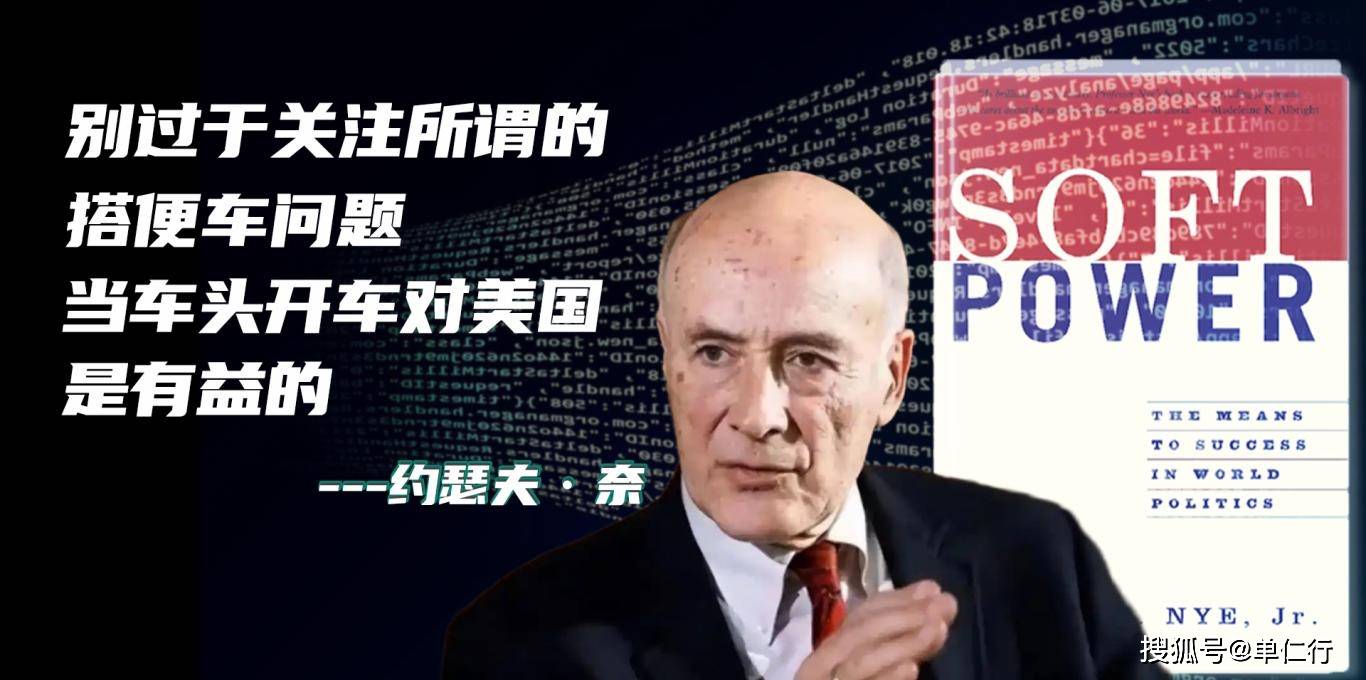
Group 1 - The article discusses the concept of "soft power" introduced by Joseph Nye, emphasizing its importance in U.S. foreign policy and its decline in recent years [3][5][10] - The recent U.S.-China trade negotiations resulted in a significant breakthrough for China, achieving "91% tariff mutual exemption + 24% suspension of additional tariffs," marking a historical surpassing of the 2018 trade war [3][10] - Nye's definition of soft power focuses on influencing others to adopt one's goals voluntarily, contrasting with hard power, which relies on military and economic strength [5][7][10] Group 2 - The article highlights China's ability to win the tariff battle through "vertical integration" and systematic approaches, exemplified by the military cooperation with Pakistan and the automotive innovations by BYD [12][14][16] - BYD's e-platform is presented as a complex system that integrates various technologies to meet the demands of electric vehicles, showcasing a shift from component optimization to comprehensive system innovation [12][14] - The article notes that China's comprehensive industrial capabilities and strategic initiatives, such as the "dual circulation strategy" and the Belt and Road Initiative, have enhanced its trade relationships and resilience against external pressures [16][18]

邓正红软实力思想解析:在全球技术创新网络中逐步掌握产业链价值定义权
Sou Hu Cai Jing· 2025-05-17 14:14
Core Insights - The Chinese technology market is experiencing significant growth, with a transaction volume of 1.6 trillion yuan in the first four months of the year, projected to exceed 6.8 trillion yuan for the entire year, indicating a robust upward trend in technology contracts [1][2] - The growth in technology exports, particularly in emerging sectors like biomedicine and clean energy, reflects a shift in global industrial chain value driven by technological innovation [1][2] - The establishment of a unified technology trading platform is expected to enhance China's ability to define global value in technology [1][3] Group 1: Market Performance - In the first four months of the year, 228,000 technology contracts were registered, with a transaction value of 1.6 trillion yuan, marking a year-on-year increase of 13.3% [1] - The technology service industry has seen an average annual revenue growth of 12.3% from 2019 to 2023, indicating a strong performance in the sector [1] - The expected growth rate for technology contract transaction value in 2024 is 11.2%, continuing a trend of double-digit growth for eight consecutive years [1] Group 2: Sectoral Insights - Technology exports are anticipated to grow by 8.8% in 2024, primarily in biomedicine, clean energy, and new materials, showcasing the focus on emerging industries [1][2] - Key technology transfer institutions facilitated 968 international technology transfer projects, with a total transaction value of 18.16 billion yuan, highlighting the importance of technology intermediary services [1][3] Group 3: Strategic Framework - The dynamic interaction between science, technology, and industry is crucial for driving innovation and upgrading industries, with a focus on creating a closed-loop system for value innovation [3][4] - The need for a unified technology trading rule system is emphasized to overcome regional barriers and enhance operational synergy [3] - Revisions to technology contract recognition rules and improvements in intellectual property protection are necessary to stabilize value output and ensure compliance in technology transactions [3][4] Group 4: Talent Development - The development of a "technology manager" workforce is identified as a key area for enhancing market adaptability and addressing gaps in technology transfer [4] - The shift in technology export focus towards emerging industries necessitates the establishment of standard-setting authority to transition from "following innovation" to "leading innovation" [4] - A comprehensive value assessment system is required to ensure quality in the growth of technology contracts, emphasizing the importance of innovation effectiveness [4]
“关税大棒”下的好莱坞影业之殇
Guo Ji Jin Rong Bao· 2025-05-16 09:02
Core Viewpoint - The U.S. government's decision to impose a 100% tariff on foreign-produced films entering the U.S. signifies an extension of trade sanctions from goods to services, which will significantly impact Hollywood and its performance in the Chinese market [1][5]. Group 1: Impact on Hollywood - The U.S. tariffs and China's response to reduce the import of American films will create substantial challenges for Hollywood, pushing it into a more difficult situation [1]. - Hollywood's revenue from the Chinese market has seen a drastic decline, with box office earnings dropping from 216 billion RMB in 2017 to only 62.73 billion RMB in 2024, representing a decrease from 38.7% to 15.1% of global box office revenue [4][10]. - The number of Hollywood films generating over 1 billion RMB in China has decreased for two consecutive years, indicating a significant downturn in market performance [4]. Group 2: Market Dynamics - The Chinese film market has grown significantly, with over 80,000 screens and a total box office of 425.02 billion RMB in 2024, making it the second-largest globally [3]. - Hollywood films once accounted for half of their global box office revenue from China, but this share has diminished as the market dynamics shift [3][10]. - The competition from streaming platforms like Netflix and YouTube has further eroded traditional cinema attendance, with only 34% of U.S. adults preferring to watch films in theaters [10]. Group 3: Financial Implications - The average production cost of Hollywood films exceeds 200 million USD, and rising tariffs on imported materials will increase production costs and strain profitability [8][9]. - The overall U.S. film box office revenue is projected to decline from approximately 86 billion USD in 2023 to around 70 billion USD by 2025, reflecting a significant contraction in the industry [10]. - The U.S. service trade surplus, which includes film exports, may be adversely affected by the restrictions on Hollywood films in China, despite the relatively small direct contribution of film revenues to the overall service trade [12][14]. Group 4: Cultural and Strategic Considerations - Hollywood's cultural influence and the portrayal of American values through its films are at risk due to the increasing isolation from international markets [14]. - The U.S. government's tariffs may lead to retaliatory measures from other countries, further complicating Hollywood's ability to access key markets [13]. - The decline in Hollywood's global market share, which has fallen from over 60% a decade ago to 51% in 2023, underscores the industry's diminishing competitive edge [10].
马小军:稳步推进包容性软实力建设正当其时
Huan Qiu Wang· 2025-05-15 23:43
Group 1 - The article discusses the decline of American soft power and its implications for global leadership, highlighting that more countries are distancing themselves from the U.S. [1][2] - The U.S. government's recent policies have exacerbated domestic social divisions, contributing to the decline of its soft power [2][3] - The U.S. has initiated a global tariff war, undermining the existing international economic order and damaging its credibility [3] Group 2 - China's soft power is on the rise, with its global ranking improving due to its stable development and the promotion of initiatives like the Belt and Road [4][7] - The article emphasizes China's diplomatic focus on cooperation, stability, and mutual benefit, contrasting with the U.S.'s confrontational approach [4][8] - China's cultural exports, including literature and entertainment, are gaining international traction, showcasing its growing influence [5][6] Group 3 - The article highlights the importance of China continuing to strengthen its global narrative and improve mutual understanding with other countries [7][9] - It suggests that China should actively represent the interests of the Global South and enhance its role in global governance [8][9] - The potential for technological collaboration and support for developing countries is emphasized as a means to bridge gaps and enhance China's soft power [8]