绿色低碳转型

Search documents
全文|国际可持续准则理事会(ISSB)张政伟:绿色低碳转型是历史必然趋势 呼吁企业成为可持续信息披露先行者
Xin Lang Zheng Quan· 2025-10-16 07:52
Core Viewpoint - The 2025 Sustainable Global Leaders Conference emphasizes the importance of sustainable information disclosure as a critical bridge connecting funds and projects in the context of global green transformation [1][3]. Group 1: Sustainable Information Disclosure - The ISSB aims to create a global unified language for sustainable information disclosure, drawing from the successful experience of international accounting standards [1][2]. - Current sustainable information disclosure faces three core challenges: high compliance costs, lack of comparability, and fragmented standards, which can lead to "greenwashing" [2][10]. - The ISSB's standards are characterized by high quality, verifiability, and enforceability, distinguishing them from previous voluntary standards [2][11]. Group 2: China's Commitment - China is actively participating in the global sustainable disclosure framework, with plans to establish a unified sustainable information disclosure system and verification business by 2030 [3][12]. - The upcoming 14th Five-Year Plan will introduce significant policy changes, including a comprehensive carbon management system that will impact all industries [3][12]. Group 3: Benefits for Enterprises - Adopting ISSB standards will provide enterprises with four key benefits: identifying risks and opportunities in their value chain, quantifying the impact on enterprise value, enhancing core competencies through compliance, and integrating sustainable disclosure into financial reporting [3][12]. Group 4: Collaborative Efforts - The transition to a green low-carbon economy is seen as an inevitable historical trend, requiring collaboration among financial institutions and enterprises to build a sustainable information disclosure ecosystem [4][13]. - The conference aims to gather global wisdom to explore new paths for sustainable development, highlighting the importance of collective action in addressing sustainability challenges [6].

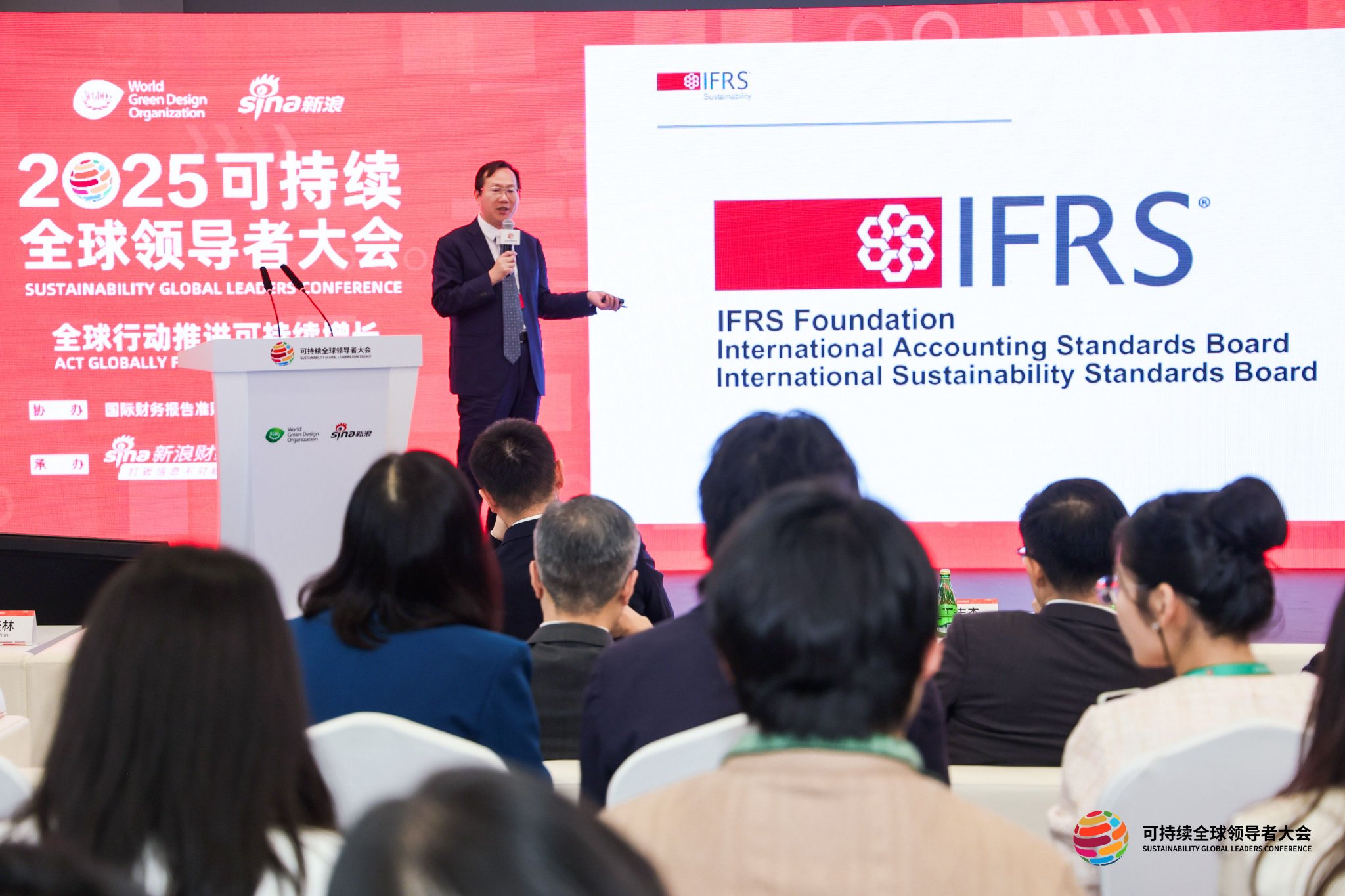
证监会毕晓颖:中国可持续披露制度坚持“以我为主” 不受外部杂音左右
Xin Lang Cai Jing· 2025-10-16 04:45
Core Insights - The 2025 Sustainable Global Leaders Conference is scheduled to take place from October 16 to 18 in Shanghai, emphasizing the importance of sustainable development and governance [1][5] - The conference aims to gather global wisdom and explore new paths for sustainable development, highlighting China's role in global governance [5] Group 1: Sustainable Disclosure System - The China Securities Regulatory Commission (CSRC) emphasizes that the sustainable disclosure system for listed companies will follow a path of self-development, focusing on principles of "actively learning, being self-directed, integrating diverse approaches, and showcasing unique characteristics" [3] - The CSRC plans to improve the disclosure guidelines based on the needs of enterprises, ensuring that the system is tailored to China's context while remaining aligned with international standards [3][4] - Approximately 400 companies are required to disclose sustainability reports, representing a significant portion of the market's total value, with 95% of these companies having already tested the waters, achieving record-high disclosure rates and completeness of climate information [4] Group 2: Conference Details - The conference will feature around 500 prominent guests, including 100 international attendees, such as political figures, representatives from international organizations, Nobel Prize winners, and leaders from Fortune 500 companies [5] - Discussions will cover nearly 50 topics, including energy and carbon neutrality, green finance, sustainable consumption, and technology and public welfare [5]
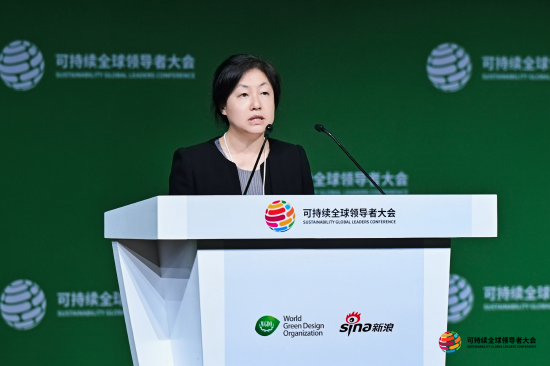
全文|证监会毕晓颖:按照“积极借鉴、以我为主、兼收并蓄、彰显特色”原则 坚定不移逐步完善可持续披露制度
Xin Lang Zheng Quan· 2025-10-16 04:31
Core Points - The 2025 Sustainable Global Leaders Conference was held in Shanghai from October 16 to 18, focusing on sustainable development and corporate disclosure practices [1][2] - The China Securities Regulatory Commission (CSRC) emphasized the importance of enhancing the sustainable information disclosure system for listed companies, guided by the new "National Nine Articles" [2][4] - A total of 1,869 listed companies disclosed sustainability reports, achieving an overall disclosure rate of 34.7%, which is a 10 percentage point increase from the previous two years [5][6] Group 1: Sustainable Disclosure System - The CSRC is committed to supporting high-quality sustainable disclosures by listed companies, following principles of gradual improvement and practical guidance [2][8] - The sustainable disclosure system has been established with mandatory guidelines from exchanges and reference standards for companies [5][6] - The number of companies disclosing sustainability reports has increased significantly, with 612 companies also disclosing social responsibility reports [5][6] Group 2: Quality of Disclosure - The content of sustainability disclosures has become more detailed and objective, with 99.3% of companies reporting quantitative indicators [5][6] - There is a notable increase in the disclosure of climate-related risks and greenhouse gas emissions, with 62.1% and 65.9% of companies respectively providing this information [5][6] - Governance structures related to sustainability have been strengthened, with 67.3% of companies establishing governance frameworks [5][6] Group 3: Focused Topics and Ratings - The introduction of guidelines has led to a more focused approach to sustainability topics, with increased attention on climate change and fair treatment of small and medium enterprises [6][7] - By the end of last year, one-third of companies listed on the Shanghai and Shenzhen stock exchanges saw improvements in their MSCI ESG ratings, with the proportion of top-rated companies increasing from 0 to 7.2% over five years [6][7] Group 4: Future Directions - The CSRC plans to continue refining the sustainable disclosure system, incorporating international best practices while considering local conditions [8][9] - A phased approach will be taken for mandatory disclosures, with approximately 400 companies required to disclose sustainability reports by 2026 [9][10] - The focus will remain on practical implementation and high-quality development, ensuring that disclosures reflect genuine sustainable practices [10][11]
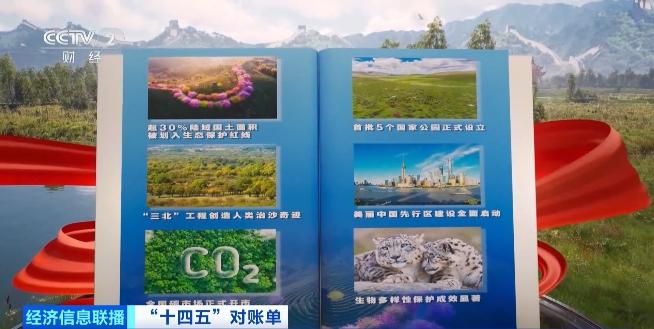
“十四五”对账单|美丽中国建设迈出重大步伐 “绿水青山”绘就生态画卷
Yang Shi Wang· 2025-10-16 04:12
Group 1 - The core viewpoint emphasizes the importance of green and low-carbon development for achieving high-quality growth during the "14th Five-Year Plan" period, highlighting significant progress in building a beautiful China and the successful transformation towards green development [1][7] - The "14th Five-Year Plan" outlines the goal of improving environmental quality, with specific targets for reducing PM2.5 concentration to 29.3 micrograms per cubic meter by 2024, a 16.3% decrease from 2020 levels, and achieving a good air quality day ratio of 87.2% [4] - The plan also aims for a 90.4% proportion of surface water quality meeting good standards, marking a significant milestone in environmental governance [4] Group 2 - The ecological restoration efforts in the Helan Mountains, which faced severe environmental degradation due to coal mining, have led to a resurgence of wildlife, including the return of snow leopards, indicating a healthier ecosystem [8][14][24] - The transformation of the Helan Mountain area has also spurred economic development, with the wine industry in the region projected to exceed 50 billion yuan in output this year, showcasing the integration of ecological restoration with economic growth [32] - The shift from targeted pollution control to comprehensive ecological governance reflects a broader strategy for sustainable development, with an emphasis on systemic management of environmental issues [33][35] Group 3 - The establishment of the world's largest renewable energy system and carbon market during the "14th Five-Year Plan" period highlights China's commitment to green transformation and its role in global ecological governance [37] - Experts indicate a transition from a focus on green technology industry emergence to a phase of rapid growth, suggesting that green low-carbon industries will play an increasingly vital role in the domestic economy [39] - The new round of national contributions announced in September aims for absolute reductions in greenhouse gas emissions across all economic sectors, reflecting a comprehensive approach to climate action [41]

增绿最多、最快!我国贡献全球大约25%新增绿化面积
Yang Shi Xin Wen Ke Hu Duan· 2025-10-16 02:52
Group 1 - The core viewpoint emphasizes the importance of green and low-carbon development for achieving high-quality growth, highlighting significant progress in building a beautiful China during the 14th Five-Year Plan period [1][3] - The 14th Five-Year Plan outlines a commitment to promoting green development and improving environmental quality, with a focus on systematic governance of ecosystems [1][24] - China has achieved a national afforestation area of 5.49 million hectares, with a forest coverage rate exceeding 25%, contributing approximately 25% of the world's new greening area [1][26] Group 2 - The ecological restoration efforts in the Helan Mountains have led to a significant improvement in biodiversity, with the return of species such as the snow leopard [4][6] - The transformation of the Helan Mountain area into a major wine production region is highlighted, with an expected wine output value surpassing 500 billion yuan this year [22][26] - The shift from targeted pollution control to comprehensive ecological governance is noted, indicating a broader approach to environmental management [24][30] Group 3 - The establishment of the world's largest renewable energy system and carbon market is a key achievement, reflecting the growing contribution of green transformation to economic and social development [26][28] - Experts indicate a transition from a phase of explosive growth in green technology industries to a stage of rapid development, with a stronger emphasis on sustainable practices [28][30] - Future goals for the 15th Five-Year Plan include a comprehensive reduction target for all greenhouse gases, showcasing China's commitment to climate change mitigation [28][30]
京东集团加码汽车产业链布局,与宁德时代、长安汽车达成战略合作
Ju Chao Zi Xun· 2025-10-16 02:52
Group 1 - JD Group has signed strategic cooperation agreements with CATL and Changan Automobile to promote green low-carbon and digital transformation in the supply chain [2] - The collaboration with CATL focuses on leveraging JD's strengths in digital supply chain and omnichannel services, aiming for sustainable development and cost efficiency in supply chain operations [2] - JD and CATL will work together on expanding the new energy vehicle charging ecosystem and building a battery aftermarket channel network, utilizing JD's nationwide service network [2] Group 2 - The partnership with Changan Automobile builds on a solid foundation of collaboration in user marketing, after-sales service, and inventory management, aiming to enhance cost efficiency [3] - During the 2024 JD 11.11 event, JD and Changan will jointly launch new vehicles to provide consumers with cost-effective automotive experiences [3] - The collaboration includes the completion of the Changan Automobile Smart Interaction Center project, enhancing customer service systems and extending cooperation into AI fields [3] Group 3 - The comprehensive strategic partnership will enable JD and Changan to deepen cooperation across various domains, including marketing for passenger cars, motorcycles, and vehicle ecosystem products [4] - Both companies will explore the development of smart logistics vehicles and collaborate on designing and producing new energy autonomous vehicles [4] - The partnership aims to create a modular automotive supply chain logistics solution, enhancing Changan's digital transformation in marketing management and offline service network [4]




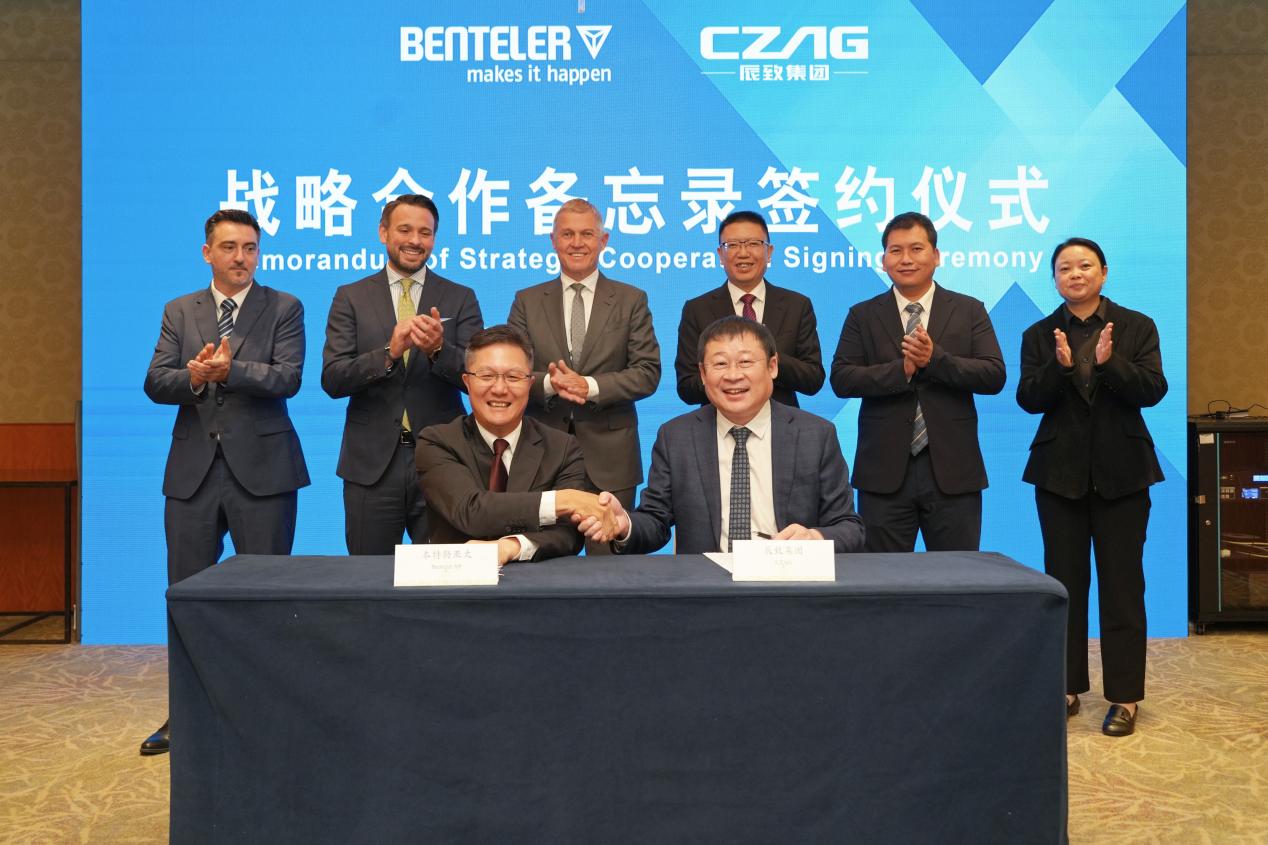
辰致集团与本特勒签署合资合作备忘录 共筑中国汽车底盘系统新高地
Zhong Guo Qi Che Bao Wang· 2025-10-16 02:27
Core Insights - The penetration rate of new energy vehicles in China has surpassed 58%, indicating a shift in consumer preferences towards technology, service, quality, and safety rather than just price and discounts [1] - The partnership between Chen Zhi Group and Benteler International AG marks a significant collaboration in the automotive industry, focusing on high-value components for new energy vehicles [1][4] Company Collaboration - A memorandum of understanding was signed between Chen Zhi Group and Benteler International AG to establish a joint venture in the Chengdu-Chongqing region, covering four key areas: high-end chassis components, battery box systems, hot-formed body structure components, and integrated chassis modules [4][16] - The collaboration aims to meet the growing demand for new energy vehicles and enhance the supply chain through Sino-German technological integration, promoting green and low-carbon transformation [4][20] Strategic Goals - The new joint venture will expand its business from traditional chassis components to high-tech areas such as modular chassis systems and hot-formed battery boxes, which currently have no domestic counterparts [16][20] - The partnership is expected to enhance market expansion, allowing the new company to target a broader market both domestically and internationally, leveraging Benteler's global presence [16][20] Technological Integration - The collaboration will focus on technology integration and upgrading, enhancing research and manufacturing capabilities in chassis modular systems and battery box technologies [20] - A new joint research and development team will be established to develop products tailored to the needs of new energy vehicles, reflecting a shared understanding of chassis business [17][20] Industry Impact - This partnership signifies a new phase in Sino-German cooperation in the automotive parts sector, injecting new momentum into the transformation and upgrading of China's automotive industry [16][20] - The collaboration aims to create a comprehensive capability covering chassis, battery, and body systems, positioning the new company as a cornerstone for intelligent electric vehicles in China [21][20]
光伏如何爆改沙漠
Jing Ji Ri Bao· 2025-10-15 21:51
Core Viewpoint - The "Photovoltaic + Desertification Control" model in China is gaining global attention as it effectively combines energy production, ecological protection, and agricultural development, transforming deserts into productive lands [1][4]. Group 1: Photovoltaic Technology and Desertification Control - The construction of a 400-kilometer "Photovoltaic Great Wall" in the Kubuqi Desert is a significant initiative aimed at combating desertification while generating energy [1]. - Traditional desertification control methods, such as afforestation, face challenges like high costs, long cycles, and low efficiency, making them less sustainable [1][2]. - The "Photovoltaic +" model offers a revolutionary solution by using solar panels to stabilize sand and generate electricity, creating a self-sustaining economic cycle for ecological restoration [1][3]. Group 2: Economic Benefits and Local Development - The establishment of photovoltaic power stations in desert areas has unexpectedly enhanced local economies, turning desertification control from a loss-making endeavor into a profitable industry [3]. - The income generated from electricity production can be reinvested into ecological projects, fostering a sustainable cycle of "using electricity to support sand control and using sand to generate electricity" [3]. - The cultivation of crops and livestock under photovoltaic panels not only improves local economic conditions but also contributes to soil health and vegetation growth, creating a beneficial cycle of "sand stabilization, grass planting, and livestock raising" [3]. Group 3: Future Implications and Global Relevance - The "Photovoltaic + Desertification Control" model provides valuable insights for sustainable development globally, particularly for regions facing both desertification and energy shortages [4]. - This approach demonstrates that with innovative thinking and systematic planning, barren lands can be transformed into productive areas, contributing to both ecological and economic goals [4]. - Future integration of this model with technologies like hydrogen production and energy storage could further enhance its impact, positioning deserts as potential "energy oases" [4].
广州发展:绿色转型成就能源巨头
Zheng Quan Ri Bao Zhi Sheng· 2025-10-15 16:13
Core Viewpoint - Guangzhou Development Group has transformed from a single coal and electricity enterprise to a comprehensive clean energy industry system, focusing on green transformation and business model innovation during the "14th Five-Year Plan" period [1] Group 1: Business Growth and Transformation - As of June 2025, the installed capacity of new energy generation units increased from 967,400 kW at the end of 2020 to 5,820,000 kW, a growth of 501.61% [1] - The company has over 140 operational wind and solar power stations, with controllable installed capacity exceeding 5,820,000 kW, and green low-carbon energy accounting for over 76% of total installed capacity [1] - The asset scale grew from 43.4 billion to 80.4 billion [1] Group 2: Community and Environmental Impact - The "Lin-Guang Complementary" model in Houping Village has transformed previously barren land into a thriving photovoltaic power generation site, enhancing local economic benefits and ecological sustainability [2][3] - The photovoltaic area totals 32,400 acres, with 22,000 acres available for planting and breeding, achieving a coverage rate of approximately 56.75% of the total photovoltaic area [3] Group 3: Energy Supply and Infrastructure - The Guangzhou LNG emergency peak-shaving gas source station has successfully received 16 LNG vessels, totaling 868,700 tons, ensuring gas supply for Guangzhou [4] - The company has developed a diverse energy supply structure, including coal, gas, distributed energy, wind, solar, and storage, to balance energy supply [5] Group 4: Financial Performance - From 2021 to 2024, the net profit attributable to shareholders increased significantly, reaching 1.032 billion in 2021, 1.354 billion in 2022, 1.638 billion in 2023, and 1.732 billion in 2024 [6] - In the first half of 2025, the net profit continued to rise to 1.635 billion, a year-on-year increase of 42.56% [6] Group 5: Future Outlook and Strategic Goals - The company aims to double its total investment, installed capacity, and natural gas supply during the "14th Five-Year Plan" period, with expectations to exceed these targets [6] - The company is committed to becoming a leading green low-carbon comprehensive smart energy enterprise, aligning with national goals for energy transition and carbon neutrality [7]

广交会观察:新能源汽车成亮点 中国智造加速“出海”
Zhong Guo Xin Wen Wang· 2025-10-15 14:15
Core Insights - The 138th China Import and Export Fair (Canton Fair) opened in Guangzhou, highlighting the strong performance of the new energy vehicle (NEV) sector, with many companies showcasing intelligent products and comprehensive solutions [1][4]. Industry Performance - NEVs have become a significant growth driver for China's automotive industry, with exports reaching 1.758 million units from January to September, marking a year-on-year increase of 89.4% [4]. - The Dongfeng Liuzhou Motor Company reported a 20% increase in export volume for the first three quarters, attributed to their hybrid models that cater to markets with inadequate charging infrastructure [4]. Company Strategies - Companies like Kaiwo New Energy and GAC Group are focusing on customized solutions for different markets, enhancing battery management and vehicle performance based on regional needs [3][4]. - Kaiwo's products, including the autonomous Shuttle Bus and the large VAN, have garnered significant attention, particularly in European markets, where they plan to launch by the end of the year [3]. Future Trends - The future of NEV exports is expected to be driven by intelligence and sustainability, with companies aiming to enhance their brand and service quality to elevate "Made in China" to "Quality from China" [5].