
银发经济

Search documents
银发经济新趋势白皮书发布:精神文化需求加速升温,产业升级迎来关键窗口
Cai Fu Zai Xian· 2025-11-29 07:59
Core Insights - The white paper titled "New Trends in the Silver Economy: The Spiritual and Cultural Needs of the Middle-aged and Elderly and Industry Development" highlights the expanding spiritual and cultural demands of the "new middle-aged and elderly" demographic in China, driven by recent policies aimed at enhancing the well-being of older adults [1][4] Group 1: Demand and Supply Dynamics - There is a growing demand for spiritual and cultural services among the elderly, yet the supply remains structurally insufficient, with a lack of quality offerings and innovative cultural products [2] - Over half of the respondents rated local spiritual and cultural services as "average," indicating a need for improvement in service quality [2] Group 2: Industry Trends and Innovations - Industry players are actively pursuing content innovation and technological integration in response to rising demand, with organizations like Lihua Education exploring various practices in the cultural service sector [3] - Future innovations in spiritual and cultural services will focus on balancing technology friendliness, content adaptability, and emotional experience [3] Group 3: Future Outlook - The silver economy is expected to continue expanding, with spiritual and cultural consumption becoming a significant growth driver, emphasizing the importance of enhancing life quality and social participation among the elderly [4] - Lihua Education plans to focus on innovation in spiritual cultural services, technology empowerment for the elderly, and the creation of smart elderly care scenarios to improve supply quality [4]
兴业证券董事长苏军良:积极应对老龄化、发展银发经济,正是中国推动可持续发展的关键着力点
Xin Lang Zheng Quan· 2025-11-29 03:16
Core Insights - The aging population in China is a significant strategic issue for national development, and actively addressing aging and developing the silver economy is crucial for sustainable development [3][4] - The report emphasizes the need for policy innovation, financial empowerment, and social collaboration to build an inclusive and sustainable elderly care ecosystem [1][3] Industry Overview - The "14th Five-Year Plan" has highlighted the "active response to population aging" as a national strategy, with a focus on developing a coordinated policy mechanism for elderly care and industry [3] - Financial policies are increasingly recognizing "pension finance" as a key growth area for high-quality development [3] Company Positioning - The company, as a state-owned financial enterprise, prioritizes national strategy and social responsibility, particularly in the important area of pension finance [4] - The company has been a pioneer in personal pension finance, being one of the first brokerages to pilot personal pension product distribution, and currently holds nearly 700,000 personal pension investment accounts [4] - The company's pension financial products have shown strong performance, with its first pension target fund achieving a return of 84.25% since inception, and its three-year investment yield ranking first among similar products [4] Future Outlook - The company plans to continue deepening its practices in the pension finance sector, guided by the "15th Five-Year Plan," by enriching its pension financial product offerings and enhancing wealth management services throughout the lifecycle [5] - There will be increased investment in financial technology to improve services for the elderly, along with efforts to educate investors and promote knowledge of pension finance [5] - The company aims to collaborate with various sectors to innovate products and upgrade services, believing that collective efforts will help address aging challenges and activate new momentum in the silver economy [5]


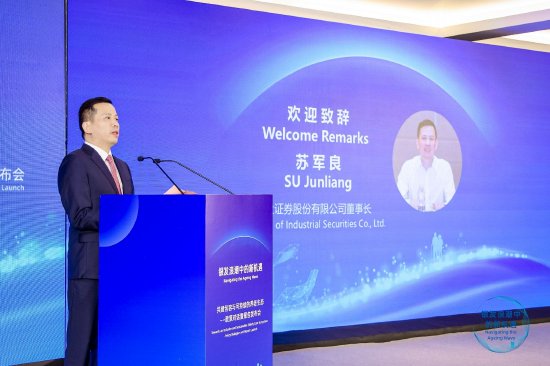
老年人是财富?发改委社会发展司原副司长郝福庆:老年人创造了财富,同时也是财富的拥有者
Xin Lang Zheng Quan· 2025-11-29 03:10
Core Insights - The report highlights the opportunities and challenges presented by China's aging population, emphasizing the need for a sustainable and inclusive elderly care ecosystem [1][3] - The aging population is seen as a significant driver of economic growth, with elderly consumption becoming an important engine for domestic demand [1][2] Group 1: Economic Implications - The aging population will reshape China's economic landscape and social values, marking a historical shift that requires comprehensive preparation across various sectors [3] - Elderly individuals are both creators and owners of wealth, indicating their increasing role in the economy [2][3] - The "silver economy" is expected to become a new driving force for economic growth, industry upgrades, and innovation [1][2] Group 2: Policy and Strategy - There is a call for policy innovation, financial empowerment, and social collaboration to build a more inclusive and sustainable elderly care system [1] - The concept of "active aging" and strategies for healthy aging are emphasized as essential for seizing opportunities in the silver economy [3]
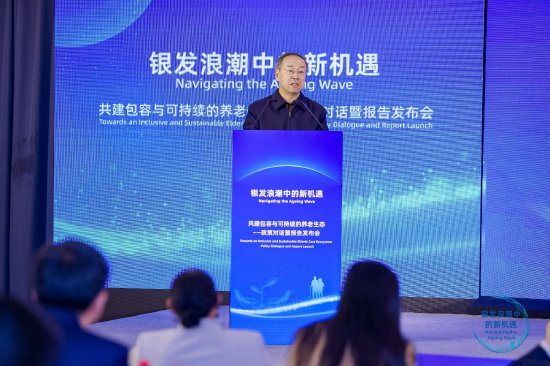
发改委社会发展司原副司长郝福庆:老年消费是与日俱增的,是拉动内需的重要引擎
Xin Lang Zheng Quan· 2025-11-29 03:05
Core Insights - The report highlights the opportunities and challenges presented by China's aging population, emphasizing the need for a more inclusive and sustainable elderly care ecosystem [1][3] - The aging population is seen as a significant driver of economic growth, with elderly consumption increasingly contributing to domestic demand [1][3] Group 1: Economic Implications - The elderly are both creators and owners of wealth, indicating their potential as a vital economic force [3] - Elderly consumption is recognized as an important engine for driving domestic demand, suggesting a shift in economic focus towards the silver economy [1][3] Group 2: Policy and Strategy - The need for policy innovation, financial empowerment, and social collaboration is emphasized to build a robust elderly care ecosystem [1] - A proactive approach to aging, including the promotion of healthy aging strategies, is necessary to harness the opportunities presented by an aging society [3]
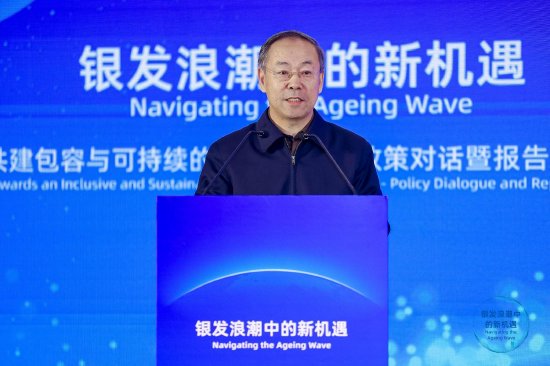
兴业证券董事长苏军良:兴旗下首支养老目标基金成立以来回报84.25%,近三年投资收益率位居同类型产品第一
Xin Lang Zheng Quan· 2025-11-29 02:27
Group 1 - The aging population has become a significant strategic issue for national development in China, with a focus on actively addressing aging and developing the silver economy as key points for sustainable development [3][4] - The "14th Five-Year Plan" emphasizes the need for a national strategy to actively respond to population aging, while the upcoming "15th Five-Year Plan" will further clarify policies for the coordinated development of elderly care and industry [3][4] - The government is committed to creating a robust institutional foundation for the construction of the elderly care ecosystem through continuous and precise policy support [3] Group 2 - Industrial Securities has established itself as a leader in the personal pension finance sector, having opened nearly 700,000 personal pension investment accounts and managing a total scale of nearly 6 billion yuan in its subsidiary's pension fund [4] - The company's first pension target fund has achieved a return of 84.25%, with the highest investment yield among similar products over the past three years [4] - Looking ahead, Industrial Securities aims to deepen innovation in the pension finance field, enhance product offerings, and improve services tailored for the elderly, while also promoting financial literacy and collaboration across various sectors [4][5]
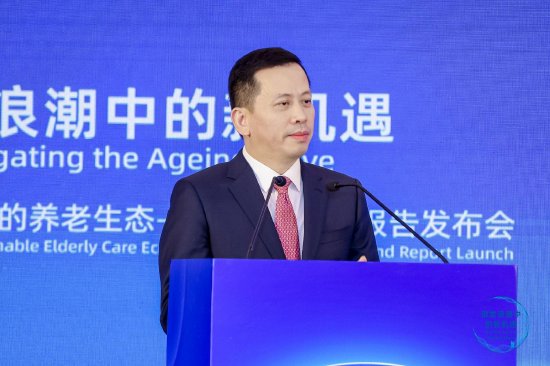
发改委社会发展司原副司长郝福庆:在老龄化的背景下,银发经济会成为未来我国经济社会发展的新经济增长期
Xin Lang Zheng Quan· 2025-11-29 02:16
责任编辑:尉旖涵 会议上国家发展改革委社会发展司原副司长、一级巡视员郝福庆称,人口老龄化是大趋势、大趋势就会 带来大需求、孕育着大市场、大市场需要大服务、依靠大科技,这5个认知构成了银发经济划分的底层 逻辑。在人口老龄化的大背景下,可以预见,银发经济一定会成来未来我国经济社会发展的新经济增长 期。 郝福庆称,人口老龄化是大趋势,不可逆转。当前世界出现了百年未有之大变局,在这其中有两个确定 性我觉得是不容置疑的:一个是中华民族的伟大复兴,再一个大家看得见、摸得着的人口老龄化。对于 后者而言,生活水平的提高、医疗条件的改善、社会保障的建立、包括生育观念的转变、人类寿命的延 长等等,很多因素共同的作用导致人口老龄化。 去年我们国家出生人口是954万,生育率只有百分之一点零几,我们的老年人口是负增长,去年是减少 了139万,老年人口达到是3.1亿,占比达到22%。我们中国人口从22年开始进入拐点,也就是22年达到 峰值,开始进入下行的通道。去年一年人口减少了139万,老年人口净增了1334万。那么前一年我们出 生人口是902百,死亡是1110万,人口减小208万。这是全球的一个趋势。 专题:银发浪潮中的新机遇:共建包 ...
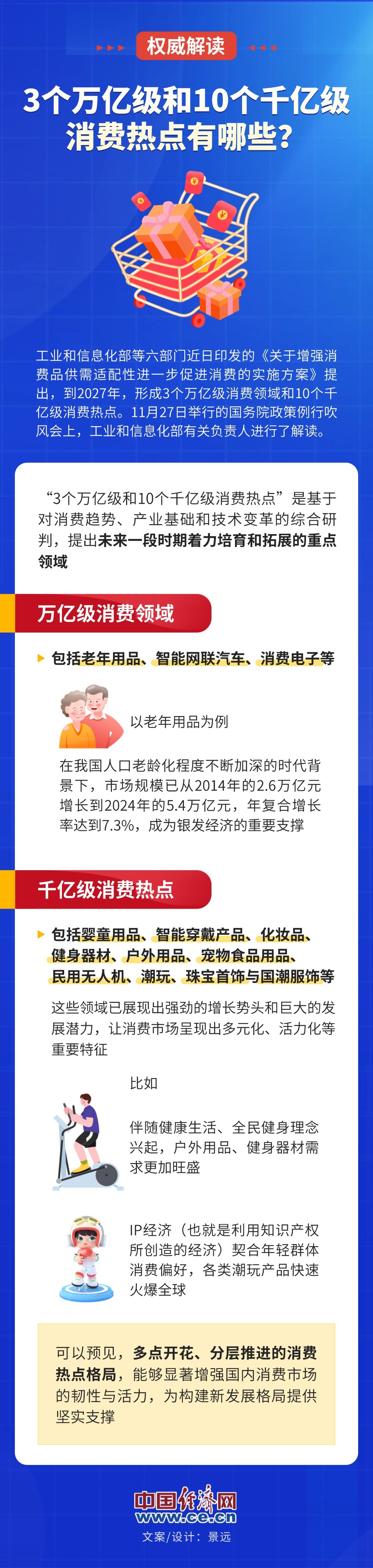
【图解】权威解读:3个万亿级和10个千亿级消费热点有哪些?
Zhong Guo Jing Ji Wang· 2025-11-29 01:34
Core Insights - The implementation plan by six departments, including the Ministry of Industry and Information Technology, aims to establish three trillion-level consumption sectors and ten hundred-billion-level consumption hotspots by 2027, based on comprehensive analysis of consumption trends, industrial foundations, and technological changes [3][4]. Trillion-Level Consumption Sectors - The three trillion-level consumption sectors identified include elderly products, smart connected vehicles, and consumer electronics. For instance, the market size for elderly products has grown from 2.6 trillion yuan in 2014 to an expected 5.4 trillion yuan by 2024, reflecting a compound annual growth rate of 7.3%, highlighting the significance of the silver economy [4]. Hundred-Billion-Level Consumption Hotspots - The ten hundred-billion-level consumption hotspots encompass a diverse range of products, including baby products, smart wearable devices, cosmetics, fitness equipment, outdoor goods, pet food, civilian drones, trendy toys, jewelry, and national trend clothing. These sectors are showing strong growth momentum and significant development potential, contributing to a diversified and vibrant consumer market [4][6]. Emerging Trends - The rise of health-conscious living and the concept of national fitness are driving increased demand for outdoor products and fitness equipment [6]. - The IP economy, which leverages intellectual property to create economic value, aligns with the consumption preferences of younger demographics, leading to a rapid global popularity of trendy toy products [8]. Market Resilience - The multi-faceted and layered approach to consumption hotspots is expected to significantly enhance the resilience and vitality of the domestic consumer market, providing solid support for the construction of a new development pattern [8].
开启文化素养智慧服务新程,梨花教育发布首款AI声学学习机
Xin Jing Bao· 2025-11-28 15:11
Group 1 - The core viewpoint of the articles highlights the transformation of the elderly care industry from material support to spiritual care, emphasizing the growing demand for cultural and technological integration in services for the elderly [2][6] - The launch of the Pear Blossom AI Acoustic Learning Machine aims to address the challenges faced by the elderly in using technology, featuring a fully elderly-friendly design and a comprehensive learning ecosystem [3][5] - The Pear Blossom Education has upgraded its platform to a "Cultural Literacy Wisdom Service Platform," focusing on providing diverse cultural services and integrating AI technology to enhance the spiritual and cultural needs of the elderly [2][4] Group 2 - The "New Elderly" demographic, defined as individuals born in the 1960s and 1970s, is becoming a significant consumer force in the silver economy, with increasing attention to spiritual and cultural life [6][7] - A white paper co-authored by Pear Blossom Education and the Communication University of China outlines the trends in the spiritual cultural needs of the elderly, indicating a shift from optional to essential aspects of daily life [6][7] - The white paper identifies three core trends in the silver economy: the integration of AI as a foundational infrastructure, the necessity for a collaborative network to address supply shortages, and the transition of cultural care from a niche interest to a mainstream lifestyle [7]
万亿银发赛道:政策市场双轮驱动 机器人等智慧养老产品加速落地
Xin Jing Bao· 2025-11-28 14:00
Core Viewpoint - The article highlights the opportunities arising from the aging population in China, emphasizing the government's initiative to enhance consumer goods supply and demand adaptability through a new implementation plan aimed at promoting consumption and upgrading industries [1][2]. Group 1: Government Initiatives - The Chinese government has issued a plan to optimize the supply structure of consumer goods by 2027, aiming to create three trillion-level consumption sectors and ten hundred-billion-level consumption hotspots [1][2]. - The plan is the first consumption promotion policy document released after the 20th National Congress of the Communist Party of China, focusing on high-quality development and the dynamic balance of supply and demand [1]. Group 2: Market Growth in Elderly Products - The market for elderly products in China is projected to grow from 2.6 trillion yuan in 2014 to 5.4 trillion yuan by 2024, with a compound annual growth rate of 7.3%, indicating a significant expansion in the silver economy [2]. - The elderly population aged 60 and above is expected to reach 310.31 million by the end of 2024, accounting for 22% of the total population, which reflects a shift in demand from survival to development and participation [8]. Group 3: Technological Innovations in Elderly Care - Various innovative elderly care products are being developed, such as adaptive exoskeleton robots and portable bathing machines, which are being introduced into communities to enhance the quality of life for seniors [3][4]. - The Shanghai Elderly Care Technology Industrial Park has been established to foster innovation in elderly care products, with over 70 companies already participating [3]. Group 4: Rental and Accessibility of Elderly Care Products - A new rental service for rehabilitation aids has been introduced in Shanghai, allowing seniors to rent essential care products at a low monthly fee, making advanced technology more accessible [5][6]. - The introduction of intelligent companion robots, such as "UnyBan," aims to provide emotional support and practical assistance to the elderly, enhancing their daily lives [7]. Group 5: Future Outlook and Challenges - Experts emphasize the need for government intervention to address the supply gap in elderly products, particularly for low-income and rural populations, to ensure a balanced market [8][9]. - The integration of AI technology into elderly care products is seen as a key driver for future growth, with a focus on creating personalized solutions that meet the specific needs of seniors [9][10].

食品饮料2026年投资策略:拐点显现、板块次第筑底、积极布局
China Post Securities· 2025-11-28 13:40
Group 1: Economic Indicators and Consumer Trends - The CPI in October showed a slight improvement, with a year-on-year increase of 0.2% and a month-on-month increase of 0.2%, indicating a potential recovery trend that may continue into the first half of next year [6][10] - The retail sales of consumer goods in October reached 46,291 billion yuan, growing by 2.93% year-on-year, with significant improvements in essential consumption categories such as food and beverages [10] - The restaurant sector saw a monthly revenue of 5,199 billion yuan in October, reflecting a year-on-year growth of 3.8%, driven by the National Day and Mid-Autumn Festival holidays [10] Group 2: Frozen and Food Supply Industry - The frozen food and catering industry is witnessing a shift from price wars to product innovation and channel development, with companies focusing on quality and service rather than just price competition [11] - Major players like Anjiyuan and Qianwei Central Kitchen are transitioning their strategies to emphasize product quality and operational efficiency, leading to improved profitability [11][15] - The industry is entering a "hard strength reshuffle period," where companies are expected to enhance their product offerings and service capabilities to maintain competitiveness [11] Group 3: Snack Food Sector - The snack food sector is experiencing a weak recovery, with a clear differentiation in growth among brands and channels, driven by strategic adjustments and product innovations [33][34] - The emergence of the konjac category as a significant growth driver, with market potential expected to reach 300 billion yuan by 2025, indicates a strong consumer demand for healthy snacks [34][40] - Companies like Yummy Foods and Salted Fish are leveraging their core products and channel strategies to achieve substantial growth, with a focus on high-margin products and efficient cost management [34][42] Group 4: Specific Company Strategies - Anjiyuan is focusing on high-margin products and channel expansion, with significant growth in its core offerings like volcanic stone grilled sausages and high-end dumplings [12][13] - Qianwei Central Kitchen is seeing improvements in its direct sales and distribution channels, with a focus on enhancing profitability through strategic adjustments in customer structure and resource allocation [15][18] - Salted Fish is capitalizing on the konjac trend and optimizing its product mix to improve profitability, with a strong emphasis on high-margin products and efficient channel management [40][41]



