云计算

Search documents
智慧旅游票务管理系统,旅游景区多业态管控平台,景区票务系统厂家
Sou Hu Cai Jing· 2025-12-16 09:12
Core Viewpoint - The traditional ticketing management model in the cultural tourism industry faces challenges such as inefficiency, data fragmentation, and poor user experience. The company has developed an innovative smart tourism ticketing management system that offers a comprehensive, intelligent, and one-stop ticketing solution for scenic spots, theme parks, and cultural venues, promoting the upgrade of ticketing management towards refinement, efficiency, and personalization [2]. Group 1: Technical Architecture - The smart tourism ticketing management system is built on advanced technologies such as cloud computing, big data, IoT, and artificial intelligence, forming a three-tiered architecture of "front-end interaction, middle platform processing, and back-end support" to ensure efficient operation and flexible expansion [3]. - The front-end interaction layer supports multi-channel ticket sales and verification, including official websites, WeChat public accounts, mini-programs, third-party OTA platforms (like Ctrip and Meituan), self-service ticket machines, and offline windows, allowing visitors to choose their preferred purchasing channels [4]. - The middle platform serves as the core brain of the system, integrating intelligent ticket management, dynamic pricing, visitor flow forecasting, and data analysis, providing precise decision support for scenic spots [5]. Group 2: Core Functions - The system achieves integrated management of multi-channel ticket sales, with real-time synchronization of ticket inventory, pricing, and sales data across all channels, thus avoiding overselling and data inconsistencies [8]. - To enhance visitor entry efficiency, the system supports various ticket verification methods, including QR code scanning, ID verification, facial recognition, and IC card verification, allowing visitors to choose the most suitable method for quick entry [9]. - The system utilizes big data analysis and machine learning algorithms to accurately predict future visitor flow, enabling scenic spots to make informed operational decisions [10]. - The system features robust data analysis capabilities, allowing for in-depth exploration of ticket sales data, visitor behavior, and flow data, providing valuable insights for marketing strategies and service improvements [11]. Group 3: Innovative Highlights - The system introduces a dynamic pricing mechanism that adjusts ticket prices based on market demand, competition, and time factors, maximizing revenue through strategic pricing [13]. - To enhance payment convenience, the system supports various seamless payment methods, allowing visitors to complete transactions quickly and easily without manual input [14]. - The system promotes ecological integration by facilitating data connections and business collaborations with surrounding industries such as hotels, dining, transportation, and retail, providing a comprehensive tourism service solution [15]. Group 4: Security Assurance - The system employs advanced encryption technology to protect visitor personal information and transaction data, ensuring data security during transmission and storage [17]. - To handle high concurrency challenges during peak tourist seasons, the system utilizes a distributed architecture and load balancing technology to maintain stable operation [18]. - A comprehensive security audit and monitoring mechanism is established to track system operations, data access, and network traffic, allowing for timely detection of security vulnerabilities [19].


行业聚焦:全球以太网交换集成电路市场头部企业份额调研(附Top5 厂商名单)
QYResearch· 2025-12-16 09:08
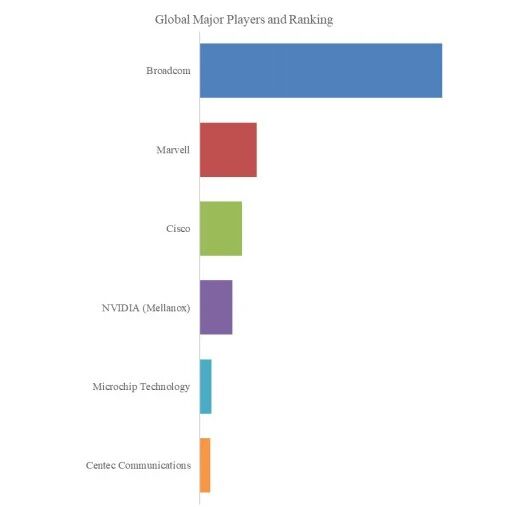
Core Viewpoint - The global Ethernet switch integrated circuit market is projected to grow from $4.86 billion in 2024 to $8.37 billion by 2031, with a compound annual growth rate (CAGR) of 7.26%, driven by the demand for higher-speed Ethernet and advancements in cloud computing, AI, and digital transformation [2][13]. Market Growth and Trends - The market is experiencing a significant shift towards higher-speed categories, particularly from 25G/100G to 200G/400G and even 800G switch architectures, reshaping revenue distribution and competitive dynamics [2][11]. - The revenue share of ≤ 25G chips is expected to decline from 25.63% in 2020 to approximately 9.34% by 2031, indicating a trend towards commoditization and integration into lower-end enterprise and industrial network devices [7][9]. - The 100G-400G segment remains a key revenue contributor, with its market share slightly decreasing from 47.31% in 2020 to 41.49% in 2024, while still experiencing revenue growth [8][11]. Competitive Landscape - Broadcom is the undisputed global leader with a market share of 54.59% in 2024, followed by Marvell at 12.95% and Cisco at 9.60%, which is expected to decline to 5.96% by 2030 due to a shift towards commercial chip adoption [4][9]. - The market is highly concentrated, with Broadcom and Marvell positioned as long-term winners due to their ability to invest heavily in R&D and innovation [11][13]. Product Type Evolution - The market is transitioning from traditional ≤ 25G and 25G-100G categories to higher-speed 100G-400G and 400G+ segments, driven by the expansion of cloud service providers and AI data centers [7][8]. - The 400G+ segment is the fastest-growing, expected to increase from $55 million in 2020 to $921 million in 2024, and projected to reach $3.24 billion by 2030, accounting for over 40% of total market revenue [8][11]. Application Trends - Commercial Ethernet switch integrated circuit solutions dominate the market, contributing 86.92% of total revenue in 2024, with expectations to exceed 92% by 2031, reflecting a trend of outsourcing hardware innovation to specialized semiconductor suppliers [9][11]. - The share of in-house developed integrated circuits is declining, from 18.37% in 2020 to an anticipated drop below 8% by 2031, due to the increasing complexity and costs associated with developing advanced switching chips [9][11]. Regional Insights - The Asia-Pacific region is the largest consumer market for Ethernet switch integrated circuits, driven by rapid cloud computing expansion in China, enterprise upgrades in Japan, and digital infrastructure development in India [11][13]. - North America remains at the technological forefront, primarily due to major cloud operators like Amazon, Google, Microsoft, and Meta adopting 400G/800G switch architectures [11][13].


从“卖跑车”跨界“卖火腿”!莆田69岁富豪掌舵金字火腿,90后儿子火速升总裁,还要押注光通信芯片?
Jin Rong Jie· 2025-12-16 07:29
Core Viewpoint - The management of Jinzi Ham is undergoing significant changes with the appointment of Zheng Hu as the new president, following the acquisition of control by Zheng Qing Sheng, who has no prior experience in the food industry [1][3]. Group 1: Management Changes - Guo Bo has resigned as president for personal reasons but will remain as vice chairman and a member of the board's strategic committee [1]. - Zheng Hu, born in 1991, has been appointed as the new president, marking a consolidation of power within the Zheng family, with both father and son holding key positions [1][2]. Group 2: New Business Directions - Jinzi Ham has been diversifying its business interests, recently entering the semiconductor sector by establishing subsidiaries and investing in a light communication chip company, Zhongsheng Microelectronics [3]. - The new investment in Zhongsheng Microelectronics focuses on high-speed optical module core chips, which are applicable in AI, cloud computing, and telecommunications [3]. Group 3: Financial Performance - In 2024, Jinzi Ham reported revenues of 344 million yuan and a net profit of 62.17 million yuan, with over 87% of revenue coming from ham and related meat products [5][6]. - However, in the first three quarters of 2025, the company experienced a significant decline, with revenues dropping by 13.97% to 222 million yuan and net profits decreasing by 26.25% to 22.01 million yuan [5][6].

合肥壹学元瑧科技有限公司成立 注册资本100万人民币
Sou Hu Cai Jing· 2025-12-16 03:01
Core Viewpoint - Hefei Yixue Yuanjin Technology Co., Ltd. has been established with a registered capital of 1 million RMB, focusing on various technology and software services, including artificial intelligence and cloud computing [1] Group 1: Company Overview - The company is legally represented by Cheng Xiaojin [1] - The registered capital of the company is 1 million RMB [1] Group 2: Business Scope - The business scope includes technology services, development, consulting, and transfer, as well as software development and outsourcing [1] - The company specializes in artificial intelligence software development, both foundational and application software [1] - Additional services include network and information security software development, 5G communication technology services, and cloud computing equipment technology services [1] - The company is involved in various sectors such as gaming, data processing, esports application system development, and IoT device sales [1] - It also offers retail services for computer hardware and software, as well as technology intermediary and consulting services [1]
恒指收跌347点,科网股走低
Guodu Securities Hongkong· 2025-12-16 01:42
Market Overview - The Hang Seng Index closed at 25,628.88, down 347 points or 1.34%, with 66 out of 89 blue-chip stocks declining [3][4] - The total market turnover was 204.29 billion, with a net inflow of 3.655 billion from northbound trading [3] Company News - China National Airlines reported a 10.1% year-on-year increase in passenger turnover for November, with an average seat occupancy rate of 83.3%, up 4 percentage points [12] - SenseTime launched its Seko 2.0 platform for series production, significantly improving production efficiency by reducing the time required for animated series by 80% to 90% [13] - Meituan announced the suspension of its "Tuan Hao Huo" business to focus on exploring new retail formats, indicating a strategic shift in its operations [14] - Vanke's bondholder meeting resulted in the rejection of all three proposals regarding debt repayment arrangements, leading to a second meeting scheduled for December 17 [15] Industry Dynamics - The Hong Kong General Chamber of Commerce signed three memorandums of cooperation in Hangzhou to enhance collaboration in innovation and technology between Hong Kong and Hangzhou [7] - The credit demand outlook for Hong Kong remains cautiously optimistic, with signs of stabilization in retail credit, although challenges persist in commercial loans [8] - Germany's trade and investment agency predicts that China will fall out of the top five export destinations for Germany for the first time in 15 years, with a projected 10% decrease in exports to 81 billion euros (approximately 740 billion HKD) [9] - The China Securities Regulatory Commission is deepening reforms in the capital market to enhance stability and promote high-quality development in the private equity fund sector [10]
6部门发文 促进服务外包高质量发展
Xin Hua She· 2025-12-16 01:29
Core Viewpoint - The Ministry of Commerce and five other departments have issued a notification regarding the "Action Plan for Promoting High-Quality Development of Service Outsourcing," aiming to enhance the competitiveness and innovation of service outsourcing in China by 2030 [1][2]. Group 1: Action Plan Objectives - By 2030, the plan aims to cultivate a number of internationally competitive leading service outsourcing enterprises and establish innovation-driven service outsourcing clusters with distinct advantages [1]. - The plan emphasizes the digitalization, intelligence, greening, and integration of service outsourcing, with a significant increase in employment [1]. Group 2: Specific Measures - The action plan outlines six key areas for implementation: enhancing platform capabilities, leading through innovation, nurturing main entities, expanding market access, developing industry standards, and training talent [1]. - It supports eastern cities to leverage high-end resources for global service outsourcing, while encouraging central and western regions to develop their unique outsourcing strengths [1]. Group 3: Digital Economy Integration - The plan promotes deep integration of the digital economy with the real economy, aiming to build digital trade industrial clusters [2]. - It encourages the development of international data service businesses and the establishment of a data service industry chain for overseas data storage, processing, and trading [2].
研判2025!中国内存数据库行业分类、产业链及市场规模分析:从性能加速工具到国计民生核心基础设施,印证信创与数字化驱动下的战略地位质变[图]
Chan Ye Xin Xi Wang· 2025-12-16 01:25
Core Insights - The role of in-memory databases has fundamentally shifted from being an "auxiliary tool" focused on caching and performance acceleration to becoming a "key strategic infrastructure" that supports core business systems in finance and telecommunications [1][7]. Industry Overview - Database management systems are essential software for organizing, storing, and managing data, serving as the backbone for IT core systems in the information and big data era [1]. - In-memory databases store data primarily in RAM, achieving read/write speeds that are tens to hundreds of times faster than traditional disk databases, making them suitable for real-time applications [3][1]. Market Size - The market size of China's in-memory database industry is projected to reach approximately 10.104 billion yuan in 2024, representing a year-on-year growth of 20.29% [1][7]. Key Companies - Major players in the in-memory database sector include Huawei's GaussDB, Ant Group's OceanBase, and Tencent Cloud's TDSQL, which leverage cloud-native architectures and distributed technologies [8]. - Traditional database vendors like Dameng Data and Kylin Software are also significant, with their solutions supporting high-performance real-time memory computing [8][10]. Industry Development Trends 1. **Technological Evolution**: In-memory databases are integrating AI, cloud computing, and distributed architectures, leading to a new paradigm of "intelligent in-memory computing" [12]. 2. **Application Expansion**: In-memory databases are increasingly tailored for specific verticals such as finance and telecommunications, enhancing their adaptability to real-time requirements [13]. 3. **Domestic Ecosystem Construction**: Under the influence of domestic innovation policies, local in-memory database vendors are accelerating the establishment of a comprehensive ecosystem that includes chips, operating systems, databases, and applications [14][15].





黄朝椿:数字化赋能乡村产业振兴
Jing Ji Ri Bao· 2025-12-16 00:05
Core Viewpoint - The implementation of the rural revitalization strategy is a significant historical task related to the comprehensive construction of a modern socialist country, with a focus on the comprehensive revitalization of rural industries, talents, culture, ecology, and organization [1] Group 1: Industry Revitalization - Industrial revitalization is the key to the overall revitalization of rural areas, as highlighted by Xi Jinping, emphasizing that without industry, it is difficult to attract and retain talent, and farmers' income cannot be increased [1] - The rural industry is rooted in county areas, relying on agricultural and rural resources, with farmers as the main body, and aims for the integration of primary, secondary, and tertiary industries [1] Group 2: Digital Transformation - The rapid development of digital technologies such as artificial intelligence, cloud computing, blockchain, and big data has accelerated their integration with traditional industries, significantly enhancing the mechanization and intelligence levels of agriculture [2] - By the end of 2023, the number of agricultural machines equipped with Beidou terminals reached 2.2 million, and the agricultural production informationization rate reached 27.6% [2] Group 3: Challenges and Recommendations - Despite notable achievements in rural industrial revitalization, there are still gaps compared to new industrialization and modernization requirements, with challenges such as insufficient technical talent and the predominance of smallholder farmers [3] - The "14th Five-Year Plan" suggests accelerating agricultural modernization and promoting the deep integration of rural primary, secondary, and tertiary industries [3] Group 4: Infrastructure and Innovation - Accelerating the construction of new infrastructure is essential for supporting industrial digital transformation and innovation, with a focus on IoT and AI [4] - The development of smart farms and the integration of digital technologies into agricultural production are crucial for modern agriculture [4] Group 5: Ecological Restructuring - The transformation of digital technology from "single empowerment" to "ecological restructuring" is necessary, promoting the development of multiple business models in rural industries [5] - The promotion of digital inclusive finance in rural areas aims to enhance the accessibility and convenience of financial services for various agricultural entities [5] Group 6: Talent Development - Building a high-quality professional talent team is vital for the digital and intelligent transformation of rural industries, with initiatives to enhance digital literacy among rural residents [6] - Establishing a policy system for the two-way flow of talent between urban and rural areas is essential to attract more technical professionals to rural revitalization efforts [6]
TOP100CFOs:上市公司CFO薪酬白皮书(2025版)
Sou Hu Cai Jing· 2025-12-16 00:02
Summary of the 2025 CFO Compensation White Paper Core Viewpoint The 2025 CFO Compensation White Paper focuses on the salary levels, influencing factors, and development trends of CFOs in the Hong Kong and A-share markets, revealing significant disparities in compensation between the two regions. Group 1: Compensation Overview - The average annual salary for CFOs in Hong Kong is 1.602 million RMB, with a median of 1.077 million RMB, while in A-shares, the average is 857,600 RMB and the median is 684,200 RMB, indicating that Hong Kong CFOs earn approximately 1.9 times more than their A-share counterparts [1][2]. - The total salary for CFOs in Hong Kong reached 630 million RMB in 2024, with a notable right-skewed distribution where a few high-earning CFOs significantly raise the average [38][41]. Group 2: Individual Characteristics Impacting Compensation - Gender distribution shows a predominance of male CFOs in both markets, with a ratio of approximately 7:3 in Hong Kong and 61% male in A-shares. Male CFOs earn more on average than female CFOs, although top female CFOs can match or exceed male salaries [2][44]. - Age plays a crucial role in salary, with CFOs aged 40-55 being the primary group. Salaries increase with age and experience, with those over 50 in Hong Kong reaching high salary levels [2][50]. Group 3: Industry and Company Characteristics - In Hong Kong, sectors such as consumer discretionary, healthcare, and information technology lead in CFO compensation, while in A-shares, finance and real estate offer the highest salaries [2][56]. - Larger companies with higher profitability tend to pay their CFOs more, with a positive correlation between asset size, revenue, and return on equity (ROE) with compensation levels [2][56]. - The average salary for CFOs in AH-share listed companies is particularly high at 3.05 million RMB, reflecting a 15% increase from 2023 [2][56]. Group 4: Trends and Future Outlook - The role of CFOs is evolving from traditional financial controllers to strategic leaders and digital transformation drivers, leading to changes in compensation structures [2][56]. - Over the next 3-5 years, overall CFO compensation growth is expected to moderate, but the premium for top-tier, multifaceted CFOs will continue to rise, with compensation increasingly tied to long-term incentives and performance metrics [2][56].

影响市场重大事件:六部门支持符合条件的中西部城市发展云计算、智算、人工智能等服务外包业务
Mei Ri Jing Ji Xin Wen· 2025-12-15 22:36
Group 1: Service Outsourcing Development - The Ministry of Commerce and six other departments issued an action plan to promote high-quality development in service outsourcing, aiming to cultivate internationally competitive leading enterprises by 2030 [1][3] - The plan emphasizes the importance of digitalization, intelligence, greening, and integration in service outsourcing, with a goal of significantly increasing employment [1] - Support will be provided for resource-based cities in central and western regions to develop cloud computing, intelligent computing, and artificial intelligence outsourcing services [3] Group 2: Capital Market Trends - CICC's research indicates a trend of residents shifting asset allocation, with potential for nearly 1 trillion yuan in incremental funds entering the capital market by 2027 [2] - The increase in equity asset allocation by financial institutions is projected to rise from 2.3% in 2026 to 3.5% in 2027, driven by the growth of rights-bearing products [2] Group 3: Autonomous Driving - The Ministry of Industry and Information Technology granted conditional access for the first L3 level autonomous driving vehicles, marking a significant step towards commercialization [4] Group 4: Future Industry Support - Chongqing's economic information committee proposed measures to support future industry development, including subsidies for ground station network projects and satellite internet infrastructure [5] Group 5: Renewable Energy Initiatives - Elon Musk announced plans to deploy 100 GW of solar AI satellites annually, emphasizing the economic inefficiency of building small nuclear fusion reactors [6] Group 6: Financial Market Infrastructure - The People's Bank of China launched a centralized accounting system to enhance the efficiency of the buyback market, supporting monetary policy implementation [9] Group 7: Brain-Computer Interface Innovation - Shanghai Brain Tiger Technology announced the successful completion of the first clinical trial for its fully implanted, wireless brain-computer interface, showcasing significant advancements in assistive technology [10] Group 8: Flying Car Development - GAC Group's flying car, GOVY AirCab, has entered the airworthiness certification phase, with plans for mass production by 2026 [11]