通用人工智能(AGI)

Search documents
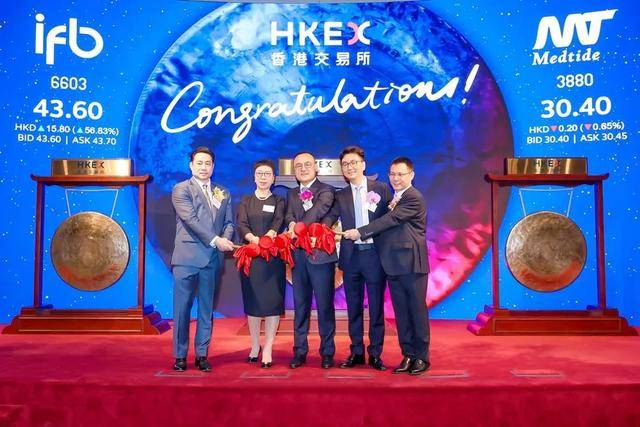
富阳喜讯!今天,敲钟上市!
Sou Hu Cai Jing· 2025-06-30 07:23
Group 1 - Cloud Wisdom Intelligent Technology Co., Ltd. officially listed on the Hong Kong Stock Exchange with a market capitalization of HKD 14.5 billion, becoming the first stock in the Hong Kong market focused on General Artificial Intelligence (AGI) technology [1] - The successful listing marks a new development stage for Cloud Wisdom and highlights the unique vision and outstanding achievements of the Fuyang District Industrial Fund in nurturing high-tech future industries [5] - Cloud Wisdom, established in 2012, is a pioneer in the AGI field in China, focusing on the research and sales of conversational AI products and solutions widely applied in daily life and healthcare [8] Group 2 - Since 2016, Cloud Wisdom has been building the Atlas AI infrastructure, which has achieved over 184 PFLOPS computing power and over 10 PB storage capacity, providing a solid foundation for AI technology research and development [10] - In 2023, Cloud Wisdom launched its self-developed Shanhai large language model, featuring 60 billion parameters and capabilities for generative multilingual and multimodal functions, enhancing human-machine interaction through dynamic reasoning and cross-modal data processing [11] - Cloud Wisdom (Hangzhou) Intelligent Technology Co., Ltd. has established its headquarters in Hangzhou Fuchun Bay New City, focusing on artificial intelligence and digital intelligence industries to continuously support the growth of the digital economy in Fuyang [13][14]

百度开源文心4.5系列10款模型,多项评测结果超DeepSeek-V3
Founder Park· 2025-06-30 06:22
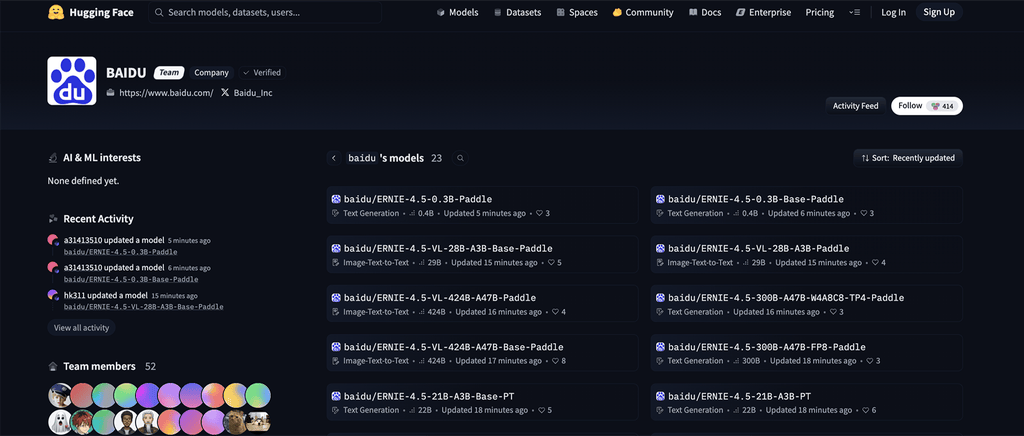
文章转载自「智东西」 今日,百度正式开源 文心大模型4.5系列 模型。 文心4.5系列开源 模型共10款,涵 盖了激活参数规模分别为47B和3B的混合专家 (MoE)模型(最大的模型总参数量为424B),以及0.3B的稠 密参数模型。 预训练权重和推理代码完全开源。 目前,文心大模型4.5开源系列已可在飞桨星河社区、 Hugging Face 等平台下载部署使用,同时开源模型API服务也可在百度智能云千帆大模型平 台使用。 用户 可在文心一言( https://yiyan.baidu.com )即刻体验最新开源能力。 超 8000 人的「AI 产品市集」社群!不错过每一款有价值的 AI 应用。 邀请从业者、开发人员和创业者,飞书扫码加群: 进群后,你有机会得到: 01 Hugging Face:https://huggingface.co/baidu/models 飞桨星河社区:https://aistudio.baidu.com/modelsoverview GitHub:https://github.com/PaddlePaddle/ERNIE 技术报告:https://yiyan.baidu.com/b ...


李彦宏出手!百度大模型终于开源
Sou Hu Cai Jing· 2025-06-30 04:25
Core Insights - Baidu has officially open-sourced the Wenxin large model 4.5 series, releasing 10 models with varying parameters, including a 47B and a 3B mixture of experts (MoE) model, and a 0.3B dense model, along with complete pre-training weights and inference code [2][4] Group 1: Model Details - The Wenxin large model 4.5 series is available for download and deployment on platforms like PaddlePaddle and Hugging Face, with API services accessible via Baidu's intelligent cloud [4] - The open-sourced models include versions with smaller parameters, which are considered suitable for memory-constrained configurations, and the 28B model has added visual capabilities [6][7] - The Wenxin 4.5 series has demonstrated superior performance in various benchmarks, surpassing competitors like Qwen3 and DeepSeek-V3 in multiple tests [8][9] Group 2: Technical Innovations - Key innovations behind the Wenxin 4.5 series include multi-modal heterogeneous MoE pre-training, which enhances performance in text understanding, image comprehension, and cross-modal reasoning tasks [10][12] - The infrastructure for the model is designed for scalability and efficiency, employing strategies like heterogeneous mixed parallelism and hierarchical load balancing to improve pre-training throughput [12][13] - The model has undergone fine-tuning for specific modalities to meet diverse application needs, focusing on visual language understanding and employing advanced reinforcement learning methods [13][14] Group 3: Industry Impact - Baidu's move to open-source its models is seen as a significant step in the competitive landscape of large models, potentially raising industry standards and pressuring closed-source providers like OpenAI and Anthropic [14] - The daily invocation of Wenxin models is projected to reach 1.65 billion by 2024, a substantial increase from 50 million in the same period of 2023, indicating a growth rate of 33 times [14]
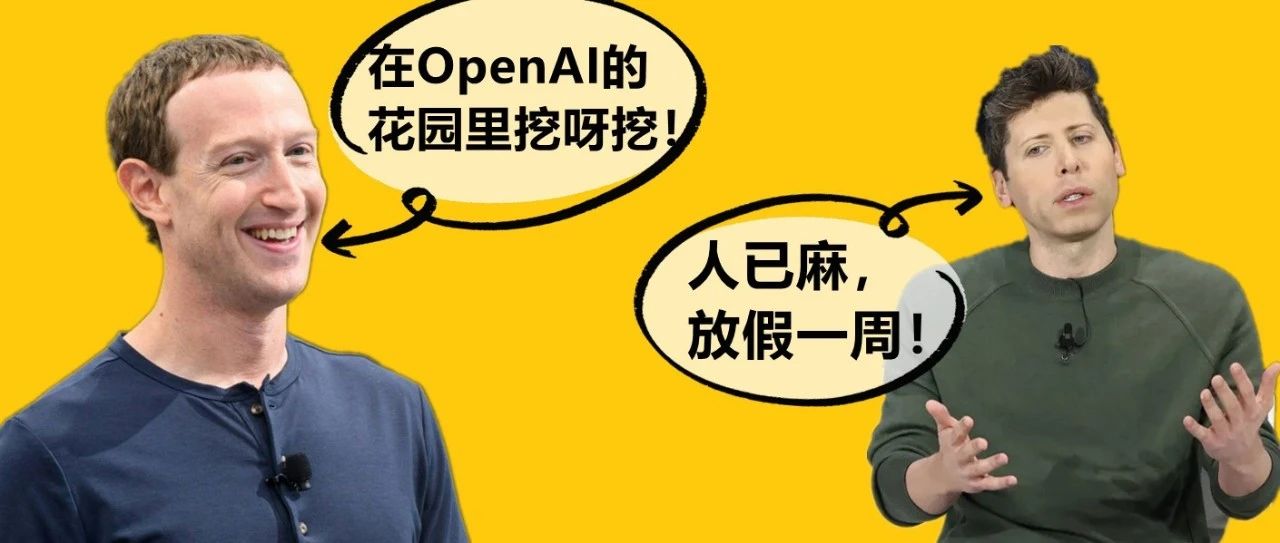
刚刚,OpenAI全员放假一周!被Meta高薪连挖8人「偷家」,真麻了
机器之心· 2025-06-30 03:18
机器之心报道 机器之心编辑部 面对 Meta 一亿美元签字费挖人的条件,OpenAI 的回应是…… 随着高级研究人员接连被竞争对手挖走,OpenAI 高管向团队成员保证,公司不会「袖手旁观」。据《连线》杂志报道,上周六,OpenAI 首席研究官 Mark Chen 向员工发出了一份措辞强硬的备忘录,承诺要在顶尖研究人才争夺战中与 Meta 进行正面交锋。 这一次,《连线》甚至以 「OpenAI 领导层回应 Meta 挖角:有人闯进了我们家」为题进行了专题报道。 生成式 AI 竞争如火如荼的当口, OpenAI 却突然宣布本周全员放假,还是直接放一周。 这当然不是因为 GPT-5 已经造好,或是竞争对手全被打败了,而是因为 OpenAI 被挖人挖麻了。 在那份备忘录中,Mark Chen 表示:「我现在有一种强烈的预感,就像有人闯入我们家偷了东西一样。请相信,我们并没有袖手旁观。」 就在几天前,Meta 首席执行官马克・扎克伯格成功从 OpenAI 招募了四名高级研究人员加入 Meta 的「超级智能实验室」。而更早几天,Meta 更是将 OpenAI 苏黎 世办公室的三位研究者一锅端走。详情可参阅我们之前的两篇 ...

雷军盛赞蔚来;格力高管怒怼同行;特朗普T1手机被曝由中国公司生产;李宇春谈当年拒绝代言锤子手机;国外生产充电宝不检查3C……
Sou Hu Cai Jing· 2025-06-30 02:50
Group 1 - New regulations prohibit travelers from carrying non-compliant power banks on domestic flights, with a verification system in place for recalls [1] - Anker has updated its recall plan for power banks, allowing users to submerge the device in saltwater for 24 hours to deplete the battery before submitting a claim [13][11] Group 2 - Xiaomi's Yu7 model features double-layer laminated glass and includes a window-breaking tool for emergencies, emphasizing safety in design [2] - The rental price for Xiaomi Yu7 on second-hand platforms ranges from 1500 to 5000 yuan per day, indicating strong demand in the high-end market [19] Group 3 - NIO celebrated the 10th anniversary of its first Formula E championship, with Lei Jun praising the company's contributions to the Chinese EV industry [5] - ByteDance's Seed team is expanding, actively recruiting for key positions in robotics, indicating a shift towards practical applications of technology [7][8] Group 4 - OpenAI's Chief Researcher criticized Meta's poaching of employees, likening it to theft, and is exploring compensation strategies to retain talent [6] - PwC plans to lay off 175 junior auditors, reflecting potential challenges in the auditing sector [21] Group 5 - Lotus Cars denied reports of closing its Hethel factory in the UK, asserting ongoing operations and strategic explorations to enhance efficiency [18] - A controversy arose regarding Trump's T1 phone, initially marketed as "Made in America," which was later revealed to be produced by a Chinese company [20]

Gary Marcus惊世之言:纯LLM上构建AGI彻底没了希望!MIT、芝大、哈佛论文火了
机器之心· 2025-06-29 04:23
Core Viewpoint - The article discusses a groundbreaking paper co-authored by MIT, the University of Chicago, and Harvard, which reveals significant inconsistencies in reasoning patterns of large language models (LLMs), termed "Potemkin understanding," suggesting that the hope of creating Artificial General Intelligence (AGI) based solely on LLMs is fundamentally flawed [2][4]. Summary by Sections Introduction - Gary Marcus, a prominent AI scholar, highlights the paper's findings, indicating that even top models like o3 frequently exhibit reasoning errors, undermining the notion of their understanding and reasoning capabilities [2][4]. Key Findings - The paper argues that success in benchmark tests does not equate to genuine understanding but rather reflects a superficial grasp of concepts, leading to a "Potemkin understanding" where models provide seemingly correct answers that mask a deeper misunderstanding [3][17]. - The research team identifies two methods to quantify the prevalence of the Potemkin phenomenon, revealing that it exists across various models, tasks, and domains, indicating a fundamental inconsistency in conceptual representation [17][28]. Experimental Results - The study analyzed seven popular LLMs across 32 concepts, finding that while models could define concepts correctly 94.2% of the time, their performance in applying these concepts in tasks significantly declined, as evidenced by high Potemkin rates [29][33]. - The Potemkin rate, defined as the proportion of incorrect answers following correct responses on foundational examples, was found to be high across all models and tasks, indicating widespread issues in conceptual application [30][31]. Inconsistency Detection - The research also assessed internal inconsistencies within models by prompting them to generate examples of specific concepts and then asking them to evaluate their own outputs, revealing substantial limitations in self-assessment capabilities [36][39]. - The inconsistency scores ranged from 0.02 to 0.64 across all examined models, suggesting that misunderstandings stem not only from incorrect concept definitions but also from conflicting representations of the same idea [39][40]. Conclusion - The findings underscore the pervasive nature of the Potemkin understanding phenomenon in LLMs, challenging the assumption that high performance on traditional benchmarks equates to true understanding and highlighting the need for further research into the implications of these inconsistencies [40].

AI日报丨抢人抢技术!Meta一亿美元从OpenAI强揽三员大将,AI顶级人才争夺战白热化
美股研究社· 2025-06-27 14:26
Core Viewpoint - The article highlights the rapid development of artificial intelligence (AI) technology and its potential opportunities, focusing on the competitive landscape among major tech companies in AI talent acquisition and investment strategies [1]. Group 1: Company Developments - Li Auto announced a new organizational structure, merging its "R&D and Supply Group" and "Sales and Service Group" into a newly formed "Smart Vehicle Group," with President Ma Donghui leading the group [3]. - Meta has successfully recruited top researchers from OpenAI, including Trapit Bansal, Lucas Bayer, Alexander Kolesnikov, and Zhai Xiaohua, to strengthen its "Superintelligence" team, indicating a fierce competition for AI talent among tech giants [4][5]. - Amazon's AI Vice President Vasi Philomin has left the company after eight years, which comes at a time when tech companies are actively seeking talent to enhance their AI teams [9][15]. Group 2: Market Trends - Morgan Stanley analysts noted that Microsoft's investment in OpenAI is yielding positive results, with growth in direct monetization and an increase in market share within the IT sector [6][7]. - Nvidia's stock is on the rise, with a market capitalization of $3.80 trillion, positioning it as the largest company globally, while the semiconductor sector shows signs of recovery [16][17].

国内数据产业规模已超2万亿元,腾讯云程彬:Data+AI赛道将爆发
Tai Mei Ti A P P· 2025-06-27 14:04
Core Insights - Tencent Cloud has developed a comprehensive "Data+AI" capability and plans to launch a data intelligence product in the second half of the year [2] - The total data production in China is projected to exceed 40ZB for the first time in 2024, reaching 41.06ZB, a 25% year-on-year increase [2] - The demand for unstructured data management is surging due to the explosion of generative AI applications and compliance pressures [3] Group 1: Data Production and Trends - In 2024, the per capita data production is expected to be approximately 31.31TB, equivalent to over 10,000 HD movies, marking a 25.17% increase year-on-year [2] - Gartner's research indicates that unstructured data accounts for 70% to 90% of organizational data today, highlighting the growing need for effective management [2][3] Group 2: Challenges and Opportunities - Traditional data platforms face significant challenges in meeting the new data demands brought by generative AI, particularly regarding data quality, compliance, and security [3] - Companies are managing an average of over 400 heterogeneous data sources, leading to issues such as data silos and the need for a dynamic, traceable data governance system [3] Group 3: Future Developments - Tencent Cloud aims to create a next-generation integrated Data+AI platform to address new market and customer needs, emphasizing the importance of utilizing unstructured data effectively [5] - The construction of the Data Intelligence as a Service (DIaaS) platform is seen as a long-term and systematic project requiring industry collaboration [7] Group 4: Market Landscape - Currently, there are over 190,000 companies in China's data sector, with the industry scale exceeding 2 trillion yuan, projected to reach 7.5 trillion yuan by 2030 at an annual growth rate of over 20% [8]

AI 开始「自由玩电脑」了!吉大提出「屏幕探索者」智能体
机器之心· 2025-06-27 04:02
Core Viewpoint - The article discusses the development of a vision-language model (VLM) agent named ScreenExplorer, which is designed to autonomously explore and interact within open graphical user interface (GUI) environments, marking a significant step towards achieving general artificial intelligence (AGI) [2][3][35]. Group 1: Breakthroughs and Innovations - The research introduces three core breakthroughs in the training of VLM agents for GUI exploration [6]. - A real-time interactive online reinforcement learning framework is established, allowing the VLM agent to interact with a live GUI environment [8][11]. - The introduction of a "curiosity mechanism" addresses the sparse feedback issue in open GUI environments, motivating the agent to explore diverse interface states [10][12]. Group 2: Training Methodology - The training involves a heuristic and world model-driven reward system that encourages exploration by providing immediate rewards for diverse actions [12][24]. - The GRPO algorithm is utilized for reinforcement learning training, calculating the advantage of actions based on rewards obtained [14][15]. - The training process allows for multiple parallel environments to synchronize reasoning, execution, and recording, enabling "learning by doing" [15]. Group 3: Experimental Results - Initial experiments show that without training, the Qwen2.5-VL-3B model fails to interact effectively with the GUI [17]. - After training, the model demonstrates improved capabilities, successfully opening applications and navigating deeper into pages [18][20]. - The ScreenExplorer models outperform general models in exploration diversity and interaction effectiveness, indicating a significant advancement in autonomous GUI interaction [22][23]. Group 4: Skill Emergence and Conclusion - The training process leads to the emergence of new skills, such as cross-modal translation and complex reasoning abilities [29][34]. - The research concludes that ScreenExplorer effectively enhances GUI interaction capabilities through a combination of exploration rewards, world models, and GRPO reinforcement learning, paving the way for more autonomous agents and progress towards AGI [35].

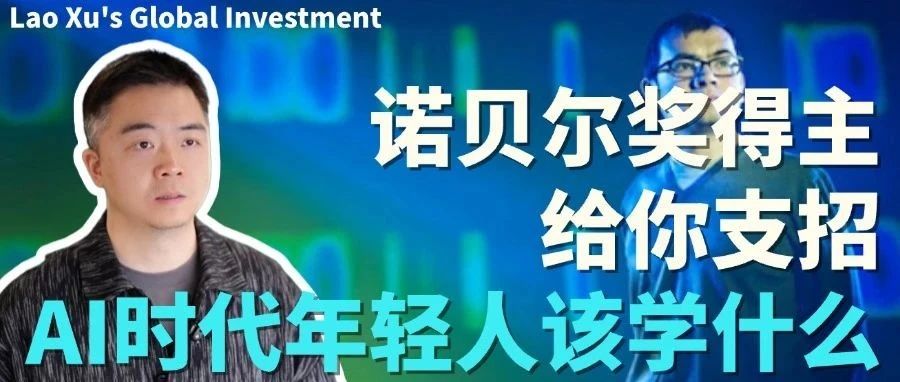
诺贝尔奖得主给你支招:AI时代年轻人该学什么 ?
老徐抓AI趋势· 2025-06-26 19:01
Core Viewpoint - The article emphasizes the importance of foundational skills such as programming, mathematics, and physics for young people in the AI era, arguing that understanding these subjects is crucial for effectively utilizing AI tools and adapting to future job markets [16][25]. Group 1: Demis Hassabis and His Contributions - Demis Hassabis is a renowned AI scientist and entrepreneur, known for his early achievements in chess and his academic excellence, having graduated from Cambridge University at the age of 20 [4][7]. - He founded DeepMind in 2010 with the goal of using AI to solve complex scientific problems, leading to significant milestones such as the defeat of Go champion Lee Sedol by AlphaGo in 2016 [10][11]. - AlphaFold, developed by DeepMind, revolutionized protein structure prediction, reducing research time from years to minutes and contributing to the understanding of 2 billion proteins, earning Hassabis a Nobel Prize in Chemistry in 2024 [13]. Group 2: Recommendations for Young People - Young individuals are encouraged to focus on foundational subjects like programming, mathematics, and physics to fully grasp AI principles and develop a personalized AI capability [16][25]. - The article suggests that the ability to effectively utilize AI tools depends on a deep understanding of their underlying principles, similar to how a manager's effectiveness relies on their ability to leverage team members' strengths [17][18]. Group 3: AI in Education - The article introduces an AI-based college application tool called "Sweet Volunteer," which uses a data-driven approach to assist students in selecting their majors and universities based on their preferences and past admission data [19]. - This tool features a "reach, safe, and steady" strategy model, intelligent search capabilities, and personalized AI Q&A to provide tailored recommendations for students [19]. Group 4: Future Outlook - The article concludes that while the future holds uncertainties, the AI era presents numerous opportunities, and individuals must actively engage with AI to avoid being left behind [23][25].