
不良贷款率

Search documents
中国最大消费金融公司,蚂蚁消费金融发债20亿!不良贷款率曝光!
Sou Hu Cai Jing· 2025-08-04 06:58
Core Viewpoint - Ant Group's consumer finance subsidiary, Chongqing Ant Consumer Finance Co., Ltd., has issued its first financial bond since its establishment in 2021, with a scale of 2 billion yuan and a fixed interest rate of 1.7%-2.4% for a three-year term [2][7]. Group 1: Bond Issuance Details - The bond issuance was recorded on August 4, 2023, with a total scale of 2 billion yuan and a maturity of three years [2]. - Huatai Securities acted as the book manager for this bond issuance [5]. - The bond and issuer received a AAA credit rating from United Ratings [6]. Group 2: Financial Performance - In 2024, Ant Consumer Finance reported an operating income of 15.213 billion yuan, a year-on-year increase of 76.3%, and a net profit of 3.051 billion yuan, up 1907.24% [9]. - Total assets reached 313.751 billion yuan, reflecting a year-on-year growth of 30.91% [9]. Group 3: Loan Quality and Risk - Ant Consumer Finance's non-performing loan (NPL) ratios for 2022-2024 were 1.69%, 1.74%, and 1.78%, respectively, indicating a continuous increase over the years [16]. - As of the end of 2024, the credit scale was 301.467 billion yuan, with a non-performing loan balance of 5.52 billion yuan [17]. - The company maintains a loan structure characterized by small and dispersed loans, with over 97% of loans having a term of 12 months or less [19].


渤海银行迎新任首席风险管理官!能否破解不良率困局?
Nan Fang Du Shi Bao· 2025-07-24 07:51
Group 1 - The core point of the article is the appointment of Qi Jun as the Chief Risk Officer of Bohai Bank, which is expected to address the bank's persistent high non-performing loan (NPL) ratio [2][4][5] - Qi Jun has extensive experience in risk management and non-performing asset disposal, having worked in various roles at Industrial and Commercial Bank of China (ICBC) [3][4] - Bohai Bank's NPL ratio has remained above 1.7% for the past five years, indicating a significant challenge in risk management despite recent improvements in revenue and net profit [4][5] Group 2 - As of the end of last year, Bohai Bank's NPL ratio was 1.76%, a slight decrease of 0.02 percentage points from the previous year, but still above the industry average [4][5] - The overall NPL ratio for commercial banks was reported at 1.50%, with the average for joint-stock commercial banks at 1.22%, highlighting Bohai Bank's underperformance [5] - The bank's corporate loan and advance NPL ratio was 1.11%, while the personal loan NPL ratio surged to 4.15%, reflecting significant issues in personal lending [5]

【杭州银行(600926.SH)】营收增速环比提升,不良率保持稳定——2025年半年度业绩快报点评(王一峰/董文欣)
光大证券研究· 2025-07-18 14:27
Core Viewpoint - Hangzhou Bank reported a strong performance in the first half of 2025, with a revenue of 20.09 billion and a net profit of 11.66 billion, indicating a year-on-year growth of 3.9% and 16.7% respectively [2][3]. Group 1: Financial Performance - Revenue growth rate improved by 1.7 percentage points compared to Q1, while net profit growth remained stable at a high level [3]. - In Q2, the revenue and net profit growth rates were 5.6% and 16% respectively, showing a positive trend compared to Q1 [3]. - The annualized return on equity was 19%, reflecting a slight decrease of 0.48 percentage points year-on-year [2]. Group 2: Asset and Loan Growth - As of the end of Q2 2025, total assets, loans, and non-credit assets grew by 12.6%, 12%, and 13.2% year-on-year respectively, although there was a decline in growth rates compared to the previous quarter [4]. - The loan-to-asset ratio slightly increased to 45.2%, indicating a stable loan growth strategy [4][5]. - The bank's loan growth is expected to slightly exceed that of 2024, supported by its strong credit issuance capabilities [5]. Group 3: Deposit and Liability Management - Total liabilities and deposits grew by 11.8% and 16.2% year-on-year, but there was a slight decrease in deposit balances compared to Q1 [6]. - The loan-to-deposit ratio improved to 75.4%, reflecting effective management of funding costs [6]. - The bank is actively managing interest margin pressures by promoting early credit asset deployment and reducing deposit interest rates [6]. Group 4: Asset Quality - The non-performing loan (NPL) ratio remained stable at 0.76%, consistent since Q1 2023 [7]. - The NPL balance was 7.67 billion, showing stability compared to the previous quarter [7]. - The provision coverage ratio was maintained above 520%, indicating a strong buffer against potential loan losses [7].


牛市就到这了?
Sou Hu Cai Jing· 2025-07-17 00:54
Group 1 - The core viewpoint is that the recent decline in bank stocks is influenced by changes in insurance company assessment periods, encouraging long-term investment strategies rather than short-term risk aversion [2][4][11] - The adjustment in bank stocks began on July 11, coinciding with a government policy announcement [3][4] - The banking sector is experiencing a historical shift, with non-performing loan rates expected to exceed net interest margins for the first time, indicating potential underlying issues [7][8] Group 2 - In the first quarter of this year, bank profits saw a decline for the first time in years, with the six major banks averaging a 2% decrease [9] - The banking sector has historically been conservative in profit reporting, with banks releasing hidden profits during economic downturns to stabilize the market [11] - Current valuations of bank stocks are considered average, but they still outperform other investment options like deposits, bonds, and real estate [12][13] Group 3 - Pop Mart reported a significant increase in revenue and profit for the first half of the year, yet its stock price fell due to market dynamics [14][15] - The high degree of market crowding in sectors like new consumption, pharmaceuticals, and non-bank financials is noted, which can lead to short-term adjustments [19][20] - Despite high growth expectations, Pop Mart's current valuation appears reasonable compared to historical standards, with a projected PE ratio of 34 based on anticipated growth [22][23][29]

广西贵港农商银行2025年拟发行1亿元同业存单,3月末不良率为2.8%
Sou Hu Cai Jing· 2025-07-11 09:25
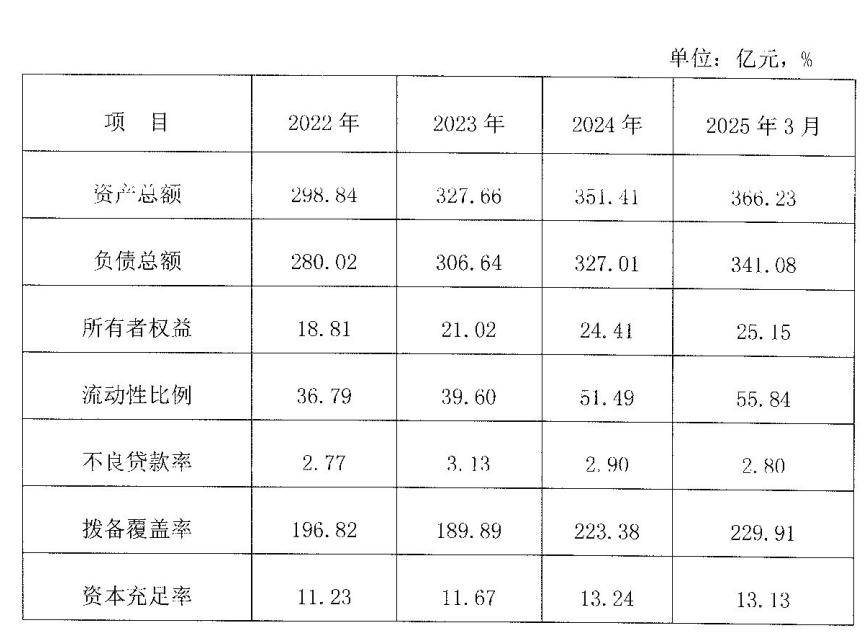
Group 1 - Guangxi Guigang Rural Commercial Bank plans to issue interbank certificates of deposit worth 100 million yuan for 2025 [1] - The bank's total assets reached 34.998 billion yuan in 2024, with a growth rate of 7.28%, and loan balance was 23.859 billion yuan, growing at 5.6% [1] - The bank achieved an operating profit of 716 million yuan in 2024, a year-on-year increase of 3.77%, and as of March 2025, total assets reached 36.623 billion yuan [1] Group 2 - The bank's net interest margin has been declining, from 3.25% in 2022 to 2.72% in 2024, although it slightly rebounded to 2.83% in Q1 2025 [2] - The cost-to-income ratio increased from 30.06% in 2023 to 34.59% in Q1 2025, indicating challenges in cost control [2] - The non-performing loan ratio was 3.13% in 2023, decreasing to 2.90% in 2024 and 2.80% in Q1 2025, but still remains at a relatively high level [2] Group 3 - The bank was established in March 2007, evolving from the Guigang City Rural Credit Cooperative, and was renamed several times, with the latest being Guangxi Guigang Rural Commercial Bank in June 2021 [2] - The bank is under the Guangxi Guigang Steel Group, with a registered capital of 503 million yuan [2] - The top four shareholders hold more than 5% of the shares, with Guangxi Guigang Steel Group holding 9.69% [3]
东莞银行IPO“迷雾”:净息差失守、不良攀升,17年冲刺恐成空?
Sou Hu Cai Jing· 2025-07-08 01:33
Core Viewpoint - Dongguan Bank has faced a lengthy IPO journey since 2008, with its application recently accepted by the Shenzhen Stock Exchange, reigniting market interest [2] Financial Performance - Dongguan Bank's total assets are projected to grow from 538.42 billion to 672.73 billion from 2022 to 2024, a rise of over 130 billion, with a year-on-year growth of 6.97% in 2024 [3] - The bank's operating income for 2024 is reported at 10.197 billion, down 3.68% from 10.587 billion in 2023, marking the first decline in both revenue and net profit in five years [3] - The net profit attributable to shareholders is 3.738 billion in 2024, down 8.09% from 4.067 billion in 2023 [3] Interest Margin and Income - The net interest margin decreased from 1.61% in 2023 to 1.26% in 2024, with the average yield on loans dropping to 4.01%, a decline of 0.41 percentage points [4] - Interest income fell to 7.119 billion by the end of 2024, a decrease of 14.57% compared to the previous year [4] Non-Interest Income - Non-interest income increased significantly to 3.078 billion in 2024, a growth of 36.50% year-on-year, primarily driven by investment income [4][5] - Investment income reached 2.086 billion, up 35.90%, while fair value changes shifted from a loss of 55 million in 2023 to a profit of 233 million in 2024 [5] Asset Quality - The non-performing loan ratio rose to 1.01% in 2024, up from 0.93% in 2023, with non-performing loans increasing from 2.715 billion in 2022 to 3.707 billion in 2024 [5] - Special mention loans surged to 7.639 billion in 2024, more than doubling from 3.652 billion in 2023, indicating potential future risks [5] Regulatory and Management Issues - Dongguan Bank faced significant regulatory penalties, with fines increasing from 1 million in 2023 to 5.882 million in 2024, reflecting internal management issues [6] - Despite declining performance, the total compensation for senior management rose by 9.8% to 25.15 million in 2024 [6] Industry Context - The banking sector is experiencing intense competition, particularly for small and medium-sized banks, which are struggling with profitability and risk management amid a slowing economy [6][7] - Dongguan Bank must enhance its competitive edge and address its weaknesses to succeed in the IPO process and navigate the challenging market landscape [7]
洪偌馨: 招行难返2%,银行净息差「临界点」在哪儿?
Xin Lang Cai Jing· 2025-06-30 03:25
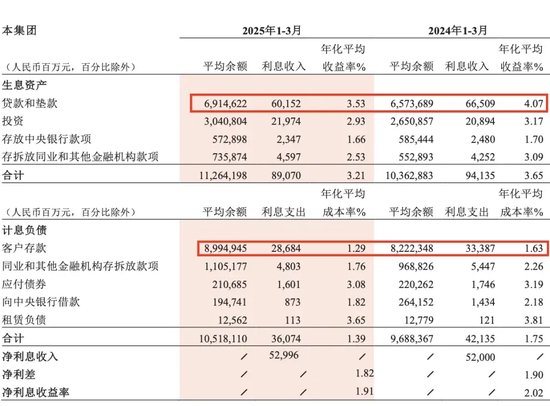
Core Viewpoint - The recent shareholder meeting of China Merchants Bank (CMB) highlighted significant concerns regarding the downward pressure on net interest margin (NIM), with management acknowledging the challenges in returning to a NIM above 2% [1][2][3]. Financial Performance - CMB's NIM decreased from 1.98% in 2024 to 1.91% in Q1 2025, with the bank's president admitting the difficulty in recovering to previous levels [2][5]. - In Q1 2025, the annualized average yield on loans and advances was 3.53%, down 0.54 percentage points year-on-year [4]. - The average cost of customer deposits fell to 1.29%, a decrease of 0.34 percentage points, but this was insufficient to counteract the narrowing NIM [5]. Industry Context - The overall banking sector's NIM was reported at 1.43% in Q1 2025, with the average non-performing loan (NPL) ratio at 1.51%, indicating a concerning trend where NIM is below NPL rates [6][7]. - A significant number of listed banks (80%) reported NIMs below the regulatory threshold of 1.8%, with some banks, like Shengjing Bank, dropping to as low as 0.8% [10][11]. Challenges and Comparisons - The current environment reflects a broader trend in the banking industry, reminiscent of Japan's prolonged period of declining NIMs, which saw rates drop to historical lows [18]. - CMB's situation is compounded by insufficient credit demand and the impact of interest rate adjustments on asset yields, leading to a more competitive and challenging landscape [5][12]. Strategic Insights - Some banks, particularly private banks, maintain higher NIMs, often due to their focus on personal loans, which are subject to intense competition and risk [13][14]. - The need for banks to adapt their business structures and strategies is evident, as many face pressures to maintain sustainable operations amidst declining NIMs [15][19].

大家担心的事情,终于有了答案!银行利率不可能会降到0
Sou Hu Cai Jing· 2025-06-25 22:58
Core Viewpoint - The decline in bank deposit interest rates is a concern, but it is unlikely that rates will drop to zero in China due to various economic factors and the current financial landscape [1][3][12] Group 1: Current Trends in Deposit Rates - Recent years have seen a significant decline in bank deposit interest rates, with 3-year rates dropping from 3.05% to 1.50% and 1-year rates from 2.25% to 1.3% [1] - Concerns have been raised that if this trend continues, deposit rates could eventually reach zero, similar to some developed European countries [1][3] Group 2: Economic Context and Implications - The situation in Europe, where some countries have zero deposit rates, is not directly applicable to China, as those rates are often just nominal and banks still offer rates above zero [3][4] - China's economic conditions, including a GDP growth of 5.4% in the first quarter and a high M2 money supply exceeding 300 trillion, suggest that a zero interest rate policy would not be feasible [8][12] Group 3: Risks of Zero Interest Rates - A zero deposit rate could lead to significant capital outflows as domestic deposits would shift to countries with higher rates, exacerbating issues in the domestic real estate and stock markets [6][12] - The potential for increased loan demand due to low rates could result in higher default rates, reminiscent of the U.S. subprime mortgage crisis, indicating that maintaining a balance in interest rates is crucial [10][12]

北京农商行总行组织架构及2024年经营情况分析
数说者· 2025-06-25 11:59
Core Viewpoint - The article analyzes the development history and operational status of Beijing Rural Commercial Bank, questioning its growth potential in a highly urbanized environment where the primary industry accounts for only 0.2% of the economy in Beijing [1]. Group 1: Development History and Organizational Structure - Beijing Rural Commercial Bank originated from 14 district and county cooperatives and the Beijing Rural Credit Cooperative, established in 1951 [2]. - The bank was restructured into a joint-stock company in 2005, with a total of 27,796 shareholders as of March 2025, including 280 legal entity shareholders (77.35% ownership) and 27,516 individual shareholders (22.65% ownership) [3]. - The largest shareholder is Beijing Financial Holdings Group, holding 9.9996% of the shares, with several state-owned enterprises among the top ten shareholders [3]. - As of the end of 2024, the bank had 9,447 employees, all located in Beijing, and its management structure includes 26 departments [4]. Group 2: Operational Status - As of the end of 2024, the total assets of Beijing Rural Commercial Bank reached 1.27 trillion yuan, reflecting a year-on-year growth of 2.10%, indicating a slowdown in growth [7]. - The bank's operating income for 2024 was 18.09% higher than the previous year, totaling 18.063 billion yuan, but still below the peak of 19.530 billion yuan in 2018 and 18.839 billion yuan in 2019 [9]. - The significant increase in operating income was primarily due to a 79.40% rise in investment income, which grew by 17.77%, while net interest income only increased by 0.37 billion yuan [9]. - The net profit attributable to shareholders for 2024 was 7.973 billion yuan, a modest increase of 0.71%, which is disproportionate to the high growth in operating income, largely due to a substantial increase in impairment losses [12]. - The bank's net interest margin continued to decline, reaching 1.00% in 2024, down from 1.05% in 2023, indicating a challenging lending environment [14]. - As of March 2025, total assets increased to 1.31 trillion yuan, but operating income for the first quarter fell by 12.63% year-on-year [15]. - The bank's financial investments amounted to 491.267 billion yuan, accounting for 38.83% of total assets, while loans were only 480.259 billion yuan, representing 37.96% of total assets, highlighting a low loan-to-investment ratio [20]. - The bank maintained a good asset quality with a non-performing loan ratio of 0.96% at the end of 2024 and a high provision coverage ratio of 322.71% [21].
上海银行: 上海银行股份有限公司公开发行A股可转换公司债券定期跟踪评级报告
Zheng Quan Zhi Xing· 2025-06-23 09:20
上海银行股份有限公司 公开发行 A 股可转换公司债券 定期跟踪评级报告 项目负责人: 项目组成员: 评级总监: 联系电话: (021) 63501349 联系地址:上海市黄浦区汉口路 398 号华盛大厦 14 层 上海新世纪资信评估投资服务有限公司 Shanghai Brilliance Credit Rating & Investors Service Co., Ltd. 公司网站:www.shxsj.com 评级声明 除因本次评级事项使本评级机构与评级对象构成委托关系外,本评级机构、评级人员与评级对象不存在 任何影 响评级行为独立、客观、公正的关联关系。 本评级机构与评级人员履行了调查和诚信义务,所出具的评级报告遵循了真实、客观、公正的原则。 本报告的评级结论是本评级机构依据合理的内部信用评级标准和程序做出的独立判断,未因评级对象和 其他任 何组织或个人的不当影响改变评级意见。 本次跟踪评级依据评级对象及其相关方提供或已经正式对外公布的信息,相关信息的真实性、准确性和 完整性 由资料提供方或发布方负责。本评级机构合理采信其他专业机构出具的专业意见,但不对专业机构出具 的专业 意见承担任何责任。 本报告并非 ...
