去中国化

Search documents
强如美国都妥协,欧盟竟想对中国稀土加税,中方送冯德莱恩两句话
Sou Hu Cai Jing· 2025-09-29 04:44
Core Viewpoint - The European Union (EU) is attempting to reduce its reliance on Chinese rare earths by considering imposing taxes on Chinese rare earth exports, which may backfire and worsen its own supply issues [1][3][7] Group 1: EU's Strategy and Challenges - The EU aims to create a protective framework to develop its own rare earth industry and reduce dependence on China, but this ambition faces significant challenges due to the complexity and time required to establish such an industry [5][7] - The EU's plan to tax Chinese rare earths could lead to a decrease in supply, exacerbating its existing reliance on China for these critical materials [7][9] Group 2: US-China Trade Dynamics - In the context of the US-China trade war, China's strategic use of rare earth supply restrictions has put pressure on both the US and the EU, highlighting the critical role of rare earths in high-tech industries [3][5] - The US has shown willingness to negotiate with China regarding rare earth supplies, indicating the high stakes involved in this sector [5][9] Group 3: Sino-European Relations - The relationship between China and the EU has been stable overall, with significant trade volume reaching over $780 billion last year, suggesting mutual interests despite political tensions [9][11] - China emphasizes the importance of communication and cooperation with the EU, urging the EU to avoid politicizing economic issues and to recognize the benefits of collaboration [9][11]


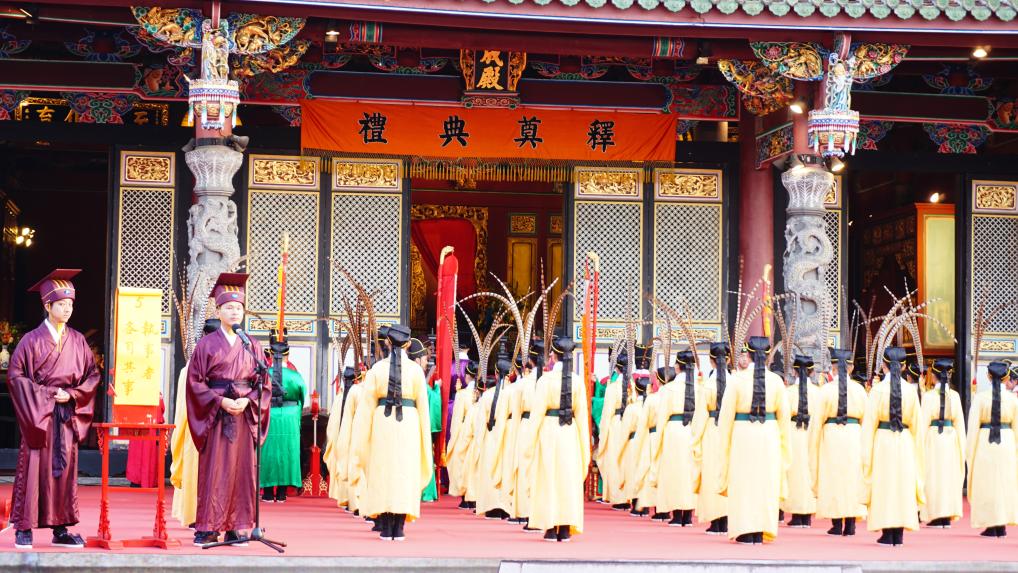
从台湾各地祭孔感受中华文化在台根深叶茂
Xin Hua Wang· 2025-09-28 20:10
Group 1 - The core viewpoint of the articles highlights the deep-rooted presence of Chinese culture in Taiwan, as evidenced by the annual Confucius Memorial Ceremony held on September 28, which attracts large crowds and showcases traditional rituals [1][3][5] - The ceremony in Taipei followed the "Three Offerings Ancient Rite," consisting of 37 procedures, and involved participation from local students, indicating a strong engagement with cultural practices among the youth [1] - There are over 40 Confucius temples across Taiwan, with the Tainan Confucius Temple, built in 1666, being the first and referred to as "the first school in Taiwan," reflecting the historical significance of these sites [1] Group 2 - The articles discuss the contrasting attitudes towards Chinese history and culture in Taiwan, where many citizens appreciate traditional customs, while the government promotes a "de-Sinicization" agenda, attempting to separate "Chinese history" from "Taiwanese history" [2] - Despite governmental efforts, there is a notable enthusiasm among the public for traditional activities, such as dragon boat racing, which is linked to historical figures like Qu Yuan, demonstrating a continued connection to Chinese heritage [2] - Educators in Taiwan are actively working to counteract the "de-Sinicization" narrative by encouraging students to explore Chinese history through reading and visiting historical sites, aiming for a more comprehensive understanding of their cultural identity [4]
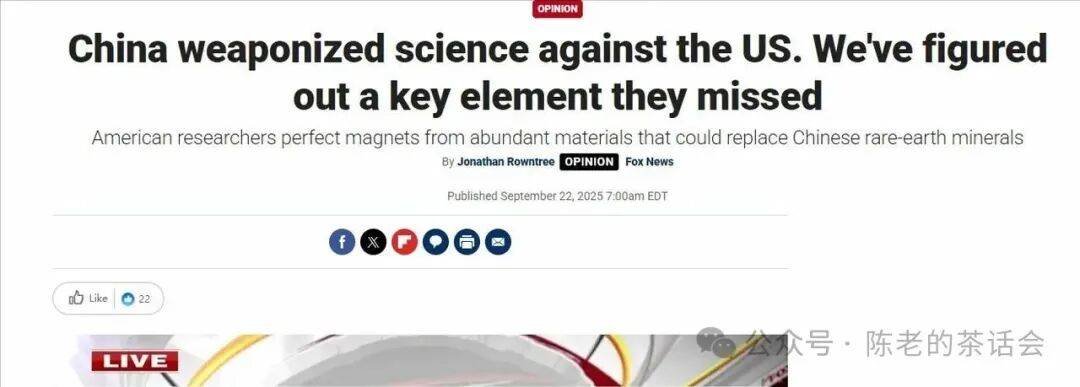
美国宣称氮化铁“摆脱中国稀土”!网友:这玩意在中国是做冰箱贴的
Sou Hu Cai Jing· 2025-09-27 01:47
Core Insights - Rare earth elements are crucial for modern technology, including smartphones, air conditioners, and electric vehicles, due to their unique electronic structures and stability under extreme conditions [2][4] - The U.S. is seeking alternatives to Chinese rare earth supplies, with recent claims about iron nitride as a potential substitute, although its performance is significantly inferior to rare earth materials [6][9] Industry Overview - The importance of rare earth elements in high-tech products like neodymium-iron-boron magnets and catalysts highlights their role as essential components in modern industry [4] - The U.S. heavily relies on China for rare earth imports, with over 80% of its supply coming from China and a staggering 97% for heavy rare earths, indicating a critical dependency [8] Technological Challenges - Iron nitride, while marketed as a breakthrough, is primarily used in low-performance applications and cannot meet the stringent requirements of high-tech industries [6][9] - Previous U.S. attempts to find substitutes for rare earth elements have failed due to high costs and inadequate performance, suggesting that the current push for iron nitride is more of a psychological reassurance than a viable solution [9]
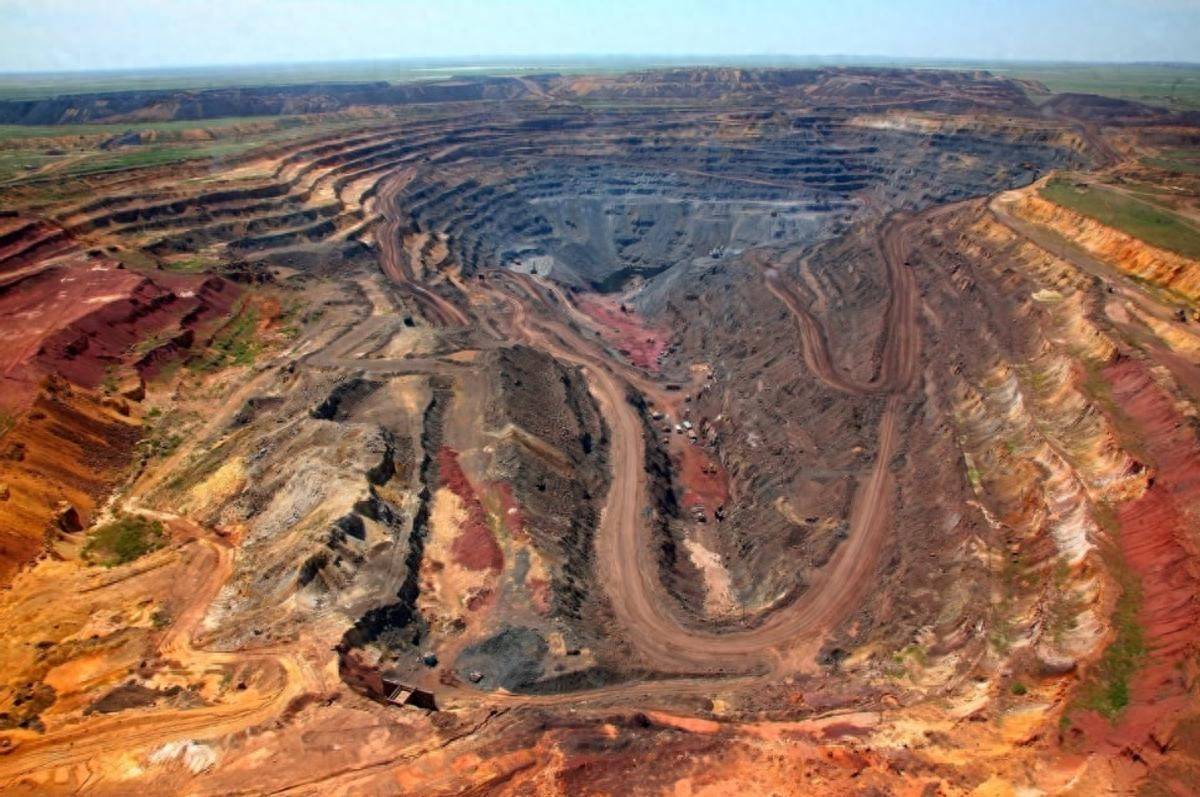
G7和欧盟突然想不开,要和中国稀土比划比划,先朝自己脖子来一刀
Sou Hu Cai Jing· 2025-09-26 15:07
Core Viewpoint - The G7 and EU's recent decision to impose minimum prices, tariffs, and carbon taxes on rare earth exports from China reflects a strategic anxiety and a misguided approach to reducing dependency on Chinese resources, which may ultimately harm their own industries rather than China’s [1][3][19] Group 1: Background and Context - The G7 and EU's actions are a response to a series of challenges over the past year, including renewed trade tensions between the US and China and stricter Chinese export controls on rare earths [3][5] - European companies are already feeling the pressure, with some resorting to depleting their inventories due to fears of supply shortages, particularly in the automotive sector [3][5] Group 2: Policy Implications - The G7's plan to set minimum prices and impose tariffs on rare earths is seen as an attempt to force domestic companies to source non-Chinese rare earths, but this could lead to increased costs and operational challenges for these companies [5][11] - The European Union's rare earth reserves account for less than 1% of global supply, making it difficult for them to achieve self-sufficiency in the short term [7][9] Group 3: Industry Impact - Industries heavily reliant on rare earths, such as renewable energy, electronics, and automotive, are likely to face significant cost increases, which could undermine their competitiveness [11][13] - The imposition of minimum prices may disrupt market dynamics, potentially leading to black market activities and further complicating supply chains [11][13] Group 4: China's Position - China remains in a strong position as it controls over 80% of global rare earth supply and is actively seeking to expand its market presence in Asia and Africa [15][19] - The G7 and EU's actions may inadvertently strengthen China's market position by pushing other countries to develop their rare earth resources, which will take time and investment [15][19] Group 5: Future Considerations - The G7 and EU's approach may exacerbate internal structural issues within their industries rather than effectively countering China's dominance in the rare earth market [17][19] - A collaborative approach with China to stabilize supply chains and promote mutual development may be a more effective strategy than isolationist policies [19]
毒害台湾青少年 其行可恶其心可诛(微言)
Ren Min Ri Bao· 2025-09-20 21:48
Core Viewpoint - The article discusses the Taiwanese government's recent educational reforms aimed at promoting a "Taiwan independence" narrative, which is seen as an attempt to sever cultural and historical ties with mainland China [1][2]. Group 1: Educational Reforms - The Taiwanese government has mandated the creation of 13 supplementary textbooks titled "Understanding the Chinese Threat," to be used in the upcoming school term, reflecting a shift towards "cultural Taiwan independence" [1]. - The history curriculum has been criticized for inadequately covering over 2,000 years of Chinese history in just 1,600 words, indicating a trend of "de-Sinicization" in education [1]. Group 2: Cultural and Historical Context - The article emphasizes that the Taiwanese and mainland Chinese share a common cultural and historical heritage, which the government’s educational policies threaten to undermine [1][2]. - Despite political pressures, many Taiwanese citizens showed enthusiasm for the recent military parade in Beijing, indicating a continued connection to Chinese national pride [1]. Group 3: Political Implications - The article warns that the Taiwanese government's actions could lead to increased tensions across the Taiwan Strait, fostering societal divisions and undermining the shared identity of the Chinese people [1][2]. - It asserts that attempts to erase Chinese cultural identity in Taiwan will ultimately fail, as the deep-rooted cultural recognition among the Taiwanese population remains intact [2].
想下手又怕中国“断稀土”,欧盟向中国提了个“不太好意思的请求”
Sou Hu Cai Jing· 2025-09-18 20:57
Group 1 - The EU is facing significant challenges due to its reliance on Chinese rare earth exports, which has led to production halts in major automotive and high-tech companies [1][3][5] - The EU is considering two approaches to sanctions against China: a limited scope targeting a few companies or a broad-based sanction that could provoke a strong retaliatory response from China [1][3] - China's strict control over rare earth exports is aimed at preventing other countries from stockpiling resources that could be used against China, complicating the EU's supply chain dynamics [3][5][9] Group 2 - The EU's dependency on rare earths, particularly for electric vehicles, poses a critical risk to its automotive industry, as rare earth permanent magnets are essential for high-performance motors [5][7] - China's share of global rare earth production has surged from 48% to 95%, with refining capacity controlling about 90% of the market, creating a long-standing supply chain dependency [5][9] - The EU's attempts to diversify its rare earth supply sources are hindered by the limited capacity of alternative suppliers, with Australia being the only significant option, but its production levels are far below China's [5][7][9] Group 3 - The ongoing geopolitical tensions between the EU and China highlight the strategic dilemma faced by the EU in balancing economic relations with China and political alignment with the US [11] - The EU's efforts to reduce reliance on China may be undermined by the reality that without a complete restructuring of the supply chain, dependency will persist and could even intensify under restrictions [9][11] - The current situation indicates that if China maintains its export controls, the production of high-tech and electric vehicles in Europe will face significant disruptions [9][11]
开启更多大陆“看见”之旅
Ren Min Ri Bao· 2025-08-24 08:04
Core Insights - The article highlights the increasing interactions and exchanges between Taiwanese youth and mainland China, showcasing a vibrant scene of cultural and educational engagement during the summer [1][2]. Group 1: Youth Engagement - Various events such as the Cross-Strait Youth Summit and the National Taiwan Federation's Summer Camp have facilitated visits of Taiwanese youth to mainland China, fostering mutual learning and understanding [1]. - Taiwanese youth express a common sentiment of discovering a "real and three-dimensional" mainland, contrasting sharply with the negative portrayals they have been exposed to in Taiwan [2]. Group 2: Cultural Discovery - The journey serves as a cultural exploration, allowing Taiwanese youth to connect deeply with Chinese heritage, as they experience historical sites and cultural landmarks firsthand [3]. - The shared cultural background leads to a sense of belonging and connection between Taiwanese and mainland youth, as they find common ground in contemporary cultural references and social media trends [3]. Group 3: Changing Perceptions - The firsthand experiences of Taiwanese youth challenge the narratives propagated by the Taiwanese government, promoting a more accurate understanding of mainland China [3][4]. - The return of these youth, enriched with new perspectives and positive sentiments towards the mainland, encourages them to invite others to experience it for themselves [4].
开启更多大陆“看见”之旅(观沧海)
Ren Min Ri Bao· 2025-08-23 22:42
Core Viewpoint - The article highlights the increasing interaction and understanding between Taiwanese youth and mainland China, emphasizing the transformative experience of visiting the mainland and witnessing its rapid development firsthand [1][2][3]. Group 1: Youth Exchange and Perception - Various events such as the Cross-Strait Youth Summit and forums have facilitated the visit of Taiwanese youth to the mainland, leading to a vibrant exchange and mutual learning [1]. - Many Taiwanese youth expressed that their preconceived notions of the mainland, shaped by political narratives and media, were shattered upon their actual visit, revealing a dynamic and modern society [2]. Group 2: Cultural Resonance and Connection - The journey is not only about modernization but also about cultural roots, as Taiwanese youth find a deep connection with Chinese culture during their visits, enhancing their sense of belonging [2]. - Interactions between Taiwanese and mainland youth reveal shared interests and cultural references, fostering a sense of unity and understanding [2]. Group 3: Impact on Narratives and Relationships - The collective experiences of Taiwanese youth visiting the mainland challenge the narratives propagated by the Taiwanese authorities, promoting a more accurate understanding of the mainland [3]. - The return of these youth with enriched perspectives and positive sentiments towards the mainland encourages them to invite others to experience it for themselves, potentially altering perceptions across generations [3].
HeyGen与Manus:同为华人AI独角兽,为何命运截然不同?
Hu Xiu· 2025-08-22 03:53
Core Viewpoint - The article discusses the contrasting fates of two AI companies, HeyGen and Manus, highlighting how regulatory compliance and strategic decisions have led to HeyGen's success and Manus's struggles amid U.S. scrutiny [1][2][3]. Group 1: Company Backgrounds - HeyGen, founded by Chinese entrepreneurs, is an AI video generation platform that allows users to create professional videos quickly, supporting 175 languages and serving 85,000 global clients [3][4][26]. - Manus, also founded by Chinese entrepreneurs, operates in the AI space but has faced challenges due to U.S. regulatory investigations, particularly the Reverse CFIUS inquiry [1][2][22]. Group 2: Strategic Decisions and Compliance - HeyGen successfully relocated its headquarters from Shenzhen to Los Angeles in 2022 and completely divested from Chinese investors by 2023, effectively distancing itself from potential regulatory issues [20][23]. - Manus, in contrast, has retained its Chinese corporate structure and investors, which has drawn increased scrutiny from U.S. regulators, especially after its recent high-profile marketing efforts [25][28][29]. Group 3: Financial Trajectories - HeyGen raised approximately $9 million in seed funding from notable investors like Sequoia China and IDG Capital, followed by a $5.6 million round in 2023, leading to a valuation of $500 million [15][19][20]. - Manus's financial activities have been less clear, with its recent fundraising efforts occurring under the shadow of regulatory concerns, potentially limiting its growth prospects [25][28]. Group 4: Market Positioning and Risks - HeyGen has positioned itself as a "low-profile leader" in the AI video generation market, focusing on marketing and education applications, which appear to be less sensitive to regulatory scrutiny [26][27]. - Manus's high-profile marketing and attempts to enter the Chinese market have raised alarms among U.S. regulators, complicating its operational landscape and leading to mixed perceptions in both the U.S. and China [29][30]. Group 5: Lessons and Future Considerations - The experiences of HeyGen and Manus illustrate the importance of strategic positioning in the face of geopolitical tensions, emphasizing the need for companies to choose between markets rather than attempting to operate in both simultaneously [30][31]. - The article suggests that future AI entrepreneurs must carefully consider their corporate structures and compliance strategies to navigate the evolving regulatory landscape [36][37].
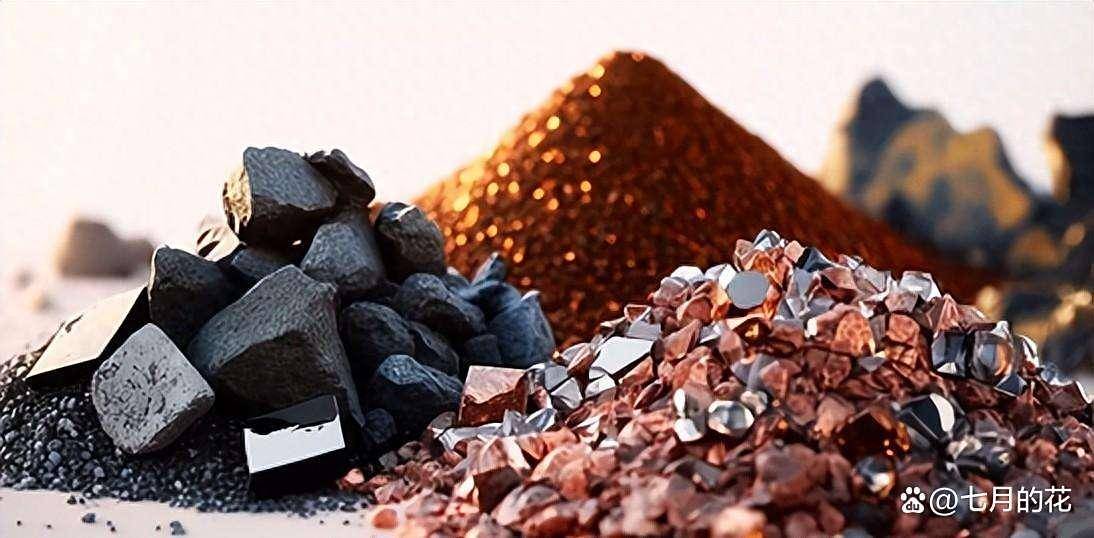
澳大利亚10亿美元砸稀土,能撬动中国的全球霸主地位吗?
Sou Hu Cai Jing· 2025-08-17 01:56
Core Viewpoint - The future of global technology and energy may hinge on the Eniba mining area in Australia, which holds rare earth resources valued at hundreds of billions, becoming a geopolitical "ticking time bomb" [1] Group 1: Geopolitical Context - Australia is investing $1 billion to challenge China's dominance in the rare earth sector, aiming to establish an independent supply chain for the West [1][5] - The U.S. Department of Defense has warned that critical defense equipment relies heavily on rare earth magnets, making supply chain disruptions a national security issue [1] - The dependency of the U.S. (80%), EU (98%), Japan, and South Korea on Chinese rare earth imports highlights the vulnerability of global manufacturing [3] Group 2: Industry Challenges - Iluka Resources has accumulated $650 million worth of rare earths as a byproduct of zircon mining, but refining poses significant challenges due to the complex and costly processes involved [3][5] - The Australian government is prioritizing national strategy over commercial logic, providing low-interest loans to support the establishment of a refining facility expected to be operational in two years [5] Group 3: Market Dynamics - The International Energy Agency (IEA) predicts that global rare earth demand will double by 2030, driven by the growth of electric vehicles and wind energy [7] - Market speculation is already occurring despite the Australian refining plant not yet being operational, raising concerns about the ability to withstand potential price wars initiated by China [7] - The U.S. is also increasing investments in rare earth resources, with plans for new facilities and expansions in various regions, indicating a competitive race for rare earth resources [7] Group 4: Long-term Implications - The ultimate control in the rare earth sector lies not in mining but in refining and magnet manufacturing, where China currently holds a complete supply chain advantage [8] - The outcome of this geopolitical gamble will significantly impact global energy transition and high-end manufacturing, suggesting a complex and uncertain future for all involved [8]