
并购重组

Search documents
不涉及GEO业务 易点天下明日复牌;水井坊去年净利预计下降七成丨公告精选
2 1 Shi Ji Jing Ji Bao Dao· 2026-01-19 14:19
Key Points - Yidian Tianxia's stock will resume trading on January 20, 2026, after a suspension for price volatility investigation, confirming no significant changes in its business operations [1] - Trina Solar expects a net loss of 6.5 billion to 7.5 billion yuan for 2025 due to supply-demand imbalance and rising raw material costs, despite a slight recovery in product prices [1] - Tianjian Technology anticipates a net loss of 176 million to 250 million yuan for 2025, which may trigger delisting risk warnings [2] - Jiangxi Copper plans to register and issue debt financing tools not exceeding 25 billion yuan, including medium-term notes and short-term financing bonds [2] - Shuijingfang forecasts a 71% decline in net profit for 2025, attributed to a deep adjustment phase in the liquor industry and high inventory levels [3] - Hualing Cable terminated its acquisition of Hunan Xingxin Aerospace due to failure to reach agreement on specific terms, with no adverse impact on its operations [3] - Jianghuai Microelectronics will change its controlling shareholder to Shanghai State-owned Assets Supervision and Administration Commission, with stock resuming trading on January 20, 2026 [4][5] - Dingtong Technology expects a 120% increase in net profit for 2025, while other companies like Mingtai Aluminum and Anfu Technology also project significant profit growth [6] - Several companies, including Shanghai Petrochemical and Sanfangxiang, anticipate substantial net losses for 2025, indicating ongoing challenges in their respective sectors [10]



一纸公告引发异常波动 上市公司宜提高决策严谨性及信披透明度
Xin Hua Wang· 2026-01-19 12:54
Core Viewpoint - Shimao Energy's stock experienced a significant drop of 9.99% following the announcement of the termination of its control rights transfer plan, highlighting the volatility associated with such corporate actions [1][4]. Group 1: Control Rights Change - On January 16, Shimao Energy announced the termination of its control rights transfer plan due to a lack of agreement on key terms between the parties involved [2][3]. - The core terms typically involved in control rights changes include share transfer price, approval procedures, performance commitments, voting rights handling, funding sources, transition arrangements, and liability for breach [2][3]. Group 2: Market Reaction - Following the announcement of the termination, Shimao Energy's stock opened at a limit down of 31.46 yuan per share, marking a 9.99% decline, after previously experiencing a rise of over 19% in the two trading days prior to the suspension [1][4]. - The rapid termination of the control rights change is not the first setback for Shimao Energy, as it previously attempted a cross-industry restructuring that also failed due to disagreements on final transaction conditions [5][6]. Group 3: Governance and Transparency - Analysts suggest that the lack of detailed disclosure regarding the transaction parties and development plans raises concerns about the company's decision-making rigor and transparency [7]. - The repeated initiation of significant corporate actions without thorough justification and transparent disclosure may undermine investor confidence in the company's governance and strategic execution [7]. Group 4: Regulatory Environment - The China Securities Regulatory Commission has emphasized the need for enhanced transaction and information disclosure regulation to maintain market fairness and prevent excessive speculation [8].
拿下19单IPO,深圳产业升级步伐持续加速
Sou Hu Cai Jing· 2026-01-19 10:42
Group 1 - The IPO market in Shenzhen is experiencing significant growth, with 19 new companies listed in 2025, including 6 on A-shares and 13 on overseas markets, indicating a vibrant capital market environment [3][4] - The Hong Kong Stock Exchange has become the world's leading IPO destination in 2025, with 117 companies raising HKD 285.69 billion, a more than twofold increase from the previous year [3] - Shenzhen's new listed companies are characterized by strong technological capabilities and rapid international expansion, with examples including Fengcai Technology and Yingshi Innovation [4] Group 2 - Shenzhen has completed 146 merger and acquisition (M&A) projects since 2025, with a total disclosed transaction value of CNY 86.645 billion, ranking second in the country by number and third by value [6] - Major M&A projects include China Resources Sanjiu's acquisition of a 28% stake in Tianjin-listed Tianshili for CNY 6.074 billion and China General Nuclear Power's acquisition of 100% of a subsidiary for CNY 1.204 billion [6] - The local government is actively promoting M&A to enhance the quality of listed companies, aiming for a total market value of CNY 20 trillion by the end of 2027 [7]

聚焦 | 以并购重组赋能战略性新兴产业有效投资
Sou Hu Cai Jing· 2026-01-17 00:41
Core Viewpoint - The development of strategic emerging industries is essential for enhancing international competitiveness and achieving proactive development amidst global economic challenges and uncertainties. Mergers and acquisitions (M&A) are increasingly recognized as a means to optimize the layout of these industries, emphasizing the importance of quality and effectiveness in M&A processes [1][4]. Group 1: Current Status of Strategic Emerging Industries - The number of enterprises in strategic emerging industries in China has significantly increased, with 96,000 large-scale industrial enterprises engaged in this sector by the end of 2023, accounting for 19.5% of all large-scale industrial enterprises. Including smaller enterprises, the total exceeds 2 million, surpassing traditional manufacturing [2]. - By the end of 2024, 66 national industrial clusters have formed across nine major fields, including information technology and biomedicine, with notable regional advantages in areas like the Yangtze River Delta and the Pearl River Delta [2]. - In terms of revenue, the leading sectors in strategic emerging industries include new-generation information technology, new energy, and high-end equipment manufacturing, which together account for 85% of total revenue in this sector [2]. Group 2: Challenges Facing Strategic Emerging Industries - The current industrial layout is fragmented, with a low proportion of revenue from strategic emerging industries relative to total A-share company revenue, indicating a need for stronger economic impact [3]. - Innovation capabilities are lacking, with many enterprises not mastering key technologies, leading to reliance on imports for critical materials and components [3]. - There is a structural imbalance in talent supply, with existing talent not aligning well with the needs of strategic emerging technologies, and a lack of effective talent incentive mechanisms [3]. Group 3: Role of Mergers and Acquisitions in Enhancing Investment Efficiency - M&A can optimize resource allocation by integrating production equipment, human resources, and technology, thus enhancing investment efficiency and avoiding resource wastage [4][5]. - The realization of synergies through M&A can lead to improved operational efficiency, reduced costs, and increased revenues, thereby enhancing overall investment efficiency [6][7]. - M&A can also expand market share by consolidating supply chains and production processes, allowing companies to gain stronger bargaining power and improve investment returns [7]. Group 4: Recommendations for Enhancing Investment Efficiency in Strategic Emerging Industries - Companies should carefully plan and define goals for the development of strategic emerging industries, focusing on high-quality M&A targets that possess core technologies and are positioned in critical segments of the supply chain [8]. - There is a need to cultivate key enterprises within strategic emerging industries to enhance industry concentration and scale efficiency, leveraging both independent R&D and M&A strategies [9]. - Continuous resource integration post-M&A is crucial for maximizing the benefits of synergies and enhancing the overall value of enterprises within strategic emerging industries [10]. - A focus on cultural integration and talent incentive mechanisms is necessary to align employee goals with corporate objectives, fostering innovation and collaboration [11].
并购市场需求旺盛 贷款投放密集落地
Zhong Guo Jing Ying Bao· 2026-01-16 20:35
Group 1 - The core viewpoint of the article highlights the increasing activity in the domestic merger and acquisition (M&A) market, driven by a series of supportive policies from regulatory authorities, particularly the new guidelines on M&A loans issued by the National Financial Regulatory Administration [1][2][3] - The new M&A loan management regulations allow for a higher proportion of controlling M&A loans in the transaction price, increasing the limit from 60% to 70%, and extending the loan term from seven years to ten years, thereby facilitating financing for M&A transactions [3][4] - The implementation of these regulations has led to a rapid increase in M&A loan projects being approved and disbursed by various commercial banks within a short period, indicating a positive market response to the new policies [2][3][4] Group 2 - The new regulations specifically include minority stake acquisitions in the scope of M&A loans, which aligns with current industrial upgrade needs and is expected to promote industrial integration and high-quality economic development [4][7] - Several banks, including Industrial and Commercial Bank of China and Agricultural Bank of China, have successfully issued the first M&A loans under the new regulations, demonstrating proactive engagement with local enterprises to meet their financing needs [4][5][6] - The regulatory environment is further supported by multiple government departments encouraging industrial mergers and acquisitions, particularly in technology sectors such as electronics and biomedicine, which are seeing increased M&A activity [8][9]






中成进出口股份有限公司2025年度业绩预告
Shang Hai Zheng Quan Bao· 2026-01-16 18:52
Group 1 - The company expects a positive net profit for the fiscal year 2025, indicating a turnaround from previous losses [2][3] - The main reasons for the expected profit include steady progress in major engineering projects, improved profitability in core business, reduced operating expenses, and decreased impairment provisions [3] - The company has communicated with its accounting firm regarding the earnings forecast, and there are no discrepancies between them [2][3] Group 2 - The company plans to acquire 100% of Jiangsu Clean Energy Co., Ltd. from China National Technical Import and Export Corporation through a share issuance, while also raising matching funds from up to 35 specific investors [7] - The transaction is subject to approval from the Shenzhen Stock Exchange and the China Securities Regulatory Commission, with the review meeting scheduled for January 23, 2026 [7] - The company will fulfill its information disclosure obligations based on the progress of this matter [7]

原总裁李翔请辞半年后,长城证券官宣周钟山为新任总裁
Jing Ji Guan Cha Wang· 2026-01-16 14:52
Group 1 - The company officially appointed Zhou Zhongshan as the president and financial officer on January 16, 2026, after he served as acting president for six months [2] - Zhou Zhongshan has a background in the banking sector and joined the company in 1998, holding various positions before becoming vice president and board secretary [3] - The actual controller of the company is China Huaneng Group, a state-owned enterprise [3] Group 2 - In the first half of 2025, the company's wealth management business generated total revenue of 1.202 billion yuan, a year-on-year increase of 13.53% [3] - The company's total revenue for the first three quarters of 2025 reached 4.121 billion yuan, reflecting a year-on-year growth of 44.61% [5] - The net profit attributable to shareholders for the same period was 1.931 billion yuan, with a year-on-year increase of 75.83% [5] Group 3 - In the competitive landscape of the brokerage industry, the company focused on bond underwriting and mergers and acquisitions [4] - In 2025, the company's bond underwriting scale was 105.857 billion yuan, ranking 25th in the industry, an increase of six places year-on-year [4] - The company participated in three merger and acquisition projects as a financial advisor, with the largest transaction being a 14.68 billion yuan equity transfer project [4]


广东坐稳并购重组第一省
2 1 Shi Ji Jing Ji Bao Dao· 2026-01-16 11:36
Core Insights - The M&A market in China is expected to be exceptionally active in 2025, driven by policies such as the "Six M&A Guidelines," with a total of 5,736 new M&A events and disclosed transaction amounts reaching 2.85 trillion yuan [2][3] - Guangdong province leads the nation in both the number of M&A events and the scale of disclosed transaction amounts, with 909 new M&A events in 2025, representing a year-on-year increase of 10.60% [2][3] - The current M&A wave in Guangdong reflects a structural transformation, focusing on efficiency and industry orientation, with significant activity in sectors like semiconductors, communications, and environmental protection [2][8] Summary by Category M&A Market Overview - In 2025, the top regions for new M&A events were Guangdong (909), Zhejiang (721), Jiangsu (648), Shanghai (620), and Beijing (601), collectively accounting for over 60% of the national total [3] - The disclosed transaction amounts for major regions include Beijing (652.3 billion yuan), Shanghai (407.4 billion yuan), and Guangdong (318.2 billion yuan), placing Guangdong among the top three [3][5] Policy and Economic Drivers - The active M&A market is fueled by policy incentives, industrial upgrade demands, and the synchronized momentum of capital leverage, marking a shift towards quality improvement rather than mere scale expansion [5][9] - Local governments in Guangdong have implemented supportive policies for M&A activities, particularly for technology-driven and traditional industries [6] Industry Dynamics - Guangdong's robust manufacturing base and the high number of listed companies (908) contribute significantly to the M&A activity, with many firms seeking to optimize resource allocation and enhance development quality [7][8] - The focus on "new quality productivity" and the search for a "second growth curve" are prevalent themes among listed companies in Guangdong, indicating a strategic shift towards M&A as a tool for industry upgrade [8] Types of M&A Activities - The current M&A wave emphasizes industrial mergers, particularly in high-tech sectors, contrasting with previous trends that prioritized high valuations and rapid expansion [10][11] - Notable M&A cases include TCL Technology's acquisition of a stake in Huaxing Semiconductor and Huanlan Environment's acquisition of Yuefeng Environmental, showcasing the trend towards strategic resource integration [12][13] Future Trends - The M&A market is expected to remain active in 2026, with a focus on technology-driven acquisitions and cross-regional mergers, driven by differentiated local policies [15][16] - Challenges in M&A transactions include valuation disputes and diverse shareholder interests, which can complicate negotiations and lead to failed deals [14][15]


奥浦迈:资产过户手续完成 澎立生物成为公司全资子公司
Zheng Quan Ri Bao· 2026-01-16 08:36
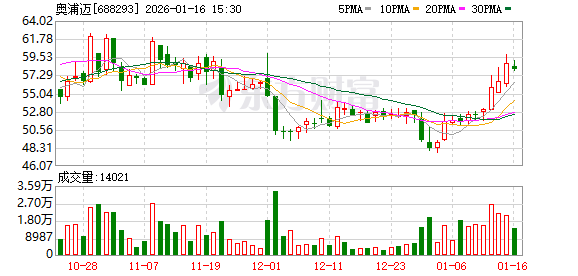
Group 1 - The core point of the article is that Aopumai Biotech has officially acquired 100% of the shares of Plenitude Biopharmaceutical Technology, making it a wholly-owned subsidiary [2] - The acquisition was completed through a combination of issuing shares and cash payment, with a total transaction price of 1.451 billion yuan [2] - The acquisition has been approved by the Shanghai Stock Exchange's M&A Review Committee on December 9, 2025, and involves 31 transaction parties [3] Group 2 - Aopumai plans to use differentiated pricing strategies, including installment payments in stock and cash, to complete the acquisition [3] - The original financial investors of Plenitude Biopharmaceutical will bear part of the performance compensation responsibility [3] - This acquisition is notable as it is the first project in the A-share market to adopt a phased payment mechanism for restructuring shares since the release of the "Six Mergers" policy [3]

中国船舶跌2.03%,成交额21.86亿元,主力资金净流出1.90亿元
Xin Lang Zheng Quan· 2026-01-16 06:11
Core Viewpoint - China Shipbuilding Industry Company Limited has shown significant financial growth, with a notable increase in revenue and net profit year-on-year, despite recent fluctuations in stock price and trading volume [2][3]. Group 1: Stock Performance - On January 16, China Shipbuilding's stock price decreased by 2.03%, reaching 35.27 CNY per share, with a trading volume of 2.186 billion CNY and a turnover rate of 1.01% [1]. - Year-to-date, the stock price has increased by 6.04%, with a 1.40% decline over the last five trading days, a 7.04% increase over the last 20 days, and a 1.07% decline over the last 60 days [1]. Group 2: Financial Performance - For the period from January to September 2025, China Shipbuilding achieved a revenue of 107.403 billion CNY, representing a year-on-year growth of 91.21%, and a net profit attributable to shareholders of 5.852 billion CNY, reflecting a 157.71% increase [2]. - Cumulatively, the company has distributed 5.310 billion CNY in dividends since its A-share listing, with 2.102 billion CNY distributed over the last three years [3]. Group 3: Shareholder Information - As of September 30, 2025, the number of shareholders for China Shipbuilding reached 916,900, an increase of 228.92% compared to the previous period, while the average number of circulating shares per person decreased by 58.73% to 6,621 shares [2]. - Among the top ten circulating shareholders, Hong Kong Central Clearing Limited holds 153 million shares, a decrease of 7.2285 million shares from the previous period, while various ETFs have increased their holdings significantly [3].
