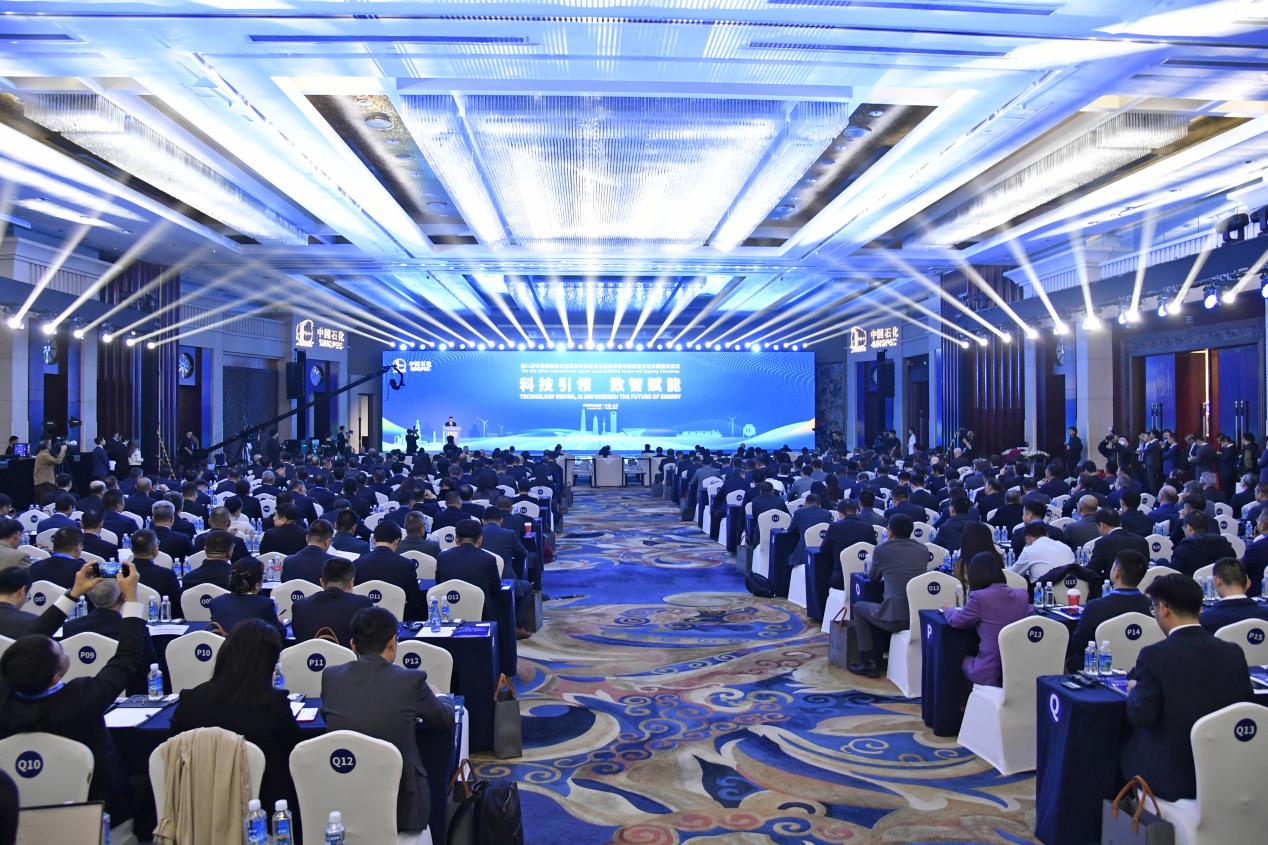
数智赋能

Search documents
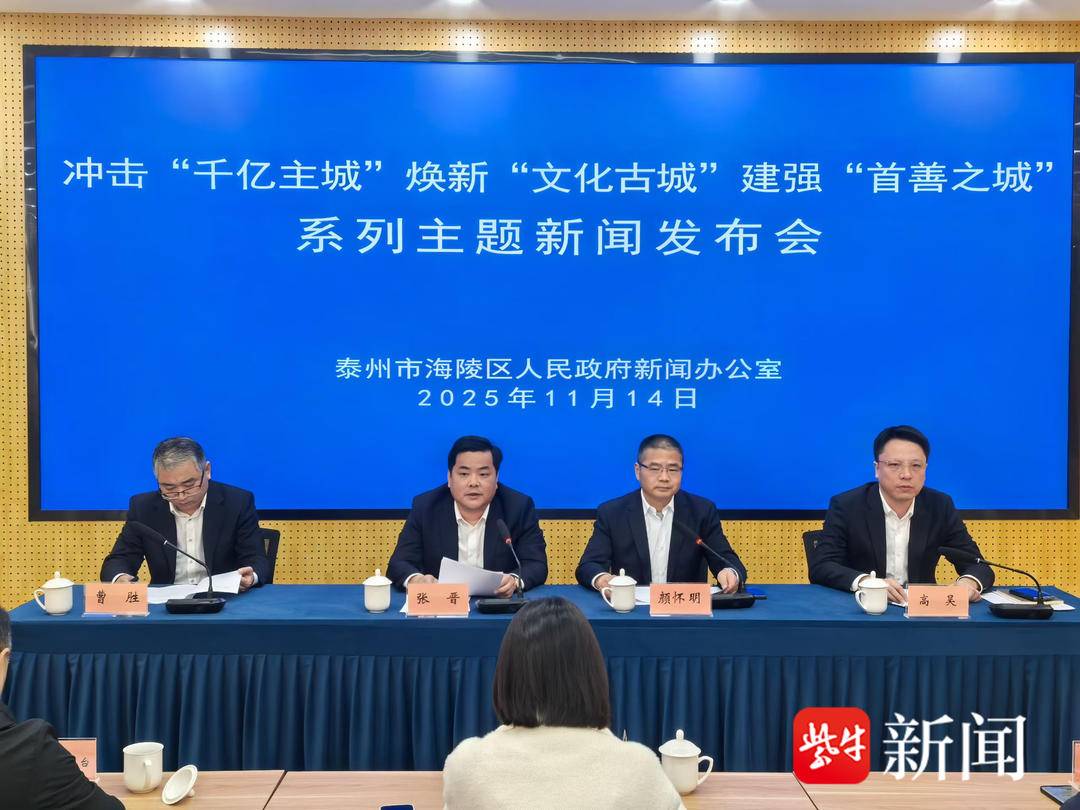
泰州海陵服务业“登高提质” 助推该区冲击“千亿主城”目标
Yang Zi Wan Bao Wang· 2025-11-15 04:50
Core Viewpoint - The Haoling District of Taizhou is focusing on enhancing its service industry, aiming for significant growth and development in various sectors, including commerce and cultural integration, as part of its strategic goals for the "14th Five-Year Plan" period [1][3]. Group 1: Service Industry Development - During the "14th Five-Year Plan" period, the average annual growth rate of the service industry's added value in Haoling is projected to be 6% [3]. - By the end of 2024, the added value of the service industry is expected to account for 63.8% of GDP, exceeding the development target of 58.5% by 5.3 percentage points [3]. - The proportion of the added value of the productive service industry within the total service industry is anticipated to reach 52.6% by the end of 2024 [3]. Group 2: Innovations and Upgrades - The Haoling District has seen the emergence of new technologies, industries, models, and business formats, leading to a more knowledge-intensive and technology-driven service sector [3]. - Over the past five years, more than 100 new large-scale service enterprises have been established [3]. - The modern logistics system in Haoling has made significant breakthroughs, and the level of technological service has greatly improved [3]. Group 3: Infrastructure and Economic Growth - The district has expanded its service industry infrastructure, enhancing the economic capacity of its buildings and parks [4]. - By the end of 2024, Haoling has cultivated 11 tax-revenue-generating buildings and awarded six star-rated buildings, with the Cultural and Creative Building becoming the first "billion-yuan building" in the city [4]. - The district is focusing on the integration of cultural and commercial development, enriching the cultural connotation of its urban areas [4]. Group 4: Future Outlook - Looking ahead to the "15th Five-Year Plan," Haoling aims to leverage digital empowerment, open collaboration, and environmental optimization to inject new momentum into the service industry's growth [4].

持续深化党建引领接诉即办 用心用情用力解决群众急难愁盼
Zheng Zhou Ri Bao· 2025-11-14 00:44
Core Insights - The article emphasizes the importance of community engagement and efficient governance through the integration of party leadership in addressing public concerns and enhancing citizen satisfaction [1][2]. Group 1: Governance and Community Engagement - The focus is on the "people-centered" development approach, aiming to improve governance efficiency and ensure citizens' sense of gain, happiness, and security [1]. - The street operation centers are described as command hubs responsible for coordinating responses to public demands and ensuring effective problem resolution [1]. - The article highlights the need for a proactive governance model that shifts from reactive responses to anticipating and addressing community issues [1]. Group 2: Role of Community Organizations - Community organizations are identified as essential units for listening to public voices, understanding community needs, and mobilizing local resources [2]. - The article stresses the importance of leveraging community party organizations to enhance coordination and stimulate grassroots self-governance [2]. - It discusses the implementation of effective practices, such as the "small courtyard discussion hall," to manage public demands and resolve conflicts locally [2]. Group 3: Operational Mechanisms - The article outlines the closed-loop management mechanism for the "接诉即办" (Immediate Response to Complaints) process, detailing the workflow from receiving to evaluating public complaints [2]. - It emphasizes the combination of problem-oriented and goal-oriented approaches to institutionalize and enhance the effectiveness of governance practices [2]. - The goal is to establish a benchmark for efficient governance, ensuring that public demands are met promptly and effectively [2].
中小机场探索“起飞”新路径
Jing Ji Ri Bao· 2025-11-13 22:20
Core Viewpoint - The development of small and medium-sized airports is crucial for China's civil aviation network and regional economic growth, with 189 out of 267 certified transport airports being small and medium-sized, representing 71% of the total [1] Group 1: Current Challenges and Opportunities - Small and medium-sized airports face challenges such as the need to improve operational safety, enhance planning and design, and strengthen construction management capabilities [1] - In 2024, small and medium-sized airports are projected to account for only 16.6% of the total passenger throughput of all transport airports in China, indicating both challenges and significant growth potential [1] Group 2: Regulatory and Technological Enhancements - There is a need to comprehensively improve the regulatory framework for small and medium-sized airports, ensuring that policies are updated and aligned with national strategies like rural revitalization and regional coordinated development [2] - China Aviation Information Group has developed cloud-based, lightweight, and modular smart airport solutions to address the unique needs of small and medium-sized airports, aiming to make them efficient and modern [2] Group 3: Innovative Development in Specific Regions - Chengdu's Shuangliu District is focusing on developing a comprehensive aviation industry chain, including research, manufacturing, and maintenance, leveraging resources from major companies like COMAC and Airbus [3] - Yunnan Airport Group has established a collaborative operational platform that integrates various data-sharing capabilities to enhance safety and efficiency in airport management [3] Group 4: Smart Solutions in Airport Operations - Ezhou Huahu Airport has implemented a digital twin airport model and developed a real-time flight data tracking system, achieving 100% accuracy in predicting the arrival times of international cargo flights [4] - The airport has also built an intelligent weather forecasting platform that utilizes AI technology, improving the accuracy of severe weather predictions from 90% to 95% [4]
“昨天的利润,今天就能看到”——山东海化氯碱树脂公司数智赋能精益管理纪实
Zhong Guo Hua Gong Bao· 2025-11-07 02:21
Core Insights - The company achieved a record production of 234,000 tons of caustic soda in the first three quarters of the year, with a profit increase of 38.55 million yuan year-on-year [1] - The company is focusing on digitalization and intelligent management to enhance operational efficiency and profitability, moving from monthly to daily profit calculations [1][3] Production and Sales Coordination - The company developed an automatic profit calculation system to optimize product structure and sales strategies based on real-time data analysis [2] - The marketing department emphasizes efficiency and responsiveness to market fluctuations, particularly in the volatile pricing of caustic soda and liquid chlorine [2] Safety and Risk Management - The company invested 19.79 million yuan in transforming its caustic soda and hydrogen peroxide systems to achieve "zero manual" operations, enhancing safety through real-time monitoring [3][4] - A comprehensive safety information system has been established, integrating risk monitoring and management mechanisms to improve overall safety performance [3][4] Lean Management and Operational Excellence - Lean management is viewed as a cultural approach to continuous improvement and waste elimination, with a focus on optimizing processes [4] - The company has achieved significant energy savings and operational efficiency, with a reported annual reduction of 4.5 million kilowatt-hours and a total benefit of nearly 10 million yuan [4] Integration of Party Building and Production - The company has integrated fine management as a core production strategy, achieving significant operational improvements [5] - Initiatives such as the "Risk Prevention Party Member Post" have been implemented to enhance safety and risk management through active participation of party members [5][6]

新思想引领新征程丨第八届进博会拉开帷幕 推动全球共享创新成果
Yang Guang Wang· 2025-11-06 03:01
Group 1 - China emphasizes its role as a significant opportunity for global development and commits to high-level openness and economic globalization [1] - During the "14th Five-Year Plan" period, China's trade in goods and services ranks first and second globally, attracting over $700 billion in foreign investment [1] - The negative list for foreign investment access has been reduced to 29 items, with manufacturing sector restrictions eliminated and service sector openness expanded [1] Group 2 - The 8th China International Import Expo (CIIE) commenced in Shanghai, with over 600 additional overseas exhibitors compared to last year, marking a record exhibition scale [2] - CIIE has facilitated over $500 billion in intended transaction value since its inception, serving as a crucial platform for China's high-level opening to the world [2] - The exhibition area exceeds 367,000 square meters, featuring 4,108 companies from 138 countries and regions, with a vibrant atmosphere of discussions and new product launches [2] Group 3 - The event showcases 461 new products, technologies, and services, positioning China as a global innovation testing ground [3] - The technology equipment sector has the highest number of Fortune 500 and industry-leading companies, introducing groundbreaking technologies [3] - Notable innovations include humanoid robots and lithium-ion battery conductive additives, indicating future industry trends [3] Group 4 - The Hongqiao Forum addresses key topics such as multilateral cooperation, digital empowerment, and sustainable development, reflecting China's commitment to multilateralism [4] - The flagship report "World Open Report 2025" was released, indicating a shift in global openness dynamics towards emerging markets and developing countries [4] - CIIE has cumulatively facilitated over $500 billion in intended transaction value, demonstrating China's determination to share market opportunities [4] Group 5 - CIIE serves as a platform to observe China's high-level openness and experience its vast market advantages [5] - The event reinforces China's commitment to expanding its openness and collaborating with global partners to enhance economic growth [5]
山东钢铁产业掌舵者寻找产业“突围密码”
Xin Hua Wang· 2025-11-06 02:16
Core Viewpoint - The steel industry in Shandong is at a critical juncture, facing the need for transformation and upgrade to address structural challenges and achieve sustainable growth [1][2]. Group 1: Industry Challenges - The steel industry is experiencing a significant downturn, with domestic steel consumption reaching a plateau and traditional demand from construction declining [2]. - The industry is struggling with low profit margins, with national profits reported at 83.03 billion yuan from January to July this year, indicating instability in the sector [2]. - There is a pressing need for capacity reduction and structural adjustment as the government implements unprecedented measures to control production and optimize the industry [2][3]. Group 2: Transformation Strategies - The Shandong steel industry is focusing on three key areas for transformation: high-end production, intelligent manufacturing, and green practices [5]. - High-end production aims to create products with unique value propositions, moving away from low-end capacity to high-value offerings [5]. - Intelligent manufacturing involves integrating AI, industrial internet, and big data into the production process to enhance efficiency and reduce costs [5]. - Green practices are essential for compliance with international standards, such as the EU carbon tariff, and involve innovations in processes and energy supply [5][6]. Group 3: Future Outlook - The upcoming strategies will emphasize a combination of high-end, intelligent, and green approaches to create a competitive steel industry in Shandong [5]. - The transformation of the steel industry serves as a model for other traditional sectors in Shandong, such as chemicals and textiles, showcasing the potential for high-quality development through innovation [6].

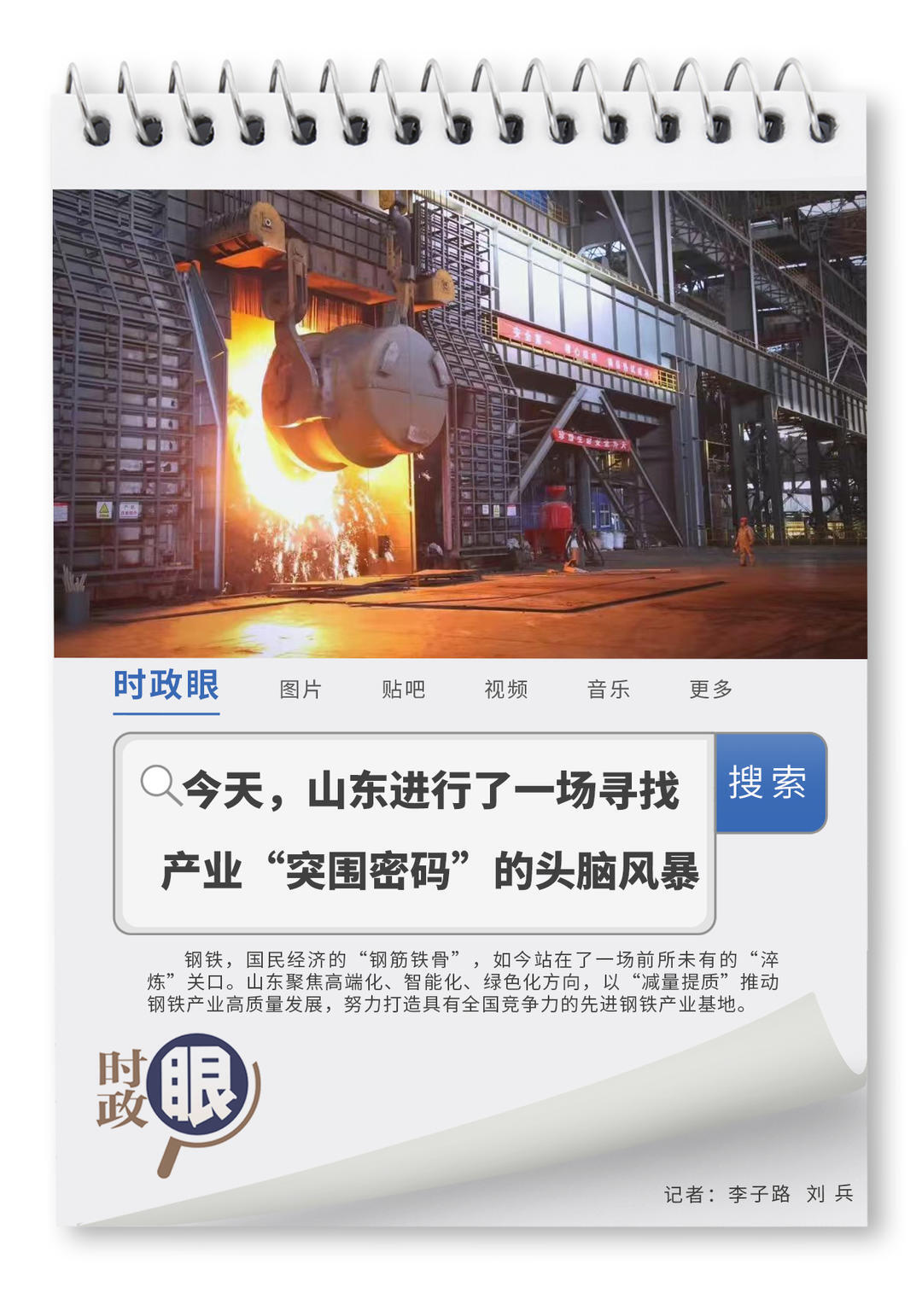
时政眼|今天,山东进行了一场寻找产业“突围密码”的头脑风暴
Da Zhong Ri Bao· 2025-11-05 11:18
Core Viewpoint - The Shandong steel industry is at a critical juncture, focusing on high-end, intelligent, and green development to enhance competitiveness and address structural challenges in the sector [2][6]. Group 1: Industry Challenges - The steel industry is facing unprecedented challenges, with domestic steel consumption reaching a ceiling and traditional demand from construction declining [3]. - The industry is struggling with low profits, with national profits at 830.3 billion yuan for the first seven months of the year, indicating instability in the development foundation [4]. - There is a significant mismatch between excess low-end capacity and insufficient high-end supply, exacerbated by global trade tensions [3]. Group 2: Strategic Directions - The Shandong steel industry is adopting a "reduction and quality improvement" strategy, as outlined in the national plan for 2025-2026, aiming for an average annual growth of around 4% in industry value added [2][6]. - The focus is on three key areas: high-end products, intelligent manufacturing, and green transformation, which are seen as essential for the industry's future [7][8]. - Companies are encouraged to innovate and enhance product quality to gain market share, moving away from low-end production [7]. Group 3: Technological and Environmental Initiatives - Digital transformation and green low-carbon initiatives are identified as critical drivers for the industry's evolution, with companies like Yongfeng Group aiming to transition from manufacturing to service-oriented models [5][6]. - The industry must comply with stringent environmental regulations, with over 80% of steel production capacity required to achieve ultra-low emissions by the end of 2025 [5][7]. - The integration of AI, industrial internet, and big data into steel production processes is expected to enhance efficiency and reduce costs [7]. Group 4: Future Outlook - The transformation of the Shandong steel industry serves as a benchmark for traditional industries, demonstrating that embracing change can lead to successful upgrades and sustainable growth [8][9]. - Other traditional sectors in Shandong, such as chemicals and textiles, are also undergoing similar transformations driven by new technologies and concepts [9].
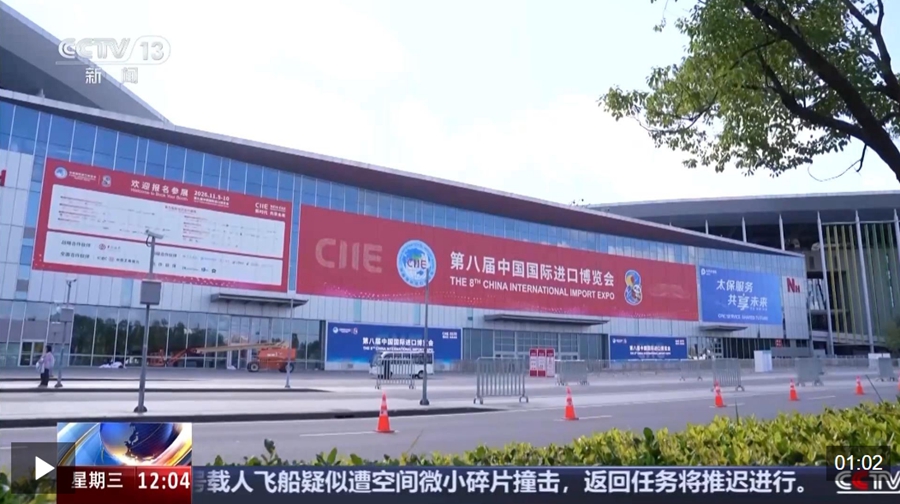
视频丨第八届进博会今天开幕 参展企业比去年新增600余家
Yang Shi Xin Wen Ke Hu Duan· 2025-11-05 07:48
Group 1 - The 8th China International Import Expo (CIIE) opened today in Shanghai, with participation from 155 countries, regions, and international organizations, marking a record high in both exhibition area and number of participating companies [1] - The event features over 600 new exhibitors compared to last year, including 290 Fortune Global 500 and industry-leading companies, achieving the largest exhibition scale in history [5] - The expo includes six major exhibition areas and an innovation incubation zone, showcasing advancements in future industries such as low-altitude economy, humanoid robots, next-generation information technology, artificial intelligence, and green low-carbon sectors [5] Group 2 - The 8th Hongqiao International Economic Forum, an important part of the CIIE, opened today with over 400 prominent figures from politics, business, and academia discussing global governance and open topics [3] - The forum will host 33 sub-forums and closed-door meetings, addressing hot topics such as "Revitalizing Multilateral Cooperation," "Digital Empowerment," "Green and Sustainable Development," and "A More Open China," reflecting China's commitment to multilateralism and building an open world economy [3]
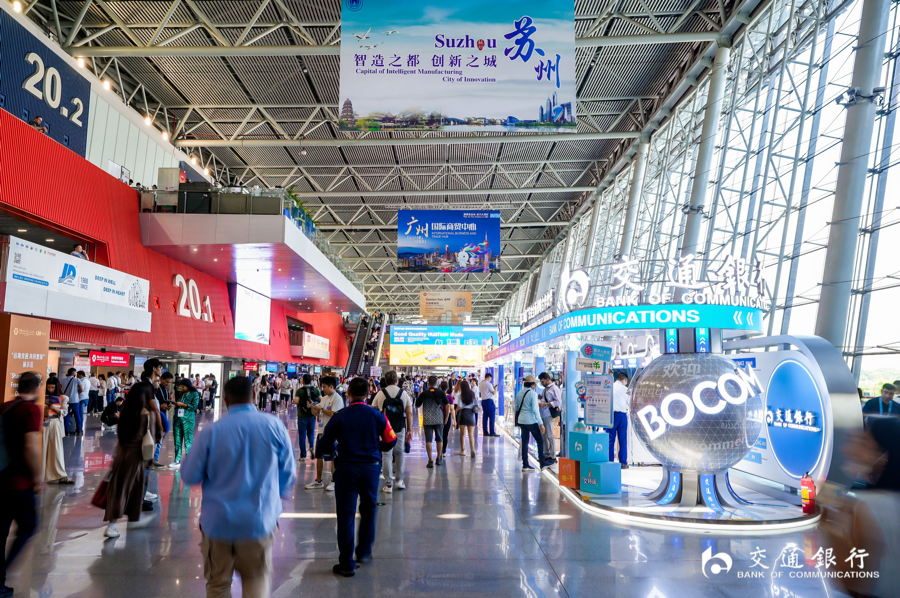
携手伴广交 筑牢金融桥 交通银行护航第138届广交会成功举办
2 1 Shi Ji Jing Ji Bao Dao· 2025-11-05 04:03
Core Insights - The 138th China Import and Export Fair (Canton Fair) successfully concluded, showcasing the resilience and vitality of China's foreign trade, with participation from over 220 countries and regions [2][3] - As a strategic partner of the fair, the Bank of Communications (BoCom) provided comprehensive financial services to support global merchants in expanding business opportunities [2][3] Group 1: Financial Services and Innovations - BoCom upgraded its services at the Canton Fair, creating technology-driven exhibition areas that highlight its century-long history and global operational advantages [3] - The bank set up various service zones, including a "Service Display Area," "Business Handling Area," and "Smart Interaction Area," offering services like foreign currency exchange and digital RMB payments [3][5] - BoCom introduced a comprehensive financial service plan for the 12th National Games for Persons with Disabilities, showcasing 17 specialized services aimed at supporting the disabled community [4] Group 2: Support for Foreign Trade Development - BoCom is committed to enhancing cross-border financial services, aligning with national strategies to stabilize foreign trade [5][6] - The bank launched the "Yueqi Going Global" cross-border financial service plan, addressing the financial needs of enterprises looking to expand internationally [5] - BoCom's Guangdong branch led a cross-border RMB syndicate financing project for key state-owned enterprises, effectively reducing financing costs for companies venturing abroad [6] Group 3: Payment Solutions and Customer Experience - The bank established a "Payment Facilitation Zone" at the fair to enhance payment services for foreign attendees, including a digital currency wallet display and currency exchange services [7][9] - BoCom collaborated with major e-commerce platforms to create a "Digital Currency Festival," offering discounts for payments made through its digital wallet, enhancing the payment experience for international guests [9] - The bank's extensive network of over 200 branches in Guangdong provides foreign currency exchange and cash withdrawal services for overseas visitors [9]

超409亿美元!第八届进博会中国石化签下大单
Zhong Guo Jing Ji Wang· 2025-11-05 01:52
Core Insights - The eighth China International Import Expo (CIIE) featured a forum themed "Technology Leading, Digital Intelligence Empowering," focusing on technological innovation, new material development, and enhancing supply chain resilience [1][3] - Sinopec signed agreements with 34 partners from 17 countries and regions, covering 24 product categories, with a total procurement amount exceeding $40.9 billion [3] - Since the first CIIE in 2018, Sinopec has accumulated contracts exceeding $325 billion across eight expos [3] Group 1 - Sinopec emphasizes the importance of technological innovation and digital intelligence in driving the energy and chemical industry towards high-end, intelligent, and green development [3] - The company aims to strengthen global partnerships to overcome development bottlenecks and create new advantages in the industry [3] - Sinopec plans to accelerate the integration of new information technologies with the energy and chemical sectors to stimulate industrial upgrades [3] Group 2 - The company is committed to expanding green and low-carbon cooperation, promoting the efficient use of traditional energy alongside the large-scale development of renewable energy [3] - Sinopec envisions a sustainable development landscape for the energy and chemical industry through collaborative efforts with global partners [3]