机构库存

Search documents
融资客连续加仓,是机会还是陷阱?
Sou Hu Cai Jing· 2025-12-24 07:58
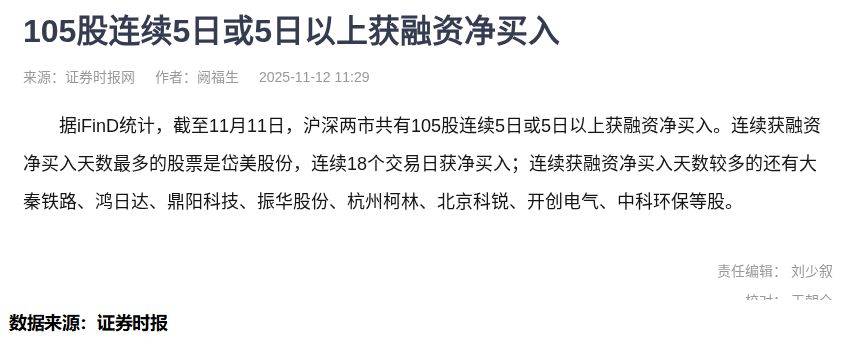
最近看到一条新闻,说截至12月23日,沪深两市有超过100只股票连续5天以上获得了融资资金的净买入。其中,德邦科技、英诺特 等股票更是连续11个交易日被融资客加仓。看到这样的消息,很多朋友的第一反应可能是:这么多资金看好,是不是意味着机会来 了? 一、牛市中的两大遗憾:勇气与冲动的悖论 投资市场里,最让人懊恼的往往不是没赚到钱,而是明明看到了机会,却因为自己的犹豫或冲动,最终与收益擦肩而过,甚至蒙受 损失。尤其是在市场整体向好的时候,这种遗憾会被放大。 第一种遗憾,是遇到调整时没有勇气参与。这就像"一朝被蛇咬,十年怕井绳"。很多人因为曾经在调整中吃过亏,所以再次面对震 荡时,内心充满了恐惧和犹豫。眼睁睁看着股价在短暂的下跌后重拾升势,自己却因为不敢下手而错失良机。这种心情,比单纯的 踏空更让人难受。 第二种遗憾,则恰恰相反,是遇到行情尾声时后悔自己太冲动。市场没有只涨不跌的行情,每一次调整也未必都是机会。有些人过 于执着于"抓住每一次机会",结果在一次次的调整中不断消耗,最终可能在山顶附近耗尽所有勇气和资金,成为"高位接盘侠"。这 种从山顶跌落的痛,远比错过机会更深刻。 最糟糕的情况是,很多人兼有这两种特质: ...

科创板融资余额大增,但看懂资金态度才能不留遗憾
Sou Hu Cai Jing· 2025-12-23 03:35
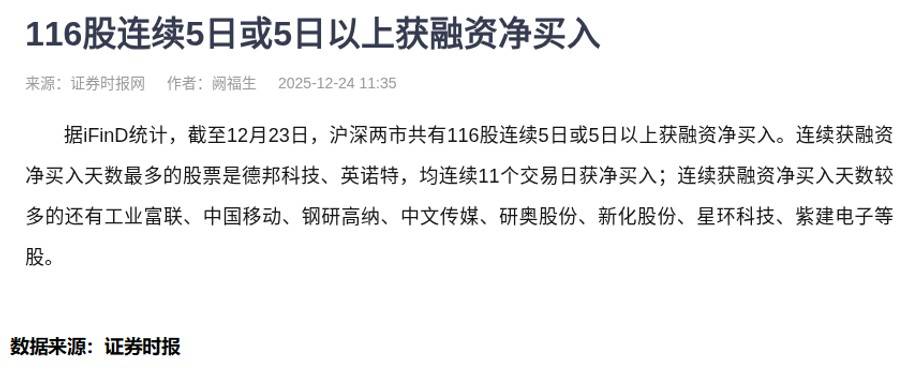
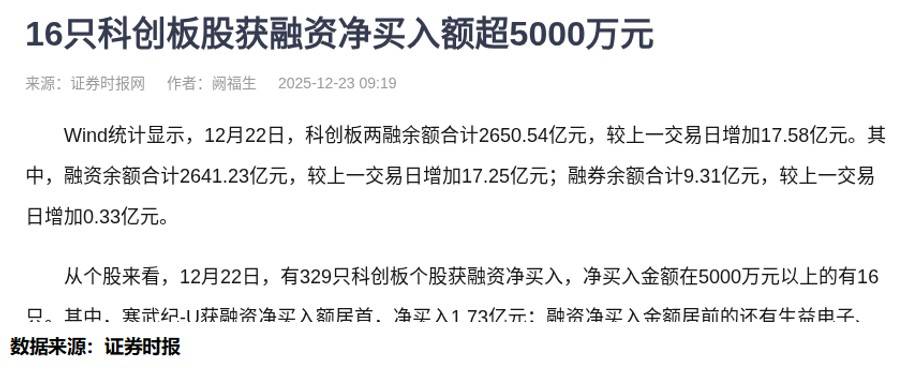
最近看到一则关于科创板的新闻,数据挺有意思。根据Wind统计,12月22日(周一),科创板两融余额合计2650.54亿元,较上一 交易日增加了17.58亿元。其中,融资余额增加17.25亿元,达到2641.23亿元。更引人注目的是个股层面,当天有329只科创板个股 获得了融资净买入,其中净买入金额超过5000万元的就有16只,像寒武纪-U、生益电子、炬光科技等公司都榜上有名。 这组数据背后,反映的是市场资金对科创板部分个股的关注度在提升。融资客的动向,常常被看作是市场情绪的一个风向标。看到 这样的新闻,很多朋友可能会想:是不是机会来了?是不是该跟着"聪明钱"的脚步走? 但这里有个关键问题:新闻和数据本身只是表象,是市场波动的诱因之一。真正决定股价后续走向的,是资金背后的态度和持续的 交易行为。融资余额增加,代表有资金愿意借钱买入,这显示了看多的意愿。然而,意愿能否转化为持续的上涨动力,却要看更深 层次的资金行为是否配合。如果只是昙花一现的热情,盲目跟进反而可能陷入被动。 这就引出了一个在投资中普遍存在的困境:面对市场的波动和调整,我们到底该如何抉择?是应该大胆参与,还是谨慎观望?很多 人正是在这种反复纠结中, ...
机构狂买12亿!散户却还在猜顶底?
Sou Hu Cai Jing· 2025-12-11 09:52
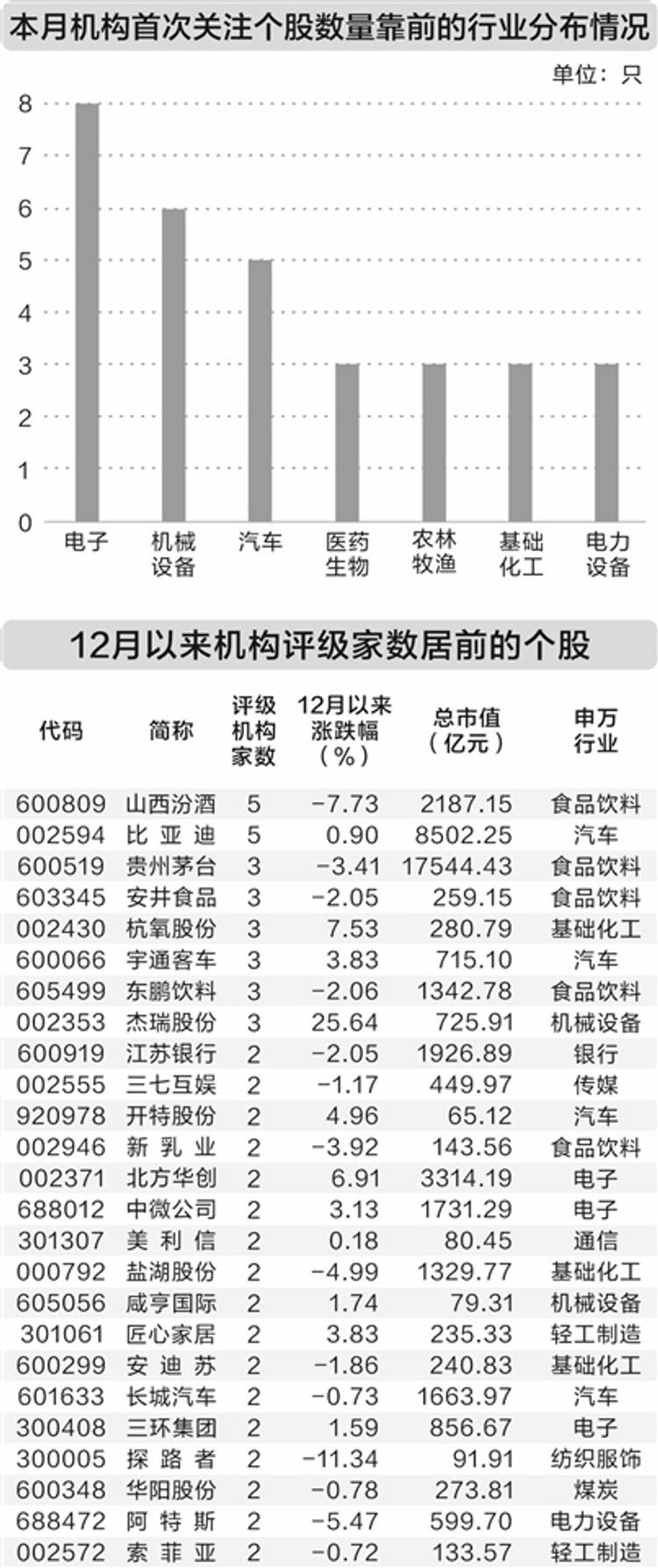
Group 1 - The article highlights the disparity between institutional recommendations and the actual performance of stocks, indicating that many retail investors are suffering losses despite positive ratings for companies like BYD and Shanxi Fenjiu [1][3] - Institutional ratings show 49 institutions issued 222 buy ratings across 185 stocks, yet some of these stocks, such as Shanxi Fenjiu, have seen significant declines, with a drop of 7.73% [3] - The article criticizes the notion of a bull market, suggesting that it is misleading and that many stocks are experiencing substantial losses despite overall market gains [4][7] Group 2 - The food and beverage index has decreased by 3.6%, while there has been a net purchase of 1.2 billion in financing, indicating a disconnect between market sentiment and institutional buying behavior [12] - The article emphasizes the importance of understanding institutional inventory data, which can provide insights into market movements that are not apparent from price charts alone [12][14] - It advises investors to be cautious and to recognize that the stock market operates on information asymmetry, where institutional investors often act before retail investors are aware of market changes [14]


AI巨头IPO暗战:3000亿对决1万亿
Sou Hu Cai Jing· 2025-12-03 15:46
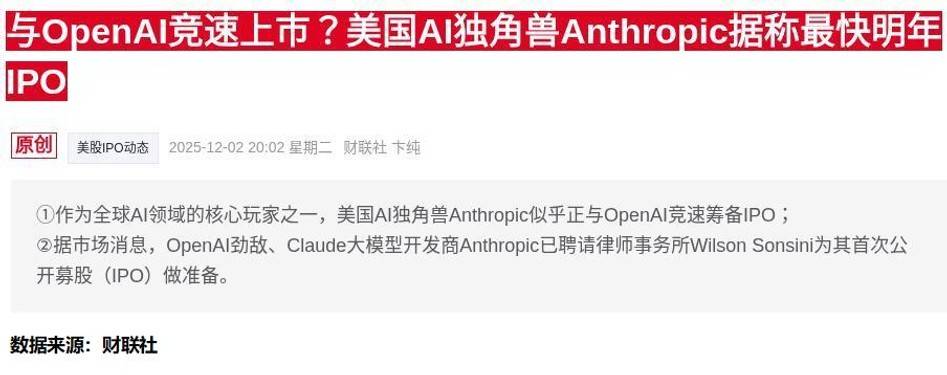
Group 1 - The core message highlights the competitive landscape between AI giants Anthropic and OpenAI, with both companies potentially aiming for IPOs at valuations exceeding 300 billion and 1 trillion respectively [1] - The current market is likened to a reality show, where beneath a calm surface, significant activities are taking place, similar to the dynamics observed in the A-share market [3] - The rapid switching of market hotspots indicates a shift in investment strategies, with liquidity being abundant but institutional investors employing advanced trading techniques that render traditional tactics ineffective [6] Group 2 - Foreign investors exhibit a dualistic approach, publicly distancing themselves from speculative stocks while actively investing in restructuring concepts, showcasing a disconnect between their statements and actions [7] - The importance of observing actual market behaviors over mere rhetoric is emphasized, suggesting that true investment insights come from analyzing financial flows rather than listening to narratives [9] - The case of Wenyitech demonstrates that institutional investors often position themselves ahead of market movements, indicating that understanding large capital behaviors is crucial in the current trading environment [14] Group 3 - The urgency for Anthropic and OpenAI to go public is driven by the need to capitalize on favorable market conditions, reflecting a broader strategy of realizing profits at peak expectations [17] - The analysis suggests that even in a bull market, a significant portion of industries may still experience declines, underscoring the necessity for retail investors to grasp the underlying market dynamics [17] - Recommendations for ordinary investors include focusing on data over narratives, monitoring actual capital flows, and utilizing appropriate analytical tools to navigate the complexities of modern trading [18]




当"假突破"遇上"真建仓",量化数据显神威
Sou Hu Cai Jing· 2025-11-29 00:37
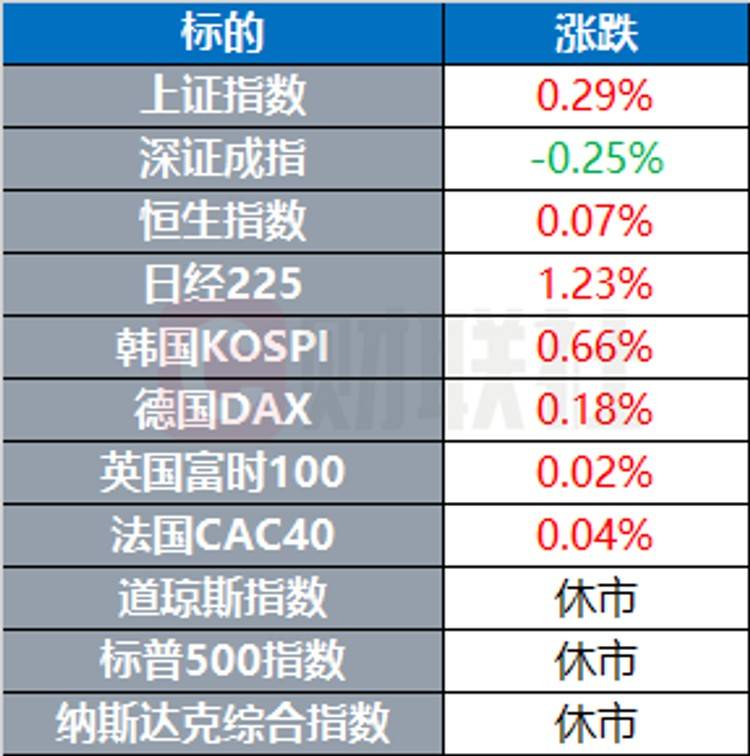
Global Market Dynamics - European stock indices showed slight increases, with Germany's DAX up by 0.18%, and the UK's FTSE 100 and France's CAC 40 rising by 0.02% and 0.04% respectively [2] - Commodity prices for copper, aluminum, and zinc declined, while nickel and tin experienced slight recoveries [2] - The ongoing Russia-Ukraine conflict remains tense, with Putin stating that negotiations hold no substantial meaning, while Zelensky is focused on implementing security agreements [2] Market Behavior Analysis - The concepts of "oscillating accumulation" and "phased reduction" are highlighted, where both can create false breakout signals but serve different purposes: the former is for future positioning, while the latter is for profit-taking [5] - Traditional analysis methods often rely on subjective judgment, making investment decisions feel uncertain; in contrast, quantitative methods provide clearer insights by focusing on institutional trading behaviors [5] Quantitative Data Insights - A data system can effectively display trading behaviors, with specific indicators showing the level of institutional activity; for instance, "institutional inventory" data indicates the involvement of institutional investors [8] - Examples of Huadong Medicine and Zhenzhou Cell illustrate how quantitative data can differentiate between institutional-led movements and short-term trading activities, leading to divergent market outcomes [8] Retail Investor Challenges - Retail investors face a barrage of information, including potential Fed interest rate cuts and OPEC+ production assessments, highlighting the need for improved interpretative skills rather than just information acquisition [9] - The importance of institutional participation in market movements is emphasized, suggesting that trends without significant institutional backing are likely to be short-lived [10] Recommendations for Investors - Investors are advised to shift focus from price to trading behavior, recognize institutional footprints, avoid emotional trading, and utilize tools that clearly display capital flows [12]
15%年增长!揭秘沙特电商崛起背后的秘密
Sou Hu Cai Jing· 2025-11-28 02:55
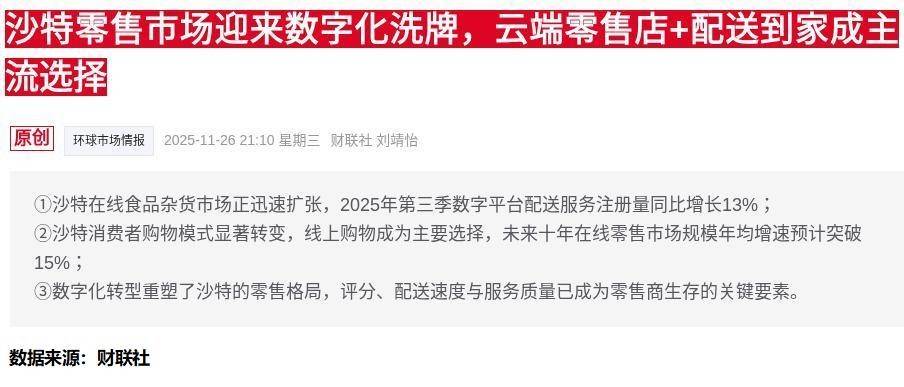
Group 1 - The core idea is that traditional retail businesses in Saudi Arabia are struggling due to the rapid digital transformation, mirroring historical trends seen in other markets like Shanghai's Nanjing Road [1][2] - By Q3 2025, the number of registered physical retail stores in Saudi Arabia is expected to decline by 4% year-on-year, while digital platform delivery services are projected to grow by 13% [2] - The competitive edge in the retail sector has shifted from location and size to digital presence and customer experience, reflecting a broader trend in investment markets [3] Group 2 - The article highlights two major regrets in the investment market: investors often hesitate to participate during market adjustments and may act impulsively at market peaks [4][5][6] - Many investors, like traditional retailers, miss opportunities due to fear of market corrections, similar to how some Saudi retailers are slow to adapt to digital changes [5] - The importance of understanding consumer behavior and market fundamentals is emphasized, suggesting that investors should not be misled by superficial market trends [7][12] Group 3 - A cautionary example is provided where some retail businesses in Saudi Arabia realize too late that consumer preferences have shifted, paralleling investors who fail to recognize critical market signals [16] - The article stresses the need for investors to find suitable tools and methods for analysis, akin to how different consumer segments require tailored retail strategies [17] - The IMARC Group predicts that Saudi Arabia's online retail market will grow at an annual rate exceeding 15% over the next decade, indicating a significant growth opportunity [17]
融资客突然转向!13只个股暗藏玄机
Sou Hu Cai Jing· 2025-11-21 04:50
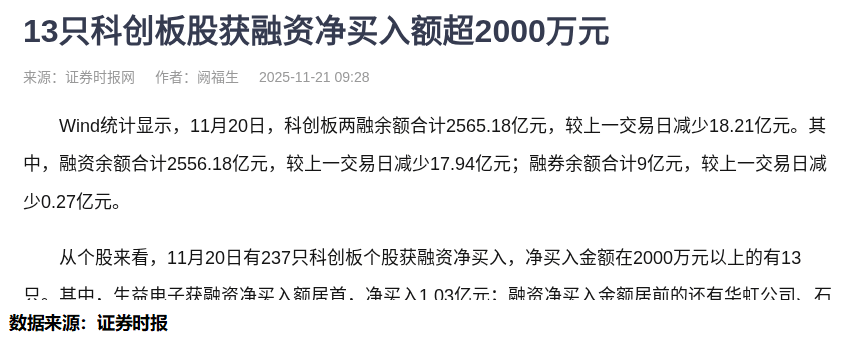
Group 1 - The core point of the article emphasizes the importance of understanding deeper market dynamics beyond surface-level data, as exemplified by the recent outflow of 1.821 billion yuan from the STAR Market while 237 stocks still received net financing inflows [3][10] - The article highlights a significant divergence in market behavior, where certain stocks, like Shengyi Electronics, managed to attract substantial net financing despite overall negative trends in the STAR Market [3] - It reflects on past experiences where superficial data led to misguided investment decisions, particularly during the 2023 new energy sector boom, illustrating the need for deeper analysis [3][4] Group 2 - The concept of "the art of volatility" is introduced, indicating that successful stocks must navigate both influxes of speculative buying and profit-taking sell-offs, akin to the complex dynamics of pedestrian traffic in a busy area [4] - The article discusses the lessons learned from the photovoltaic sector, where significant price increases occurred despite the industry facing losses, challenging traditional notions of value investing [5] - It emphasizes the importance of institutional inventory data as a critical indicator for investment decisions, suggesting that understanding this data can help avoid pitfalls in seemingly strong financial reports [9][10] Group 3 - The article concludes by revisiting the STAR Market's financing data, questioning whether stocks with large financing inflows have genuine institutional support, thus highlighting the need for critical evaluation of market trends [10]
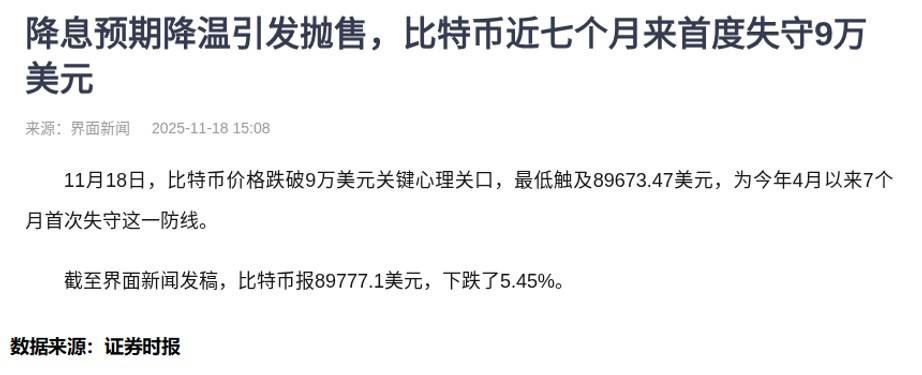
5.45%暴跌日:我用数据看穿市场谎言
Sou Hu Cai Jing· 2025-11-18 08:03
Group 1 - The core viewpoint of the article highlights the alarming drop in Bitcoin prices, with a significant gap observed at $89,673.47, indicating a potential market crisis reminiscent of the 2021 downturn [1] - The liquidity pressure index shows a steep decline, indicating that hot money is evaporating at a rate of $300 million per hour, signaling a critical market condition [2] - The probability of interest rate cuts by the Federal Reserve falling below 50% is identified as a triggering factor for the market downturn, while hedge funds had already positioned themselves for a bearish trend weeks in advance [4] Group 2 - The article discusses the illusion of bull markets, emphasizing that true opportunities are only recognized by those who can track institutional inventory data, which reflects the real movements of large funds [5] - A quantitative model is mentioned that successfully identified a stock that appeared to be in decline but was actually experiencing hidden strength, illustrating the concept of "false declines" [8] - The article warns that recent Bitcoin rebounds have low institutional participation, indicating a "dead cat bounce" rather than a genuine recovery [15] Group 3 - The article stresses the importance of data-driven analysis over traditional technical indicators, advocating for a focus on funding flows to understand market dynamics better [15] - It highlights the prevalence of misinformation among blockchain analysts, suggesting that many lack fundamental knowledge yet still provide market commentary [15] - The need for investors to discern genuine signals amidst market noise is emphasized, particularly in the context of Bitcoin's volatility and potential future price movements [14]
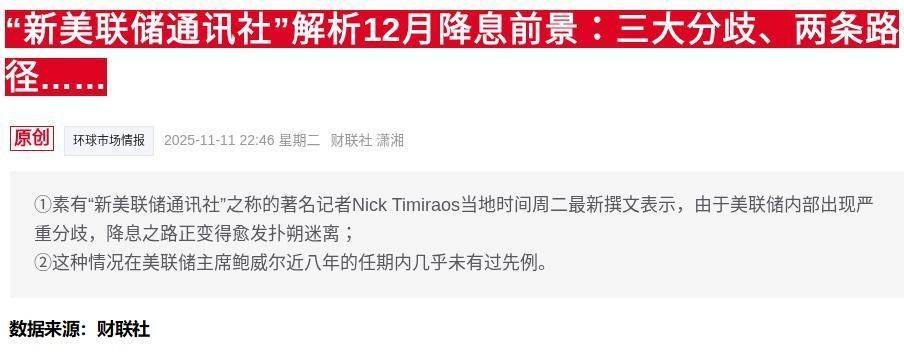
牛市三大陷阱正在吞噬散户
Sou Hu Cai Jing· 2025-11-12 17:12
Core Insights - The ongoing debate within the Federal Reserve, referred to as the "hawk-dove battle," is drawing significant attention on Wall Street, reflecting broader market sentiments and potential investment implications [1] - The recent market dynamics show a stark contrast between the rising Shanghai Composite Index and the quietness among retail investors, indicating a potential disconnect between market performance and investor sentiment [1] - The analysis highlights three major traps for investors: chasing popular stocks, the illusion of high-frequency trading, and the passive waiting trap, which can lead to missed opportunities and losses [2][1] Investment Traps - The first trap identified is the tendency to chase popular stocks, which can lead to significant performance discrepancies within the same sector, with differences reaching up to 300% [1] - The second trap is the misconception that daily small gains can lead to substantial annual returns, as evidenced by the fact that during a recent index rise, over 2,000 stocks still experienced declines [1] - The third trap is the passive waiting trap, where over 300 stocks declined despite the overall market rising from 3,000 to 4,000 points, illustrating the dangers of inaction [2] Institutional Behavior - The analysis of institutional inventory data reveals that despite active institutional participation, stock prices may remain suppressed, indicating potential underlying issues in market dynamics [6] - The case studies of specific stocks show that institutions are engaging in a "stealth game," where they accumulate positions without immediate price movements, suggesting a strategic approach to investing [14] Macro and Micro Insights - The divergence in opinions among Federal Reserve officials is reflected in specific funding flow patterns, which can provide early signals for market movements [14] - The emphasis is placed on the importance of data-driven decision-making over emotional responses, highlighting that the truth often lies within the data [14][15] Key Takeaways - Establishing a benchmark awareness is crucial, as failing to outperform the index is considered a loss [16] - Focusing on behavioral patterns rather than verbal statements from officials is essential, as actual fund flows are more indicative of market trends [16] - Continuous tracking of institutional footprints can provide valuable insights for investors, akin to a hunter tracking its prey [16]
融资持续买入≠稳赚!量化告诉你为什么
Sou Hu Cai Jing· 2025-11-12 09:11
Core Viewpoint - The recent news about 105 stocks in the Shanghai and Shenzhen markets experiencing continuous net buying through financing may appear positive, but it raises concerns about potential market manipulation and the risks for retail investors [1][16]. Group 1: Market Dynamics - Many investors have a misconception that bull markets guarantee easy profits, but the reality is that the stock market operates as a zero-sum game where gains for some come at the expense of others [3][4]. - During bull markets, retail investors often develop two major illusions: the belief that their stocks will inevitably rise and that market corrections present buying opportunities [4][5]. Group 2: Institutional Behavior - Institutional investors actively participate in the market, as indicated by the "institutional inventory" data, which shows that they continue to buy even during price declines [13][16]. - The disappearance of "institutional inventory" during a stock's final adjustment serves as a clear signal for institutions to exit, highlighting the importance of monitoring institutional behavior for retail investors [16]. Group 3: Investment Strategies - Retail investors should avoid path dependence, as historical performance does not guarantee future results, and they must be cautious of relying solely on past trends to make investment decisions [17]. - Utilizing quantitative tools can help retail investors discern the true intentions of market participants and navigate the complexities of the market more effectively [16][17].