牛市陷阱

Search documents
牛市里最吊诡的陷阱——“撑死胆大的”
雪球· 2026-01-20 13:01
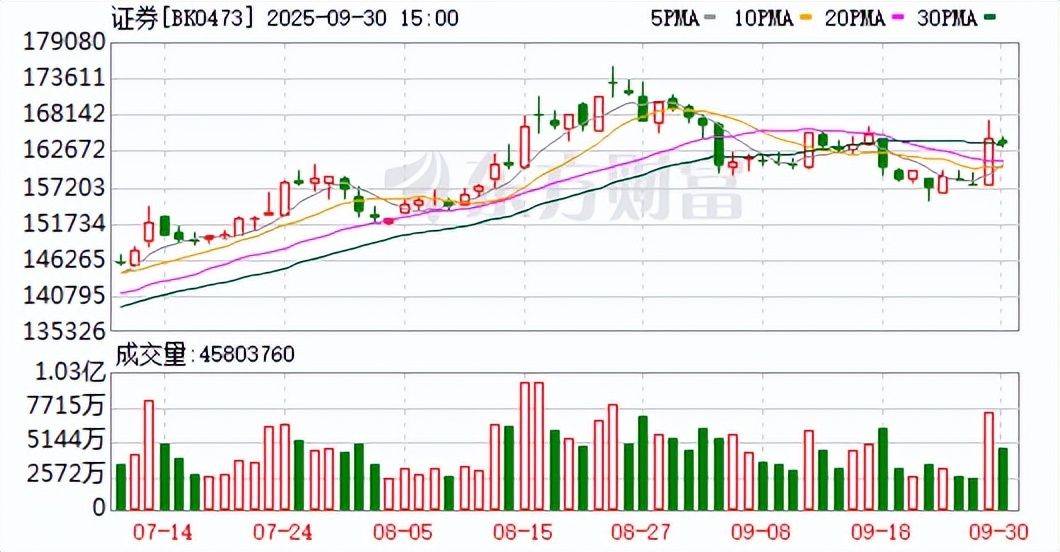
Core Viewpoint - The article emphasizes the importance of having a clear profit-taking strategy in a bullish market, highlighting the psychological challenges investors face and the need for discipline to avoid losses from greed and hesitation [4][5][11]. Group 1: Market Overview - The A-share market has seen significant activity, with trading volumes exceeding 3.6 trillion yuan for three consecutive days, reaching a record high of 3.9 trillion yuan [4]. - Despite regulatory measures such as increasing margin requirements and the presence of large sell orders in key stocks, market enthusiasm remains strong [4]. Group 2: Investor Behavior - Investors who refuse to take profits during market euphoria often end up as tragic figures, caught in a cycle of greed and denial, leading to significant losses [7]. - In contrast, cautious investors who take profits early and avoid chasing high prices are more likely to succeed in the long run, demonstrating that being cautious is not a weakness but a sign of awareness [8]. Group 3: Profit-Taking Strategy - Establishing a profit-taking plan is crucial for navigating market volatility. This plan can include dynamic asset allocation, hard stop-loss rules based on technical indicators, or valuation thresholds [10]. - The most dangerous strategy is to rely on vague feelings about market movements, as historical patterns suggest that every bull market follows a similar script, regardless of the specific assets involved [11]. Group 4: Investment Philosophy - The article argues that true courage in investing lies in adhering to principles in the face of temptation, while true caution is rooted in a clear understanding of risks [11].


分析师:以太坊不太可能在2026年创下新高
Ge Long Hui· 2025-12-26 13:52
Core Viewpoint - According to crypto analyst Ben Cowen, Ethereum is unlikely to reach new highs within the next year given the current state of Bitcoin [1] Group 1 - If Ethereum manages to return to its historical high of $4,878 set in August, it could potentially become a "bull trap," with prices possibly plummeting back to $2,000 afterward [1]
牛市三大陷阱正在吞噬散户
Sou Hu Cai Jing· 2025-11-12 17:12
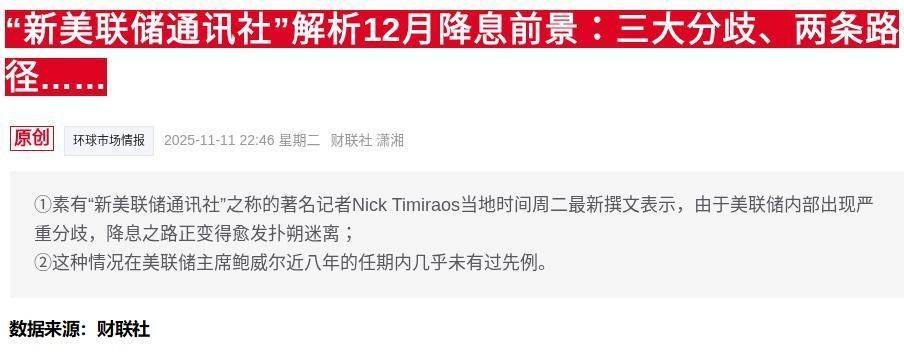
Core Insights - The ongoing debate within the Federal Reserve, referred to as the "hawk-dove battle," is drawing significant attention on Wall Street, reflecting broader market sentiments and potential investment implications [1] - The recent market dynamics show a stark contrast between the rising Shanghai Composite Index and the quietness among retail investors, indicating a potential disconnect between market performance and investor sentiment [1] - The analysis highlights three major traps for investors: chasing popular stocks, the illusion of high-frequency trading, and the passive waiting trap, which can lead to missed opportunities and losses [2][1] Investment Traps - The first trap identified is the tendency to chase popular stocks, which can lead to significant performance discrepancies within the same sector, with differences reaching up to 300% [1] - The second trap is the misconception that daily small gains can lead to substantial annual returns, as evidenced by the fact that during a recent index rise, over 2,000 stocks still experienced declines [1] - The third trap is the passive waiting trap, where over 300 stocks declined despite the overall market rising from 3,000 to 4,000 points, illustrating the dangers of inaction [2] Institutional Behavior - The analysis of institutional inventory data reveals that despite active institutional participation, stock prices may remain suppressed, indicating potential underlying issues in market dynamics [6] - The case studies of specific stocks show that institutions are engaging in a "stealth game," where they accumulate positions without immediate price movements, suggesting a strategic approach to investing [14] Macro and Micro Insights - The divergence in opinions among Federal Reserve officials is reflected in specific funding flow patterns, which can provide early signals for market movements [14] - The emphasis is placed on the importance of data-driven decision-making over emotional responses, highlighting that the truth often lies within the data [14][15] Key Takeaways - Establishing a benchmark awareness is crucial, as failing to outperform the index is considered a loss [16] - Focusing on behavioral patterns rather than verbal statements from officials is essential, as actual fund flows are more indicative of market trends [16] - Continuous tracking of institutional footprints can provide valuable insights for investors, akin to a hunter tracking its prey [16]
牛市四大陷阱,90%股民都踩过!
Sou Hu Cai Jing· 2025-10-08 04:21
Group 1 - S&P Global Ratings (China) received a warning letter from the Beijing Securities Regulatory Bureau for failing to adhere to the principle of rating consistency and not disclosing information as required, highlighting issues of transparency in the market [1] - The incident reflects a broader issue where even established international rating agencies can face regulatory scrutiny for lack of transparency, similar to mistakes made by retail investors in the stock market [1] Group 2 - Retail investors often fall into common traps during bullish markets, such as holding stocks waiting for prices to rise, chasing hot stocks, believing in the "stronger gets stronger" mentality, and attempting to catch falling knives [3] - The importance of understanding market dynamics and institutional behavior is emphasized, as retail investors may misinterpret price movements without considering underlying institutional activity [5][11] - The article suggests that the true drivers of stock prices are not just technical indicators but the real movements of capital, indicating a need for investors to focus on quantitative data rather than solely on price charts [11][12] Group 3 - The development of quantitative technology has made data previously accessible only to institutions available to retail investors, allowing them to make more informed decisions [12] - The key to avoiding losses in investments is to identify genuine opportunities versus traps and to understand the actions of capital rather than relying on gut feelings [12]
三大指数齐涨,为何我的账户还在亏损?
Sou Hu Cai Jing· 2025-09-24 08:40
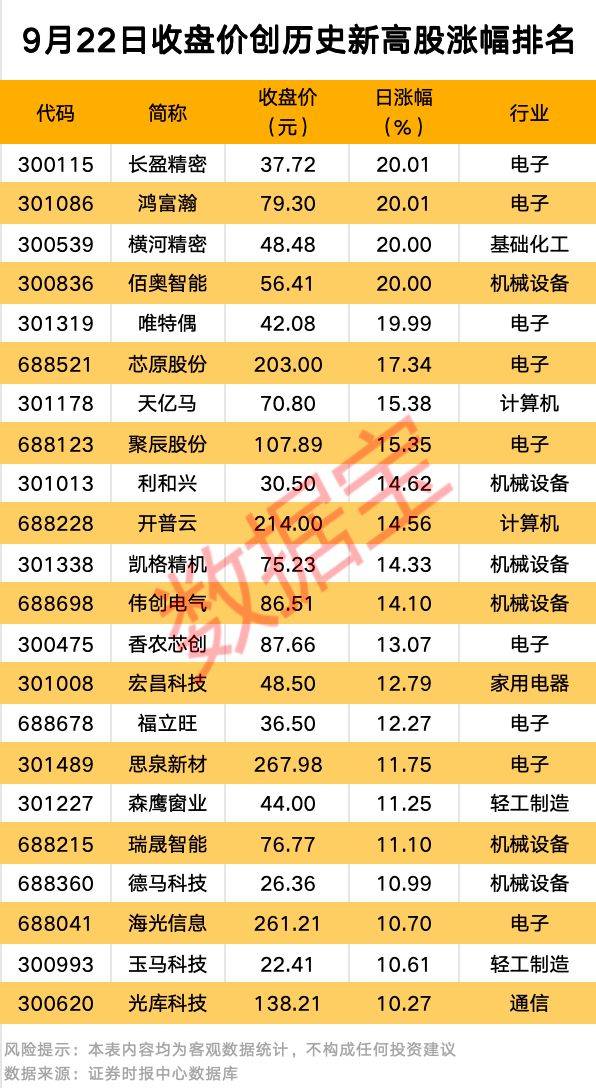
Market Overview - On September 22, the A-share market experienced a significant rally, with all three major indices rising and trading volume surpassing 2 trillion yuan, led by a 6% increase in the precious metals sector [1] - Over 2,100 stocks saw gains, with 73 stocks hitting the daily limit up, prompting investor optimism about a potential bull market [1] Stock Performance - Notable stocks with substantial price increases include: - Changying Precision (300115) at 37.72 yuan, up 20.01% - Yutu (301086) at 79.30 yuan, up 20.01% - Henghe Precision (300539) at 48.48 yuan, up 20.00% - Baiao Intelligent (300836) at 56.41 yuan, up 20.00% - Weichuang Electric (688698) at 86.51 yuan, up 14.10% [2] Institutional Investment Insights - The market saw significant institutional buying, with 12 stocks receiving net purchases exceeding 10 million yuan, led by Juchen Co. with a net buy of 359 million yuan [2][3] - The importance of understanding institutional behavior is emphasized, as it can provide insights into market trends beyond mere stock price movements [5][7] Investment Strategy - A principle of focusing on data-driven decisions rather than emotional reactions is highlighted, suggesting that stock price fluctuations are merely surface indicators [5][9] - The strategy includes three key approaches: 1. Avoiding distractions from short-term market trends 2. Not panicking due to price volatility 3. Not being swayed by high or low price perceptions [5][9] Sector Analysis - The electronic and mechanical equipment sectors are noted for their strong performance, with a significant number of stocks reaching historical highs [5][8] - Continuous monitoring of institutional buying patterns is recommended, as these can indicate future opportunities despite market volatility [7][8]




牛市来了为何散户总亏钱?大数据揭秘真相
Sou Hu Cai Jing· 2025-09-24 00:32
Group 1 - The article highlights the importance of relying on data rather than news headlines or expert opinions for investment decisions, emphasizing that successful investors do not let external noise dictate their strategies [1][12] - The upcoming economic data releases and corporate earnings, including the PCE price index and Alibaba's Cloud Conference, are seen as critical turning points for the global market, with underlying risks present despite the apparent information abundance [3][12] - The article warns against four major investment traps: holding onto stocks waiting for price increases, chasing hot stocks, the cognitive bias of strong stocks continuing to perform, and the allure of rebounds in oversold stocks [4][5][6][7] Group 2 - The article discusses the significance of monitoring institutional inventory data, which serves as a reliable indicator of stock performance, contrasting it with superficial price movements [9][12] - It mentions the recent performance of Micron Technology, where despite positive earnings, the stock price fell due to declining institutional inventory, highlighting the importance of data-driven analysis [9][12] - The article advises investors to focus on their own data observation systems and to track the long-term movements of leading institutions rather than being swayed by extreme opinions on social media [14]
三大指数再创历史新高 道琼斯运输指数疲软引发“牛市陷阱”担忧
Zhi Tong Cai Jing· 2025-09-19 23:23
Core Viewpoint - The recent strong performance of the U.S. stock market, with major indices reaching historical highs, contrasts with the underperformance of the Dow Jones Transportation Index, which may signal potential economic risks ahead [1][2]. Group 1: Market Performance - The Dow Jones Industrial Average, S&P 500, and Nasdaq Composite all reached historical highs, reflecting a bullish market sentiment [1]. - The Russell 2000 index, which tracks small-cap stocks, also achieved a historical closing high for the first time in nearly four years, although it experienced a slight pullback [1]. Group 2: Transportation Index Insights - The Dow Jones Transportation Index has declined nearly 2% year-to-date, diverging from the broader market trends, which is seen as a potential warning sign for economic health [1]. - The Transportation Index consists of 20 leading transportation companies, including Delta Air Lines, Southwest Airlines, Union Pacific, CSX, Old Dominion Freight Line, J.B. Hunt, FedEx, and UPS [1]. - The upcoming inclusion of Uber in February 2024, replacing JetBlue, highlights the index's representation of new economic transportation models [1]. Group 3: Economic Implications - According to Dow Theory, a simultaneous rise in the Transportation Index and Industrial Index is necessary to confirm a healthy economic expansion; a divergence suggests weakening economic momentum or potential recession [1][2]. - Analysts warn that the ongoing weakness in the Transportation Index could indicate that the current market rally is merely a "bull trap" [2]. - The Transportation Index is sensitive to changes in the modern digital economy, particularly in e-commerce supply chains, where companies like FedEx and UPS play crucial roles [2]. Group 4: Sector Analysis - LPL Financial's chief technical strategist noted that global growth slowdown and tariff uncertainties are exerting pressure on the transportation sector, which could affect the broader market [2]. - The performance of FedEx, viewed as an industry bellwether, showed a strong earnings report, leading to a stock price increase of over 2%, but this did not uplift the entire sector [3]. - Analysts suggest that unless more transportation companies report strong earnings and optimistic guidance, the current market rally may struggle to sustain itself [3].
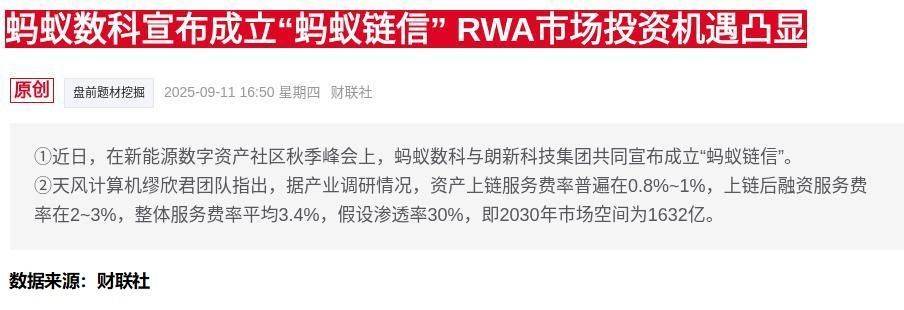
蚂蚁链信题材成型,多个板块有增仓迹象!
Sou Hu Cai Jing· 2025-09-14 03:51
Core Viewpoint - The establishment of Ant Chain Letter signifies a significant opportunity in the green asset market, valued at 16 trillion, with service fees ranging from 0.8% to 3% [3]. However, there are concerns about retail investors lacking adequate tools to participate effectively in this high-end market [3]. Group 1: Market Trends and Risks - The current market buzz around sectors like new energy, blockchain, and AI is reminiscent of past market cycles, where retail investors often faced significant losses [3][4]. - Historical patterns indicate that retail investors should be cautious of four major pitfalls during bull markets: "holding stocks for appreciation," "focusing solely on hot sectors," "the strong getting stronger," and "buying on dips" [4]. Group 2: Institutional Insights - The concept of "institutional inventory" is crucial; active institutional participation in a stock suggests confidence, while a lack of participation indicates potential issues [6][7][8]. - Data shows that stocks with active institutional inventory tend to be more stable, while those with declining inventory may face further declines [6][9]. Group 3: Strategies for Retail Investors - Retail investors are advised to build their own quantitative observation pools rather than chasing trends, focusing on stocks with sustained institutional interest [11]. - Recent observations indicate that while the new energy vehicle sector has seen a downturn, certain lithium battery companies are experiencing rising institutional inventory, suggesting potential investment opportunities [11].