
肿瘤免疫治疗

Search documents
日本研究揭示促进乳腺癌转移的核心分子通路
Xin Hua She· 2025-09-05 09:46
Core Insights - A new study from Tsukuba University reveals key molecular pathways regulating immune response and cancer metastasis in triple-negative breast cancer (TNBC) patients, potentially leading to innovative treatment options for this aggressive cancer type [1][2] Group 1: Research Findings - Researchers identified a transmembrane glycoprotein named "non-metastatic melanoma glycoprotein B" that is significantly elevated in TNBC tumor cells, with distinct molecular modification characteristics compared to other cells [1] - The identified glycoprotein promotes the differentiation of upstream cells into tumor-associated macrophages (TAMs), which enhance their immunosuppressive properties [1] - TAMs play a crucial role in tumor progression, invasion, metastasis, and treatment resistance by helping tumor cells evade immune attacks [1] Group 2: Implications for Treatment - Targeting the identified molecular pathway may lead to the development of new immunotherapies, drugs, and combination strategies with existing immune checkpoint blockade therapies, providing innovative treatment options for TNBC and other poor-prognosis cancers [2]
Merck(MRK) - 2025 FY - Earnings Call Transcript
2025-09-04 16:52
Financial Data and Key Metrics Changes - Merck is in a transformation phase with a diversified set of growth drivers, aiming for over $50 billion in revenues by the mid-2030s from its pipeline [3][4] - The company is launching 20 products, most of which have blockbuster potential [3][4] Business Line Data and Key Metrics Changes - KEYTRUDA continues to show strong growth with 42 approved indications in the U.S. across 18 tumor types, with expectations for continued growth from new indications [6][7] - The subcutaneous formulation of KEYTRUDA is anticipated to achieve 30% to 40% adoption within 18 to 24 months post-launch [9][11] Market Data and Key Metrics Changes - The company is well-positioned to manage the impact of tariffs and has a diverse supply chain footprint [41][42] - The impact of the Most Favored Nation (MFN) policy is expected to be manageable, as it only accounts for less than 10% of revenues [42][43] Company Strategy and Development Direction - Merck is focused on innovation and expanding its pipeline, with plans to increase R&D investments due to a strong pipeline of 80 Phase III clinical programs [51][52] - Business development remains a priority, with a focus on bringing in innovative science that addresses unmet medical needs [67][68] Management's Comments on Operating Environment and Future Outlook - Management expressed confidence in navigating the loss of exclusivity for KEYTRUDA and emphasized the importance of their pipeline in driving future growth [5][6] - The company is optimistic about the readouts from its oncology and HIV pipelines in the coming year [80][81] Other Important Information - The company is preparing for the launch of its oral PCSK9 inhibitor, which is expected to democratize access to this treatment [60][62] - Merck is also excited about its cancer vaccine program, focusing on early-stage cancers with potential curative opportunities [39][40] Q&A Session Summary Question: What are the growth avenues for KEYTRUDA? - Management expects continued growth from new indications, including early-stage lung cancer and women's cancers [7][8] Question: How will the adoption of the subcutaneous formulation of KEYTRUDA be affected? - Factors such as pricing, access, and the J code will influence adoption rates, with expectations of 30% to 40% adoption within 18 to 24 months [10][11] Question: What is the confidence level in the TROP-two ADC program? - Management expressed confidence based on early signals and extensive clinical trials, highlighting its unique properties and potential in maintenance settings [17][18] Question: How does Merck plan to address macroeconomic headwinds like tariffs? - The company has a diverse supply chain and is well-positioned to manage tariff impacts, focusing on innovation and product launches [41][42] Question: What is the outlook for Gardasil in China? - Gardasil is not expected to drive significant growth in China, with future growth anticipated from international markets and new product launches [69][70] Question: What are the expectations for the cancer vaccine program? - The program is focused on early-stage cancers, with positive readouts expected in the next couple of years [39][40]

Merck(MRK) - 2025 FY - Earnings Call Transcript
2025-09-04 16:50
Financial Data and Key Metrics Changes - The company is in a transformation phase with a diversified set of growth drivers, expecting over $50 billion in revenues by the mid-2030s from its pipeline [3][4][5] - The company is launching 20 products, most of which have blockbuster potential [3][4] Business Line Data and Key Metrics Changes - KEYTRUDA continues to show strong growth with 42 approved indications across 18 tumor types, with new indications expected to drive future growth [6][7][8] - The subcutaneous formulation of KEYTRUDA is anticipated to achieve 30% to 40% adoption within 18 to 24 months post-launch [9][11] - The company has 24 oncology assets in clinical trials, focusing on immune stimulation, chemotherapy improvements, and specific targeting agents [13][15] Market Data and Key Metrics Changes - The company is well-positioned to manage tariff impacts due to a diverse supply chain and manufacturing footprint [42][43] - The impact of the Most Favored Nation (MFN) policy is expected to be manageable, with less than 10% of revenues affected [43][44] Company Strategy and Development Direction - The company is focused on innovation and expanding its pipeline, with a commitment to reinvest $3 billion in annual cost savings into R&D [51][52] - Business development remains a priority, with a focus on bringing in innovative science that addresses unmet medical needs [66][67] Management's Comments on Operating Environment and Future Outlook - Management expressed confidence in navigating the loss of exclusivity for KEYTRUDA and emphasized the importance of new product launches [5][6] - The company is optimistic about the future, with expectations for positive readouts from its pipeline and successful product launches [78][79] Other Important Information - The company is excited about the potential of its oral PCSK9 inhibitor, which showed a 60% reduction in LDL cholesterol in Phase II trials [59][60] - The company is also exploring opportunities in the GLP-1 space, with an oral formulation expected to enter Phase I trials [62][64] Q&A Session Summary Question: What are the growth avenues for KEYTRUDA? - Management highlighted new indications in lung cancer and women's cancers as key growth opportunities [6][7] Question: How does the company plan to handle tariff impacts? - The company has a diverse supply chain and believes the impact of tariffs is manageable [42][43] Question: What is the strategy for the new PD-1 VEGF bispecifics? - The company is focusing on specific patient strata and therapeutic indications to differentiate from existing treatments [32][33] Question: How will the company approach pricing in light of MFN? - The company plans to price products based on the value they bring, ensuring broad access while being mindful of MFN implications [44][46] Question: What is the outlook for the cancer vaccine program? - Management is optimistic about the enthusiasm from investigators and the potential for early-stage cancer treatments [39][40] Question: How does the company view the future of Gardasil in China? - Gardasil is not expected to drive significant growth in China, with focus shifting to international markets [68][69]
加科思-B(01167.HK)中期收入增加至4570万元
Ge Long Hui· 2025-08-29 16:17
Core Viewpoint - The company reported a significant increase in revenue and a reduction in losses for the six months ending June 30, 2025, primarily due to milestone payments from the Elysium licensing agreement [1] Financial Performance - Revenue increased from zero to RMB 45.7 million, representing a 100% increase compared to the same period ending June 30, 2024 [1] - Losses decreased from RMB 169 million to RMB 59 million during the same period [1] Product Development - The company's HER2-STINGiADC clinical candidate, JAB-BX467, is set to be nominated in the second half of 2024, with plans to submit an IND application in 2026 [1] - JAB-BX467 demonstrated good in vitro stability and induced significantly lower peripheral IL-6 levels compared to competitors in preclinical studies [1] - Low-dose administration in cold tumor models effectively inhibited tumor growth and triggered strong immune memory effects upon tumor rechallenge [1] Strategic Partnerships - The company aims to actively seek and establish strategic collaborations with leading multinational companies to enhance the success rate of its drug candidates [1] - These partnerships are intended to leverage complementary expertise and resources to maximize the clinical and commercial value of the company's candidates globally [1]
和誉-B(2256.HK):匹米替尼开启全球商业化进程 后续临床管线储备丰富
Ge Long Hui· 2025-08-28 11:51
Core Viewpoint - The company is expanding its product portfolio from small molecule innovation in oncology to non-oncology treatments, with significant advancements in drug commercialization and clinical trials [1][2]. Group 1: Product Development - The company has received acceptance for the new drug application (NDA) of Pimicotinib for treating adult tenosynovial giant cell tumors (TGCT) by the National Medical Products Administration (NMPA) in China, with a target date of June 10, 2025 [1]. - Pimicotinib has also been granted breakthrough therapy designation (BTD) by the FDA and priority medicine (PRIME) designation by the EMA, indicating its potential for global commercialization [1]. - The company has initiated the first patient dosing in a registration study for Epaglutide in patients with FGF19 overexpressing hepatocellular carcinoma (HCC), with promising data from ongoing clinical trials [1]. Group 2: Clinical Trials and Collaborations - The company is exploring the combination of ABSK043 (an oral PD-L1 inhibitor) with other therapies for treating KRAS-G12C mutated non-small cell lung cancer (NSCLC) and is conducting a Phase II clinical study for ABSK043 combined with other agents for EGFR mutated NSCLC [2]. - The latest Phase II study results for Epaglutide combined with Atezolizumab showed an overall response rate (ORR) of ≥50% and progression-free survival (PFS) of ≥7 months [1]. Group 3: Financial Projections - Revenue forecasts for the company are projected at 612.1 million, 678.8 million, and 627.2 million yuan for 2025-2027, reflecting year-on-year growth rates of 21.5%, 10.9%, and -7.6% respectively [2]. - The current stock price corresponds to price-to-sales (PS) ratios of 17, 15, and 17 for the years 2025, 2026, and 2027, respectively, indicating potential investment opportunities as the company approaches product commercialization [2].
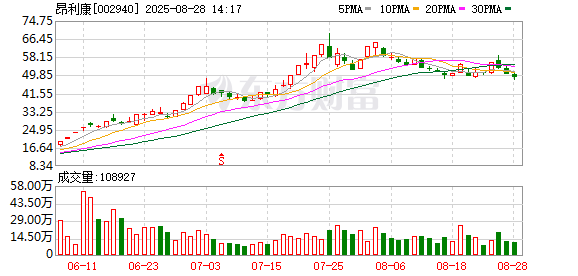
昂利康:战略合作加码创新药研发,纵深布局筑牢产业链优势
Zheng Quan Shi Bao Wang· 2025-08-28 06:17
Group 1 - Company reported a slight decline in revenue and net profit for the first half of 2025, with revenue at 724 million yuan and net profit at 65.93 million yuan [2] - Despite short-term financial performance, the market remains optimistic about the company's strategic focus on innovative drug development [2] - The company announced a cash dividend plan, proposing a distribution of 1 yuan per 10 shares, reflecting confidence in cash flow [2] Group 2 - The company signed a strategic cooperation agreement with Afei Biopharmaceutical and Qinhuali Biopharmaceutical, committing 150 million yuan as an upfront payment for exclusive rights to develop and commercialize the cancer drug ALK-N002 in Greater China [3] - ALK-N002 is a novel IgG1 antibody targeting CD47, expected to provide new immunotherapy options for cancer patients, with promising preclinical results showing significant tumor growth inhibition [4] - The collaboration builds on previous partnerships, enhancing the company's competitive edge in innovative drug development [5] Group 3 - The company plans to invest 389 million yuan to establish a new production facility for amoxicillin and ampicillin, aiming to strengthen its position in the raw material pharmaceutical sector [6] - The project is expected to generate approximately 1.348 billion yuan in annual revenue and contribute 119 million yuan in profit, with a payback period of about 7.09 years [6] - The new production line will enhance the integration of raw material and formulation processes, improve product offerings, and support sustainable development initiatives [7]

高校两名原副校长落马后,在任校长被查
券商中国· 2025-08-27 23:39
Core Viewpoint - The article discusses the investigation of Zheng Junian, the Vice President and President of Xuzhou Medical University, for serious violations of discipline and law, highlighting issues within the university's leadership and governance [1][4]. Summary by Sections Investigation of Zheng Junian - Zheng Junian is under investigation by the Jiangsu Provincial Commission for Discipline Inspection and Supervisory Commission for serious violations of discipline and law [1]. - He was present at an event and gave a lecture on August 17, 2023, just days before the announcement of the investigation [2]. Background of Zheng Junian - Zheng Junian, born in March 1966, holds a doctorate and is a second-level professor and chief physician, with over 20 years of experience in tumor immunotherapy research [2][3]. - He has held various significant positions, including Director of the National and Local Joint Engineering Laboratory for Tumor Biological Therapy and has received multiple provincial and ministerial awards for his contributions to science and education [3]. Related Investigations - The article notes that two other former vice presidents of Xuzhou Medical University, Wang Renhao and Xu Kailin, were also investigated earlier in August 2023, indicating a pattern of issues within the university's leadership [3]. Issues Identified in University Governance - A report from the Jiangsu Provincial Inspection Team highlighted several governance issues at Xuzhou Medical University, including inadequate implementation of central and provincial policies, lack of effective measures to address hospital development challenges, and weaknesses in the construction of grassroots party organizations [4]. - The inspection also pointed out that there were gaps in the supervision of key areas and that some corrective measures had not been effectively implemented [4]. Historical Context of Xuzhou Medical University - Xuzhou Medical University has a long history dating back to 1934 and has undergone several name changes and structural developments over the decades, reflecting its evolution into a high-level medical institution in Jiangsu Province [4].

昂利康:与亚飞生物、亲合力签署授权许可协议 公司将获得IMD-1005药物分子在中国的独家权益
Xin Lang Cai Jing· 2025-08-27 13:36
Core Viewpoint - The company, Anglikang, has signed a licensing agreement with Aifei Biopharmaceutical and Qinhuli Biopharmaceutical, granting it exclusive rights to develop, manufacture, and commercialize the drug molecule IMD-1005 in China, including mainland China, Hong Kong, Macau, and Taiwan [1] Group 1 - The company will make an initial payment of 150 million RMB to Aifei and Qinhuli, with potential milestone payments to Qinhuli not exceeding 620 million RMB for research and sales [1] - The company is also obligated to pay a sales share of 12.8% to Qinhuli during the sales revenue sharing period [1] - IMD-1005 is an innovative tumor microenvironment-activated IgG1 subtype antibody targeting CD47, which is expected to provide new immunotherapy options for cancer patients [1]
君实生物2025中报:经营业绩延续向好趋势 上半年营收增长49% 亏损缩窄36%
Sou Hu Wang· 2025-08-26 12:34
Core Viewpoint - Junshi Bioscience (688180.SH/1877.HK) reported significant improvement in operational performance in the first half of 2025, with revenue reaching 1.168 billion yuan, a 49% year-on-year increase, and a 36% reduction in net loss to 413 million yuan, indicating enhanced sustainability in operations [1] Group 1: Financial Performance - In the first half of 2025, Junshi Bioscience achieved drug sales revenue of 1.059 billion yuan, also a 49% increase year-on-year, reflecting strengthened commercialization capabilities [1] - The core product, Toripalimab (Tuoyi®), generated sales revenue of 954 million yuan in the domestic market, marking a 42% year-on-year growth [1] - As of the end of Q2, the company had a total of 3.507 billion yuan in cash and financial assets, indicating a strong liquidity position [3] Group 2: Product Development and Market Expansion - Toripalimab's inclusion in the National Medical Insurance Directory expanded to 10 indications, with new approvals for the 11th and 12th indications in mainland China [1] - The product has been approved for sale in 40 countries and regions across four continents, including recent approvals in Australia, Singapore, UAE, and Kuwait [1][7] - The company has established commercial partnerships in over 80 countries, enhancing its global commercialization network [6] Group 3: R&D and Pipeline Progress - Junshi Bioscience increased its R&D investment to 706 million yuan in the first half of 2025, a 29% year-on-year increase, focusing on high-potential projects [8] - The company is advancing its PD-1/VEGF dual antibody (JS207) in Phase II clinical trials, targeting various cancers [9] - The company is also developing JS213, a PD-1/IL-2 dual functional antibody, currently in I phase clinical trials [9] - The innovative research institute was established to consolidate resources for R&D, enhancing operational efficiency [8]

石药集团:SYS 6036注射液在中国获临床试验批准
Zhi Tong Cai Jing· 2025-08-22 10:25
Core Viewpoint - The approval of SYS6036 injection by the National Medical Products Administration of China marks a significant advancement for the company in the field of tumor immunotherapy [1] Group 1: Product Development - SYS6036 is a humanized monoclonal antibody drug aimed at tumor immunotherapy, specifically targeting melanoma, non-small cell lung cancer, esophageal cancer, and head and neck squamous cell carcinoma [1] - The product has been submitted under the category of biological products for therapeutic use, specifically Class 3.3 [1] - The development of SYS6036 adheres to the research guidelines for biosimilars, indicating a structured approach to its clinical development [1] Group 2: Research Findings - Pharmaceutical and non-clinical research results demonstrate that SYS6036 shows high similarity in quality, safety, and efficacy compared to the reference drug, supporting the initiation of subsequent clinical studies [1]