多边主义

Search documents
第八届虹桥论坛开启公开注册 八大亮点抢先看
Di Yi Cai Jing Zi Xun· 2025-09-30 05:15
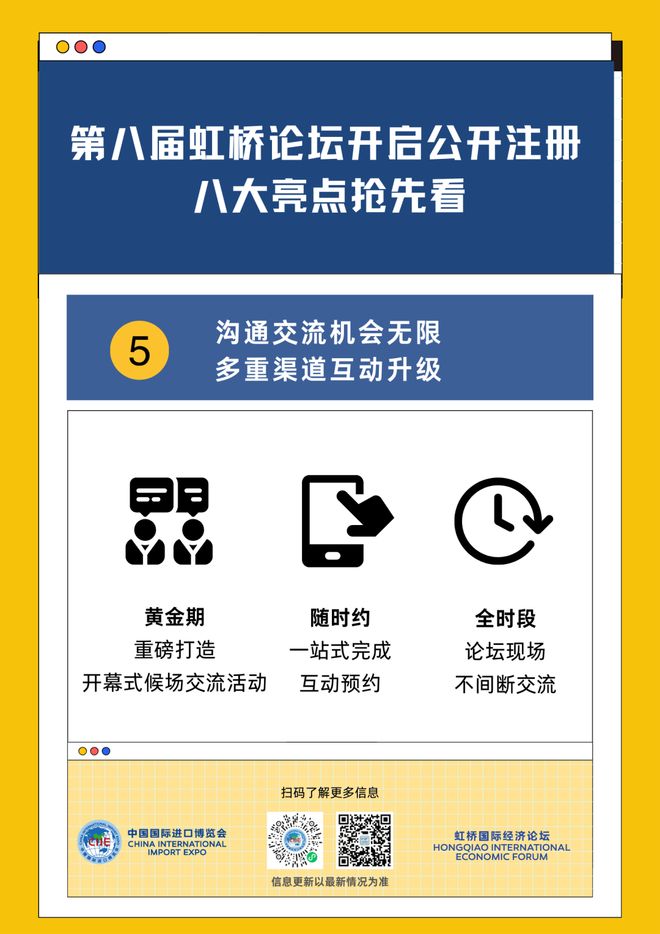
Core Insights - The 8th Hongqiao International Economic Forum will be held from November 5 to 10, 2025, at the National Exhibition and Convention Center in Shanghai, focusing on global openness and economic governance [5][6] Group 1: Forum Theme and Objectives - The forum's theme is "Open Cooperation - Creating New Opportunities Together, Sharing a New Future," addressing global governance initiatives and the evolving global economic landscape [7] - The event coincides with the 80th anniversary of the United Nations, reflecting on the current state of global governance and trade order [7] Group 2: Agenda and Topics - The forum will feature 25 sub-forums covering topics such as multilateral cooperation, digital empowerment, sustainable development, and China's openness [8] - Key issues include trade security, supply chain resilience, and global south concerns, alongside discussions on artificial intelligence and digital economy [8] Group 3: Guest Speakers and Participation - Over 400 representatives from governments, international organizations, and top scholars are expected, with nearly 10,000 participants [9] - Notable speakers include Nobel laureates and executives from Fortune 500 companies, enhancing the forum's prestige [9] Group 4: Key Reports and Publications - The flagship report "World Open Report 2025" will be released, focusing on new trends and challenges in global openness [10][11] - Various authoritative research outcomes will be presented, including national standards in artificial intelligence and reports on trade security [11] Group 5: Communication and Interaction - The forum aims to enhance communication opportunities through various interactive formats, including pre-event networking and real-time engagement during sessions [12] - A dedicated app will facilitate participant interactions and information sharing [12] Group 6: Integration with Trade Events - The forum will leverage its concurrent scheduling with the China International Import Expo to enhance synergies between exhibitions and discussions [12] - Special activities will be organized to connect exhibitors with forum participants, fostering deeper dialogue [12] Group 7: Organizational Collaboration - The forum is co-hosted by multiple national ministries and international organizations, ensuring high-quality organization and diverse perspectives [13] - Collaboration with renowned think tanks and media outlets will support the forum's objectives [13] Group 8: Media Coverage and Promotion - Comprehensive media coverage will be implemented before, during, and after the forum to maximize outreach and engagement [14][15] - Continuous updates on guest participation and forum highlights will be shared through various media channels [15]

专栏丨美国20多年驻军给伊拉克带来了什么
Xin Hua Wang· 2025-09-30 00:53
Core Viewpoint - The article discusses the impact of over 20 years of U.S. military presence in Iraq, highlighting the negative consequences on the country's security and stability, while questioning the legitimacy of U.S. motives under the guise of "counter-terrorism" [1][2]. Group 1: U.S. Military Presence in Iraq - The U.S.-led international coalition is set to end its military mission against the Islamic State in Iraq by September 30, with some troops relocating to northern Iraq for operations in Syria [1]. - The U.S. military's actions in Iraq have been characterized by significant incidents, including civilian casualties and the infamous Abu Ghraib prison scandal, contributing to ongoing regional tensions [1]. - There is a growing demand within Iraq to end the U.S. military presence, as many believe it has exacerbated the security situation rather than improved it [1]. Group 2: Broader Implications of U.S. Military Actions - Since 2001, U.S. military actions under the "counter-terrorism" banner have affected approximately 40% of countries globally, resulting in over 800,000 deaths and displacing more than 38 million people [2]. - The article emphasizes that foreign military presence does not guarantee security, and true safety comes from respecting national sovereignty and fostering equitable cooperation [2]. - The need for genuine multilateralism and a commitment to building a stable international order is highlighted as essential for achieving lasting peace and security [2].
记者观察:在数贸会上管窥“中国智慧”助益全球发展
Zheng Quan Shi Bao· 2025-09-29 14:36
Group 1 - The fourth Global Digital Trade Expo concluded in Hangzhou, attracting over 11,000 international business guests and showcasing China's digital economy as a significant global player [1] - The "China Digital Trade Development Report 2025" indicates that by mid-2025, China's digitally deliverable service trade is expected to reach 1.5 trillion yuan, a year-on-year increase of 6%, while cross-border e-commerce imports and exports are projected to hit 1.32 trillion yuan, growing by 5.7% [1] - China's digital service trade growth rate significantly outpaces the global average, establishing it as the fastest-growing economy in this sector [1] Group 2 - The digital trade between China and Africa is enhancing economic and social development on the continent, with African products like Ethiopian coffee and Kenyan tea entering the Chinese market through cross-border e-commerce [2] - There is a strong complementarity in digital fields between China and Africa, with vast cooperation potential in areas such as digital infrastructure and mobile payment systems [2] - Initiatives focusing on small and medium enterprises, digital infrastructure, and education are helping to bridge the digital divide in Africa, improving the quality of life for its citizens [2] Group 3 - Digital trade, as a new form of deep integration between digital technology and international trade, is becoming a common strategic choice for countries worldwide [3] - Despite the rapid development of digital trade, significant digital divides persist, particularly in developing countries where internet penetration and communication skills lag behind global averages [3] - China's initiatives like the "Silk Road E-commerce" and "Digital Silk Road" aim to provide developing countries with access to the benefits of the digital age, helping to narrow the digital divide and promote shared development [3]
记者观察:在数贸会上管窥“中国智慧”助益全球发展
证券时报· 2025-09-29 14:34
Core Viewpoint - Digital trade has become a significant aspect of China's economy, showcasing its potential for growth and international cooperation through events like the Global Digital Trade Expo [1][2]. Group 1: Digital Trade Growth - During the expo, the "China Digital Trade Development Report 2025" was released, indicating that by the first half of 2025, China's digitally deliverable service trade is expected to reach 1.5 trillion yuan, a year-on-year increase of 6% [2]. - Cross-border e-commerce imports and exports are projected to hit 1.32 trillion yuan, reflecting a year-on-year growth of 5.7%, marking a historical high for the same period [2]. - China's digital service trade growth rate significantly outpaces the global average, positioning it as the fastest-growing economy in this sector [2]. Group 2: Competitive Advantages - China's digital trade is supported by technological leadership, a vast market, and a complete industrial chain, which together form its core competitive advantages [2]. - The country advocates for multilateralism and has consistently rejected a zero-sum mindset, promoting global public goods through its digital solutions in areas like artificial intelligence and fintech [2]. Group 3: International Cooperation - The digital trade initiatives are enhancing economic and social development in Africa, with products like Ethiopian coffee and Kenyan tea entering the Chinese market through cross-border e-commerce [2]. - Cooperation between China and Africa focuses on key areas such as small and medium-sized enterprises, digital infrastructure, healthcare, and education, aiming to bridge the digital divide [3]. - China's initiatives like "Silk Road E-commerce" and "Digital Silk Road" are designed to inject new momentum into the economy and help developing countries benefit from the digital age [3].

拉美国家齐“开火” 美国形象大“翻车”
Xin Hua She· 2025-09-29 12:47
Core Points - Latin American leaders at the 80th UN General Assembly criticized unilateralism and power politics, particularly in response to increased U.S. military presence in the Caribbean and interference in Venezuela [1][2] - Brazilian President Lula emphasized the importance of multilateralism and warned against repeating past humanitarian disasters caused by military interventions [1] - Chilean President Boric condemned climate change denial as a lie that must be countered [1] - Colombian President Petro accused Trump of neglecting democracy and climate issues while promoting violence [1] - Bolivian President Arce described U.S. defense strategies as a new form of colonialism under the guise of combating drug trafficking [2] - Cuban Foreign Minister Rodriguez raised alarms about U.S. military actions in the Caribbean, claiming they violate international law and threaten regional peace [2] - The collective message from Latin American leaders called for a return to rule-based governance rather than power-based governance [2]
【中外对话】葡萄牙以务实行动支持中方倡议,为完善全球治理体系助力
Zhong Guo Xin Wen Wang· 2025-09-29 08:02
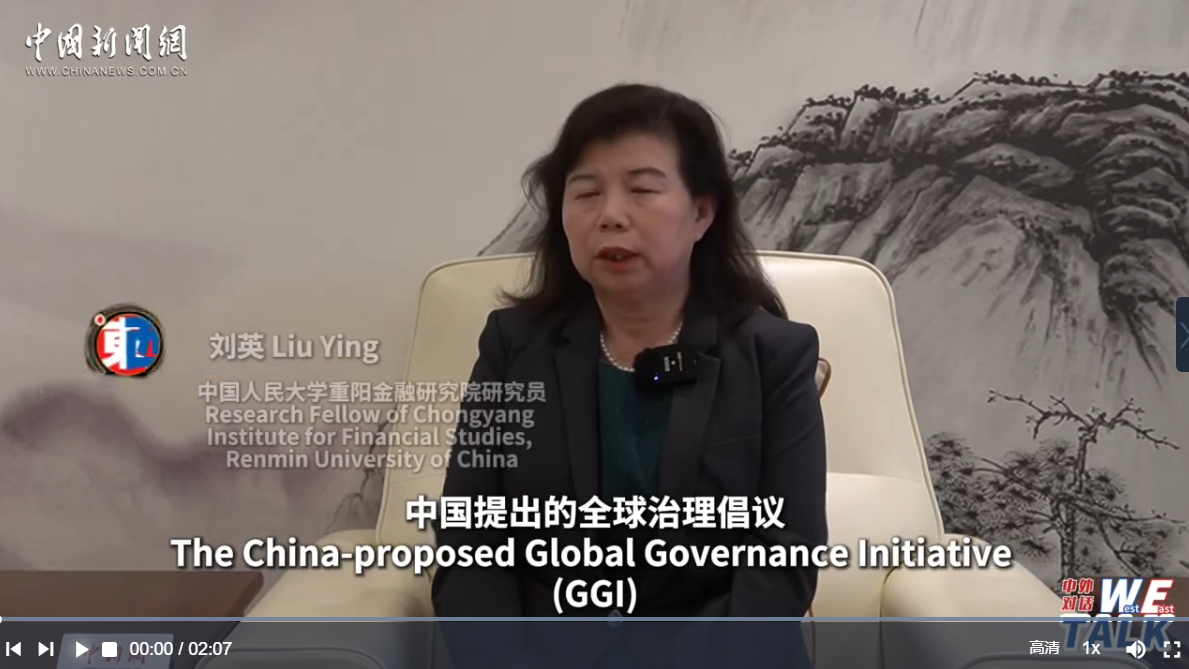
Core Viewpoint - The global governance initiative proposed by China has garnered significant attention from the international community, with support from various countries, including Portugal [2] Group 1 - The Prime Minister of Portugal, Montenegro, expressed support for China's global governance initiative during his visit to China, emphasizing the importance of multilateralism [2] - Montenegro indicated a willingness to collaborate with China to enhance the global governance system [2] - Liu Ying, a researcher at Renmin University of China, highlighted that both China and Europe have taken pragmatic steps to promote multilateralism, and their close cooperation is crucial for the implementation of the global governance initiative [2]
从中非贸易强劲增长看国际贸易格局之变
Sou Hu Cai Jing· 2025-09-29 06:11
Core Insights - The strong growth of China-Africa trade is attributed to shared historical experiences and missions, with significant increases in trade volumes and diversification of trade products [1][2][3] - China's imports from Africa's least developed countries reached $39.66 billion, a year-on-year increase of 10.2%, highlighting Africa's growing importance in China's overall foreign trade [1] - The shift in Africa's trade focus from traditional partners in Europe to China is seen as a natural evolution due to changing global economic dynamics [2][3] Trade Growth Factors - The deepening political and economic ties between China and Africa have led to a natural increase in trade, with China's stable economic growth further facilitating this process [2][3] - The diversification of Africa's export products, including higher value-added goods, is essential for sustaining trade growth and economic development [4][6] - The introduction of "innovative financing" by China aims to enhance Africa's trade capabilities and promote sustainable development, countering narratives of "debt traps" [4][6] Investment Trends - Chinese investments in Africa have evolved from labor-intensive sectors to high-tech and financial services, reflecting changes in both economies' structures [3][4] - The emphasis on manufacturing cooperation is crucial, as Africa possesses advantages in hosting Chinese manufacturing capabilities, which can drive bilateral trade growth [6][7] Challenges and Opportunities - Africa's reliance on external partners for 84% of its trade underscores the need for enhanced intra-African trade to support growth in trade with China [8][9] - The necessity for skill development in Africa is highlighted, as improving production and processing capabilities can lead to higher value exports and economic stability [9][10] - The impact of geopolitical factors, such as U.S. tariff policies, on global trade dynamics necessitates strategic adjustments and collaboration among Southern countries [12][13] Future Directions - Strengthening trade capacity and negotiation skills in African countries is essential for balancing trade growth with China and enhancing understanding of market demands [10][11] - The African Continental Free Trade Area (AfCFTA) is positioned as a critical element in fostering regional trade and should be integrated into broader China-Africa cooperation frameworks [14][15]
专访丨携手65载共筑中古新未来——访中国驻古巴大使华昕
Xin Hua Wang· 2025-09-29 00:30
Core Points - The 65th anniversary of diplomatic relations between China and Cuba is highlighted, marking a significant milestone in their partnership [1] - The relationship is characterized as being at its best historical period, with both countries supporting each other amidst global challenges [2] - There is a strong emphasis on cultural exchanges and cooperation, with various events and initiatives enhancing bilateral ties [3] Group 1: Diplomatic Relations - China and Cuba have maintained a cooperative relationship for 65 years, serving as a model for solidarity among socialist countries and mutual assistance among developing nations [1] - The two countries have reached important agreements on bilateral relations, including the consensus to build a community with a shared future [1][2] Group 2: Economic Cooperation - In 2024, trade between China and Cuba is expected to grow by 6.7% year-on-year, with the establishment of direct cargo flights providing new momentum for cooperation [2] - Chinese enterprises are actively involved in Cuba's energy transition, with widespread use of Chinese equipment in local photovoltaic parks [2] Group 3: Cultural Exchange - Cultural exchanges between China and Cuba have flourished, with significant participation in events such as the "Happy Spring Festival" in Havana and the Cuban National Ballet's tour in China [3] - The resumption of direct flights has facilitated easier travel between the two countries, with a nearly 50% increase in Chinese visitors to Cuba expected in 2024 [3]
“和平是人类共同事业”
Ren Min Ri Bao· 2025-09-28 22:28
Core Viewpoint - The article emphasizes the significance of China's role in the anti-Japanese war and the broader context of the World Anti-Fascist War, highlighting the importance of historical memory and international cooperation in maintaining peace and justice [2][3][4]. Group 1: Historical Context - The anti-Japanese war was crucial in opening the Eastern Front of the World Anti-Fascist War, with China achieving victory in 1945, which not only defended its sovereignty but also contributed significantly to the global anti-fascist efforts [3]. - The Chinese battlefield against fascism began earliest, lasted the longest, and incurred the highest costs, playing a decisive role in the defeat of Japanese invaders [3]. Group 2: International Relations - The United Nations is regarded as one of the most important outcomes of World War II, serving as the cornerstone of the modern international relations system and contributing to peace, security, and socio-economic development [4]. - The article advocates for the adherence to the principles of the UN Charter and the promotion of genuine multilateralism to address global challenges and create a better future for all nations [4].

“一带一路”——凝结中国智慧的国际公共产品(高质量发展故事汇·第11期)
Ren Min Wang· 2025-09-28 22:25
Core Viewpoint - The "Belt and Road Initiative" (BRI) has evolved into the largest and most influential international economic cooperation platform globally, addressing various global challenges and enhancing international collaboration [5][9][10]. Group 1: Infrastructure Development - The BRI focuses on "hard connectivity" through infrastructure projects, forming an integrated network of land, sea, and air transport, which enhances regional logistics efficiency and industrial collaboration [6]. - Significant projects, such as cross-border highways, railways, ports, and aviation hubs, have been accelerated, improving energy security and development foundations [6]. Group 2: Regulatory and Standards Cooperation - The BRI emphasizes "soft connectivity" by deepening regulatory and standards alignment among participating countries, establishing a framework for cooperation [6]. - Over 150 countries and 30 international organizations have signed cooperation documents related to the BRI, with trade volume projected to reach 22.1 trillion yuan in 2024, accounting for over 50% of China's total imports and exports [6]. Group 3: Cultural and People-to-People Exchanges - The initiative fosters cultural, tourism, and educational cooperation, enhancing mutual understanding and interaction among the peoples of participating countries [6][9]. Group 4: New Areas of Cooperation - The BRI is expanding into new areas such as green and innovative development, establishing international alliances for green development and implementing technology innovation action plans [7][9]. Group 5: Global Economic Impact - The BRI addresses developmental bottlenecks in participating countries through infrastructure projects, improving local living conditions and economic capabilities [9]. - It enhances global economic vitality by promoting international cooperation and investment, facilitating the flow of information, capital, technology, and goods [9]. Group 6: Global Governance and Civilizational Exchange - The BRI offers new solutions for global governance, advocating for genuine multilateralism and promoting a fairer global governance system [10]. - It emphasizes cultural exchange and mutual learning, fostering a new landscape of human interaction and cultural integration [10]. Group 7: Case Studies - A logistics company in Xi'an benefits from the BRI by facilitating efficient cross-border trade, connecting Central Asia and Europe [12]. - The Oasis Energy Storage Project in South Africa, supported by China Bank, showcases financial backing for green development initiatives [15]. - The Thailand Luban Workshop exemplifies successful vocational training collaboration, enhancing skills and economic conditions for Thai students [16].